Designing for Manufacture: Inside the Soft Goods Tech Pack

Designing for Manufacture: Inside the Soft Goods Tech Pack

From Concept to Creation

Every great product begins with a spark of creativity—a sketch, a mood board, a prototype. But in order for that idea to become a physical object, it needs more than inspiration. It needs precision. Technical design is the step that translates vision into manufacturable reality, turning abstract concepts into clear instructions that factories can execute.

At the heart of this process is the technical design pack, or “tech pack.” It is more than just a set of drawings. A tech pack is a comprehensive roadmap and outlines exactly how a product is built, down to the smallest stitch, seam, or material choice. Without it, even the most innovative wearable or softgoods design are at risk being misinterpreted or poorly executed in production.

At Interwoven Design, we view technical design as a creative act in itself. It is a discipline that ensures ideas retain their integrity as they move from the studio to the factory floor. In this article, we outline what a tech pack includes, why it matters, and how we use it to bridge the gap between concept and creation.

What is a Technical Design Pack?

A technical design pack (tech pack) is the universal language between designers and manufacturers. It ensures that everyone—from patternmakers to production partners—shares the same understanding of how a product is meant to look, feel, and function. Think of it as the blueprint for softgoods and wearable technology. A typical tech pack includes:

  • Technical Drawings & Callouts
    Precise line drawings with notes on construction details, stitching, seams, hardware, and placement.
  • Bill of Materials (BOM)
    A complete breakdown of all materials and components. It includes fabrics, foams, fasteners, sensors—required to build the product.
  • Measurements & Grading
    Dimensions, tolerances, and size variations to ensure consistent fit across different body types or product sizes.
  • Assembly Instructions
    Step-by-step construction methods that guide how pieces come together, whether sewn, bonded, or mechanically fastened.
  • Testing & Performance Standards
    Requirements for durability, washability, strength, or medical-grade compliance, depending on the product category.
  • Labeling & Branding
    Placement of logos, care instructions, or certifications that connect the product to its brand identity and compliance needs.
Perci Emergency Preparedness Vest Branding

At its core, the tech pack is about clarity and accountability. It creates a shared framework where manufacturers know exactly what to deliver—and designers can trust the product will match their intent.

Why Technical Design Matters

Without a clear technical foundation, even the most brilliant creative concept risks breaking down in production. Technical design ensures that wearable products are not only beautiful and functional but also manufacturable, repeatable, and safe for users.

For softgoods and wearable technology, this precision becomes even more critical:

  • Integration of Textiles and Hardware
    A garment that incorporates sensors or mechanical components must balance flexibility, comfort, and durability. Tech packs detail how fabrics stretch, where reinforcements are placed, and how electronics are housed without compromising user comfort.
  • Consistency at Scale
    A prototype may be hand-built with care, but manufacturers need exact instructions to replicate that quality across hundreds or thousands of units. Tech packs standardize stitching, finishes, and tolerances so every piece delivers the same performance.
  • Risk Reduction
    By spelling out materials, testing requirements, and construction methods, technical design minimizes costly production errors and prevents miscommunication with suppliers.
  • User-Centered Reliability
    In wearables, failure isn’t just inconvenient—it can mean loss of trust. Technical documentation ensures durability and reliability in real-world contexts, whether that’s a medical device worn 24/7 or a back-assist exosuit in a warehouse.

In short, technical design translates creativity into reality. It bridges the gap between the designer’s vision and the user’s everyday experience, ensuring that innovation holds up in practice.

Inside an Interwoven Design Tech Pack

Every product we design—whether it’s a medical brace or adaptive lingerie—requires a set of technical design assets that guide manufacturers from concept to production.

These documents are roadmaps that ensure the integrity of the design across fit, function, and user experience. This matters even more in the case studies below, where we integrate hard goods and soft goods within the same wearable. Alongside the tech pack, we create a high-fidelity mockup that serves as a companion to the technical specs, bringing them into three dimensions and demonstrating complex construction at scale.

Case Study 1: Breg CrossRunner™ Soft Knee Brace

For the Breg CrossRunner™ Soft Knee Brace, precision was non-negotiable. The brace needed to fit a wide range of leg shapes while maintaining consistent hinge placement—essential for safe, effective joint support.

Interwoven Design developed custom leg forms to represent each size, then engineered a size grading system that scaled patterns evenly without shifting key hinge locations. We created multi-layered technical drawings to capture every detail of the brace’s flaps, straps, and fabric panels. By translating these patterns into CAD and supporting the manufacturing team through sample reviews, we ensured the final product matched the vision: a premium brace that’s both supportive and comfortable.

Case Study 2: Even Adaptive Lingerie

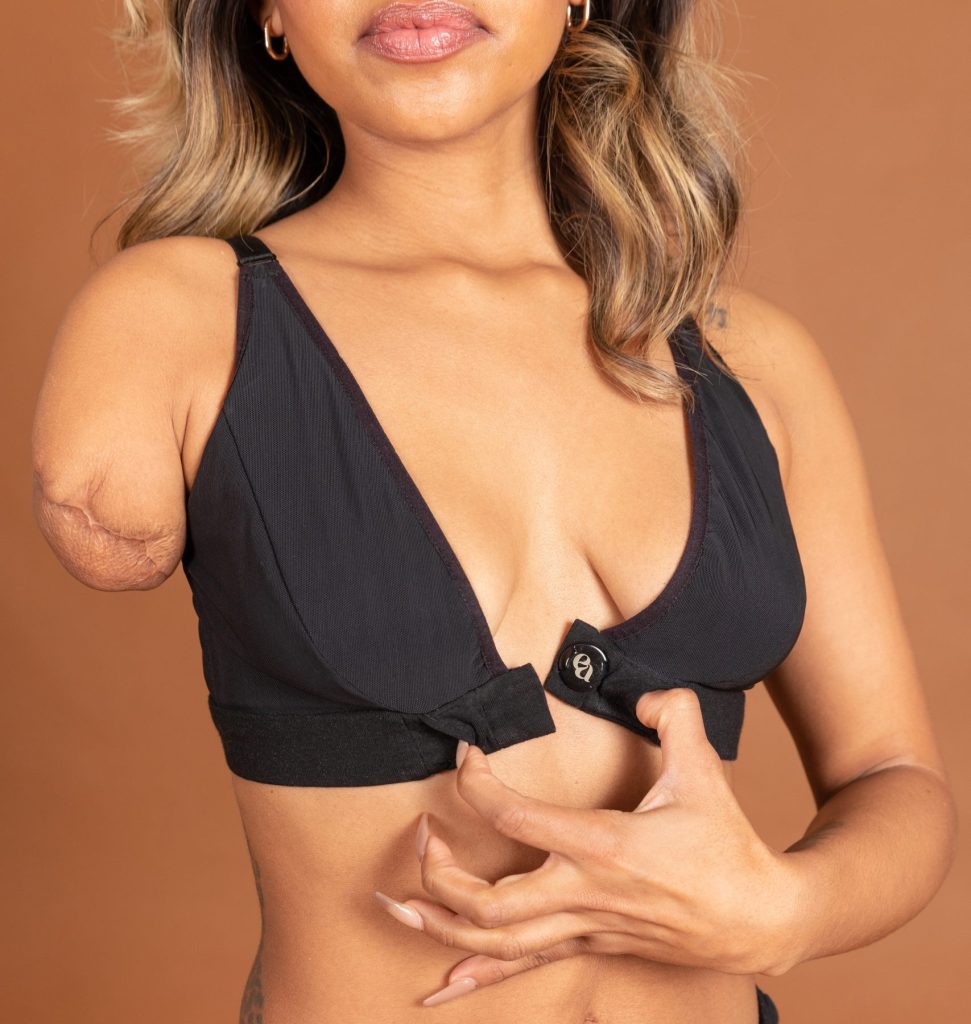
For Even Adaptive lingerie, the tech pack became the bridge between inclusive innovation and manufacturable detail. Alongside garment design, we developed a magnetized clasp system that users could operate with one hand.

Our industrial design and garment design teams worked in parallel, using 3D-printed prototypes with embedded magnets to test usability, strength, and comfort. We documented each iteration in technical drawings and specifications so manufacturers clearly understood how to integrate the clasp into the fabric without compromising softness or fit. The result was a low-profile, reliable closure that delivered on both aesthetics and accessibility. 

From Documentation to Collaboration

At Interwoven Design, we see tech packs not only as instructions for manufacturers, but as living tools. These align every stakeholder in the process, from clients and engineers to production partners. A strong pack captures the full intent of a design: the dimensions, construction methods, materials, finishes, and functional details that define how a product should look, feel, and perform. By consolidating all of this into a single, reliable reference, everyone involved—from brand stakeholders reviewing the concept to factory technicians cutting patterns—works from the same shared vision.

But we also know that design doesn’t end at handoff. Even the most detailed tech pack is only part of the equation. Manufacturing is an iterative process, and unexpected challenges can arise when ideas meet real-world production. That’s why success depends on pairing precision documentation with open, ongoing relationships with manufacturers. At Interwoven, we don’t just pass off a tech pack. We stay engaged throughout production, reviewing prototypes, answering questions, and refining details.

This collaborative approach helps bridge logistical gaps, ensures that subtle but important design decisions are preserved, and reduces costly missteps. A well-crafted tech pack minimizes guesswork, but it’s the combination of clear documentation and active partnership that guarantees the best outcomes: products that deliver on both creative vision and practical performance.

Precision as a Creative Act

Technical design is where creativity transforms into reality. The sketches, prototypes, and ideas that spark innovation become manufacturable products through careful documentation and technical rigor. At Interwoven Design, our expertise lies in creating these assets with the same care we bring to concepting and design. So, we ensure every product we hand off is made with accuracy, quality, and intent.

If you’re looking to take your concept from an idea to a market-ready product, we’d love to partner with you. With our vision and professional-grade technical documentation, we turn your ideas into fully realized products.

Interwoven Design is a design consultancy positioned at the intersection of soft goods and wearable technology. Sign up for our newsletter and follow us on Instagram and LinkedIn to learn more about design and development! 

Soft Goods, Smart Care: Designing the Next Generation of Medical Wearables

Soft Goods, Smart Care: Designing the Next Generation of Medical Wearables

The Stakes of Medical Design

Designing for the medical field is unlike designing for any other industry. Here, the stakes are measured not just in performance or user satisfaction, but in people’s health, safety, and wellbeing. A device that fails to deliver comfort or reliability isn’t just inconvenient, it can directly affect quality of life or clinical outcomes. Medical design demands a balance of precision, empathy, and usability.

Soft Goods Designers and Engineers

At Interwoven Design, we specialize in working at this intersection. Our team combines expertise in soft goods and hard goods, bringing together textiles, mechanics, and electronics into products that are as wearable as they are functional. From early research to final prototyping, our focus is on creating medical wearables that fit seamlessly into people’s lives—solutions that are technically robust, clinically sound, and human-centered by design. In this Insight article we will outline the unique considerations of medical design, our approach to designing medical wearables, the challenges and opportunities inherent in this area of the design industry, and three case studies of medical wearables that showcase the value of Interwoven Design’s human-centered approach. 

Why Medical Design Is Unique

Medical design brings a set of challenges and responsibilities that set it apart from other categories of product development. Every decision, from material selection to interface design, must be made with an acute awareness of the user’s physical and emotional context, as well as strict regulatory and clinical requirements.

Regulatory Context
Medical devices are subject to rigorous approval processes, with agencies such as the FDA or EMA requiring extensive validation and documentation. This means that every design decision must be defensible, testable, and aligned with compliance standards, not only to achieve certification but also to ensure long-term patient safety.

Emotional Context
Unlike consumer wearables, medical products often enter a user’s life during moments of stress, vulnerability, or recovery. Designers must anticipate not just the functional needs of patients and clinicians but also the emotional impact of the device. A poorly considered interface or material can heighten anxiety, while thoughtful design can build confidence and trust.

Usability Context

Reading Braille on a medication carton.

For a medical device to be effective, it must be intuitive to use, not just for patients but also for clinicians, caregivers, and sometimes even first responders. Accessibility, clarity, and ergonomics are not “nice to haves” but essential design principles. This often means extensive rounds of testing and iteration to make sure that products can be used correctly and consistently, even in high-pressure situations.

Together, these contexts shape a design discipline that is both technically demanding and deeply human. It’s this balance of rigor and empathy that drives successful medical innovation.

Designing for the Body and for Care

At Interwoven Design, we see medical wearables as more than devices, they are extensions of the body and tools for care. Designing them requires an iterative, human-centered approach that prioritizes the user at every stage. Prototyping is central to this process. Early models are tested not just in the studio but in real-world conditions, allowing us to observe how products perform during daily routines, clinical use, or extended wear. This cycle of making, testing, and refining ensures that each design evolves in direct response to user needs and feedback.

Industrial Designers Working on Knee Brace

Ergonomics, hygiene, and comfort are treated as non-negotiables. Materials must withstand the realities of long-term use, remaining breathable, easy to clean, and gentle against the skin. Attention to these details transforms functional devices into trusted companions for the people who rely on them. Every strap, sleeve, or modular component is designed to accommodate movement, protect sensitive areas, and support extended wear without fatigue or discomfort.

Collaboration drives the process forward. We work closely with clinicians to align with medical best practices, with engineers to ensure technical performance, and with end users to guarantee that the product is intuitive and usable across contexts. By integrating insights from soft goods design, we go beyond wearable devices alone, creating patient safety garments, rehabilitation aids, and hybrid systems that bridge clinical care and consumer wellness. Our expertise allows us to design accessories, support systems, and healthcare environments that not only meet functional requirements but also enhance comfort, confidence, and dignity.

The result is a wearable or healthcare system that not only performs its intended medical function but does so in a way that feels natural, safe, and empowering for the user, extending the body, supporting care, and enabling better health outcomes.

The Challenge (and Opportunity) of Medical Wearables

Medical wearables are evolving rapidly, from rehabilitation devices to continuous monitoring systems and preventative tools. While their potential to improve health outcomes is immense, designing these products presents a unique set of challenges. Unlike conventional consumer wearables, medical devices must integrate electronics, mechanics, and textiles into a seamless system that functions reliably in clinical settings, daily life, and even high-movement scenarios.

At Interwoven Design, our specialty lies in creating soft goods that feel natural against the body while incorporating hard goods—sensors, actuators, structural supports—that deliver precise performance. Every strap, sleeve, or interface must balance technical requirements with comfort, fit, and intuitive usability. A device that performs flawlessly but feels awkward, restrictive, or irritating will quickly be abandoned by the people who need it most.

Long-term wearability adds another layer of complexity. Medical wearables often remain in contact with the skin for hours or even days, requiring careful attention to materials, pressure distribution, and ventilation. Devices must support patient mobility, prevent injury, and integrate seamlessly into clinical protocols, all while maintaining hygiene standards and durability.

These challenges, however, are also opportunities. By addressing the intersection of comfort, ergonomics, and performance, Interwoven Design can create medical wearables that are not only clinically effective but also empowering and dignified for the people who use them. Our integrated approach ensures that each product functions as an extension of the body, helping patients and clinicians alike achieve better health outcomes through thoughtful, human-centered design.

Case Studies: Medical Design in Action

Interwoven Design’s work in medical wearables and healthcare soft goods spans a wide spectrum, from patient-focused therapeutic devices to clinician-centered support tools. Each project demonstrates how thoughtful design can bridge the gap between technology, the human body, and the demanding realities of healthcare environments. Whether stabilizing a catheter for heart failure patients, creating a flexible armband for continuous glucose monitoring, or integrating back support into a utility bag for nurses, our approach remains the same: combine clinical insight with human-centered design to deliver solutions that are safe, functional, and comfortable for real-world use.

Case Study 1: Nuwellis Device for Aquapheresis Therapy

Interwoven Design partnered with TKDG and Nuwellis to design a wearable solution that improves the patient experience during Aquapheresis therapy, a treatment used to safely remove excess fluid in people with Congestive Heart Failure (CHF). For patients already navigating a fragile health condition, maintaining catheter stability is critical: dislodgement, vein compression, or accidental interference can compromise treatment and patient safety.

The Design Challenge

The goal was to create an external arm stabilization device that protects the catheter while remaining comfortable enough for extended wear. The solution needed to work across different patient anatomies and treatment contexts, from resting in bed to moving around a hospital room, without restricting mobility or adding undue burden.

Our Approach

Through research with clinicians and patients, we identified key risks such as poor arm positioning, excessive elbow bending, and unconscious interference with the catheter site. These insights guided the development of multiple wearable prototypes designed to protect access points, promote healthy blood flow, and maintain comfort. Materials like Baymedix® froth foams were chosen for their softness, breathability, and ability to reduce pressure on the skin.

Impact

Clinical feedback highlighted two standout prototypes that offered strong catheter protection while preserving freedom of movement. Follow-up testing confirmed that these designs maintained vein access and minimized risks during therapy. By combining thoughtful ergonomics with material innovation, Interwoven Design delivered a solution that reduces complications, improves patient confidence, and supports more effective treatment outcomes.

Case Study 2: Senseonics Continuous Glucose Monitor

Senseonics is advancing diabetes care with the first long-term, implantable continuous glucose monitoring (CGM) system, designed to measure glucose levels for up to 90 days compared to the five-to-seven-day lifespan of most existing systems. Interwoven Design partnered with the Senseonics team to design the external armband that houses the system’s electronic component, ensuring comfort and reliability for everyday use.

A model wears a black and black armband.

The Design Challenge

The armband needed to balance durability, security, and comfort for wearers managing diabetes around the clock. From moments of high activity to periods of rest and sleep, the device had to stay securely in place without causing discomfort or drawing unwanted attention. 

Our Approach

We developed a flexible, two-part band featuring a seamlessly knit inner layer and a reversible over-cuff. This design gave users both comfort and choice—adjusting for security, flexibility, and even color preference—while ensuring that the device remained unobtrusive during daily activities.

Impact

The resulting armband delivers a secure, user-friendly solution that integrates naturally into the wearer’s lifestyle. By prioritizing comfort and adaptability, the design supports Senseonics’ mission to make glucose monitoring easier, more accurate, and less intrusive for people living with diabetes.

Case Study 3: Whitecloud Medical Utility Bag

Whitecloud Medical set out to solve two everyday challenges faced by nurses and medical technicians: back strain from strenuous lifting and the need to carry essential supplies throughout long shifts. Interwoven Design partnered with Whitecloud to design and prototype a first-of-its-kind product that combines a supportive back brace with a utility bag, purpose-built for demanding healthcare environments.

The Design Challenge

Medical professionals often lift patients, maneuver equipment, and push gurneys, all while carrying syringes, bandages, and other tools in overloaded pockets. This combination leads to back strain, discomfort, and inefficiency. Whitecloud’s founders, medical professionals themselves, envisioned a wearable solution that could ease physical strain while keeping supplies accessible.

Our Approach

We designed a modular waist pack and back support system that functions as one unit but allows flexibility in use. The bag slides around the belt for quick access to supplies or can be secured over the back support during strenuous movement. Both the bag and the back support can also be detached and used independently. Interior compartments include a fold-down main pocket for medical tools and a rear pocket for personal items, streamlining organization.

Impact

The Whitecloud Medical Utility Bag provides healthcare workers with reliable back support and accessible storage in a single wearable solution. By combining ergonomics with practical functionality, the design reduces strain, improves efficiency, and directly responds to the daily realities of clinical work.

Designing Confidence Into Care

Medical design is about more than solving functional problems, it’s about building trust, safety, and dignity into every interaction. From stabilizing a catheter during Aquapheresis therapy to creating flexible wearable monitors and clinician-focused utility solutions, the challenges are as much human as they are technical. Through rigorous testing, iterative prototyping, and a deep commitment to human-centered thinking, Interwoven Design ensures that every product performs reliably while feeling intuitive, comfortable, and approachable in real-world use.

Our expertise in seamlessly combining soft goods and hard goods gives us a unique advantage: we can craft wearable medical solutions that are both technically sophisticated and thoughtfully tailored to the body. Every strap, sleeve, or modular component is designed with the user’s comfort, mobility, and safety in mind.

We invite clinicians, medical device companies, and innovators to collaborate with Interwoven Design to create medical products that not only meet clinical standards but also resonate with the people who use them every day. Designing for care means designing for confidence, and that is a principle at the heart of everything we do.

Interwoven Design is a design consultancy that is positioned at the intersection of soft goods and wearable technology, creating products that function with the body and offer comfort as well as the superb performance that arises through the innovative incorporation of rigid, often electronic and responsive elements. Sign up for our newsletter and follow us on Instagram and LinkedIn for design news, multi-media recommendations, and to learn more about product design and development! 

Designing Digital: Interfaces, Interactions, and Communication in Wearable Tech

Designing Digital: Interfaces, Interactions, and Communication in Wearable Tech

Design doesn’t stop at the physical product, and this is especially true in the field of wearable technology. In our field, the experience often depends as much on the digital layer as it does on the straps, sensors, or fabrics that touch the body. A button that feels intuitive, an alert that communicates clearly, a dashboard that makes data meaningful—these digital details are what transform a wearable from a clever object into a trusted tool.

At Interwoven Design, we’ve found that nearly every project we take on has a digital component woven into it. Sometimes it’s a user interface that guides medical treatment. Other times it’s a haptic signal or LED sequence that makes a product’s function legible in the field. This is to say nothing of the endless digital sketches, technical drawings, diagrams, and presentations involved in every project. Even beyond the devices themselves, digital design shapes how we communicate—through our website, Instagram, and LinkedIn—to make our work accessible and understandable.

In this Insight article, we’ll explore how we approach digital design in wearable technology from multiple angles: how interfaces act as bridges, how digital and physical elements must integrate seamlessly, and how our outward-facing digital communication extends the same design principles. Along the way, we’ll share examples from our studio projects that show how digital and physical design combine to create products that are not only functional, but intuitive and human-centered.

Lens 1: User Interfaces as Bridges

When it comes to medical and wearable devices, the interface bridges complex technology and the people who rely on it. Whether it’s a surgeon adjusting a device mid-operation, a warehouse worker tracking exertion, or a patient managing a chronic condition, the interaction must feel effortless and clear. Screens, buttons, and haptic cues are not just details of execution. They are how theoretical functionality becomes real user action.

Reading Braille on a medication carton.

The challenge lies in balancing capability with simplicity. Medical devices often contain highly sophisticated systems, yet the interface must distill them into accessible, reliable controls. A touchscreen with oversized icons lets a nurse navigate quickly in an emergency. A tactile button gives feedback even through gloves. In industrial settings, vibration cues can alert workers without pulling their eyes from the task. For consumer wearables, intuitiveness is everything—a health-tracking band that needs a manual will not inspire long-term use or adoption.

Context drives design. Interfaces must perform in low light, in motion, or when the user’s hands are full. Accessibility is equally vital. Icons, contrast, and feedback must consider users of all ages, abilities, and technical backgrounds. These choices affect not only usability but also safety and trust. A device that communicates clearly and predictably becomes an extension of the user’s body and mind. It empowers them to act with confidence.

At Interwoven Design, we view interfaces as more than functional tools. They are points of connection, empathy, and communication—bridges that let technology blend seamlessly into daily life, whether in the clinic, the workplace, or the home.

Case Study 1: WithMe Baby Monitor

For new parents, peace of mind is priceless. The WithMe Baby Monitor was created to deliver exactly that. This wearable sensor tracks a baby’s breathing, skin temperature, activity, and body position, then shares the data seamlessly with caregivers through a mobile app. The project’s success depended on more than accuracy or form—it hinged on how information was presented and acted upon. When developing the interface, the design team understood that parents would use the system under stress, fatigue, and distraction. Clarity and reassurance became the core goals.

Rather than flooding users with data, the app distilled complex biometric inputs into intuitive signals: calm confirmations when everything was normal and clear notifications when attention was needed. By translating data into simple, actionable insights, the interface eased anxiety instead of heightening it. Context shaped many design choices. Large, high-contrast icons made information easy to read, whether in a dim nursery or bright daylight.

Notifications were tiered—gentle reminders for low battery, urgent alerts for vital changes. Sound and haptic cues added layers of feedback so parents could stay informed even with their hands or eyes occupied. The result was a system where the interface became the heart of the product. WithMe didn’t just collect data—it gave parents confidence and control. By focusing on how information was delivered, not just what was measured, the design turned advanced sensing technology into clear, human-centered communication that fits seamlessly into everyday caregiving.

Lens 2: Integrating Digital with Physical Design

Wearable technology is never purely digital or physical—it’s both, tightly intertwined. The challenge lies in blending textiles, hardware, and software into one seamless system rather than a collection of parts. A user shouldn’t have to think about how the app connects to the strap or whether a sensor will sync with the interface. The design must feel unified, intuitive, and effortless, hiding its complexity beneath the surface.

Perci Emergency Preparedness Vest Icons

The form factor shapes how the digital layer comes to life. For some products, this means embedding displays or haptic cues directly into a strap so feedback is felt on the body. For others, the digital experience is external—an app or dashboard—but still closely tied to the wearable’s physical function. A garment may look simple, yet its success depends on how well the software interprets movement or how easily the user can interact with controls hidden in seams. Alignment between form and interface is essential. The digital experience should enhance, not complicate, the physical design.

True integration comes from prototyping digital and physical interactions side by side. Testing an on-screen button is incomplete without feeling the corresponding tactile click on the body. Likewise, fabric layouts mean little until paired with a responsive app that interprets sensor data in real time. Iterating both together helps designers find friction early and create products that feel like one cohesive experience—not two systems forced to coexist.

Case Study 2: The HeroWear Exosuit

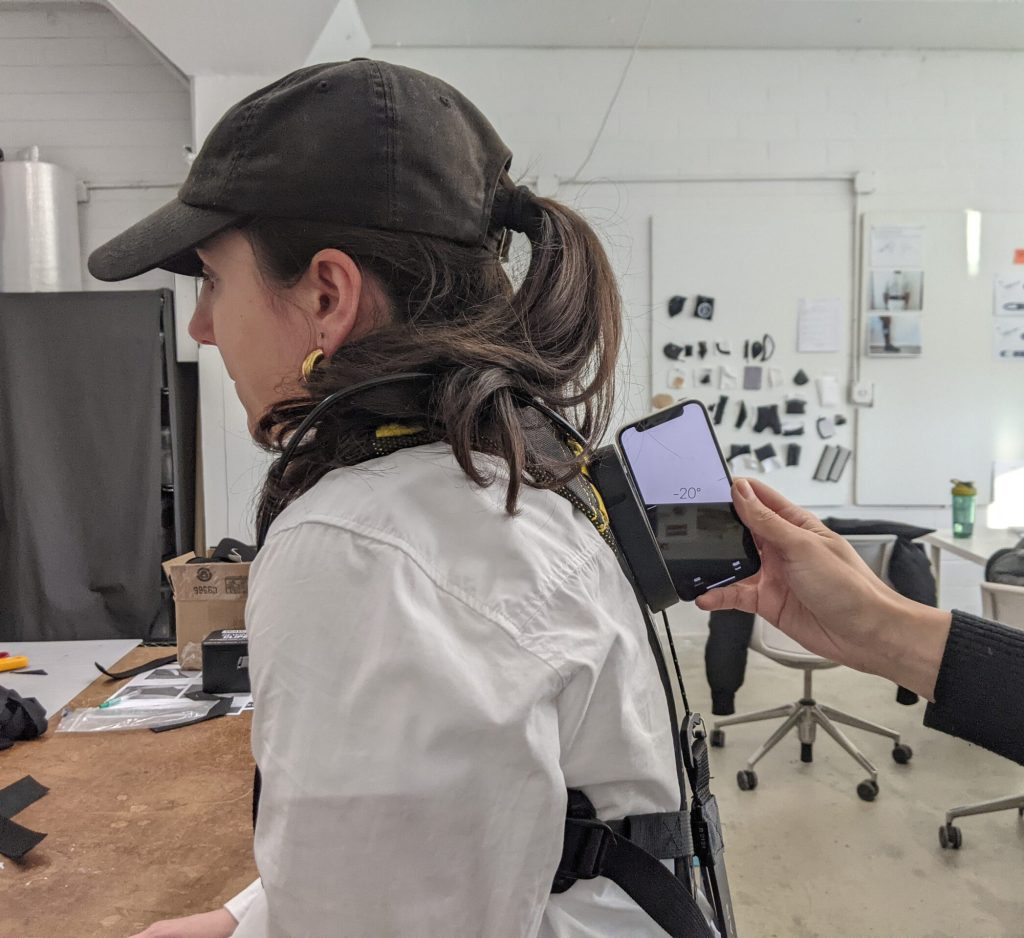
For the HeroWear Apex Exosuit, integration of digital and physical design was essential to its success. The exosuit’s primary control—a switch that allows users to engage, disengage, and fine-tune assistance—needed to be intuitive, fast, and ergonomically located. Positioned at the front of the shoulder, the switch had to work seamlessly with both the garment and the worker’s natural range of motion.

To find the best solution, our team tested prototypes in real warehouse environments. We observed how workers moved during long shifts and noted the motions they repeated most often. Prototyping showed that small changes in placement or resistance could make the difference between smooth operation and disruption. By combining digital control with physical ergonomics, we ensured the switch could be found instantly and used with minimal effort.

The result is an exosuit that feels like a natural extension of the body. Its interface doesn’t just control assistance—it builds worker confidence and trust. This focus on detail led to strong adoption in the field and earned the Apex international recognition for innovation and human-centered design.

Lens 3: Beyond the Device, Digital Communication

Digital design doesn’t end with the product in a user’s hands. At Interwoven Design, we see it as a continuum that also shapes how we communicate our work with the world. Just as a wearable’s interface must be intuitive, our digital presence has to be clear, engaging, and consistent.

Our website functions as a curated portfolio, highlighting the depth of our expertise while making it easy for visitors to explore projects and services. It’s designed to mirror the clarity and precision we bring to product interfaces, giving prospective clients a seamless introduction to who we are and what we do.

On Instagram, we open up the process. It’s a space for storytelling—where sketches, prototypes, and behind-the-scenes glimpses reveal the culture of design thinking that drives our work. The platform lets us share not just outcomes, but the human side of making: experimentation, iteration, and discovery.

LinkedIn acts as our professional hub. It’s where we contribute to industry dialogue, share insights, and connect with collaborators who care about the future of wearable technology and soft goods. Thought leadership here reinforces our position at the intersection of design, technology, and human use.

The consistency across these channels—product interfaces, website, social platforms—creates a unified experience. For us, credibility comes not just from what we design, but from how we communicate it. Whether someone interacts with an Interwoven wearable or with our digital footprint, the same principles apply: clarity, trust, and human connection.

Connecting People, Products, and Platforms

At Interwoven, we don’t see digital design as a separate discipline—it’s part of the fabric of every project. From the way a button responds to touch, to how an app conveys reassurance, to how we share our work online, digital is threaded through the entire design process. It’s both a tool for exploration and a tangible outcome that defines user experience.

Our strength lies in this integration. By blending expertise in soft goods with fluency in digital, we design systems where textiles, hardware, and interfaces feel inseparable. Each of them reinforces the other to create products that are not only functional, but intuitive and human.

Ultimately, digital design is what makes wearables understandable, usable, and trusted. It turns complexity into clarity and ensures that technology feels like a natural extension of the body and daily life.

For clients and partners, we offer more than product creation—we design ecosystems. From textile to interface to communication, we build solutions that connect people, products, and platforms with confidence and care. If you’re looking to bring a wearable or soft goods concept to life, we’d love to collaborate. Interwoven Design is a design consultancy that is positioned at the intersection of soft goods and wearable technology, creating products that function with the body and offer comfort as well as the superb performance that arises through the innovative incorporation of rigid, often electronic and responsive elements.

Sign up for our newsletter and follow us on Instagram and LinkedIn for design news, multi-media recommendations, and to learn more about product design and development.

Holding Hope: What It Means to Be a Woman Who Designs

Holding Hope: What It Means to Be a Woman Who Designs

This article, written by Rebeccah Pailes-Friedman, was published in the Spring 2025 Issue of IDSA’s INNOVATION Magazine.

Hope isn’t loud. It doesn’t arrive in fanfare or blaze across headlines. For many of us—especially women working in creative fields—it shows up quietly, in the act of continuing. In the sketch, the prototype, the difficult conversation we still choose to have. Design, at its core, is a hopeful practice: it asks us to imagine that something could be better than it is now, and then dares us to shape it. Even when the world feels brittle, uncertain, or indifferent.

As a woman navigating both industry and academia, I’ve come to see hope not as optimism, but as resistance. It’s the decision to keep building—companies, objects, classrooms, futures—in spite of all that tells us not to. And I see this resilience everywhere: in the students who arrive carrying questions no syllabus can answer; in the design teams holding the line for inclusive products; in the small, quiet breakthroughs that happen late at night at the sewing machine or CAD screen.

This kind of hope is rarely celebrated, because it’s not shiny. It doesn’t make headlines. It shows up in the tenacity to make good work even when timelines are tight, budgets are limited, or recognition is slow to come. It’s especially present in the work of women designers, who often take on the invisible emotional labor of collaboration, mentoring, and bridging hard conversations. In our Women in Design conversations over the past few years, I’ve been struck by how often words like perseverance, balance, care, and community come up—none of which scream “disruption,” but all of which embody a more durable kind of design leadership.

When we talked about networking and resilience, we weren’t talking about ladder-climbing. We were talking about survival. About holding space for one another while navigating a field that’s not always structured with us in mind. About reaching out across disciplines and generations. That too is a hopeful act: to believe that connection and mentorship matter, and to keep showing up for each other, even when it’s hard.

I think often about the women I’ve spoken to through this column—their stories, their honesty, their strength. One shared how she stayed in the field because another woman made space for her. Another talked about choosing projects not based on prestige, but on the opportunity to make change. These aren’t always the loudest decisions, but they are the ones that shape the culture of design from the inside out. These women weren’t talking about hope in abstract terms. They were living it, designing it into being.

And let’s be honest: it has been hard. Between global instability, climate disasters, the rollback of rights, economic pressure, and the constant background hum of burnout, it can feel countercultural to keep imagining better futures. But design is inherently future-facing. Whether we’re creating a medical wearable, a system of support for a patient, or a vessel for shared meaning—we’re always in conversation with tomorrow.

Sometimes, that conversation is technical. Sometimes, it’s philosophical. And sometimes, it’s deeply personal.

For me, that dialogue often happens through clay.

In my studio, I make large ceramic vessels—coiled by hand, textured with slips and oxides, and fired until the surfaces crack and reveal layers of transformation. These pieces aren’t about beauty or perfection. They’re my response to climate grief, especially the long, slow disasters like drought and erosion. They’re how I process the overwhelming scale of what’s happening in the world—by shaping it, literally, into something I can hold.

There’s nothing passive about that process. Clay resists. It collapses. The kiln introduces chaos. And yet, I return to it because it grounds me. My ceramics practice is not separate from my design work—it’s the well I draw from. It reminds me that making is a form of meaning-making. That even in the face of loss or uncertainty, our hands can still create.

In earlier writing, I described creativity as a natural pathway—one shaped by instinct, iteration, and trust. When I’m working in clay, I feel that path most clearly. It’s intuitive. It’s physical. I’m not designing for a user or testing for scale. I’m listening. I’m responding. I’m giving form to emotion, tension, hope, and frustration—all of it. My recent work deals with drought because it’s something I can’t stop thinking about. The ground drying up. The surface cracking. The idea of something vital disappearing. Through my vessels, I can process those fears in a way that feels active, not paralyzing.

When I coil the clay, there’s a rhythm. When I fire it, there’s surrender. When the piece comes out—changed, scorched, scarred—it holds a narrative that didn’t exist before. And often, I didn’t know what it would say until I saw it finished. That, to me, is hope in physical form. Not a glossy outcome, but a mark of having passed through something difficult and come out the other side, altered but intact.

And that’s the part I’ve come to understand as hope.

Not the idea that everything will be okay—but the decision to make something anyway. To participate. To stay in the conversation.

I see this same spirit in so many women designers I know. Whether they’re working on equitable tech, gender-responsive products, or advocacy within institutions, they’re not waiting for perfect conditions. They’re doing the work. They’re shaping the conversation. The Women in Design Committee has shown me again and again that progress often looks like this: a little bit of clarity, a lot of persistence, and a shared belief that things can move forward—even if just a few degrees at a time.

There is also something profoundly hopeful in the way women often approach complexity—not by simplifying it or pushing it aside, but by holding it. Balancing competing priorities. Making room for ambiguity. Designing solutions that don’t ignore context but embrace it. Whether that’s a product that adapts to changing bodies, a workspace that accommodates caregiving, or a platform that centers underrepresented voices, women designers are constantly expanding the definition of what design can be—and who it’s for.

And isn’t that the most hopeful thing of all? That we keep showing up?

Hope isn’t naïve. It’s not passive. It’s built from hours, from iterations, from the small courageous decisions we make in the face of constraint. It’s built from care and curiosity and showing up again, even when we’re tired. Especially then.

I don’t always know if what I make will work. In ceramics, pieces crack. Kilns fail. In design, prototypes don’t always land. Budgets get cut. Teams shift. But I keep making. We keep making. Because through that act, we’re building not just products—but possibility.

And that’s what I want to leave you with. Not the kind of hope that demands a silver lining or a five-point plan. But the kind that lives in your hands. The kind you carry quietly into the studio, or the meeting, or the classroom. The kind that grows through practice. Through presence.

Through making.

—Rebeccah Pailes-Friedman, FIDSA

rpf@getinterwoven.com

Tried and True: Validation and Testing in Soft Goods Wearable Technology

Tried and True: Validation and Testing in Soft Goods Wearable Technology


Why Testing Matters 

In wearable technology, ideas don’t just live on a screen or in a prototype, they live on the body. That means every design decision, from the angle of a strap to the stretch of a textile, directly impacts how a product feels, functions, and performs in real life. Unlike hard goods, where performance can often be validated through digital simulations or mechanical testing, soft goods require a different level of scrutiny. Comfort, fit, and durability can’t be fully predicted without real-world testing. 

At Interwoven Design, we see testing not as a final checkbox before launch, but as an essential part of the design process. It’s how we uncover the subtle issues that CAD files and sketches can’t reveal: a seam that rubs after an hour of wear, a closure that feels intuitive in theory but awkward in practice, or a textile that stretches beautifully in the lab but loses integrity after repeated washing. Testing is how we build confidence in the products we design; for our team, for our clients, and most importantly, for the people who will rely on them. In this Insight article, we’ll outline what’s unique when testing soft goods, testing techniques we use in our studio, the process developing test protocols, and share three case studies that demonstrate the value of testing in wearable tech.  

What Makes Soft Goods Testing Unique 

Testing photo by Interwoven Design Group

Testing soft goods isn’t just about checking boxes on durability or performance, it’s about validating how a product interacts with the human body. Unlike rigid products, soft goods flex, stretch, and conform, which means the variables multiply. A harness may perform well on one body type but dig uncomfortably into another. A fabric might wick sweat effectively but lose breathability once layered. Even something as subtle as a seam placement can make the difference between a product that feels effortless and one that users abandon. These nuances make testing in soft goods especially critical.

Comfort, ergonomics, and wearability can’t be fully captured by digital modeling or static evaluation. They need to be worn, adjusted, and lived in. At Interwoven Design, we approach testing as both technical and human centered: technical in measuring durability, strength, and performance; human-centered in evaluating comfort, fit, and user experience over time. 

The challenges are amplified when technology is integrated. Wearable sensors, power sources, and connectivity components add complexity to already delicate material systems. Ensuring that a textile stretches without disrupting circuitry, or that an engagement mechanism is positioned intuitively, requires iterative testing at every stage. Add to this the reality that soft goods often need to fit a wide range of body types, movements, and environments, and you get a testing landscape that is both demanding and essential.

This is why testing isn’t an afterthought for us, it’s a design driver. By confronting these challenges head-on, we can refine products so they’re not only functional in theory but reliable, comfortable, and intuitive in the real world. 

Types of Testing We Use 

At Interwoven Design, we see testing as a layered process. Each stage answers a different question: does it hold up, does it feel right, does it work in the real world? By combining technical evaluation with lived experience, we create products that are both reliable and human-centered.  Each type of testing reveals different insights, and together they form a comprehensive validation process. 

1. In-House Testing as a First Line​

Before we send prototypes into the field, we stress-test them in the studio. In-house testing allows our team to push early concepts to failure, observe weak points, and refine design elements quickly. This controlled stage saves time and resources by filtering out obvious flaws before involving external testers or clients. 

2. Ergonomic & Fit Testing

Comfort and wearability are non-negotiable for soft goods. We run structured fit trials across diverse body types, tracking everything from pressure points to range of motion. These insights ensure the product adapts to real human variation, not just a single “ideal” model. 

3. Durability & Material Testing

From fabric abrasion to seam strength, we evaluate how a product holds up under repeated use. We also test environmental performance—exposing prototypes to heat, humidity, or repeated laundering to anticipate how they’ll age over time. For wearable technology, we also look at how embedded electronics and hardware behave under repeated strain, ensuring sensors, circuits, and connectors remain reliable as materials bend and stretch. 

4. User Experience Testing

The most rigorous test is the target audience wearing and interacting with the product. We work closely with end users—nurses, athletes, warehouse workers, patients—to gather qualitative and quantitative feedback. We study ergonomics, comfort, ease of use, and long-term wearability, while the users execute the body movements typical for the wearable, iterating prototypes based on their lived experience. Small adjustments, like repositioning a seam to bolster support or refining adjustability for greater control, can transform acceptance and adoption rates. 

Functionality doesn’t stop at fit and durability. We observe how users actually interact with the product in context—how quickly they can don and doff it, how it integrates into workflows, and how intuitive the design feels. These behavioral insights are critical for adoption.

5. Field Testing

Soft goods live in unpredictable environments, so testing them in context is essential. Whether it’s a warehouse, hospital, or outdoor trail, we evaluate products in the environments where they’ll actually be used. This allows us to track how sweat, weather, temperature, or prolonged wear affect performance. Field testing often reveals subtle issues, like unexpected environmental conflicts, that lab conditions can’t replicate. 

Developing Test Protocols 

No two soft goods projects are alike, and neither are their testing needs. A performance-driven backpack, a medical compression garment, and a wearable sensor system all demand different metrics of success. That’s why at Interwoven Design, we don’t rely on one-size-fits-all checklists. Instead, we collaborate with clients to build test protocols that are tailored to their product, user base, and market context. 

The process starts with clarifying priorities: Is the primary concern comfort during extended wear? Durability under heavy load? Compliance with medical or industrial safety standards? From there, we map testing methods to those goals. For example, a healthcare wearable may require protocols aligned with regulatory requirements, while an industrial soft good might emphasize stress testing, longevity, and performance under extreme conditions. 

Equally important is balancing quantitative and qualitative feedback. We often combine lab metrics (such as tensile strength or moisture resistance) with user-centered data (comfort, usability, ergonomics). Together, these insights give clients a clear, evidence-based picture of how their product will perform in the real world. By developing test protocols alongside clients, we create not only a validation process but also a shared language. This ensures alignment early, reduces the risk of missteps later, and ultimately results in products that meet both technical standards and human needs. 

Case Studies: Testing in Action 

Case Study 1: Project Firefly — Validating Reflective Durability 

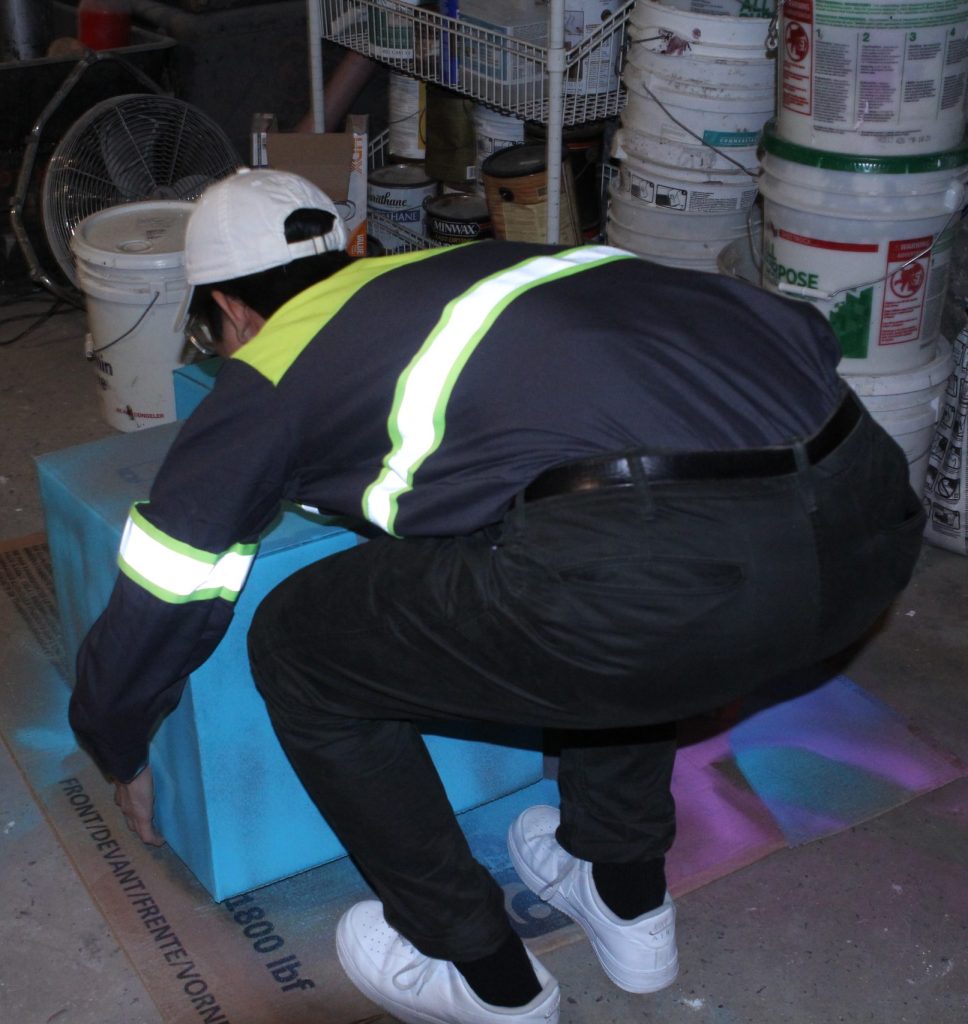
When Red Kap approached Interwoven Design to develop Project Firefly, a new line of reflective Type O workwear garments, one of the most pressing challenges was durability. Reflective materials are essential for worker safety, but in warehouse and industrial settings they face harsh conditions: constant friction from movement, contact with equipment, and repeated exposure to industrial laundering. A material that looked promising on paper could easily fail once subjected to the realities of the job site. 

To address this, we incorporated abrasion testing early in the design process. Using our testing methodology, we simulated the high-friction scenarios workers regularly encounter—lifting, bending, kneeling, and brushing against rough surfaces.

By evaluating reflective materials under these stresses, we were able to pinpoint which options maintained their integrity and visibility over time. This testing didn’t just confirm durability; it also informed design decisions, such as strategic placement of reflective elements to minimize wear while maximizing visibility. 

The result was a set of garments that met the highest safety standards while withstanding the rigors of warehouse conditions. Abrasion testing proved to be a critical step in validating that the reflective components would perform reliably over the lifespan of the garment, giving both workers and employers confidence that safety would not degrade with use.  

Case Study 2: Even Adaptive — Testing for Intuitive, One-Handed Use 

For Even Adaptive, Interwoven Design set out to reimagine adaptive lingerie by creating garments that could be put on with the use of a single hand. Unlike traditional lingerie closures, which are often difficult or impossible to manage without two hands, this line demanded a design solution that was not only functional but also elegant, comfortable, and inclusive. At the heart of the project was the development of a custom magnetic clasp; a new closure system designed to empower women with limited mobility while offering a contemporary, stylish alternative to the outdated adaptive lingerie on the market. From the start, our delivery team knew that validation with the target audience would be key to our process.

We conducted testing sessions with women who had the use of only one hand, observing how they interacted with prototypes and gathering real-time feedback. This ensured that the clasp design, garment construction, and finger-loop supports were intuitive, reliable, and easy to operate under everyday conditions. In-house testing confirmed magnet strength, clasp durability, and comfort against the skin, while user trials revealed small but critical refinements—such as adjusting clasp engagement force and loop placement—that made the product seamless in practice. 

The result is a line of adaptive lingerie that feels both functional and beautiful, bridging accessibility and style in a way that had not existed before. The success of this validation-driven design process was recognized at the highest levels: Even Adaptive won the Professional Award in the Personal Accessories category at the 2023 Core77 Design Awards and was named an Honoree in Fast Company’s Innovation by Design Awards, Accessible Design category. These accolades affirm not only the product’s innovation but also the importance of rigorous, user-centered testing in bringing meaningful, inclusive solutions to market. 

Case Study 3: SABER Military Exosuit — Field Testing for Real-World Performance 

Developing the SABER Military Exosuit for the U.S. Army required more than theoretical models or lab simulations. To ensure the exosuit could meet the demanding physical and operational needs of soldiers, Interwoven Design partnered closely with Vanderbilt’s Zelik Lab and conducted extensive field testing with the 101st Airborne Division at Fort Campbell. Observing soldiers in their natural work environment allowed the team to understand not just lifting movements, but the full range of activities—including carrying gear, navigating obstacles, and performing operational tasks—that the exosuit would need to support without restricting mobility. 

Through iterative prototyping and in-field trials, we validated key aspects of the design, from the placement and tension of elastic bands to the comfort of shoulder straps and thigh sleeves over long periods of wear.

101st testing SABER military exoskeleton. Photo by LARRY MCCORMACK.

Soldiers provided real-time feedback on range of motion, heat retention, and overall ergonomics, enabling the team to refine materials, adjust fit, and improve the ease of donning and doffing.This continuous feedback loop was essential in creating a lightweight, breathable, and low-profile exosuit that successfully reduced back strain while remaining unobtrusive in active duty scenarios. 


The results were compelling: the SABER exosuit, weighing just 2.7 pounds, reduced over 50 pounds of back strain per lift and improved overall endurance and performance in demanding tasks. Field testing confirmed that the design was intuitive, comfortable, and effective for extended wear, demonstrating how rigorous validation with the target audience is crucial for wearable technologies, particularly those intended for extreme or high-stakes environments. 

Building Confidence Through Testing 

At Interwoven Design, testing is more than a checklist, it’s a mindset. It embodies curiosity, validation, and iteration, ensuring that every concept not only works but feels intuitive, comfortable, and human-centered. Rigorous testing allows ideas to evolve from sketches and prototypes into products that perform reliably in real-world conditions, whether that means a reflective workwear garment, adaptive lingerie, or a wearable exosuit for military or industrial use. 

Validation reduces risk, inspires trust, and ultimately delivers better outcomes for both users and clients. By engaging with testing early and often, Interwoven ensures that products meet functional, ergonomic, and experiential goals before they reach production. Far from being a hurdle, testing is a powerful tool for innovation; a way to explore possibilities, uncover hidden challenges, and refine solutions with confidence. Prospective clients are invited to collaborate with Interwoven to develop tailored test protocols that align with their vision, needs, and user requirements, transforming ideas into products that are not only effective but also thoughtfully designed for real human use. 

Interwoven Design is a design consultancy that is positioned at the intersection of soft goods and wearable technology, creating products that function with the body and offer comfort as well as the superb performance that arises through the innovative incorporation of rigid, often electronic and responsive elements. Sign up for our newsletter and follow us on Instagram and LinkedIn for design news, multi-media recommendations, and to learn more about product design and development!