Designing Digital: Interfaces, Interactions, and Communication in Wearable Tech
Design doesn’t stop at the physical product, and this is especially true in the field of wearable technology. In our field, the experience often depends as much on the digital layer as it does on the straps, sensors, or fabrics that touch the body. A button that feels intuitive, an alert that communicates clearly, a dashboard that makes data meaningful—these digital details are what transform a wearable from a clever object into a trusted tool.

At Interwoven Design, we’ve found that nearly every project we take on has a digital component woven into it. Sometimes it’s a user interface that guides medical treatment. Other times it’s a haptic signal or LED sequence that makes a product’s function legible in the field. This is to say nothing of the endless digital sketches, technical drawings, diagrams, and presentations involved in every project. Even beyond the devices themselves, digital design shapes how we communicate—through our website, Instagram, and LinkedIn—to make our work accessible and understandable.
In this Insight article, we’ll explore how we approach digital design in wearable technology from multiple angles: how interfaces act as bridges, how digital and physical elements must integrate seamlessly, and how our outward-facing digital communication extends the same design principles. Along the way, we’ll share examples from our studio projects that show how digital and physical design combine to create products that are not only functional, but intuitive and human-centered.
Lens 1: User Interfaces as Bridges
When it comes to medical and wearable devices, the interface bridges complex technology and the people who rely on it. Whether it’s a surgeon adjusting a device mid-operation, a warehouse worker tracking exertion, or a patient managing a chronic condition, the interaction must feel effortless and clear. Screens, buttons, and haptic cues are not just details of execution. They are how theoretical functionality becomes real user action.

The challenge lies in balancing capability with simplicity. Medical devices often contain highly sophisticated systems, yet the interface must distill them into accessible, reliable controls. A touchscreen with oversized icons lets a nurse navigate quickly in an emergency. A tactile button gives feedback even through gloves. In industrial settings, vibration cues can alert workers without pulling their eyes from the task. For consumer wearables, intuitiveness is everything—a health-tracking band that needs a manual will not inspire long-term use or adoption.
Context drives design. Interfaces must perform in low light, in motion, or when the user’s hands are full. Accessibility is equally vital. Icons, contrast, and feedback must consider users of all ages, abilities, and technical backgrounds. These choices affect not only usability but also safety and trust. A device that communicates clearly and predictably becomes an extension of the user’s body and mind. It empowers them to act with confidence.
At Interwoven Design, we view interfaces as more than functional tools. They are points of connection, empathy, and communication—bridges that let technology blend seamlessly into daily life, whether in the clinic, the workplace, or the home.
Case Study 1: WithMe Baby Monitor

For new parents, peace of mind is priceless. The WithMe Baby Monitor was created to deliver exactly that. This wearable sensor tracks a baby’s breathing, skin temperature, activity, and body position, then shares the data seamlessly with caregivers through a mobile app. The project’s success depended on more than accuracy or form—it hinged on how information was presented and acted upon. When developing the interface, the design team understood that parents would use the system under stress, fatigue, and distraction. Clarity and reassurance became the core goals.
Rather than flooding users with data, the app distilled complex biometric inputs into intuitive signals: calm confirmations when everything was normal and clear notifications when attention was needed. By translating data into simple, actionable insights, the interface eased anxiety instead of heightening it. Context shaped many design choices. Large, high-contrast icons made information easy to read, whether in a dim nursery or bright daylight.

Notifications were tiered—gentle reminders for low battery, urgent alerts for vital changes. Sound and haptic cues added layers of feedback so parents could stay informed even with their hands or eyes occupied. The result was a system where the interface became the heart of the product. WithMe didn’t just collect data—it gave parents confidence and control. By focusing on how information was delivered, not just what was measured, the design turned advanced sensing technology into clear, human-centered communication that fits seamlessly into everyday caregiving.
Lens 2: Integrating Digital with Physical Design
Wearable technology is never purely digital or physical—it’s both, tightly intertwined. The challenge lies in blending textiles, hardware, and software into one seamless system rather than a collection of parts. A user shouldn’t have to think about how the app connects to the strap or whether a sensor will sync with the interface. The design must feel unified, intuitive, and effortless, hiding its complexity beneath the surface.

The form factor shapes how the digital layer comes to life. For some products, this means embedding displays or haptic cues directly into a strap so feedback is felt on the body. For others, the digital experience is external—an app or dashboard—but still closely tied to the wearable’s physical function. A garment may look simple, yet its success depends on how well the software interprets movement or how easily the user can interact with controls hidden in seams. Alignment between form and interface is essential. The digital experience should enhance, not complicate, the physical design.
True integration comes from prototyping digital and physical interactions side by side. Testing an on-screen button is incomplete without feeling the corresponding tactile click on the body. Likewise, fabric layouts mean little until paired with a responsive app that interprets sensor data in real time. Iterating both together helps designers find friction early and create products that feel like one cohesive experience—not two systems forced to coexist.
Case Study 2: The HeroWear Exosuit

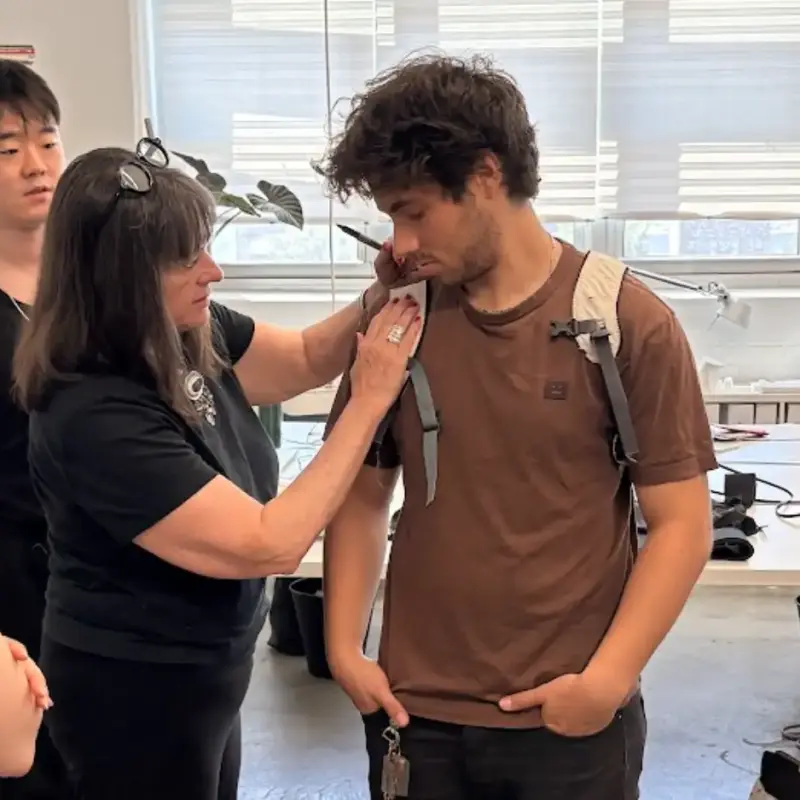
For the HeroWear Apex Exosuit, integration of digital and physical design was essential to its success. The exosuit’s primary control—a switch that allows users to engage, disengage, and fine-tune assistance—needed to be intuitive, fast, and ergonomically located. Positioned at the front of the shoulder, the switch had to work seamlessly with both the garment and the worker’s natural range of motion.
To find the best solution, our team tested prototypes in real warehouse environments. We observed how workers moved during long shifts and noted the motions they repeated most often. Prototyping showed that small changes in placement or resistance could make the difference between smooth operation and disruption. By combining digital control with physical ergonomics, we ensured the switch could be found instantly and used with minimal effort.
The result is an exosuit that feels like a natural extension of the body. Its interface doesn’t just control assistance—it builds worker confidence and trust. This focus on detail led to strong adoption in the field and earned the Apex international recognition for innovation and human-centered design.
Lens 3: Beyond the Device, Digital Communication
Digital design doesn’t end with the product in a user’s hands. At Interwoven Design, we see it as a continuum that also shapes how we communicate our work with the world. Just as a wearable’s interface must be intuitive, our digital presence has to be clear, engaging, and consistent.

Our website functions as a curated portfolio, highlighting the depth of our expertise while making it easy for visitors to explore projects and services. It’s designed to mirror the clarity and precision we bring to product interfaces, giving prospective clients a seamless introduction to who we are and what we do.
On Instagram, we open up the process. It’s a space for storytelling—where sketches, prototypes, and behind-the-scenes glimpses reveal the culture of design thinking that drives our work. The platform lets us share not just outcomes, but the human side of making: experimentation, iteration, and discovery.
LinkedIn acts as our professional hub. It’s where we contribute to industry dialogue, share insights, and connect with collaborators who care about the future of wearable technology and soft goods. Thought leadership here reinforces our position at the intersection of design, technology, and human use.
The consistency across these channels—product interfaces, website, social platforms—creates a unified experience. For us, credibility comes not just from what we design, but from how we communicate it. Whether someone interacts with an Interwoven wearable or with our digital footprint, the same principles apply: clarity, trust, and human connection.
Connecting People, Products, and Platforms
At Interwoven, we don’t see digital design as a separate discipline—it’s part of the fabric of every project. From the way a button responds to touch, to how an app conveys reassurance, to how we share our work online, digital is threaded through the entire design process. It’s both a tool for exploration and a tangible outcome that defines user experience.
Our strength lies in this integration. By blending expertise in soft goods with fluency in digital, we design systems where textiles, hardware, and interfaces feel inseparable. Each of them reinforces the other to create products that are not only functional, but intuitive and human.
Ultimately, digital design is what makes wearables understandable, usable, and trusted. It turns complexity into clarity and ensures that technology feels like a natural extension of the body and daily life.
For clients and partners, we offer more than product creation—we design ecosystems. From textile to interface to communication, we build solutions that connect people, products, and platforms with confidence and care. If you’re looking to bring a wearable or soft goods concept to life, we’d love to collaborate. Interwoven Design is a design consultancy that is positioned at the intersection of soft goods and wearable technology, creating products that function with the body and offer comfort as well as the superb performance that arises through the innovative incorporation of rigid, often electronic and responsive elements.
Sign up for our newsletter and follow us on Instagram and LinkedIn for design news, multi-media recommendations, and to learn more about product design and development.