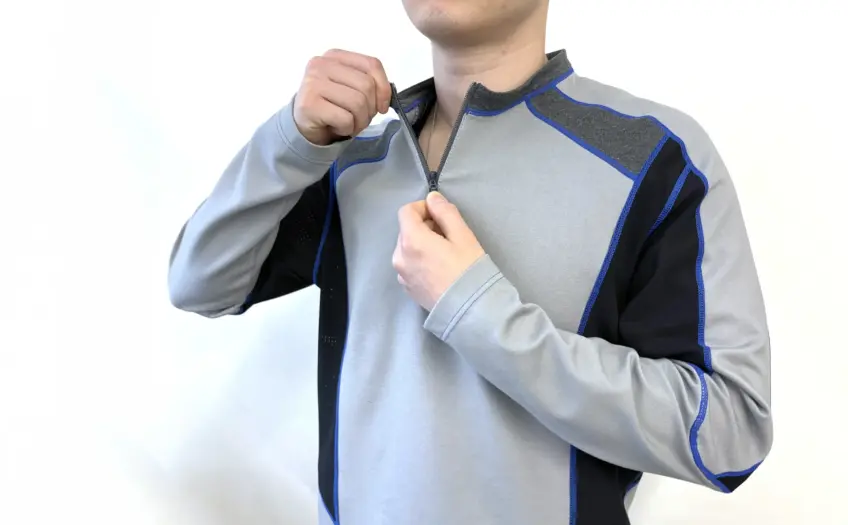
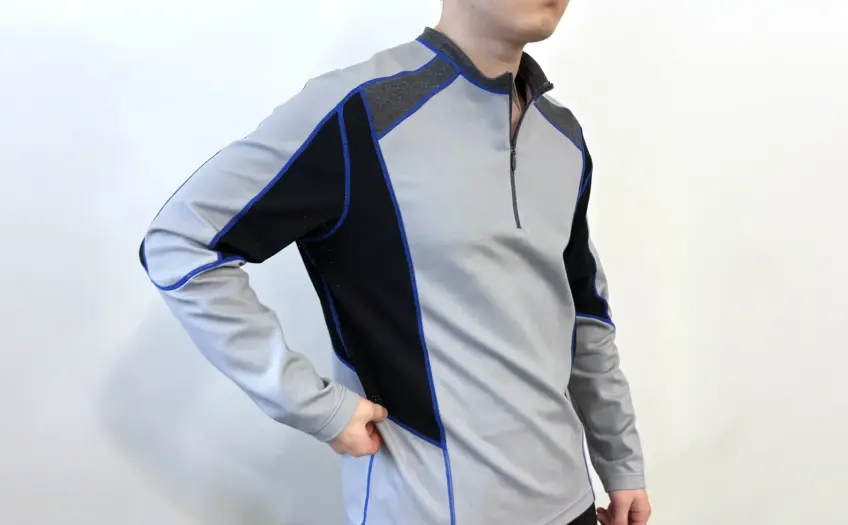
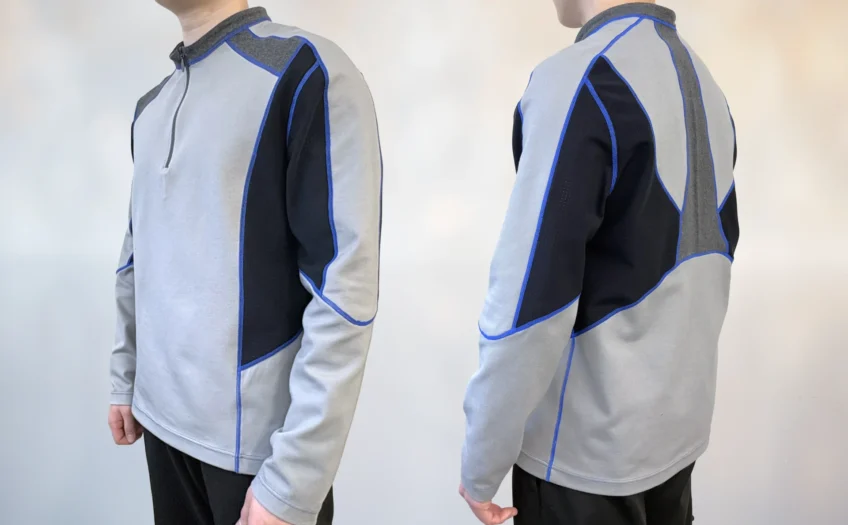
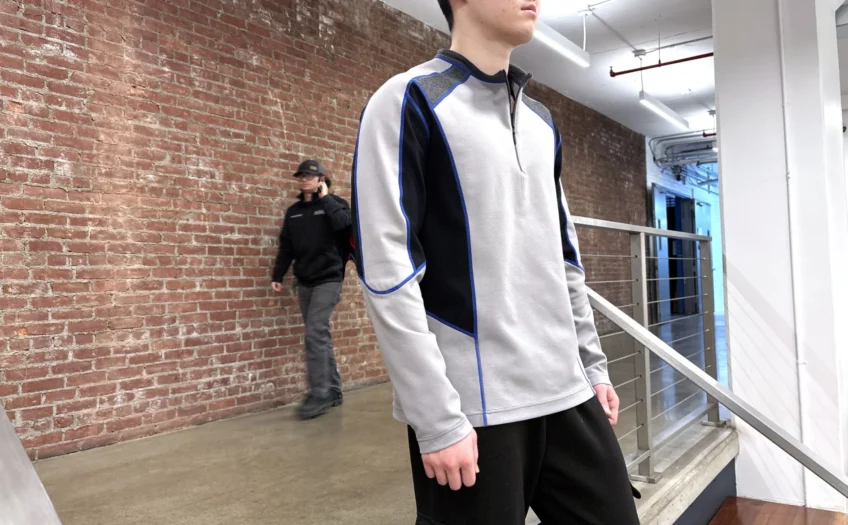
The Listen System Concept Garment explores how advanced textile engineering can discreetly integrate audio-enabled smart technology into a wearable garment without compromising comfort, movement, or visual clarity. Developed as part of the SMART ePANTS initiative, the concept translates research in conductive textiles, fiber systems, and apparel construction into a functional upper-body prototype that demonstrates how sensing technology can exist within a familiar apparel format. The final concept focuses on a performance-inspired knit silhouette in which technology is embedded primarily within the center back panel, allowing the garment to remain visually clean while showcasing how smart systems can be concealed inside engineered textile structures.

Smart ePants – Listen System Smart Garment Concept
What we did
- Concept Development
- Sourcing
- Materials Research
- Technical Design
- Prototype Development
- Seam Construction
- Electronics Integration
Clients / Collaborators
Technology Explained
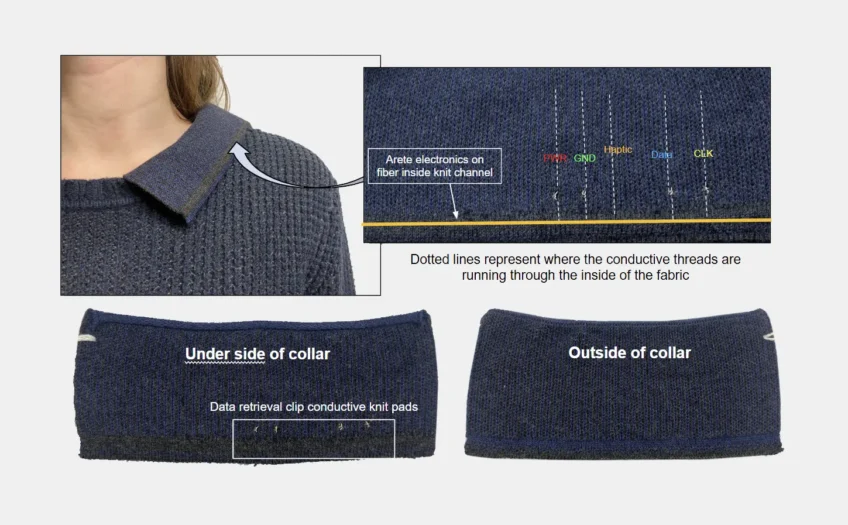
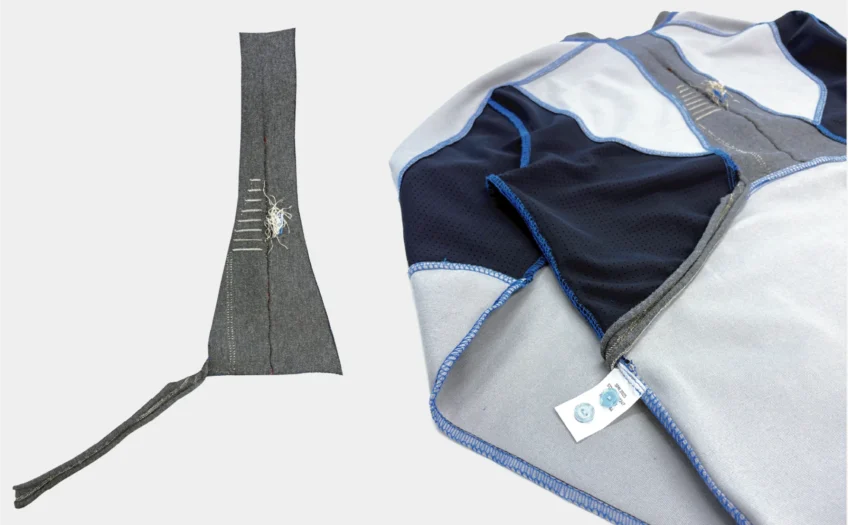
The garment uses a custom knit architecture designed to receive embedded electronic components through a concealed channel integrated into the center back panel. Conductive traces are incorporated within the knit structure to route signals while protecting the electronics from direct exposure. Following technical discussions with MIT Lincoln Laboratory, the front system placements were removed in favor of concentrating the active listen technology exclusively in the back panel, where a longer internal channel accommodates the electronic board while preserving flexibility across the upper body. Additional conductive pathways extend toward the side seam to support indicator-button connectivity without disrupting garment wearability. This strategy allows the technology to remain functional yet visually integrated into the textile itself.

Design Direction
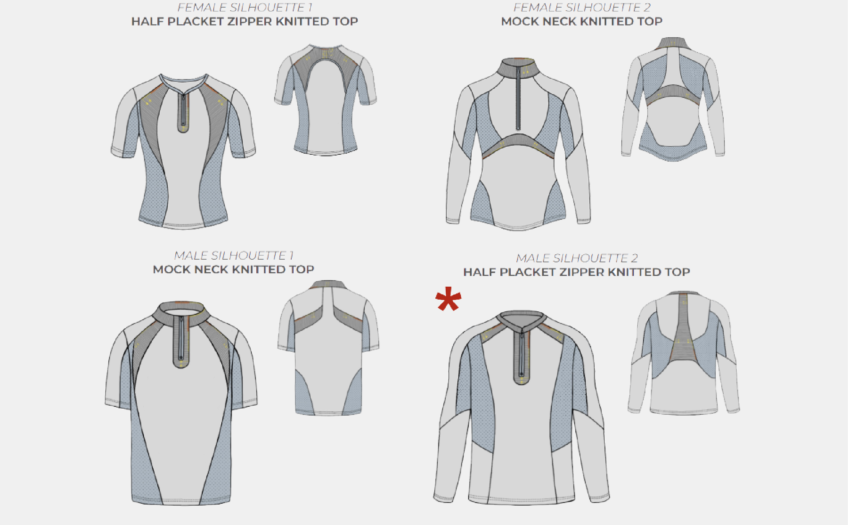
The design direction draws from high-end technical sportswear and futuristic performance garments, using paneling as both a visual and functional language. A cool neutral palette of light gray, slate, and deep blue was selected to reinforce the technical identity of the garment while allowing knit-engineered sections to remain legible without appearing overly decorative. Contrasting panel shapes define zones of movement, stability, and technological placement, while the center back panel becomes the focal point for hidden innovation. Rather than exposing electronics, the concept intentionally uses engineered textile patterning and dummy conductive traces to camouflage technical activity, creating a garment that reads as refined performance apparel first and advanced technology second. This balance between discretion and innovation was central to the concept direction.
Technical Development
Technical development focused on translating laboratory-scale textile innovation into a garment construction method that could support real wear conditions while maintaining reliable system placement. The concept garment required custom knit components engineered to accept conductive pathways, internal channels, and concealed electronic placement without distorting garment balance or limiting body movement. Early development explored multiple placement options across the collar, chest, and placket, but team testing ultimately concentrated the active listen system within the center back panel, where the knit structure could better accommodate the required board length and routing requirements.
The center back knit panel was dimensioned specifically to create an internal insertion channel for the electronic board, while conductive traces were integrated into the knit layout to guide signal transfer through the garment. Additional non-active conductive traces were introduced as visual camouflage, allowing the technical pathways to read as part of the textile design rather than exposed circuitry. Routing for the indicator button extended from the back panel toward the side seam, using the garment’s internal construction to protect connections and maintain a clean exterior finish.
Pattern Development & Fabrication
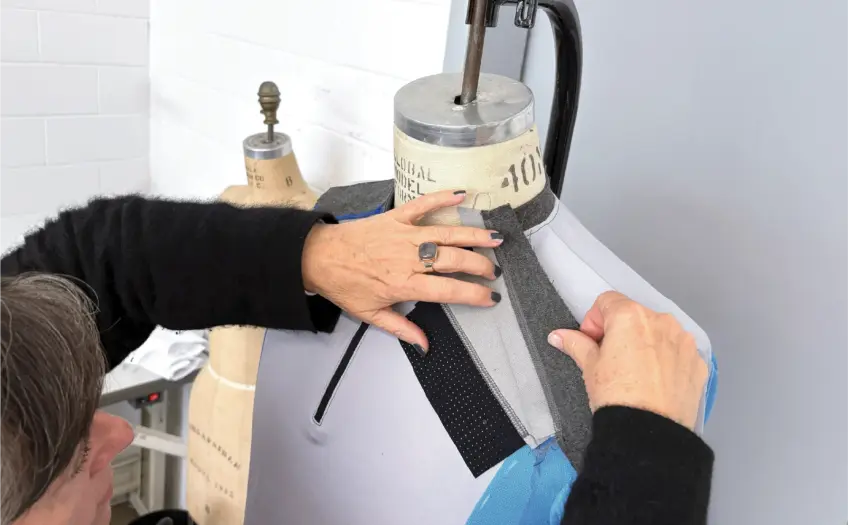
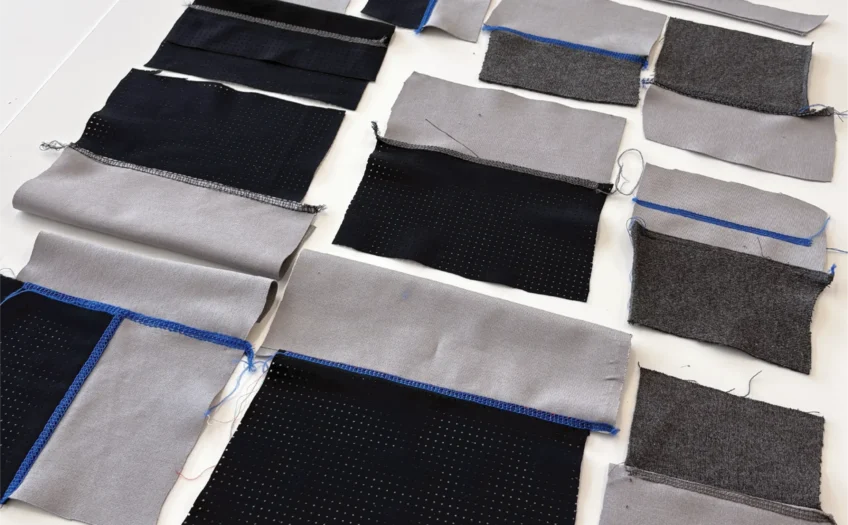
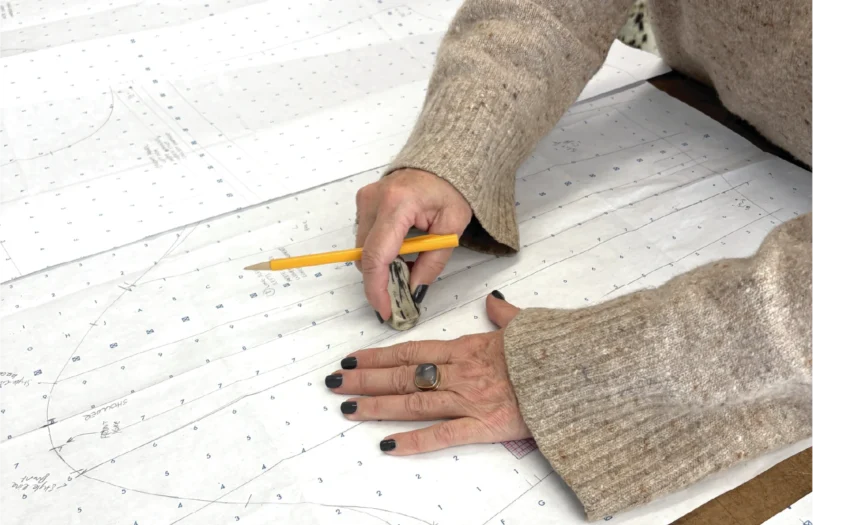
Pattern development focused on creating seam pathways that could support knit-to-fabric transitions while protecting embedded systems during wear and assembly. Custom knit components required precise dimensional coordination so they could be inserted into a cut-and-sew garment without distortion. Special attention was given to seam construction methods, comparing flatlock and clean-finish techniques to determine which best reduced bulk while preserving interior routing space for conductive elements. The final fabrication approach considered seam allowances as functional channels, allowing conductive paths and board placement to remain secured inside the garment structure. This method ensured that technology integration became part of the garment architecture rather than an added layer applied after construction.