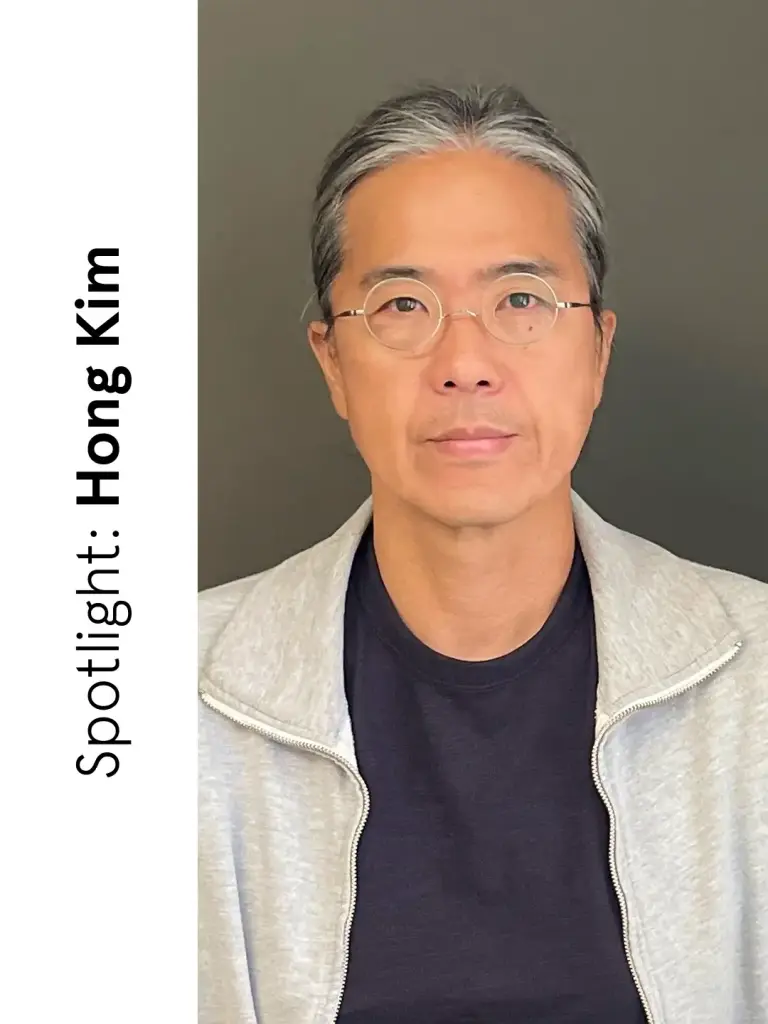
A Q&A with Hong Kim, Designer of Frame Runners for the 2028 Paralympics
Spotlight articles shine a light on designers, engineers and researchers we admire, asking leaders in the field about their work and their creative journey. This month, our theme is Inclusivity in Design, and we are looking at how products, systems and experiences can expand who gets to participate, and on whose terms.
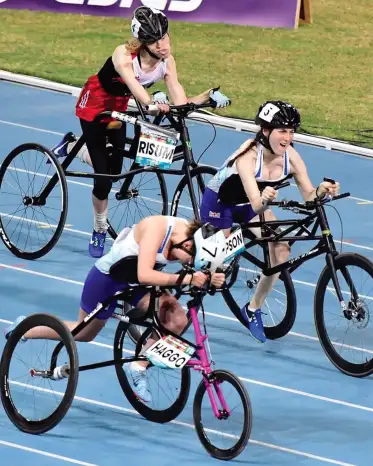
Frame Running will make its Paralympic debut as a medal event at the 2028 Los Angeles Games, marking a major milestone for a sport that has transformed access to running for people with cerebral palsy. Originally developed in Denmark in 1991 as “RaceRunning,” the three-wheeled running frame quickly spread throughout Northern Europe through CPISRA. In 2019, World Para Athletics officially recognized it as a track discipline, assigning sport classes T71 and T72 and later renaming it Frame Running. In 2023, the rehabilitation organization Good Playground introduced the sport to South Korea by designing and distributing domestically produced running frames, helping train a new generation of athletes for the road to LA.
To explore this space, we spoke with Hong Kim, a New York based multidisciplinary designer and 3D specialist who now leads Frame Runner development for Good Playground. Drawing on years of serious cycling, architectural visualization and medical simulation, Hong approaches the Frame Runner not as a medical aid but as a high performance sports machine and a tool for freedom, dignity and joy.
In this conversation, we discuss engineering for extreme forces, the realities of co-designing with athletes and clinicians, and how elite sports can reshape everyday mobility design for children and seniors.
Q:
Can you tell us a little about your journey and how you came to work with the Korean Paralympic team for the 2028 Games?
A:
I am a New York based multidisciplinary designer and 3D specialist. After graduating from Parsons with an MFA, I worked across many different fields, including medical simulation, LEGO game development, 3D fabrication and architectural lighting simulation.
Outside of work, I have been a long time rider and leader with the New York Cycling Club. That experience gave me a very deep, hands-on understanding of how bicycles work, including mechanics, geometry and engineering across different riding styles.
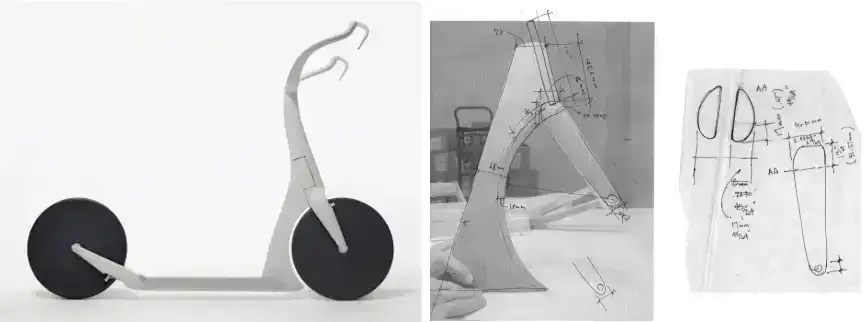
Those two tracks came together in RH1, a carbon scooter concept I developed with an architect colleague. We approached it with total production rigor, and the combination of high-fidelity visualization and 3D-printed prototypes proved that engineering-backed design can bridge the gap between concept and reality.
Eventually, all of this connected. My diverse design background, together with my cycling knowledge, matched what Good Playground needed. That is how I became the design and project lead for a custom Frame Runner program ahead of the 2028 Paralympics, working for a broader international market rather than the Korean team alone.
Q:
A competition mobility device becomes an extension of the athlete’s body. How does that shape your approach to design?
A:
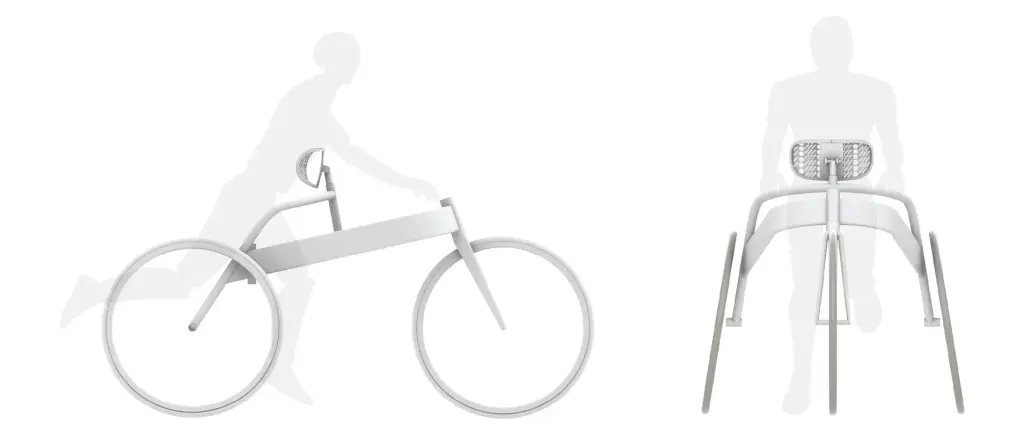
There’s not much existing reference for this kind of device, so a lot of what I do, I have to invent. My starting point is always stability. That’s why I lean on triangular structures, they give the most confidence for a rider to actually push their physical limits. If they don’t feel safe, they won’t try.
From there, I bring in aerodynamics and performance, but always on top of that stable base. I don’t design it as medical equipment. I’m designing a sports machine, something an athlete is proud to use, visually and emotionally.
Q:
Every athlete moves differently. What are the biggest biomechanical differences you consider when designing a Frame Runner?
A:
Sizing, small, medium, large, is just the starting point. The real complexity is in how each athlete transfers energy into the machine. Some push almost entirely through the chest support; others generate strong lateral force through rapid arm strokes. I was genuinely surprised watching some athletes push hard enough that the metal connection between the frame and body actually tore.
So the real challenge isn’t just making parts adjustable, it’s making sure every joint and connection point where force concentrates can survive that load, so 100% of the athlete’s effort transfers directly into forward motion instead of getting lost in flex or wobble.

Q:
Can you share a moment when working with an athlete completely changed the way you thought about design?
A:
Watching that chest support tear under real force was one. Another was an athlete whose leg kept rubbing against the frame during training, something no CAD model would ever show you. Those issues only appear when a real person, with a specific body and movement pattern, uses the device.
Working with a company founded by a physician was critical here, I had direct access to feedback from doctors and physical therapists, and could translate that immediately into structural changes. It taught me that this work isn’t about a beautiful static rendering. It’s about managing force, friction and human limits in their most extreme form, and that’s genuinely humbling.
Q:
How much of a competition Frame Runner is customized for each athlete, and what stays standardized?
A:
We use a hybrid model, custom frame geometry combined with standardized bicycle components. The main frame is tailored to the athlete’s height and proportions, built around small, medium and large, with extra-small or extra-large available when needed.
For everything else, we rely on off-the-shelf bike parts wherever possible, handlebars, stems, saddles, seatposts, and wheels in 650c or 700c sizes, along with specific wheel-tilt angles for stability. That keeps things serviceable using familiar bicycle infrastructure, rather than requiring a lab or factory every time something needs adjusting.

Q:
How would you describe Good Playground‘s overall design philosophy for the Frame Runner program?
A:
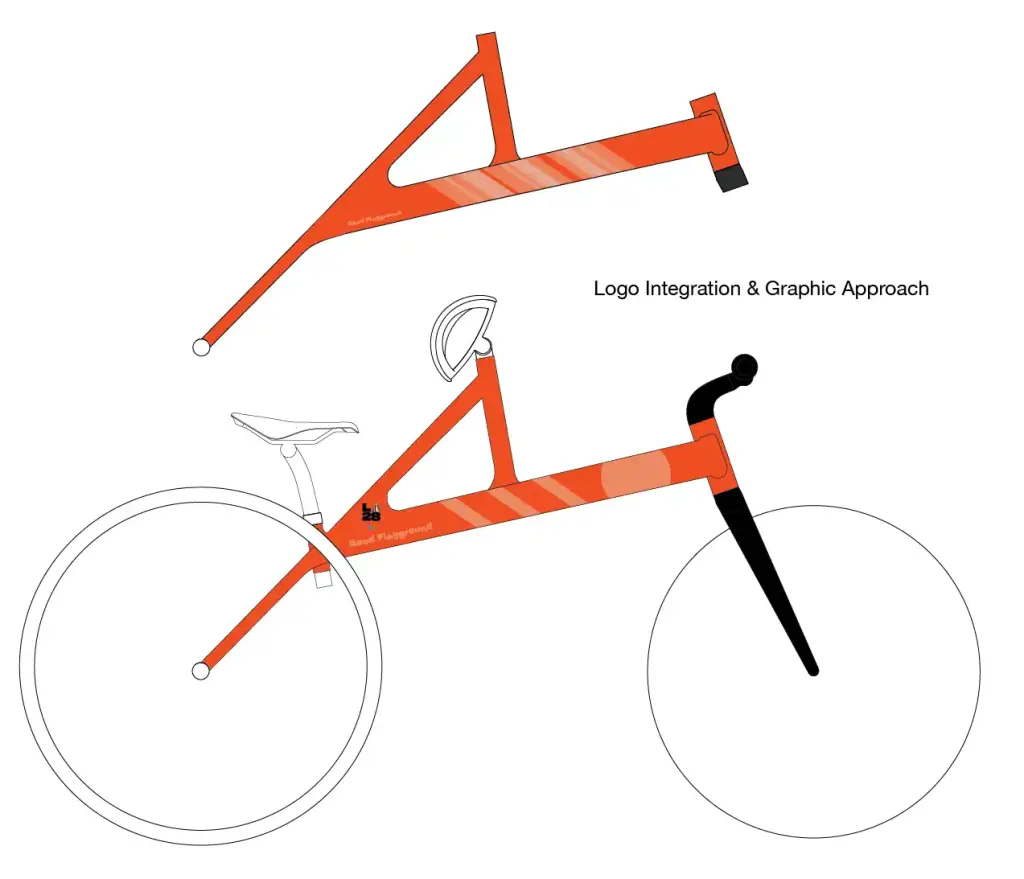
It comes down to two things: engineering simplicity and total visual branding. On the engineering side, we’re minimizing part counts and optimizing structure for real manufacturing, true 3D engineering grounded in structural reality, not surface styling. On the design side, we’re building one unified visual language across every touchpoint, frame geometry, uniforms, footwear, helmets…so the whole program reads as a single high-performance sports identity, even within a tight budget.
Before scaling up, we field-tested 100 first-generation stainless steel units with young athletes, so these decisions came from real feedback, not assumptions.
Q:
Has designing competition mobility devices changed the way you think about products for everyone, not just athletes?
A:
Definitely. My long-term interest is everyday life, seniors, children, anyone who needs mobility support. I want to shift medical devices away from a cold, clinical aesthetic into something closer to lifestyle or sports gear. The emotional experience matters as much as the mechanical one.
Looking ahead, I hope to initiate projects like a “My First Wheelchair” concept, a lightweight indoor wheelchair designed for young children encountering mobility devices for the first time. My goal is for it to feel more like playing with building blocks than sitting in hospital furniture. If a child feels curious and proud instead of sick, that changes everything. High-performance sports projects serve as our testing laboratory, and what we learn there will eventually shape warmer, more inclusive everyday products.
Q:
You’re also an avid cyclist. How has that shaped the way you think about design, ergonomics and performance?
A:
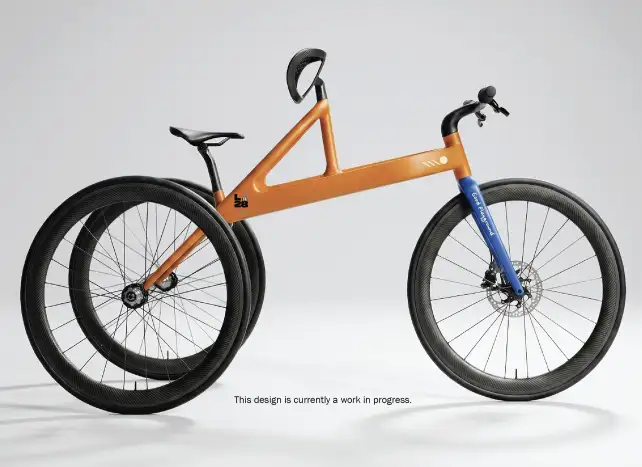
If I weren’t a cyclist, I don’t think I could design this product well. Personal experience is everything with rideable devices, no matter how beautiful something looks, nobody uses it if it’s uncomfortable. I ride many different machines, folding bikes, gravel bikes, road bikes, mountain bikes, and a Frame Runner is just another member of that family to me.
Cycling also taught me how small changes matter: a two-millimeter adjustment can completely change how your body feels after hours of riding. That’s shaped how I think about ergonomics as something dynamic, not fixed, early in a season, athletes need a more upright, comfortable position; as they train, they naturally settle into a lower, more aerodynamic one. The equipment has to be able to follow that evolution. I call it biogeometry, designing for how the body and machine change together over time, not for one static moment.
Q:
Looking ahead, what do you think is the next big opportunity in mobility design, and what advice would you give designers who want to work in this space?
A:
The biggest opportunity is shifting focus from transportation to quality of life. People with physical limitations don’t want gear that makes them look fragile in public, there’s a huge, underdeveloped space for mobility tools people are genuinely proud to use, closer to personal style than medical equipment. Mobility design isn’t just about mechanical speed, it’s about designing freedom, dignity and identity. Any product that raises someone’s daily quality of life while breaking that stigma has the potential to lead this field.
My advice to other designers: don’t overthink it, and don’t be afraid to start. You don’t need to be an expert in everything, let doctors handle medicine, engineers handle calculations, fabricators handle the builds. Your strongest tools are your ideas and your curiosity. Stay genuinely interested in how people actually move and live, and the technical problems become challenges you want to solve, not obstacles.
–
Our conversation with Hong left us with a clear takeaway: inclusive design isn’t about compensating for limitation, it’s about engineering trust. What stayed with us most was where he wants to take this next, beyond elite sport, toward everyday mobility devices that give children and seniors the same freedom and pride he’s building for Paralympic athletes.
At Interwoven Design Group, collaborations like this are a huge part of what makes our work so meaningful. Many of the projects we work on exist at the intersection of design, engineering, material science, healthcare, and emerging technology. Working alongside experts like Candace not only pushes the work further technically, but also expands how we think about problem solving, comfort, usability, and the future of wearable systems. It’s this cross-disciplinary exchange that continues to make the field of smart textiles such an exciting space to work in.
Check out the rest of our Spotlight series to hear more from leaders in the design industry. Sign up for our newsletter and follow us on Instagram and LinkedIn for design news, multi-media recommendations, and to learn more about product design and development!