A Q&A with Functional Prototypes Expert Jacob Turetsky

A Q&A with Functional Prototypes Expert Jacob Turetsky

Photo courtesy of Jacob Turetsky.

This month’s Spotlight focuses on Functional Prototypes, the working, testing, problem-revealing models that turn ideas into something you can actually use. Functional prototypes rarely look polished. In fact, they often look wrong. But for Jacob Turetsky, that’s exactly the point. In this Spotlight interview, Jacob reflects on why functional prototypes matter, how they shape better products, and why failure when designed intentionally can be the most valuable outcome of all. In this conversation, he shares his process, his philosophy, and why functional prototypes are the backbone of meaningful product development.

Q:

Can you describe a moment when functional prototypes failed so clearly that it completely changed the direction of a project?

A:

While working at a large ergonomics-focused product company, we were developing a stacking chair that included a subtle amount of active recline. The idea was to rely on the frame of the chair itself to create that movement, without adding a complex mechanism.

I quickly built a prototype using CNC plywood panels to mimic a kind of spring action happening in the lower corner of the chair leg. Structurally, it made sense. But no matter what we did, every time someone leaned back, it would pull their shirt out of their pants if it was tucked in.

It turns out that recline needs to happen as close as possible to the human hip, which is difficult because that’s exactly where your body is already sitting. Our pivot point was dramatically far from where it needed to be. Even though it worked from a construction standpoint, it completely failed ergonomically.

That prototype forced us to abandon the idea of relying solely on the frame. We moved to more complicated mechanisms that brought the action closer to the body. We built another prototype that had a cluster of potential pivot points in the right region, full of holes and adjustable pins. We could move things a quarter inch at a time and test them with people.

It didn’t look like a finished product at all. It was messy and riddled with holes. But only after that process could we move forward and actually design the chair.

Q:

For readers who may not be familiar with the term, how do you define a functional prototype? What separates it from a model or visual mockup?

A:

To me, a functional prototype is about answering the riskiest questions as early as possible—when those questions are still cheap and easy to fix.

Every design has assumptions. A functional prototype lets you isolate those assumptions and test them before you layer on additional detail. It’s not about surface or appearance yet.

You’re looking at how components relate to each other, how the user interacts with the system, and whether the overall architecture works. Drawings and visual models can only take you so far. When you need to know how something actually feels, moves, or behaves, you have to build it.

Q:

Why are functional prototypes so critical, especially in hardware, wearables, and integrated systems?

A:

Design is hard. And the design process really demands that we get answers to the riskiest questions early.

Functional prototypes allow you to test assumptions when it’s still okay to pivot—when changes don’t feel like mistakes or failures. You’re able to ask, “What are we testing right now?” and “How many versions should we build?” before committing to anything expensive or overly refined.

That’s what functional prototyping is about for me. It’s figuring out how things relate—between components, between the product and the user—before worrying about how it looks.

Q:

What makes functional prototypes successful?

A:

The most important question is whether it gave you the answer you needed.

A successful functional prototype is very well scoped. If something isn’t being tested, it should be over-engineered so it doesn’t interfere with the result. You don’t want flex or instability in one area creating a “mushy” feeling somewhere else and confusing the outcome.

I actually think one of the most boring outcomes is when a prototype works exactly as expected and doesn’t reveal anything new. A good prototype should teach you something—ideally something unexpected.

Q:

You’ve worked across design engineering, product development, and hands-on prototyping. What first drew you toward making things work in the real world?

A:

It’s hard for me to point to one specific moment. It really feels like a chain of experiences mixed with some luck.

I grew up building things and tinkering. Early on, I wanted to be a car designer, which led me to industrial design and then to furniture. I had a furniture internship that went badly—I had a severe allergic reaction to exotic wood and realized I didn’t want to be milling cabinets every day.

At the same time, I was working on a medical design project at Pratt, and that completely shifted my perspective. I loved the process of taking an idea, pinning it up, building on someone else’s thinking, and then making something that actually assembled and functioned.

Suddenly, we were creating things that had never existed before. That was far more interesting to me than just building objects. I still build things with my hands, but now it’s more of a hobby. What really captured me was thinking through how mechanisms work and why one approach works better than another.

Q:

Looking back, what experience most shaped your approach to prototyping?

A:

Early on, I learned that designing a prototype is often separate from designing the final product.

Sometimes you need a prototype that’s adjustable. You need to test different lengths, pivot points, or ranges of motion. In environments where the work is mission-critical and function-first, prototyping becomes central to the design process because you can only learn so much from drawings or static models.

I remember working on a mobility device where everyone had different ideas about wheel placement and handlebar positions. We built a single, highly adjustable prototype using basic extrusions so we could test all of those ideas in one model.

That experience reinforced something I still believe strongly: functional prototypes don’t need to be beautiful, but they do need to be neat, intentional, and well thought through. In many ways, a functional prototype is its own design.

Q:

When starting a project, how do you go from an idea to a working prototype?

A:

I really trust the design process. I usually start by defining what I call the architecture of the product. That means stepping back from materials and finishes and asking more fundamental questions.

Is it vertical or horizontal? How do the components relate to each other and to the user? I try to answer the biggest questions first and then work inward, narrowing the scope as I go.

I’ve learned that trusting this process is far more reliable than waiting for a single stroke of genius. It’s also much more valuable to clients because it creates clarity early on.

Q:

You often work in environments where time is short and the stakes are high. How do you decide what “level of fidelity” is right for each stage of prototyping?

A:

A lot of it comes down to education. Some clients see a prototype that doesn’t work as a failure, so part of the job is framing prototyping as learning.

I always imagine being in the room when the prototype doesn’t work. If I’d feel embarrassed, then it’s too expensive or too high-fidelity for that stage. At that point, I’d rather rewind a week and build two cheaper versions.

Q:

How do you avoid perfecting things too early—or too late?

A:

It’s about knowing where you are in the process and what questions you’re supposed to be answering at that moment.

If your first prototype is machined out of aluminum, you’re in trouble. If it lights up and moves and does everything at once, you’ve gone too far. Early prototypes should be cheap, fast, and iterative.

Letting time, materials, and scope set boundaries is important. Those constraints help you avoid over-investing before you’ve learned what you need to learn.

Q:

You’ve collaborated with designers, engineers, and researchers. What makes a cross-disciplinary team successful when you’re building prototypes under real-world constraints?

A:

On cross-disciplinary teams, I often act as the hub. It’s important to let subject-matter experts focus on what they do best, but designers also need to advocate for the user.

You don’t need to become an expert in everything, but you do need to learn enough of each discipline’s language to collaborate effectively. Ultimately, the designer’s role is to fight for the human experience and make sure the system works for the person using it.

Q:

Looking ahead, what skills or mindsets will the next generation of prototypers need most?

A:

With tools like 3D printing, it’s very easy to add detail too early. You have to learn when to stop.

Print it. Test it. Move on. Don’t keep refining something in CAD just because you can. Earlier in my career, tools naturally limited how far you could go. Now you have to create those limits yourself.

Functional prototyping is about answering questions quickly—about getting things to work or not work as fast as possible. That mindset is more important than any single tool.

Check out the rest of our Spotlight series to hear more from leaders in the design industry. Sign up for our newsletter and follow us on Instagram and LinkedIn for design news, multi-media recommendations, and to learn more about product design and development!

Please reach out!

A Q&A with Technical Designer Ryu Tomita

A Q&A with Technical Designer Ryu Tomita

Photo courtesy of Ryu Tomita.

This month’s Spotlight turns to Technical Design — the quiet, intricate work that transforms ideas into products that actually perform. We sat down with Ryu Tomita, a former member of the Interwoven team and one of the most precise technical designers we’ve had the pleasure of working with.

Ryu’s career bridges industrial design, soft goods, wearables, and fashion, his strength lies in the details: how materials behave, how components integrate, and how thoughtful engineering elevates user experience. In this conversation, he reflects on his path, his process, and the craft behind technical design.

Q:

You’ve had a really dynamic career, spanning fashion, industrial design, soft goods, and wearables. What originally drew you into design, and what keeps you excited about it now?

A:

I’ve always just loved making things—assembling pieces, figuring out how they fit together, and then seeing something take shape from nothing. That’s really the common denominator across all those fields. You start with an idea you can’t fully see yet, and through the process you discover what it becomes. That moment when everything comes together is incredibly satisfying. That’s what pulled me into design in the first place, and it’s still what keeps me excited about the work today.

Q:

When you think back on your time at Interwoven—it’s been about four years now, which is wild—what are the projects or moments that really shaped you? What have you carried into your current career?

A:

Definitely HeroWear and working on the Apex. I had no idea what to expect because we were designing a product none of us had ever seen before, and we had almost no information in the beginning about what it should ultimately be. We had to research everything: going into warehouses, understanding what the end users were doing, what they needed, and how a solution might actually support them.

From there it was really just creating something step by step, little by little, and trusting the process—that if we kept working, we’d eventually land on the right product. Embracing that unknown, and not being afraid of it, was a huge learning experience for me.

Ryu’s time at Interwoven taught him to design through ambiguity — a skill that continues to shape how he approaches complex technical challenges today.

Q:

Do you still approach your work the same way today—observing the user, embracing the unknown, and figuring things out step-by-step?

A:

I don’t have as many opportunities now to do direct user observation, but yes—the mindset is still the same. Embracing the unknown and taking things one step at a time was such a valuable lesson, and it’s something I still rely on in my work today.

Q:

What’s one thing people often misunderstand about the work of a technical designer?

A:

People sometimes get caught up in the tiny details and forget that technical designers always have to hold the big picture. You have to step back and think about how everything will come together and what the overall goal is—not just where a piece of Velcro lands. Remembering that bigger vision is really important.

Q:

How would you define technical design for someone outside our industry? People don’t always understand how valuable it is or how it differs from concept design or styling.

A:

Honestly, it’s hard to define because so much of it happens in your head. But for me,

Q:

Why do you think technical design matters, especially in categories like wearables, medical devices, and soft goods?

A:

Everyday items require a lot of thought because people use them constantly. Even something simple—like a belt or a holster—needs a slight curve so it hugs the hips instead of sitting straight. Those small decisions make a big difference when something is worn daily. Technical design is what makes those details functional and comfortable in real life.

Q:

You’re known for being incredibly detail-oriented—something I always appreciated in your work ethic. How does that mindset translate into the work you do now compared to more conceptual work?

A:

Believe it or not, I’m not as detail-oriented as I used to be. Things move so fast here that I’ve had to learn to let go of some of the minutiae. But I still think details are incredibly important. In tailoring, for example—where the hem goes, how the fusible is shaped inside a sleeve—those choices really affect how the final garment looks and performs. Even when the big picture matters more, the details still play a role in shaping the outcome.

Q:

Do you have an example—without breaking any NDAs—of a project where the details really drove the success of the design, or where you had to let go of details?

A:

I do, actually. I’m looking at the sample right now. We were working on a pleated dress, and the director wanted it to fit closely around the hips. With individually pleated pieces, it’s much easier to sew everything straight. But if you add a small dart to each pleat, the dress hugs the body much better. It was more work for the seamstresses and definitely more tedious, but it made a noticeable difference in the final result.

Q:

When you start a new project with big technical unknowns, where do you begin? And how is that process different from the product-focused work you did at Interwoven?

A:

Fundamentally, it’s the same. You lay out all the pieces, look at the sketch, and try to understand the big picture first—how the shape forms, where you need more volume, how things come together. Then you work through the smaller issues as you see the prototype.

The difference now is scale. In fashion, I’m working on collections with 120–140 styles, split between two people, instead of a single deep-dive product. But the mindset is the same: start broad, then solve the details.

Q:

What kinds of fabrics or garment types do you prefer working with?

A:

Wovens. I’ve learned to appreciate them more. Knits can be easier because there’s less room for error, but I work with both.

Q:

Tell me about your iterative process. How do you move from prototype to final sample?

A:

We usually make an initial prototype in a comparable fabric—we almost never use muslin. We fit it, review it, and make adjustments. If there’s a major design change, we start over. If not, we refine it and then move into a final salesman sample.

Q:

How much of the pattern work do you handle, and how long does a garment take?

A:

I draft from start to finish. A simple dress with four or five panels might take two and a half to three hours. A jacket could take three-quarters of a day to a full day. It really depends on the style.

Understanding the hidden architecture of a product — whether a wearable or a tailored jacket — is where technical design becomes almost invisible, yet absolutely essential.

Q:

Most people don’t realize how much inner structure goes into a tailored garment. Can you walk us through that?

A:

I didn’t realize it either until I opened up a men’s jacket. There’s a lot inside: canvas, padded chest pieces, Heimo, shoulder pads to hold the shape, sleeve structuring, and fusible layers that add support.

The heaviest structure is on the upper body—chest and shoulders. Fusible can run through the whole front and usually across the back shoulder blade. Anywhere there’s a turned hem, you’ll often find fusible to hold the shape.

Q:

Is that construction similar between men’s and women’s garments?

A:

The sewing is similar, but the fit is completely different because of physiological differences—especially the bust. You have to alter patterns significantly to account for that.

Q:

Can you give an example of a small technical detail that makes a big impact?

A:

A two-piece sleeve. People don’t notice it, but it feels so much more natural because the sleeve can actually follow the bend of your arm. A one-piece sleeve is basically a tube—it doesn’t guide the arm forward in the same way.

Q:

What’s next for you? What are you exploring personally right now?

A:

I’ve been experimenting with denim washes at home—doing potassium permanganate treatments on my patio, which is probably dangerous but fun. There’s so much science behind wash techniques that I never knew. I’m not inventing a new wash, but I’m trying to create my own personality in how the denim wears and ages.

Q:

What advice would you give to young designers starting out in technical design?

A:

I’d say it’s important to keep one eye on the bigger picture while you’re deep in the details. You have to be able to zoom out and look at the whole garment or product, then zoom back in to solve the small problems. It took me a while to learn that balance, but having both perspectives is essential.

Q:

Last question: if you had to start all over again, would you still choose to be a designer?

A:

Yes, absolutely.

Check out the rest of our Spotlight series to hear more from leaders in the design industry. Sign up for our newsletter and follow us on Instagram and LinkedIn for design news, multi-media recommendations, and to learn more about product design and development!

Please reach out!

Soft Goods, Smart Care: Designing the Next Generation of Medical Wearables

Soft Goods, Smart Care: Designing the Next Generation of Medical Wearables

The Stakes of Medical Design

Designing for the medical field is unlike designing for any other industry. Here, the stakes are measured not just in performance or user satisfaction, but in people’s health, safety, and wellbeing. A device that fails to deliver comfort or reliability isn’t just inconvenient, it can directly affect quality of life or clinical outcomes. Medical design demands a balance of precision, empathy, and usability.

Soft Goods Designers and Engineers

At Interwoven Design, we specialize in working at this intersection. Our team combines expertise in soft goods and hard goods, bringing together textiles, mechanics, and electronics into products that are as wearable as they are functional. From early research to final prototyping, our focus is on creating medical wearables that fit seamlessly into people’s lives—solutions that are technically robust, clinically sound, and human-centered by design. In this Insight article we will outline the unique considerations of medical design, our approach to designing medical wearables, the challenges and opportunities inherent in this area of the design industry, and three case studies of medical wearables that showcase the value of Interwoven Design’s human-centered approach. 

Why Medical Design Is Unique

Medical design brings a set of challenges and responsibilities that set it apart from other categories of product development. Every decision, from material selection to interface design, must be made with an acute awareness of the user’s physical and emotional context, as well as strict regulatory and clinical requirements.

Regulatory Context
Medical devices are subject to rigorous approval processes, with agencies such as the FDA or EMA requiring extensive validation and documentation. This means that every design decision must be defensible, testable, and aligned with compliance standards, not only to achieve certification but also to ensure long-term patient safety.

Emotional Context
Unlike consumer wearables, medical products often enter a user’s life during moments of stress, vulnerability, or recovery. Designers must anticipate not just the functional needs of patients and clinicians but also the emotional impact of the device. A poorly considered interface or material can heighten anxiety, while thoughtful design can build confidence and trust.

Usability Context

Reading Braille on a medication carton.

For a medical device to be effective, it must be intuitive to use, not just for patients but also for clinicians, caregivers, and sometimes even first responders. Accessibility, clarity, and ergonomics are not “nice to haves” but essential design principles. This often means extensive rounds of testing and iteration to make sure that products can be used correctly and consistently, even in high-pressure situations.

Together, these contexts shape a design discipline that is both technically demanding and deeply human. It’s this balance of rigor and empathy that drives successful medical innovation.

Designing for the Body and for Care

At Interwoven Design, we see medical wearables as more than devices, they are extensions of the body and tools for care. Designing them requires an iterative, human-centered approach that prioritizes the user at every stage. Prototyping is central to this process. Early models are tested not just in the studio but in real-world conditions, allowing us to observe how products perform during daily routines, clinical use, or extended wear. This cycle of making, testing, and refining ensures that each design evolves in direct response to user needs and feedback.

Industrial Designers Working on Knee Brace

Ergonomics, hygiene, and comfort are treated as non-negotiables. Materials must withstand the realities of long-term use, remaining breathable, easy to clean, and gentle against the skin. Attention to these details transforms functional devices into trusted companions for the people who rely on them. Every strap, sleeve, or modular component is designed to accommodate movement, protect sensitive areas, and support extended wear without fatigue or discomfort.

Collaboration drives the process forward. We work closely with clinicians to align with medical best practices, with engineers to ensure technical performance, and with end users to guarantee that the product is intuitive and usable across contexts. By integrating insights from soft goods design, we go beyond wearable devices alone, creating patient safety garments, rehabilitation aids, and hybrid systems that bridge clinical care and consumer wellness. Our expertise allows us to design accessories, support systems, and healthcare environments that not only meet functional requirements but also enhance comfort, confidence, and dignity.

The result is a wearable or healthcare system that not only performs its intended medical function but does so in a way that feels natural, safe, and empowering for the user, extending the body, supporting care, and enabling better health outcomes.

The Challenge (and Opportunity) of Medical Wearables

Medical wearables are evolving rapidly, from rehabilitation devices to continuous monitoring systems and preventative tools. While their potential to improve health outcomes is immense, designing these products presents a unique set of challenges. Unlike conventional consumer wearables, medical devices must integrate electronics, mechanics, and textiles into a seamless system that functions reliably in clinical settings, daily life, and even high-movement scenarios.

At Interwoven Design, our specialty lies in creating soft goods that feel natural against the body while incorporating hard goods—sensors, actuators, structural supports—that deliver precise performance. Every strap, sleeve, or interface must balance technical requirements with comfort, fit, and intuitive usability. A device that performs flawlessly but feels awkward, restrictive, or irritating will quickly be abandoned by the people who need it most.

Long-term wearability adds another layer of complexity. Medical wearables often remain in contact with the skin for hours or even days, requiring careful attention to materials, pressure distribution, and ventilation. Devices must support patient mobility, prevent injury, and integrate seamlessly into clinical protocols, all while maintaining hygiene standards and durability.

These challenges, however, are also opportunities. By addressing the intersection of comfort, ergonomics, and performance, Interwoven Design can create medical wearables that are not only clinically effective but also empowering and dignified for the people who use them. Our integrated approach ensures that each product functions as an extension of the body, helping patients and clinicians alike achieve better health outcomes through thoughtful, human-centered design.

Case Studies: Medical Design in Action

Interwoven Design’s work in medical wearables and healthcare soft goods spans a wide spectrum, from patient-focused therapeutic devices to clinician-centered support tools. Each project demonstrates how thoughtful design can bridge the gap between technology, the human body, and the demanding realities of healthcare environments. Whether stabilizing a catheter for heart failure patients, creating a flexible armband for continuous glucose monitoring, or integrating back support into a utility bag for nurses, our approach remains the same: combine clinical insight with human-centered design to deliver solutions that are safe, functional, and comfortable for real-world use.

Case Study 1: Nuwellis Device for Aquapheresis Therapy

Interwoven Design partnered with TKDG and Nuwellis to design a wearable solution that improves the patient experience during Aquapheresis therapy, a treatment used to safely remove excess fluid in people with Congestive Heart Failure (CHF). For patients already navigating a fragile health condition, maintaining catheter stability is critical: dislodgement, vein compression, or accidental interference can compromise treatment and patient safety.

The Design Challenge

The goal was to create an external arm stabilization device that protects the catheter while remaining comfortable enough for extended wear. The solution needed to work across different patient anatomies and treatment contexts, from resting in bed to moving around a hospital room, without restricting mobility or adding undue burden.

Our Approach

Through research with clinicians and patients, we identified key risks such as poor arm positioning, excessive elbow bending, and unconscious interference with the catheter site. These insights guided the development of multiple wearable prototypes designed to protect access points, promote healthy blood flow, and maintain comfort. Materials like Baymedix® froth foams were chosen for their softness, breathability, and ability to reduce pressure on the skin.

Impact

Clinical feedback highlighted two standout prototypes that offered strong catheter protection while preserving freedom of movement. Follow-up testing confirmed that these designs maintained vein access and minimized risks during therapy. By combining thoughtful ergonomics with material innovation, Interwoven Design delivered a solution that reduces complications, improves patient confidence, and supports more effective treatment outcomes.

Case Study 2: Senseonics Continuous Glucose Monitor

Senseonics is advancing diabetes care with the first long-term, implantable continuous glucose monitoring (CGM) system, designed to measure glucose levels for up to 90 days compared to the five-to-seven-day lifespan of most existing systems. Interwoven Design partnered with the Senseonics team to design the external armband that houses the system’s electronic component, ensuring comfort and reliability for everyday use.

A model wears a black and black armband.

The Design Challenge

The armband needed to balance durability, security, and comfort for wearers managing diabetes around the clock. From moments of high activity to periods of rest and sleep, the device had to stay securely in place without causing discomfort or drawing unwanted attention. 

Our Approach

We developed a flexible, two-part band featuring a seamlessly knit inner layer and a reversible over-cuff. This design gave users both comfort and choice—adjusting for security, flexibility, and even color preference—while ensuring that the device remained unobtrusive during daily activities.

Impact

The resulting armband delivers a secure, user-friendly solution that integrates naturally into the wearer’s lifestyle. By prioritizing comfort and adaptability, the design supports Senseonics’ mission to make glucose monitoring easier, more accurate, and less intrusive for people living with diabetes.

Case Study 3: Whitecloud Medical Utility Bag

Whitecloud Medical set out to solve two everyday challenges faced by nurses and medical technicians: back strain from strenuous lifting and the need to carry essential supplies throughout long shifts. Interwoven Design partnered with Whitecloud to design and prototype a first-of-its-kind product that combines a supportive back brace with a utility bag, purpose-built for demanding healthcare environments.

The Design Challenge

Medical professionals often lift patients, maneuver equipment, and push gurneys, all while carrying syringes, bandages, and other tools in overloaded pockets. This combination leads to back strain, discomfort, and inefficiency. Whitecloud’s founders, medical professionals themselves, envisioned a wearable solution that could ease physical strain while keeping supplies accessible.

Our Approach

We designed a modular waist pack and back support system that functions as one unit but allows flexibility in use. The bag slides around the belt for quick access to supplies or can be secured over the back support during strenuous movement. Both the bag and the back support can also be detached and used independently. Interior compartments include a fold-down main pocket for medical tools and a rear pocket for personal items, streamlining organization.

Impact

The Whitecloud Medical Utility Bag provides healthcare workers with reliable back support and accessible storage in a single wearable solution. By combining ergonomics with practical functionality, the design reduces strain, improves efficiency, and directly responds to the daily realities of clinical work.

Designing Confidence Into Care

Medical design is about more than solving functional problems, it’s about building trust, safety, and dignity into every interaction. From stabilizing a catheter during Aquapheresis therapy to creating flexible wearable monitors and clinician-focused utility solutions, the challenges are as much human as they are technical. Through rigorous testing, iterative prototyping, and a deep commitment to human-centered thinking, Interwoven Design ensures that every product performs reliably while feeling intuitive, comfortable, and approachable in real-world use.

Our expertise in seamlessly combining soft goods and hard goods gives us a unique advantage: we can craft wearable medical solutions that are both technically sophisticated and thoughtfully tailored to the body. Every strap, sleeve, or modular component is designed with the user’s comfort, mobility, and safety in mind.

We invite clinicians, medical device companies, and innovators to collaborate with Interwoven Design to create medical products that not only meet clinical standards but also resonate with the people who use them every day. Designing for care means designing for confidence, and that is a principle at the heart of everything we do.

Interwoven Design is a design consultancy that is positioned at the intersection of soft goods and wearable technology, creating products that function with the body and offer comfort as well as the superb performance that arises through the innovative incorporation of rigid, often electronic and responsive elements. Sign up for our newsletter and follow us on Instagram and LinkedIn for design news, multi-media recommendations, and to learn more about product design and development! 

A Q&A with Digital Design Expert Priyankaa Krishnan

A Q&A with Digital Design Expert Priyankaa Krishnan

For this installment of our Spotlight series, we sat down with digital product designer and change-management leader Priyankaa Krishnan. Trained in product design and instructional design, Priyankaa now works on complex, internally-facing tools within the supply-chain organization at a large west coast based tech company—one known for building its own systems from the ground up. Her path from international student to designer and change leader is defined by curiosity, systems thinking, and a relentless focus on user adoption.

Photo courtesy of Prinyankaa Krishnan.

In this conversation with Interwoven founder Rebeccah Pailes-Friedman, Priyankaa shares how she weaves user insights into strategy, balances business priorities with human needs, and runs rigorous testing cycles that turn ideas into durable, real-world solutions. She also offers candid, actionable advice for emerging designers.

Priyankaa Krishnan is a program manager, and in her job she pairs digital product design with change management to launch and scale internal supply-chain tools. She earned a master’s in Industrial Design from Iowa State University, and is pursuing a PhD in Human–Computer Interaction at her alma mater. An international student turned design leader, she blends UX strategy, analytics-driven decision-making, and Prosci-informed change practices—translating BRDs into measurable outcomes and guiding cross-functional teams through rigorous testing (E2E, QA, SIT, UAT) so new processes become everyday habits.

Q:

Could you start by sharing a bit about your career path—how you found your way into digital product design and change management?

A:

I came to the U.S. as an international student, which meant a lot of my early choices were constrained by visas and timing. I studied product design at Iowa State and discovered I loved teaching, so I completed a graduate certificate in instructional design. That opened the door to my first role—building learning experiences and micro-learnings inside a large enterprise.

So many of my early decisions weren’t really choices. Because of my visa status, I often had to pick from whatever options were available and run with them, and that shaped me. The instructional design credential led to an offer for the job she currently holds. At the same time, I had an entry-level product design offer from Ford and was waiting to hear back from Sac State (California State University, Sacramento). I even asked the my interviewers for a week so I could wait on Sac State. On my mentor Ana Luz’s advice—“take the tech job!”—I accepted. I call myself an “accidental” instructional designer: I didn’t know the corporate toolset at first, but I learned by doing, practiced hard, and that’s how I landed and grew in the role.

Q:

So, what exactly is an instructional designer?

A:

An instructional designer builds learning experiences—often micro-learnings—for a learning management system, guiding people from not knowing to knowing. In corporate settings that also means unlearning and relearning. The courses I built focused on changes to systems, processes, people, and tools. That’s where “change management” comes in: when something changes, you have to educate people so they can adopt it. Early on, my job was to create courses, publish them to Cornerstone (our LMS), and track participation. But I kept wondering about the bigger picture: I can design beautiful courses because I’m a designer—but are people actually adopting the change, and to what purpose? Leadership was asking the same question.

A mentor at work, Mikki Lee, introduced me to Prosci and change management. I took the workshop, earned my certification, and transitioned from instructional designer to change manager. I came to see instructional design as a subset of change management. Knowledge is just one part of it; you also build awareness, gauge desire, develop knowledge, assess ability, and ensure reinforcement—from the top down and the bottom up—so adoption actually sticks.

While I was driving end-user adoption, I also became a critical part of designing the solution itself. I work in the supply-chain space with internal users, making sure our products are ready for customers while our systems, processes, and tools continually improve for employees. That only works if our teams stay current with the changes we’re designing for them.

Q:

You specialize in Design Thinking and UX strategy—how do you weave user insights into your process from the very beginning?

A:

In an established corporate environment, we don’t go hunting for problems—the business brings them to us through Business Requirements Documents (BRDs) that outline use cases and current pain points. In parallel, we run periodic audits of existing tools, collect in-product quick-feedback surveys, and use a “bug nub” (a small bug icon in the UI) so anyone can file bugs or request features. Because the ecosystem is mature, we’re usually redesigning or improving something rather than building from scratch; about once a year we do ship a completely new tool for a team and then manage onboarding.

When a BRD comes in, we map the pain points and triage them: what’s a nice-to-have vs. what’s P0. P0 means the business cannot function without it—if a P0 breaks, the business breaks—so we tackle those first.

From there, the design process is standard: we identify the stakeholders who submitted the requirements and run quick interviews to confirm the five W’s and H (who, what, when, where, why, how) and close any gaps. Then we publish a plan: the three things we will accomplish this half, clearly separating what must happen immediately to keep the business running from what belongs in the long-term roadmap.

Q:

When you’re working on change management, how do you balance business goals with the human experience of design?

A:

Change is tricky. When we roll out new ways of working, the business often resists—people are used to doing things one way, and we’re asking them to do it another. The most effective lever is top-down alignment. We take a proposed solution to leadership and, when it maps to organizational goals, secure a clear mandate. That makes the change mandatory, not optional, and leaders can communicate, “This change is coming and we need to adopt it.”

Not every rollout is mandatory, though. I distinguish between mandatory tools and reference tools (nice to use, not required). For reference tools, we run a “rally” approach: we visit teams during their regular meetings and give a focused 15-minute demo—“Here’s the tool; here’s exactly how it benefits your team.” Crucially, we aim to have the team’s manager deliver and reinforce the message. If the instruction comes from a manager, people do it; if I pop into a room and say, “Stop using this button, use that one,” it doesn’t land the same way. When the message comes from the business, via the right manager, adoption accelerates.

A recent example (kept high-level due to sensitivity): shifting government-driven costs have impacted pricing. We built a reference tool to visualize pricing changes, but some teams still rely on spreadsheets out of habit. In these cases, I partner with the group that’s accountable for those expenses and have them champion the tool to the affected teams—so they can answer to leadership with confidence and the organization gets consistent, accurate data.

All of this is deeply cross-functional. I sit between engineers and software developers, design, the business, and end users—coordinating requirements, aligning incentives, and making sure the right people carry the right messages at the right time.

Q:

What role does collaboration play, and how do you bring cross-functional teams into the process?

A:

It’s highly cross-functional—solution leads, engineers, analytics, QA, and business stakeholders. Honestly, it’s “a lot more talking than doing” at the start—on purpose. We align on use cases, metrics, and constraints before we build. Weekly feedback loops let us present options (never a blank page) and tradeoffs. I don’t ask, “What do you want to see?”—I bring two or three viable concepts and facilitate a decision.

Q:

In digital product design, how do you gather and interpret insights to keep a concept on track?

A:

Gathering insights: I lean strongly on analytics. Because we’re often improving existing systems rather than starting from scratch, we begin by measuring current performance and identifying gaps. We partner closely with our (very large) Analytics team.

From each Business Requirements Document (BRD) we produce two artifacts: (1) product development requirements, and (2) an analytics requirements spec. Working with solution leads for the supply chain, we define which metrics matter and the exact definitions for each (numerators/denominators, business rules, segments). All relevant event and system data is stored in a central data repository.

Analytics uses the spec to build dashboards that map gaps to requirements. They’ll literally chart, “this metric is low here, that one is high there,” against our targets. If the organization says the goal is 95%, and we’re at 87%, we run root-cause analysis using taxonomy slices (flow, geography, vendor, tool, milestone, etc.). For example, we might see in-transit delays spike and discover a missing milestone between a supplier and our system.

Q:

Physical product design leans on iterative prototyping. How do digital testing methods compare or complement that process?

A:

In our ecosystem, the UI kits and brand patterns reduce surface-level design decisions, so we can focus on solution design. For new tools, we still iterate: weekly reviews, side-by-side concepts, test environments, and structured test scripts. We run multiple layers before production: end-to-end team testing, QA, systems-integration testing (SIT) across upstream/downstream tools, and user acceptance testing (UAT). It’s iterative—just like physical prototyping—only the fidelity is software builds instead of foam and muslin.

Q:

Can you share an example where testing or validation revealed something surprising and shifted direction?

A:

We built a data-collection feature and tested single-record flows successfully—then discovered we hadn’t prepared the environment for multi-record scenarios. Everything failed, and we had to push the project by three months. Another time, notification settings weren’t validated in the dev environment; when we went to prod, thousands of emails failed over a weekend. Painful—but those misses made us tighten our checklists and guardrails.

Q:

What advice would you give designers who want to strengthen their testing and validation skills—digital, physical, or hybrid?

A:

Communicate early. Build awareness that change is coming and invite feedback while it still matters.

Detach your ego. Don’t treat the work like your baby—critique is data.

Timebox and prioritize. Fix the P0 issues immediately; queue lower-priority requests for later.

Make it real. Whether it’s a clickable prototype or a rough build, tangible artifacts unlock better conversations than slides.

Q:

Anything else you’d like to share with young designers getting started?

A:

Apply steadily—even 15 minutes a night. You never know who’s looking. And practice showing unfinished work. Confidence grows when you iterate in public, learn fast, and move on.

Check out the rest of our Spotlight series to hear more from leaders in the design industry. Sign up for our newsletter and follow us on Instagram and LinkedIn for design news, multi-media recommendations, and to learn more about product design and development!

Please reach out!

From Sketch to Shelf: The Soft Goods Industrial Design Process in 6 Steps

From Sketch to Shelf: The Soft Goods Industrial Design Process in 6 Steps

Bringing a product from an idea to reality is an exciting journey—one that blends creativity, technical expertise, and user-centered thinking. In the world of wearable technology, great design isn’t just about aesthetics; it’s about crafting solutions that seamlessly integrate into people’s lives. From the first sketch to the final product on the shelf, every step in the industrial design process plays a crucial role in shaping a wearable that is functional, comfortable, and market-ready. There are a lot of ways to break down the design process, and they all have their uses: the double diamond, the design thinking cycle. Search ‘design process’ and you’ll find endless diagrams and breakdowns. In this Insight article, we’ll walk you through the key stages of industrial design, giving you a behind-the-scenes look at how innovative products come to life.

Step 1: Research & Discovery

The journey of creating a standout product starts with diving deep into the world of research and discovery. This initial phase is all about truly understanding the problem at hand—getting to know the needs of the users, the latest trends in the market, and how competitors are shaping the landscape. By mapping out these elements, designers can pinpoint where opportunities for innovation lie, crafting solutions that stand out in a crowded market. This phase is about more than just solving a problem; it’s about creating something that resonates with users and is perfectly positioned to make an impact. 

Interwoven SABER military exosuit
The SABER Military Exosuit

A key part of this research involves ethnographic studies and interviews with the target user community, which allow us to step into the shoes of the users. Through ethnography, we spend time in the real world with the people we’re designing for, understanding their habits, behaviors, and challenges. We did extensive research for our SABER Military Exosuit to understand the key tasks and body positions required of the soldiers who would be wearing the suit. This research was critical to understanding how to create a suit that would move effectively with the user. It’s a deeply immersive way of discovering what truly matters. Later, we’ll use these insights to develop testing protocols for our prototypes, ensuring that the design is not just functional, but also intuitive and user-friendly.

Step 2: Concept Development & Ideation

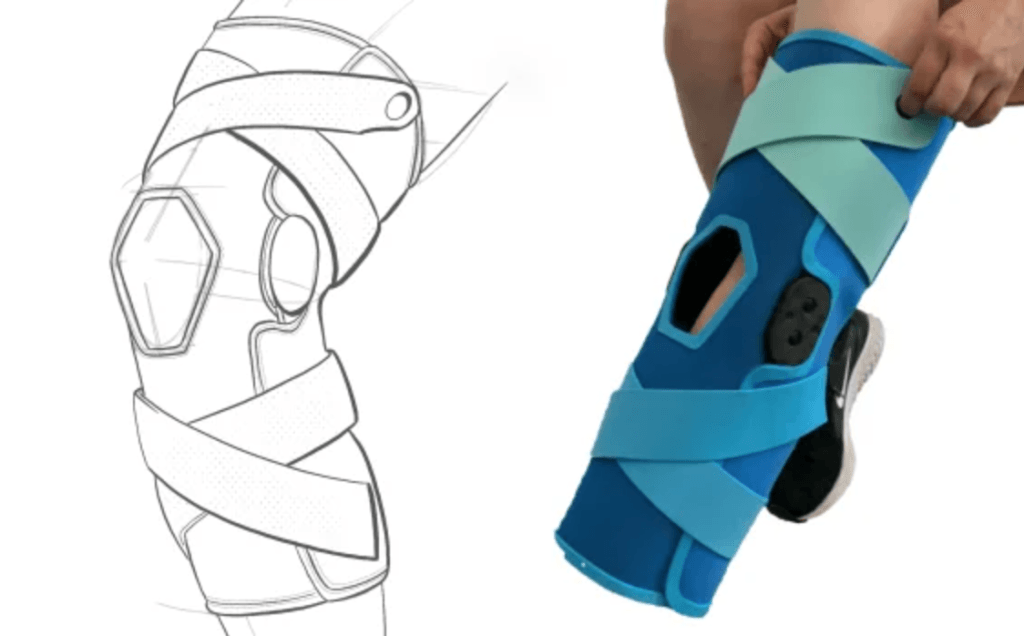
Once we’ve gathered our insights, it’s time to bring ideas to life through concept development and ideation. This stage is where creativity thrives, as designers explore different possibilities for form, function, and aesthetics. Sketching and early visualizations allow us to experiment with various design directions, refining the product’s overall look and feel. The goal is to create something that not only meets user needs but also resonates emotionally, balancing beauty with functionality. Sketching is a big part of every project we do at Interwoven Design, a great example being the Breg CrossRunner Knee Brace. We were open to many strategies for meeting the project requirements, and we sketched dozens of ideas before moving on to the prototyping stage. Every sketch brought us closer to finding the ideal design that would work both in concept and in reality.

Interwoven Sketch and prototype of the Breg Knee Brace
A sketch and prototype for the Breg Knee Brace project by Interwoven Design Group.

To refine our ideas further, we use mood boards, storyboards, and collaborative brainstorming sessions. Mood boards help convey the visual direction, pulling together textures, colors, and inspiration that guide the aesthetic choices. Storyboarding helps illustrate how users will interact with the product in real life, showcasing key moments in the user experience. Throughout this process, we collaborate closely with engineers, material scientists, and stakeholders to ensure feasibility. This interdisciplinary approach ensures the designs are not only innovative but also practical, considering technical limitations, material possibilities, and market needs from the outset. When working on our projects, which often involve collaborating with engineers, we find  that integrating interdisciplinary teamwork from the outset helps refine concepts, making sure we’re not only dreaming big but also designing something that can be successful in the real world.

Step 3: Prototyping & Iteration

With the initial concepts solidified, the next step is to bring those ideas into the physical world through prototyping and iteration. This is where sketches and ideas begin to take shape in low fidelity mockups, allowing us to visualize proportions, details, and mechanics in a more tangible way. Whether it’s through 3D printing, foam models, or soft goods mockups, these prototypes give us the opportunity to test ideas early on, making it easier to spot potential issues with form or function before committing to more complex production processes. We create dozens—in some cases far more than dozens—of prototypes for every project. The Whitecloud Medical Utility Bag is a great example of this; we created a broad range of soft goods prototypes to experiment with how we could fit a specific set of tools and objects that nurses need at all times. Early prototyping is a crucial stage that allows us to keep iterating quickly and efficiently, staying agile throughout the design journey.

As prototypes are developed, user feedback becomes a vital component of the refinement process. Testing prototypes with real users provides invaluable insights into how the product feels, operates, and resonates in everyday use. Functional assessments help determine whether the design meets its intended purpose, from ease of use to durability. Based on this feedback, the design undergoes continuous refinement, adjusting features, ergonomics, or materials as needed. This iterative cycle ensures that the product evolves to better meet user needs and aligns with both aesthetic and functional goals before moving into the final stages of production.

Step 4: User Testing & Validation

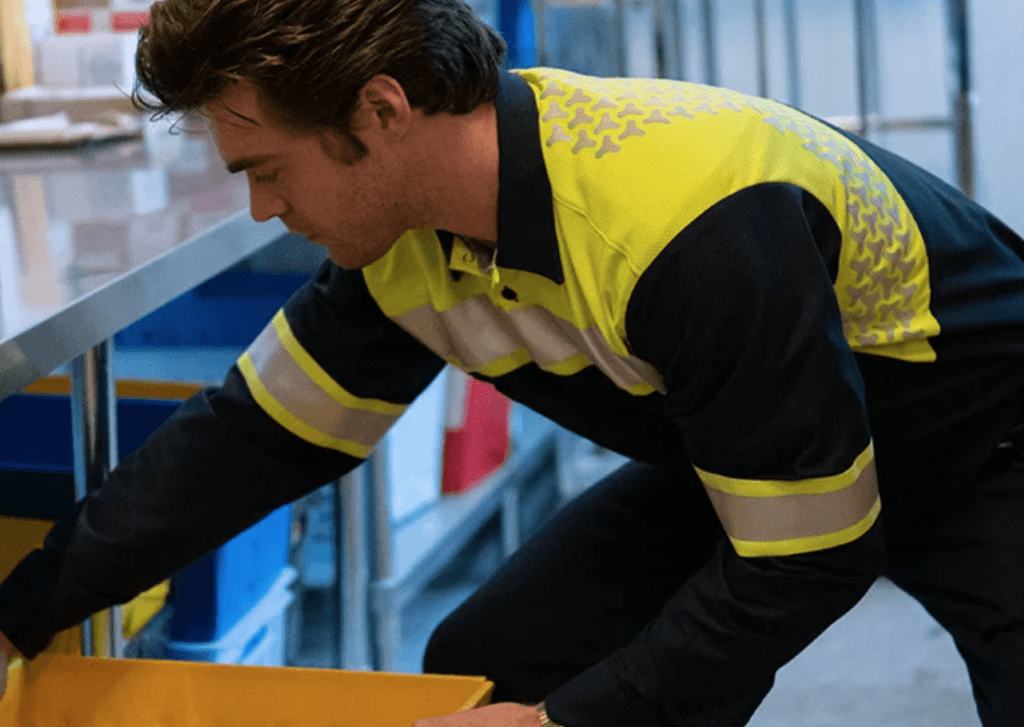
Once the prototype is ready for real-world interaction, the next step is user testing and validation. At Interwoven Design, we consider user testing and validation to be an integral part of prototyping and ideating. User testing is crucial for ensuring that the design not only meets user expectations but also performs seamlessly in everyday use. By testing the product with a target group of users, designers gather valuable feedback on comfort, usability, and overall user experience. This hands-on testing helps identify any areas where the product may need adjustments—whether it’s improving ergonomics, simplifying functionality, or enhancing the user interface. In our Firefly workwear project, we had warehouse workers wear prototypes during their work day to observe the quality and durability of the jacket’s reflective coating. It’s all about making sure the design feels intuitive, comfortable, and effective in real-world scenarios.

Interwoven Firefly workwear jacket
The Firefly workwear garment by Interwoven Design Group.

Alongside user feedback, long-term wearability and durability are evaluated to ensure the product stands up over time. This involves rigorous testing to assess how the product holds up under everyday wear and tear, as well as ensuring it meets regulatory standards for safety and compliance. Based on the data collected, the design is refined to address any issues that arise, ensuring that it not only delights users but is also safe and reliable. This iterative process guarantees that the final product is both functionally sound and compliant, offering an exceptional experience that users can trust and enjoy over time.

Step 5: Technical Design & Sourcing

With a refined concept in hand, the next step is transitioning from idea to a manufacturable product. This phase focuses on engineering the design for production, ensuring that all aspects of the product can be realized efficiently and at scale. In this step, we generate all of the technical documentation to allow the manufacturer to understand every aspect of the design. In our Even Adaptive Lingerie project, we created additional technical design documentation to support the patent application for the custom clasp we designed. 

Material sourcing is also important at this stage. The right materials must be chosen for both their functional properties—such as strength, flexibility, and weight—and their aesthetic qualities. Along with material considerations, wearability testing and durability assessments are conducted to guarantee that the product will stand up to everyday use while maintaining comfort and performance. These evaluations help refine the design, ensuring that it’s not only visually appealing but also reliable and practical in real-world conditions.

Collaborating with suppliers and manufacturers is a key part of this stage. Designers work closely with these partners to optimize production processes, ensuring that the design can be reproduced with consistency and efficiency. This includes refining techniques for assembly, tooling, and quality control, while also exploring opportunities to reduce costs or improve sustainability in the construction or in the manufacturing process. By maintaining an open dialogue with manufacturers and keeping an eye on potential production challenges, we can ensure that the design moves smoothly from the drawing board to the final product, ready for the market. This phase solidifies the design’s viability, ensuring it can be brought to life with precision and quality.

Step 6: Production & Launch

As the product nears completion, the focus shifts to the final stages of production and launch. This phase begins with finalizing manufacturing processes, ensuring that all production methods are optimized for scale and consistency. Quality control measures are put in place to maintain high standards throughout the production run, from material checks to final inspections. The goal is to ensure that each unit meets the exact specifications, preserving the integrity of the design and delivering a product that matches the vision set out at the beginning of the process.

Simultaneously, preparations are made for the product’s mass production, taking care to balance efficiency with design integrity. It’s essential that the product remains true to its initial concept, even as it moves into full-scale manufacturing. While this is happening, the marketing team works to build excitement for the launch, developing a compelling product narrative that connects emotionally with consumers. Product storytelling helps create a connection, communicating not just the features and benefits, but the values and story behind the design. This connection builds consumer trust and generates buzz, ensuring the product’s success in the market from day one.

Bringing it All Together

From the initial spark of inspiration to the final product launch, each stage of the industrial design process plays a critical role in creating wearable technology that not only looks good but works seamlessly in the lives of users. Every step—whether it’s research, prototyping, or technical design—helps shape a product that balances creativity, functionality, and user experience. A thoughtful, well-rounded design approach ensures that the product is not only technologically advanced but also user-friendly, making it easy for customers to integrate it into their daily lives with confidence and excitement.

At Interwoven Design, we believe that the best designs come from collaboration and a shared vision. We invite you to work with us to bring your ideas to life, whether you’re looking to refine an existing concept or develop an entirely new wearable tech solution. With our expert design and product development process, we’re here to guide you through every step, ensuring your product stands out in the market while meeting the highest standards of usability, functionality, and sustainability. Do you have a project you’d like to see come to life? Reach out!

Check out the rest of our Insight series to learn more about the design industry. Sign up for our newsletter and follow us on Instagram and LinkedIn for design news, multi-media recommendations, and to learn more about product design and development!