Beyond the Portfolio: Starting a Career in Industrial Design

Beyond the Portfolio: Starting a Career in Industrial Design

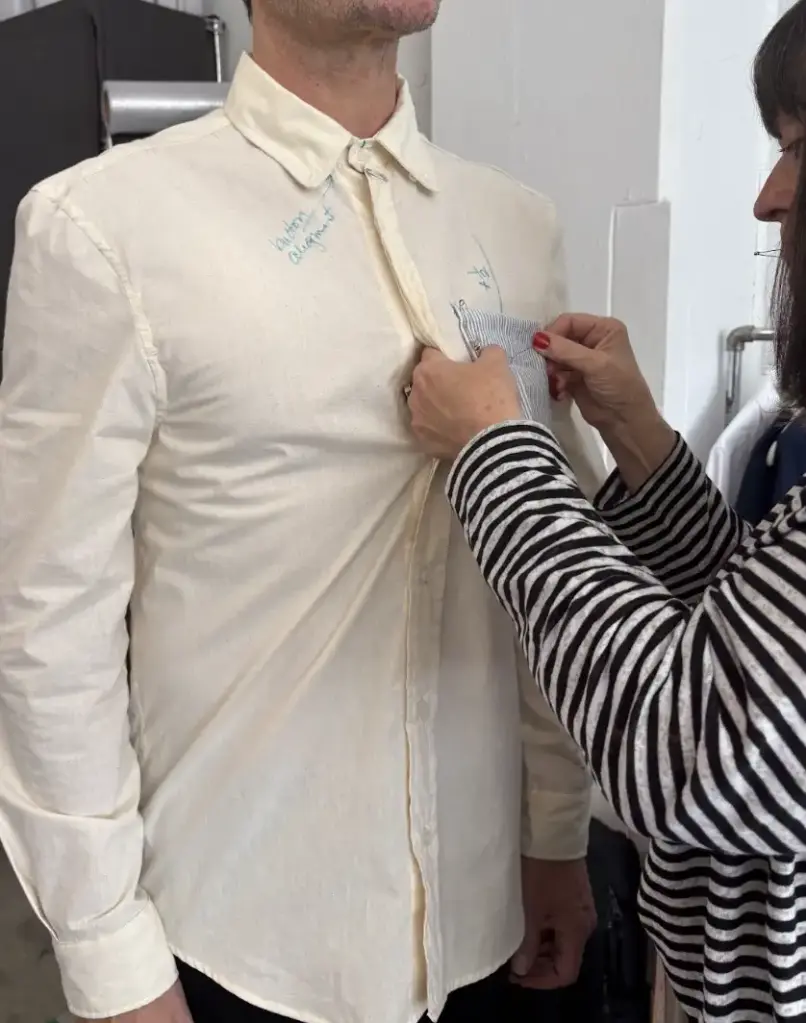
Product design is evolving rapidly. Across industries, the boundaries between physical products, digital experiences, and wearable systems are becoming increasingly fluid, creating new opportunities for designers. Designers today are expected to think beyond form alone, considering how products function within broader systems of manufacturing, interaction, human behavior, and experience.

For new graduates entering the field, this moment is both exciting and challenging. The range of possible career paths has expanded dramatically, but so have expectations. Many emerging designers find themselves asking the same questions: How do I stand out in a competitive market? What kind of portfolio do design firms actually want to see? How do I gain experience when most opportunities seem to require it already? Navigating the transition from school to industry can feel uncertain, particularly as the profession itself continues to evolve.

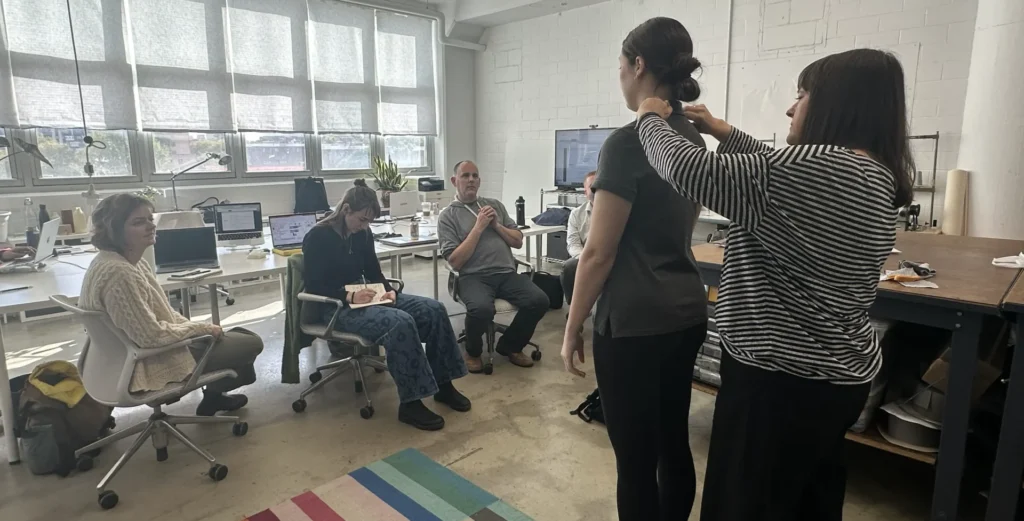
At Interwoven Design, we seek new industrial design interns every year, giving us a firsthand perspective on what differentiates successful candidates in today’s hiring landscape. In this Insight article, we explore what studios are actually looking for in new graduates, and how emerging designers can position themselves more strategically as they search for internships and full-time roles. We also examine the power of a point of view, and how to develop meaningful industry connections.

Develop a Point of View

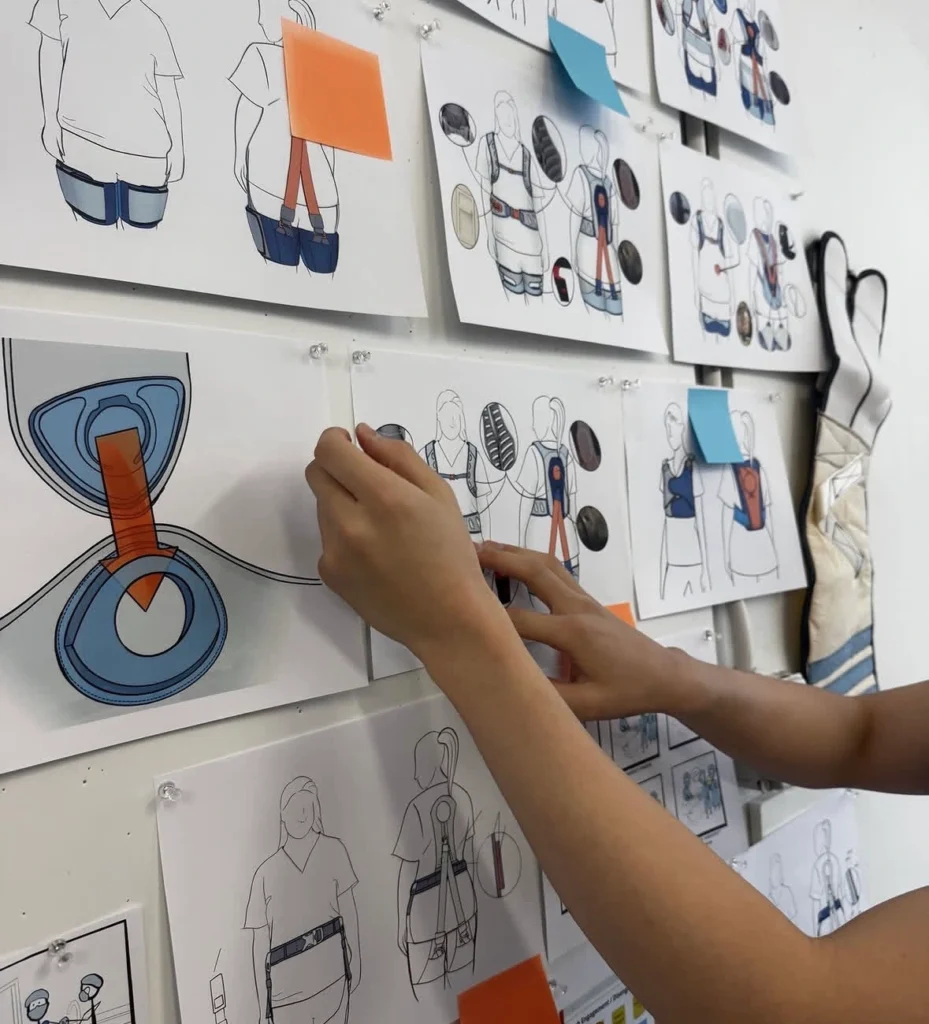
A quality that immediately distinguishes strong emerging designers is the presence of a clear point of view. In a highly competitive hiring landscape, portfolios can begin to look visually similar, featuring comparable software skills, renderings, and project structures. What often separates memorable candidates is a visible sense of curiosity, direction, and intellectual engagement with the kinds of problems they want to solve.

Developing a point of view does not mean locking yourself into a narrow specialty early in your career. One of the advantages of being a new graduate is the freedom to explore different industries, methodologies, and interests. However, employers are often drawn to candidates who demonstrate genuine enthusiasm for particular areas of design, whether that involves wearable technology, medical devices, soft goods, sustainable packaging, furniture, transportation, consumer electronics, or emerging material systems.

A point of view is often communicated subtly through project choices, research topics, material explorations, and even the way a portfolio is organized. A student who consistently explores human-centered healthcare solutions, for example, signals a different perspective than someone focused heavily on speculative consumer electronics or sustainable systems. Neither direction is inherently better, but each tells a story about what motivates the designer and how they think about the role of design in the world.

Developing a point of view is not the same as building a personal brand around aesthetics alone. While visual consistency can be valuable, firms are often more interested in conceptual consistency; evidence that a designer is asking meaningful questions and engaging thoughtfully with a set of ideas over time. This could involve an interest in emotional durability, accessibility, wearable systems, manufacturing innovation, circular design, or the relationship between digital and physical experiences. These through-lines create coherence across projects and help transform a portfolio from a collection of assignments into a reflection of a designer’s perspective. Candidates who can clearly articulate what excites them about design tend to create more engaging and memorable discussions. Employers are not simply hiring for current projects; they are hiring people they can imagine growing alongside future opportunities and challenges.

Understand the System

Once a designer has developed a point of view and a body of work that reflects how they think, the next challenge is often not capability, it is visibility. Many strong candidates struggle because they are unclear about where opportunities exist and how to position themselves within a highly fragmented hiring landscape. Unlike more centralized industries, product design opportunities rarely exist in a single, predictable place. While large companies and well-known studios do post openings on public job boards, many roles are filled through more direct or informal channels. Studio websites remain one of the most consistent sources of opportunities, particularly for internships, where smaller teams often manage hiring directly. Alumni networks also play a significant role, as many designers enter studios through personal or academic connections that extend beyond formal application systems.

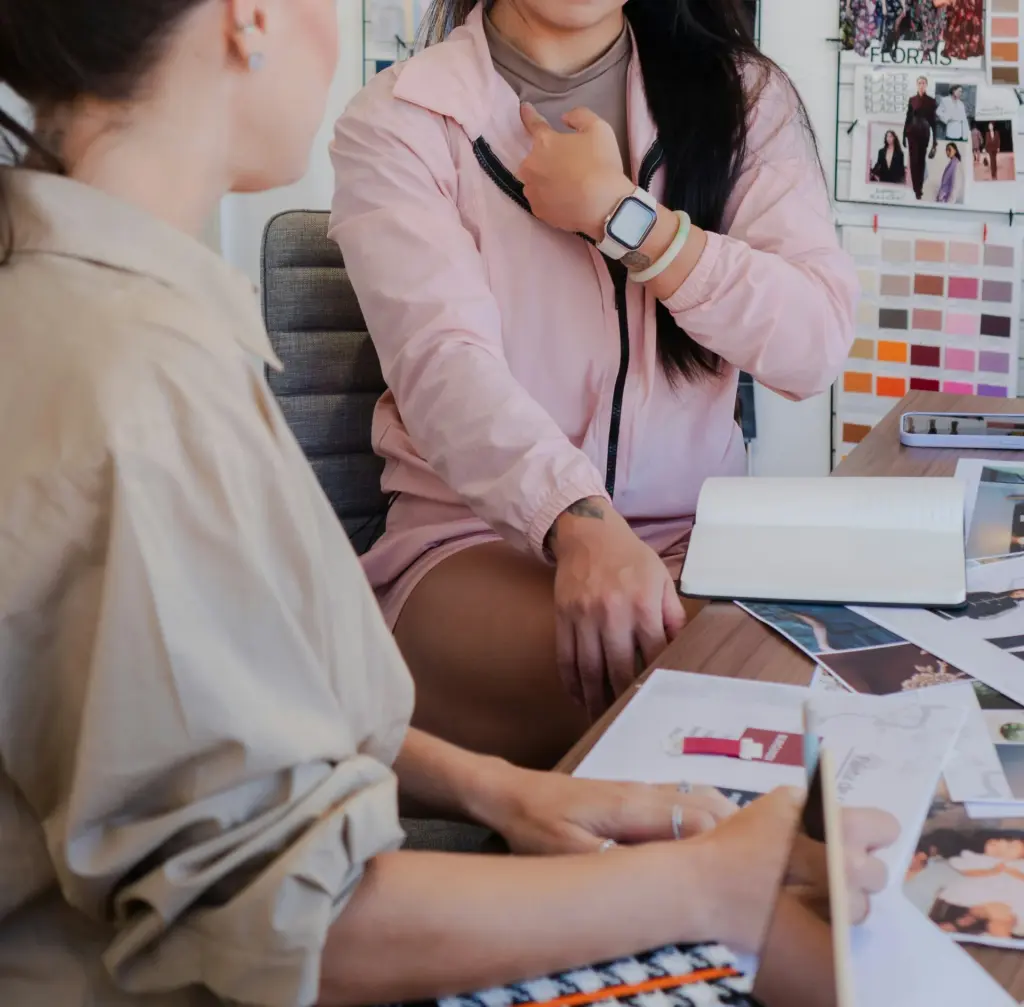
For emerging designers, this shifts the application process from reactive to proactive. Rather than waiting for the “right” posting to appear, successful candidates often identify studios whose work aligns with their interests and reach out directly. In these cases, specificity matters. Generic applications tend to disappear quickly, while targeted outreach that demonstrates an understanding of a studio’s focus—whether that is soft goods, wearable technology, consumer electronics, or medical devices—immediately signals intent and relevance.

Timing also plays a role. Many studios operate on flexible hiring cycles, especially for internships. Applying early, even when positions are not formally advertised, can be advantageous, as teams often keep strong candidates in mind when future projects arise. In some cases, opportunities are created in response to interest rather than pre-existing job postings, particularly in smaller or mid-sized practices. Translating work into opportunity is not just about applying widely; it is about applying strategically. 

Design Your Outreach

While the portfolio is important, even strong portfolios can go unnoticed if they are not introduced effectively. The reality is that most studios are not short on capable applicants; they are short on time. What often determines whether a portfolio is reviewed in detail is not its quality alone, but how it first enters a studio’s attention. The initial email, message, or application note is a filter that determines if your work is reviewed at all. A well-crafted introduction does not need to be long or overly polished, but it does need to be intentional. Studios are looking for signals of clarity: who you are, what you are interested in, and why you are reaching out to them specifically.

Effective outreach in design is itself an act of design thinking. It requires editing, prioritization, and an understanding of your audience. A strong message typically introduces the designer in a few sentences, highlights one or two relevant projects, and clearly explains why the studio’s work is meaningful to them.

The goal is not to summarize an entire portfolio, but to create enough alignment and curiosity for the reviewer to click through. What tends to weaken applications is not lack of talent, but lack of specificity. Generic messages sent to dozens of studios often read as disconnected from the work they reference. In contrast, even a short message that references a studio’s recent project, design focus, or material approach immediately establishes relevance. This demonstrates that the applicant has taken the time to understand the practice they are engaging with, which is often as important as the work itself.

Outreach does not need to be formal to be effective, but it should be professional, direct, and respectful of the reader’s time. Studios are often reviewing applications between project deadlines, so clarity and brevity are not just stylistic choices, they are practical advantages. This activity, done well, is an extension of a design practice; it requires understanding context, communicating intent, and guiding someone through an experience in a way that feels effortless and considered.

Network for Exposure

While networking can feel transactional at its worst, it should be about building visibility, familiarity, and trust over time. In product design especially, hiring is rarely a single-moment decision. Studios tend to hire people they have seen before, heard about through peers, or encountered multiple times in different contexts. This means that networking is less about one perfect interaction and more about becoming a recognizable presence within the design ecosystem. Exposure, consistency, and clarity of interest matter more than any single conversation. For emerging designers, this shift in perspective is critical. Instead of approaching networking as a performance or a pitch, it becomes an opportunity to engage with the industry in a more natural and ongoing way. 

Here are some practical ways to build meaningful exposure:

  • Attending portfolio reviews hosted by organizations such as IDSA, universities, and design festivals.
  • Reaching out to alumni who are working in studios you admire, particularly those a few years ahead in their careers
  • Engaging in informational conversations with junior and mid-level designers, who are often more accessible and candid about their experiences
  • Participating in design events, talks, and workshops where informal conversations can lead to longer-term recognition
  • Maintaining a consistent presence on platforms like LinkedIn or Instagram by sharing process work, sketches, or project thinking rather than only final renders
  • Contributing to student exhibitions, competitions, or collaborative projects that extend your visibility beyond your immediate academic environment
  • Signing up for the mailing lists of studios and companies you admire and watching for open houses and studio events

Over time, these actions build familiarity. A studio may not respond immediately to a message or application, but repeated exposure to a designer’s name, work, or ideas can create recognition when opportunities arise later. In many cases, hiring decisions are influenced by this accumulated awareness as much as by formal applications. Networking in design is about showing up consistently within the spaces where design conversations are happening, contributing meaningfully when possible, and allowing your perspective to become part of the broader dialogue.

Build Momentum Over Time

Unlike fields with clearly defined entry points, design careers often unfold unevenly; shaped by timing, exposure, relationships, portfolio development, and a degree of persistence that extends beyond any single application cycle. For emerging designers, this can feel uncertain at first, especially when comparing their progress to seemingly more direct success stories. In reality, momentum matters more than a perfect starting point. Each project, conversation, internship, and piece of outreach contributes to a broader trajectory. Designers who remain engaged—continuing to refine their portfolios, explore new ideas, and participate in the broader design community—tend to create more opportunities for themselves over time. 

For new graduates entering the field today, the opportunity lies not in finding the “correct” path, but in actively creating one—through work, relationships, and a continued commitment to evolving as a designer. Studios are looking for evidence of how candidates think, collaborate, communicate, and solve problems. Technical skills remain important, but process, adaptability, trustworthiness, and curiosity often determine which candidates stand out. At Interwoven Design, we find that the most compelling designers are rarely defined by a single aesthetic or specialty. Instead, they distinguish themselves through clarity of thought, engagement with the design process, and the ability to communicate ideas effectively.

Interwoven Design is a design consultancy that is positioned at the intersection of soft goods and wearable technology, creating products that function with the body and offer comfort as well as the superb performance that arises through the innovative incorporation of rigid, often electronic and responsive elements. Sign up for our newsletter and follow us on Instagram and LinkedIn for design news, multi-media recommendations, and to learn more about product design and development!

A Q&A with India Pearlman, Packaging Designer for Beauty and Wellness

A Q&A with India Pearlman, Packaging Designer for Beauty and Wellness

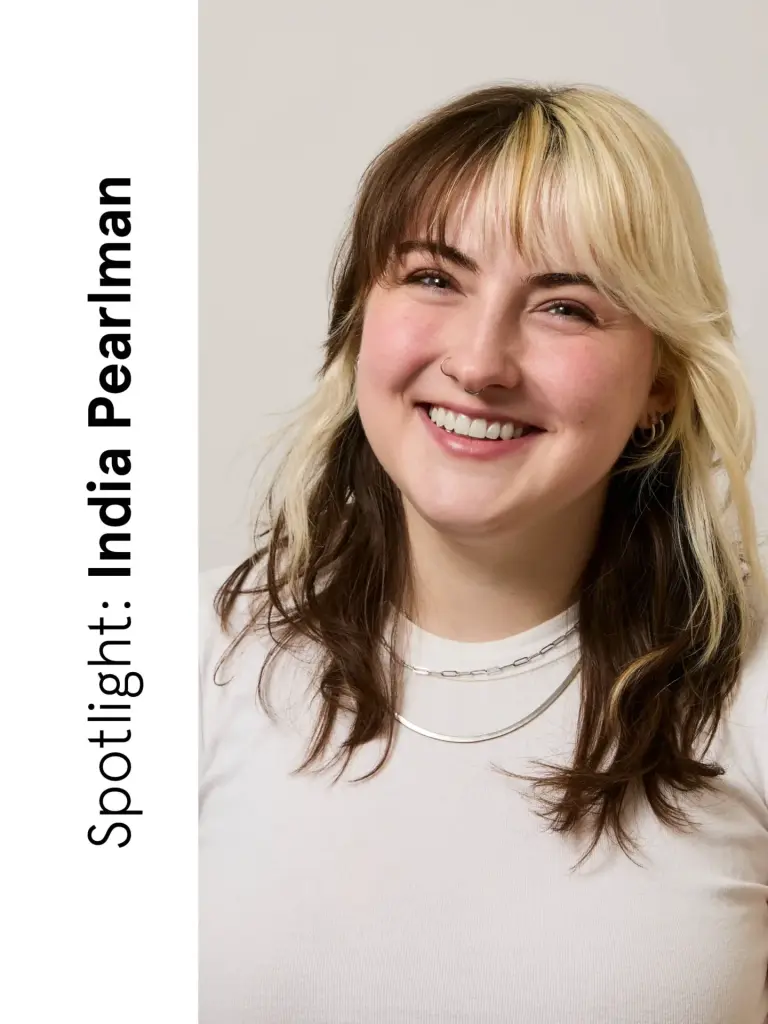
Spotlight articles shine a light on designers and engineers we admire, asking leaders in the field about their work and their creative journey. This month’s Spotlight focuses on the world of wellness and beauty through the lens of India Pearlman, a packaging designer whose work sits at the intersection of industrial design, branding, and product experience.

india pearlman spotlight portrait
India Pearlman, packaging designer based in New York and Pratt Institute graduate.

A graduate of Pratt Institute, India brings a distinctly three-dimensional, systems-driven mindset to a field often perceived as purely graphic. Her approach reflects a broader shift in design—where packaging is no longer just a container, but part of a larger ecosystem shaping how products are experienced, displayed, and lived with over time.

We spoke with India about how she found her way into packaging, how industrial design continues to inform her work, and the details she notices that most people miss.

Q:

Can you tell us a bit about your background and what led you into the wellness and beauty space?

A:

I’m a designer based in Queens, currently living in Ridgewood. I graduated from Pratt in 2020 with a degree in industrial design, which was honestly a wild time to enter the workforce. A lot of traditional industrial design roles were hard to find, especially because so much of that work is hands-on.

At the same time, there were a lot of packaging roles opening up. I hadn’t studied packaging in school and wasn’t initially interested in it, but I ended up falling into it because of the timing.

Looking back, it makes sense. My dad works in marketing, and growing up he would show me different pieces of packaging and ask which one I liked more. I think that kind of thinking was always there, even before I realized it.

Eva NYC Freshen Up dry shampoo duo pack featuring stock aluminum cans with custom graphics, an example of hair care packaging design
Eva NYC Freshen Up Invisible Dry Shampoo, a hair care product that combines stock packaging with custom graphics and color application.

Q:

Do you specialize in a particular area of packaging?

A:

I primarily work in beauty and wellness. I got my start in hair care, and the work tends to involve a mix of stock and custom packaging, with a strong focus on graphics, color, and application.

Q:

Do you think industrial design is becoming broader again as categories like beauty and wellness evolve?

A:

I definitely think so. At first, it felt strange to move from identifying as an industrial designer to working as a packaging designer, but over time I’ve seen how closely those disciplines are connected.

There’s a strong overlap between graphic thinking and the physical object—how something exists in space, how it’s held, how it’s experienced. Packaging and industrial design really do belong to the same world.

Q:

How does your industrial design background show up in your work today?

A:

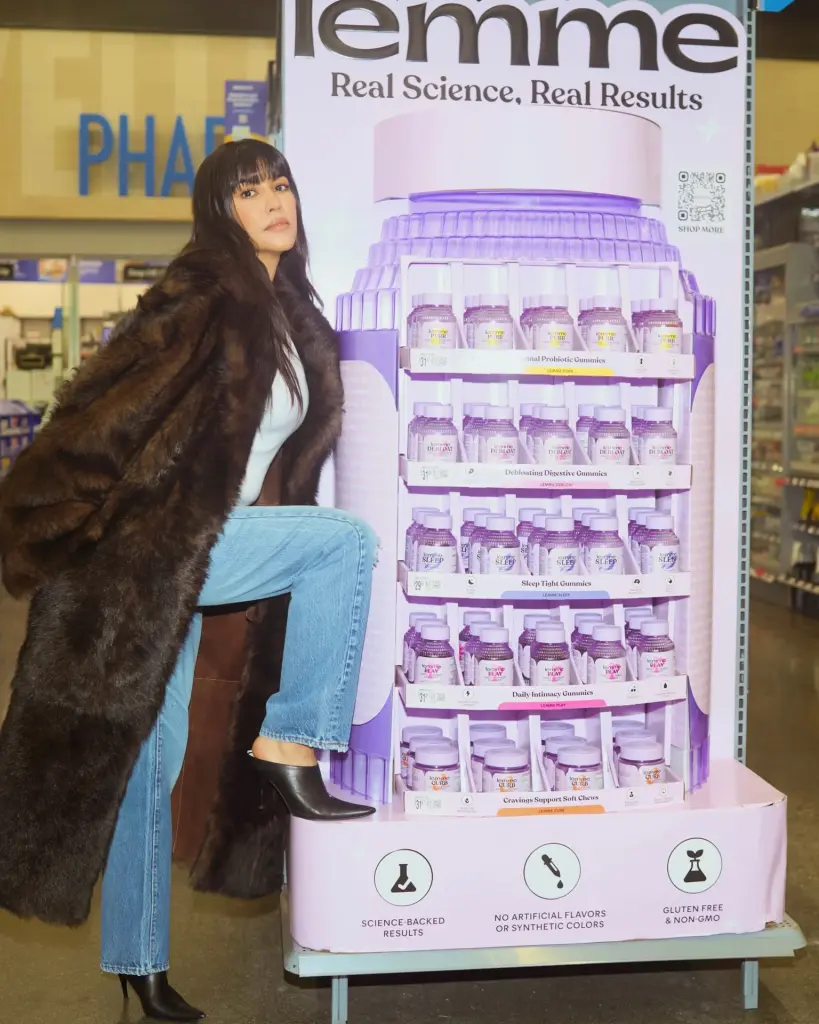
I still rely on it constantly. Having that three-dimensional understanding has allowed me to go further in my role and take on more than just packaging. I often work on retail displays and spatial elements as well, which are very much rooted in industrial design.

Kourtney Kardashian posing with Lemme wellness supplement retail display at Walmart, showing retail packaging and spatial design
Lemme’s Walmart retail display, where packaging extends into spatial and retail design.

My understanding of materials also helps me collaborate more effectively with other teams. I’m able to bring ideas that are creative but also feasible, and sometimes even anticipate challenges before engineering gets involved. That foundation makes a big difference in how projects move forward.

Q:

What usually comes first for you: visual idea, tactile experience, or story?

A:

I typically work under the brand design team, and branding involves a lot more story-based thinking.  I like to start with that because it gives me a direction and purpose. Because I work closely with brand teams, there’s often a strong narrative behind the product, and that gives me direction and purpose.

Packaging design involves a lot more brand thinking. Working within brand guidelines might seem limiting, but I actually find it freeing. It allows me to focus more deeply on the design itself, knowing that I’m working toward a clear and intentional goal.

Q:

Beauty trends move fast. How do you think about what lasts versus what’s fleeting?

A:

It can be tricky. Right now, we’re seeing a lot of minimal, sans-serif typography and simple, blocky forms, and that’s been around for a while.

I look at a lot of references. I scroll through Pinterest, study retail environments, and look at other brands, but I also rely heavily on intuition. One of the biggest considerations for me is how a product will live in someone’s home. Is it something they’ll want to keep and display, or something more temporary?

I also look to interior design trends for inspiration. There’s a movement toward more expressive, colorful spaces, what people call ‘dopamine interiors’, and that’s influencing packaging as well, especially for younger brands.

Q:

What’s a packaging detail most people never notice, but you always do?

A:

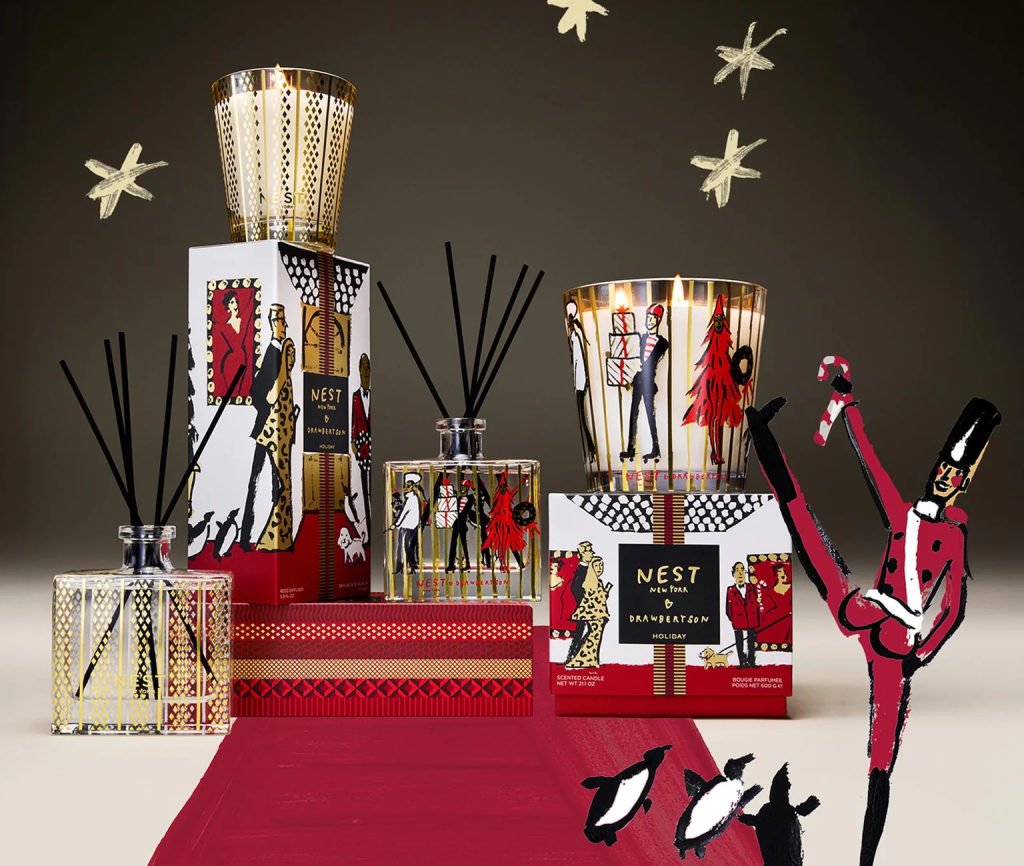
I immediately notice when things don’t align across a product line. If packaging isn’t proportionate or the typography shifts from one SKU to another, it really stands out to me.

A lot of my work has focused on refining those details. In one role, I did a full packaging revamp that addressed inconsistencies most people wouldn’t consciously see, but that make a big difference in how cohesive the line feels. I’m always thinking about how everything works together as a system. 

Q:

NEST New York and Drawbertson holiday collection showing cohesive packaging design across candles, diffusers, and gift boxes
NEST x Drawbertson Holiday Collection, an example of packaging that functions as a unified system across an entire product line.

When you’re shopping, are you able to enjoy it? Or are you redesigning everything?

A:

It depends on where I am. In a typical grocery store, I’m definitely redesigning things in my head and questioning a lot of decisions.

But I love going into smaller markets that carry emerging brands. Those spaces tend to have really thoughtful, exciting packaging, and I find them genuinely inspiring. I also take a lot of photos when I’m out, especially in places like Sephora, whenever something catches my attention.

Grocery stores are hard. there’s a lot of packaging that’s been around a long time where I’m like – we could do this better. 

Q:

What materials or sustainability approaches are you most interested in right now?

A:

 Post-consumer recycled plastic has become much more standard, which is great to see. Beyond that, I’m really interested in paper-based and refillable packaging systems.

Refillable design is especially exciting because it allows you to create a more permanent, beautiful object that people want to keep, paired with a more sustainable refill system.

I’m also paying close attention to finishes. For example, traditional foil treatments make packaging harder to recycle, so I try to push toward alternatives that achieve a similar effect while remaining recyclable. You can also get a lot out of embossing and debossing. There’s a lot of innovation happening there right now. 

Q:

If you could collaborate with any brand right now, what would it be?

A:

I would love to work with Prada, especially on fragrance. Their packaging is very architectural, which really resonates with me.

There’s also something interesting about their fashion and accessories, like their bags that translate into form and function. I think there’s a lot of opportunity to bring that same thinking into packaging design. It would be interesting to see how their fashion informs cosmetics, and how something like a handbag, which is itself a functional industrial design object, could inform packaging.

Check out the rest of our Spotlight series to hear more from leaders in the design industry. Sign up for our newsletter and follow us on Instagram and LinkedIn for design news, multi-media recommendations, and to learn more about product design and development!

Please reach out!

Soft Goods, Seamless Performance: Designing for Movement in Entertainment

Soft Goods, Seamless Performance: Designing for Movement in Entertainment

The Stakes of Entertainment Design

Designing soft goods for entertainment is a uniquely challenging discipline. Whether for stage, film, live events, or dance, these products must push the limits of movement, durability, and visual storytelling. Costumes, wearables, and accessories must look compelling under lights, but also support choreography, withstand repeated use, and integrate seamlessly. A garment that restricts motion or fails mid-performance doesn’t just interrupt the experience; it can compromise safety, storytelling, and the creative vision itself.

At Interwoven Design, we operate at this intersection of craft, performance, and technical problem-solving. Our team brings together expertise in soft goods, human movement, textiles, and engineering to create products that enhance performers’ abilities while preserving artistic integrity. From early movement studies to stage-tested prototypes, our work is grounded in creating pieces that feel natural to wear, perform reliably under stress, and advance creative expression.

In this article, we’ll explore what makes soft goods design for the entertainment industry distinct, how our approach supports both performers and creators, the opportunities emerging in this category, and case studies showcasing our work designing high-performance costumes.

Why Entertainment Design Is Unique

Designing for entertainment involves a set of conditions unlike any other category of soft goods development. Every decision must account for artistic intent, technical performance, performer safety, and the physical realities of movement.

Artistic Context
Costumes and performance wear must communicate character, story, and emotion at a glance. Designers navigate through color, silhouette, texture, and historical or stylistic accuracy. At the same time they ensure the garment supports the artistic direction of the production. A costume must function as both a tool for expression and a technical piece of equipment.

Physical Context
Performers push their bodies to extremes. Garments must allow full range of motion, distribute pressure evenly, manage heat, and remain comfortable over hours of rehearsal and performance. Fabrics that restrict, chafe, or overheat can hinder movement, increase fatigue, or lead to injury.

Technical Context

Modern entertainment frequently integrates technology; LEDs, sensors, animatronics, quick-change mechanisms, or modular components. These technologies must be embedded into costumes in ways that preserve flexibility, balance, and aesthetics while remaining easy to service backstage.
Together, these contexts shape a design discipline that is part engineering, part artistry, part biomechanics, requiring solutions that are expressive, durable, wearable, and safe.

Designing for Movement and Expression

At Interwoven Design, we view entertainment soft goods as extensions of the performer’s body and tools for storytelling. Our design process centers on an iterative, movement-driven approach that ensures each piece supports expressive freedom, technical performance, and long-term durability.
Prototyping is core to this philosophy. Early iterations are tested in rehearsals or motion studies, allowing designers to observe how garments behave during jumps, lifts, spins, or rapid transitions. We refine patterning, materials, seam placement, and support structures based on how performers actually move.

Comfort, breathability, and ergonomics are fundamental. Materials must balance stretch, drape, durability, and heat management. Every strap, panel, or internal structure is placed intentionally to reduce friction, support high motion, and maintain stability across repeated performances. When costumes incorporate technology, components must integrate seamlessly without compromising aesthetics or mobility.

Collaboration is also essential. We work with choreographers, costume designers, technical directors, and performers to ensure alignment between artistic vision and physical reality. This cross-disciplinary approach results in costumes and wearables that not only look extraordinary but perform flawlessly under demanding conditions.

The Challenge (and Opportunity) of Soft Goods in Entertainment

Soft goods for entertainment represent a rapidly evolving category, from high-tech performance to interactive costumes and modular pieces designed for quick changes or complex choreography. The opportunities are exciting, but the technical demands are significant.

Wearables must withstand extraordinary levels of physical stress. Unlike daily apparel, performance costumes experience constant stretching, repeated laundering, rapid changes, and sometimes rough backstage handling. Seams must hold, materials must last, and designs must maintain their appearance under stage lighting or camera scrutiny.

Technological integration adds further complexity. Whether incorporating electronics, sculptural elements, or mechanical activation, designers must ensure the costume remains balanced, lightweight, and flexible. A component that shifts or detaches mid-performance can jeopardize both safety and continuity.

These challenges, however, create room for innovation. Soft goods designers are uniquely equipped to bridge artistry and engineering. They develop costumes that feel weightless, move effortlessly, integrate technology invisibly, and elevate the creative vision. Our ability to unify soft materials with structural or technological components allows us to deliver reliable and expressive solutions.

Case Studies: Soft Goods for the Stage

Interwoven Design’s work in entertainment showcases how a human-centered soft goods approach can enhance artistry. It enables complex movement, and support demanding performance environments. To illustrate what we mean, here are two case studies illustrating how we’ve applied this expertise to ballet costume innovation.

Case Study 1: Fiber Optic Tutu for the Brooklyn Ballet

Interwoven Design partnered with the Brooklyn Ballet to bring a new dimension of storytelling to their production of The Brooklyn Nutcracker, creating a collection of illuminated costumes that merge classical craft with cutting-edge technology. The centerpiece of this collaboration, the Fiber Optic Tutu for the Waltz of the Flowers, unites traditional ballet couture with programmable light, transforming the stage into a living, glowing garden.

The Design Challenge

Ballet costumes must be expressive, lightweight, and durable, capable of withstanding continuous movement and intense performance demands. For this production, the creative direction introduced an additional layer of complexity. The challenge was to integrate lighting technology into garments that maintain the delicate elegance of a classical tutu.

The challenge was to create costumes that illuminated dynamically without compromising a dancer’s range of motion, stage presence, or safety. The light effects needed to be bright enough to read from the audience. They also needed to be subtle enough to blend with hand-dyed fabrics, layered tulle, and artisanal detailing inspired by botanicals.

Our Approach

Interwoven Design explored the intersection of craft and circuitry, building the tutus using traditional multi-layered foundations reinforced with boning and custom-fit top plates. Then, an intricate network of fiber optic strands were hand-sewn onto the garment, bending and weaving with the dancer’s movement. When paired with high-intensity LED wands concealed at the lower back, the fiber optics created a shimmering glow across the costume.

To maintain the natural, garden-inspired palette of the ballet, the LED control boards were custom-programmed to precise hues of blue and green, ensuring that the illumination supported the choreography’s aesthetic rather than overpowering it. Additional costume elements for Garden Sprites and demi-soloists incorporated UV-reactive inks and screen-printed artwork that appeared only under ultraviolet stage lighting, creating a layered visual reveal. The Dew Drop character’s tutu featured laser-cut mylar florals and Swarovski crystals that refracted both ambient and programmed light, adding to the performance’s visual richness.

Behind the scenes, electronics were housed discreetly within the skirt structure. The housing protected the components while distributing weight in a way that preserved balance for the dancers. The integration of soft goods, illumination technology, and performance ergonomics was refined through iterative prototyping and collaboration with the ballet’s artistic and technical teams.
Impact

The Fiber Optic Tutu elevated The Brooklyn Nutcracker with a sense of wonder that blended seamlessly into the choreography. Onstage, the tutus appeared to bloom as dancers moved, bending light through the fibers to create glimmers, twinkles, and radiant washes that felt almost alive. The effect reinforced the narrative of a secret garden, bringing modern technology into harmony with classical ballet traditions.

For the performers, the costumes remained lightweight, wearable, and unobtrusive, supporting full movement while integrating a sophisticated lighting system. They delivered an unforgettable visual experience that captured the magic of nature, craft, and technology working in concert. This project highlights Interwoven Design’s ability to merge soft goods expertise with electronic integration. Hence, creating expressive, high-performance costumes that expand what is possible in live entertainment.

Case Study 2: Mechanical Doll Costume for The Brooklyn Nutcracker

More recently, for the 2025 season of The Brooklyn Nutcracker, Interwoven Design developed a new mechanical doll costume for the Waltz of the Flowers. This introduced a striking counterpoint to the fluidity and naturalism of the surrounding dancers. While the Flowers bloom and unfurl across the stage, the mechanical doll moves with intentional rigidity and precision. This created an aesthetic contrast reflected in the costume’s blend of structured hardware and soft textile elements.

The Design Challenge

Mechanical doll characters in The Nutcracker traditionally embody stiffness, rhythm, and clockwork-like gestures. For Brooklyn Ballet’s contemporary reinterpretation, the goal was to amplify this contrast. To create a costume that expressed mechanical articulation while still supporting the dancer’s mobility and performance.

The challenge centered on integrating rigid components in a way that conveyed a sculptural, almost automaton-like quality, without hindering choreography. Hardware needed to appear functional—even if only representational—while also being lightweight, safe, and capable of withstanding repeated performances. The soft elements, inspired by the surrounding cast, required balancing so that the mechanical doll felt visually connected while maintaining its personality.

Our Approach

Interwoven Design created the costume as a hybrid system, hard elements with soft materials that allowed for motion. Hard components—such as articulated panels, structured bodice, or mechanical-inspired detailing. We positioned them strategically to enhance the signature movements: sharp turns, precise steps, and sudden pauses.

Soft goods were incorporated to facilitate comfort and fluid transitions between poses, using textiles that complemented the production’s botanical palette without softening the character’s mechanical silhouette. The internal structure was designed to distribute weight evenly, so the dancer could perform full choreography while maintaining the illusion of rigidity.

We designed the hardware, embellishments, or frame-like structures to be secure yet flexible, allowing them to move subtly with the body. Throughout development, prototypes explored different ratios of soft-to-hard materials to achieve the right blend of theatrical expression, safety, and durability.

Impact

The resulting costume offered a visually arresting contrast within the Waltz of the Flowers, transforming the mechanical doll into a focal point of sculptural, rhythmic motion. The interplay of rigid and soft surfaces heightened the character’s stylized choreography, allowing the dancer to embody a precise, clockwork energy while remaining fully supported by the garment’s underlying ergonomic design.

For Brooklyn Ballet, the mechanical doll costume reinforced the production’s signature blend of tradition and innovation. Additionally, it showcased how contemporary design techniques, when thoughtfully integrated, can expand the vocabulary of classical performance.

Designing Confidence Into Performance

Entertainment design is about more than achieving visual impact, it is about building trust between performer, costume, and creative team. A well-designed garment supports movement effortlessly, withstands the rigors of performance, and reinforces the emotional world of the production. Whether crafting dynamic ballet costumes or integrating technology into stage wear, our mission is to blend artistic expression with technical excellence.

Through testing, movement-driven design, and respect for both performers and creative collaborators, we create intuitive, reliable, and empowering products. Our expertise in combining soft and structural elements ensures that each piece fulfills its artistic role and elevates the experience.

We invite choreographers, entertainment designers, and creative teams to partner with Interwoven Design to bring ambitious ideas to life. Designing for performance means designing for confidence, and that principle is central to everything we create.

Interwoven Design is a design consultancy that is positioned at the intersection of soft goods and wearable technology, creating products that function with the body and offer comfort as well as the superb performance that arises through the innovative incorporation of rigid, often electronic and responsive elements. Sign up for our newsletter and follow us on Instagram and LinkedIn to learn more about design and development! 

A Q&A with Functional Prototypes Expert Jacob Turetsky

A Q&A with Functional Prototypes Expert Jacob Turetsky

Spotlight articles shine a light on designers we admire, asking leaders in the field about their work and their design journey. This month’s Spotlight focuses on Functional Prototypes, the working, testing, problem-revealing models that turn ideas into something you can actually use. Functional prototypes rarely look polished. In fact, they often look wrong. But for Jacob Turetsky, that’s exactly the point.

Photo courtesy of Jacob Turetsky.

In this Spotlight interview, Jacob reflects on why functional prototypes matter, how they shape better products, and why failure when designed intentionally can be the most valuable outcome of all. In this conversation, he shares his process, his philosophy, and why functional prototypes are the backbone of meaningful product development.

Q:

Can you describe a moment when functional prototypes failed so clearly that it completely changed the direction of a project?

A:

While working at a large ergonomics-focused product company, we were developing a stacking chair that included a subtle amount of active recline. The idea was to rely on the frame of the chair itself to create that movement, without adding a complex mechanism.

I quickly built a prototype using CNC plywood panels to mimic a kind of spring action happening in the lower corner of the chair leg. Structurally, it made sense. But no matter what we did, every time someone leaned back, it would pull their shirt out of their pants if it was tucked in.

It turns out that recline needs to happen as close as possible to the human hip, which is difficult because that’s exactly where your body is already sitting. Our pivot point was dramatically far from where it needed to be. Even though it worked from a construction standpoint, it completely failed ergonomically.

That prototype forced us to abandon the idea of relying solely on the frame. We moved to more complicated mechanisms that brought the action closer to the body. We built another prototype that had a cluster of potential pivot points in the right region, full of holes and adjustable pins. We could move things a quarter inch at a time and test them with people.

It didn’t look like a finished product at all. It was messy and riddled with holes. But only after that process could we move forward and actually design the chair.

Q:

For readers who may not be familiar with the term, how do you define a functional prototype? What separates it from a model or visual mockup?

A:

To me, a functional prototype is about answering the riskiest questions as early as possible—when those questions are still cheap and easy to fix.

Every design has assumptions. A functional prototype lets you isolate those assumptions and test them before you layer on additional detail. It’s not about surface or appearance yet.

You’re looking at how components relate to each other, how the user interacts with the system, and whether the overall architecture works. Drawings and visual models can only take you so far. When you need to know how something actually feels, moves, or behaves, you have to build it.

Q:

Why are functional prototypes so critical, especially in hardware, wearables, and integrated systems?

A:

Design is hard. And the design process really demands that we get answers to the riskiest questions early.

Functional prototypes allow you to test assumptions when it’s still okay to pivot—when changes don’t feel like mistakes or failures. You’re able to ask, “What are we testing right now?” and “How many versions should we build?” before committing to anything expensive or overly refined.

That’s what functional prototyping is about for me. It’s figuring out how things relate—between components, between the product and the user—before worrying about how it looks.

Q:

What makes functional prototypes successful?

A:

The most important question is whether it gave you the answer you needed.

A successful functional prototype is very well scoped. If something isn’t being tested, it should be over-engineered so it doesn’t interfere with the result. You don’t want flex or instability in one area creating a “mushy” feeling somewhere else and confusing the outcome.

I actually think one of the most boring outcomes is when a prototype works exactly as expected and doesn’t reveal anything new. A good prototype should teach you something—ideally something unexpected.

Q:

You’ve worked across design engineering, product development, and hands-on prototyping. What first drew you toward making things work in the real world?

A:

It’s hard for me to point to one specific moment. It really feels like a chain of experiences mixed with some luck.

I grew up building things and tinkering. Early on, I wanted to be a car designer, which led me to industrial design and then to furniture. I had a furniture internship that went badly—I had a severe allergic reaction to exotic wood and realized I didn’t want to be milling cabinets every day.

At the same time, I was working on a medical design project at Pratt, and that completely shifted my perspective. I loved the process of taking an idea, pinning it up, building on someone else’s thinking, and then making something that actually assembled and functioned.

Suddenly, we were creating things that had never existed before. That was far more interesting to me than just building objects. I still build things with my hands, but now it’s more of a hobby. What really captured me was thinking through how mechanisms work and why one approach works better than another.

Q:

Looking back, what experience most shaped your approach to prototyping?

A:

Early on, I learned that designing a prototype is often separate from designing the final product.

Sometimes you need a prototype that’s adjustable. You need to test different lengths, pivot points, or ranges of motion. In environments where the work is mission-critical and function-first, prototyping becomes central to the design process because you can only learn so much from drawings or static models.

I remember working on a mobility device where everyone had different ideas about wheel placement and handlebar positions. We built a single, highly adjustable prototype using basic extrusions so we could test all of those ideas in one model.

That experience reinforced something I still believe strongly: functional prototypes don’t need to be beautiful, but they do need to be neat, intentional, and well thought through. In many ways, a functional prototype is its own design.

Q:

When starting a project, how do you go from an idea to a working prototype?

A:

I really trust the design process. I usually start by defining what I call the architecture of the product. That means stepping back from materials and finishes and asking more fundamental questions.

Is it vertical or horizontal? How do the components relate to each other and to the user? I try to answer the biggest questions first and then work inward, narrowing the scope as I go.

I’ve learned that trusting this process is far more reliable than waiting for a single stroke of genius. It’s also much more valuable to clients because it creates clarity early on.

Q:

You often work in environments where time is short and the stakes are high. How do you decide what “level of fidelity” is right for each stage of prototyping?

A:

A lot of it comes down to education. Some clients see a prototype that doesn’t work as a failure, so part of the job is framing prototyping as learning.

I always imagine being in the room when the prototype doesn’t work. If I’d feel embarrassed, then it’s too expensive or too high-fidelity for that stage. At that point, I’d rather rewind a week and build two cheaper versions.

Q:

How do you avoid perfecting things too early—or too late?

A:

It’s about knowing where you are in the process and what questions you’re supposed to be answering at that moment.

If your first prototype is machined out of aluminum, you’re in trouble. If it lights up and moves and does everything at once, you’ve gone too far. Early prototypes should be cheap, fast, and iterative.

Letting time, materials, and scope set boundaries is important. Those constraints help you avoid over-investing before you’ve learned what you need to learn.

Q:

You’ve collaborated with designers, engineers, and researchers. What makes a cross-disciplinary team successful when you’re building prototypes under real-world constraints?

A:

On cross-disciplinary teams, I often act as the hub. It’s important to let subject-matter experts focus on what they do best, but designers also need to advocate for the user.

You don’t need to become an expert in everything, but you do need to learn enough of each discipline’s language to collaborate effectively. Ultimately, the designer’s role is to fight for the human experience and make sure the system works for the person using it.

Q:

Looking ahead, what skills or mindsets will the next generation of prototypers need most?

A:

With tools like 3D printing, it’s very easy to add detail too early. You have to learn when to stop.

Print it. Test it. Move on. Don’t keep refining something in CAD just because you can. Earlier in my career, tools naturally limited how far you could go. Now you have to create those limits yourself.

Functional prototyping is about answering questions quickly—about getting things to work or not work as fast as possible. That mindset is more important than any single tool.

Check out the rest of our Spotlight series to hear more from leaders in the design industry. Sign up for our newsletter and follow us on Instagram and LinkedIn for design news, multi-media recommendations, and to learn more about product design and development!
Please reach out!

A Q&A with Technical Designer Ryu Tomita

A Q&A with Technical Designer Ryu Tomita

Spotlight articles shine a light on designers we admire, asking leaders in the field about their work and their design journey. This month’s Spotlight turns to Technical Design — the quiet, intricate work that transforms ideas into products that actually perform. We sat down with Ryu Tomita, a former member of the Interwoven team and one of the most precise technical designers we’ve had the pleasure of working with.

Photo courtesy of Ryu Tomita.

Ryu’s career bridges industrial design, soft goods, wearables, and fashion, his strength lies in the details: how materials behave, how components integrate, and how thoughtful engineering elevates user experience. In this conversation, he reflects on his path, his process, and the craft behind technical design.

Q:

You’ve had a really dynamic career, spanning fashion, industrial design, soft goods, and wearables. What originally drew you into design, and what keeps you excited about it now?

A:

I’ve always just loved making things—assembling pieces, figuring out how they fit together, and then seeing something take shape from nothing. That’s really the common denominator across all those fields. You start with an idea you can’t fully see yet, and through the process you discover what it becomes. That moment when everything comes together is incredibly satisfying. That’s what pulled me into design in the first place, and it’s still what keeps me excited about the work today.

Q:

When you think back on your time at Interwoven—it’s been about four years now, which is wild—what are the projects or moments that really shaped you? What have you carried into your current career?

A:

Ryu’s time at Interwoven taught him to design through ambiguity — a skill that continues to shape how he approaches complex technical challenges today.

Definitely HeroWear and working on the Apex. I had no idea what to expect because we were designing a product none of us had ever seen before, and we had almost no information in the beginning about what it should ultimately be. We had to research everything: going into warehouses, understanding what the end users were doing, what they needed, and how a solution might actually support them.

From there it was really just creating something step by step, little by little, and trusting the process—that if we kept working, we’d eventually land on the right product. Embracing that unknown, and not being afraid of it, was a huge learning experience for me.

Q:

Do you still approach your work the same way today—observing the user, embracing the unknown, and figuring things out step-by-step?

A:

I don’t have as many opportunities now to do direct user observation, but yes—the mindset is still the same. Embracing the unknown and taking things one step at a time was such a valuable lesson, and it’s something I still rely on in my work today.

Q:

What’s one thing people often misunderstand about the work of a technical designer?

A:

People sometimes get caught up in the tiny details and forget that technical designers always have to hold the big picture. You have to step back and think about how everything will come together and what the overall goal is—not just where a piece of Velcro lands. Remembering that bigger vision is really important.

Q:

How would you define technical design for someone outside our industry? People don’t always understand how valuable it is or how it differs from concept design or styling.

A:

Honestly, it’s hard to define because so much of it happens in your head. But for me,

Q:

Why do you think technical design matters, especially in categories like wearables, medical devices, and soft goods?

A:

Everyday items require a lot of thought because people use them constantly. Even something simple—like a belt or a holster—needs a slight curve so it hugs the hips instead of sitting straight. Those small decisions make a big difference when something is worn daily. Technical design is what makes those details functional and comfortable in real life.

Q:

You’re known for being incredibly detail-oriented—something I always appreciated in your work ethic. How does that mindset translate into the work you do now compared to more conceptual work?

A:

Believe it or not, I’m not as detail-oriented as I used to be. Things move so fast here that I’ve had to learn to let go of some of the minutiae. But I still think details are incredibly important. In tailoring, for example—where the hem goes, how the fusible is shaped inside a sleeve—those choices really affect how the final garment looks and performs. Even when the big picture matters more, the details still play a role in shaping the outcome.

Q:

Do you have an example—without breaking any NDAs—of a project where the details really drove the success of the design, or where you had to let go of details?

A:

I do, actually. I’m looking at the sample right now. We were working on a pleated dress, and the director wanted it to fit closely around the hips. With individually pleated pieces, it’s much easier to sew everything straight. But if you add a small dart to each pleat, the dress hugs the body much better. It was more work for the seamstresses and definitely more tedious, but it made a noticeable difference in the final result.

Q:

When you start a new project with big technical unknowns, where do you begin? And how is that process different from the product-focused work you did at Interwoven?

A:

Fundamentally, it’s the same. You lay out all the pieces, look at the sketch, and try to understand the big picture first—how the shape forms, where you need more volume, how things come together. Then you work through the smaller issues as you see the prototype.

The difference now is scale. In fashion, I’m working on collections with 120–140 styles, split between two people, instead of a single deep-dive product. But the mindset is the same: start broad, then solve the details.

Q:

What kinds of fabrics or garment types do you prefer working with?

A:

Wovens. I’ve learned to appreciate them more. Knits can be easier because there’s less room for error, but I work with both.

Q:

Tell me about your iterative process. How do you move from prototype to final sample?

A:

We usually make an initial prototype in a comparable fabric—we almost never use muslin. We fit it, review it, and make adjustments. If there’s a major design change, we start over. If not, we refine it and then move into a final salesman sample.

Q:

How much of the pattern work do you handle, and how long does a garment take?

A:

I draft from start to finish. A simple dress with four or five panels might take two and a half to three hours. A jacket could take three-quarters of a day to a full day. It really depends on the style.

Understanding the hidden architecture of a product — whether a wearable or a tailored jacket — is where technical design becomes almost invisible, yet absolutely essential.

Q:

Most people don’t realize how much inner structure goes into a tailored garment. Can you walk us through that?

A:

I didn’t realize it either until I opened up a men’s jacket. There’s a lot inside: canvas, padded chest pieces, Heimo, shoulder pads to hold the shape, sleeve structuring, and fusible layers that add support.

The heaviest structure is on the upper body—chest and shoulders. Fusible can run through the whole front and usually across the back shoulder blade. Anywhere there’s a turned hem, you’ll often find fusible to hold the shape.

Q:

Is that construction similar between men’s and women’s garments?

A:

The sewing is similar, but the fit is completely different because of physiological differences—especially the bust. You have to alter patterns significantly to account for that.

Q:

Can you give an example of a small technical detail that makes a big impact?

A:

A two-piece sleeve. People don’t notice it, but it feels so much more natural because the sleeve can actually follow the bend of your arm. A one-piece sleeve is basically a tube—it doesn’t guide the arm forward in the same way.

Q:

What’s next for you? What are you exploring personally right now?

A:

I’ve been experimenting with denim washes at home—doing potassium permanganate treatments on my patio, which is probably dangerous but fun. There’s so much science behind wash techniques that I never knew. I’m not inventing a new wash, but I’m trying to create my own personality in how the denim wears and ages.

Q:

What advice would you give to young designers starting out in technical design?

A:

I’d say it’s important to keep one eye on the bigger picture while you’re deep in the details. You have to be able to zoom out and look at the whole garment or product, then zoom back in to solve the small problems. It took me a while to learn that balance, but having both perspectives is essential.

Q:

Last question: if you had to start all over again, would you still choose to be a designer?

A:

Yes, absolutely.

Check out the rest of our Spotlight series to hear more from leaders in the design industry. Sign up for our newsletter and follow us on Instagram and LinkedIn for design news, multi-media recommendations, and to learn more about product design and development!
Please reach out!