A Q&A with Soft Goods Designer Anthony Parrucci

A Q&A with Soft Goods Designer Anthony Parrucci

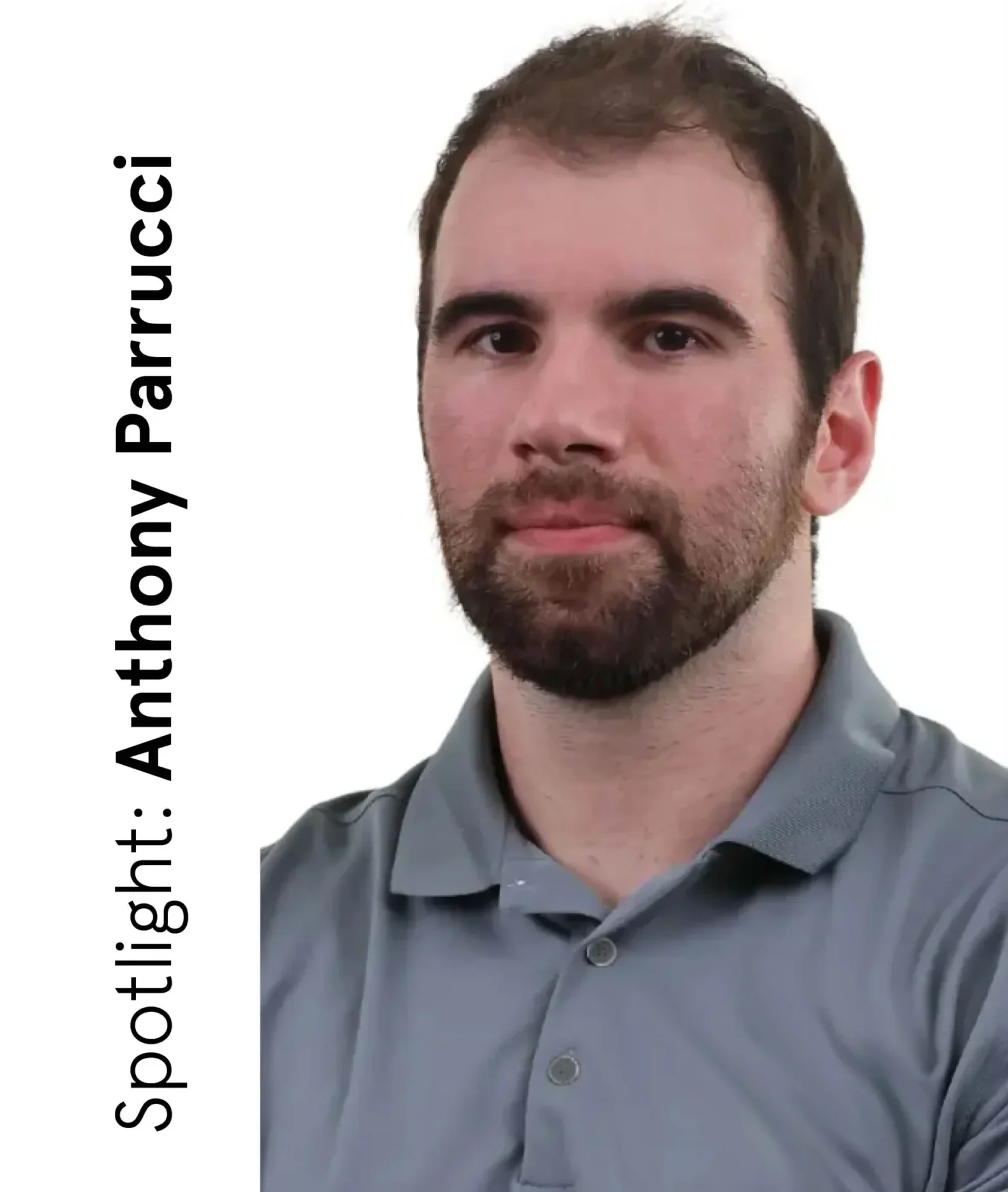
For this installment of our Spotlight series, we caught up with former Interwoven Design Group designer Anthony Parrucci, now a Soft Goods Designer at Newell Brands in Atlanta. From his early days dreaming of designing hockey gear to building innovative products for the baby industry, Anthony has carved a path defined by curiosity, collaboration, and a deep respect for hands-on making. In this conversation with Interwoven founder Rebeccah Pailes-Friedman, he reflects on conceptual prototyping, the power of “sketching in 3D,” and how early models can unlock new insights into user interaction and scale.

Photo courtesy of Anthony Parrucci

Anthony earned his master’s degree in Industrial Design from Rochester Institute of Technology after completing undergraduate studies in Business Administration and Art at Elmira College. Before joining Newell Brands, he spent three years at Interwoven Design Group, where he helped develop products across the athletic, medical, and military sectors—ranging from exoskeleton suits to technical bags and soft goods. His approach blends material experimentation with a strong focus on real-world usability. Outside the studio, Anthony brings the same discipline and drive he once applied to ice hockey, which he played at the professional and collegiate levels. Whether on the rink or in the workshop, he’s always been drawn to how performance, form, and human connection intersect.

Q:

Tell us a little bit about your background and how you found your way into industrial design.

A:

As far back as I can remember, I always wanted to be a hockey player. That was the dream. But what I found most exciting was the equipment—sticks, pads, helmets—and the idea of designing it myself. I knew I wanted to be the person behind the gear, making things better for athletes. But the funny thing was, while everyone could tell me how to become a pro hockey player, no one had any clue how to become a product designer. I kept asking, but nobody could point me in the right direction.

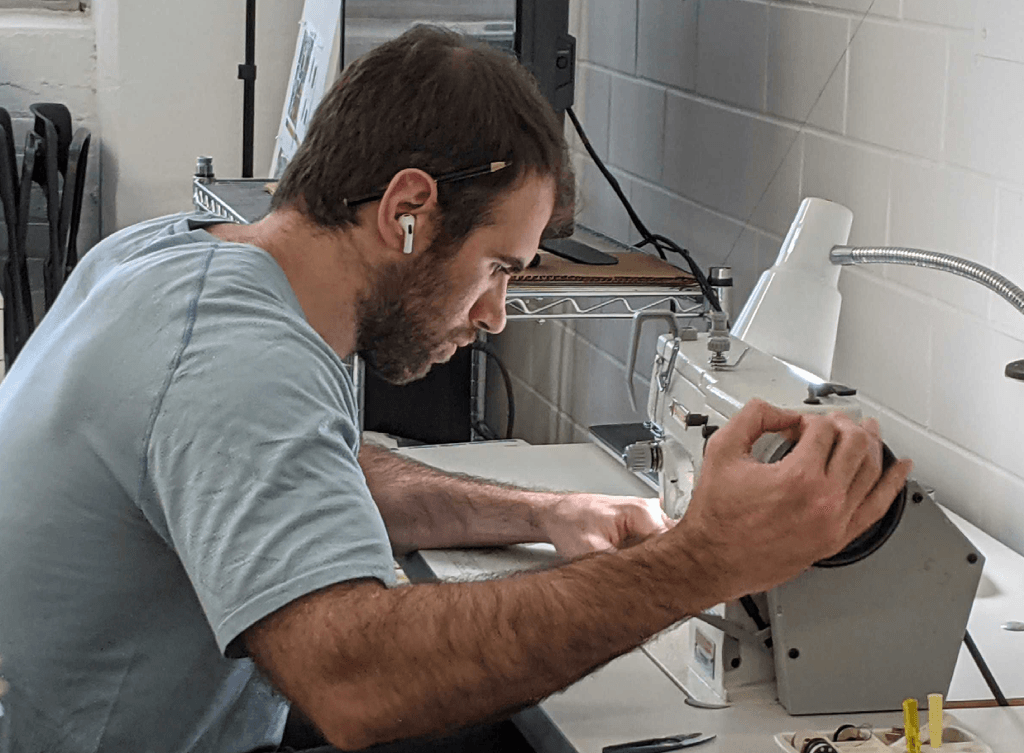
Anthony Parrucci sewing a prototype at Interwoven, working on soft goods design.
Anthony Parrucci at Interwoven, focused on soft goods prototyping

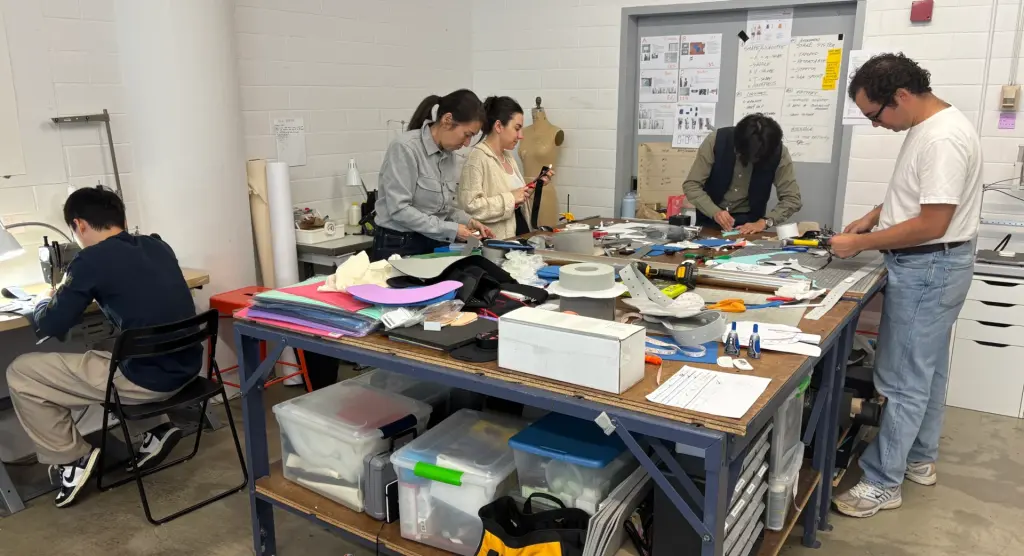
It wasn’t until undergrad that I met a professor who changed everything. He helped me find the path and really took me under his wing. I went to RIT, studied industrial design, and honed my skills while finishing up my hockey career. After graduation, I interned at Interwoven, and that turned into a full-time job—which was honestly one of the best places to grow as a young designer. I spent about three years there, getting my hands dirty, building fast mockups, and learning how to make ideas real. Now, I’m working at Newell Brands as a soft goods designer, focusing on the baby space. It’s a change of pace from Interwoven—bigger team, different structure—but the fundamentals of good design still apply.

Q:

What does conceptual prototyping mean to you, and what role does it play in your process?

A:

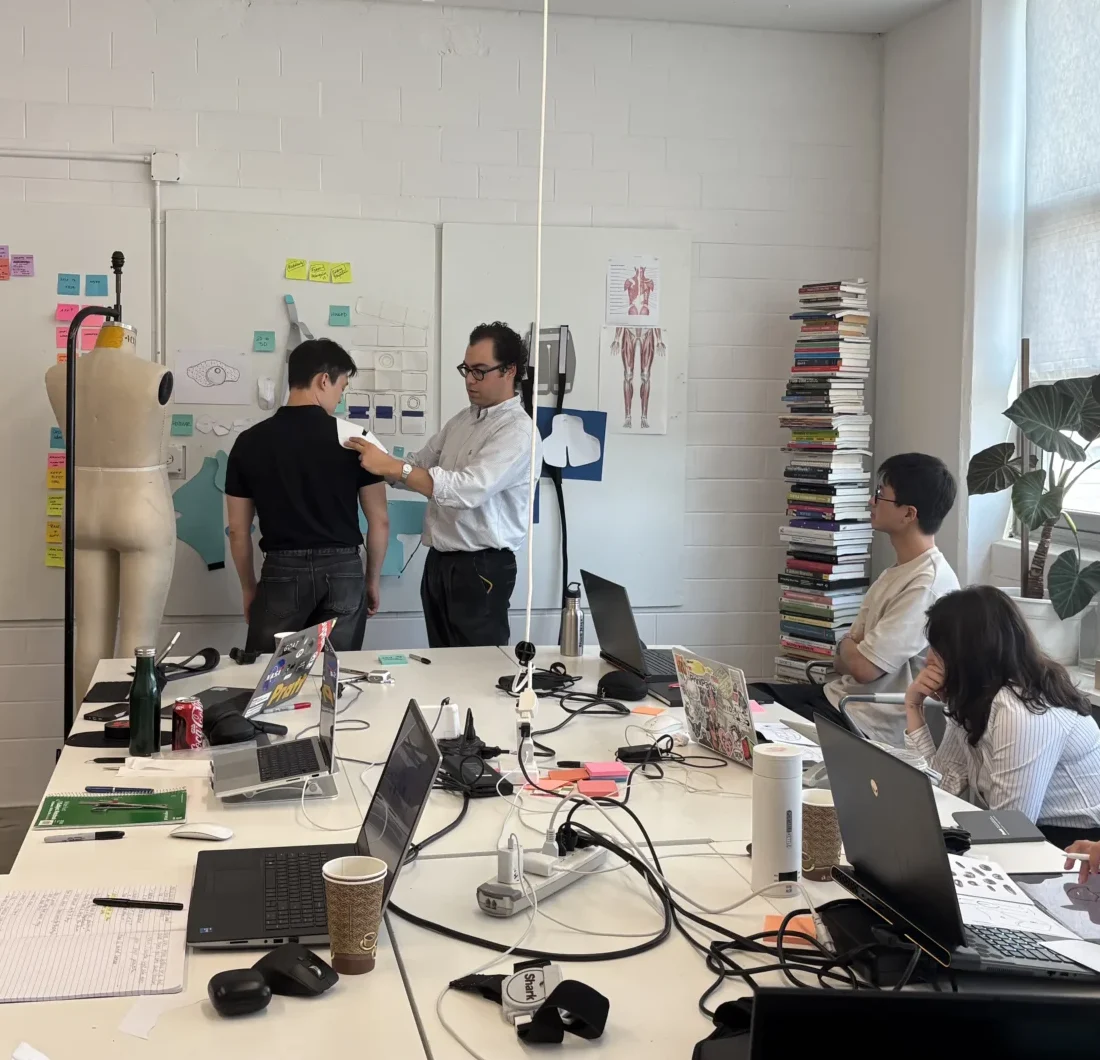
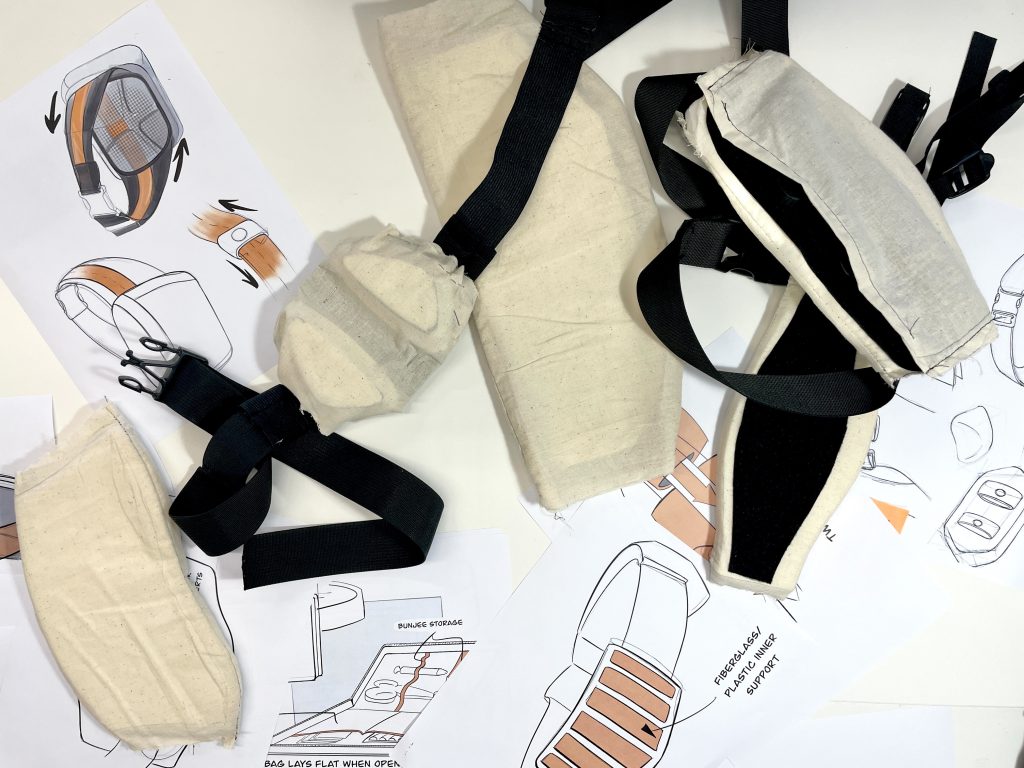
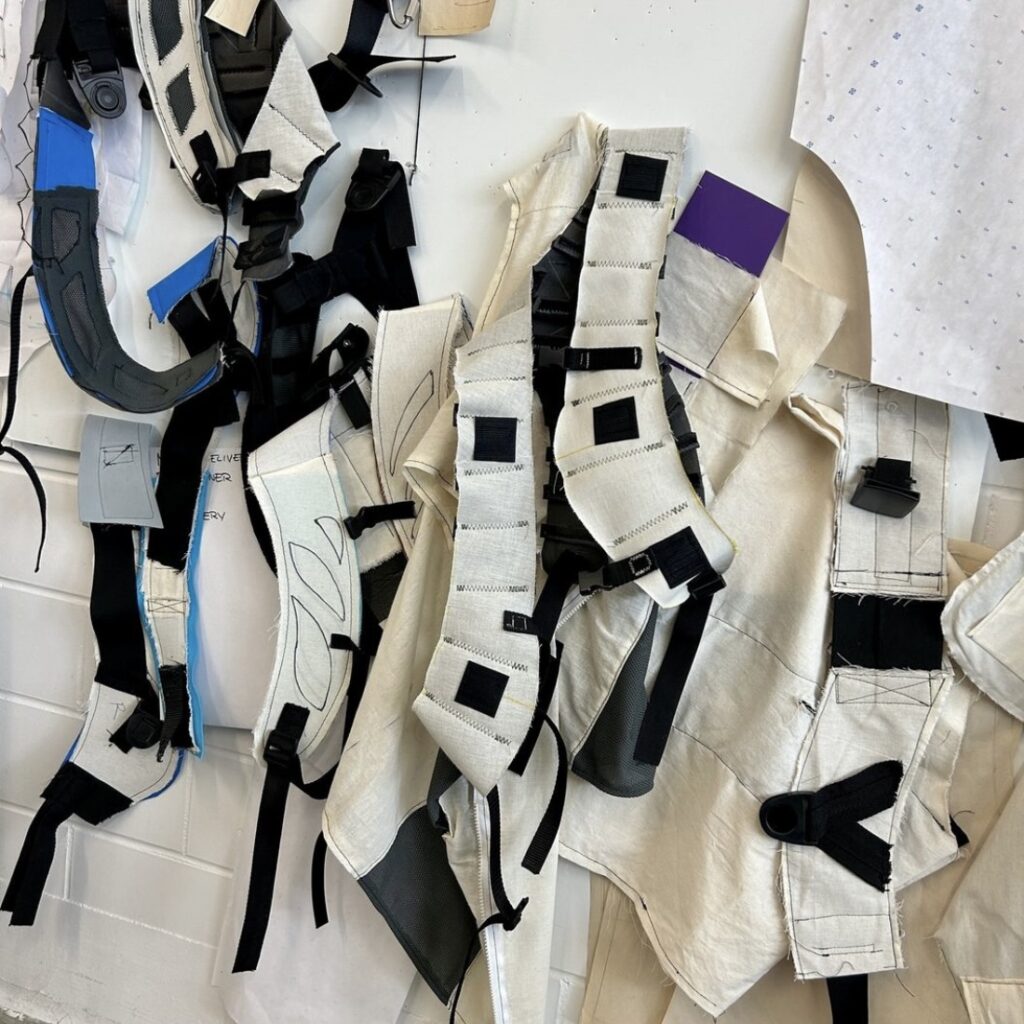
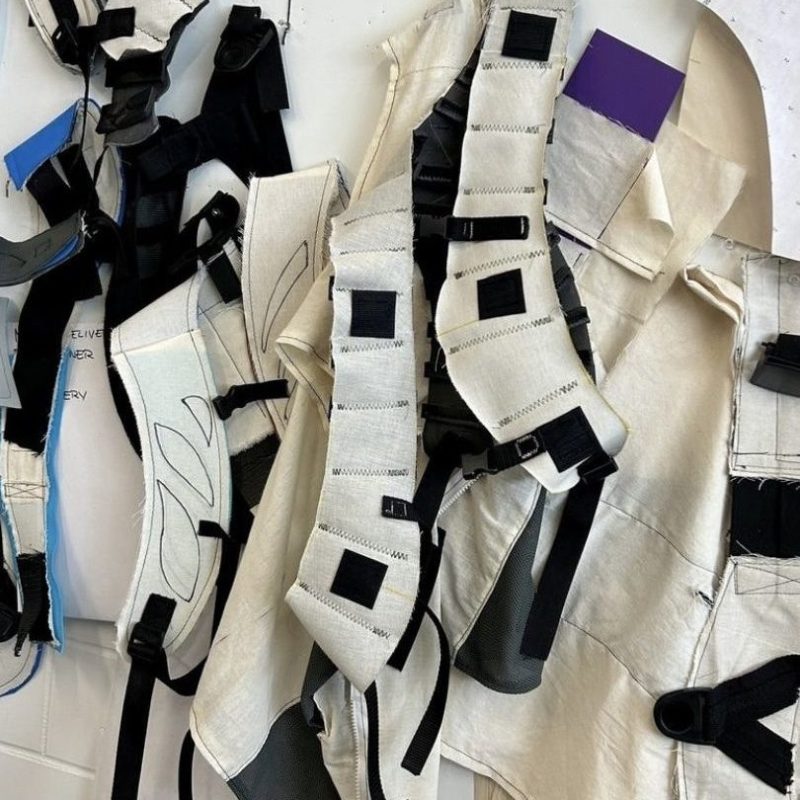
To me, conceptual prototyping is one of the most important parts of product design—especially when you’re working on the front end of a project. In fast-paced environments, having a way to quickly explore and communicate ideas is everything. I remember when I was in school, I was so hesitant to make mockups. I worried that if something was built with cardboard or hot glue, people would judge it. I’d think, “This muslin has raw edges—are they going to take it seriously?” It took me a while to realize that the point of those early models isn’t perfection—it’s validation. You’re trying to test an idea, not deliver a polished object.

Whitecloud Ideation
At Interwoven, muslin prototypes help bring design ideas to life.

Once you get over that mental hurdle and stop caring about fidelity, you’re limitless. You can make a crude mockup and say, “Imagine this part holds electronics,” and suddenly you’re in a conversation about function, user interaction, and viability. At Interwoven, that was a big part of the culture. You could build something messy, cheap, fast—and the point was to learn. It wasn’t about impressing people with how pretty something looked; it was about getting information quickly, failing fast, and saving money in the process.

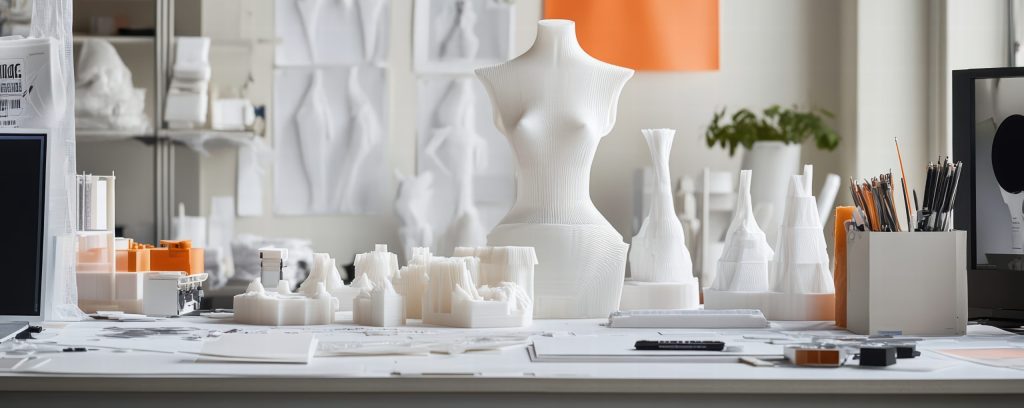
Sometimes a $1 muslin model tells you more than a $300 3D print. That’s the ROI of prototyping. Even though there’s no exact formula for it, you learn so much by making something tangible. And that knowledge pays off tenfold when you move to the next stage.

Q:

At Interwoven Design, we often talk about “sketching in 3D.” How do you think 3D prototyping compares to 2D sketching in your process? When do you choose one over the other—or do you use both?

A:

A lot of the time, they happen in parallel. I’ll jump back and forth between 2D sketching and physical prototyping depending on what I’m trying to figure out. But if I’m being honest, there were definitely moments—especially during projects at Interwoven—where I found myself sketching too much. I’d get stuck in the lines, trying to make things look good on paper, but I wasn’t really proving anything. I’d realize I was spending all this time drawing, but not actually learning how something would work in the real world.

That’s why I’ve always loved working in 3D early. I remember being in the studio with muslin draped on a form, sketching right on the body, ripping paper, taping things together. There’s just something about the immediacy of that. You’re not just imagining a form—you’re shaping it in real time, and often that translates right into pattern-making or the next stage of development.

Sometimes, when you’ve got a tight timeline or the project is super function-driven, I’ll skip 2D altogether and go straight to building. I’ll bring a quick muslin or cardboard mock-up to a team meeting and say, “This is what I think it’s doing.” That way, people can touch it, react to it, and we can talk through pros and cons on the spot. You don’t get that level of feedback from a sketch alone.

So yeah, I still sketch—but physical modeling is where I uncover the really good stuff. And often, once I understand how something works in 3D, then I’ll go back to 2D to refine the aesthetics or create a more polished representation. It’s a constant back-and-forth.

Q:

Can you share a specific example of a conceptual prototype that helped solve a problem or clarified your thinking during a project?

A:

Woman wearing the Ninja Frost Vault soft cooler backpack outdoors, surrounded by trees.
The Ninja Frost Vault soft cooler — a functional, fun design born from rapid prototyping.

The Ninja Frost Valut soft cooler project comes to mind immediately. That one was a wild ride in the best way. They came to us with a super tight turnaround—like two weeks—and said, “We need something functional and fun, and we need to validate the user interaction.” And keep in mind, this was a client with all the resources in the world. They had access to 3D printers, high-end materials, whatever they wanted. But even they knew that to move fast, we needed to get scrappy.

So instead of building out a full-size, high-fidelity prototype, we started with quick, rough mockups—cardboard, muslin, whatever we could use to visualize the structure. It was about figuring out how the top door worked, how the zipper would interact with the opening, how the compartments connected on the inside. They told us, “We want to fit 18 cans and a wine bottle,” which sounds specific but gets tricky once you start shaping the actual space.

That’s the beauty of these early mockups. They let you work within constraints and still explore. You’re building something real enough to evaluate, but flexible enough to change on the fly. We’d hold the model, try different openings, move things around. If we’d started with a polished CAD file or waited on a perfect 3D print, we would’ve lost valuable time—and we probably wouldn’t have caught some of the spatial issues until much later.

So even in a super corporate environment, the quick and dirty models were essential. They gave us clarity, speed, and insight—all things you can’t afford to miss when you’re on a tight timeline.

Q:

Can you give an example of a quick model that taught you something you wouldn’t have learned on paper?

A:

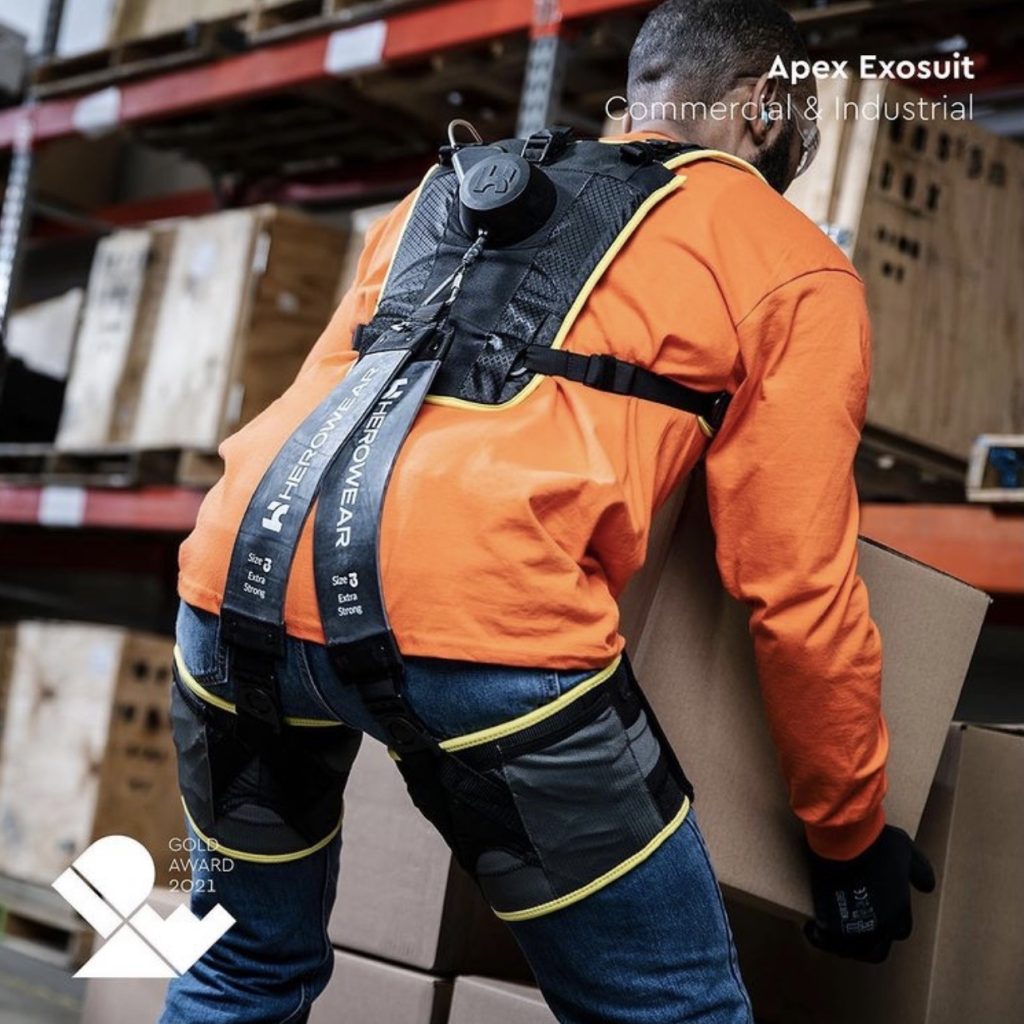
a warehouse worker wears the Apex Exosuit
IDEA Gold Award 2021 winner: Apex Exosuit

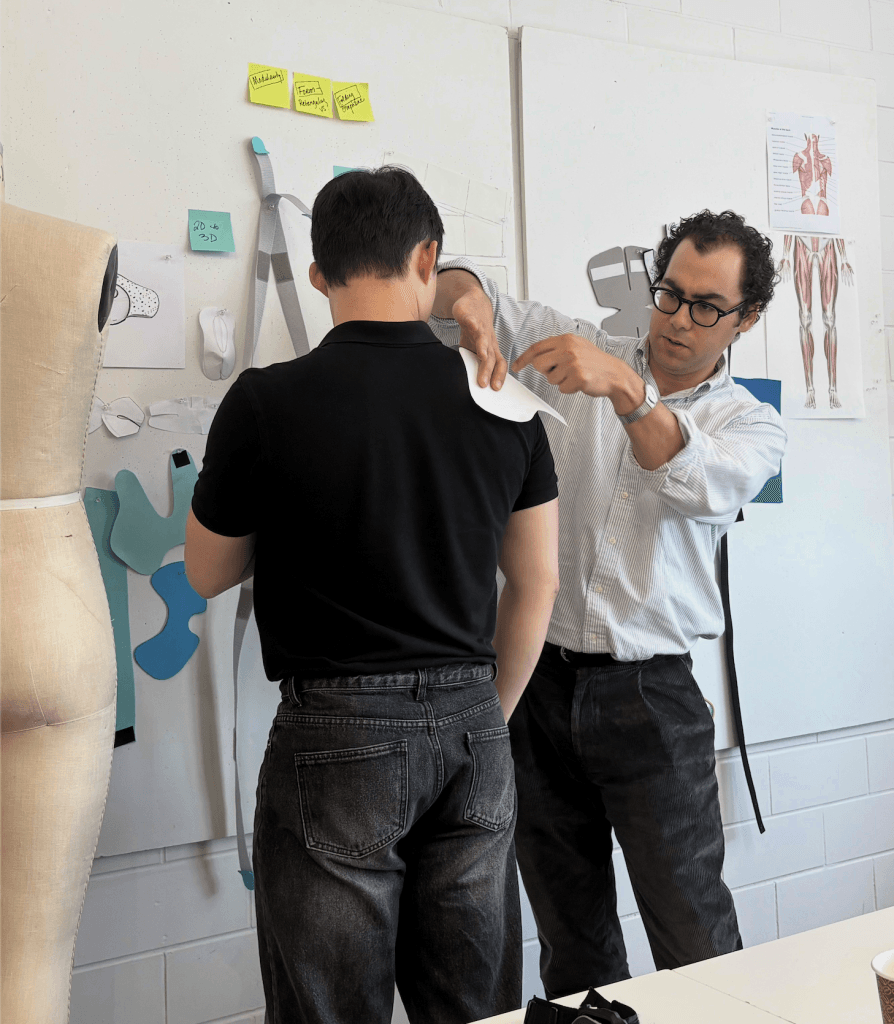
Totally. One of the best examples I can think of actually goes back to the HeroWear Apex exosuit. We were working on the early development of the wearable, and we were designing things like the shoulder straps and leg portions—really important areas for comfort and function. And the thing is, you can look at all the biomechanics research in the world, but until you physically mock something up and put it on a body, you don’t feel the impact of the design.

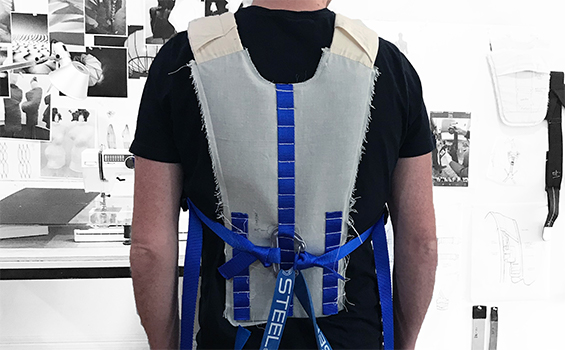
I remember making these super rudimentary models—muslin straps, cardboard cutouts, foam forms—and just trying things on. One tiny change, like shifting the sternum strap half an inch higher, would totally throw off the balance. It would start pulling back on the upper plate in this weird way, or it would choke you a little if there was any tension. It was a great reminder that the human body doesn’t care what the sketch says—it cares how it feels.

model wearing exosuit mockup harness
A model wearing a mockup of the the Apex Exosuit, rear view

That was especially true when we were testing on different bodies. Something that fit me well didn’t necessarily work on Aybuke or Meghan. We were seeing, in real-time, how much variation there is in anatomy. And we weren’t just looking at fit—we were watching how people used the prototypes. One person would put on a backpack starting with their left arm, another would hoist it from the bottom, someone else would swing it over their shoulder. All of those micro-behaviors matter.

So in that case, the mockups weren’t just about proving fit—they were about revealing differences in interaction, body types, motion, all of it. None of that was visible in the drawings. You had to build it and put it on people. That was the only way to really learn.

Q:

What kinds of materials do you gravitate toward when making these sketch models, and how do those choices shape the way you think through a problem?

A:

It really depends on what I’m trying to solve. I’ll use muslin if I need something that drapes or behaves like fabric, cardboard when I’m looking at form and structure, and EVA foam is kind of the wildcard that I love to use when I need something that does a little bit of everything. That stuff is gold—it can act like a soft shell, a flexible strap, even simulate Velcro depending on how you cut and tape it.

The thing you have to watch out for, though, is that people will take whatever you show them literally. If you’re showing a conceptual prototype to marketing or upper leadership and you use a stretchy mesh just because it looks good or is easy to sew with, they might say, “Oh wow, this feels amazing—we should use this!” And you’re like, “No, no, this isn’t the real material! It’s just here for the mock-up.” So I’ve gotten more strategic over time.

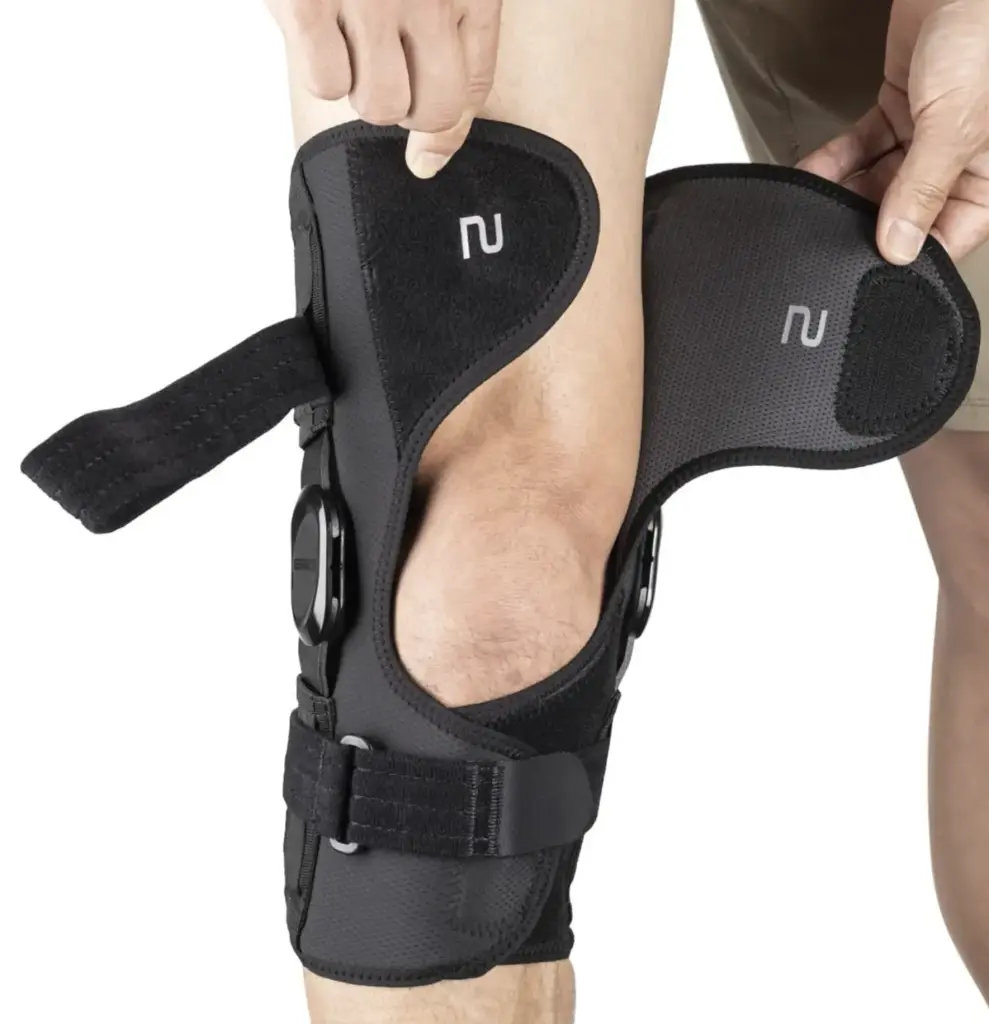
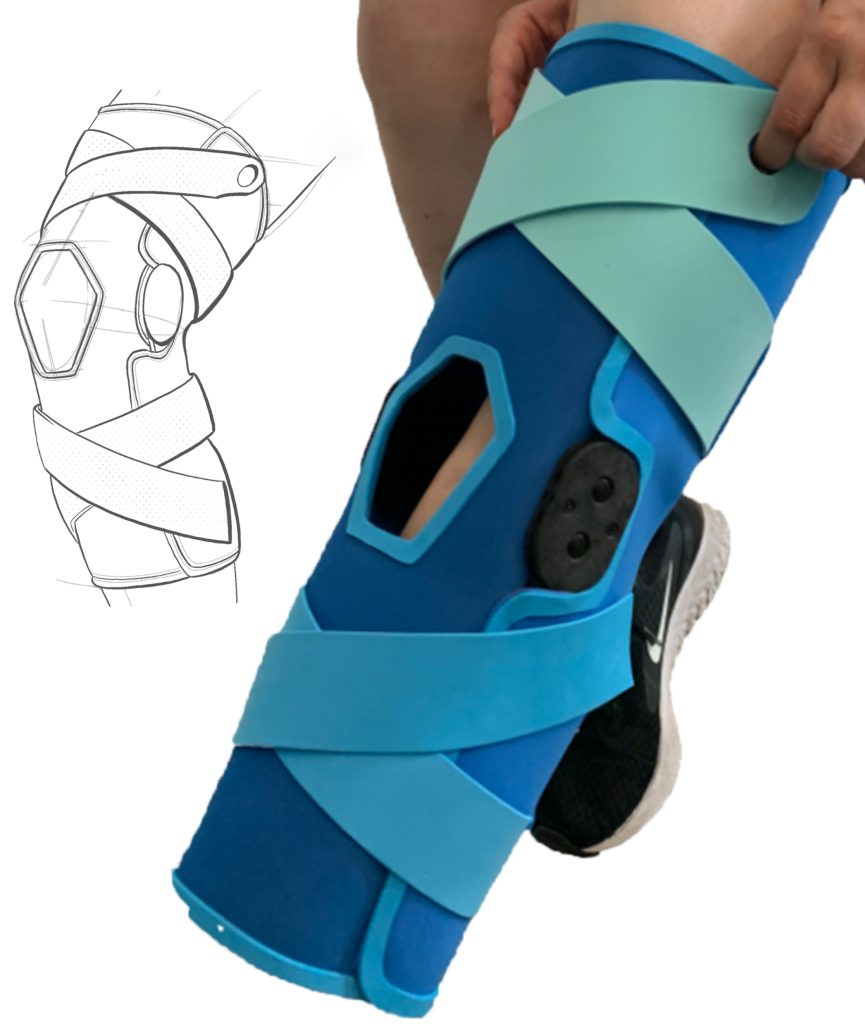
Breg CrossRunner™ Soft Knee Brace illustration and prototype on user
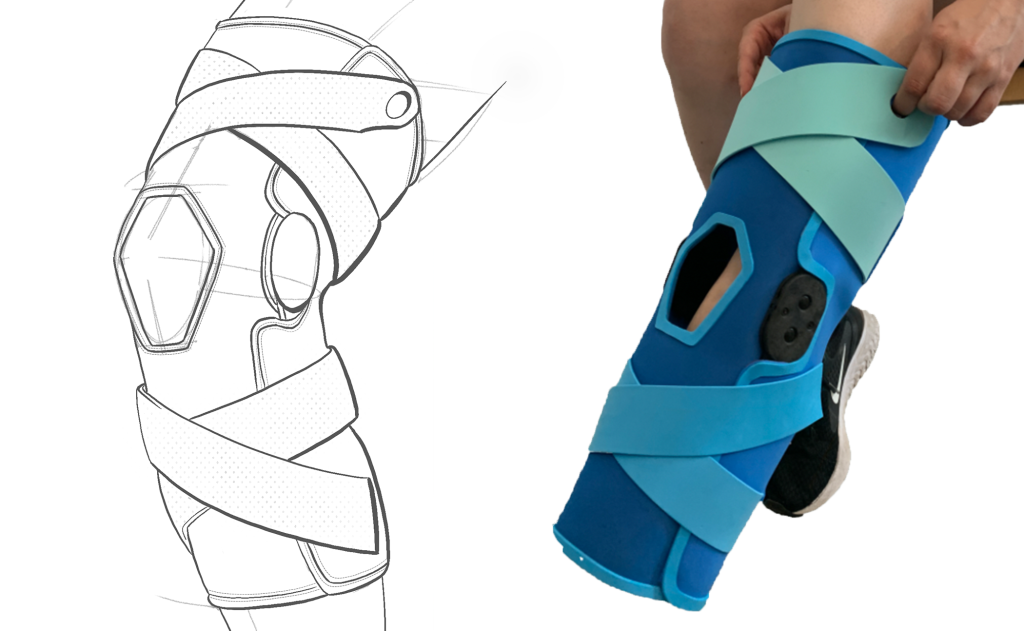
A colorful EVA foam prototype of the Breg knee brace

For example, when I was working on the Breg knee brace, I used EVA foam in all these crazy colors—turquoise, lime green, bright yellow—on purpose. If I’d made the models in black, which is what the final product was supposed to be, people would’ve gotten way too literal. But the wild colors kind of divorced the client from the final form just enough so they could focus on what the prototype was doing, not what it looked like.

So material choice isn’t just about function—it’s about communication. It’s about knowing who you’re showing it to and what message they might take away from it. I’ve learned to be really intentional about that.

Q:

What kinds of insights have you gained from building models that surprised you?

A:

So many. One of the most memorable was while working on the Apex exosuit for HeroWear. We were testing strap placements, and even with minimal tension, a small shift in sternum strap height could cause major fit issues. It made us more aware of how anatomical differences—especially between male and female bodies—affect fit. You also learn a lot just by watching how people put things on. No two users interact the same way.

Q:

How did your time at Interwoven shape the way you design and prototype today? Are there any techniques, habits, or philosophies you still carry with you?

A:

For sure. I think the biggest thing that Interwoven gave me—besides hands-on experience—was confidence. Confidence to put unfinished ideas in front of other people and say, “Here’s where I’m at,” even if it’s not polished. That’s a hard thing to do straight out of school. I was so used to trying to perfect everything before I shared it. But at Interwoven, we moved so fast. You didn’t have time to obsess. You had to get your idea out there, test it, talk about it, and then move on to the next iteration.

I remember the first time Rebeccah handed me a piece of EVA foam and said, “Just mark it up. Make a model.” And I was like, “Wait—what?” But once I did it, it unlocked something. It gave me permission to try things and not worry if they were ugly or halfway done. That mindset—that a rough idea is still a valid idea—has stayed with me. I carry that into everything I do now.

At Interwoven, we prototyped constantly. Blue-sky concepts, tech that didn’t even exist yet—we still made physical mockups to explore layout, user interface, ergonomics. Whether it was figuring out battery placement in a pet harness or mapping electronics onto soft goods, we always built first, then refined. That method taught me how valuable foam, muslin, and tape can be.

So even now, when I’m working at a much bigger company, that habit of diving in, getting hands-on early, and iterating fast is something I always go back to. It’s fundamental.

Q:

Conceptual prototypes aren’t always easy for clients or stakeholders to understand. How do you communicate their value without people taking them too literally?

A:

That’s such a good question—and it’s a challenge for sure. I think the biggest thing is knowing your audience. You have to anticipate what people are going to expect based on who they are and what kind of background they’re coming from. If you’re dealing with a huge corporation, they might be used to seeing fully 3D-printed, sanded, spray-painted mockups. That’s their norm. But someone else might be totally fine with cardboard and tape if it helps them understand the idea.

What I try to do is build in smaller checkpoints. Instead of waiting for a big Phase 2 presentation where everything’s supposed to be clean and “done,” I’ll push for a mid-phase touchpoint. It gives you a chance to say, “Here’s where we’re at—we haven’t spent too much time or money yet, but we’re getting important feedback now so we can steer in the right direction.” That sets expectations early and helps people focus on the ideas, not the finish.

Another trick I use is playing with scale and color. If you build something small, or in colors that clearly don’t belong in the final product—like making a knee brace mockup in bright turquoise and neon yellow—people immediately understand that it’s not final. It helps create that separation, so they look at the concept, not the aesthetics.

And sometimes you just have to say it directly: “This isn’t a final product. This is about exploring function, interaction, or layout.” That helps shift the mindset. The point is to open the door for feedback—not to get approval on a finished design.

Q:

In what ways does physical modeling—taping, folding, building—inform your digital work, and vice versa? When do you bring CAD into your process?

A:

I think physical and digital work are more intertwined than people realize. For me, they constantly inform each other. If I’ve built something to scale—like a muslin vest or a foam form—I’ll take photos of it and bring those into Illustrator. I might drop the opacity down and sketch over it. Or I’ll use it as the base for a tech pack, especially if we’re moving into a pattern-making phase.

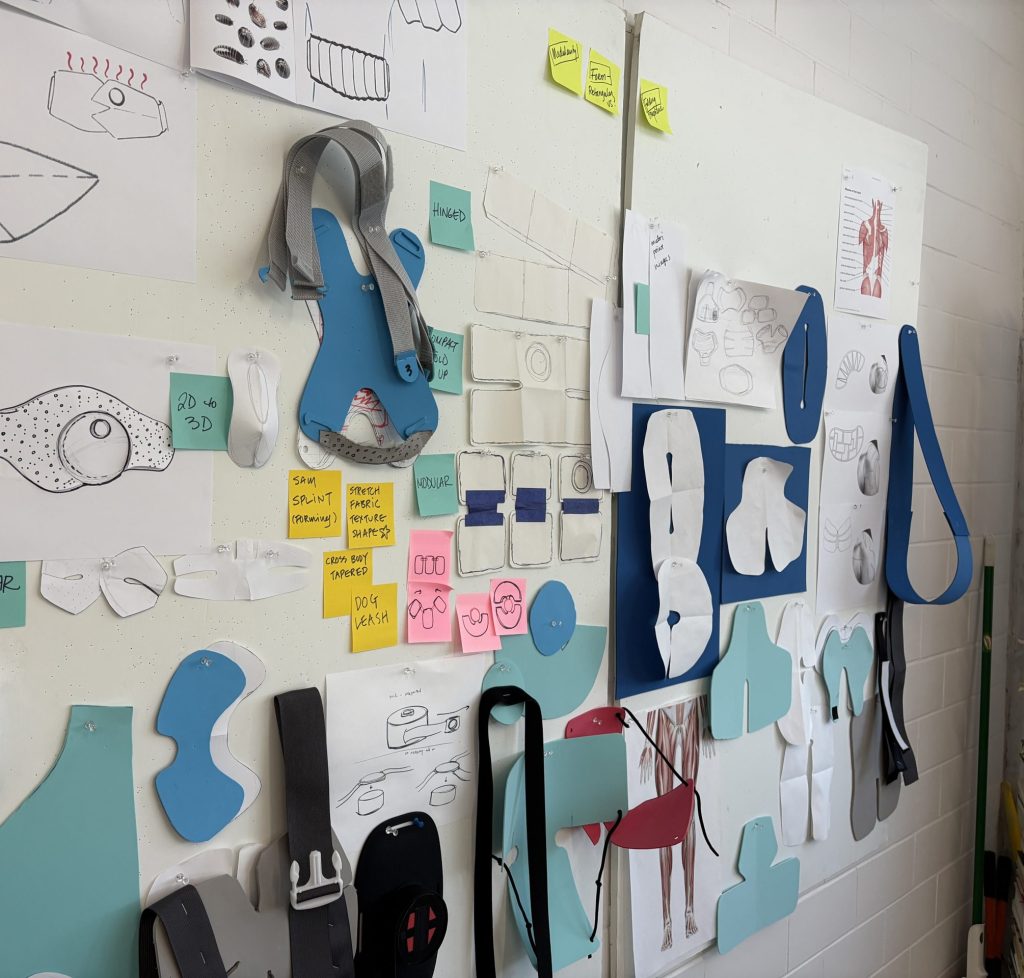
Interwoven muslin prototype pinup
At Interwoven, hands-on muslin builds inform the digital process, revealing nuances that screens alone can’t show.

Sometimes I’ll scan the flats of a muslin build and start drawing from there. That becomes the foundation for my Illustrator files or even for 3D modeling. And then as you start building in CAD, that’s when you find the real-world limitations—like, “Oh, we can’t mount this piece the way I thought,” or “This part is interfering with another component.” It’s like a back-and-forth conversation between the physical model and the digital file.

If you jump straight into CAD without building anything first, you miss so much nuance—especially around ergonomics and body interaction. The screen gives you precision, but the shop gives you truth. And once you have something physical, even a rough version, it makes your digital work smarter and more intentional.

Q:

What’s your take on failure in the prototyping process?

A:

Failure is 95% of it. You build quick mock-ups, find out what doesn’t work, and share them anyway. At Interwoven, we’d make 10 different models and walk through them as a team. Even if three of mine failed, someone else might spot something worth carrying forward. That back-and-forth was always valuable.

Q:

Final question: What advice would you give a young designer about sketch modeling?

A:

Get up from your desk. Go to the shop. Talk to people. Learn how things are made. And most importantly—don’t be afraid to fail in front of others. That confidence builds with time. Every mock-up, even the rough ones, teaches you something. And you never know who might see something in it that you missed.

Check out the rest of our Spotlight series to hear more from leaders in the design industry. Sign up for our newsletter and follow us on Instagram and LinkedIn for design news, multi-media recommendations, and to learn more about product design and development!
Please reach out!

Rebeccah Pailes-Friedman & Aybüke Şahin on Bridging Hard and Soft Goods in Industrial Design

Rebeccah Pailes-Friedman&Aybüke Şahin on Bridging Hard and Soft Goods in Industrial Design

For this Spotlight conversation, Interwoven founder Rebeccah Pailes-Friedman sits down with Aybüke Şahin, a Senior Industrial Designer who recently marked her fifth year with the studio. What begins as a casual conversation quickly turns into an expansive dialogue on what sets soft goods apart from traditional product design, why prototyping with fabric requires intuition as much as tools, and how the studio’s hybrid expertise shapes innovation across consumer, medical, and lifestyle categories.

Photo courtesy of Rebeccah Pailes-Friedman & Aybüke Şahin

In this rare peer-to-peer exchange, Rebeccah and Aybüke open up about shifting user expectations, navigating clients with very different design cultures, and how understanding human behavior continues to shape the way Interwoven brings ideas to life.

RPF: Okay, let’s get started. First, I just want to say thank you for taking some time out of your busy day to have this conversation about soft goods.

AS: Yes, absolutely—this is fun. We’re usually deep in projects, so it’s nice to step back and talk about how we actually approach the work.

RPF: So, to begin with, how long have you worked here now?

AS: It’s been a full five years.

RPF: Amazing. It went by fast.

RPF: What do you think is the biggest difference between traditional industrial design and the kind of soft goods work we do here at Interwoven?

a designer references a sketch of a buckle while prototyping
Hands-on with fabric prototypes at Interwoven to understand material behavior.

AS: I think the way we think about problems—or not even problems, but the conditions that come with softer materials like fabrics—are really different. In traditional hard goods, it’s sometimes easier to imagine things on paper or in CAD with rapid prototyping. But with fabric, we can imagine something and then it ends up behaving completely differently when we actually prototype it. I find there’s more back-and-forth, more revisions, especially in how components interact with softer materials.

RPF: I know exactly what you mean. Textiles behave differently than any other material. When you’re working in plastic or metal, the sky’s the limit—whatever you can CAD, you can produce. But with textiles, you’re limited by how the material behaves. You have to understand the material’s behavior in order to design something effective.

AS: So Rebeccah, in your expertise—and you’ve been in the field for quite some time now—how do you think user behaviors in relation to wearables or soft goods shape the way we prototype and test?

RPF: I think it all comes down to people’s behavior—how they move, how they feel comfortable. If something is uncomfortable, it literally changes the way you behave. Think about how dress clothes used to be the norm. Who wants to wear a dress shirt or a blazer now? You can’t move your arms, you can’t breathe—it’s physically restricting. I think that shift in tolerance—people just aren’t willing to be uncomfortable anymore—is huge. Understanding human behavior and translating that into the products we design is a core part of what we do. And you really saw that shift during the pandemic. People got used to wearing comfortable clothing at home and now they don’t want to go back to discomfort. That changes how we think about designing soft goods.

AS: I totally agree. And soft goods is definitely growing as an industry. When we first started doing this, there weren’t many people in the space who did what we do. Now there are a lot more. There’s more research, more product development, and more technologies popping up that incorporate wearable or soft systems.

RPF: Yeah, and it all comes back to how people want better experiences—something that’s easier to use, something that gives them value in their daily life.

Arete Swatch team consideration
Interwoven’s design process involves testing and iterating materials to uncover their unique properties.

AS: Exactly. But with soft goods, it’s not that simple. You can imagine something perfectly in your head, or even draw it out precisely, but the moment you start working with the fabric, it surprises you. Textiles behave in really unique ways. They stretch, fold, collapse, resist—things you can’t always predict until you physically make the piece.

RPF: Yes! With textiles, behavior is everything. When you’re designing in metal or plastic, you’re only limited by the constraints of your tooling or manufacturing method. But with textiles, you’re also designing within the behavior of the material. If you don’t understand how it drapes, stretches, or responds to tension, you’re lost.

AS: That’s why I think our design process here often involves more back-and-forth between ideation and physical prototyping. There’s more revision, more iteration, because the material itself is such a big part of the equation.

RPF: It’s funny—sometimes the constraints of fabric can be frustrating, but they also force you to get creative. And over time, we’ve built our own internal “library” of material behaviors and techniques. It’s experience, but also intuition.

AS: And it’s collaborative. We learn from each other all the time here—about materials, patterning, construction, testing. It’s not just about getting a good idea out; it’s about translating that idea into something functional, wearable, and manufacturable.

AS: So building on that—let’s talk about our methodology for designing comfortable, inclusive, and high-performing soft goods?

RPF: It’s not just about softness or flexibility. It’s about how products move with your body, how they accommodate different sizes and shapes. Designing for comfort now means understanding biomechanics, posture, and even emotional cues.

AS: It’s part of why soft goods are growing so quickly as a category. There’s more demand, more innovation, more cross-pollination between fashion, health, tech, and lifestyle. When we started doing this work, there weren’t a lot of people combining design and engineering in this way. Now it’s really taking off.

Rebeccah Pailes-Friedman and Aybüke Şahin in conversation at Interwoven studio, seated at a white table with books in the background.

RPF: Another thing I think sets our work apart at Interwoven is the way we merge soft and hard components. I’ve always been drawn to that crossover, and it was one of the reasons I was so excited to bring you onto the team—your background in hard goods really expanded what we could do.

AS: Thank you! I’ve really enjoyed that part of the work—figuring out how to integrate structural components like electronics, batteries, or sensors into wearable products without compromising comfort.

RPF: There’s a long tradition of wearing textiles, of course—clothing has been around forever—but there’s not a long tradition of integrating textiles with technology. It’s still relatively new. We’ve been on the forefront of this field for over 15 years.

AS: That’s what makes this work so exciting. Depending on the product category—whether it’s medical, travel, lifestyle—we have to adapt our approach. The way we combine soft and hard materials changes depending on regulatory standards, user context, durability needs, even washability.

RPF: We’ve developed a methodology, but it’s flexible. Every project brings new questions. And our experience becomes this evolving library that we draw from—but never apply in exactly the same way twice.

AS: We’ve worked on projects where even the smallest detail—like the orientation of a seam or the coating on a zipper—can make or break the user experience.

RPF: Yes. And I think this is especially true in health and medical products. More and more, users expect those products to offer experiences, not just functions. They want something intuitive, comfortable, attractive—not just technically correct.

Even Adaptive
Even Adaptive lingerie

AS: That was a big part of our work on the Even Adaptive lingerie line. It needed to function for people with limited mobility, but it also had to feel empowering. It had to look good. It couldn’t just scream “assistive device.”

RPF: Exactly. It had to be part of a person’s daily life, not a constant reminder of their limitations. And I think the final result really achieved that. It wasn’t just helpful—it was beautiful. And it ended up being useful for more people than we originally imagined.

AS: That’s one of my favorite kinds of outcomes: when inclusive design leads to better design for everyone.

RPF: Let’s switch gears for a moment. Over the years, we’ve worked on all kinds of products, but one of the more recent launches was the SharkNinja FrostVault cooler backpack. What did you find particularly interesting—or challenging—about that project?

AS: A lot, actually. First, working with the SharkNinja team was really interesting. Their internal process is very fast-paced, and different from ours. They had multiple teams working on different parts of the product simultaneously, so we weren’t always privy to the full picture. That made collaboration a little tricky sometimes.

RPF: Yes, I remember feeling like we were coming in to solve parts of a puzzle, but we weren’t always sure what the final image would be.

A woman sitting outdoors using the SharkNinja FrostVault cooler backpack, with food stored in its compartments.
SharkNinja FrostVault combines structure and soft straps for comfort.

AS: Exactly. That said, I really enjoyed the challenge. From a product standpoint, it was technically fascinating. We had to think about waterproofing, insulation, internal organization—all while making it wearable and comfortable.

RPF: And even though the exterior was technically textile-covered, it wasn’t a soft good in the traditional sense. Most of the bag was rigid, with plastic-coated fabric to repel water. The true soft goods component was the strap system.

AS: That’s where we had the most impact—designing for fit and comfort across a range of body types. I remember testing on you and Anthony and realizing how much the same strap design could feel completely different depending on the user.

RPF: It was a real lesson in anthropometrics. And it goes back to that idea of merging hard and soft—making something that performs structurally but feels good on the body.

AS: There was also the challenge of sealing off the internal compartments. One section needed to stay cold and insulated, while the upper section needed to be separate for dry storage. Getting that internal seal right—without adding bulk—was no small feat.

RPF: It was a tight balance between design, engineering, and user comfort. But the final product is really strong, and I think our collaboration with their team made it better.

RPF: One thing I’ve noticed is that we often partner with teams who share similar skills to us—but not our specific expertise. We’re frequently brought in to bridge gaps, especially when it comes to human interaction and wearability.

AS: Yes, and I really enjoy that. Sometimes we work with an engineering team that knows everything about mechanics, but hasn’t thought much about how something will actually feel on the body. Or we work with an industrial design team that hasn’t dealt with textiles before.

RPF: It’s a good reminder that design is never one-size-fits-all. It’s always collaborative, always context-driven.

RPF: Okay, time for a fun question: What’s one soft goods or wearable product you absolutely can’t live without?

AS: I have two! First is my sleep mask. It’s simple, but I love it. It covers my eyes and has a puffy filling—not just dense foam. The headband is really soft and comfortable. I use it every night.

RPF: That’s a good one. And the second?

AS: My dog’s harness and leash! I’ve gone through so many versions to find the right one—something he’s comfortable wearing, that I can easily use, and that doesn’t mess up his fur. One of them even made him limp because of how it applied pressure to his shoulder. I didn’t realize a harness could do that until I switched to a different one and the limp disappeared.

RPF: Wow. That really shows how critical good soft goods design is—even for pets. Pressure distribution, material selection, adjustability—it all matters.

AS: It does. It’s made me hyper-aware of how even small design choices can have huge consequences for comfort and safety.

RPF: That really brings it full circle. What we do here—whether it’s for people or pets, medical or lifestyle—comes down to paying attention. To behavior, to comfort, to context.

AS: Exactly. And honestly, this has been really nice. We work next to each other every day, but we rarely stop and have a full conversation like this.

RPF: I know! This was so fun—and a great way to mark five years. Here’s to the next chapter.

Check out the rest of our Spotlight series to hear more from leaders in the design industry. Sign up for our newsletter and follow us on Instagram and LinkedIn for design news, multi-media recommendations, and to learn more about product design and development!
Please reach out!

Yukiko Naoi Joins Interwoven as Creative Director

Interwoven Design Group Expands Medical Design Expertise with the Appointment of Yukiko Naoi as Creative Director

Brooklyn, NY – May 1, 2025 – Interwoven Design Group is thrilled to announce that Yukiko Naoi has joined the team as Creative Director. A seasoned leader in medical product design and a long-time collaborator with Interwoven Design, Naoi brings a unique, multidisciplinary perspective that bridges the worlds of design, medicine, and wellness. Her addition to the team marks a significant expansion of Interwoven’s capabilities in the medical design and packaging fields, reinforcing the company’s commitment to innovative solutions across the market.


Naoi’s career spans over two decades in industrial design, with a specialized focus on medical devices, diagnostics, personal care products, and packaging. As former president of Tanaka Kapec Design Group (TKDG), she led groundbreaking work in medical packaging, human factors research, and healthcare innovation, collaborating with industry leaders such as AstraZeneca, Bausch + Lomb, and Johnson & Johnson. Her extensive experience in regulatory compliance, usability research, and design for manufacturing will be instrumental in advancing Interwoven’s medical design practice, and her structural packaging experience will strengthen their packaging design practice.

Beyond her industrial design expertise, Naoi is also a licensed acupuncturist and founder of Rest NYC, a clinic dedicated to integrative health and wellness. Her ability to merge clinical insights with human-centered design allows her to create products that enhance patient outcomes and experiences, improving everyday lives. This unique combination of skills positions Interwoven Design to expand its influence in patient experience and wearable technology solutions for healthcare.

“We couldn’t be more excited to welcome Yukiko to the team,” said Rebeccah Pailes-Friedman, Founder of Interwoven Design Group. “Her expertise in medical product and packaging design as well as research-driven, user-centered healthcare solutions aligns perfectly with our mission. With Yukiko’s leadership, we are poised to deepen our impact in the healthcare design sector and develop groundbreaking innovations in wearable health technology.” 

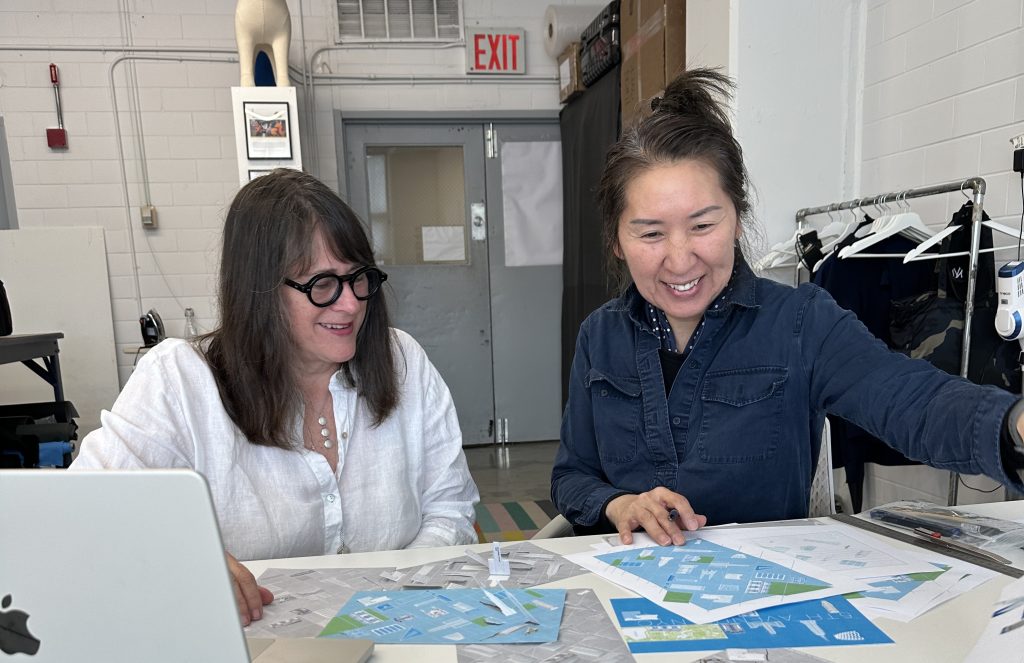
Rebeccah Pailes-Friedman (left) and Yukiko Naoi (right) collaborate at Interwoven Design Group’s Brooklyn studio, celebrating Yukiko’s new role as Creative Director.

Naoi has been a long-time friend and collaborator of Interwoven Design Group, contributing to multiple medical design projects over the years. In her new role, she will lead the studio’s medical design strategy and development, helping push the boundaries of wearable technology, health innovations, and e-textile solutions. Her expertise will allow Interwoven Design to broaden its partnerships within the medical industry and explore new frontiers in healthcare design.

Interwoven Design Group is a Brooklyn-based product design and development studio specializing in wearable technology, smart textiles, and innovations in health, medical, and consumer products as well as packaging. The studio is a thought leader in the wearable technology sector and committed to supporting women in design. By combining expertise in fashion, engineering, material science, and product design, Interwoven Design Group creates forward-thinking solutions that seamlessly integrate technology with the human body.

Please join us by welcoming Yukiko to the team!


A Q&A with Inclusive Entrepreneur Marianne Weber

A Q&A with Inclusive Entrepreneur Marianne Weber

Spotlight articles shine a light on designers and design materials we admire. Our founder and principal designer Rebeccah Pailes-Friedman has encountered many talented designers throughout her career, and in our Spotlight interviews we ask them about their work, their design journey, and what inspires them. In this interview we spoke with Marianne Weber, the founder and CEO of the inclusive lingerie line Even Adaptive and a licensed occupational therapist at Johns Hopkins Hospital. Marianne worked with Interwoven to realize her empathetic vision, founding Even Adaptive in 2021 and launching the adaptive lingerie line in 2024. That our team contributed to Marianne’s incredible project, which won a Core77 design award in 2023, makes this a particularly special Spotlight feature for us. We asked Marianne about what inspired her to become an entrepreneur, the power of designing for a traditionally neglected audience, and what it was like to work with a design team. 

Portrait of EvenAdaptive CEO Marianne Weber
Photo courtesy of Marianne Weber.

Q: You had a career in occupational therapy when you became an entrepreneur. What inspired that transition? 

A: I’m still currently working as an occupational therapist and keeping up my license, so it’s a long, slow transition. I’m still providing people with what we do as occupational therapists: providing independence and helping them relearn how to do things for themselves. It’s definitely a career change, moving into a CEO and founder role and away from being a full-time therapist. But I feel like the change is necessary for touching more lives than I could in my occupational therapy role. When I had the idea to make this happen, I didn’t immediately think, I need to switch jobs. This has been a three-year journey so far, and I’m still doing both roles. 

The job I have is in acute care. What that means is that I come in when people are initially in the hospital or post-op day one. I’m seeing people at the most heightened and scared time of their lives, and it has to be taken very seriously every moment that I am working as an OT because one wrong step and I could seriously injure somebody. I’m not able to focus on being a CEO when I am at my job, I still have to be a hundred percent there and present. Then when I’m not there I can be 100% present as the founder of Even Adaptive. 

I think one element of the transition that changed my perspective was starting to talk to all of my patients about their engagement and their sexual health as well. As occupational therapists, we focus on making sure that everybody can complete their activities of daily life, their ADLs, and sex is one of those things that we have within our scope of practice. Before becoming the CEO and the founder of Even Adaptive, I was a bit more shy about asking those questions because my toolbox wasn’t full. But, through this process, I’ve done a lot of continuing education. I became more educated on how I can help people through the process of creating our products.

Q: You explain that confidence and sexiness are the pillars of your brand ethos, could you elaborate on that?

A: When you’re faced with these disease processes or you have a disability of some kind, a lot of society communicates that these people are not allowed to express themselves in any kind of sexual manner. They’re not allowed to date, and they’re not looked at as valuable in that way that other women can be when they have full function. The pillars of being independent and sexy go hand in hand for Even Adaptive. If we can make you feel good, and increase your confidence and your independence by providing you with something that you want to be wearing instead of something that was made for 75% of women out there, then we can help to drive change. Sexiness is not just about how someone else is perceiving you but about how you perceive yourself.

Q: Your brand focuses on a neglected target audience. Did anything about this audience surprise you? 

A: I don’t know if they’ve surprised me so much because I’ve been working with this community for many years now, but one thing that I was excited about was how willing they are to lift everybody up. In so much of the world, when you’re trying to do something new, you hear no over and over again. But this community says, Let’s make change. Let’s do this. Let me post about it. Let me share your website. Everybody is excited to be involved in the ambassador program and get their name out there and their story out there. They are used to being told no as well, so when somebody finally tells them, This is for you, they grab onto it and they’re excited to be a part of it.

I’ve got both sides of the coin. We’re looking for fundraising and venture capitalists are 98% men. You’re faced with talking to men about women’s bras and underwear but also about women with disabilities and underwear. It’s this far out concept to them. They think, Who out there would need this? No we’re not going to fund that. I don’t see how it’s going to make money. But when you give it to the people who need it, they’re extremely excited to hear about the product and want to know more and be involved.  As an entrepreneur, there’s one side that’s beating you down, but then the other side that’s lifting you up. There’s a balance.

I think my personal story into why this business came to be is a pretty powerful story and seems to resonate with a lot of people. It doesn’t resonate so much with men but whenever I can tell it to women entrepreneurs they get it right away.

Q: Could you tell that story?

A: I was in graduate school in 2018 and it was finals week. I was having trouble with my vision and I was thinking, I’m going to go to the doctor and get really cute glasses!  The doctor thought something was strange, so he sent me in for an MRI. The MRI resulted with multiple lesions in my brain and my cervical spinal cord, and a very long diagnostic process led to a diagnosis of MS [Multiple Sclerosis]. So I was diagnosed with MS during finals week of grad school to become an occupational therapist. I already had my career laid out for me. I knew what I wanted to do, and it just happened that this was happening at the same time. The whole disease diagnosis process is fairly unpredictable with MS. Being me, with well-established anxiety, I was going through all the terrible things that could come from it. It was a very taxing year for me before I got on medication and was able to deal with it. In that process, I started working at Johns Hopkins in neurology. I was watching these women, who were dealing with a more advanced disease process than I had, not be able to do basics for themselves because that’s my whole job: to help people to be able to do those things again. These women couldn’t put bras on. Those were always the first things that women with neurological conditions gave up on, their underwear and their sexuality. They would just say, What? I’m never going to leave my house again, so why do I need to do this? But that doesn’t have to be the only option.

Even Adaptive was created from my own experience of going through this diagnosis and feeling like my self-worth was down in the dumps, and then watching women have this reaction over and over and over. I wondered, What is the thing that I can do to help these people? And the answer was to create an adaptive intimate line, because it was the one thing I couldn’t solve. I can teach anybody how to put on a shirt one-handed or a pant or a sock, there are tools out there for that. But nothing existed for these women that could lay the foundation of confidence and help them to feel good again. 

Q: Could you talk about your experience working with Interwoven? What was it like to have a vision realized with a design consultancy? 

A: When first I called Rebeccah, I remember her calling me back very quickly. She was immediately interested in the concept. Hearing that, I realized, Someone is going to help me with this! It was very exciting that she was able to see the vision, wrap her head around it, and know confidently that she could come up with a functional solution. It was so exciting to have a team of experts that had this portfolio behind them, that actually listened to what the product needed to be. I think Interwoven did a great job of taking the requirements that I knew that the product needed and creating something that has never been done before; to make it the best in the market and the only one-handed functional bra product that exists. The other beautiful thing that they did for me was to think about how the product was going to survive in the world in an extremely realistic way. They thought, We’re putting this work in, has this been created before? Has this been patented before? Are we going to be able to get a patent through? They did work to find out how it’s going to be manufactured, and they thought about the pricing. Interwoven thought about every detail, so they knew that the product would be viable once it left their hands. That was one of the most important things that they gave to me besides the clasp design. They wanted to see the project succeed, so they designed it with that in mind.

Q: What is something you experienced in the Even Adaptive journey that you didn’t anticipate? 

A: It was surprising how much attention went into creating this product. The multiple iterations and all the trial and error, all of the tiny little changes that Aybuke would make along the way…the product is highly fine-tuned and functional. When you’re not on the inside, you don’t think about what it takes to really create something like this. I was surprised at how much they cared.

Q: While awareness is growing, inclusive design is not yet a universal priority. What does the landscape of the inclusive market look like from your perspective? What are your hopes for this market? 

A: Since I started, I do see more adaptive companies. They’re starting to get funding and they’re popping up more and more often. I am seeing a big shift in the normalization of it. It’s still really slow moving. In terms of taking into account the look of the products and being fashioned forward, a lot of them are stuck on function. I do think that we’re going to move into a realm—and this is part of what Even Adaptive wants to help accomplish—where you don’t have to search endlessly online to find the thing that will help you get dressed after breaking your arm. You should be able to just pop online, already have a brand in your head, and order it up. There are a ton of inclusive designs that have been normalized in our homes, like all of the door handles that are levers instead of knobs. That’s an inclusive design option and we don’t think twice about it. It’s just in houses everywhere now. 

Hopefully that’s where adaptive clothing will go. It happened with baby onesies overnight. Somebody came up with baby onesies that have magnets and moms are like, Yes!  That’s a cool normalization, and that inclusive normalization is going to move up the line as long as we can make things that people want to wear.

Check out the rest of our Insight series to learn more about the design industry. Sign up for our newsletter and follow us on Instagram and LinkedIn for design news, multi-media recommendations, and to learn more about product design and development!
Insights from the Women in Design Committee

The article “Insights from the Women in Design Committee”, written by Rebeccah Pailes-Friedman, was published in the Winter 2023 Issue of Innovation Magazine.

The Women in Design Committee comprises a rich tapestry of individuals hailing from diverse backgrounds and experiences. Our membership is a dynamic mix of practitioners and academics spanning young professionals and seasoned designers, including entrepreneurs and those employed by large corporations. We proudly represent gender and racial diversity.

We represent five distinct regions across the United States. Marcelle van Beusekom, IDSA, senior designer at Aruliden, represents the Western district. Elham Morshedzadeh, PhD, IDSA, assistant professor at the University of Houston, represents the Southern district. Annie Abell, IDSA, associate professor of practice at Ohio State, represents the Central district. Priyankaa Krishnan, IDSA, design and change manager at Meta represents the Midwest district. I, the founder and principal of the Interwoven Design Group and Professor at Pratt Institute, represent the Northeast district, and Lea Stewart, IDSA, senior manager at Newell Brands, leads the committee.

In this article, the six of us come together to engage in a conversation about our experiences. Our objective is to uncover shared experiences, explore our differences, and, ultimately, convey our collective wisdom, which we are excited to share with you. The following features excerpts from our conversation.

Breaking Barriers 

Entering the field of industrial design can be a challenge, and landing that first job can be a pivotal moment in one’s design career. We all have experiences to share about that transition. My path is rather unconventional. I came from a highly successful corporate career in apparel design, having held design director positions at Nike, Fila, and Champion. However, transitioning to industrial design proved to be exceptionally challenging. After completing my MID, I faced difficulty finding a job. Ultimately, I charted my own course, combining my skills and reimagining myself as an expert in wearable technology and smart textiles. I leveraged my experience, merging it with product design to jumpstart my career as a design consultant.

Setting yourself apart is the key to standing out in a job search. Van Beusekom recalled a disheartening comment she received during an interview for her first internship: “They said, ‘Oh, they still have you design this device in your school?’ It was then that I realized not all schools support students in building a strong, distinctive portfolio. Fortunately, I learned this before graduating and spent a year studying abroad at a different school. This allowed me to create unique and relevant case studies, learn from others, and enhance my foundational skills. A stronger, more distinctive portfolio helped me secure my first full-time role.”

Many of us on the committee had to be creative in our entry into the profession. Morshedzadeh, for instance, did not secure her first job solely due to her design skills. She networked extensively during her undergraduate years, and once she landed the job, continually had to prove her value. “In my position, I had to work diligently to earn the respect of my co-workers, especially as a woman and an immigrant with a different appearance, perspective, and communication style,” she explained.

Abell reflected that “women can encounter various hidden and invisible barriers ingrained in society and workplace cultures.” However, one of the toughest challenges is recognizing that you can also be a barrier to yourself. Imposter syndrome is real. This same sentiment resonated with Krishnan, who faced significant pressure in an orthodox Indian family where the expectation was to become a doctor or engineer, or else face social ridicule. “I applied to over 700 jobs over three years, completing two degrees while struggling to secure employment until I finally received a life-changing offer from a renowned company,” she shared. Perseverance paid off, but the journey was long and arduous.

Navigating the Field

Historically, women have been underrepresented in industrial design, and navigating this landscape has required us to employ various strategies to overcome gender-related obstacles. Van Beusekom initially had a degree of naivety about this issue. Her graduating class was gender-diverse, and it was only after graduation that she realized the industry’s disparities. “I decided to turn the difference into my advantage, lean into my strengths and unique perspective, and have continued to build on those ever since,” she explained.

Abell emphasized the importance of finding your support system, explaining, “Having a support system is critical. Identifying allies in your workplace can be invaluable. Building positive relationships with peers or, even better, those with authority, can greatly assist you when facing various obstacles.”

Morshedzadeh found herself working harder, keeping a lower profile, and being less outspoken, both in her home country of Iran and when she immigrated to the U.S. She experienced discrimination as the norm. Krishnan also encountered discrimination, particularly when expressing her dream of working for IDEO while pursuing her master’s degree. Two male professors discouraged her, saying, “Women designers from the Midwest do not get jobs at IDEO and Silicon Valley.” However, she ultimately succeeded in landing a coveted job in Silicon Valley.

Krishnan’s advice to aspiring designers, especially young women entering the industry, is to “never let anyone discourage you from pursuing your dream. Keep pushing towards success.” Morshedzadeh stresses her advocacy for designers, especially her students, by helping them find their unique voice in design, igniting a deeper drive for their future, and empowering them.

Aspiring designers should be aware that there are various paths to success within the field of design and product development, spanning industrial design, user experience, product management, and more. Van Beusekom suggests, “My advice is to get started, whether at a consultancy or a company. Rather than trying to define success up front, I have often found it more valuable to try something new, learn from the people around me, and reflect on the role, team, or environment I enjoyed the most. Following your joy and keeping it at the forefront is the most motivational way to move forward.”

Balancing Act

We are all well aware that balancing a career, personal life, and family commitments can be particularly challenging for women in male-dominated design offices. In such settings, women often find themselves navigating a work culture that may not fully understand or appreciate their unique life commitments and responsibilities.

One significant challenge stems from the differing life commitments and home responsibilities between men and women, which often go unnoticed or unacknowledged. Women in these environments may fear that taking time off or requesting flexibility to fulfill their home responsibilities could make them appear less committed to the team. The pressure to conform to the perceived standard of putting work first can be overwhelming.

Conversely, some women may worry about putting too much into work at the expense of their personal lives. The fear of losing the balance between work and life is a genuine concern, as it can lead to burnout and negatively impact well-being. In this context, it’s important to acknowledge that working at a large company can have benefits, including established leave policies that provide a sense of security. However, smaller companies can also be suitable places for women to work, as they may provide more opportunities to create flexible schedules, customized flexibility plans that cater specifically to individual needs.

I have embraced a flexible working schedule for Interwoven Design that allows designers to pursue other interests. About five years ago, I established a four-day workweek. We are all in the office Monday through Thursday and off on Friday, which we call Flexible Fridays. People in the office have this time to pursue outside interests, teach classes, play and coach sports, and have room in their schedule for life. Our productivity has not decreased, and everyone is happier to be at work when they are in the office.
Abell has found balance in her life and success in her career as an academic. She explained, “Working in academia gives me a very flexible schedule, and I have the freedom to schedule or tend to life matters anytime I’m not in class or in a meeting.” She also maintains healthy boundaries with work, particularly email, by turning off notifications to avoid constant distractions.

Defining Success

Success in the field of design takes on various forms, and many of us grapple with defining what success means while striving to achieve a fulfilling work-life balance. Achieving equilibrium between your design career, personal life, and family commitments is a continuous journey that necessitates self-awareness and adaptability. It’s about feeling empowered to allocate your time and effort according to your priorities, rather than comparing yourself to others.

Stewart shared her evolving perspective on success throughout her journey. Initially, success was tied to personal growth through learning and project completion. As she progressed and assumed leadership roles, her definition of success transformed. She explained, “Early on, success meant acquiring skills and accomplishing design projects. Yet, as I became a mentor and manager, I found deeper fulfillment in fostering the growth and achievements of my team members. Witnessing their development and career progression became a significant measure of my success.” While project completion remains important, it’s now seen as a collective effort tied to team growth. Success has shifted from an individual pursuit to a shared journey. Today, her greatest satisfaction lies in empowering fellow designers, supporting their goals, and contributing to their success.

Van Beusekom’s view of success has also evolved over time. She initially measured success by the ability to bring exceptional products to the market and earn design awards. However, her perspective on success and successful design broadened as she gained a deeper understanding of what makes a product truly great, qualities such as desirability, attractiveness, delightfulness, meaningfulness, responsibility, impact, and differentiation. She continues to refine this perspective as she grows as a designer and creative leader.

In conclusion, I want to express my heartfelt thanks to the dedicated members of the Women in Design Committee. Their unwavering commitment, honesty, and openness have been the driving force behind this insightful discussion. Our committee is a tapestry of diverse individuals, representing a broad spectrum of experiences, from different regions of the United States, backgrounds, and design roles. Through this article, we came together to share our personal journeys, challenges, and wisdom.

Our experiences have revealed the evolving definition of success, the significance of support networks, and the importance of flexibility in our professional and personal lives. We believe that our stories will inspire and empower others in the design community, particularly those facing similar challenges. I extend my warmest thanks to each member for their contributions, and we eagerly anticipate sharing more of our collective insights in the future. Together, we are forging a path toward a more inclusive and diverse design world.

Looking for more design InsightsSign up for our newsletter and follow us on Instagram and LinkedIn for design news, multi-media recommendations, and to learn more about product design and development!