Beyond Metrics: The New Frontier of Wellness and Beauty

Beyond Metrics: The New Frontier of Wellness and Beauty

For over a decade, wearable technology has been synonymous with tracking; steps counted, calories burned, sleep scored. However, as the category matures, a quiet but significant shift is underway. Today’s most compelling wellness and beauty wearables are no longer focused on data collection. They are designed to deliver outcomes.

From infrared facial masks promising clearer skin to sensory sleep tools engineered for restoration, a new generation of products is redefining what it means to “wear” wellness. These devices don’t just observe the body, they actively support it. For designers, this evolution opens a new frontier: creating products that merge performance, comfort, and emotional experience into something people will not only use but trust.

At Interwoven Design, we operate at the intersection of soft goods, sensory experience, and performance-driven product design. Our team brings together expertise in textiles, human factors, and material innovation to create wearable solutions that integrate seamlessly into daily life. Whether developing next-generation beauty tools or sleep-enhancing products, our work is grounded in designing objects that feel intuitive, comfortable, and inherently beneficial to the user.

In this Insight article, we explore the rapid expansion of wellness and beauty wearables, what distinguishes this category from traditional performance-based devices, and how design can elevate passive products into meaningful daily rituals. We also share a conceptual case study that reimagines a familiar object, the sleep mask, as a multi-sensory therapeutic experience.

From Quantification to Transformation

Early wearables succeeded by making the invisible visible. Metrics became motivation. But over time, saturation and fatigue set in. Users began asking a more fundamental question: What is all this data actually doing for me? 

The next wave of products answers that question directly. Rather than interpreting information, these products are designed to intervene directly in the body’s natural processes, delivering benefits through continuous, often passive interaction. They can improve skin tone and texture through targeted light therapy, support hair growth with precise stimulation, enhance sleep quality by carefully controlling sensory inputs like light and sound, and reduce stress through tactile feedback or environmental modulation. In each case, the emphasis shifts from observation to action, allowing the product to play an active role in improving well-being rather than merely reporting on it.

This approach marks a shift from quantified self to augmented self, and it fundamentally changes how products must be designed. In the quantified era, value was delivered through information: dashboards, metrics, and feedback loops that relied on user interpretation and behavior change. The burden was on the user to translate insight into action. In contrast, augmented products are designed to act on the body directly, reducing friction between intention and outcome.

For designers, this means moving beyond interface-driven thinking toward experience-driven performance. Success is no longer defined by clarity of data visualization, but by the consistency and quality of the outcome itself: clearer skin, deeper sleep, reduced tension. This requires a deeper integration of material science, ergonomics, and physiology, where form is not just about usability, but about enabling sustained, passive benefit over time.

Designing for Passive Benefit

Unlike performance wearables, benefit-driven devices succeed when they disappear into routine. They must function seamlessly within moments of rest, recovery, or self-care. This introduces a unique set of design challenges:

1. Comfort Is Core Functionality

If a product is worn during sleep or relaxation, discomfort isn’t just a flaw, it’s failure. Materials, weight distribution, and thermal regulation become primary design drivers, not secondary considerations.

2. Sensory Design Becomes Critical

These products operate in low-stimulus environments where every sensory detail is amplified, requiring light, sound, and touch to be carefully calibrated. Excessive pressure can disrupt rest and undermine comfort, while too little feedback may diminish the user’s perception of effectiveness. Even material choices play a critical role, as the wrong texture can break the experience entirely, shifting the product from something that soothes to something that distracts.

3. Trust Through Subtlety

Unlike fitness trackers, where feedback is immediate and quantifiable, the benefits of these products are often gradual and less directly measurable. As a result, design must work harder to communicate credibility and build trust over time. This is achieved through the careful selection of high-quality materials, a level of form precision that signals intentionality and performance, and a brand language that strikes a balance between scientific rigor and a sense of calm, reinforcing both efficacy and emotional reassurance.

4. Aesthetic Integration

These objects live in intimate spaces like bedrooms and bathrooms. They must feel less like devices and more like extensions of lifestyle.

The Convergence of Beauty, Wellness, and Soft Goods

Many of the most compelling products in this emerging category exist at the intersection of wearable technology and soft goods. This convergence is not incidental, it reflects a fundamental shift in how wellness is delivered through design. As products move closer to the body and into moments of rest and recovery, rigid, device-driven form factors give way to flexible, textile-based solutions that feel more intuitive and less invasive.

Soft goods play a critical role in establishing immediate comfort and familiarity. Textiles signal comfort, safety, and approachability in a way that traditional hard goods often cannot. They allow products to conform to a wide range of body types and positions, accommodating movement during sleep or relaxation without disrupting the experience. Just as importantly, they introduce an emotional dimension, through softness, drape, and tactility, that aligns closely with the expectations of both wellness and beauty products.

At the same time, the integration of technology elevates these familiar formats into something more purposeful. Features such as light therapy, cooling properties, or acoustic dampening introduce clear functional benefits that go beyond traditional textiles. This fusion enables products to deliver measurable outcomes while maintaining the sensory qualities users associate with comfort and care.

The result is a new product typology: therapeutic wearables that are embedded seamlessly into everyday rituals. These are not devices that demand attention or learning curves, but objects that feel immediately usable and inherently personal. By blending the performance of technology with the intimacy of soft goods, designers can create products that users not only adopt, but incorporate into their daily lives with little resistance.

Designing for Ritual, Not Routine
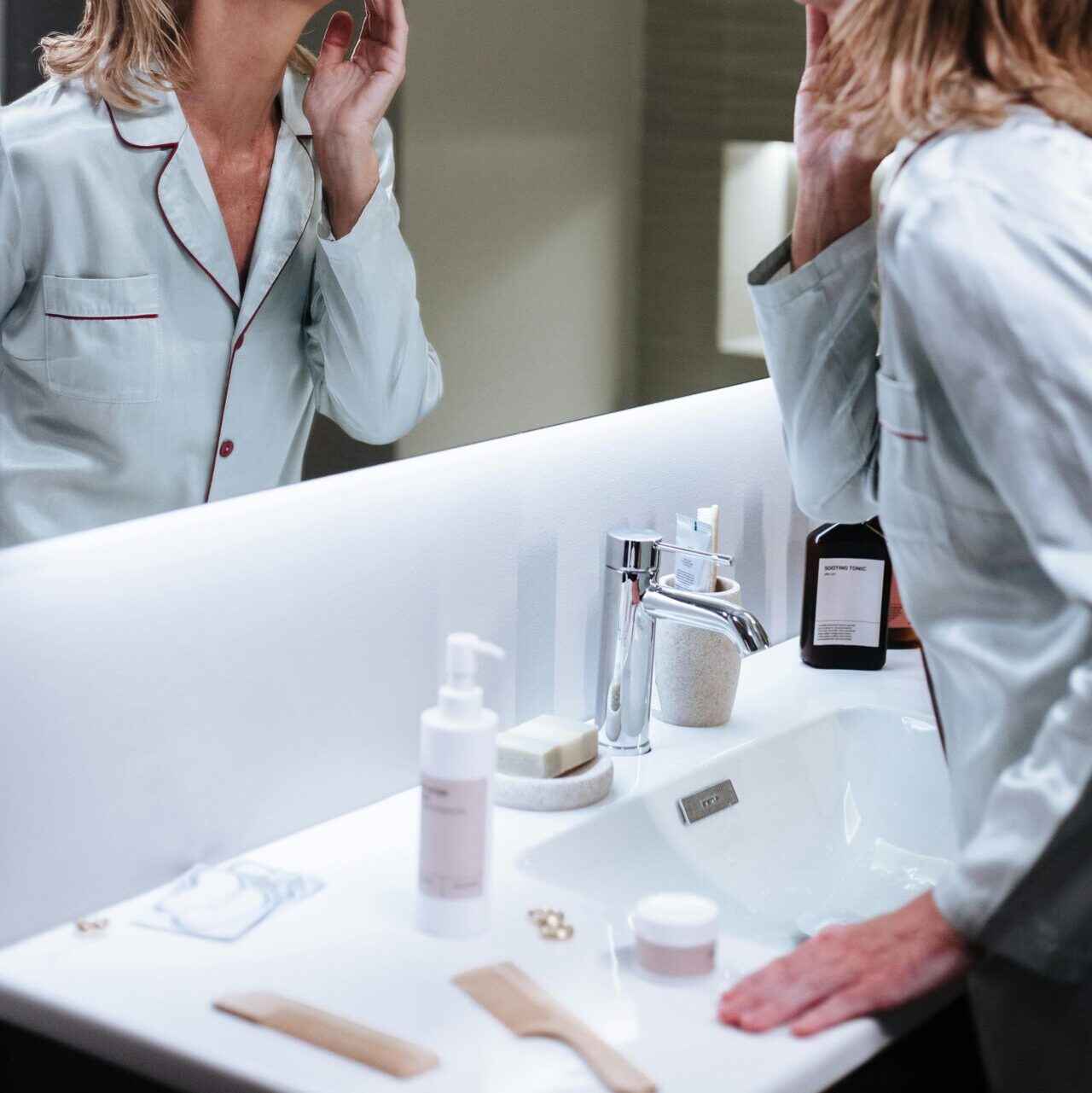
Another defining characteristic of this category is its alignment with personal rituals rather than structured routines. Unlike fitness-oriented products, which are often tied to goals, metrics, and repeated behaviors, wellness and beauty wearables tend to exist within quieter, more intentional moments. These include the transition into sleep, the process of unwinding after a long day, or small acts of self-care that signal a shift from activity to rest.

Designing for these moments requires a fundamentally different approach. Products must feel intuitive and inviting, with minimal setup or cognitive effort. This places a greater emphasis on how a product is introduced into a user’s environment; how it feels in the hand, how naturally it integrates into existing habits, and how effectively it supports a sense of calm without demanding attention.

There is also an emotional dimension that distinguishes ritual-based design. These products often become part of deeply personal behaviors, where consistency is driven not by obligation, but by desire. As a result, aesthetic choices, material quality, and sensory cues take on heightened importance. A product that feels considered, comfortable, and aligned with a user’s lifestyle is far more likely to be adopted over time.

Designing for ritual means prioritizing presence over performance. The goal is not to push users toward optimization, but to support moments of restoration in a way that feels natural and unobtrusive. In this context, success is measured not by frequency of use alone, but by the depth of integration into daily life and the extent to which the product enhances the quality of those moments.

Case Study: Reimagining the Sleep Mask as a Therapeutic Device

As the wellness and beauty wearable space continues to expand, opportunities lie in reframing how we think about value. To explore this category, we developed a conceptual product that elevates a familiar object, the sleep mask, into a multi-sensory wellness tool.

Design Objective

Transform a basic accessory into a performance-driven sleep aid that enhances recovery without introducing complexity.
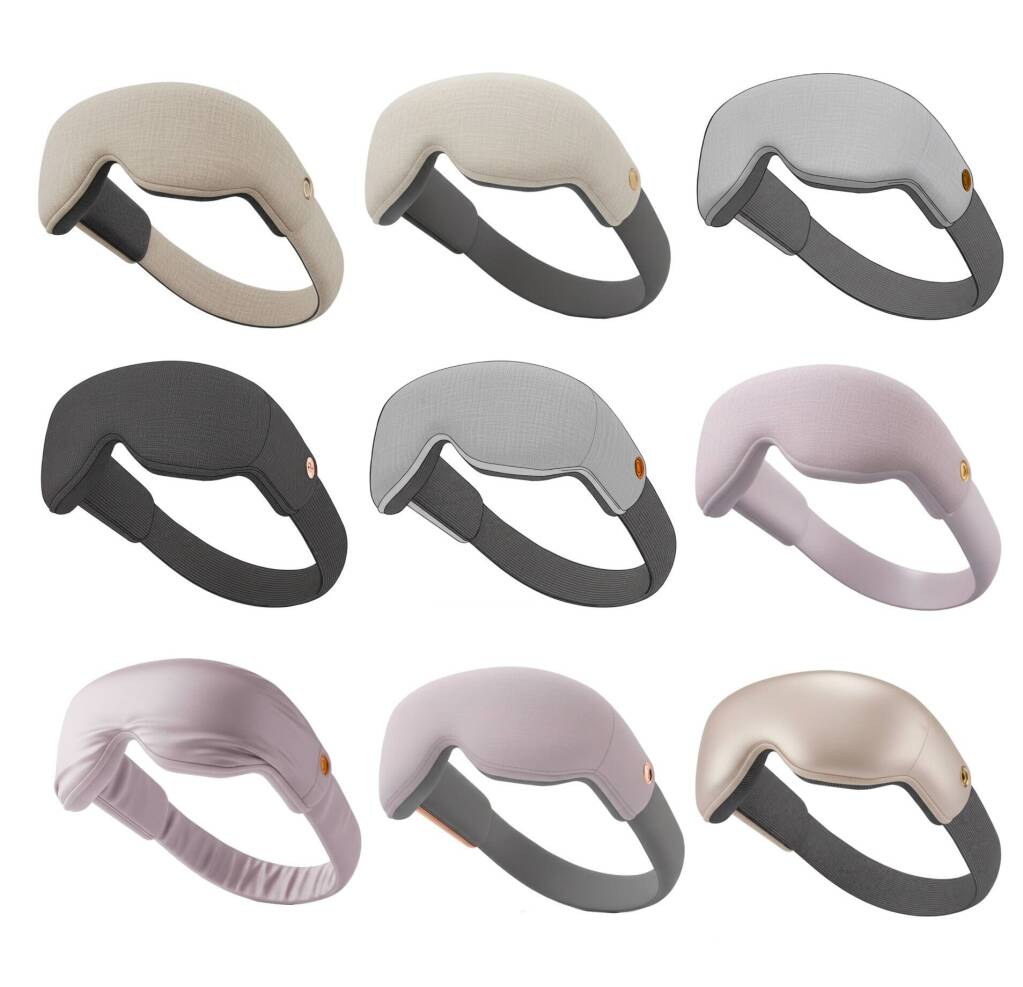
Therapeutic sleep mask concept designed by Interwoven Design Group.

Key Features & Design Considerations

1. Total Light Elimination Without Pressure
A 3D contoured structure ensures complete darkness while maintaining zero contact with the eyelids and lashes.

  • Prevents REM disruption
  • Eliminates cosmetic friction concerns
  • Enhances perceived luxury through spatial design

2. Breathable, Cooling Materials
Material selection prioritizes thermoregulation and skin comfort.

  • Silk and modal blends reduce heat retention
  • Cooling properties help minimize puffiness and inflammation
  • Soft-touch finishes reinforce a calming sensory experience
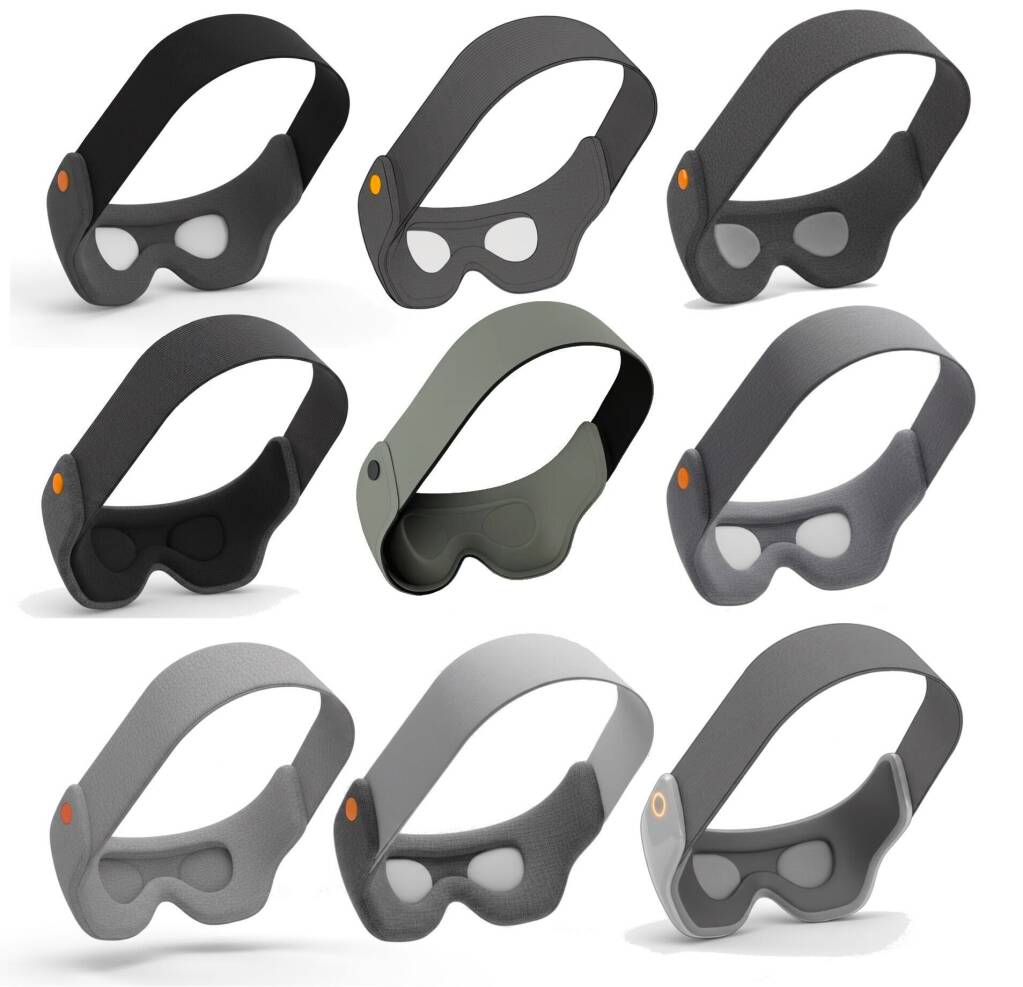
Therapeutic sleep mask concept designed by Interwoven Design Group.

3. Integrated Acoustic Dampening
An over-ear extension introduces subtle sound reduction.

  • Soft compression reduces ambient noise without isolation
  • Maintains awareness while minimizing disturbance
  • Avoids the invasiveness of in-ear solutions

4. Side-Sleeper Optimization
Ultra-thin construction ensures comfort across sleep positions.

  • Eliminates pressure points at the temples and ears
  • Maintains structural integrity without bulk
  • Supports uninterrupted movement throughout the night

The innovation is not in any single feature, but in the integration. By addressing light, sound, temperature, and pressure simultaneously, the product creates a holistic sleep environment, one that works passively, without requiring behavioral change. This reflects a broader truth in wellness design: The most successful products don’t ask users to do more. They do more for the user.

The Future is Personal

The next generation of wellness and beauty wearables will not be defined by dashboards, alerts, or metrics. Instead, their value will be measured by outcomes that are immediately perceptible and deeply personal; more restorative sleep, calmer transitions between states of activity and rest, and visible improvements in skin and hair. These products succeed not by asking for attention, but by earning trust through tangible, consistent results.

For designers, this represents a meaningful shift in perspective. It is an invitation to think beyond interfaces and into experience, where the true measure of success is not what a product shows, but what it changes. This requires a more holistic approach to design, one that considers the full spectrum of interaction: how a product is introduced into a user’s environment, how it feels over extended periods of use, how it responds to the body, and how it supports both physical and emotional well-being without adding friction.
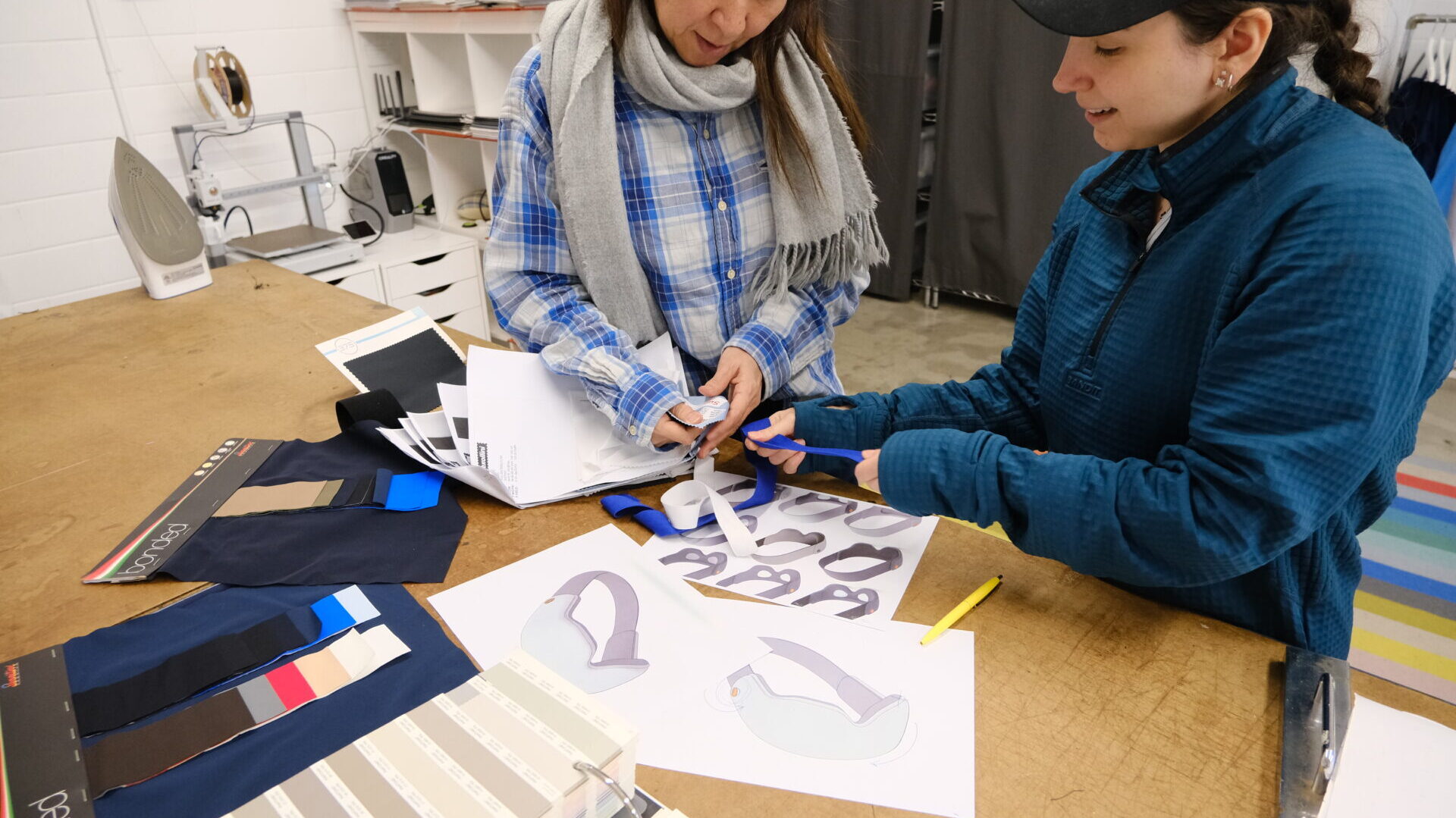
Behind the scenes: sleep mask design process at Interwoven Design Group.

At Interwoven Design, this philosophy shapes how we partner with clients from the earliest stages of development through to final production. Our process begins with a deep understanding of the intended outcome, whether that is improved sleep quality, enhanced skin health, or reduced stress, and translates those goals into design strategies grounded in material science, ergonomics, and human behavior. Rather than starting with technology and searching for an application, we work in the opposite direction, identifying the desired user experience and engineering solutions that deliver it as seamlessly as possible. Ultimately, the future of wellness design lies in this convergence of performance, comfort, and meaning. 

Interwoven Design is a design consultancy that is positioned at the intersection of soft goods and wearable technology, creating products that function with the body and offer comfort as well as the superb performance that arises through the innovative incorporation of rigid, often electronic and responsive elements. Sign up for our newsletter and follow us on Instagram and LinkedIn for design news, multi-media recommendations, and to learn more about product design and development!

Books on Cross-disciplinary Design

The Smart List is a monthly list of multi-media recommendations on everything design, curated by Interwoven Design. As a group of aesthetically obsessed designers, there are a lot of beautiful products and objects we love and enjoy. These products make our daily lives special and inviting and we want to share them with you. Pick up these Books on Cross-Disciplinary Design in this issue for the design savvy people on your list!

Books on Cross-disciplinary Design

1. The Senses: Design Beyond Vision

Edited by Ellen Lupton and curated by Andrea Lipps

Dive into the awesome world of inclusive and multisensory design with “The Senses: Design Beyond Vision.” This book is like your backstage pass to a cool exhibition at the Cooper-Hewitt Smithsonian Design Museum that flips the script on the idea that design is just about what you see. Get ready to explore how space, materials, sound, and light mess with your mind and body, all while getting insights from hip designers like Petra Blaisse, Bruce Mau, and Malin+Goetz. And guess what? This isn’t just about solving problems – it’s about making life better for everyone, especially those with sensory disabilities.

The book isn’t your typical read—it’s got essays on all kinds of stuff like designing for the table, cool tactile graphics, making sound tactile, and even visualizing the senses. It’s like a shout-out, telling you to jump on the multisensory design train. Students and pros in things like products, interiors, graphics, interaction, sound, animation, and data visualization need to check it out. But hey, even if you’re just curious about design, “The Senses” takes you on a wild ride of thought-provoking exploration. And they’ve got a dream team behind it—Christopher Brosius, Hansel Bauman, Karen Kraskow, Binglei Yan, and Simon Kinnear all pitched in, with a killer design by David Genco and Ellen Lupton. It’s like the Avengers of the design world got together to drop some knowledge!

via Cooper Hewitt

2. Ways of Being

by James Bridle

In “Ways of Being,” James Bridle, the artist, tech whiz, and deep thinker, dives into a cool exploration of intelligence in all sorts of areas—plants, animals, humans, and even artificial stuff. This mind-bending work shakes up the usual ideas about intelligence, asking if it’s just a human thing or if it’s hanging out with creatures made of flesh, wood, stone, and silicon. Bridle gets real about the progress in artificial intelligence, making it sound like this mysterious force that’s messing with our sense of being at the center of the universe.

Bridle doesn’t stick to one subject—he throws in biology, physics, computers, books, art, and deep thoughts into the mix. “Ways of Being” dives deep into all the different ways we know stuff, do stuff, and just exist in this world. As we try to wrap our heads around artificial intelligence, Bridle pushes us to rethink what we know about intelligence itself. It’s like a wake-up call to think about who we are, what our gadgets are doing, and how we fit into the big picture of nature. And hey, it’s not just for the science nerds—this exploration totally connects with the world of cross-disciplinary design, telling designers to think big about how their creations impact all kinds of intelligence and the crazy interconnected world we live in.

via Barnes & Noble

3. Videogame Atlas

by You + Pea Architecture and Game Design

In the vast digital world, the only limits are the ones we cook up in our minds. Stuff like games and shows throw open doors to these wild and captivating worlds, often inspired by architectural research. Check out game design in hits like Assassin’s Creed, where they smoothly mix architectural stuff with the gameplay. The cool team You+Pea, led by Sandra Youkhana and Luke Caspar Pearson, dives into this whole blend of architecture and gaming. They run You+Pea, an architectural design studio that’s been showing off their game-based creations in fancy galleries. Plus, they just dropped a book called “Videogame Atlas: Mapping Interactive Worlds.”

This awesome book, a brainchild of You+Pea’s research, breaks down twelve rad games—from big-budget ones to indie gems—using panoramic maps, diagrams, and over 400 illustrations. “Videogame Atlas” makes the whole link between architecture and games easy to get, even if you’re not a gaming whiz. The book digs into games where the city takes the spotlight, like Assassin’s Creed: Unity, Cities: Skylines, and Dwarf Fortress, as well as those with crazy fantasy vibes like Final Fantasy VII + Remake, Death Stranding, and Dark Souls. The authors want us to see video game worlds like we look at real cities, recognizing the deep meaning they hold for gamers. They’re all about how games not only get ideas from real spots but also twist them in new ways, creating cool perspectives in gamer communities. With games leaving their mark on how architects learn and design, the line between architecture and gaming is getting blurry. And hey, The Bartlett just launched a fresh master’s program called “Cinematic and Videogame Architecture,” led by Lukas Caspar Pearson. It’s like the next level of blending these two worlds!

via Parametric Architecture

Follow us on Instagram for design news, multi-media recommendations, and to learn more about product design and development!

Small Scale Manufacturing

Prototyping and Initial Production Runs

The Smart List is a monthly list of multi-media recommendations on everything design, curated by Interwoven Design. As a group of aesthetically obsessed designers, there are a lot of beautiful products and objects we love and enjoy. These products make our daily lives special and inviting and we want to share them with you. This issue is a collection of small scale manufacturers for prototyping and initial production runs.

The Smart List: Small Scale Manufacturing

Print Parts

We rely on Print Parts’ impressive 3D Printing capabilities to conduct early design tests and validate ideas during our creative process. Their team of skilled additive specialists is always on hand to assist with printing parts and overcoming any challenges that arise.

Conveniently located in Manhattan, just a short subway ride away from our studio, Print Parts facilitates a swift turnaround of iterative 3D printed components. Their manufacturing lab excels at producing cost-effective prototypes and high-quality samples.

To ensure top-notch quality, every order is accompanied by a comprehensive Quality Assurance Checklist. This meticulous inspection is carried out by one of Print Part’s operators before the parts are dispatched for delivery. This way, all parties involved can rest assured that the components meet the required criteria.

via Print Parts

Athena 3D Manufacturing

Athena 3D Manufacturing was established in 2019 with a clear objective: to utilize 3D printing to produce top-notch parts at scale and competitive prices. Over time, Athena has grown its offerings to include a range of additive manufacturing methods like HP Jet Fusion and Markforged Metal X technology, post-processing services, CNC machining, injection molding, cast urethane, and engineering design services.With their ability to develop high-performance, quality parts quickly, Athena 3D helps us iterate quickly through 3D printing and even runs small production runs for us to develop high fidelity prototypes to our clients. Combining their exceptional components with our prototyping capabilities empowers us to fabricate fully functional, photoshoot-ready products with confidence.

via Athena 3D Manufacturing

Carbon 3D

Carbon® is a pioneering 3D printing technology company that empowers businesses to create superior products and accelerate their time to market. Their impressive client roster spans the globe and is particularly distinguished by innovative solutions in the automotive, footwear, and athletic industries. Among their standout projects, Carbon’s ongoing collaboration with Adidas stands out, where they utilize 3D printing to craft lattice midsoles for shoes.

Through their ingenious application of additive manufacturing methods, Carbon 3D has revolutionized lattice structures, allowing us to replicate foam-like qualities in plastic parts. This opens up unique use-case scenarios that were previously unattainable through injection molding or traditional 3D printing. Working alongside their personable and knowledgeable team, we’ve enjoyed a seamless process of iteration and prototyping.

via Carbon 3D


Follow us on Instagram for design news, multi-media recommendations, and to learn more about product design and development!

Designs Created by AI

The Smart List is a monthly list of multi-media recommendations on everything design, curated by Interwoven Design. As a group of aesthetically obsessed designers, there are a lot of beautiful products, objects and events we love and enjoy. These recommendations make our daily lives special and inviting and we want to share them with you. This issue is a guide to Designs Created by AI!

The Smart List: Designs Created by AI

NASA’s new AI generated parts

NASA has submersed themselves in incorporating artificial intelligence, much like the kind we have all experimented with in creating images, text, and music based on human prompts. These one of a kind components, known as Evolved Structures, are now being integrated into space-bound equipment. This remarkable lineup includes astrophysics balloon observatories, Earth-atmosphere scanners, planetary instruments, and space telescopes. Designers, harnessing the power of CAD software such as Autodesk, nTopology, and Divergent3D, have been delving into the realm of generative capabilities for years. According to Ryan McClelland, a research engineer at NASA, these awe-inspiring structures, influenced by science fiction shows, have been meticulously generated using precise prompts. He further highlights that conventional manufacturing tools are typically not deemed capable of producing such unique parts. As McClelland aptly puts it, “Most people would simply find it hard to believe that these parts could be created through that process—until someone actually did it.”

via Fast Company

Sneakers designed with H.U.E. by DeepObjects and PUMA

Deep Objects began on a groundbreaking mission to develop an AI engine that relied heavily on human input. Operating covertly for nearly two years, the creative studio known as FTR has been at the forefront of this project. This “decentralized design studio” takes a million potential solutions and distills them into a singular outcome. Enter the Hueristic Unsupervised Entity (H.U.E.), an engine that has astoundingly showcased an array of sneaker variations. The creators elucidate that this tool serves as a means to explore, engage, and scrutinize technology in order to unleash creativity and advance the field of design. Deep Objects elaborates, stating, “Now, people and designers alike are actively and massively engaging with it, which holds immense power. At Deep Objects, our aim is to investigate how a more controlled and proactive relationship between designers, AI, and ‘consumers’ can yield extraordinary design objects.”

via HIGHSNOBIETY

Paragraphica Text-to-Image Camera

Paragraphica, an innovative camera powered by artificial intelligence, has emerged as a remarkable creation. Devised by Bjørn Karmann, this lensless camera employs location data to provide users with real-time descriptions of their surroundings, which are then transformed into distinctive visual representations of the scenes. Equipped with buttons, the camera allows users to control the collection of surrounding data, including weather conditions and points of interest. These parameters grant users the ability to govern both the description and the resulting image. Karmann elaborates, stating, “Interestingly the photos do capture some reminiscent moods and emotions from the place but in an uncanny way, as the photos never really look exactly like where I am.”

via Designboom

Sign up for our newsletter and follow us on Instagram and LinkedIn for design news, multi-media recommendations, and to learn more about product design and development!

Sustainable Materials in Soft Goods and Wearable Product Design: The Search for Innovation

How New Materials are Shaping Industrial Design

In recent years, industrial designers have been challenged to find new materials that can meet the demands of today’s ever-changing world. With an emphasis on sustainability and functionality, the search for new materials has intensified, leading to innovative and inspiring discoveries that are changing the way products are designed, manufactured, and used. In this article, we will explore some of these new materials, including their functions and the impact they have on industrial design.

New Materials: An Introduction

New materials refer to the novel substances, composites, or combinations thereof, that possess properties and characteristics that make them suitable for use in the design and development of products. These materials may offer enhanced mechanical, electrical, thermal, or optical properties, as well as features such as biodegradability, sustainability, and reduced environmental impact. New materials may be developed through various approaches, such as advances in material science, biotechnology, nanotechnology, and additive manufacturing, and can lead to innovative products that address real-world challenges in industries ranging from healthcare to transportation to consumer goods. As such, new materials play a critical role in enabling product designers to create sustainable and high-performance products that meet the evolving needs of society.

The development of new materials has become essential in addressing environmental concerns and creating sustainable solutions in industrial design. One approach is to integrate living organisms into building materials, as seen in the bio-concrete tiles developed by Brigitte Kock and Irene Roca Moracia. These tiles are an innovative example of how new materials can address real-world issues by absorbing water and reducing urban heat island effects. On the other hand, bio-plastics offer an eco-friendly and biodegradable alternative to traditional plastics, significantly reducing plastic waste and its harmful impact on the environment. The use of these new materials demonstrates a shift towards a more sustainable approach to industrial design, leading to a greener and healthier future for our planet.

Bio-Plastics

Bio-plastics are a category of materials that are derived from renewable resources and have gained popularity in recent years due to their sustainability and eco-friendliness. These materials are made from plant-based sources such as corn starch, potato starch, and sugarcane, which makes them biodegradable and environmentally friendly.

One of the most significant advantages of bio-plastics is that they can significantly reduce the amount of plastic waste that ends up in landfills and oceans, which is one of the biggest environmental issues we face today. Unlike traditional plastics, which can take hundreds of years to degrade, bio-plastics are biodegradable and break down much faster, leaving behind fewer harmful residues.

In addition to their environmental benefits, bio-plastics also have numerous practical applications in industrial design. They can be used to create a wide range of products, including coffee cups, cutlery, and packaging materials. These products are not only more sustainable, but they also offer a range of unique features and properties, such as heat resistance, water resistance, and durability.

One example of footwear that uses bio-plastics is the “Futurecraft Loop” sneaker, developed by Adidas. The sneaker’s upper is made from 100% reusable thermoplastic polyurethane (TPU), which is a type of bio-plastic derived from natural materials like corn and castor beans. The unique design of the sneaker allows it to be easily disassembled and recycled, with the recycled TPU being used to create new shoes. This innovative approach to design and materials creates a closed-loop system that minimizes waste and reduces the environmental impact of the footwear industry.

Overall, the impact of bio-plastics on the environment and industrial design is significant, and they represent a promising solution to the plastic waste problem. By using bio-plastics in their designs, industrial designers can create products that are both functional and sustainable, contributing to a more eco-friendly future.

Natural Fiber Welding: A New Material

Natural Fiber Welding is a technology that uses plant-based materials, such as cotton and flax, to create new sustainable alternatives to traditional synthetic materials like plastic and leather. The company behind this technology has developed a patented process that transforms natural fibers into a durable, flexible, and customizable material that can be used in a wide range of applications, including furniture, apparel, and automotive products.

The process involves using enzymes and natural chemistry to break down the plant fibers into their basic components, which are then reassembled into a new material that has similar properties to leather or synthetic fabrics. The resulting material is biodegradable, non-toxic, and more sustainable than traditional materials, as it requires fewer resources to produce and has a lower environmental impact.

One example of a product that uses Natural Fiber Welding is the “Mirage” chair by the furniture company Steelcase. The chair features a unique backrest and seat made from the company’s patented plant-based material, which is created using Natural Fiber Welding technology.

The material used in the chair is made from natural fibers like flax and cotton, which are processed using enzymes and natural chemistry to create a material that is both durable and flexible. The resulting material has a similar look and feel to leather but is much more sustainable and ethical, as it is biodegradable, non-toxic, and requires fewer resources to produce.

The Mirage chair is an excellent example of how Natural Fiber Welding can be used to create innovative and sustainable products that meet the needs of today’s consumers while minimizing the environmental impact of the manufacturing process.

Sustainability: Sourcing New Materials

One of the biggest challenges that industrial designers face when sourcing new materials is sustainability. With an emphasis on creating a more sustainable future, it is important that new materials are sourced responsibly and ethically. This includes ensuring that materials are not harmful to the environment or contribute to deforestation, pollution, or exploitation.

To overcome these hurdles, designers can use databases that provide information about the sustainability of materials. These databases can be found online and offer information about the environmental impact of materials, including their carbon footprint, water usage, and more. By using these databases, designers can make informed decisions about the materials they use, ensuring that they are sustainable and ethical.

Here are three databases where you can find information about new materials:

  1. Materials Project: This is a database that provides information on the physical and chemical properties of materials. It includes data on more than 100,000 materials and is free to use for academic and research purposes.
  2. MatWeb: This is a searchable database of materials and their properties. It includes data on metals, plastics, ceramics, and other materials, and is used by engineers, designers, and researchers to find materials that meet specific requirements.
  3. SciFinder: This is a database that provides access to a vast collection of scientific research, including information on new materials. It includes data on materials science, engineering, chemistry, and other related fields, and is used by scientists, researchers, and engineers to stay up-to-date on the latest developments in their fields.

In addition to databases, designers can also work with suppliers and manufacturers who prioritize sustainability. This includes sourcing materials from local or ethical sources, using renewable energy, and reducing waste and emissions. By working with these suppliers, designers can ensure that their materials are sustainable and contribute to a more sustainable future.

Getting Materials in House: Ordering and Cost

Another challenge that industrial designers face when sourcing new materials is getting materials in house to prototype and cost. This can be difficult, as many new materials are not readily available or can be expensive to source.

To overcome these hurdles, designers can work with suppliers who offer samples or small quantities of materials. This allows designers to test and prototype their designs

without committing to large quantities of expensive materials. Designers can also work with manufacturers who offer custom material development services, allowing them to create materials that meet their specific needs and requirements.

When it comes to cost, designers can explore alternative materials or look for ways to optimize their design to reduce material usage. For example, using lightweight materials can reduce transportation costs and lower the carbon footprint of the product. Designers can also explore ways to use recycled materials or incorporate waste materials into their designs, reducing the overall cost and environmental impact.

Conclusion

In conclusion, the search for new materials is an essential part of industrial design. New materials offer unique properties and features that can improve product performance, aesthetics, and sustainability. Bio-concrete tiles, bio-plastics, and natural fiber are just a few examples of new materials that are changing the way products are designed and manufactured.

To overcome the challenges of sourcing and using new materials, designers can use databases, work with sustainable suppliers and manufacturers, and explore alternative materials or design optimization. By embracing new materials and sustainable practices, designers can create products that are both functional and environmentally responsible, contributing to a more sustainable future.

Looking for more design InsightsSign up for our newsletter and follow us on Instagram and LinkedIn for design news, multi-media recommendations, and to learn more about product design and development!