Interwoven Design Group Expands Medical Design Expertise with the Appointment of Yukiko Naoi as Creative Director
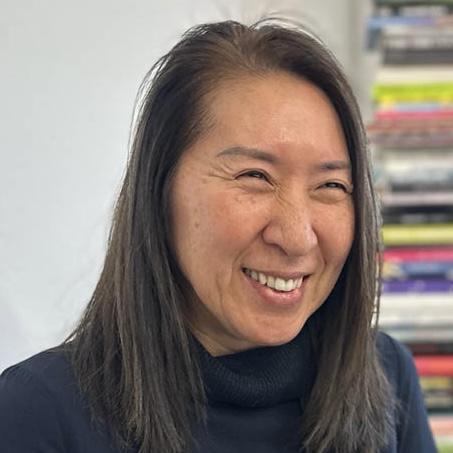
Brooklyn, NY – May 1, 2025 – Interwoven Design Group is thrilled to announce that Yukiko Naoi has joined the team as Creative Director. A seasoned leader in medical product design and a long-time collaborator with Interwoven Design, Naoi brings a unique, multidisciplinary perspective that bridges the worlds of design, medicine, and wellness. Her addition to the team marks a significant expansion of Interwoven’s capabilities in the medical design and packaging fields, reinforcing the company’s commitment to innovative solutions across the market.
Naoi’s career spans over two decades in industrial design, with a specialized focus on medical devices, diagnostics, personal care products, and packaging. As former president of Tanaka Kapec Design Group (TKDG), she led groundbreaking work in medical packaging, human factors research, and healthcare innovation, collaborating with industry leaders such as AstraZeneca, Bausch + Lomb, and Johnson & Johnson. Her extensive experience in regulatory compliance, usability research, and design for manufacturing will be instrumental in advancing Interwoven’s medical design practice, and her structural packaging experience will strengthen their packaging design practice.
Beyond her industrial design expertise, Naoi is also a licensed acupuncturist and founder of Rest NYC, a clinic dedicated to integrative health and wellness. Her ability to merge clinical insights with human-centered design allows her to create products that enhance patient outcomes and experiences, improving everyday lives. This unique combination of skills positions Interwoven Design to expand its influence in patient experience and wearable technology solutions for healthcare.
“We couldn’t be more excited to welcome Yukiko to the team,” said Rebeccah Pailes-Friedman, Founder of Interwoven Design Group. “Her expertise in medical product and packaging design as well as research-driven, user-centered healthcare solutions aligns perfectly with our mission. With Yukiko’s leadership, we are poised to deepen our impact in the healthcare design sector and develop groundbreaking innovations in wearable health technology.”
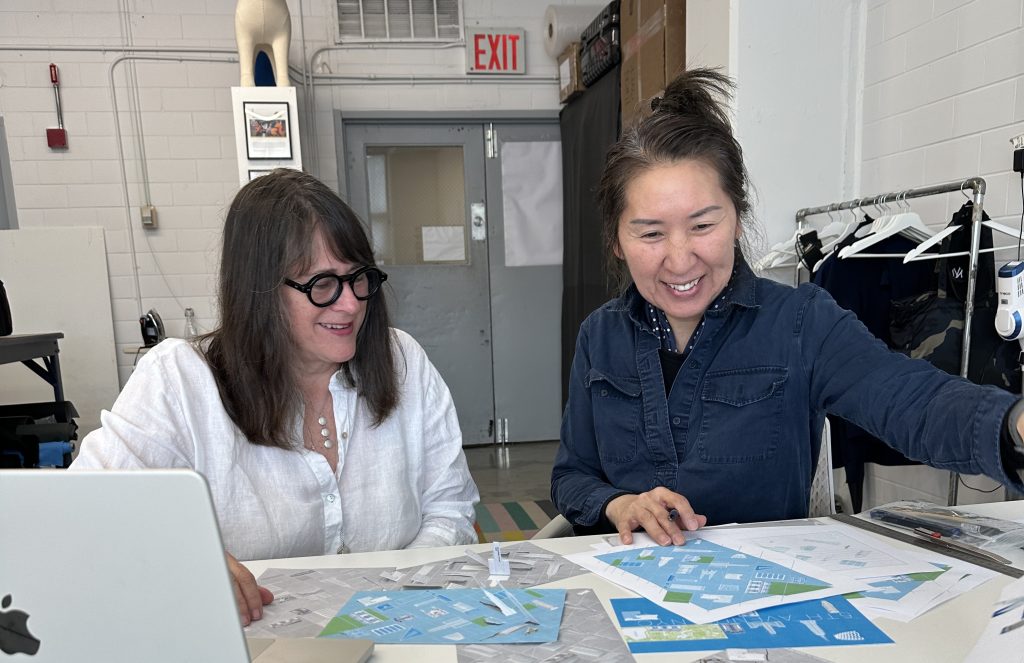
Rebeccah Pailes-Friedman (left) and Yukiko Naoi (right) collaborate at Interwoven Design Group’s Brooklyn studio, celebrating Yukiko’s new role as Creative Director.
Naoi has been a long-time friend and collaborator of Interwoven Design Group, contributing to multiple medical design projects over the years. In her new role, she will lead the studio’s medical design strategy and development, helping push the boundaries of wearable technology, health innovations, and e-textile solutions. Her expertise will allow Interwoven Design to broaden its partnerships within the medical industry and explore new frontiers in healthcare design.
Interwoven Design Group is a Brooklyn-based product design and development studio specializing in wearable technology, smart textiles, and innovations in health, medical, and consumer products as well as packaging. The studio is a thought leader in the wearable technology sector and committed to supporting women in design. By combining expertise in fashion, engineering, material science, and product design, Interwoven Design Group creates forward-thinking solutions that seamlessly integrate technology with the human body.
Please join us by welcoming Yukiko to the team!
A Q&A with Medical Design Consultant Yukiko Naoi
A Q&A with Medical Design Consultant Yukiko Naoi
Spotlight articles shine a light on designers we admire, asking leaders in the field about their work and their design journey. In this interview we spoke with medical design consultant and acupuncturist Yukiko Naoi.
Photo courtesy of Yukiko Naoi.
Yukiko’s journey bridges the worlds of design, medicine, and wellness. With a foundation in acupuncture and Chinese medicine combined with degrees in interior design and industrial design, Yukiko has spent over a decade designing innovative medical devices, diagnostics, and consumer products as long time partner and president of TKDG, Tanaka Kapec Design Group. Her hands-on experience with medical precision rekindled her passion for acupuncture, leading her to found her clinic, Rest NYC. From working with children battling cancer at Columbia University Medical Center to exploring the healing power of group dynamics in community clinics, Yukiko’s work reflects a holistic approach to health, design, and the interconnectedness of human experiences. She is also a long-time friend of Interwoven, and has collaborated with us on a number of medical design projects. We asked her about the challenges of medical design, getting feedback from stakeholders in the design process, and how her dual roles of acupuncturist and medical design consultant influence one another.
Q:
Why is medical design different from other types of industrial design? And what are some of the unique challenges you face when designing for the healthcare industry?
A:
I’m going to be really honest. To tell you what is truly unique about medical design, I would have to know everything else. I’d have to know aviation design and everything. Let’s think about designing an airplane or a helicopter—that must be just as complicated. I can’t definitively say that medical design is unique, so I’ll just talk about how I see it compared to some more general products.
Even when you say medical design it could mean different classes of products. It could mean consumer products or it could mean products only used by doctors, where there’s a different level of product development.
In general, there are more regulations and requirements. There are requirements for manufacturing and materials, and multiple rounds of approval for those materials. Toys are similar. Those are the obvious challenges that are somewhat unique to medical design; regulatory requirements as well as the involvement of the insurance agencies. Whatever product that you’re designing has to work with that system of patients, healthcare providers, and insurance companies. The insurance companies can come in at the very early stages of the project. Let’s say you are designing something that focuses on the patient but the doctor is going to be the one pitching the emerging technology to the patient. This puts the doctor in a certain position of power, but at the same time they need the insurance company’s approval so that insurance will pay. Let’s say it’s a diagnostic device. They need to have some sort of system of checks and balances in place so the doctors have a certain level of power, but not so much power that the insurance companies wouldn’t approve it.
Many medical companies have in-house consultants; doctors, nurses, techs, and even insurance consultants. All of a sudden, your scope could change. You might realize that you need another step in place to make sure that there’s an opportunity for doctors to share their input before the final outcome or to account for how they manage data or patient information. As designers, we are trying to make everyone happy.
Then there is an enormous amount of people in the healthcare industry who have nothing to do with the insurance company. They get the product in place or in the doctor’s hand or they clean the product or store the product, and that’s their everyday life. We always try to include those people to really make the whole process smooth. The ultimate goal is to have better outcomes; to provide the best health care that you possibly can while eliminating human error and maximizing efficiency and all that good stuff. The new trend is patients getting more power. Of course we include patients in our research as well.
Q:
Medical designs have multiple users from the patients to the doctors and the other medical professionals who use it to the hospitals or clinics that invest in the product. How do you ensure your designs satisfy the needs of all of these groups?
A:
There is a harsh element to this, which is about where the money comes from. The clients provided the money to solve this issue, and we need to satisfy them. Then there’s the receiving side, the target user for the product. They should have the same goal, but those sides don’t always have the same priorities. Not every project results in the best of the best for everyone. So there’s the harsh side of budgets and time constraints, and there’s the super soft side—that this is a product that humans will touch and feel and live with. Our goal is to make a bridge between the two so that no one is overlooked. It’s not always easy.
Q:
How do you gather and incorporate feedback from end-users, such as patients and healthcare providers, during the design process?
A:
We often shadow medical professionals so we can really understand their roles and know what to bring to their attention. There’s a little void that we need to fill because the product has to work at every stage, and as designers we’re often the only ones who see every stage of a product. Good clients would give us the time and budget to really understand the beginning and the end of the life cycle of each product; where material comes in, where it’s going to be made, how it’s going to be packaged, how it’s going to be shipped, the carbon footprint, and all that stuff. It makes for better design but also each stage costs money, and a lot of clients are interested in saving a penny wherever possible. We’re talking about millions of whatever product you design. It’s ultimately more successful to consider all of these details in product development.
It’s important for us to observe as well as interview stakeholders. People aren’t necessarily aware of what they do, it’s second nature to them so they don’t think about it. They have standard tasks they repeat over and over, nurses are a great example but this happens in all kinds of medical roles. They do tasks, and if you ask them about it they say…whatever they think they’re doing, This is better. I want this. I’m doing this. But the reality may not be the same. It’s interesting to see their perception of what they’re doing, and that is valuable information, but they’re working with the existing system, so they may not be able to see what we can do for them. What they say could be very different from what they’re doing. It’s powerful to hear their words as well as to see their environment and how they work in it.
Ideally we hear from stakeholders with all levels of income, to hear from a huge, well-funded hospital in Texas and also to hear from the one person clinic. They may be doing the same procedure but in a very different environment, and to understand both is important. Location is important also, or real estate. Some users have more room, some have very little. A Manhattan clinic is tiny. The same goes for patients. We want to see people with huge families and small families, we want to see a wide range of age differences and body types. One product should be able to go to all those places and work at an optimal level.
Q:
How do you address the need for balancing functionality, safety, and aesthetics in your designs?
A:
As a designer, I think aesthetics is a given. This is why we’re designers instead of being engineers or marketing experts. Of course everything is a collaboration because there are engineers, salespeople, manufacturers…I think we have to trust ourselves to know that aesthetics is just what we do. It’s in our blood, it’s in everything we do, without thinking. Then just try to design an honest, elegant solution. We are like aesthetic ambassadors. I’m glad that a lot of medical companies value that, and I think there is a demand for aesthetically appealing products from patients and doctors as well, they don’t want to live with not so nice things.
Q:
What considerations go into designing products that need to withstand rigorous use and sanitation protocols?
A:
There are two main options, and they are complete opposites. One is a reusable medical product, and one is a disposable product. Many medical devices are disposable because of the danger of cross-contamination. That comes with challenges around material use and environmental impact.
Certainly we can play a huge role in selecting better optimal materials and considering the environment issues. A lot of companies are under pressure to show environmental accountability. On the other side are the reusable products that go through a sterilization process. There are always trusted, well-established systems for sterilization; protocols and procedures that people are reluctant to change because of the risk involved. It depends on the area of medical design as well. Orthopedic surgery instruments are usually reusable but it depends on the cost, because hospitals are businesses, and if they see that a sterilization process costs more than disposable products, they may decide to get rid of the sterilization process just because it’s not efficient or not profitable enough.
The sterilization process itself is its own area of medical product design. I’ve done a little work in that area, just enough to understand how complex it is. The sterilization process is done by a human. There is a machine, but there is a human working the machine, and you have to keep it sterile. There is some automation, but that space between the human and the automated machine is a great opportunity for industrial design.
It’s always fun for us to look at the options and push the envelope a little bit, to consider new materials and processes, but in the medical field anything new has to go through an extensive and expensive approval process. It feels like it really comes down to money: whether or not there is a company or a government entity that’s willing to fund the project. I have to say, in this huge, wealthy country there are enough people to do that, and that’s how good things come to the market.
Q:
You’ve worked with Interwoven on a number of projects, including the Breg CrossRunner Soft Knee Brace. Could you talk about some of the challenges of that project and how the team addressed them?
A:
This was a proper industrial design project. The challenge at the beginning of the product exploration, once the discovery was in place and we understood our parameters, was to mix the hard and soft materials on the body. We have to consider three elements; the human body, the soft goods and the hard parts, and we’re trying to integrate them to create a new combination of all three. That part was really fun. And again there was the aesthetic ambassador part, because we wanted people to want to wear this product, and for them to find it easy and comfortable to wear. It was quite successful.
Q:
On top of being an Industrial Designer, you are also an acupuncturist and have an active acupuncture practice. Has acupuncture informed your medical design work? How do they influence one another?
A:
At one point in my career, I got a little disheartened with the design industry because of all these things that we just talked about, the frustration with the money-making industry, proof that it’s a for profit industry, nobody’s doing it for free. It’s ideal if designers can make money and help people, that’s the ultimate goal, but sometimes it doesn’t happen. I was discouraged, thinking, What’s the point? Sometimes I felt that the industry was operating with priorities that were different from mine. I thought, Okay, I’m just going to do more hands-on things to help people. I wanted to fix things. That’s what designers do: problem-solving mindset.
So I went into this hands-on phase, working with people individually, which was when I started doing acupuncture. It was amazing because I had the perspective of working with a huge company and a huge budget, able to impact thousands of people, and this was the opposite, and I really got to appreciate both ends of the industry. I also did a post-graduate internship at the Columbia hospital in their pediatric oncology department, and got to see how the hospital worked from the inside. I learned a lot and everyday I interacted with patients. You learn a lot by touching people, and that was a huge influence.
Q:
What medical design trends or emerging technologies excite you most right now? How do you see the medical design field evolving over the next ten years?
A:
The undeniable trends are AI, wearable technology, and companion apps. I have mixed feelings about the direction the trends are heading, part excitement and part fear. AI has the potential to revolutionize diagnostics, improve accuracy, and reduce human error. Wearables and apps are empowering patients to take more control of their health. This empowering of the patient is exciting! The medical design field is moving toward more patient-centered designs, with devices getting smaller, smarter, and more seamlessly integrated into daily life.
Sustainability should be important, and I want to believe that society can push for more eco-conscious materials and manufacturing practices. The growing trend of wellness and preventative care, outside reacting to diseases and conditions, empowers people to stay healthier and more engaged in managing their well-being. This feels like a logical direction to focus on. We call it “healthcare” because we are caring for people’s health.
In our Design Object Series we highlight iconic objects designed by women. Thousands of objects that you use and appreciate everyday…surprise! Women designed them! Many of the contributions of women to design have been obscured if not erased throughout history. We want to do our part to counteract this effect by celebrating the women behind a range of objects that you’re sure to recognize. In this issue we salute three design objects from the turn of the century and the pioneering women behind them: Monopoly, the outrageously popular board game designed by Elizabeth Magie in 1904, the fire escape, designed by Anna Connelly in 1887, and the one-handed medical syringe, designed by Letitia Geer in 1899.
Monopoly
Monopoly was designed in 1904 by Elizabeth Magie. Photo courtesy of Mike_Fleming.
You know the game: two to eight players battle it out for domination by buying and developing properties, and forcing their opponents into bankruptcy. These days you can play the classic game or one of hundreds of themed spin-offs; Star Wars, Pokemon, Game of Thrones, The Simpsons…it is an ever-expanding catalogue.
The game was developed and patented in Washington DC by stenographer and leftwing feminist Elizabeth Magie in 1903. It was originally called The Landlord’s Game and was in Magie’s words, “a practical demonstration of the present system of land-grabbing with all its usual outcomes and consequences. It might well have been called the ‘Game of Life’, as it contains all the elements of success and failure in the real world, and the object is the same as the human race in general seem[s] to have, ie, the accumulation of wealth.”
The Landlord’s Game per Elizabeth Magie’s 1924 patent. Photo courtesy of Lucius Kwok.
Magie was a follower of American economist Henry George, and wanted to create a tool to teach others about the danger of wealth disparity and the exploitation of tenants by landlords. She had the bright idea of using a new, growing medium to engage the economic student: the board game. The game was immediately popular with children and adults alike, spreading by word of mouth and capitalizing on the pull of competitive play. Magie’s role as innovator was unfortunately overshadowed by the opportunistic entrepreneur who coopted her concept. The game was appropriated by Charles Darrow, who claimed it as his own invention and sold it to Parker Brothers in 1932, erasing Magie from the origin story as he made millions. The myth that Darrow is the creator persists to this day, but we know better.
The Fire Escape
The fire escape was designed by Anna Connelly in 1887. Photo courtesy of Chris Bertram.
While Magie wanted to educate people about economics, the next pioneer wanted to save their lives. The fire escape is an emergency exit, usually exterior to a building (though not necessarily), that provides an alternative to a stairwell, which might be inaccessible or compromised in an emergency. For those in urban environments, they are an omnipresent feature of the landscape, peppering every multi-story building, particularly residential buildings. The Interwoven Design office is in Brooklyn, New York, so we see hundreds of fire escapes on residential brownstones every day. They can range from chunky and utilitarian to colorful and statement-making.
Fire escapes in cities today are often seen as a decorative opportunity, as with this blue fire escape in SoHo featuring a mural. Photo courtesy of David Paul Ohmer.
Their invention was a response to 19th century building codes, which were in turn responding to the overcrowding in cities in England and the deaths that resulted from inadequate exits, especially by fire. Builders liked that they could be easily retrofit to existing buildings as well as inexpensively incorporated into new designs. While a range of strategies were developed independently in large cities during the industrial revolution, Connelly’s design is the ancestor of the modern fire escape, the classic zig zag structure running up an exterior. For a taste of historic detail, check out Connelly’s original patent.
While the fire escape was meeting a critical need in growing cities, there were problems with the concept. They weren’t uniformly effective, and the convenient platforms and railings were too tempting as makeshift patios, outdoor sleeping quarters, drying racks, and more, especially in poor neighborhoods. Even today, though technically illegal, repurposed fire escapes are a common sight.
One-handed Medical Syringe
Both the fire escape and the medical syringe have saved countless lives in the decades since their invention, and both objects have negative arguments against them in our current culture. The fire escapes are used in ways that were never intended, and the one-handed syringe has facilitated drug abuse for millions.
The concept of the syringe has been around since the ancient Roman era, but originally the devices were used topically to apply creams and ointments. Syringes weren’t used to inject substances subcutaneously until the development of the hollow needle in 1844, and weren’t tolerable until years later when the technology to make the needle much finer was available. In all that time, using a syringe was a two-handed affair for medical professionals. That all changed in 1899, when Letitia Mumford Geer, a nurse from New York, was granted a patent for an “in a hand-syringe”, or a one-handed syringe. This allowed a medical professional or even a patient to perform an injection with ease. While the materials of the syringe have been gradually improved over time, adopting material advancements as they became available, the fundamental technology has not changed.
Very little is known about Geer beyond the US census records and the information on the patent itself. She was born in New York 1853 and died there in 1935 at the age of 83. She had three brothers, and she was a nurse. Unfortunately this is all we know about her, despite her incredible contribution to medical design.
The device was described as consisting of “a cylinder, a piston and an operating-rod which is bent upon itself to form a smooth and rigid arm terminating in a hand, which, in its extreme positions, is located within reach of the fingers of the hand which holds the cylinder, thus permitting one hand to hold and operate the syringe.”
The patent outlines the operation of the syringe as follows:
“The handle can be drawn into a position near to the cylinder while injecting the medicine by the use of one hand, thereby enabling the operator to use the syringe himself without the aid of an assistant. The advantages of the medical syringe are several. The syringe is very simple and cheap. It can be operated with one hand.”
The syringe opened up the possibility of self-administering medicine, and could be produced inexpensively. The glass components could be sterilized, a development that evolved into more and more of the parts of the syringe being glass or metal to allow a greater level of hygiene in injections. These improvements, better sterilization and one-handed action, have saved countless lives over the decades since Geer’s invention.