Soft Goods in Athletics: Designing for Performance

Soft Goods in Athletics: Designing for Performance

Athletics place unique demands on the body. From training and competition to recovery and everyday wear, athletes rely on products that support movement, regulate the body, and perform under constant stress. Unlike casual apparel, athletic soft goods must respond dynamically to speed, impact, repetition, and fatigue, often across long durations and varied environments. Soft goods are foundational to this ecosystem. Apparel, supports, accessories, and hybrid soft–hard systems sit directly against the body, shaping how athletes move, feel, and perform. When designed well, they enhance mobility, manage heat and moisture, reduce distraction, and support confidence. When designed poorly, they restrict movement, cause irritation, or interfere with performance.

At Interwoven Design, we specialize in soft goods that move with the body. Our work in athletics combines textile innovation, ergonomics, and human-centered design to create performance-driven products that feel intuitive in motion. By designing for real bodies in real athletic contexts, we help brands create products that support both peak performance and long-term use.

In this Insight article, we explore what makes athletic soft goods design distinct, the challenges and opportunities within this space, and how thoughtful design can elevate performance, comfort, and user experience. Through examples from across the athletic landscape, we highlight how soft goods function as essential infrastructure for modern sport.

When Apparel Becomes Equipment

Athletic soft goods operate in a fundamentally different context than lifestyle apparel or fashion-driven performance wear. These products are not designed for occasional movement or visual expression alone; they are worn through repetition, strain, sweat, and fatigue. They must perform reliably under physical stress, often for hours at a time, and across a wide range of environments and body types. Designing for athletics means designing for use, not appearance first.

Unlike everyday apparel, athletic soft goods are in constant dialogue with the body. They stretch, compress, resist, and recover in response to motion. A poorly placed seam can cause chafing. Excess material can disrupt movement or trap heat. Insufficient structure can compromise stability and lead to injury.In this context, comfort is not a luxury, it is a performance requirement.

Athletic products must also account for intensity and repetition. Runners log thousands of steps per session. Training garments endure repeated washing, abrasion, and exposure to sweat and friction. Soft goods must maintain their integrity and fit over time, not just during initial wear. This demands careful material selection, durable construction methods, and patterning that supports long-term use without breakdown.

There is also a psychological dimension to athletic soft goods. When equipment fits well and moves naturally with the body, it fades into the background, allowing athletes to focus fully on performance. When it doesn’t, it becomes a distraction. Confidence, trust, and mental clarity are directly influenced by how gear feels in motion. The best athletic soft goods support not only physical performance, but also the athlete’s sense of readiness and control. They must earn their place through performance: working with the body, adapting to motion, and standing up to the realities of athletic use.

Designing for the Body in Constant Motion

In athletics, soft goods are not passive layers. They are active interfaces between the body, the environment, and performance demands. From training apparel and compression systems to protective gear and integrated wearables, these products must move dynamically with the athlete while maintaining structure, control, and comfort under stress. Designing for this context requires a deep understanding of the body in motion and the realities of how athletic products are actually used.

Designing for Dynamic Movement

Athletic soft goods must accommodate complex, repetitive movement patterns: sprinting, cutting, rotating, reaching, absorbing impact, and recovering between efforts. Unlike everyday apparel, these products are subjected to continuous mechanical stress, sweat, heat buildup, and friction. Seams, stretch zones, and reinforcement areas must be placed with intention, aligning with muscle groups, joints, and patterns of load. Poorly placed construction details can restrict movement, cause chafing, or create pressure points that distract from performance.

Effective design begins with understanding how the body behaves under exertion. This includes how muscles expand and contract, how posture shifts during fatigue, and how movement changes across different intensities. Soft goods that perform well in athletics are designed not just for a static fit, but for how they stretch, compress, and recover throughout an entire training session or match. They are also tailored to the specific movements that are unique to a given sport or activity.

Balancing Support and Freedom

One of the central challenges in athletic soft goods design is balancing support with mobility. Athletes often need targeted compression, stabilization, or protection without sacrificing range of motion or speed. This balance is achieved through thoughtful material zoning and construction strategies rather than relying on bulk or rigidity.

Strategic use of elastic and non-elastic materials can provide structure where it is needed and flexibility where it is essential. Paneling, knit variation, and layered systems allow designers to fine-tune how a product behaves across different areas of the body. When executed well, this approach creates products that feel secure without feeling restrictive, enabling athletes to move confidently and naturally.

Comfort as a Performance Factor

In athletic contexts, comfort is inseparable from performance. Heat retention, moisture management, and skin interaction all influence endurance, focus, and recovery. Fabrics must manage sweat efficiently, dry quickly, and maintain a consistent feel against the skin even during prolonged use. Construction details such as bindings, hems, and closures must remain stable under movement without digging in or shifting.

Extended wear is common in athletics, whether during long training sessions, tournaments, or back-to-back competitions. Soft goods that cause irritation or distraction can negatively affect performance long before physical fatigue sets in. Designing for comfort means anticipating these long-duration use cases and prioritizing material behavior and construction quality at every point of contact with the body.

Iteration Through Real-World Testing

Designing for athletic performance demands rigorous, real-world testing. Prototypes must be worn, trained in, and stressed in the environments they are intended for. Observing how products shift, stretch, retain shape, or fail under real movement reveals critical insights that inform refinement. his iterative process is central to how we approach athletic soft goods at Interwoven Design. By evaluating products in motion and under load, we identify opportunities to improve durability, comfort, and performance, ensuring that the final design supports the athlete rather than working against them.

Designing for the body in motion means respecting the physical realities of athletic performance. While the challenges are significant, they also represent meaningful opportunities for innovation. Well-designed athletic soft goods can improve performance, reduce injury risk, enhance comfort, and build stronger emotional connections between athletes and their gear. Products that perform reliably over time earn trust, becoming essential parts of an athlete’s training and competition routine.

Case Studies: Design for Athletics in Action

Performance apparel and wearable systems are shaped by how athletes move, train, and compete across varying conditions and levels of intensity. The following case studies highlight Interwoven Design’s approach to athletic soft goods, showcasing how thoughtful material selection, ergonomic construction, and brand-driven design come together to support performance, comfort, and identity on and off the field.

Case Study 1: GLDN PNT Padelwear

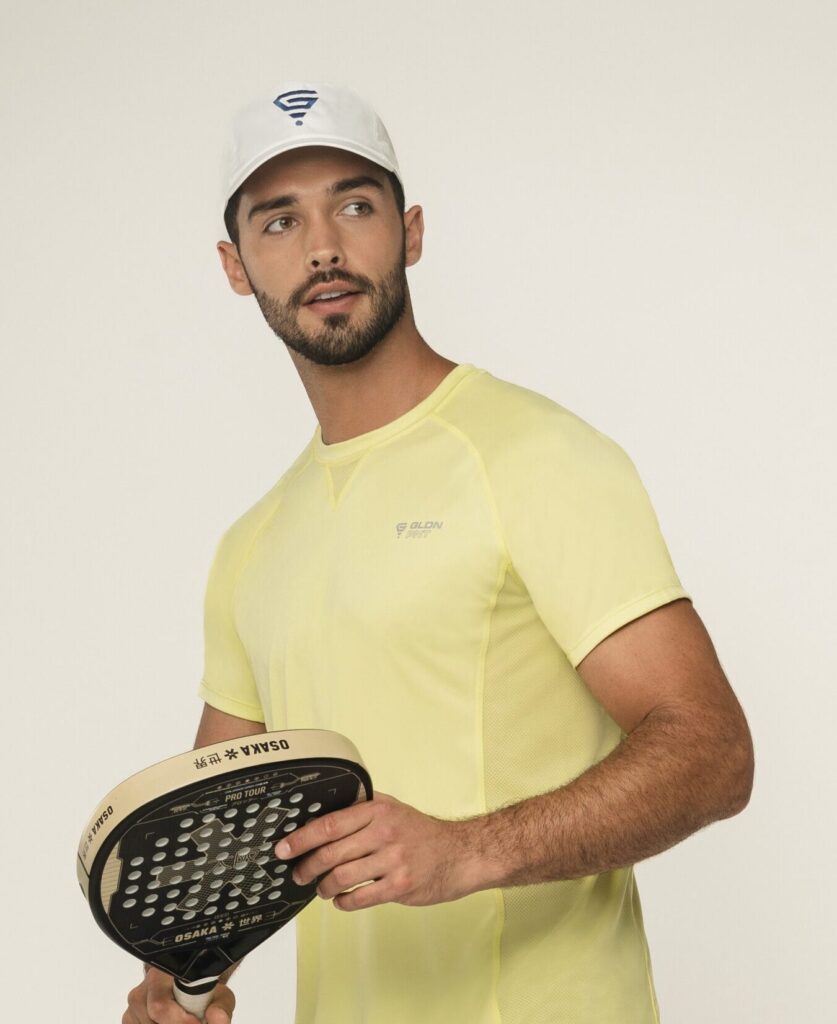
Premium activewear brand GLDN PNT partnered with Interwoven Design to create their first men’s and women’s padelwear collections, launching a brand built specifically around the movement patterns, performance needs, and aesthetic expectations of the sport. As the sport of padel continues to grow globally, athletes are demanding apparel that reflects the intensity, precision, and social culture of the game. 

Unlike crossover tennis or general training apparel, padel requires clothing that supports rapid lateral movement, extended rallies, sun exposure, and frequent ball handling. GLDN PNT’s goal was to introduce a collection that felt intentional, elevated, and authentic to padel, while establishing a strong visual identity that could scale with the brand.

GLDN PNT - Photo by Ton Gomes
GLDN PNT – Photo by Ton Gomes

The Design Challenge

Padel occupies a distinct space between tennis and squash, with its own cadence, court dynamics, and player culture. However, the apparel market had yet to fully reflect those differences. The challenge was twofold: to design sport-specific garments that performed under the physical demands of padel, and to simultaneously define a cohesive brand language that would differentiate GLDN PNT in a growing, style-conscious market.

From a performance standpoint, garments needed to support explosive movement, sustained play, and outdoor conditions without compromising comfort or fit. From a brand perspective, the collection had to feel modern and premium, appealing to both competitive players and lifestyle-driven athletes who engage with padel as a social sport.

Our Approach

Interwoven Design led a comprehensive, end-to-end design process that integrated brand strategy, soft goods expertise, and technical apparel development. The project began with identifying market gaps and analyzing both competitive sportswear and emerging padel culture. Through trend research, event observation, and consumer insight, Interwoven Design established a clear design direction for the GLDN PNT brand. Mood boards and color stories were developed to define the collection’s tone, ensuring visual cohesion across men’s and women’s lines. Silhouette development focused on balancing clean, contemporary styling with functional performance, resulting in a capsule collection that included athletic tanks, t-shirts, shorts, skirts, and complementary accessories.

As always, material selection played a central role in the design. Drawing from an extensive textile library and industry partnerships, Interwoven Design sourced high-performance fabrics selected for stretch, breathability, durability, and sun protection. Each fabric choice was evaluated not only for performance, but for how it contributed to the overall brand feel and on-court presence.

Branding and Visual Integration

Beyond garment design, Interwoven developed GLDN PNT’s branding system across apparel and accessories. This included custom graphics, reflective heat-seal logos, embroidered elements for visors and hats, and garment labels. Each branding element was strategically placed to enhance visibility and identity without interfering with performance or comfort. The result is a cohesive visual language that reinforces GLDN PNT’s positioning as a premium padel brand while remaining functional on the court.

Impact

Launched in June 2024, the GLDN PNT padelwear collection established a strong foundation for the brand, delivering sport-specific performance apparel with a distinct identity. By designing soft goods that respond directly to the physical demands and cultural nuances of padel, Interwoven helped GLDN PNT enter the market with clarity, confidence, and credibility.

Case Study 2: Miami Dolphins Cheerleader Uniforms

Miami Dolphins cheerleaders performing on the field wearing team performance uniforms
Miami Dolphins – Photo by Miami Dolphins Cheer

Elite cheerleading sits at the intersection of athletic performance, visual precision, and public-facing brand representation. The Miami Dolphins Cheerleaders partnered with Interwoven Design Group to modernize their uniforms and practice apparel, with the goal of creating performance-driven soft goods that support high-energy routines while empowering individual expression within a cohesive team identity.

Interwoven Design was commissioned to redesign the on-field uniforms, practice apparel, and a complementary cheer sneaker, elevating the cheerleaders’ wardrobe to reflect their dual roles as professional athletes and ambassadors for the Miami Dolphins organization. The project emphasized comfort, functionality, and confidence, ensuring that each garment

performed under physical intensity while presenting a polished, contemporary aesthetic on and off the field.

The Design Challenge

Cheerleading places exceptional demands on apparel. Garments must support explosive movement, jumps, lifts, and sustained choreography under stadium lights, heat, and long performance durations. At the same time, cheer uniforms are highly visible, serving as a key expression of team identity and brand values.

The challenge was to design a system of soft goods that could withstand athletic rigor without restricting movement, manage heat and perspiration, and maintain visual consistency across the team. Equally important was creating a wardrobe that allowed cheerleaders agency over their appearance, enabling personalization while preserving a unified, professional look.

Our Approach

Interwoven Design approached the project as a modular performance system rather than a single uniform. The design process began with direct engagement with the cheerleaders, gathering insight into their preferences, pain points, and performance requirements. This collaborative approach ensured that the final collection responded to real athletic needs rather than surface-level aesthetics alone. The concept of a “cheer closet” guided the development of a capsule collection composed of nine core silhouettes designed to be mixed and matched by individual team members. These included a crop top, sports bras, unitard, track jacket, skirt, leggings, and boy shorts, offered in a range of Miami Dolphins–branded colorways.

This system-based approach allowed each cheerleader to select combinations that best suited her body, role, and performance needs while maintaining visual cohesion across the squad. Soft goods design focused on creating garments that moved seamlessly with the body, supported dynamic routines, and felt comfortable throughout long rehearsals, games, and appearances.

Engineered for Movement and Durability

Material selection was central to the success of the collection, and a particular challenge here. Interwoven sourced a breathable, moisture-wicking performance fabric engineered to resist visible color changes from perspiration, ensuring the uniforms maintained a fresh, polished appearance even during high-intensity routines. Strategically placed perforated textiles enhanced ventilation while adding subtle textural detail to the garments.

Athletic construction techniques were used throughout, incorporating internal support features and carefully engineered paneling to improve fit, stability, and comfort. These decisions allowed the garments to support demanding choreography without restricting range of motion or causing distraction during performance.

Impact

The final uniform and practice collection successfully unified performance and style, delivering soft goods that support athletic excellence while reinforcing brand identity. The “cheer closet” model gives team members agency and confidence, allowing them to personalize their look while presenting a consistent, elevated image as a squad.

A complementary makeup kit was also designed to align with the apparel color strategy, enabling a cohesive head-to-toe presentation for games, practices, and appearances. Together, the system underscores the Miami Dolphins Cheerleaders’ role as elite athletes and public representatives of the organization.

Supporting Movement, Comfort, and Confidence

Athletics is defined by movement, repetition, and intensity. Every sprint, pivot, jump, and recovery phase places unique demands on the body and on the products worn in motion. In this context, soft goods are not passive layers or branding surfaces; they are active participants in performance. The way a garment stretches, compresses, breathes, or stabilizes can influence confidence, endurance, and precision in ways that are felt long before they are noticed.

Well-designed athletic soft goods regulate temperature without distraction, support muscles without restricting movement, and adapt across training, competition, and recovery. When these systems are thoughtfully engineered, athletes can focus fully on their sport. When they fall short, friction appears in the form of discomfort, distraction, or compromised performance. The difference often lies in details: patterning, material behavior under sweat and strain, seam placement, and how a product responds over time.

At Interwoven Design, we approach athletic soft goods as performance systems rather than isolated products. Our work blends material intelligence, ergonomic construction, and brand strategy to create apparel and wearable solutions that move with the body and evolve with the demands of sport. Whether designing for emerging athletic categories or established performance disciplines, we prioritize comfort, adaptability, and long-term wearability alongside visual identity and market relevance.

We collaborate with athletic brands, innovators, and performance-driven organizations who recognize that great design is built through deep understanding of the body in motion. Together, we design soft goods that support athletes where it matters most: in the moments of effort, focus, and flow that define sport.Interwoven Design is a design consultancy that is positioned at the intersection of soft goods and wearable technology, creating products that function with the body and offer comfort as well as the superb performance that arises through the innovative incorporation of rigid, often electronic and responsive elements. Sign up for our newsletter and follow us on Instagram and LinkedIn for design news, multi-media recommendations, and to learn more about product design and development!

From Sketch to Shelf: The Soft Goods Industrial Design Process in 6 Steps

From Sketch to Shelf: The Soft Goods Industrial Design Process in 6 Steps

Bringing a product from an idea to reality is an exciting journey—one that blends creativity, technical expertise, and user-centered thinking. In the world of wearable technology, great design isn’t just about aesthetics; it’s about crafting solutions that seamlessly integrate into people’s lives. From the first sketch to the final product on the shelf, every step in the industrial design process plays a crucial role in shaping a wearable that is functional, comfortable, and market-ready. There are a lot of ways to break down the design process, and they all have their uses: the double diamond, the design thinking cycle. Search ‘design process’ and you’ll find endless diagrams and breakdowns. In this Insight article, we’ll walk you through the key stages of industrial design, giving you a behind-the-scenes look at how innovative products come to life.

Step 1: Research & Discovery

The journey of creating a standout product starts with diving deep into the world of research and discovery. This initial phase is all about truly understanding the problem at hand—getting to know the needs of the users, the latest trends in the market, and how competitors are shaping the landscape. By mapping out these elements, designers can pinpoint where opportunities for innovation lie, crafting solutions that stand out in a crowded market. This phase is about more than just solving a problem; it’s about creating something that resonates with users and is perfectly positioned to make an impact. 

Interwoven SABER military exosuit
The SABER Military Exosuit

A key part of this research involves ethnographic studies and interviews with the target user community, which allow us to step into the shoes of the users. Through ethnography, we spend time in the real world with the people we’re designing for, understanding their habits, behaviors, and challenges. We did extensive research for our SABER Military Exosuit to understand the key tasks and body positions required of the soldiers who would be wearing the suit. This research was critical to understanding how to create a suit that would move effectively with the user. It’s a deeply immersive way of discovering what truly matters. Later, we’ll use these insights to develop testing protocols for our prototypes, ensuring that the design is not just functional, but also intuitive and user-friendly.

Step 2: Concept Development & Ideation

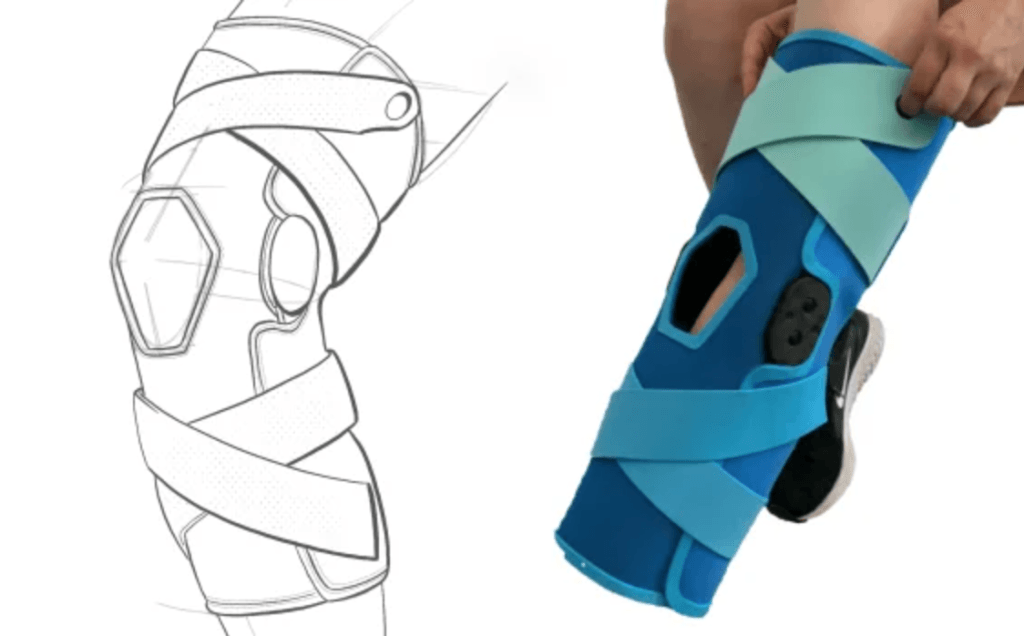
Once we’ve gathered our insights, it’s time to bring ideas to life through concept development and ideation. This stage is where creativity thrives, as designers explore different possibilities for form, function, and aesthetics. Sketching and early visualizations allow us to experiment with various design directions, refining the product’s overall look and feel. The goal is to create something that not only meets user needs but also resonates emotionally, balancing beauty with functionality. Sketching is a big part of every project we do at Interwoven Design, a great example being the Breg CrossRunner Knee Brace. We were open to many strategies for meeting the project requirements, and we sketched dozens of ideas before moving on to the prototyping stage. Every sketch brought us closer to finding the ideal design that would work both in concept and in reality.

Interwoven Sketch and prototype of the Breg Knee Brace
A sketch and prototype for the Breg Knee Brace project by Interwoven Design Group.

To refine our ideas further, we use mood boards, storyboards, and collaborative brainstorming sessions. Mood boards help convey the visual direction, pulling together textures, colors, and inspiration that guide the aesthetic choices. Storyboarding helps illustrate how users will interact with the product in real life, showcasing key moments in the user experience. Throughout this process, we collaborate closely with engineers, material scientists, and stakeholders to ensure feasibility. This interdisciplinary approach ensures the designs are not only innovative but also practical, considering technical limitations, material possibilities, and market needs from the outset. When working on our projects, which often involve collaborating with engineers, we find  that integrating interdisciplinary teamwork from the outset helps refine concepts, making sure we’re not only dreaming big but also designing something that can be successful in the real world.

Step 3: Prototyping & Iteration

With the initial concepts solidified, the next step is to bring those ideas into the physical world through prototyping and iteration. This is where sketches and ideas begin to take shape in low fidelity mockups, allowing us to visualize proportions, details, and mechanics in a more tangible way. Whether it’s through 3D printing, foam models, or soft goods mockups, these prototypes give us the opportunity to test ideas early on, making it easier to spot potential issues with form or function before committing to more complex production processes. We create dozens—in some cases far more than dozens—of prototypes for every project. The Whitecloud Medical Utility Bag is a great example of this; we created a broad range of soft goods prototypes to experiment with how we could fit a specific set of tools and objects that nurses need at all times. Early prototyping is a crucial stage that allows us to keep iterating quickly and efficiently, staying agile throughout the design journey.

As prototypes are developed, user feedback becomes a vital component of the refinement process. Testing prototypes with real users provides invaluable insights into how the product feels, operates, and resonates in everyday use. Functional assessments help determine whether the design meets its intended purpose, from ease of use to durability. Based on this feedback, the design undergoes continuous refinement, adjusting features, ergonomics, or materials as needed. This iterative cycle ensures that the product evolves to better meet user needs and aligns with both aesthetic and functional goals before moving into the final stages of production.

Step 4: User Testing & Validation

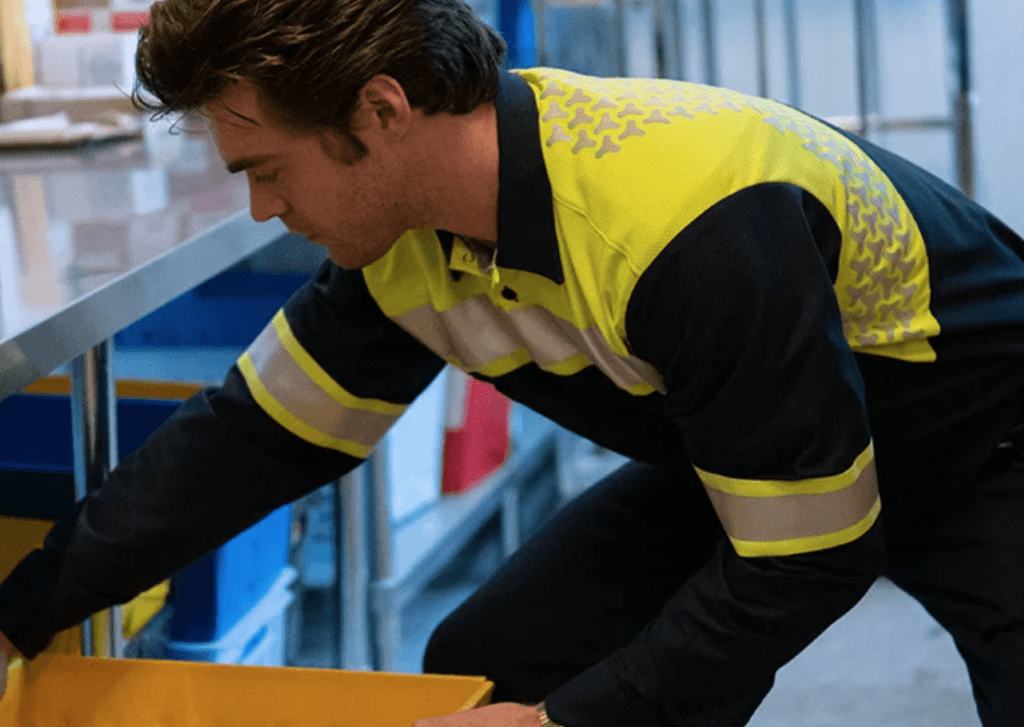
Once the prototype is ready for real-world interaction, the next step is user testing and validation. At Interwoven Design, we consider user testing and validation to be an integral part of prototyping and ideating. User testing is crucial for ensuring that the design not only meets user expectations but also performs seamlessly in everyday use. By testing the product with a target group of users, designers gather valuable feedback on comfort, usability, and overall user experience. This hands-on testing helps identify any areas where the product may need adjustments—whether it’s improving ergonomics, simplifying functionality, or enhancing the user interface. In our Firefly workwear project, we had warehouse workers wear prototypes during their work day to observe the quality and durability of the jacket’s reflective coating. It’s all about making sure the design feels intuitive, comfortable, and effective in real-world scenarios.

Interwoven Firefly workwear jacket
The Firefly workwear garment by Interwoven Design Group.

Alongside user feedback, long-term wearability and durability are evaluated to ensure the product stands up over time. This involves rigorous testing to assess how the product holds up under everyday wear and tear, as well as ensuring it meets regulatory standards for safety and compliance. Based on the data collected, the design is refined to address any issues that arise, ensuring that it not only delights users but is also safe and reliable. This iterative process guarantees that the final product is both functionally sound and compliant, offering an exceptional experience that users can trust and enjoy over time.

Step 5: Technical Design & Sourcing

With a refined concept in hand, the next step is transitioning from idea to a manufacturable product. This phase focuses on engineering the design for production, ensuring that all aspects of the product can be realized efficiently and at scale. In this step, we generate all of the technical documentation to allow the manufacturer to understand every aspect of the design. In our Even Adaptive Lingerie project, we created additional technical design documentation to support the patent application for the custom clasp we designed. 

Material sourcing is also important at this stage. The right materials must be chosen for both their functional properties—such as strength, flexibility, and weight—and their aesthetic qualities. Along with material considerations, wearability testing and durability assessments are conducted to guarantee that the product will stand up to everyday use while maintaining comfort and performance. These evaluations help refine the design, ensuring that it’s not only visually appealing but also reliable and practical in real-world conditions.

Collaborating with suppliers and manufacturers is a key part of this stage. Designers work closely with these partners to optimize production processes, ensuring that the design can be reproduced with consistency and efficiency. This includes refining techniques for assembly, tooling, and quality control, while also exploring opportunities to reduce costs or improve sustainability in the construction or in the manufacturing process. By maintaining an open dialogue with manufacturers and keeping an eye on potential production challenges, we can ensure that the design moves smoothly from the drawing board to the final product, ready for the market. This phase solidifies the design’s viability, ensuring it can be brought to life with precision and quality.

Step 6: Production & Launch

As the product nears completion, the focus shifts to the final stages of production and launch. This phase begins with finalizing manufacturing processes, ensuring that all production methods are optimized for scale and consistency. Quality control measures are put in place to maintain high standards throughout the production run, from material checks to final inspections. The goal is to ensure that each unit meets the exact specifications, preserving the integrity of the design and delivering a product that matches the vision set out at the beginning of the process.

Simultaneously, preparations are made for the product’s mass production, taking care to balance efficiency with design integrity. It’s essential that the product remains true to its initial concept, even as it moves into full-scale manufacturing. While this is happening, the marketing team works to build excitement for the launch, developing a compelling product narrative that connects emotionally with consumers. Product storytelling helps create a connection, communicating not just the features and benefits, but the values and story behind the design. This connection builds consumer trust and generates buzz, ensuring the product’s success in the market from day one.

Bringing it All Together

From the initial spark of inspiration to the final product launch, each stage of the industrial design process plays a critical role in creating wearable technology that not only looks good but works seamlessly in the lives of users. Every step—whether it’s research, prototyping, or technical design—helps shape a product that balances creativity, functionality, and user experience. A thoughtful, well-rounded design approach ensures that the product is not only technologically advanced but also user-friendly, making it easy for customers to integrate it into their daily lives with confidence and excitement.

At Interwoven Design, we believe that the best designs come from collaboration and a shared vision. We invite you to work with us to bring your ideas to life, whether you’re looking to refine an existing concept or develop an entirely new wearable tech solution. With our expert design and product development process, we’re here to guide you through every step, ensuring your product stands out in the market while meeting the highest standards of usability, functionality, and sustainability. Do you have a project you’d like to see come to life? Reach out!

Check out the rest of our Insight series to learn more about the design industry. Sign up for our newsletter and follow us on Instagram and LinkedIn for design news, multi-media recommendations, and to learn more about product design and development!

A Q&A with Industrial Designer Alvaro Uribe

A Q&A with Industrial Designer Alvaro Uribe

Spotlight articles shine a light on designers we admire, asking leaders in the field about their work and their design journey. In this interview, we spoke with industrial designer and educator Alvaro Uribe. Born in the U.S. and raised in Colombia, Alvaro’s career has been defined by a multidisciplinary approach, blending industrial design, UX/UI, and branding to create meaningful, experience-driven products. His work includes product design for leading brands, museum-exhibited creations, and an entrepreneurial venture that helped international brands navigate the U.S. market.

Industrial Designer Alvaro Uribe portrait
Industrial designer and Pratt professor Alvaro Uribe. Photo courtesy of Alvaro Uribe.

A graduate of Pratt Institute, Alvaro Uribe honed his craft at some of New York’s top design studios before launching his own practice in 2012. Alongside his professional work, he has built a distinguished academic career, serving as a tenured professor at Pratt and mentoring the next generation of designers. Alvaro wears many different hats. As a Design Director at American furniture brand Wooda, a UX/UI Lead with startups, and an industrial design consultant, he continues to shape the landscape in various industries while exploring how design can spark moments of delight and curiosity. We sat down with Alvaro to talk about starting his own practice, the challenges facing designers today, and how he balances artistic vision with commercial success.

Q: 

Could you introduce yourself and tell me about how you came to be an industrial designer?

A:

I was born in Miami, but I grew up in Colombia and my immediate family is in Colombia. I came to the U.S. when I was 19 with the goal of pursuing industrial design. I actually wanted to be a Disney animator—that was my childhood dream—but making things with my hands was also something I enjoyed. I applied to schools to study industrial design but in Colombia the application isn’t based on a portfolio, it’s based on your SAT equivalent scores. My scores weren’t great, so I was not accepted to my main schools. I took that as a sign that maybe I should go somewhere else, so I came to New York. I spent a year applying to school, I got my first job working at an art supply store at the Art Students League of New York. I took courses there on metal welding and live drawing. I hold that year of my life as one of the best. Ultimately, I got into Pratt, Parsons, and RISD. There was something about Pratt that I really enjoyed when I visited the campus, so I went for Pratt. Also, my mother’s a designer, and I think that’s part of why I gravitated towards industrial design. She has a business doing Italian-style kitchen carpentry and I spent a lot of time in the factory making silly projects as a kid. I even went to Salon De Mobile before I went to college. That exposure to the Italian world was very inspiring to me, and I was fortunate to be surrounded by people in the design world early on.

Q: 

What is your area of specialization within design? What drew you to it?

A:

I don’t see myself specialized, I consider myself a problem solver with a business mind. Having said that,  I’ve become very comfortable with homegoods. I like anything around the home, whether it’s housewares, kitchen tools or the core; furniture and lighting. However, as a designer, I look to be challenged, so I’m constantly looking for new markets, new projects that will excite me and keep me on my toes. For instance six years ago, I started doing something completely different called Aztro Marketplace. I met a lot of my clients by visiting trade shows. In walking the trade shows, you realize how much money goes into visiting those trade shows, especially for international brands. If you’re coming from Spain, or you’re coming from Argentina, being in the U.S. for a trade show is very expensive. So I wondered, why isn’t there a platform that helps you connect with retailers here in the U.S.? 

I had this idea back in 2015 and felt like it would be unfair to myself not to try it. So, in 2019, I started Aztro, which meant A-Z trading online. I built the platform from the ground up. It involved a lot of web development—working with programmers, understanding user flows—and that got me deep into UX/UI. I had to learn it the hard way because my business was constantly revisiting things and integrating feedback from stores or brands. I walked out of that experience very knowledgeable and it opened another path in my career: working with digital interfaces, whether websites or applications.

Q: 

In 2012, you started your own studio. What motivated that leap, and how has your approach to design evolved as a result?

A:

The motivation was a biking accident that I had. I was freelancing for several consultancies in New York at the time. As much as I loved it—because I was getting my hands on a lot of different projects—I always felt like an outside entity, someone who was just passing through. One day, I got hit by a bus in Chinatown and my bike was destroyed. I was lucky that it wasn’t more serious, but I knew that I couldn’t say I was enjoying what I was doing if it had been worse. I needed a change. A few weeks later, Camille Thayer from Pratt emailed me, saying, “We need someone who knows Rhino and Solidworks. Would you be interested in teaching this class?” A lot of things just came together. I also had my first client offer me a project and I thought, Maybe this is a sign that I could do something on my own.

Q:

You work across disciplines, from industrial design to UX/UI and branding. How has this multidisciplinary approach influenced your perspective on product design?

A: 

Earlier in my career, when I was doing a lot of product design, I was focused on the physicality of the product and manufacturing. Now I think more about the overall experience; the journey of why someone decides to use a product. What is the motivation? What are the pain points that drove them to want the product? UX opened me up to thinking about the product beyond just the moment of putting it on the shelf and walking away. UX is a user-centric way of thinking about how the product lives and how it fits into the user’s life.

Q:

Tell us about  the idea of “emotional function” in your design philosophy. Could you share an example of a product where this principle was particularly successful? 

A:

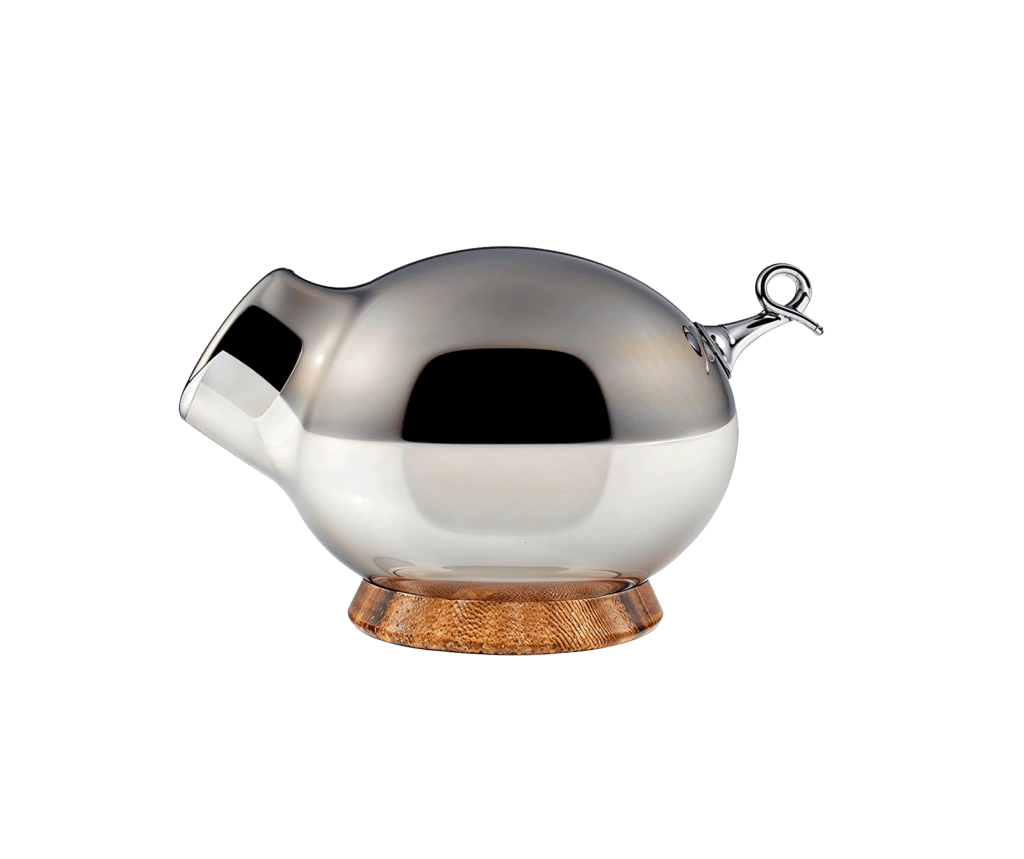
Kibo Piggy Bank for Nambe by designer Alvaro Uribe
The Kibo Piggy Bank for Nambé, designed by Alvaro Uribe. Photo courtesy of Alvaro Uribe.

We have these expectations of how things work. We walk into a space with an expectation of what’s going to happen or how something might look or work. I think that, as humans, we build connections with products that surprise and inspire us. When you buy a product, you’re expecting it to fulfill a specific function, but when it performs especially well, or when it sits on your shelf and you’re happy to see it, it exceeds your expectations, and creates an emotional connection. I feel like we live in a world where there are so many products. Looking back at my parents, they cherish their first camera. There was this sentimental connection with products because the products had done so much for them. They were also valuable. The appreciation I felt for products was much more present back then. I feel that now there’s an opportunity to have an emotional connection but it requires intention. It won’t happen by chance. A design I often get emails about is the Kibo Piggy Bank for Nambe, which delivers both functionally and aesthetically.

Q: 

Industrial design balances artistic vision with business and user needs. How do you navigate this when developing a new product?

A:

Every client is different. Some projects are driven by market research—looking at what’s out there, identifying gaps, and creating something that fills a real need. Other clients live in more artistic or conceptual spaces, so the work leans more into visual storytelling or expression. Either way, as a designer, you’re responsible for making sure the product not only looks good but also functions efficiently and intuitively. That’s why UX and UI go hand in hand—they’re equally important. Take something as simple as a menu: it should clearly map the sections of a site, but who says it can’t also be exciting? A few years ago, I worked with a digital agency in Toronto on a corporate website. Instead of a standard dropdown, we used the golden ratio spiral to build a dynamic menu—featured projects had the most visual weight, secondary sections were subdominant, and older content took on a subtle, supportive role.

Q:

Like you, we are constantly partnering with engineers at Interwoven Design. Could you talk about the relationship between engineers and designers and how to get the most from that partnership? 

A:

Engineers bring a level of analytical rigor that balances and elevates the more user-centered and experiential focus that designers often bring to the table. In any multidisciplinary collaboration, it’s the diversity of viewpoints—technical, aesthetic, functional—that leads to stronger, more market-ready products.

For example, when we’re working on something like an injection-molded product, engineers help ground the design in reality—highlighting constraints, opportunities for efficiency, and manufacturability. When you are working on an app, the programmers will be thinking about speed, efficiency and reliability of the system.The best collaborations happen when both sides listen and respect each other’s expertise. In my experience, when that mutual understanding exists, the process becomes incredibly fluid and effective.

Q:

Looking back at your body of work, could you share a project that stands out as especially meaningful to you? 

A:

Two projects come to mind. The first is the mobile and desktop app I designed while serving as Head of Design at Outpave, a SaaS platform focused on expense management for small businesses in the construction industry. I had the privilege of working with an exceptionally talented and inspiring team, supported by bold, design-driven leadership. That made a world of difference—every detail mattered, and nothing was overlooked.

The challenge was tackling a space that’s often chaotic: contractors managing expenses across multiple vendors, job sites, and categories. By pairing a mobile app with a robust desktop experience, we gave users the flexibility to allocate expenses, track transactions, and simplify bookkeeping in a seamless way. The end result was a product that felt intuitive and fluid, even though it was handling deeply complex workflows. That’s what made it special—transforming a technically dense process into something smooth, clear, and beautifully simple.

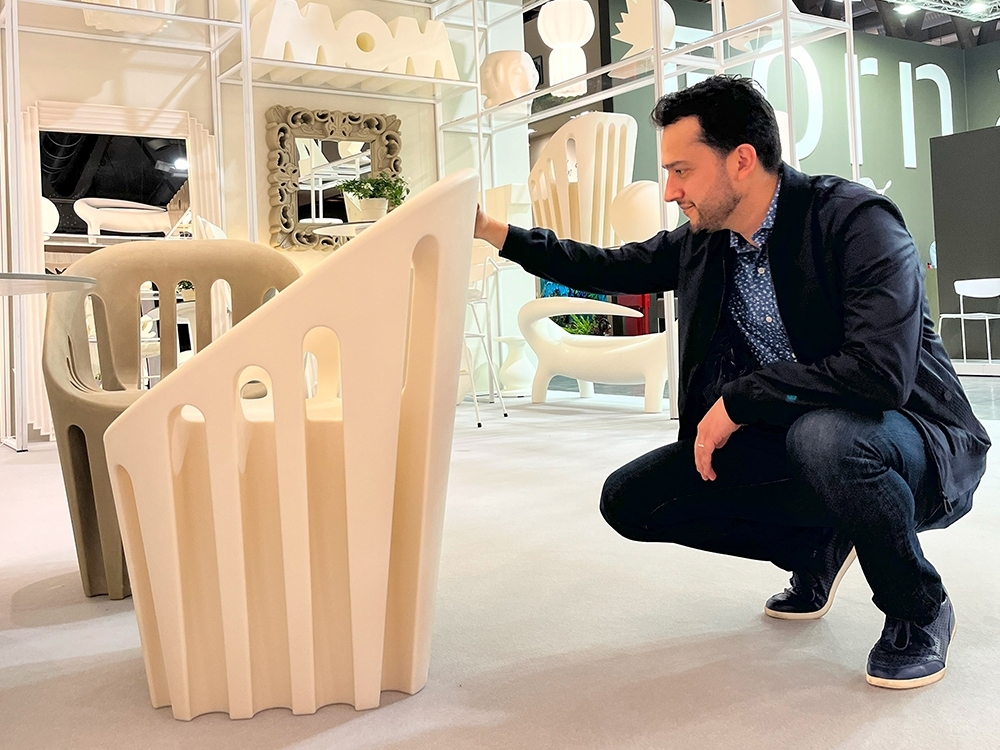
 Coliseum Chair for Slide Design
The Coliseum Chair for Slide Design, designed by Alvaro Uribe. Photo courtesy of Alvaro Uribe.

The second project is the Coliseum Chair, which I designed for Slide Design, an Italian brand known for its bold indoor-outdoor furniture and strong storytelling through design. Collaborating with an Italian company was a dream come true—there’s a deep appreciation for artistic vision, paired with exceptional craftsmanship and manufacturing precision.

The chair itself was inspired by the architectural arches of the Roman Colosseum, reinterpreted into a sculptural, functional form. It quickly became an iconic piece for the brand and was prominently featured at last year’s Salone del Mobile, drawing attention for its blend of historic inspiration and contemporary aesthetics.

Q:

What are some of the biggest challenges facing industrial designers today, and how do you approach them in your own work?

A:

Keeping up with technology is a big challenge. There is so much at our disposal as designers, and learning them all feels challenging and potentially confusing. There’s so much more, but how do you integrate them properly into your process? It can easily feel like you’re trying everything but not using anything at its full potential. I think that’s a challenge. 

From a job standpoint, I also feel that the industrial design consulting industry has gotten smaller since I was a student. It used to be mostly consultancies offering design services to brands but now many brands have in-house design teams. Even within in-house design teams, I feel like designers have become incredibly efficient. It used to be that you needed a big team of designers, but now a designer can do the job of three other designers. That’s challenging in the sense that there are only so many opportunities out there for the amount of industrial designers graduating every year.

Having said that, at the core of every industrial designer there’s always problem-solving. It’s been nice to see designers moving into strategy and other areas, applying that core skill of problem-solving to business, strategy, environmental practices, and so on.

Q: 

What advice would you give to designers looking to create products that stand the test of time—both in function and emotional resonance?

A:

Two things. Do a lot of research, and try to have a process that allows you to make mistakes. Nowadays, we might spend an hour or two a day looking at social media. The amount of images we consume is not great for your design process. Inevitably, your brain will connect one idea to another, and then you’re feeding into this trend that we’re all reinforcing. Suddenly I feel like,  I’ve seen this before. I can’t put my finger on where. One of the things I love about Pratt is that we teach abstraction; the ability to look at ideas in a very abstract way and sketch and allow yourself to have an idea that does nothing. And maybe it does do nothing, but maybe it triggered something that led you to the next idea. Today a lot of designers want to get to their idea without obstacles or without issues. As an industry, we need to embrace people showing their mistakes, showing their failures, showing what didn’t work out just as much as what did. When we celebrate that part of the process, that’s where innovation happens.

Q:

What concerns you about the future of industrial design? What gives you hope?

A:

Industrial design is unappreciated as an industry, in my opinion. I think we bring a lot of value to businesses but we can be seen as a commodity. It’s like design-washing, where the company calls something design but it’s not really design. Industrial design is such a robust field. When you’re studying industrial design, you’re expected to master a wide range of skills—sketching, CAD, rendering, user research, market research, prototyping, model making, craft, understanding materials and manufacturing processes. You also learn to think strategically about product lifecycles and marketing. It’s so much more than just making things look good.

Yet when you step into the job market, the salaries often don’t reflect the depth or value of that expertise. And that’s frustrating—because the impact of good design is tangible. You can measure it, track it, and see how it drives success. Some brands get this—they’re design-led, and they invest in it properly. But they’re the exception. Too much of the industry still undervalues design, keeping it in the underdog position it doesn’t deserve.

We build connections with products that surprise and inspire us.

When it comes to hope for the industry, I believe in the resilience of designers. At their core, designers are problem-solvers—not just in their work, but in how they navigate their own paths. Many are already pivoting into new industries, bringing fresh perspectives wherever they go. Emerging fields like artificial intelligence are opening doors for industrial designers to shape all kinds of human experiences, far beyond physical products. The market is evolving, and designers have the adaptability and creativity to evolve with it.

Q:

What’s next for you? Are there any upcoming projects you’re particularly excited about?

A:

I have a range of work across both industrial design and UX, and it’s always exciting—but lately, I’ve felt a growing urge to be part of something bigger, where I can make a deeper impact. I’m now open to the idea of joining a team if the right opportunity comes along. In the meantime, I have some exciting new collections launching with clients, including a Judaica collection for Nambe, branding and web development for Wooda, barware items with a Portuguese brand, new projects with brands in Italy, and mentoring young talent alongside my role as a professor.

On top of that, I’ve been even more energized by my personal projects. Over the past year, I’ve really gotten into 3D printing as manufacturing. The idea of what a brand is is shifting, and I believe designers are increasingly becoming brands themselves. 3D printing is a powerful catalyst for that shift—it removes the barriers of minimum orders and tooling costs, allowing you to design, produce, and sell directly to your own audience. You can now launch a product that feels just as refined as something on a store shelf, but with full control over the customer experience. That kind of creative freedom is incredibly exciting to me. I want to explore it firsthand. Knowing myself, I’ll definitely give it a shot.

We hope you enjoyed this interview with industrial designer Alvaro Uribe! Check out the rest of our Spotlight series to hear more from leaders in the design industry. Sign up for our newsletter and follow us on Instagram and LinkedIn for design news, multi-media recommendations, and to learn more about product design and development!
Collaborative Design Tools

The Smart List is a monthly list of multi-media recommendations on everything design, curated by Interwoven Design. As a group of aesthetically obsessed designers, there are a lot of beautiful products, objects, and resources that we love and enjoy. These products improve the quality of our daily lives and we want to share them with you. This issue is a collection of collaborative design tools to help you find accessible ways to work and design with others virtually and in person.

Smart List: Collaborative Design Tools

Milanote / Miro

Milanote is a cloud-based collaboration software designed to help creative teams manage storyboarding, creative writing and briefs, mind-mapping, note-taking, and brainstorming. It can be used to create mood boards, mind maps, briefs and more, all in one place. It lets us create boards and share projects with team members to collect feedback and ensure privacy.

Via https://milanote.com/ 

Similarly, Miro is a digital collaboration platform designed to facilitate remote and distributed team communication and project management. As an online workspace for innovation, it allows you to add various content from texts to images, create maps and diagrams, and work with visual templates together with a team of any size to dream and design the future together.

via Miro

Convivial Toolbox: Generative Research for the Front End of Design

Generative design research is like throwing a design party where everyone, especially the people we’re designing for, gets an invite to the creative process. This book isn’t just a read for the academic design research folks; it’s also a hot topic for the business and design crowd. And here’s the kicker – it’s a total game-changer in the realm of collaborative design. It’s like the guidebook for bringing minds together to make sure we’re hitting the right notes in creating products, systems, services, and spaces that truly click with people. Plus, there’s no other book out there hitting this collaborative design groove right now.

via Amazon

Community-Led Co-design Kit

The Community-led Co-design Kit, an initiative by the Inclusive Design Research Centre in Toronto, Canada, represents a significant step in inclusive design methodologies. Supported by the Hewlett Foundation through the Flexible Learning Open Education project, this first iteration of the kit draws on insights from projects like Co-designing Inclusive Cities, Platform Co-op Development Kit, and Coding to Learn and Create. Rooted in the experiences of working directly with communities, the kit also takes inspiration from disability justice, anti-oppression movements, and decolonialist research and design approaches. Emphasizing community input, the creators acknowledge the valuable feedback received, with plans to incorporate it into future versions of the kit, reflecting a commitment to continuous improvement based on collaborative engagement.

via Co-design

Design-Kit by IDEO

In 2009, IDEO introduced the HCD Toolkit, a groundbreaking book shedding light on the transformative potential of human-centered design (HCD) in the social sector. This unique approach quickly gained traction, drawing in a diverse community of designers, entrepreneurs, and social innovators who eagerly snapped up over 150,000 copies. Fast forward to April 2015, and IDEO.org took things up a notch with the launch of the Field Guide to Human-Centered Design. This dynamic 192-page book not only packs in 57 design methods, key mindsets, worksheets, and real-world case studies but also reflects the collaborative ethos of design thinking. The collaborative spirit embedded in the toolkit’s development aligns seamlessly with the principles of collaborative design, emphasizing the collective effort to bring about positive change in the social sector.

via IDEO

Design Object Series N. 003

The OXO Peeler, the Paper Coffee Filter + the Foot-pedal Trash Can

In our Design Object Series we highlight iconic objects designed by women. Thousands of objects that you use and appreciate everyday…surprise! Women designed them! Many of the contributions of women to design have been obscured if not erased throughout history. We want to do our part to counteract this effect by celebrating the women behind a range of objects that you’re sure to recognize. In this issue we salute three women and three designs that have improved our daily lives in the kitchen: Patricia Moore and the universal design principles she applied to the OXO Good Grips Peeler, Melitta Benz and the paper coffee filters that revolutionized the coffee experience, and Lillian Moller Gilbreth and the incredible motion studies that led to the foot-pedal trash can.

The OXO Good Grips peeler

The OXO Good Grips peeler is a best-selling kitchen tool, with over 40,000 reviews on Amazon and millions of units sold. It is also an important case study in universal design and product ergonomics that revolutionized how everyday objects were developed. The design was developed by SmArt Design in conjunction with gerontologist and industrial designer Patricia Moore, one of the founders of universal design. Universal design is the process of creating objects and services that are accessible by all, independent of age, physical size, mobility, ability, and any number of factors. More often than speaking of it as a distinct discipline, we speak of designs that adhere to universal design principles. 

The OXO Good Grips peeler has an incredible history, of which this is just a taste. Serial entrepreneur Sam Farber was cooking with his wife Betsey in the south of France, and Betsey, who had mild arthritis, was having a difficult time using a vegetable peeler. Couldn’t Sam do something about this? Kitchen tools hadn’t been taken seriously on the market, and a ‘nicer’ kitchen tool typically just meant a tool that was made with more expensive materials, not one that offered superior performance. Sam reached out to SmArt design, a company he had worked with before for his range of Copco kitchen tools. He knew he wanted to make a range of tools, so they needed a handle that could be used for many different tool types. “These were little items that had no batteries, no moving parts, but they provided a model that has been moving up the food chain ever since,” Moore explained, “Sam understood the duality of creating–that you need both form and function.” 

The OXO Good Grips Swivel Peeler was developed to have a large, universally comfortable handle with an oval profile that doesn’t accidentally rotate in the hand. Image via OXO.

The development team wanted a handle that would be comfortable to hold for long periods and offer a secure grip even when wet. They found an innovative rubber-like polymer called Santoprene, which was being used for gaskets, this was the first time it would be used for a consumer product. They made hundreds of prototypes to understand the form that would work most effectively, and got feedback from those with all kinds of hand sizes and needs. They decided on an oval profile that wouldn’t easily rotate in the hand, a large, thick grip that would be easy to hold for those with low strength or impaired hand mobility or arthritis (or anyone), and textured fins on either side to provide a more precise grip for those who applied more pressure, and a visual cue of the tactile appeal of the tool. 

SmArt Design went to a Japanese knife company for manufacturing as none of the manufacturers in the US or Taiwan were confident they could successfully execute the delicate fins. This allowed them to have a superb blade, which is another reason that the peeler is such a hit. Not only is it comfortable and convenient to hold for all users, it is wonderfully sharp. The result of OXO’s undertaking is an iconic design object that established best practices for the entire design industry. Moore explained, “We were rethinking how you design. It became a social challenge.”

The paper coffee filter

Until 1908 it was common for coffee grounds and brewing water to share a vessel. The water would be poured directly over the grounds into a pot or mug and the grounds would gradually settle to the bottom of the container, becoming a thick sludge that the drinker would ideally leave behind but of course, that wouldn’t always work. Lots of clean-up was involved with this process, too. The French press was one solution to separate the grounds from the water, though it was only suitable for certain types of coffee and there was still the business of cleaning the apparatus. 

The paper coffee filter would change all of that, effectively filtering out the grounds and leaving behind a neat, disposable bundle for quick, painless clean-up. Coffee made with a filter was smooth, and sludge-free, and the filtration could influence the flavor positively as well.

Melitta Bentz was a German housewife in Dresden, passionate about good coffee. She made a cup each morning, irritated with each granule of ground coffee accidentally ingested. One day, fed up with the mess and inconvenience of the old way, she punched holes in an old tin pot and layered a sheet of her son’s blotting paper inside. She added coffee grounds and hot water, got a clean cup and a relatively clean pot, and never looked back. It’s said that she tested and refined the filter and the porcelain pour-over component with friends during her “coffee afternoons.”

Melitta Bentz developed not only the paper coffee filter but an entirely new system of making coffee based upon those filters. Image via jaune 10.

She was granted a patent within two years, in 1908, and set up a business making paper coffee filters in her Dresden apartment, with her two sons making deliveries and her husband creating displays to explain the new product. When she showed the product at the Leipzig Trade Fair the product took off and the company began to grow rapidly. The product was so clever in part because it was not only a product but a system. It took some education and training to help new users understand the idea, but once they saw the benefits they were quickly converted. The Melitta company is still one of the largest paper coffee filter manufacturers in the world. Though hundreds of styles are now available, the Melitta filter is the ancestor of them all.

The foot-pedal trash can

Many of the vegetable peelings and used filters above end up in our third critical kitchen design object, the foot-pedal trash can. While the concept of public sanitation has been around since the ancient Roman era, the first garbage receptacles didn’t come on the scene for hundreds of years, not until the late 1800s when the careless tossing of trash into streets and public waterways had become a public health hazard that could no longer be ignored. The ubiquitous foot-pedal trash can that we see in kitchens today was only designed in the last 100 years, in the 1920s. The development of this incredibly useful kitchen tool was brought about by an incredibly intelligent psychologist and engineer, Lillian Moller Gilbreth

Gilbreth was remarkable in many ways, most famously for being the model for the super-mother in the Cheaper by the Dozen movies, which tell the story of a family with 12 children and their clever systems for maintaining a functional household. The movies were based on books written by two of Gilbreth’s children. She is also known for her motion studies, detailed time-motion studies she did with her husband Frank Gilbreth in 1911 to understand how workers move when completing tasks as well as the time it takes to complete each task. These motion studies, and later studies around fatigue, were critical in streamlining factory processes. She also gave this kind of careful attention to offices, hospitals, sports arenas, kitchens, and her own domestic labor, determined to optimize those as well. 

The foot-pedal trash can allows users to access the trash with their hands free. Image via Simple Human.

Gilbreth worked as an industrial engineer for General Electric, which led her to design several improvements for the kitchen throughout the 1920s. She observed thousands of women at work, and from the insights she gathered from that research she developed the foot-pedal trash can as well as the shelves inside refrigerator doors, including the egg and butter trays. She also did the research that standardized counter, stove, cabinet, and other fixture heights in kitchens.  Next time you are at the trash can with your hands full, you can appreciate that clever, hands-free foot pedal action and the efforts of Lillian Moller Gilbreth to improve everyday life.

Sign up for our newsletter and follow us on Instagram and LinkedIn for design news, multi-media recommendations, and to learn more about product design and development!