A Q&A with James Rudolph, Industrial Design Educator and Founder of Rudolph Design Studio

A Q&A with James Rudolph, Industrial Design Educator and Founder of Rudolph Design Studio

Spotlight articles shine a light on designers, engineers, researchers, and creative thinkers we admire and the ideas shaping design today. This month, as students head back to school, we’re turning to industrial design education with a provocative question: Are we teaching young designers the right things?

James Rudolph, Assistant Professor of Industrial Design at the University of Notre Dame and founder of Rudolph Design Studio, smiling in an outdoor headshot
James Rudolf, industrial design educator at the University of Notre Dame and founder of Rudolf Design Studio

We sat down with James Rudolph, Paul Down Assistant Professor of Industrial Design at the University of Notre Dame and founder and principal designer of Rudolph Design Studio. With more than 20 years of industry experience, James brings the perspective of an active practitioner to the classroom.

Our conversation ranged from AI-generated renderings to the enduring value of making, craftsmanship, and putting an idea into someone else’s hands. We talked about what students may be spending too much time learning, whether designers have become too focused on solving problems, and James’s growing interest in what he calls “speculative design for the real world.”

Q:

What’s one skill that students obsess over right now that you don’t think is going to matter as much in five years? And conversely, what’s one “old-school” skill that you think is going to become even more valuable?

A:

A lot of students are obsessed with being able to render at a fidelity that creates engaging, compelling, interesting visuals. In the past, that was such an important skill. If you’re a young designer, your concepts get more attention if they’re visually compelling, have high contrast and perfect perspective, and integrate color, material, and texture in a compelling way.

Some students get stuck on that to the detriment of thinking about the gesture, the overall form, and the general first impression of a physical thing. AI can help young designers create stronger, more compelling visualizations. The designer, in turn, brings the critical thinking and analysis needed to give those visualizations meaning and direction.

Conversely, the more traditional industrial design skill of model making and physical making is an area where I think we could all use a little more time. It doesn’t have to be hand carving, but it has to be the ability to show your idea in a three-dimensional form and put it in somebody’s hand.

And it’s not only model making, but craftsmanship. People respond to craftsmanship. Taking the time to make well-crafted, low-fidelity mockups allows people to evaluate the things you want them to evaluate—the ergonomics, the gesture, the space it takes up, the volume—rather than looking at how poorly something is made.

Q:

Is industrial design education keeping pace with the profession—or is it still preparing students for a version of design that no longer exists?

A:

My research and practice are closely intertwined. I continue to work with industry clients, particularly in healthcare, where I collaborate with engineers, scientists, and researchers to understand people and their needs and bring that perspective to the development of critical technologies. Those experiences also shape my research, giving me an opportunity to reflect and write about the role design can play in advancing healthcare innovation.

Those challenges, processes, and methodologies that I practice are what I try to bring into the classroom. With younger students, I provide more constraints so they can learn some of the fundamentals. As they progress, I give them fewer constraints and more of a framework for the types of questions they should be answering and the work they should be doing from the beginning of a project through the end.

In some ways, I guess it’s going back to an apprentice-style model of education: learning through doing, learning through dialogue, learning through feedback, and learning through interaction with physical things.
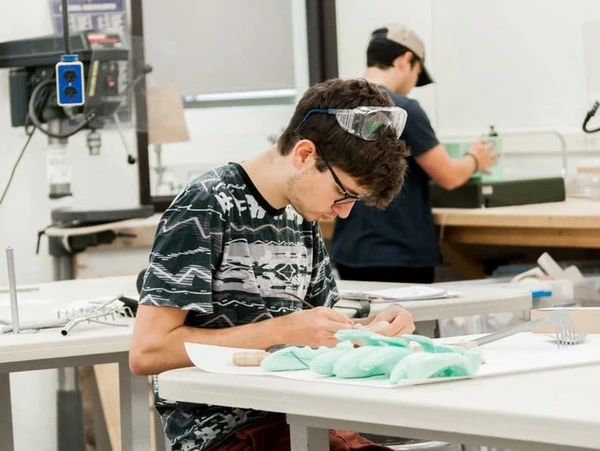
Industrial design student wearing safety goggles working on a project in a design studio workshop at the University of Notre Dame
Design student working on a project in West Lake Hall. Photo courtesy of the University of Notre Dame Department of Art, Art History, and Design.

Q:

Has making become optional? What role does physical making still play in industrial design education?

A:

For me, it’s still so critical. The act of making has obviously expanded.  When I was in school, it was about working directly with materials—shaping foam, building three-dimensional forms in the wood shop, and learning the fundamentals of form through craft. It meant creating physical objects you could hold, interact with, and put into other people’s hands.

That’s still so critical to industrial design and the physical world, but the ways in which we can make things has grown. Now we’re 3D printing a lot. You can iterate quicker, create quick mockups in CAD, and add more content to your models through displays or digital experiences.

I think making is absolutely critical. It’s part of our approach to research and understanding people. You learn by making in a couple of different ways. You learn yourself through a kind of dialogue with the three-dimensional object, and you respond as a designer to what you’re making. But the real power is being able to learn from others through your making.

Q:

Are we graduating designers who know how to make things—or designers who know how to present things really well?

A:

I think every school is a little bit different. Some schools are certainly doing a better job of making sure that the craft of design is still at the forefront of their curriculum. A lot of it has to do with the expertise of the faculty. We tend to teach what we know, so a lot has to do with the values of the different departments and what areas of design they want to highlight.

There are certainly programs that excel at really strong presentations and portfolios—the ability to tell a compelling narrative through the visual storytelling of their projects. There may be some truth to the trend that a lot of the content in those portfolios tends to be more rendering-heavy, more digital-heavy, and less prototyping-heavy.

But I still see a lot of portfolios that show early, low-fidelity prototyping. I love to see that. I think it’s still paramount to the way designers learn from their own mistakes.

Q:

How do you define design research, what impact does it have, and how might we encourage more students to become design researchers?

A:

For me, design research is really about understanding people: their needs, their wants, their desires. Then, if you move beyond that, thinking about people in terms of social dynamics, behavioral dynamics, and common cognitive things that you need to think through from a human factors perspective.

It’s understanding people within a context, and that means understanding what their common goals, activities, and tasks are. When we start a design research project in my class, it’s about understanding a group or groups of people that have a shared task, activity, or goal. 

At Notre Dame, we put a heavy emphasis on design research. In fact, one of the areas of feedback we sometimes receive is that we graduate students who almost have too much design research and less design refinement on the back end.

We start with an area of inquiry and go through the process of: What are the questions we have? How do we frame a research effort around that? What are some of the questions you might want to ask? What are some of the observations you might want to make? What type of people should you include to be more representative of a broader population?

Then, on the back end, how do you turn those observations into insights? How do you communicate what’s important—what you found that was interesting, compelling, and meaningful—to whoever your audience is?

Q:

Has industrial design become too focused on solving problems? Is there still room for work that’s speculative, poetic, or simply asks different types of questions?

A:

I certainly hope so. I grapple with this issue myself all the time. I have a real appreciation for speculative design work and for design work that is not intended only to inform products or practical things in your life. The idea of using the methods, skills, and tools of design to inform dialogue and debate has always been interesting to me. In fact, I wanted to be an artist originally. I went to school for fine art. So the idea of using the object to solicit or evoke dialogue and critical thinking is really compelling to me.

I think that’s a way to inspire students to think beyond practical objects or objects that are meant just to bring utility to your life—introducing projects intended to provoke, prompt, or incite dialogue. There’s this whole other world of design that takes place in art galleries, community settings, and social settings. Students can use their skills in more ways than just developing utilitarian products.

You also have the freedom not to design something. Maybe a product isn’t the right solution. Maybe it’s a system or service, or maybe it’s meant for a gallery or museum setting.

Q:

Everyone is talking about AI replacing designers. Is that the wrong question? Should we really be worried, or should we be excited?

A:

I struggle with AI a little bit because I haven’t found a way in my practice to use it successfully. I go to conferences and watch demonstrations of different workflows for incorporating AI into the design process, and at the end it’s like a coffee maker shrouded in camouflage. The forms don’t make sense and there’s no thought around the workflow or usability.

For more complex healthcare devices—wearables and things that have surgical robotics-like complexity—the results initially look compelling. They’re rendered very nicely, the forms look real, and they have compelling contrast and lighting. But I haven’t been able to use it in a way where I see real value. I can sit down with my partner and brainstorm 20 more reasonable, meaningful ideas. Maybe they’re not perfect or rendered very well, but they actually address the issues that we want to solve.

OneAir Medical and OneAir Environment handheld devices, healthcare and environmental monitoring products designed by Rudolph Design Studio
OneAir Medical and OneAir Environment devices, designed by Rudolph Design Studio.

It’s not to say that AI isn’t going to be there soon. I think it will become a great tool. But it won’t replace your ability to analyze and critique from a human perspective. I’m not scared. I’m frustrated with my own inability to use it successfully. It falls on me to continue to use the tools, understand the tools, and introduce them when I think they’re appropriate.

Q:

You mentioned speculative design earlier, and it’s clearly something you’re thinking about a lot. Where do you see speculative design fitting into the future of industrial design practice and education?

A:

One area that you might have seen me light up about is this idea of speculative design. Early in my career, my research was heavily focused on traditional ways of thinking about design: How do we better understand people’s needs? How do we define needs? How do we create procedures and processes to translate those needs into user-need statements and then into product requirements?

But my own research is going back to what I was more interested in as a student, which is this idea of speculative design. I’ve been rereading Victor Papanek’s Design for the Real World and also reading about speculative work, speculative everything, and discursive design. They often talk to each other as if they’re very different camps—speculative design on one side and traditional industrial design, where we make things useful, practical, and usable, on the other. 

Why do they have to be so different? I think there’s room for both, and both camps can learn from each other.  I’ve got this idea I’m calling “speculative design for the real world.” How do you leverage the methodologies and thinking of speculative design, and how can those things inform real-world initiatives—important societal and cultural initiatives?

When you think through the lens of speculative design, it opens up an entirely new range of possibilities for where the research might lead. You don’t have to constrain yourself to a thing. It could be an experience. It could be an exhibit. It could be a social initiative. It opens a lot of opportunities for different types of solutions that, as an industrial designer, you might not have thought of at the onset.

–

Check out the rest of our Spotlight series to hear more from leaders in the design industry. Sign up for our newsletter and follow us on Instagram and LinkedIn for design news, multi-media recommendations, and to learn more about product design and development!

From Sketch to Shelf: The Soft Goods Industrial Design Process in 6 Steps

From Sketch to Shelf: The Soft Goods Industrial Design Process in 6 Steps

Bringing a product from an idea to reality is an exciting journey—one that blends creativity, technical expertise, and user-centered thinking. In the world of wearable technology, great design isn’t just about aesthetics; it’s about crafting solutions that seamlessly integrate into people’s lives. From the first sketch to the final product on the shelf, every step in the industrial design process plays a crucial role in shaping a wearable that is functional, comfortable, and market-ready. There are a lot of ways to break down the design process, and they all have their uses: the double diamond, the design thinking cycle. Search ‘design process’ and you’ll find endless diagrams and breakdowns. In this Insight article, we’ll walk you through the key stages of industrial design, giving you a behind-the-scenes look at how innovative products come to life.

Step 1: Research & Discovery

The journey of creating a standout product starts with diving deep into the world of research and discovery. This initial phase is all about truly understanding the problem at hand—getting to know the needs of the users, the latest trends in the market, and how competitors are shaping the landscape. By mapping out these elements, designers can pinpoint where opportunities for innovation lie, crafting solutions that stand out in a crowded market. This phase is about more than just solving a problem; it’s about creating something that resonates with users and is perfectly positioned to make an impact. 

Interwoven SABER military exosuit
The SABER Military Exosuit

A key part of this research involves ethnographic studies and interviews with the target user community, which allow us to step into the shoes of the users. Through ethnography, we spend time in the real world with the people we’re designing for, understanding their habits, behaviors, and challenges. We did extensive research for our SABER Military Exosuit to understand the key tasks and body positions required of the soldiers who would be wearing the suit. This research was critical to understanding how to create a suit that would move effectively with the user. It’s a deeply immersive way of discovering what truly matters. Later, we’ll use these insights to develop testing protocols for our prototypes, ensuring that the design is not just functional, but also intuitive and user-friendly.

Step 2: Concept Development & Ideation

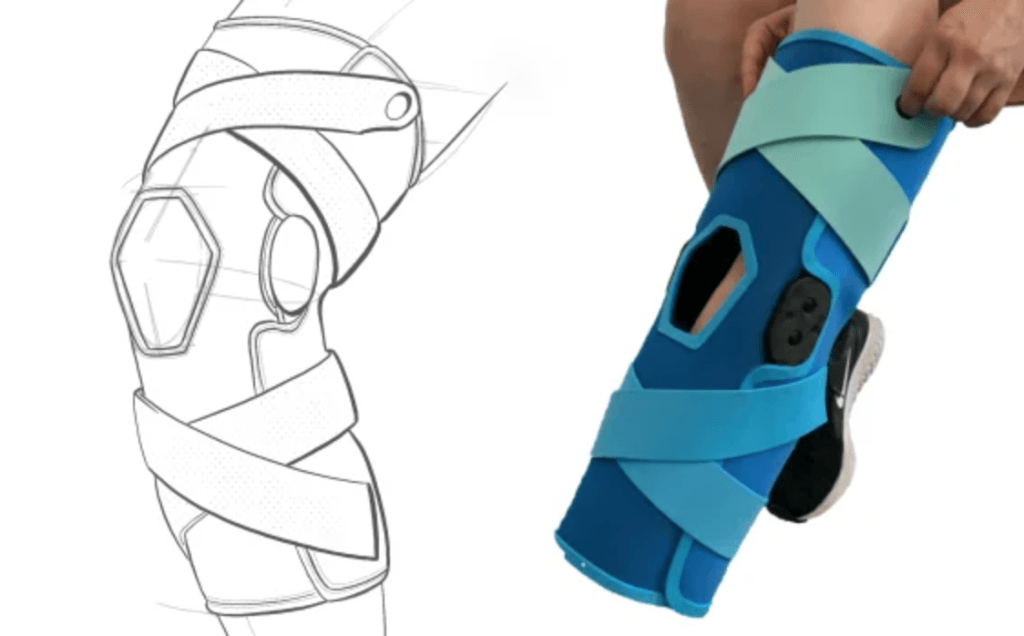
Once we’ve gathered our insights, it’s time to bring ideas to life through concept development and ideation. This stage is where creativity thrives, as designers explore different possibilities for form, function, and aesthetics. Sketching and early visualizations allow us to experiment with various design directions, refining the product’s overall look and feel. The goal is to create something that not only meets user needs but also resonates emotionally, balancing beauty with functionality. Sketching is a big part of every project we do at Interwoven Design, a great example being the Breg CrossRunner Knee Brace. We were open to many strategies for meeting the project requirements, and we sketched dozens of ideas before moving on to the prototyping stage. Every sketch brought us closer to finding the ideal design that would work both in concept and in reality.

Interwoven Sketch and prototype of the Breg Knee Brace
A sketch and prototype for the Breg Knee Brace project by Interwoven Design Group.

To refine our ideas further, we use mood boards, storyboards, and collaborative brainstorming sessions. Mood boards help convey the visual direction, pulling together textures, colors, and inspiration that guide the aesthetic choices. Storyboarding helps illustrate how users will interact with the product in real life, showcasing key moments in the user experience. Throughout this process, we collaborate closely with engineers, material scientists, and stakeholders to ensure feasibility. This interdisciplinary approach ensures the designs are not only innovative but also practical, considering technical limitations, material possibilities, and market needs from the outset. When working on our projects, which often involve collaborating with engineers, we find  that integrating interdisciplinary teamwork from the outset helps refine concepts, making sure we’re not only dreaming big but also designing something that can be successful in the real world.

Step 3: Prototyping & Iteration

With the initial concepts solidified, the next step is to bring those ideas into the physical world through prototyping and iteration. This is where sketches and ideas begin to take shape in low fidelity mockups, allowing us to visualize proportions, details, and mechanics in a more tangible way. Whether it’s through 3D printing, foam models, or soft goods mockups, these prototypes give us the opportunity to test ideas early on, making it easier to spot potential issues with form or function before committing to more complex production processes. We create dozens—in some cases far more than dozens—of prototypes for every project. The Whitecloud Medical Utility Bag is a great example of this; we created a broad range of soft goods prototypes to experiment with how we could fit a specific set of tools and objects that nurses need at all times. Early prototyping is a crucial stage that allows us to keep iterating quickly and efficiently, staying agile throughout the design journey.

As prototypes are developed, user feedback becomes a vital component of the refinement process. Testing prototypes with real users provides invaluable insights into how the product feels, operates, and resonates in everyday use. Functional assessments help determine whether the design meets its intended purpose, from ease of use to durability. Based on this feedback, the design undergoes continuous refinement, adjusting features, ergonomics, or materials as needed. This iterative cycle ensures that the product evolves to better meet user needs and aligns with both aesthetic and functional goals before moving into the final stages of production.

Step 4: User Testing & Validation

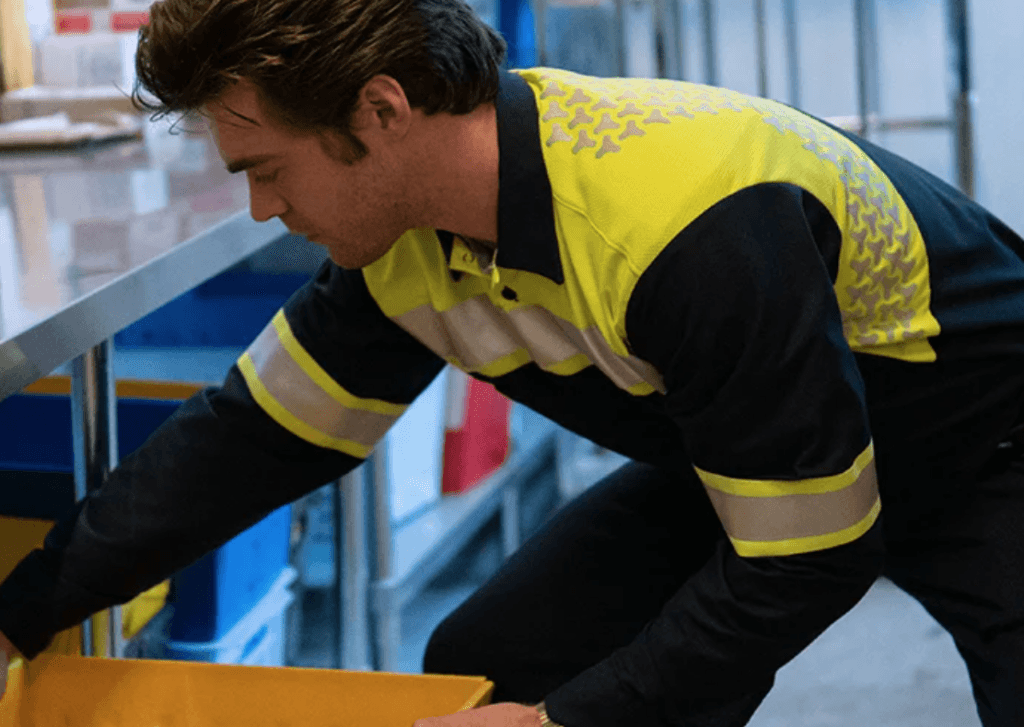
Once the prototype is ready for real-world interaction, the next step is user testing and validation. At Interwoven Design, we consider user testing and validation to be an integral part of prototyping and ideating. User testing is crucial for ensuring that the design not only meets user expectations but also performs seamlessly in everyday use. By testing the product with a target group of users, designers gather valuable feedback on comfort, usability, and overall user experience. This hands-on testing helps identify any areas where the product may need adjustments—whether it’s improving ergonomics, simplifying functionality, or enhancing the user interface. In our Firefly workwear project, we had warehouse workers wear prototypes during their work day to observe the quality and durability of the jacket’s reflective coating. It’s all about making sure the design feels intuitive, comfortable, and effective in real-world scenarios.

Interwoven Firefly workwear jacket
The Firefly workwear garment by Interwoven Design Group.

Alongside user feedback, long-term wearability and durability are evaluated to ensure the product stands up over time. This involves rigorous testing to assess how the product holds up under everyday wear and tear, as well as ensuring it meets regulatory standards for safety and compliance. Based on the data collected, the design is refined to address any issues that arise, ensuring that it not only delights users but is also safe and reliable. This iterative process guarantees that the final product is both functionally sound and compliant, offering an exceptional experience that users can trust and enjoy over time.

Step 5: Technical Design & Sourcing

With a refined concept in hand, the next step is transitioning from idea to a manufacturable product. This phase focuses on engineering the design for production, ensuring that all aspects of the product can be realized efficiently and at scale. In this step, we generate all of the technical documentation to allow the manufacturer to understand every aspect of the design. In our Even Adaptive Lingerie project, we created additional technical design documentation to support the patent application for the custom clasp we designed. 

Material sourcing is also important at this stage. The right materials must be chosen for both their functional properties—such as strength, flexibility, and weight—and their aesthetic qualities. Along with material considerations, wearability testing and durability assessments are conducted to guarantee that the product will stand up to everyday use while maintaining comfort and performance. These evaluations help refine the design, ensuring that it’s not only visually appealing but also reliable and practical in real-world conditions.

Collaborating with suppliers and manufacturers is a key part of this stage. Designers work closely with these partners to optimize production processes, ensuring that the design can be reproduced with consistency and efficiency. This includes refining techniques for assembly, tooling, and quality control, while also exploring opportunities to reduce costs or improve sustainability in the construction or in the manufacturing process. By maintaining an open dialogue with manufacturers and keeping an eye on potential production challenges, we can ensure that the design moves smoothly from the drawing board to the final product, ready for the market. This phase solidifies the design’s viability, ensuring it can be brought to life with precision and quality.

Step 6: Production & Launch

As the product nears completion, the focus shifts to the final stages of production and launch. This phase begins with finalizing manufacturing processes, ensuring that all production methods are optimized for scale and consistency. Quality control measures are put in place to maintain high standards throughout the production run, from material checks to final inspections. The goal is to ensure that each unit meets the exact specifications, preserving the integrity of the design and delivering a product that matches the vision set out at the beginning of the process.

Simultaneously, preparations are made for the product’s mass production, taking care to balance efficiency with design integrity. It’s essential that the product remains true to its initial concept, even as it moves into full-scale manufacturing. While this is happening, the marketing team works to build excitement for the launch, developing a compelling product narrative that connects emotionally with consumers. Product storytelling helps create a connection, communicating not just the features and benefits, but the values and story behind the design. This connection builds consumer trust and generates buzz, ensuring the product’s success in the market from day one.

Bringing it All Together

From the initial spark of inspiration to the final product launch, each stage of the industrial design process plays a critical role in creating wearable technology that not only looks good but works seamlessly in the lives of users. Every step—whether it’s research, prototyping, or technical design—helps shape a product that balances creativity, functionality, and user experience. A thoughtful, well-rounded design approach ensures that the product is not only technologically advanced but also user-friendly, making it easy for customers to integrate it into their daily lives with confidence and excitement.

At Interwoven Design, we believe that the best designs come from collaboration and a shared vision. We invite you to work with us to bring your ideas to life, whether you’re looking to refine an existing concept or develop an entirely new wearable tech solution. With our expert design and product development process, we’re here to guide you through every step, ensuring your product stands out in the market while meeting the highest standards of usability, functionality, and sustainability. Do you have a project you’d like to see come to life? Reach out!

—

Check out the rest of our Insight series to learn more about the design industry. Sign up for our newsletter and follow us on Instagram and LinkedIn for design news, multi-media recommendations, and to learn more about product design and development!
Why Work with a Product Design Consultancy?

We keep describing ourselves at Interwoven Design as a design consultancy that specializes in soft goods and wearable technology, but what is a design consultancy, and why would you work with one in the first place? In this article we explain the many benefits of working with a design consultancy, and under what circumstances it might be the right choice for you.

What are the benefits of working with a design consultancy?

Let’s say you have an idea, and you’re interested in developing it. Regardless of how vague or refined the concept might be at the start, research and development is not a straight line. It’s a convoluted, long-term process that can take months or years to complete successfully. It takes a special combination of knowledge and skills to do efficiently and effectively, and these are completely different skills from those needed to manufacture, promote, and sell existing products. While some companies have the resources to do this on their own, it is far more likely that the development is outsourced to another kind of company, one that specializes in bringing ideas to life. This is the design consultancy. 

The development of a new product ideally involves a team with customized skills for that specific industry and product category.

While any given company is an expert on their slice of the market to some degree, it is less likely that they are also experts in trends, marketing, a new area of the market for their brand, ergonomics, behavioral psychology, research, testing, prototyping, and all manner of skills needed to create innovative products that can succeed. Diverse teams are more creative, and these teams need diversity not only in gender and background but in skills, experience, and knowledge, both professional and personal. Design consultancies come in a wide variety of flavors, which means that a company can identify the specific array of skills that are needed for their particular project and have access to those skills in a convenient package.

When is the right time to work with a design consultancy?

a designer references a sketch of a buckle while prototyping
Many companies choose to work with a design consultancy to develop a new brand or product line, expand an existing product line, or enter a new space in the market.

Giant corporations (think Estée Lauder or Proctor & Gamble), who need to constantly diversify and expand their own innumerable product lines—as well as those of their child corporations— are likely to have a dedicated R&D department, or even multiple R&D departments. They are generating so many products for existing and reliable distribution channels that it is logical and economical to develop projects internally. Many companies don’t need R&D at all times, they need it at specific times to accomplish specific goals for their growth and development.

Big companies known for their dedication to innovation (think Nike or Patagonia) are another kind of company that is likely to have in-house R&D. After decades of demonstrating this dedication, they have amassed a faithful audience for cutting-edge products. It is part of their branding strategy to push the envelope in their industries, and while it is of course valuable to sell the products, it is enormously valuable to be pioneers in new spaces in the market, and to develop newsworthy projects. While many companies would appreciate the branding and market benefits of innovation, they don’t have the time or the expertise to generate it.

Most companies don’t have the time, the funds, or the bandwidth to execute research and development in-house.

A typical business isn’t likely to have the luxury of in-house R&D. They often don’t have the time, flexibility, funds, or bandwidth to do their own in-house development. All of their employees have tasks to complete, and those tasks cannot be suspended for a year or more to transition them to research and exploration. That said, companies still see value in developing new products for existing product lines, developing new product lines, expanding into new product categories, and offering cutting-edge products within their industries. Design consultancies are often behind new brand launches as well, and could be the right fit for a new company looking to establish their place in the market. When you want to achieve any one of these goals, it could be a good time to find a design consultancy.

To sum up

Working with a design consultancy allows small, medium, and even large companies to outsource R&D to experts who can work knowledgeable and efficiently to bring a product to the market. A company with a certain set of skills can gain access to an entirely distinct and targeted set of skills without needing to headhunt and hire for them. This saves time and money.  You get a team with precisely the skills you need when you need them in a convenient bundle, a team that is professionally trained to innovate and develop ideas on a timeline, within a budget. Are you curious about industrial design and product development? Sign up for our newsletter and follow us on Instagram and LinkedIn for design news, multi-media recommendations, and to learn more about product design and development!

Industrial Design: A Deep Dive

Industrial Design: A Deep Dive

Industrial design is a field that is not yet well understood in mainstream culture, and that is partly because it is a broad field that covers a lot of product and service categories, and bleeds into hundreds of others. As industrial designers we field this question all the time, and it’s not that easy to answer. To understand what an industrial designer is, let’s first look at what industrial design is. Here is the definition from the Industrial Design Society of America (IDSA), which conveniently brings up both design and designers: 

“Industrial Design (ID) is the professional practice of designing products, devices, objects, and services used by millions of people around the world every day. Industrial designers typically focus on the physical appearance, functionality, and manufacturability of a product, though they are often involved in far more during a development cycle. All of this ultimately extends to the overall lasting value and experience a product or service provides for end-users.”

Virtually every object around you, with the exception of raw elements of nature, involved the process of design. Someone had to decide what it would look like, its dimensions and form and color and materials, how it would be manufactured. This goes for virtually everything in the built environment, from kitchens, jackets and water bottles to skyscrapers and sidewalks. It also includes things like road signs, how the checkout process in a store works, how you book a plane ticket, and much more. 

a designer's hands work on a soft goods prototype
Industrial designers prototype, and test to develop and refine their ideas.

Like Rebeccah explained in her Ask Me Anything video, one way to think of industrial design is as everything left over once you take away the other major design fields, each of which is a massive and complex field in its own right. Urban design (the sidewalks and road signs), fashion design (the jackets), architecture (the skyscrapers), and interior design (the kitchens) are much better defined in our culture, and though they have their own complexities, it’s easier to wrap your head around the basic concept. We more or less get it. Interior design is the contents, style, and layout of interior spaces, architecture is the design of structures and buildings of all kinds, fashion design is the creation of apparel and accessories we wear on the body, and urban design is the design of towns and cities, regional areas, and the public environments of those spaces.

Let’s break it down

So…what else is there? Well, interior design, urban design, and architecture are often about creating spaces. Most of the objects that populate those spaces are created through industrial design. The park bench and the trash can on the sidewalk, the office desks and lamps in the skyscraper, the dishwasher and the toaster in the kitchen, the cars and buses following the road signs…those are all industrial design objects. Products are a large fraction of industrial design, and many objects that you can purchase (or that a company or city can purchase) are the result of industrial design. This also includes digital products, like apps and websites. Another large fraction of industrial design is service design, which involves optimizing the interaction between a service provider and its users. 

In the simplest form, industrial designers design products and services and, like IDSA explained, they are primarily concerned with the form, function, and manufacturability of those products and services.

What does the industrial part mean?

Herman Miller Eames chair ad shows many views
A Herman Miller Ad shows the various forms of the iconic Eames chair, designed in 1962. Photo courtesy of MidCentArc

There are two important pieces to understanding what an industrial designer is: the industrial piece, and the design piece. Industrial here has the same meaning that it does in the phrase industrial revolution, it refers to large-scale manufacturing. This means using industrial machines to make the same identical or essentially identical object over and over again. This is why most art does not qualify as industrial design: its creation does not require industrial methods of production. That said, industrial production doesn’t necessarily mean thousands of copies have to be made, it is more important that thousands of copies could be made with the intended manufacturing method. 

This is the “manufacturability” part of the IDSA’s definition. The designer needs to determine how a product would be mass produced, what materials and machinery and technology need to come together to produce it. The manufacturing process doesn’t have to be 100% industrial, either. A manufactured chair (and industrial designers seem to love designing chairs) might have a hand-finished detail, for example. A manufactured teddy bear might have eyes that are sewn on manually. 

What does the design part mean?

lighting design sketches in ink in a notebook
Sketches are an important tool for an industrial designer to develop and share ideas.

Design is a highly versatile and slippery word, in both noun and verb form. The meanings most relevant to us here are about making a plan, creating according to a plan, and making a drawing or a drawing of a plan. Here are some formal definitions of the verb form: ‘to create, fashion, execute, or construct according to plan’, ‘to conceive and plan out in the mind’, ‘to devise for a specific function or end’, ‘to make a drawing, pattern, or sketch of’.

Well, yeah. Those are all correct. Industrial designers conceive a plan for the appearance of a product or service (which we are more likely to call the form) and determine the functionality of the product or service. We make drawings or models of it to find the form, work out the details, and share the idea with others. 

To sum up

Industrial designers determine the form and function of products and services, and how to manufacture them at an industrial scale. This could mean commercial manufacturing for resale, as with toys or sofas or any of a million products on the market, but it doesn’t have to. It could be a system to help an underserved community access medical care, or the creation of a museum exhibition. Industrial design is fundamentally about solving problems.  

The industrial design field touches many facets of our lives and is needed in every industry. Though the products and services might look very different from one industry to another, the process followed by the designer looks remarkably similar. The toy designer and the furniture designer have a lot in common in how they approach developing a new idea, even if their materials and manufacturing options might be completely different. Industrial designers have a special combination of analytical and creative skills that allow them to research, sketch, prototype and test their ideas to work toward successful solutions. 

Do you have any questions about design? Let us know on social media! Be sure to sign up for our newsletter and follow us on Instagram and LinkedIn for design news, multi-media recommendations, and to learn more about product design and development.

A Q&A with Sustainability Consultant and Educator Frank Millero

A Q&A with Sustainability Consultant and Educator Frank Millero

Spotlight articles shine a light on designers and design materials we admire. Our founder and principal designer Rebeccah Pailes-Friedman has met many wonderful designers in her time in the industry, and in our Spotlight interviews we ask them about their work, their design journey, and what inspires them. In this interview we spoke with Frank Millero, a design and sustainability consultant as well as design educator. He has been helping companies with sustainable initiatives for over twelve years and he has taught a range of design courses at Pratt Institute for nearly twenty.

Frank Millero is on the Board of Directors for SERVV, a nonprofit dedicated to fair and ethical trade, where he works to empower small-scale global artisans and farmers. Trained as an industrial designer at Pratt Institute, he brings his passion for sustainability and his boundless curiosity to all of his projects. We asked Frank about prototyping and designing for sustainability, his history as a design educator, and the future of sustainable design.

Photo courtesy of Frank Millero.

“Everything goes back to that word, ‘value’. What do we value? And how do we use all of these tools to support our values? “

Q: What are you working on that’s interesting to you at the moment?

A: For me teaching is endlessly interesting. I got to teach a design research class last fall and that was a fun opportunity to think about what my research process is in the work that I do. In terms of design work, recently I got to work with a nonprofit called Mayan Hands. They work with weavers in Guatemala to produce textiles. What I really enjoyed about it was that I got to learn what the techniques were and how they were done. I wanted to create something that was really culturally sensitive because they were using a traditional technique, but I didn’t want the project to be necessarily traditional. How do you find that compromise between creating something new but also honoring the tradition?

The good thing was that the weavers were really excited to try new things, so I worked on developing color palettes and designs based on the biogeography of Guatemala. That was a point of departure that made a connection to the land and to the people. It was a fun project in many ways. I got to learn about their textiles, but also about Guatemala.

Q: Could you tell us about one of your favorite projects and share why it is important to you?

A: In Cambodia I worked with the nonprofit SERVV to come up with designs and design ideas. I was there for a month and I got to see how they make things. They were using large, traditional wood looms and they did cut-and-sew. The program was set up to help support women, especially women in farming communities. Part of the year they didn’t have any income from farming and so this provided them with another source of income.

One of the things that we did that was a little bit of a departure from the traditional techniques was creating something that was quick and easy to make. They had some screen printing capacity, so I worked with the director to find local canvas from the market and we used the screen printing techniques that they knew to create tote bags. It was a simple project but it was great because it was a teaching tool for people who were learning to cut and sew simple constructions. It was also really affordable to make and they could make a lot, so it was profitable.

I think the most interesting thing about that project was connecting directly to the people who were making the product and learning about their culture, learning about the way that they were producing things. I knew  a lot about the environmental dimension of sustainability but this gave me an opportunity to think about the social dimension of sustainability and to realize how important that was.

Q: What is sustainable design?

A: Sustainable design is a fascinating challenge of creating high value products and services that consider environmental, social, and economic factors throughout the life cycle. I use that phrase ‘high value’. How you define value is important because there are always so many trade-offs when you’re thinking about what impacts there are, what you have to live with, and what you can work towards. It depends on so many different factors. 

One of the things I realized when thinking about that word value is that the designers can’t really decide this on their own. It has to be something that’s built into the design brief at the beginning, so that everyone who’s working on the project understands what the values are. Having that discussion early is important. When you get to a point where things conflict and you have to have trade-offs, how do you make those decisions?

Q: How can we design with sustainability in mind?

A: That part is fairly straightforward to me. I think it’s about education and awareness first. Like any aspect of our design process, the more we understand it, the better we can achieve what we’re looking for. Education is also about asking a lot of questions. 

When I go to a factory, I try to ask as many questions as I can to find out what they are doing and what they are hoping to improve. What are the best practices in their industry? Certifications are helpful because they help you understand what some of the best practices are, but not all partners will be certified or have the money to be certified. So it’s really important to ask them directly about their practices, and that goes for social practices, too.

Take some of the textile vendors I worked with early on in my career; I would ask them if they had organic cotton and some of them had no idea what that even meant. So you educate them and explain what it means and why it’s important. We would have them create two samples or at least cost out conventional cotton and organic cotton. It was always a bit of a battle with the merchants to say, it’s 20 cents more but this is really worth it. Sometimes it took creating a whole story around it to get people to understand the value and importance of it. 

Some people just graduating and entering a job might feel like they don’t have a lot of say in the decision making, but they do have an opportunity to communicate and propose ideas. They can find somebody who’s a mentor within the organization, maybe higher up, who can be an advocate for their ideas. It’s important that you have people at different levels in an organization who are committed to sustainability.

It’s also important to realize that everyone and every organization is going to be at different stages of incorporating these ideas. Wherever you’re at, it’s you need to set goals, figure out how you’re going to measure them, and hold yourself accountable. The more specific they are the better, because then you can measure them in some way, at least qualitatively. But hopefully quantitatively, too. 

Q: Could you share some products that you think are good examples of sustainable design?

A:  I worked with an organization called Get Paper in Nepal. The products were high quality and they had parts of their business that helped support the other parts. One part was handmade paper and the other part was more conventional paper-making. They produced a lot of packaging.

They got off-cuts from a local T-shirt factory and used that cotton as raw material for their handmade paper. They incorporated artisans in the governance of the organization, and that is a really unusual way to govern your organization. We think of most organizations as top-down, but more and more there are opportunities for people to think about cooperative organizations and new kinds of economic models. I thought this one was great because the artisans were on the decision-making panel. It wasn’t just outsiders coming in and designing things, the product was also coming from the artisans themselves. 

They had this cool community program where they would count how much paper they used per year, translate that into trees, go to a local area of degraded land and everyone in the community—the school would be closed for the day, the factory would be closed for the day—would go plant trees. 

Over time this helped to increase the water table because without the trees there was a lot of erosion. The community really saw the value in the tree planting because they immediately saw the effect. There are a lot of tree planting programs in the world and I think that they’re great in general, but when it’s directly connected to the community I think it’s even more powerful. It really shows that connection. 

Another example: Bill McKibben has an organization called Third Act. This is an organization to activate people who are over 60 to support sustainability projects. His idea was that we have this large population, some of them are starting to retire but they have all of this wisdom and experience. They were also passionate in the 60’s and 70’s about environmental and social causes. He was tapping into that history and also their skills. The idea was that everyone should be involved in this kind of activism. What’s amazing is that they vote, so they have a lot of influence in terms of policy.

Q: When did sustainability become a focus for you as a designer and what inspired that specialization?

A: My background was in biology, and I spent 10 years working as a staff biologist and exhibit developer at the Exploratorium Museum in San Francisco. This was a very important starting point for my career. I feel like I was practicing sustainability in some ways there and I didn’t even know it. The mantra of the museum is, “Here is being created a community museum, dedicated to awareness.”

While I was there I got more and more interested in design. I took design classes at night through UC Berkeley: furniture classes, different kinds of design classes, and also art classes. Victor Papanek’s Design for the Real World was really influential for me. There were a few books I read at the time that got me interested in sustainable design, one was The Ecology of Commerce by Paul Hawken, and another was Natural Capitalism by Paul Hawken and Hunter and Amory Lovins. Another really influential book was Biomimicry by Janine Benyus.

This was all in the late 90’s. And so I thought, Well, you know, I have a biology background. There are all of these interesting opportunities to think about connections, and that’s what led me to Pratt for my graduate program. While I was there, I was interested in looking at the intersection of science and design. I wasn’t focused so much on sustainability but it was an underlying current. Later I was invited to teach a junior studio about sustainable design at Pratt. It was challenging because they told me just a couple of weeks before the class started, and this was one of my first times teaching. It was an early prototype. I got interested in this idea of What tools do students need?What tools do designers need to help them get engaged in this topic and care about it? That was a key starting point for me.

Q: Could you talk about the prototyping process in the context of a sustainable design project? What does sustainable prototyping look like?

A: I think that it’s never too early to prototype and test out your ideas, to test your assumptions. Sometimes at the Exploratorium I would just take a table out, put a microscope on it with a video monitor, go outside and get some pond water, and put it on the microscope and invite people to look at it. I would ask, What do you notice? What’s going on? This was really primitive prototyping to get ideas for the experience.

Keeping people on the same page is also important. I’ve been at organizations where designers say, we’re not going to show it to them yet, because they’re afraid that it’s going to get shut down early. You have to have check-ins along the way, and this is a challenging balance. You want to have some creative freedom, you don’t want to be shut down early, but you do want to make sure that you’re checking in along the way. That’s what prototyping allows you to do: create new directions and be really collaborative. 

I think that the prototyping impacts are small compared to large production runs, so I don’t worry too much about it. It’s a good investment, basically. It is important to look at the issues of toxicity, because there are some materials, especially model-making materials, that do have health impacts for the people involved. If you’re ordering the model, you are still responsible for those health impacts, because somebody else could be exposed. 

Finding partners who have best practices in the industry, have protection for workers, reduce the amount of exposure…all of those things are really important questions to ask. There are different types of prototypes— looks-like, feels-like, works-like—and you may not need something that’s really beautiful if you’re just creating a works-like prototype. Communicating that to producers might help to see what the alternatives are.

Really simple materials like paper tape and glue are some of my best prototyping tools. There are also opportunities for you to recycle and reuse some of the materials you have. I like to use cardboard, it seems like there’s an endless supply of cardboard from boxes. These kinds of materials can get you to where you want.

Q: What inspired you to become a design educator?

A: I’m the middle child. I have an older sister and a younger brother, so I got to learn from them but also to teach both of them at the same time, and I really enjoyed that. My brother is five years younger than I am, so he was a little kid, and I enjoyed that process of seeing him learn new things

When I was in high school, I had a job at a grocery store as a bag boy, and this was in Miami so it was super hot. I’d have to go out and collect the shopping carts, and I had to wear a tie and mop the floor. And I was making, I don’t know, three dollars an hour. And one of my teachers asked me if I wanted to be a math tutor. I got paid twice as much, I was in the air conditioning, and I got to work with my peers, helping them with math. This was a really exciting experience for me. 

When I was in college, I tutored for Upward Bound. I was really inspired by the students because no one in their family had gone to college, and they just needed a little bit of help. They were eager to learn, and to see somebody with that passion for learning was so exciting for me. 

At the Exploratorium I had an opportunity to teach people as well. We had three different types of interns;  post-college interns, college-age interns, and high school interns. They would all be responsible for teaching each other, and I helped teach all of them. This idea of creating mentorship among the groups was really inspiring to see.

Q: How does your work as an educator inform your consulting work and vice versa?

A: I mentioned already that my experience at SERVV opened my eyes to the social dimension of sustainability. I realized in teaching my class that I was focused a lot on environmental issues but I hadn’t really thought about the social dimension, or intersection of the two. What is environmental justice? What happens when these two forces collide? 

My experiences with commercial clients has also taught me so much. I go to visit factories, to work on a team to understand the business side of the retail world – that’s a whole different language. So much to learn there. I used to go to the store and talk to all the salespeople and ask them, What’s selling? What do people like? Why don’t they like it? Getting the vibe from them. When I first started asking them, they were reluctant because they knew that I had designed it and they didn’t want to insult me. But then, over time, after we had a friendship, they would be really honest.

I bring in samples to my classrooms and say, This is what happened, these are the things that could go wrong in production. So here’s different stages of prototyping, and here’s what ended up in the store. I’ve been connected through my work to so many different design professionals, and I invite them into the classroom as well.

Q: How has the conversation around sustainability in design changed over the course of your career?

A: I think for sure there’s been a lot more discussion about sustainability. It was not really talked about so much 30 years ago. More discussion has created more awareness, and there are companies trying to do new things. There’s also some greenwashing that happens, too, because companies don’t want to be shamed for doing bad things. I guess that’s my concern; while it’s being talked about a lot more, you have to be even more vigilant about the trustworthiness of the message.

We also have to look at the bigger picture of consumption patterns. While individual products might be made with safer, better materials, a bigger picture is: what is our culture of consumption? What will happen if we don’t dramatically change this culture? Other countries are modeling their behavior on us in the U.S. and the Western world, and this is troubling to me, too.

Q: What do you see in the future of sustainable design?

A: I hope that it’s a point of inspiration for designers in the future. Up to this point, it’s been this sort of burden, Oh and it has to be sustainable. As if it’s going to squelch your creativity in some way. I think that if designers have a new point of view that sustainable design will give you new ideas and new points of inspiration, then that will be a different kind of attitude shift. That’s what I try to develop in my class as an understanding; that all these products have issues for sure, but we have an opportunity as creative designers and thinkers to come up with new approaches, and that should produce new aesthetics, new opportunities. 

I also hope that sustainability is integrated earlier in the design process. People think way too late about these issues, and it’s hard. Things get locked in really early. If it can get more integrated into design briefs earlier on in the process, we’ll have much better outcomes. 

I hope that designers can integrate more qualitative or quantitative approaches that can help them in their decision making, like the LCA. You can model something and see how well it achieves its goal. Is this new transportation route better? Well, you can mathematically find that out. It’s not unknowable. 

Designers can’t work alone, and corporations can’t work alone. It has to be governments, nonprofit corporations, consumers…everyone has to be involved in this in some way. And I think this is one of the things that’s concerning: some of the messaging is that, Oh, it’s the consumer’s fault because they’re not recycling properly, or whatever it is. Pushing it on people. Why did you buy this fast fashion? Well, I know why: it’s cheap and it’s available. So the practice of blaming people for all of these problems is something that I hope will change as well.

I see some really great opportunities in terms of understanding what environmental and social impacts are by having enough data, using AI and machine-learning, and having somebody in a sense smarter than us analyze the data to find the patterns and trends. These technologies can provide real benefits, they already have in terms of things related to climate change and biodiversity laws. 

Everything goes back to that word, value. What do we value? And how do we use all of these tools to support our values? 

I like to think about our connection to our history and to cultural heritage. I see young designers being interested in this idea of craft, of connection to their own personal past.  What’s special about their local community, or what’s special about their personal history, can be a component of the design process, something that they value. Diverse voices and perspectives being heard in the design process is an aspect of sustainable design as well. It’s an opportunity to have lots of different ideas and perspectives come together to create these solutions.

–

Check out the rest of our Insight series to learn more about the design industry. Sign up for our newsletter and follow us on Instagram and LinkedIn for design news, multi-media recommendations, and to learn more about product design and development!