

A Q&A with Dr. Candace Chan, Materials Scientist and Battery Researcher in Smart Textiles
Spotlight articles shine a light on designers, engineers and scientists we admire, asking leaders in the field about their work and their creative journey. This month’s Spotlight interview explores the rapidly evolving world of Smart Textiles — a space where materials science, wearable technology, and garment design are beginning to blur together in fascinating ways. While wearable tech often focuses on sensors, data, and interfaces, one of the biggest challenges has always been power: how do you create energy systems that are small, flexible, safe, and comfortable enough to disappear into the garment itself?

To dig deeper into that question, we spoke with Dr. Candace Chan, a materials scientist and battery researcher at Arizon State University, whose work focuses on developing advanced energy storage systems, including flexible batteries for wearable applications.
Candace collaborated with Interwoven Design Group as part of the SMART ePANTS initiative — a multi-disciplinary research project exploring how electronics, conductive textiles, and embedded systems can be integrated directly into garments without compromising comfort or movement.
With a background in chemistry and nanomaterials, Candace brings a perspective that bridges fundamental science with real-world applications. What makes her especially compelling to talk to is the way she translates incredibly complex technology into ideas that feel surprisingly human and relatable.
Q:
Can you tell us a little about your background and how you first became interested in battery technology?
A:
My training is actually in chemistry. When I first went to college, I thought I was probably going to go to medical school like a lot of people do. But then I started taking chemistry courses and became really interested in materials science — especially nanomaterials. At the time, nanotechnology was becoming a huge area of research, and there was a lot of excitement around how materials behave differently at very small scales.
When I was a graduate student, I became involved in a research project exploring nanostructured materials for batteries, and what we found was that by making materials smaller, you could improve their mechanical properties, lifetime, and charge storage. That work eventually spun off into a startup company, which was exciting because it showed how fundamental research could become a real product.
I’ve always been interested in understanding the chemistry and fundamentals of materials, but also in figuring out how to leverage that understanding to improve everyday technologies. It just happened that batteries became the area where I could really see that impact.
Q:
In very simple terms, how does a battery actually work?
A:
In a nutshell, a battery is an energy conversion device. There’s chemical energy stored in the materials inside the battery, and through electrochemical reactions that energy gets converted into electrical energy that we can use.
Basically, the reactions allow electrons to move from one material to another, and the battery is designed so we can leverage those electrons by running them through a circuit to power a device.
What’s interesting is that different batteries work in different ways depending on the materials and reactions involved. Some batteries, like a typical 9-volt battery, aren’t rechargeable because the reactions happening inside them can’t easily be reversed. In rechargeable batteries, you can apply electricity to reverse those reactions and restore the stored energy.
There’s actually a lot happening at the atomic level inside a battery. It’s not just electrons moving around — in many cases the atomic structure of the materials themselves is changing during the reaction process. Sometimes those changes are reversible, and sometimes they’re not.
Q:
Most people picture batteries as hard, rigid objects. How do you even begin to make a battery small and flexible enough to live inside a textile or garment?
A:
That’s actually a really big challenge, and it’s one of the reasons this project was so interesting. A lot of traditional batteries are rigid because they’re designed to contain corrosive liquids and protect the materials inside. The hard casing is really there to keep everything sealed and stable.
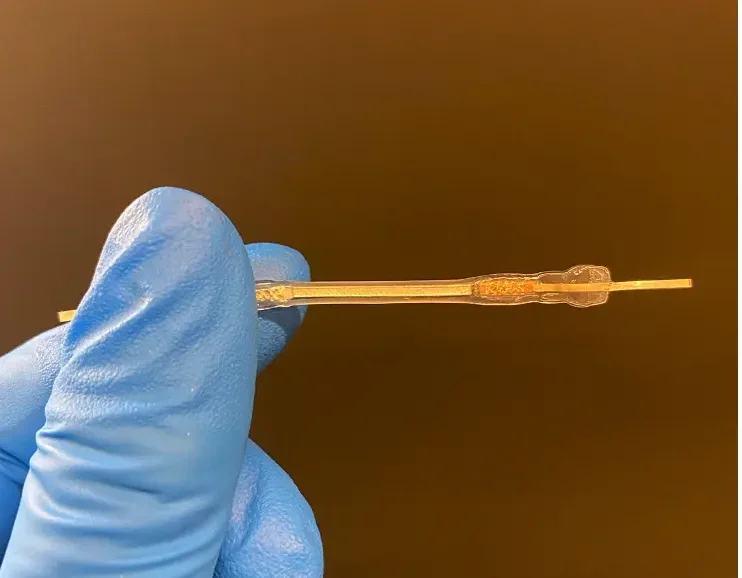
But batteries don’t necessarily have to be rigid. If you look at lithium batteries — like the ones in phones or laptops — many are already packaged inside flexible polymer films instead of hard metal casings. So the question becomes: how do you take that idea even further and make something small and flexible enough to disappear into a textile?
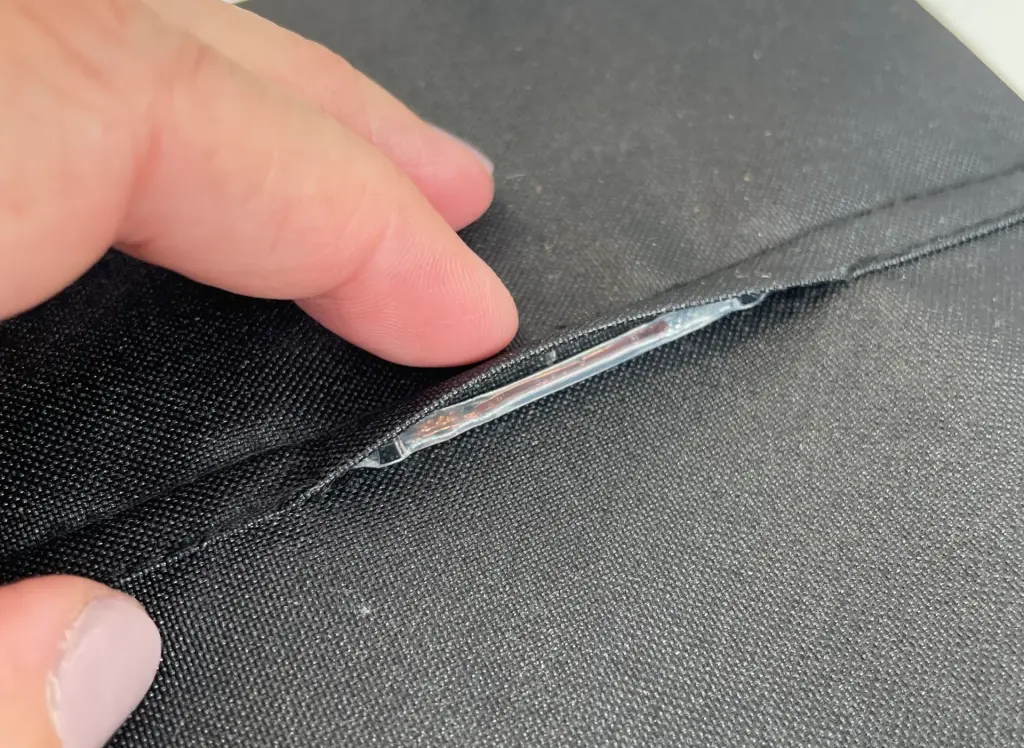
A big part of it is balancing the power requirements of the device with how small you can realistically make the battery. In the SMART ePANTS project, we were fortunate to work with a team developing very low-power electronics, which meant we could design a much smaller battery, which we call a ribbon battery. That really opened the door to creating something that could integrate more naturally into the garment itself.
What’s interesting is that so much development has happened with sensors, wearable interfaces, and data systems, but the battery is still often the limiting factor. In a lot of ways, the battery has become the “ugly duckling” of wearable technology — everyone wants devices to be smaller, lighter, and more invisible, but power is still the thing holding many of those ideas back.

Q:
For people who may not be familiar with the field, how would you explain what smart textiles are and why people should be excited about them?
A:
For me, a smart textile is really a textile with improved functionality because it has embedded electronics integrated into it — including the power source. What’s exciting is that the possibilities are so broad. Smart textiles could support healthcare monitoring, athletic performance, mobility assistance, or entirely new types of wearable experiences that we haven’t even fully imagined yet.
Q:
The Smart ePants project brought together textiles, electronics, engineering, and garment design. What was most exciting or surprising to you about working in such a cross-disciplinary space?
A:
Everything about it was really interesting to me because I had never worked so closely with people from the textile and garment world before. I didn’t fully appreciate how much development had already happened in smart textiles — from conductive threads to knitting structures to the different ways electronics can be integrated into garments.
What was most exciting was seeing all these different disciplines come together around a common goal. It really showed how much innovation can happen when engineers, scientists, and designers are all approaching the same problem from completely different perspectives.
One thing I realized during the project was how valuable co-design can be. We initially approached it as, “Okay, we’ll make the battery and then figure out how to integrate it into the garment.” But I think if we had collaborated even earlier in the process, the battery itself might have evolved differently. I learned that the way a garment moves, stretches, and behaves on the body can actually influence how you design the technology inside it.

Q:
One of the biggest goals in wearable technology is making the technology almost invisible to the user. How close do you think we are to smart garments that truly feel natural and comfortable?
A:
I think we’re getting much closer. One of the really interesting things about the SMART ePANTS project was that so much of the testing focused on comfort and durability, asking whether the garment still felt natural once the electronics and battery were embedded inside it.
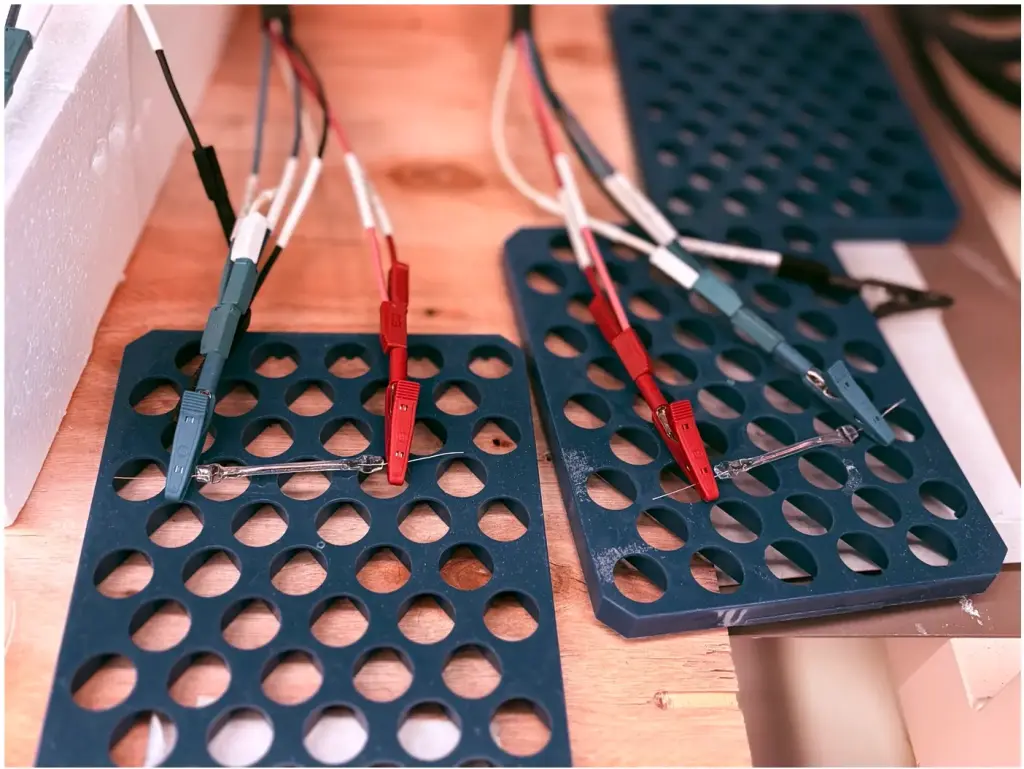
Our team really tried to make the battery as small and non-detectable as possible rather than simply integrating an off-the-shelf component. We customized the battery specifically around the low-power devices the electronics team was developing, which allowed us to make it much smaller and more flexible.
I was actually really proud that we exceeded the comfort and durability metrics. Even after aggressive bend testing, the battery still functioned and the stiffness change in the fabric was less than 10%, which was far better than the project requirements. That was a big moment for us because it demonstrated that these systems really can begin to integrate naturally into textiles.
Q:
Where do you think smart textiles and embedded power systems are going to have the biggest impact first, healthcare, sports, military, consumer products, or somewhere else entirely?
A:
Historically, military applications are often the first place these technologies gain traction because that’s where a lot of the early funding and development happens. There’s still a huge need for better embedded power systems for soldier-worn devices — in some cases, people are carrying nearly 30 pounds of batteries to support different equipment.
That said, I think healthcare and consumer wellness are going to continue pushing the field forward as well. Right now there’s enormous interest in wearable technology for monitoring health, exercise, recovery, and performance, but almost everyone is still struggling with the same issue: the battery. I was at a flexible electronics conference earlier this year, and it felt like every company had a battery problem. There’s clearly a lot of opportunity — it’s just a matter of finding the right applications first.
Q:
Looking ahead five or ten years, what excites you most about the future of smart textiles, wearable technology, and flexible batteries?
A:
What excites me most is that it finally feels like all the different pieces are starting to come together. The electronics are getting smaller, the textiles are becoming more advanced, and there’s a much greater understanding now of how to integrate these systems into something people can actually wear comfortably.
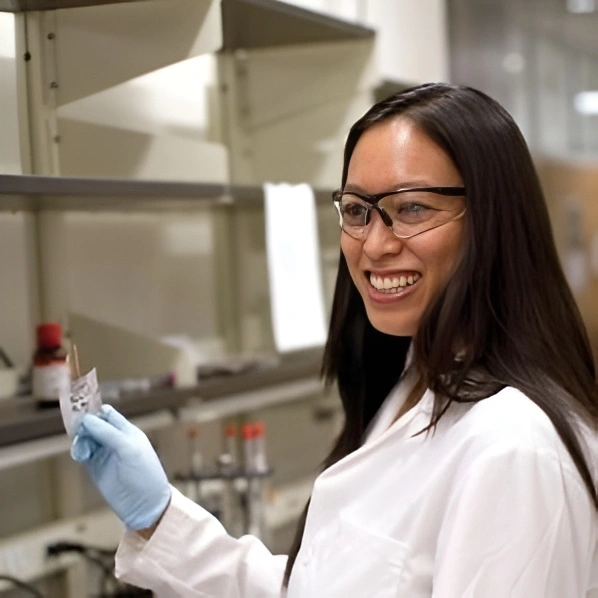
From the battery side, there’s still a huge opportunity. Everywhere I go, whether it’s healthcare, flexible electronics, or wearable technology conferences, people are still talking about the same challenge: they need better power systems. It almost feels like everyone has a battery problem right now.
That makes me optimistic because it means there’s still so much room for innovation. I think the future will come from much closer collaboration between scientists, engineers, and designers. The more these technologies are developed together — instead of as separate parts added at the end — the more natural and invisible wearable technology is going to become.
–
Speaking with Candace was a fascinating reminder that some of the most important innovations in wearable technology are happening behind the scenes. While sensors, interfaces, and data often get the attention, our conversation highlighted just how critical — and challenging — power systems really are. Her perspective as a materials scientist brought a completely different lens to the SMART ePANTS project and revealed how much thoughtful engineering goes into making technology feel seamless, flexible, and almost invisible on the body.
At Interwoven Design Group, collaborations like this are a huge part of what makes our work so meaningful. Many of the projects we work on exist at the intersection of design, engineering, material science, healthcare, and emerging technology. Working alongside experts like Candace not only pushes the work further technically, but also expands how we think about problem solving, comfort, usability, and the future of wearable systems. It’s this cross-disciplinary exchange that continues to make the field of smart textiles such an exciting space to work in.
Check out the rest of our Spotlight series to hear more from leaders in the design industry. Sign up for our newsletter and follow us on Instagram and LinkedIn for design news, multi-media recommendations, and to learn more about product design and development!


