A Q&A with Digital Design Expert Priyankaa Krishnan

A Q&A with Digital Design Expert Priyankaa Krishnan

Spotlight articles shine a light on designers we admire, asking leaders in the field about their work and their design journey. For this installment of our Spotlight series, we sat down with digital product designer and change-management leader Priyankaa Krishnan. Trained in product design and instructional design, Priyankaa now works on complex, internally-facing tools within the supply-chain organization at a large west coast based tech company—one known for building its own systems from the ground up. Her path from international student to designer and change leader is defined by curiosity, systems thinking, and a relentless focus on user adoption.

Photo courtesy of Prinyankaa Krishnan.

In this conversation with Interwoven founder Rebeccah Pailes-Friedman, Priyankaa shares how she weaves user insights into strategy, balances business priorities with human needs, and runs rigorous testing cycles that turn ideas into durable, real-world solutions. She also offers candid, actionable advice for emerging designers.

Priyankaa Krishnan is a program manager, and in her job she pairs digital product design with change management to launch and scale internal supply-chain tools. She earned a master’s in Industrial Design from Iowa State University, and is pursuing a PhD in Human–Computer Interaction at her alma mater. An international student turned design leader, she blends UX strategy, analytics-driven decision-making, and Prosci-informed change practices—translating BRDs into measurable outcomes and guiding cross-functional teams through rigorous testing (E2E, QA, SIT, UAT) so new processes become everyday habits.

Q:

Could you start by sharing a bit about your career path—how you found your way into digital product design and change management?

A:

I came to the U.S. as an international student, which meant a lot of my early choices were constrained by visas and timing. I studied product design at Iowa State and discovered I loved teaching, so I completed a graduate certificate in instructional design. That opened the door to my first role—building learning experiences and micro-learnings inside a large enterprise.

So many of my early decisions weren’t really choices. Because of my visa status, I often had to pick from whatever options were available and run with them, and that shaped me. The instructional design credential led to an offer for the job she currently holds. At the same time, I had an entry-level product design offer from Ford and was waiting to hear back from Sac State (California State University, Sacramento). I even asked the my interviewers for a week so I could wait on Sac State. On my mentor Ana Luz’s advice—“take the tech job!”—I accepted. I call myself an “accidental” instructional designer: I didn’t know the corporate toolset at first, but I learned by doing, practiced hard, and that’s how I landed and grew in the role.

Q:

So, what exactly is an instructional designer?

A:

An instructional designer builds learning experiences—often micro-learnings—for a learning management system, guiding people from not knowing to knowing. In corporate settings that also means unlearning and relearning. The courses I built focused on changes to systems, processes, people, and tools. That’s where “change management” comes in: when something changes, you have to educate people so they can adopt it. Early on, my job was to create courses, publish them to Cornerstone (our LMS), and track participation. But I kept wondering about the bigger picture: I can design beautiful courses because I’m a designer—but are people actually adopting the change, and to what purpose? Leadership was asking the same question.

A mentor at work, Mikki Lee, introduced me to Prosci and change management. I took the workshop, earned my certification, and transitioned from instructional designer to change manager. I came to see instructional design as a subset of change management. Knowledge is just one part of it; you also build awareness, gauge desire, develop knowledge, assess ability, and ensure reinforcement—from the top down and the bottom up—so adoption actually sticks.

While I was driving end-user adoption, I also became a critical part of designing the solution itself. I work in the supply-chain space with internal users, making sure our products are ready for customers while our systems, processes, and tools continually improve for employees. That only works if our teams stay current with the changes we’re designing for them.

Q:

You specialize in Design Thinking and UX strategy—how do you weave user insights into your process from the very beginning?

A:

In an established corporate environment, we don’t go hunting for problems—the business brings them to us through Business Requirements Documents (BRDs) that outline use cases and current pain points. In parallel, we run periodic audits of existing tools, collect in-product quick-feedback surveys, and use a “bug nub” (a small bug icon in the UI) so anyone can file bugs or request features. Because the ecosystem is mature, we’re usually redesigning or improving something rather than building from scratch; about once a year we do ship a completely new tool for a team and then manage onboarding.

When a BRD comes in, we map the pain points and triage them: what’s a nice-to-have vs. what’s P0. P0 means the business cannot function without it—if a P0 breaks, the business breaks—so we tackle those first.

From there, the design process is standard: we identify the stakeholders who submitted the requirements and run quick interviews to confirm the five W’s and H (who, what, when, where, why, how) and close any gaps. Then we publish a plan: the three things we will accomplish this half, clearly separating what must happen immediately to keep the business running from what belongs in the long-term roadmap.

Q:

When you’re working on change management, how do you balance business goals with the human experience of design?

A:

Change is tricky. When we roll out new ways of working, the business often resists—people are used to doing things one way, and we’re asking them to do it another. The most effective lever is top-down alignment. We take a proposed solution to leadership and, when it maps to organizational goals, secure a clear mandate. That makes the change mandatory, not optional, and leaders can communicate, “This change is coming and we need to adopt it.”

Not every rollout is mandatory, though. I distinguish between mandatory tools and reference tools (nice to use, not required). For reference tools, we run a “rally” approach: we visit teams during their regular meetings and give a focused 15-minute demo—“Here’s the tool; here’s exactly how it benefits your team.” Crucially, we aim to have the team’s manager deliver and reinforce the message. If the instruction comes from a manager, people do it; if I pop into a room and say, “Stop using this button, use that one,” it doesn’t land the same way. When the message comes from the business, via the right manager, adoption accelerates.

A recent example (kept high-level due to sensitivity): shifting government-driven costs have impacted pricing. We built a reference tool to visualize pricing changes, but some teams still rely on spreadsheets out of habit. In these cases, I partner with the group that’s accountable for those expenses and have them champion the tool to the affected teams—so they can answer to leadership with confidence and the organization gets consistent, accurate data.

All of this is deeply cross-functional. I sit between engineers and software developers, design, the business, and end users—coordinating requirements, aligning incentives, and making sure the right people carry the right messages at the right time.

Q:

What role does collaboration play, and how do you bring cross-functional teams into the process?

A:

It’s highly cross-functional—solution leads, engineers, analytics, QA, and business stakeholders. Honestly, it’s “a lot more talking than doing” at the start—on purpose. We align on use cases, metrics, and constraints before we build. Weekly feedback loops let us present options (never a blank page) and tradeoffs. I don’t ask, “What do you want to see?”—I bring two or three viable concepts and facilitate a decision.

Q:

In digital product design, how do you gather and interpret insights to keep a concept on track?

A:

Gathering insights: I lean strongly on analytics. Because we’re often improving existing systems rather than starting from scratch, we begin by measuring current performance and identifying gaps. We partner closely with our (very large) Analytics team.

From each Business Requirements Document (BRD) we produce two artifacts: (1) product development requirements, and (2) an analytics requirements spec. Working with solution leads for the supply chain, we define which metrics matter and the exact definitions for each (numerators/denominators, business rules, segments). All relevant event and system data is stored in a central data repository.

Analytics uses the spec to build dashboards that map gaps to requirements. They’ll literally chart, “this metric is low here, that one is high there,” against our targets. If the organization says the goal is 95%, and we’re at 87%, we run root-cause analysis using taxonomy slices (flow, geography, vendor, tool, milestone, etc.). For example, we might see in-transit delays spike and discover a missing milestone between a supplier and our system.

Q:

Physical product design leans on iterative prototyping. How do digital testing methods compare or complement that process?

A:

In our ecosystem, the UI kits and brand patterns reduce surface-level design decisions, so we can focus on solution design. For new tools, we still iterate: weekly reviews, side-by-side concepts, test environments, and structured test scripts. We run multiple layers before production: end-to-end team testing, QA, systems-integration testing (SIT) across upstream/downstream tools, and user acceptance testing (UAT). It’s iterative—just like physical prototyping—only the fidelity is software builds instead of foam and muslin.

Q:

Can you share an example where testing or validation revealed something surprising and shifted direction?

A:

We built a data-collection feature and tested single-record flows successfully—then discovered we hadn’t prepared the environment for multi-record scenarios. Everything failed, and we had to push the project by three months. Another time, notification settings weren’t validated in the dev environment; when we went to prod, thousands of emails failed over a weekend. Painful—but those misses made us tighten our checklists and guardrails.

Q:

What advice would you give designers who want to strengthen their testing and validation skills—digital, physical, or hybrid?

A:

Communicate early. Build awareness that change is coming and invite feedback while it still matters.

Detach your ego. Don’t treat the work like your baby—critique is data.

Timebox and prioritize. Fix the P0 issues immediately; queue lower-priority requests for later.

Make it real. Whether it’s a clickable prototype or a rough build, tangible artifacts unlock better conversations than slides.

Q:

Anything else you’d like to share with young designers getting started?

A:

Apply steadily—even 15 minutes a night. You never know who’s looking. And practice showing unfinished work. Confidence grows when you iterate in public, learn fast, and move on.
—

Check out the rest of our Spotlight series to hear more from leaders in the design industry. Sign up for our newsletter and follow us on Instagram and LinkedIn for design news, multi-media recommendations, and to learn more about product design and development!
Please reach out!

Tried and True: Validation and Testing in Soft Goods Wearable Technology

Tried and True: Validation and Testing in Soft Goods Wearable Technology


Why Testing Matters 

In wearable technology, ideas don’t just live on a screen or in a prototype, they live on the body. That means every design decision, from the angle of a strap to the stretch of a textile, directly impacts how a product feels, functions, and performs in real life. Unlike hard goods, where performance can often be validated through digital simulations or mechanical testing, soft goods require a different level of scrutiny. Comfort, fit, and durability can’t be fully predicted without real-world testing. 

At Interwoven Design, we see testing not as a final checkbox before launch, but as an essential part of the design process. It’s how we uncover the subtle issues that CAD files and sketches can’t reveal: a seam that rubs after an hour of wear, a closure that feels intuitive in theory but awkward in practice, or a textile that stretches beautifully in the lab but loses integrity after repeated washing. Testing is how we build confidence in the products we design; for our team, for our clients, and most importantly, for the people who will rely on them. In this Insight article, we’ll outline what’s unique when testing soft goods, testing techniques we use in our studio, the process developing test protocols, and share three case studies that demonstrate the value of testing in wearable tech.  

What Makes Soft Goods Testing Unique 

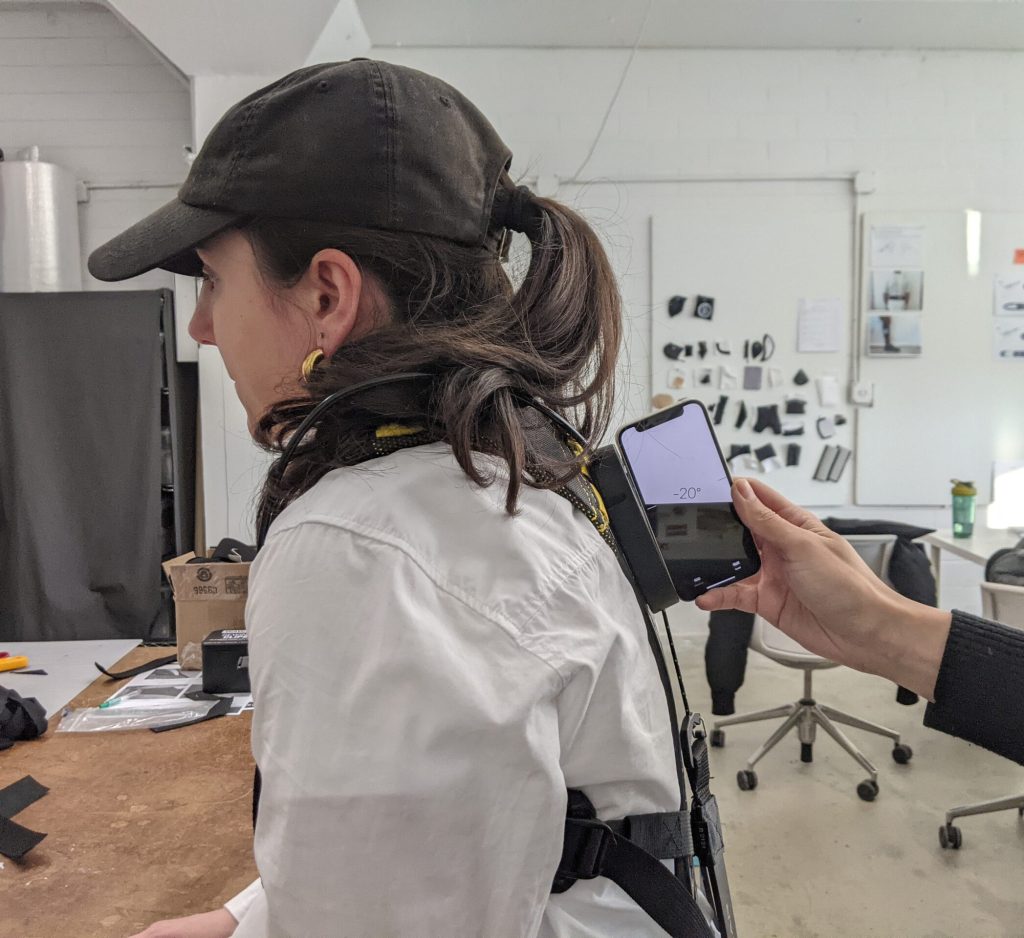
Testing photo by Interwoven Design Group

Testing soft goods isn’t just about checking boxes on durability or performance, it’s about validating how a product interacts with the human body. Unlike rigid products, soft goods flex, stretch, and conform, which means the variables multiply. A harness may perform well on one body type but dig uncomfortably into another. A fabric might wick sweat effectively but lose breathability once layered. Even something as subtle as a seam placement can make the difference between a product that feels effortless and one that users abandon. These nuances make testing in soft goods especially critical.

Comfort, ergonomics, and wearability can’t be fully captured by digital modeling or static evaluation. They need to be worn, adjusted, and lived in. At Interwoven Design, we approach testing as both technical and human centered: technical in measuring durability, strength, and performance; human-centered in evaluating comfort, fit, and user experience over time. 

The challenges are amplified when technology is integrated. Wearable sensors, power sources, and connectivity components add complexity to already delicate material systems. Ensuring that a textile stretches without disrupting circuitry, or that an engagement mechanism is positioned intuitively, requires iterative testing at every stage. Add to this the reality that soft goods often need to fit a wide range of body types, movements, and environments, and you get a testing landscape that is both demanding and essential.

This is why testing isn’t an afterthought for us, it’s a design driver. By confronting these challenges head-on, we can refine products so they’re not only functional in theory but reliable, comfortable, and intuitive in the real world. 

Types of Testing We Use 

At Interwoven Design, we see testing as a layered process. Each stage answers a different question: does it hold up, does it feel right, does it work in the real world? By combining technical evaluation with lived experience, we create products that are both reliable and human-centered.  Each type of testing reveals different insights, and together they form a comprehensive validation process. 

1. In-House Testing as a First Line​

Before we send prototypes into the field, we stress-test them in the studio. In-house testing allows our team to push early concepts to failure, observe weak points, and refine design elements quickly. This controlled stage saves time and resources by filtering out obvious flaws before involving external testers or clients. 

2. Ergonomic & Fit Testing​

Comfort and wearability are non-negotiable for soft goods. We run structured fit trials across diverse body types, tracking everything from pressure points to range of motion. These insights ensure the product adapts to real human variation, not just a single “ideal” model. 

3. Durability & Material Testing​

From fabric abrasion to seam strength, we evaluate how a product holds up under repeated use. We also test environmental performance—exposing prototypes to heat, humidity, or repeated laundering to anticipate how they’ll age over time. For wearable technology, we also look at how embedded electronics and hardware behave under repeated strain, ensuring sensors, circuits, and connectors remain reliable as materials bend and stretch. 

4. User Experience Testing​

The most rigorous test is the target audience wearing and interacting with the product. We work closely with end users—nurses, athletes, warehouse workers, patients—to gather qualitative and quantitative feedback. We study ergonomics, comfort, ease of use, and long-term wearability, while the users execute the body movements typical for the wearable, iterating prototypes based on their lived experience. Small adjustments, like repositioning a seam to bolster support or refining adjustability for greater control, can transform acceptance and adoption rates. 

Functionality doesn’t stop at fit and durability. We observe how users actually interact with the product in context—how quickly they can don and doff it, how it integrates into workflows, and how intuitive the design feels. These behavioral insights are critical for adoption.

​5. Field Testing

Soft goods live in unpredictable environments, so testing them in context is essential. Whether it’s a warehouse, hospital, or outdoor trail, we evaluate products in the environments where they’ll actually be used. This allows us to track how sweat, weather, temperature, or prolonged wear affect performance. Field testing often reveals subtle issues, like unexpected environmental conflicts, that lab conditions can’t replicate. 

Developing Test Protocols 

No two soft goods projects are alike, and neither are their testing needs. A performance-driven backpack, a medical compression garment, and a wearable sensor system all demand different metrics of success. That’s why at Interwoven Design, we don’t rely on one-size-fits-all checklists. Instead, we collaborate with clients to build test protocols that are tailored to their product, user base, and market context. 

The process starts with clarifying priorities: Is the primary concern comfort during extended wear? Durability under heavy load? Compliance with medical or industrial safety standards? From there, we map testing methods to those goals. For example, a healthcare wearable may require protocols aligned with regulatory requirements, while an industrial soft good might emphasize stress testing, longevity, and performance under extreme conditions. 

Equally important is balancing quantitative and qualitative feedback. We often combine lab metrics (such as tensile strength or moisture resistance) with user-centered data (comfort, usability, ergonomics). Together, these insights give clients a clear, evidence-based picture of how their product will perform in the real world. By developing test protocols alongside clients, we create not only a validation process but also a shared language. This ensures alignment early, reduces the risk of missteps later, and ultimately results in products that meet both technical standards and human needs. 

Case Studies: Testing in Action 

Case Study 1: Project Firefly — Validating Reflective Durability 

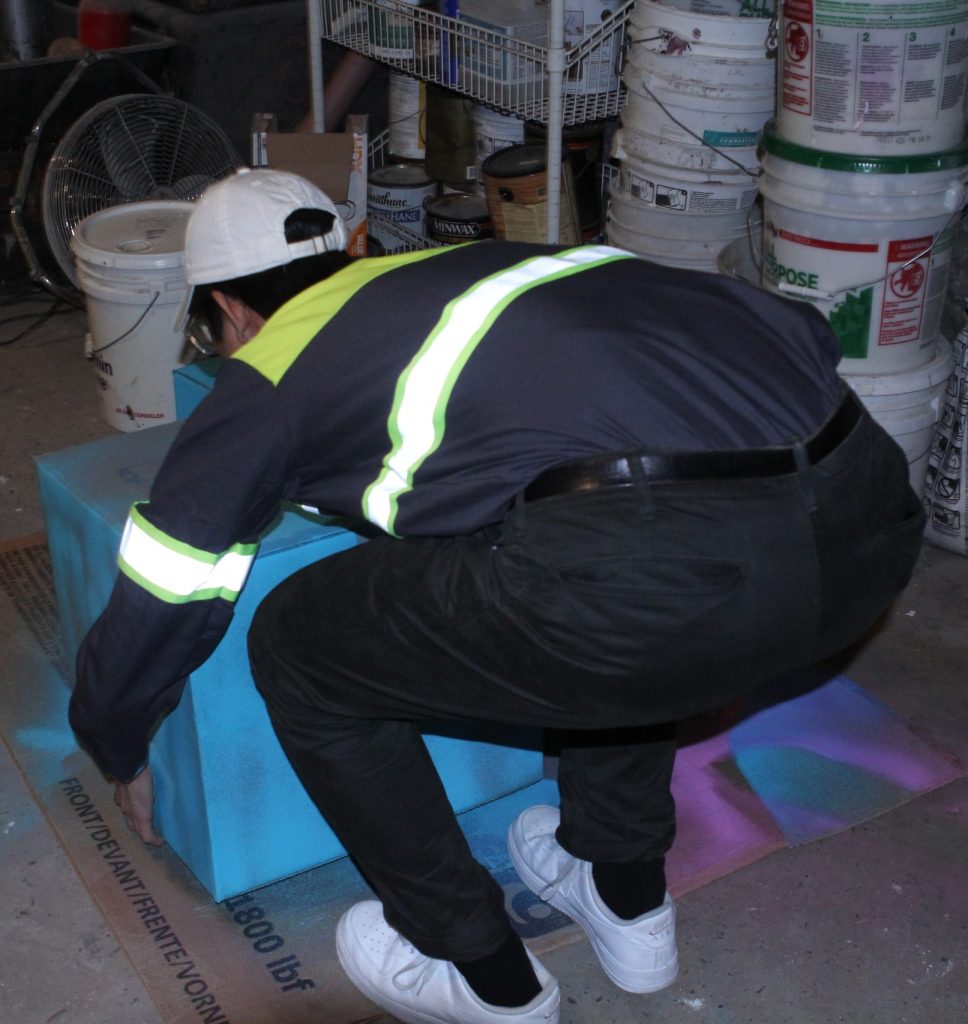
When Red Kap approached Interwoven Design to develop Project Firefly, a new line of reflective Type O workwear garments, one of the most pressing challenges was durability. Reflective materials are essential for worker safety, but in warehouse and industrial settings they face harsh conditions: constant friction from movement, contact with equipment, and repeated exposure to industrial laundering. A material that looked promising on paper could easily fail once subjected to the realities of the job site. 

To address this, we incorporated abrasion testing early in the design process. Using our testing methodology, we simulated the high-friction scenarios workers regularly encounter—lifting, bending, kneeling, and brushing against rough surfaces.

By evaluating reflective materials under these stresses, we were able to pinpoint which options maintained their integrity and visibility over time. This testing didn’t just confirm durability; it also informed design decisions, such as strategic placement of reflective elements to minimize wear while maximizing visibility. 

The result was a set of garments that met the highest safety standards while withstanding the rigors of warehouse conditions. Abrasion testing proved to be a critical step in validating that the reflective components would perform reliably over the lifespan of the garment, giving both workers and employers confidence that safety would not degrade with use.  

Case Study 2: Even Adaptive — Testing for Intuitive, One-Handed Use 

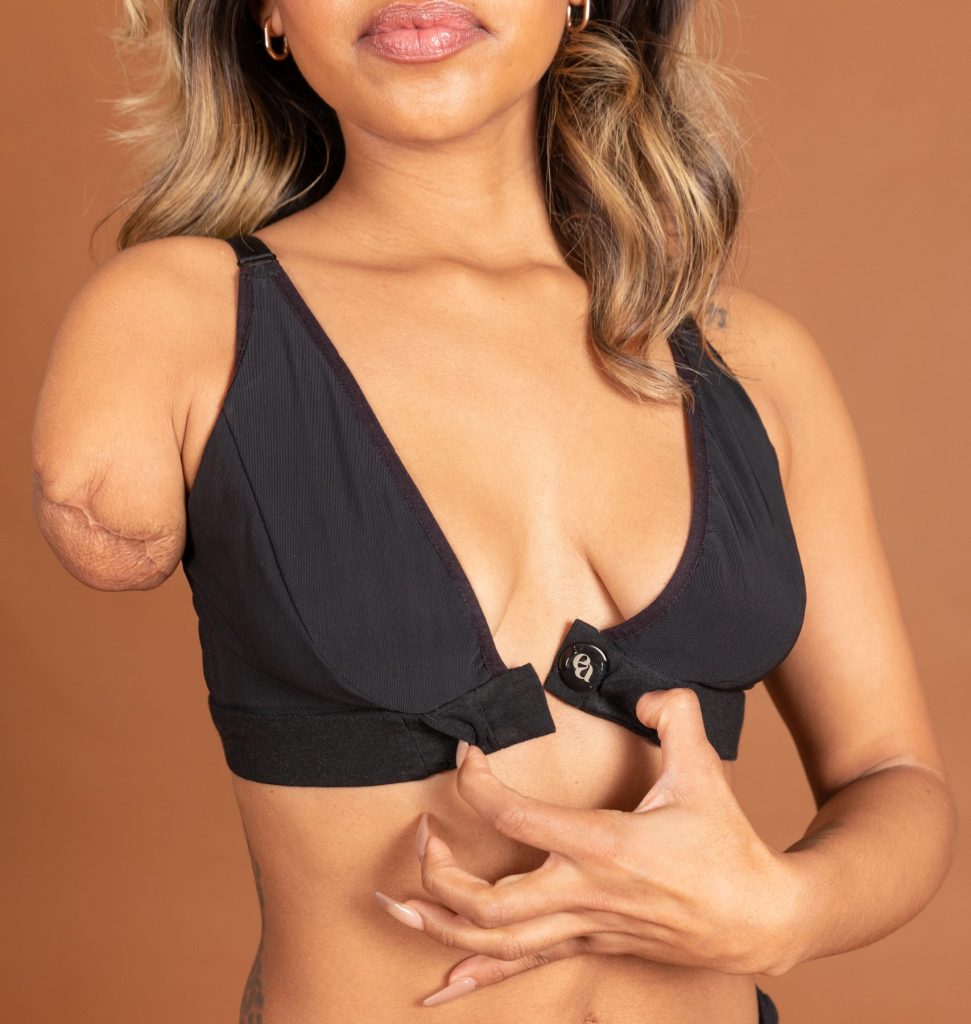
For Even Adaptive, Interwoven Design set out to reimagine adaptive lingerie by creating garments that could be put on with the use of a single hand. Unlike traditional lingerie closures, which are often difficult or impossible to manage without two hands, this line demanded a design solution that was not only functional but also elegant, comfortable, and inclusive. At the heart of the project was the development of a custom magnetic clasp; a new closure system designed to empower women with limited mobility while offering a contemporary, stylish alternative to the outdated adaptive lingerie on the market. From the start, our delivery team knew that validation with the target audience would be key to our process.

We conducted testing sessions with women who had the use of only one hand, observing how they interacted with prototypes and gathering real-time feedback. This ensured that the clasp design, garment construction, and finger-loop supports were intuitive, reliable, and easy to operate under everyday conditions. In-house testing confirmed magnet strength, clasp durability, and comfort against the skin, while user trials revealed small but critical refinements—such as adjusting clasp engagement force and loop placement—that made the product seamless in practice. 

The result is a line of adaptive lingerie that feels both functional and beautiful, bridging accessibility and style in a way that had not existed before. The success of this validation-driven design process was recognized at the highest levels: Even Adaptive won the Professional Award in the Personal Accessories category at the 2023 Core77 Design Awards and was named an Honoree in Fast Company’s Innovation by Design Awards, Accessible Design category. These accolades affirm not only the product’s innovation but also the importance of rigorous, user-centered testing in bringing meaningful, inclusive solutions to market. 

Case Study 3: SABER Military Exosuit — Field Testing for Real-World Performance 

Developing the SABER Military Exosuit for the U.S. Army required more than theoretical models or lab simulations. To ensure the exosuit could meet the demanding physical and operational needs of soldiers, Interwoven Design partnered closely with Vanderbilt’s Zelik Lab and conducted extensive field testing with the 101st Airborne Division at Fort Campbell. Observing soldiers in their natural work environment allowed the team to understand not just lifting movements, but the full range of activities—including carrying gear, navigating obstacles, and performing operational tasks—that the exosuit would need to support without restricting mobility. 

Through iterative prototyping and in-field trials, we validated key aspects of the design, from the placement and tension of elastic bands to the comfort of shoulder straps and thigh sleeves over long periods of wear.

101st testing SABER military exoskeleton. Photo by LARRY MCCORMACK.

Soldiers provided real-time feedback on range of motion, heat retention, and overall ergonomics, enabling the team to refine materials, adjust fit, and improve the ease of donning and doffing.This continuous feedback loop was essential in creating a lightweight, breathable, and low-profile exosuit that successfully reduced back strain while remaining unobtrusive in active duty scenarios. 


The results were compelling: the SABER exosuit, weighing just 2.7 pounds, reduced over 50 pounds of back strain per lift and improved overall endurance and performance in demanding tasks. Field testing confirmed that the design was intuitive, comfortable, and effective for extended wear, demonstrating how rigorous validation with the target audience is crucial for wearable technologies, particularly those intended for extreme or high-stakes environments. 

Building Confidence Through Testing 

At Interwoven Design, testing is more than a checklist, it’s a mindset. It embodies curiosity, validation, and iteration, ensuring that every concept not only works but feels intuitive, comfortable, and human-centered. Rigorous testing allows ideas to evolve from sketches and prototypes into products that perform reliably in real-world conditions, whether that means a reflective workwear garment, adaptive lingerie, or a wearable exosuit for military or industrial use. 

Validation reduces risk, inspires trust, and ultimately delivers better outcomes for both users and clients. By engaging with testing early and often, Interwoven ensures that products meet functional, ergonomic, and experiential goals before they reach production. Far from being a hurdle, testing is a powerful tool for innovation; a way to explore possibilities, uncover hidden challenges, and refine solutions with confidence. Prospective clients are invited to collaborate with Interwoven to develop tailored test protocols that align with their vision, needs, and user requirements, transforming ideas into products that are not only effective but also thoughtfully designed for real human use. 

Interwoven Design is a design consultancy that is positioned at the intersection of soft goods and wearable technology, creating products that function with the body and offer comfort as well as the superb performance that arises through the innovative incorporation of rigid, often electronic and responsive elements. Sign up for our newsletter and follow us on Instagram and LinkedIn for design news, multi-media recommendations, and to learn more about product design and development!