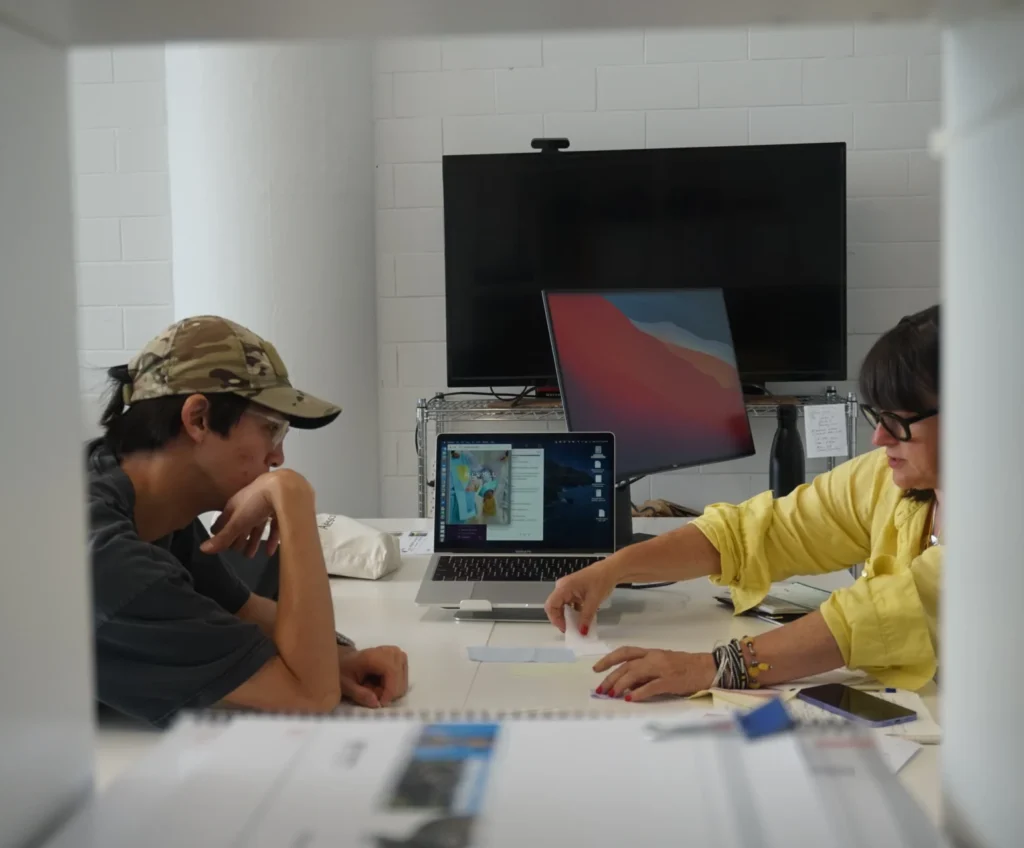
A Q&A with Technical Designer Ryu Tomita

A Q&A with Technical Designer Ryu Tomita

Photo courtesy of Ryu Tomita.

This month’s Spotlight turns to Technical Design — the quiet, intricate work that transforms ideas into products that actually perform. We sat down with Ryu Tomita, a former member of the Interwoven team and one of the most precise technical designers we’ve had the pleasure of working with.

Ryu’s career bridges industrial design, soft goods, wearables, and fashion, his strength lies in the details: how materials behave, how components integrate, and how thoughtful engineering elevates user experience. In this conversation, he reflects on his path, his process, and the craft behind technical design.

Q:

You’ve had a really dynamic career, spanning fashion, industrial design, soft goods, and wearables. What originally drew you into design, and what keeps you excited about it now?

A:

I’ve always just loved making things—assembling pieces, figuring out how they fit together, and then seeing something take shape from nothing. That’s really the common denominator across all those fields. You start with an idea you can’t fully see yet, and through the process you discover what it becomes. That moment when everything comes together is incredibly satisfying. That’s what pulled me into design in the first place, and it’s still what keeps me excited about the work today.

Q:

When you think back on your time at Interwoven—it’s been about four years now, which is wild—what are the projects or moments that really shaped you? What have you carried into your current career?

A:

Definitely HeroWear and working on the Apex. I had no idea what to expect because we were designing a product none of us had ever seen before, and we had almost no information in the beginning about what it should ultimately be. We had to research everything: going into warehouses, understanding what the end users were doing, what they needed, and how a solution might actually support them.

From there it was really just creating something step by step, little by little, and trusting the process—that if we kept working, we’d eventually land on the right product. Embracing that unknown, and not being afraid of it, was a huge learning experience for me.

Ryu’s time at Interwoven taught him to design through ambiguity — a skill that continues to shape how he approaches complex technical challenges today.

Q:

Do you still approach your work the same way today—observing the user, embracing the unknown, and figuring things out step-by-step?

A:

I don’t have as many opportunities now to do direct user observation, but yes—the mindset is still the same. Embracing the unknown and taking things one step at a time was such a valuable lesson, and it’s something I still rely on in my work today.

Q:

What’s one thing people often misunderstand about the work of a technical designer?

A:

People sometimes get caught up in the tiny details and forget that technical designers always have to hold the big picture. You have to step back and think about how everything will come together and what the overall goal is—not just where a piece of Velcro lands. Remembering that bigger vision is really important.

Q:

How would you define technical design for someone outside our industry? People don’t always understand how valuable it is or how it differs from concept design or styling.

A:

Honestly, it’s hard to define because so much of it happens in your head. But for me,

Q:

Why do you think technical design matters, especially in categories like wearables, medical devices, and soft goods?

A:

Everyday items require a lot of thought because people use them constantly. Even something simple—like a belt or a holster—needs a slight curve so it hugs the hips instead of sitting straight. Those small decisions make a big difference when something is worn daily. Technical design is what makes those details functional and comfortable in real life.

Q:

You’re known for being incredibly detail-oriented—something I always appreciated in your work ethic. How does that mindset translate into the work you do now compared to more conceptual work?

A:

Believe it or not, I’m not as detail-oriented as I used to be. Things move so fast here that I’ve had to learn to let go of some of the minutiae. But I still think details are incredibly important. In tailoring, for example—where the hem goes, how the fusible is shaped inside a sleeve—those choices really affect how the final garment looks and performs. Even when the big picture matters more, the details still play a role in shaping the outcome.

Q:

Do you have an example—without breaking any NDAs—of a project where the details really drove the success of the design, or where you had to let go of details?

A:

I do, actually. I’m looking at the sample right now. We were working on a pleated dress, and the director wanted it to fit closely around the hips. With individually pleated pieces, it’s much easier to sew everything straight. But if you add a small dart to each pleat, the dress hugs the body much better. It was more work for the seamstresses and definitely more tedious, but it made a noticeable difference in the final result.

Q:

When you start a new project with big technical unknowns, where do you begin? And how is that process different from the product-focused work you did at Interwoven?

A:

Fundamentally, it’s the same. You lay out all the pieces, look at the sketch, and try to understand the big picture first—how the shape forms, where you need more volume, how things come together. Then you work through the smaller issues as you see the prototype.

The difference now is scale. In fashion, I’m working on collections with 120–140 styles, split between two people, instead of a single deep-dive product. But the mindset is the same: start broad, then solve the details.

Q:

What kinds of fabrics or garment types do you prefer working with?

A:

Wovens. I’ve learned to appreciate them more. Knits can be easier because there’s less room for error, but I work with both.

Q:

Tell me about your iterative process. How do you move from prototype to final sample?

A:

We usually make an initial prototype in a comparable fabric—we almost never use muslin. We fit it, review it, and make adjustments. If there’s a major design change, we start over. If not, we refine it and then move into a final salesman sample.

Q:

How much of the pattern work do you handle, and how long does a garment take?

A:

I draft from start to finish. A simple dress with four or five panels might take two and a half to three hours. A jacket could take three-quarters of a day to a full day. It really depends on the style.

Understanding the hidden architecture of a product — whether a wearable or a tailored jacket — is where technical design becomes almost invisible, yet absolutely essential.

Q:

Most people don’t realize how much inner structure goes into a tailored garment. Can you walk us through that?

A:

I didn’t realize it either until I opened up a men’s jacket. There’s a lot inside: canvas, padded chest pieces, Heimo, shoulder pads to hold the shape, sleeve structuring, and fusible layers that add support.

The heaviest structure is on the upper body—chest and shoulders. Fusible can run through the whole front and usually across the back shoulder blade. Anywhere there’s a turned hem, you’ll often find fusible to hold the shape.

Q:

Is that construction similar between men’s and women’s garments?

A:

The sewing is similar, but the fit is completely different because of physiological differences—especially the bust. You have to alter patterns significantly to account for that.

Q:

Can you give an example of a small technical detail that makes a big impact?

A:

A two-piece sleeve. People don’t notice it, but it feels so much more natural because the sleeve can actually follow the bend of your arm. A one-piece sleeve is basically a tube—it doesn’t guide the arm forward in the same way.

Q:

What’s next for you? What are you exploring personally right now?

A:

I’ve been experimenting with denim washes at home—doing potassium permanganate treatments on my patio, which is probably dangerous but fun. There’s so much science behind wash techniques that I never knew. I’m not inventing a new wash, but I’m trying to create my own personality in how the denim wears and ages.

Q:

What advice would you give to young designers starting out in technical design?

A:

I’d say it’s important to keep one eye on the bigger picture while you’re deep in the details. You have to be able to zoom out and look at the whole garment or product, then zoom back in to solve the small problems. It took me a while to learn that balance, but having both perspectives is essential.

Q:

Last question: if you had to start all over again, would you still choose to be a designer?

A:

Yes, absolutely.

Check out the rest of our Spotlight series to hear more from leaders in the design industry. Sign up for our newsletter and follow us on Instagram and LinkedIn for design news, multi-media recommendations, and to learn more about product design and development!

Please reach out!

Soft Goods Outdoor Performance: Designing for Movement

Outdoor hiker carrying soft goods backpack designed for performance
Movement is not just about motion. It’s about the rhythm between who we are and what we carry.

In outdoor product design, soft goods are changing the way we think about movement for outdoor performance. The way our bodies move is more than a single action. it’s an ongoing and dynamic process—a conversation between the body, the environment, and the gear we carry.

Whether you’re hiking rough trails, adjusting your straps mid-walk, setting up camp, or navigating a city, every small motion tells us something. The body is asking for support, and good design should respond. As soft goods designers, we understand these movements and study the interaction between the human and the products they wear and carry. In recent years, soft goods—like backpacks, wearable gear, and modular carry systems—have begun to challenge the old idea that “hard equals safe.” These products are no longer built to be stiff and rigid. Instead, they are designed to move with the body, to adapt in real time, and to feel like a natural part of us. This shift doesn’t reduce performance—it changes how we define it. Performance today means adapting to movement, supporting dynamic actions, and keeping us comfortable across changing situations combined with ease of use. This article explores how soft goods in outdoor performance are reshaping gear to better support how we move.

Soft Doesn’t Mean Weak—It Means Smart

Soft materials are not weaker. They’re more nuanced. In outdoor soft goods, fabrics like ripstop nylon, waxed canvas, X-Pac, spacer mesh, and soft shell textiles aren’t just about coverage—they enable movement, compression, ventilation, and adaptability.

Compared to hard materials like ABS plastic or rigid foams, soft product design offers more breathability, compressibility, and responsiveness. For sports product design—trail running, climbing, or mountain biking—this translates to reduced fatigue and more natural alignment with the body. When the Interwoven Design soft goods team worked with Shark/Ninja on the design for the Frost Vault Soft Cooler, we created a soft goods strap prototypes that improved user comfort and interaction. The soft structure adapts to shifting weight and varied terrain, giving users comfort and agility without sacrificing durability.

Body-First Design: A Dynamic Ergonomics

At Interwoven Design, we call this approach “body-first design.” It’s a core principle that guides how we develop soft goods across industries—but it’s especially critical in outdoor performance. Traditional ergonomics often focuses on static posture or ideal alignment. But when you’re hiking, climbing, crouching, or transitioning between urban and natural environments, what the body really needs is flexibility, freedom, and real-time responsiveness. This is where soft goods design can make the biggest impact—by allowing the product to adapt to the user, not the other way around.

User adjusting the shoulder clip on a HeroWear exosuit for ergonomic fit
A close-up of HeroWear’s modular shoulder system — designed to adapt to diverse body types with intuitive adjustment and soft-structured support.

Soft goods outdoor performance products are built to move with us. Think shoulder straps that naturally rotate and contour with your shape instead of fighting against it. We applied this thinking in our work with HeroWear’s Apex 2 exosuit, designing padded straps and soft interfaces that reduce pressure points and accommodate shoulder rotation, ensuring all-day wearability for users engaged in repetitive movement and lifting. The harness flexes without bunching and adjusts easily to fit a wide range of body types—an essential feature in any gear meant for motion.

Waist packs are another area where body-first design shines. In our collaboration with White Cloud Medical, we developed a soft goods waist pack for their wearable wound care system. It was designed to securely house a medical device while allowing users to bend, sit, or shift their weight without discomfort or slippage. The soft structure conforms to the lower back and hips, using strategically placed foam zones and breathable mesh to maintain stability without sacrificing comfort—mirroring the dynamic adaptability you’d expect in a trail running or trekking belt.

Back panels also matter. In our work with Saber, we helped develop a lightweight and flexible exosuit that assists soldiers with moving heavy loads, where the back interface needed to support both agility and load-bearing performance in extreme conditions. The back panel was constructed with contoured foam, airflow channels, and an adaptable frame sheet, all layered under soft but durable outer textiles. These components worked together to mold to the user’s back, distribute weight evenly, and reduce fatigue during long missions—providing the kind of responsive support critical in both combat and outdoor expedition scenarios.

Close-up of hands adjusting the zipper on a Perci motion-support vest
Designed for emergency readiness, the Perci Vest uses ripstop fabric and intuitive closures to support quick response in high-stress situations.

The Perci Emergency Preparedness Vest that we developed for Invicta Ready, takes this philosophy into urban contexts. Designed to help families be ready for natural disasters as a quick grab and go tool, it features a modular system of pockets and zones tailored to the store critical equipment needed in an emergency while no inhibiting the motion of the upper body. Each element was placed to balance weight while avoiding key flexion points like the shoulders and underarms, allowing wearers to reach, twist, and carry without restriction.

In all of these examples, subtle design decisions—curved seams, flexible materials, layered zones—add up to a dramatic improvement in comfort, usability, and performance. This is what we mean by body-first design: a commitment to soft goods that move with you, not against you.

Beyond the Trail: Lessons from Outdoor to Medical Soft Goods

What we learn from the trail informs other areas where motion matters—especially in healthcare and wellness design. Medical soft goods must also move with the body, respond to user feedback, and adapt to changing conditions.

Two views of the Breg CrossRunner soft knee brace being worn and opened on a leg
The Breg CrossRunner™ soft knee brace uses breathable stretch fabric and adjustable hinges to support motion while adapting to different body needs.

Take the Breg CrossRunner™ Soft Knee Brace. Though not an outdoor product, it demonstrates how principles from soft goods outdoor design translate to medical wearables. We worked with Breg to combine modular support with breathable Breathefit™ stretch fabric and Airmesh® zones for ventilation. The adjustable hinge system lets users tailor their range of motion, providing support without restricting freedom—just like in performance-oriented outdoor gear.

In both cases, we’re solving the same challenge: designing for bodies in motion.

The Future of Soft Goods Prototyping: Material Meets Movement

The rise of soft goods prototyping has unlocked a new frontier in performance product development. Today’s soft goods designers must go beyond creating surface forms—they must understand how every layer, stitch, and seam behaves under real-world conditions. It’s no longer enough to build a shell that looks good. Soft product design demands an iterative process of testing, refinement, and material engineering—guided not just by aesthetics, but by how the product moves with the body over time.

At Interwoven Design Group, we approach soft goods prototyping through progressive fidelity. We start with quick mockups—cut-and-sew foam, muslin, and low-cost textiles—to evaluate scale, placement, and range of motion. These early models help us identify design issues and ergonomic conflicts quickly. As the concept evolves, we move into digital patterning, custom material selection, and full-scale physical builds that test dynamic fit, load management, and wear resistance. For complex systems like outdoor soft goods and medical soft goods, this phase is critical to ensure durability without compromising comfort or flexibility.

In a recent internal concept study, we explored how combining 3D sandwich mesh with multi-zone sewing templates could deliver a high-performance pack system. Our goal was to optimize three conflicting performance needs—water resistance, targeted stretch, and long-wear breathability—while keeping the product suitable for mass production. Through layered material construction and strategic paneling, we were able to achieve localized compression in some areas, flexible articulation in others, and vented airflow across the spine. The result was a prototype that moved in sync with the body, responded to environmental shifts, and met the standards of scalable manufacturing.

This kind of hybrid thinking—blending digital design tools, soft goods construction methods, and performance testing protocols—is essential to what we call craft-forward innovation. It’s not just about making something look sleek or futuristic; it’s about knowing how textiles behave in motion, how seams influence structure, and how users physically interact with the product hour after hour. This approach helps us build smarter, more resilient outdoor soft goods, sports product designs, and medical wearables that align with real human needs—not theoretical assumptions.

By designing in layers and working across both digital and analog prototyping, we make sure that the products we develop don’t just function—they feel right. From backpacks and vests to wearable medical systems, every decision in soft goods design has a ripple effect on how people move, feel, and perform. Our prototyping methods make those connections visible and actionable, laying the foundation for soft goods that are technically sound, user-centered, and ready for real-world use.design itself.

Final Thoughts: Movement Is the Measure of Meaning

At Interwoven Design Group, we believe that soft goods design is where performance meets empathy. Whether you’re scaling a ridge, navigating a commute, or recovering from injury, soft goods should support—not dictate—how you move. As soft goods designers, we don’t just make gear. We create systems that listen, flex, and evolve with the user.

From outdoor gear to medical soft goods and wellness wearables, designing for motion is not just a method—it’s a mindset. One that values flexibility over force, collaboration over control, and experience over assumption.

We look forward to working with makers, researchers, and brands to shape the next generation of soft goods—smarter, more adaptive, and deeply human.

Please reach out!

Check out the rest of our Insight series to learn more about the design industry. Sign up for our newsletter and follow us on Instagram and LinkedIn for design news, multi-media recommendations, and to learn more about product design and development!