Soft Goods, Smart Care: Designing the Next Generation of Medical Wearables

Soft Goods, Smart Care: Designing the Next Generation of Medical Wearables

The Stakes of Medical Design

Designing for the medical field is unlike designing for any other industry. Here, the stakes are measured not just in performance or user satisfaction, but in people’s health, safety, and wellbeing. A device that fails to deliver comfort or reliability isn’t just inconvenient, it can directly affect quality of life or clinical outcomes. Medical design demands a balance of precision, empathy, and usability.

Soft Goods Designers and Engineers

At Interwoven Design, we specialize in working at this intersection. Our team combines expertise in soft goods and hard goods, bringing together textiles, mechanics, and electronics into products that are as wearable as they are functional. From early research to final prototyping, our focus is on creating medical wearables that fit seamlessly into people’s lives—solutions that are technically robust, clinically sound, and human-centered by design. In this Insight article we will outline the unique considerations of medical design, our approach to designing medical wearables, the challenges and opportunities inherent in this area of the design industry, and three case studies of medical wearables that showcase the value of Interwoven Design’s human-centered approach. 

Why Medical Design Is Unique

Medical design brings a set of challenges and responsibilities that set it apart from other categories of product development. Every decision, from material selection to interface design, must be made with an acute awareness of the user’s physical and emotional context, as well as strict regulatory and clinical requirements.

Regulatory Context
Medical devices are subject to rigorous approval processes, with agencies such as the FDA or EMA requiring extensive validation and documentation. This means that every design decision must be defensible, testable, and aligned with compliance standards, not only to achieve certification but also to ensure long-term patient safety.

Emotional Context
Unlike consumer wearables, medical products often enter a user’s life during moments of stress, vulnerability, or recovery. Designers must anticipate not just the functional needs of patients and clinicians but also the emotional impact of the device. A poorly considered interface or material can heighten anxiety, while thoughtful design can build confidence and trust.

Usability Context

Reading Braille on a medication carton.

For a medical device to be effective, it must be intuitive to use, not just for patients but also for clinicians, caregivers, and sometimes even first responders. Accessibility, clarity, and ergonomics are not “nice to haves” but essential design principles. This often means extensive rounds of testing and iteration to make sure that products can be used correctly and consistently, even in high-pressure situations.

Together, these contexts shape a design discipline that is both technically demanding and deeply human. It’s this balance of rigor and empathy that drives successful medical innovation.

Designing for the Body and for Care

At Interwoven Design, we see medical wearables as more than devices, they are extensions of the body and tools for care. Designing them requires an iterative, human-centered approach that prioritizes the user at every stage. Prototyping is central to this process. Early models are tested not just in the studio but in real-world conditions, allowing us to observe how products perform during daily routines, clinical use, or extended wear. This cycle of making, testing, and refining ensures that each design evolves in direct response to user needs and feedback.

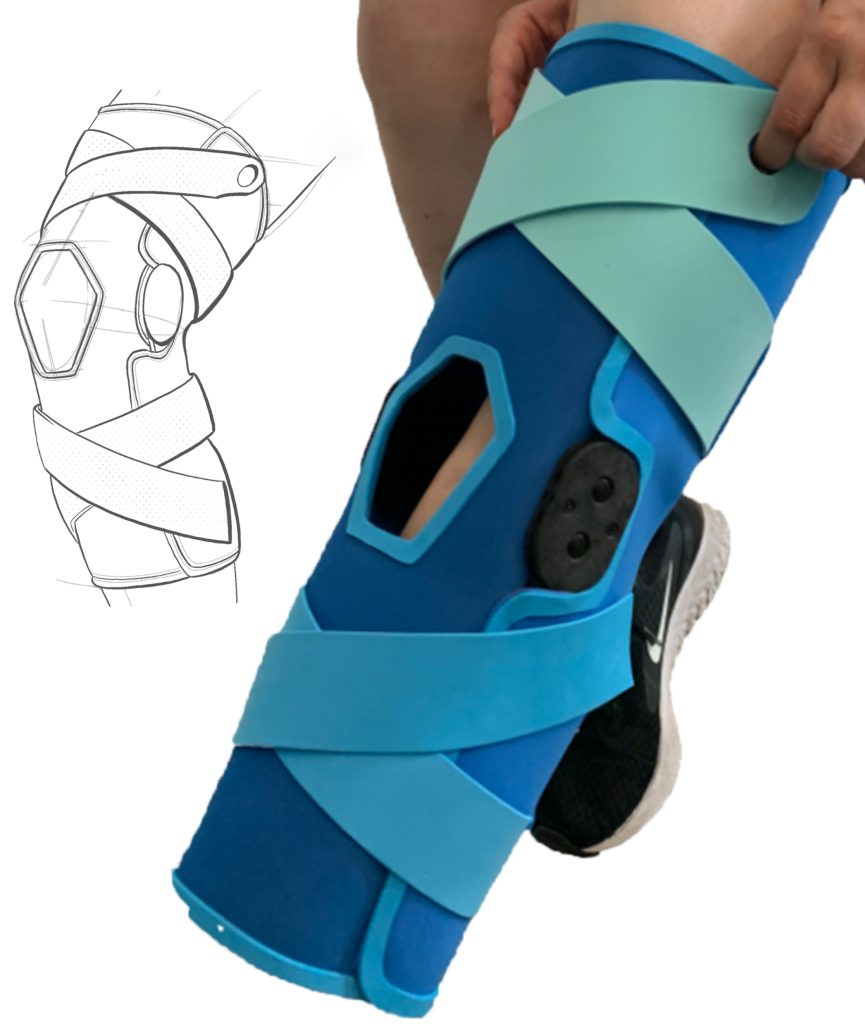
Industrial Designers Working on Knee Brace

Ergonomics, hygiene, and comfort are treated as non-negotiables. Materials must withstand the realities of long-term use, remaining breathable, easy to clean, and gentle against the skin. Attention to these details transforms functional devices into trusted companions for the people who rely on them. Every strap, sleeve, or modular component is designed to accommodate movement, protect sensitive areas, and support extended wear without fatigue or discomfort.

Collaboration drives the process forward. We work closely with clinicians to align with medical best practices, with engineers to ensure technical performance, and with end users to guarantee that the product is intuitive and usable across contexts. By integrating insights from soft goods design, we go beyond wearable devices alone, creating patient safety garments, rehabilitation aids, and hybrid systems that bridge clinical care and consumer wellness. Our expertise allows us to design accessories, support systems, and healthcare environments that not only meet functional requirements but also enhance comfort, confidence, and dignity.

The result is a wearable or healthcare system that not only performs its intended medical function but does so in a way that feels natural, safe, and empowering for the user, extending the body, supporting care, and enabling better health outcomes.

The Challenge (and Opportunity) of Medical Wearables

Medical wearables are evolving rapidly, from rehabilitation devices to continuous monitoring systems and preventative tools. While their potential to improve health outcomes is immense, designing these products presents a unique set of challenges. Unlike conventional consumer wearables, medical devices must integrate electronics, mechanics, and textiles into a seamless system that functions reliably in clinical settings, daily life, and even high-movement scenarios.

At Interwoven Design, our specialty lies in creating soft goods that feel natural against the body while incorporating hard goods—sensors, actuators, structural supports—that deliver precise performance. Every strap, sleeve, or interface must balance technical requirements with comfort, fit, and intuitive usability. A device that performs flawlessly but feels awkward, restrictive, or irritating will quickly be abandoned by the people who need it most.

Long-term wearability adds another layer of complexity. Medical wearables often remain in contact with the skin for hours or even days, requiring careful attention to materials, pressure distribution, and ventilation. Devices must support patient mobility, prevent injury, and integrate seamlessly into clinical protocols, all while maintaining hygiene standards and durability.

These challenges, however, are also opportunities. By addressing the intersection of comfort, ergonomics, and performance, Interwoven Design can create medical wearables that are not only clinically effective but also empowering and dignified for the people who use them. Our integrated approach ensures that each product functions as an extension of the body, helping patients and clinicians alike achieve better health outcomes through thoughtful, human-centered design.

Case Studies: Medical Design in Action

Interwoven Design’s work in medical wearables and healthcare soft goods spans a wide spectrum, from patient-focused therapeutic devices to clinician-centered support tools. Each project demonstrates how thoughtful design can bridge the gap between technology, the human body, and the demanding realities of healthcare environments. Whether stabilizing a catheter for heart failure patients, creating a flexible armband for continuous glucose monitoring, or integrating back support into a utility bag for nurses, our approach remains the same: combine clinical insight with human-centered design to deliver solutions that are safe, functional, and comfortable for real-world use.

Case Study 1: Nuwellis Device for Aquapheresis Therapy

Interwoven Design partnered with TKDG and Nuwellis to design a wearable solution that improves the patient experience during Aquapheresis therapy, a treatment used to safely remove excess fluid in people with Congestive Heart Failure (CHF). For patients already navigating a fragile health condition, maintaining catheter stability is critical: dislodgement, vein compression, or accidental interference can compromise treatment and patient safety.

The Design Challenge

The goal was to create an external arm stabilization device that protects the catheter while remaining comfortable enough for extended wear. The solution needed to work across different patient anatomies and treatment contexts, from resting in bed to moving around a hospital room, without restricting mobility or adding undue burden.

Our Approach

Through research with clinicians and patients, we identified key risks such as poor arm positioning, excessive elbow bending, and unconscious interference with the catheter site. These insights guided the development of multiple wearable prototypes designed to protect access points, promote healthy blood flow, and maintain comfort. Materials like Baymedix® froth foams were chosen for their softness, breathability, and ability to reduce pressure on the skin.

Impact

Clinical feedback highlighted two standout prototypes that offered strong catheter protection while preserving freedom of movement. Follow-up testing confirmed that these designs maintained vein access and minimized risks during therapy. By combining thoughtful ergonomics with material innovation, Interwoven Design delivered a solution that reduces complications, improves patient confidence, and supports more effective treatment outcomes.

Case Study 2: Senseonics Continuous Glucose Monitor

Senseonics is advancing diabetes care with the first long-term, implantable continuous glucose monitoring (CGM) system, designed to measure glucose levels for up to 90 days compared to the five-to-seven-day lifespan of most existing systems. Interwoven Design partnered with the Senseonics team to design the external armband that houses the system’s electronic component, ensuring comfort and reliability for everyday use.

A model wears a black and black armband.

The Design Challenge

The armband needed to balance durability, security, and comfort for wearers managing diabetes around the clock. From moments of high activity to periods of rest and sleep, the device had to stay securely in place without causing discomfort or drawing unwanted attention. 

Our Approach

We developed a flexible, two-part band featuring a seamlessly knit inner layer and a reversible over-cuff. This design gave users both comfort and choice—adjusting for security, flexibility, and even color preference—while ensuring that the device remained unobtrusive during daily activities.

Impact

The resulting armband delivers a secure, user-friendly solution that integrates naturally into the wearer’s lifestyle. By prioritizing comfort and adaptability, the design supports Senseonics’ mission to make glucose monitoring easier, more accurate, and less intrusive for people living with diabetes.

Case Study 3: Whitecloud Medical Utility Bag

Whitecloud Medical set out to solve two everyday challenges faced by nurses and medical technicians: back strain from strenuous lifting and the need to carry essential supplies throughout long shifts. Interwoven Design partnered with Whitecloud to design and prototype a first-of-its-kind product that combines a supportive back brace with a utility bag, purpose-built for demanding healthcare environments.

The Design Challenge

Medical professionals often lift patients, maneuver equipment, and push gurneys, all while carrying syringes, bandages, and other tools in overloaded pockets. This combination leads to back strain, discomfort, and inefficiency. Whitecloud’s founders, medical professionals themselves, envisioned a wearable solution that could ease physical strain while keeping supplies accessible.

Our Approach

We designed a modular waist pack and back support system that functions as one unit but allows flexibility in use. The bag slides around the belt for quick access to supplies or can be secured over the back support during strenuous movement. Both the bag and the back support can also be detached and used independently. Interior compartments include a fold-down main pocket for medical tools and a rear pocket for personal items, streamlining organization.

Impact

The Whitecloud Medical Utility Bag provides healthcare workers with reliable back support and accessible storage in a single wearable solution. By combining ergonomics with practical functionality, the design reduces strain, improves efficiency, and directly responds to the daily realities of clinical work.

Designing Confidence Into Care

Medical design is about more than solving functional problems, it’s about building trust, safety, and dignity into every interaction. From stabilizing a catheter during Aquapheresis therapy to creating flexible wearable monitors and clinician-focused utility solutions, the challenges are as much human as they are technical. Through rigorous testing, iterative prototyping, and a deep commitment to human-centered thinking, Interwoven Design ensures that every product performs reliably while feeling intuitive, comfortable, and approachable in real-world use.

Our expertise in seamlessly combining soft goods and hard goods gives us a unique advantage: we can craft wearable medical solutions that are both technically sophisticated and thoughtfully tailored to the body. Every strap, sleeve, or modular component is designed with the user’s comfort, mobility, and safety in mind.

We invite clinicians, medical device companies, and innovators to collaborate with Interwoven Design to create medical products that not only meet clinical standards but also resonate with the people who use them every day. Designing for care means designing for confidence, and that is a principle at the heart of everything we do.

Interwoven Design is a design consultancy that is positioned at the intersection of soft goods and wearable technology, creating products that function with the body and offer comfort as well as the superb performance that arises through the innovative incorporation of rigid, often electronic and responsive elements. Sign up for our newsletter and follow us on Instagram and LinkedIn for design news, multi-media recommendations, and to learn more about product design and development! 

Building Ideas: The Role of Conceptual Mock-Ups in Soft Goods Design

Building Ideas: The Role of Conceptual Mock-Ups in Soft Goods Design

Thinking in Three Dimensions

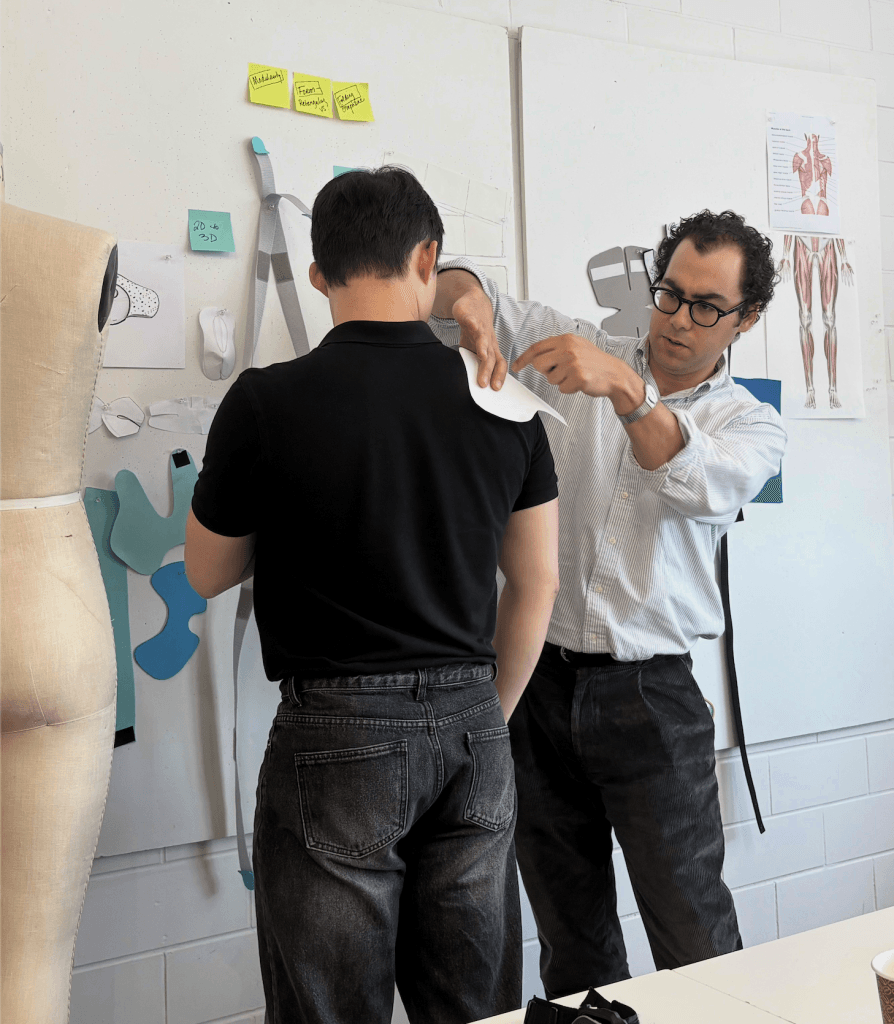
Design rarely happens in a straight line. In soft goods design, where products must conform to the body, support movement, and feel comfortable in real-world use, mock-ups are especially crucial. Subtle differences in fit, tension, or material behavior can completely change how a garment or wearable feels, yet these nuances are often invisible in drawings or CAD renderings. Rough 3D models allow designers to evaluate ergonomics, assess how straps, seams, or closures interact with the body, and ensure that the product performs intuitively and comfortably before a higher fidelity prototype is made.

While drawings and digital files are powerful tools, they can only go so far. Sometimes the only way to know whether a curve feels natural in the hand, a hinge aligns with joint movement, or a strap sits comfortably across the body is to build it in the real world, however roughly. That’s where conceptual mock-ups come in. These early, low-fidelity models aren’t meant to be polished or permanent; they’re tools for thinking. They expose hidden challenges, spark unexpected directions, and make the abstract tangible. Just as importantly, they allow both designers and clients to engage with an idea in ways that are more intuitive than a flat image or diagram could ever provide.

At Interwoven Design, we see mock-ups as a bridge between imagination and execution. Building in 3D is how we explore questions that sketches can’t answer, and it’s how we make sure our concepts are grounded in the realities of human use. For us, mock-ups aren’t just a stage in the process; they’re an act of curiosity, iteration, and craft that defines how ideas come to life. In this Insight article, we’ll discuss the value of mock-ups, outline various methods of making them, and share three case studies of studio projects that showcase the ability of mock-ups to elevate the design process at every level of fidelity. 

Why We Build to Think

Design is, at its core, a process of discovery. Even the most carefully considered sketch or digital model can miss details that only emerge when something is built in physical space. By working in three dimensions, designers invite surprise into the process, sometimes confirming assumptions, other times revealing issues that couldn’t have been predicted on paper.

Conceptual mock-ups are powerful because they shift the question from “Does this look right?” to “Does this work in real life?” A quick foam cut-out can reveal that a button is too far for the thumb to reach, or that a curve looks elegant in renderings but feels awkward when held. Fabric mock-ups can show how material drapes, stretches, or resists movement, helping teams anticipate comfort and durability before investing in higher-fidelity prototypes.

Just as importantly, building early and often keeps the design process agile. A mock-up doesn’t have to be precious; in fact, its roughness is part of the point. The less time invested, the easier it is to test, critique, and move on. This freedom encourages exploration rather than perfectionism, giving space for bolder ideas to emerge and evolve.

At Interwoven Design, we use mock-ups not just to validate concepts, but to provoke questions. What happens if this element shifts by an inch? How does the design change if the material is softer, stiffer, lighter? Every build is a chance to learn something new, and often those discoveries become the foundation for the next round of design.

Methods of Mock-Up Making

There’s no one right way to make a conceptual mock-up, only the method that best suits the question at hand. Also, we never make just one! Sometimes the goal is to understand form and scale, other times it’s about testing flexibility, ergonomics, or how a feature behaves when it meets the body. Because of this, the process often spans a wide spectrum of materials and techniques, from the scrappiest cardboard approximation to precision 3D prints.

Paper and Foam Models
When speed matters, nothing beats the simplicity of paper, foam, or cardboard. These materials are quick to cut, shape, and tape together, allowing designers to test proportions, angles, and spatial relationships in minutes. They’re the fastest way to move an idea out of a sketchbook and into the real world. At Interwoven Design, we love paper as a tool, as it behaves a lot like a textile.

Fabric and Soft Goods Constructions
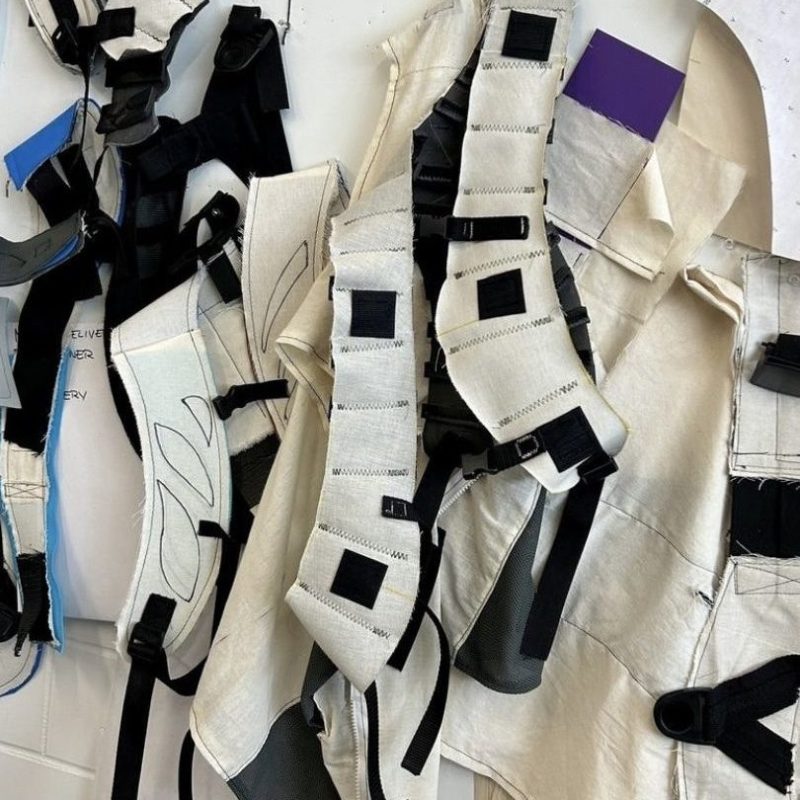
For wearables or textile-based products, mock-ups made from muslin, mesh, or other inexpensive fabrics can reveal how a design drapes, folds, and moves against the body. These rough-sewn models often expose ergonomic insights that drawings can’t capture, like how a strap pulls across the shoulder or how a pocket can be accessed in motion.

Digital-to-Physical Hybrids
Sometimes, precision is the priority. Tools like 3D printing, laser cutting, or CNC machining allow teams to translate digital models into physical parts with exact dimensions. These methods are especially valuable when testing components that interact mechanically or when verifying that multiple parts fit together as intended. Like the design process itself, mock-up making is rarely linear. A paper sketch model may inspire a fabric iteration, which then sparks a 3D-printed test. Each build answers some questions while raising others, creating a feedback loop that moves the design steadily closer to resolution.

At Interwoven Design, we embrace this iterative mix—shifting tools and materials as needed to keep ideas moving and evolving. We are nearly always combining soft goods and hard goods in the same product, and we use a range of construction methods to build the components needed to test the interaction between the two.

Mock-Ups as Communication Tools

Mock-ups are more than internal design aids, they are powerful tools for communication. A sketch can suggest form, and a CAD file can demonstrate function, but nothing replaces the clarity of a physical object. When stakeholders can hold, wear, or manipulate a mock-up, abstract ideas become concrete. The conversation shifts from speculation to lived experience.

For clients, this means gaining confidence that the product is on the right track. Engineers can assess feasibility, materials, and assembly details. Users, meanwhile, provide feedback that is grounded in the reality of use rather than imagination. Each group engages with the same artifact, but through their own lens, creating a richer and more specific dialogue.

This shared understanding is critical. By aligning expectations early in the process, mock-ups reduce the risk of costly misunderstandings later. Questions of scale, ergonomics, or usability are resolved in the physical world rather than in post-production fixes. In this way, mock-ups not only accelerate collaboration but also protect both the integrity of the design and the efficiency of the project timeline.

Case Studies: Mock-Ups in Action

Case Study 1: The Breg CrossRunner™ Soft Knee Brace

When Breg set out to reinvent their soft knee brace line, they partnered with Interwoven Design to merge engineering precision with human-centered comfort. The challenge was to create a premium brace that could address a wide spectrum of injuries and instabilities while remaining easy to use, breathable, and adaptable to different body types. 

Early in the process, mock-ups played a critical role: foam models and fabric constructions allowed the team to explore how hinges aligned with anatomy, how straps wrapped and adjusted, and how materials compressed or released tension in motion.

These quick builds revealed insights that sketches alone couldn’t capture, helping refine ergonomics, donning sequences, and user comfort long before committing to a final design direction. By iterating through mock-ups, the team established a design language that balanced sleek aesthetics with technical performance. The result, the Breg CrossRunner™ Soft Knee Brace, exemplifies how physical mock-ups can bridge vision and execution, ensuring that every detail—fit, function, and feel—was tested and validated in three dimensions.

Case Study 2: The Perci Emergency Preparedness Vest

When INVICTA Ready set out to design a product that could help families face the growing threat of natural disasters, they partnered with Interwoven Design to create something intuitive, wearable, and life-saving: the Perci Emergency Preparedness Vest. The challenge was complex: developing a garment that could store and organize critical supplies, remain comfortable during rapid evacuations, and be universally adaptable across diverse users. 

Early mock-ups were essential in shaping the vest’s design: muslin and fabric prototypes allowed the team to test how tools and essentials could be organized into categories, ensuring each pocket was ergonomic, accessible, and balanced against the body.

These rough builds revealed whether wearers could move freely—carrying a child, lifting luggage, or running—without being restricted by bulk or weight distribution. These iterative mock-ups uncovered design insights that made the vest both practical and confidence-inspiring: reflective icons and graphic labeling clarified what each pocket contained, while ergonomic patterning and stretch panels improved comfort and mobility. The inclusion of a collapsible hood, internal storage systems, and integration with a companion mobile app extended its functionality, making the vest a true system for preparedness rather than just a garment.

Recognized internationally, the Perci Vest won Gold in Industrial and Life Science Design – Safety Designs and Bronze in Design for Society at the 2022 International Design Awards (IDA). The project underscores the value of mock-ups as more than just prototypes: they were the means of simulating real-world scenarios, uncovering challenges, and validating design decisions. For the Interwoven Design delivery team, building in three dimensions was the key to transforming the abstract concept of “preparedness” into a product that is intuitive, wearable, and empowering in moments of crisis.

Case Study 3: The HeroWear Apex Exosuit

Warehouse work places enormous strain on the body. Long shifts, hot environments, and constant bending and lifting often leave workers fatigued and injured, especially in the lower back. When a team from Vanderbilt’s Center for Rehabilitation Engineering & Assistive Technology developed a proof-of-concept for a mechanical exoskeleton, they partnered with Interwoven Design to transform their idea into a fully commercialized product: the HeroWear Apex Exosuit. Mock-ups were central to the exosuit’s design process. Our delivery team built garment and hardware mock-ups to test placement of mechanical components, optimize body heat management, and fine-tune ergonomics in real time.

Dozens of soft goods mock-ups were created and tested, shaping the design’s modular fit system, strength adjustability, and range of motion. By iterating through muslin mock-ups to increasingly high fidelity prototypes, the team ensured that the exosuit was not only effective in reducing strain but also intuitive and comfortable enough to gain worker acceptance, an essential factor for adoption on the job floor.

The final design balances technology with wearability: lightweight, breathable, and easy to don and doff, the Apex relieves more than 50 pounds of strain from the lower back. Its garment-based system manages body heat while remaining easy to clean and maintain, enabling daily use in demanding environments. The Apex Exosuit has been celebrated internationally, winning Gold at the 2021 IDEA International Design Excellence Awards (Commercial & Industrial), Platinum at the 2020 Spark Design Awards, and recognition as a 2021 Core77 Design Awards Notable winner (Commercial Equipment). These honors highlight not only the strength of the final product but also the value of mock-ups and iterative design in transforming breakthrough research into a scalable, worker-centered solution.

Building Toward Better Ideas

In soft goods design, mock-ups are more than a step in the process, they are essential to understanding how a product interacts with the body. They transform abstract concepts into tangible experiences, allowing designers to evaluate fit, tension, mobility, and comfort in ways that sketches or digital models alone cannot. This hands-on approach fosters a studio culture of experimentation, openness to failure, and playful discovery, while balancing intuition with practical constraints. 

At Interwoven Design, building mock-ups, whether for wearable braces, ergonomic vests, or modular exosuits, brings ideas to life, revealing hidden opportunities and guiding iteration. By seeing, touching, and testing concepts in three dimensions, we ensure that every soft goods product is not only functional and durable, but also intuitive, human-centered, and aligned with real-world use. In short, making shapes the trajectory of design, producing solutions that resonate with both people and their bodies.

Interwoven Design is a design consultancy that is positioned at the intersection of soft goods and wearable technology, creating products that function with the body and offer comfort as well as the superb performance that arises through the innovative incorporation of rigid, often electronic and responsive elements. Sign up for our newsletter and follow us on Instagram and LinkedIn for design news, multi-media recommendations, and to learn more about product design and development! 

Rigid to Responsive: The Evolution of Outdoor Softgoods

Rigid to Responsive: The Evolution of Outdoor Softgoods

From Hard Shell to Soft Shell

Outdoor gear has undergone a profound transformation over the last thirty years. Where products once focused solely on shielding users from the elements, prioritizing rigidity, protection, and brute durability—they now emphasize movement, comfort, and adaptability. This shift represents more than just better materials. It reflects a new philosophy in product design: one that centers the user’s experience, not just their survival.

In outdoor soft goods, this evolution is visible everywhere, from breathable technical jackets that feel like a second skin to backpacks that mold to the human form. Designers are no longer just engineering gear to withstand the elements; they’re crafting tools that enhance how we live, explore, and perform in outdoor spaces.

This design revolution is being shaped by human needs: for agility, for connection, for gear that feels intuitive. Soft goods—textile-based products like apparel, backpacks, harnesses, and medical wearables—have emerged at the forefront of this change, offering solutions that align with the way people actually move and behave. 

At the forefront of this evolution are specialized soft goods studios like Interwoven Design, which are advancing the field through deep research, ergonomic expertise, and thoughtful design. At our studio, soft goods are treated as wearable systems—engineered to support real people in real contexts. Whether serving healthcare professionals, outdoor athletes, or even animals, the studio applies a rigorous, user-centered design process that blends research, prototyping, and testing.

In this Insight article, we’ll discuss the three phases of the transformation of outdoor soft goods and provide a few product examples that typify the style. Each era brought new materials, priorities, and philosophies that shaped how products were built as well as how people used them. Let’s take a closer look at how we got here—and where this niche corner of the soft goods world is heading.

Phase 1: Structure is King

The Structure-Dominant Era (1990s–Early 2000s)

The 1990s marked a time when outdoor gear prioritized maximum protection, often at the expense of comfort and flexibility. Products were designed to endure harsh environments through rigidity and strength, using heavyweight materials and reinforced construction. These products were marketed for their rugged durability and stressed extreme utilitarian value, designed to be hardcore products for hardcore users.

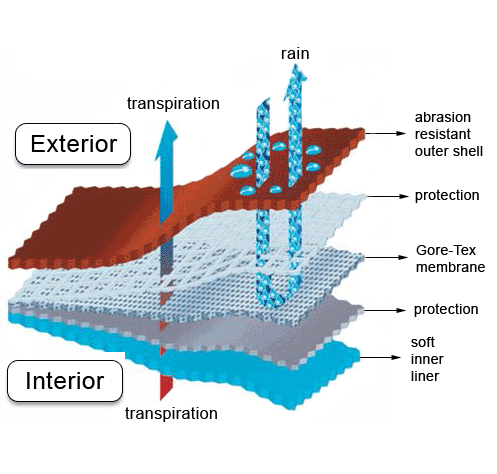
  • GORE-TEX Shells as Armor: Jackets like the Arc’teryx Alpha SV (1998) were constructed with heavy-duty 3-layer GORE‑TEX, delivering full waterproofing and durability. They offered protection in extreme conditions but were often stiff, bulky, and lacked breathability. 
  • Framed Backpacks: Packs like the Dana Design Terraplane used massive internal frames and heavy Cordura fabric. Though praised for their robustness, they were notorious for their weight, some tipping the scale at over 7 pounds when empty.
  • Mountaineering Boots: Footwear such as the La Sportiva Nepal Extreme featured stiff full-shank soles, thick leather uppers, and heavy insulation. Built for high-altitude performance and technical terrain, these boots provided unmatched support and durability, but were rigid and uncomfortable for long approaches or everyday use.
Layer Structure of GORE-TEX

It’s a testament to the functionality of these products that they are all still on the market today. The Structure-Dominant Era established the foundation of modern outdoor gear, emphasizing strength, protection, and durability above all else. While often heavy and rigid, the products of this time were engineered to withstand extreme environments and earned a reputation for reliability and toughness. However, this singular focus on endurance often came at the cost of comfort and adaptability, and appealed to the extreme end of the outdoor market. As user expectations evolved and materials advanced, the limitations of this approach became clear, paving the way for a more balanced approach.

Phase 2: Performance Meets Comfort

The Hybrid Functionality Era (Mid-2000s–2015)

By the mid-2000s, a new design mindset began to take hold. Outdoor gear no longer had to choose between protection and comfort, advancements in materials and construction made it possible to have both. This era was marked by the integration of breathable membranes, lighter fabrics, and ergonomic adjustments that responded more intelligently to the human body. Gear became more modular and customizable, allowing users to fine-tune their equipment for specific activities or conditions. A growing awareness of user experience signaled a major shift toward more human-centered outdoor design.

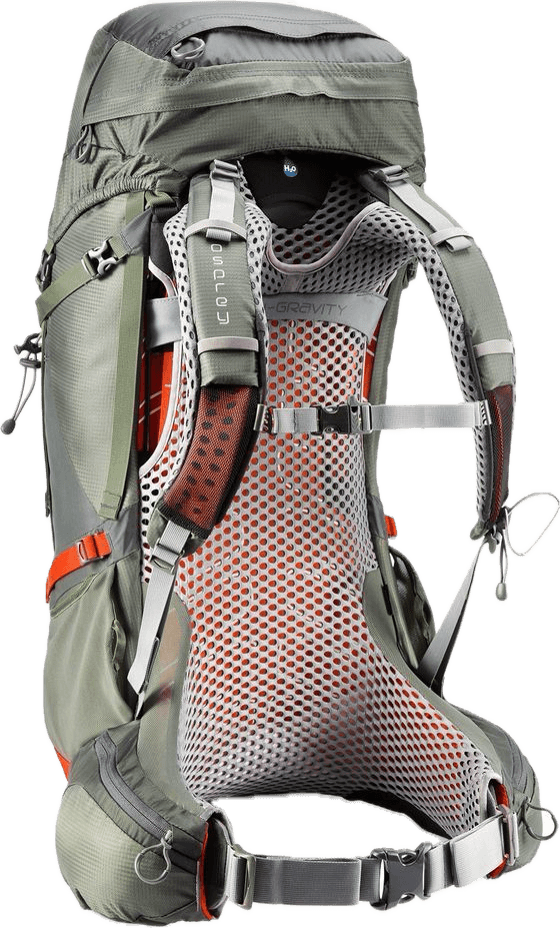
Osprey Atmos (2005)
  • Ventilated & Adjustable Backpacks: The Osprey Atmos (2005) introduced a tensioned mesh back panel that allowed for airflow between the user and the pack, reducing sweat and increasing comfort on long hikes. Combined with adjustable hip belts and modular lid systems, this design reflected a growing emphasis on breathability, load distribution, and personalized fit.
  • Body-Mapped Fabrics: Garments from brands like Salomon and Marmot began integrating zone-specific materials for targeted breathability, stretch, or insulation. These designs moved away from uniform construction and toward dynamic apparel that responded to different parts of the body, supporting both performance and comfort in a range of conditions.
  • Convertible & Multi-Use Garments: Pieces like the Patagonia Simple Guide Pants or REI’s zip-off hiking trousers embodied versatility. Designed to adapt to shifting weather and activities, they often featured articulated knees, adjustable hems, and convertible options, bridging the gap between gear designed for performance and clothing suited for comfort and travel             

The Hybrid Functionality Era marked a pivotal transition from rugged, utilitarian gear to more versatile, user-responsive designs. By incorporating modular features, lighter materials, and targeted performance zones, designers began balancing protection with comfort and adaptability. It’s not a coincidence that the outdoor gear of this era begins to overlap stylistically with sportswear, shifting from boxy, heavy forms to streamlined, ergonomic forms that often used some of the same performance materials.

Phase 3: Flexibility First

The Human-Centered Flexibility Era (2015–Present)

Beginning in the mid-2010s, outdoor design entered a new phase, one driven by flexibility, softness, and seamless integration with the human body. No longer content with simply reducing weight or adding breathability, designers began rethinking the entire relationship between gear and user. The focus shifted to how products feel in motion, how they adapt to different activities, and how they support long-term comfort without compromise. This era is characterized by textiles that stretch, breathe, and insulate dynamically, along with gear that anticipates and responds to the user’s needs in real time. Functionality became embedded, not added on, blurring the line between technical equipment and wearable systems.

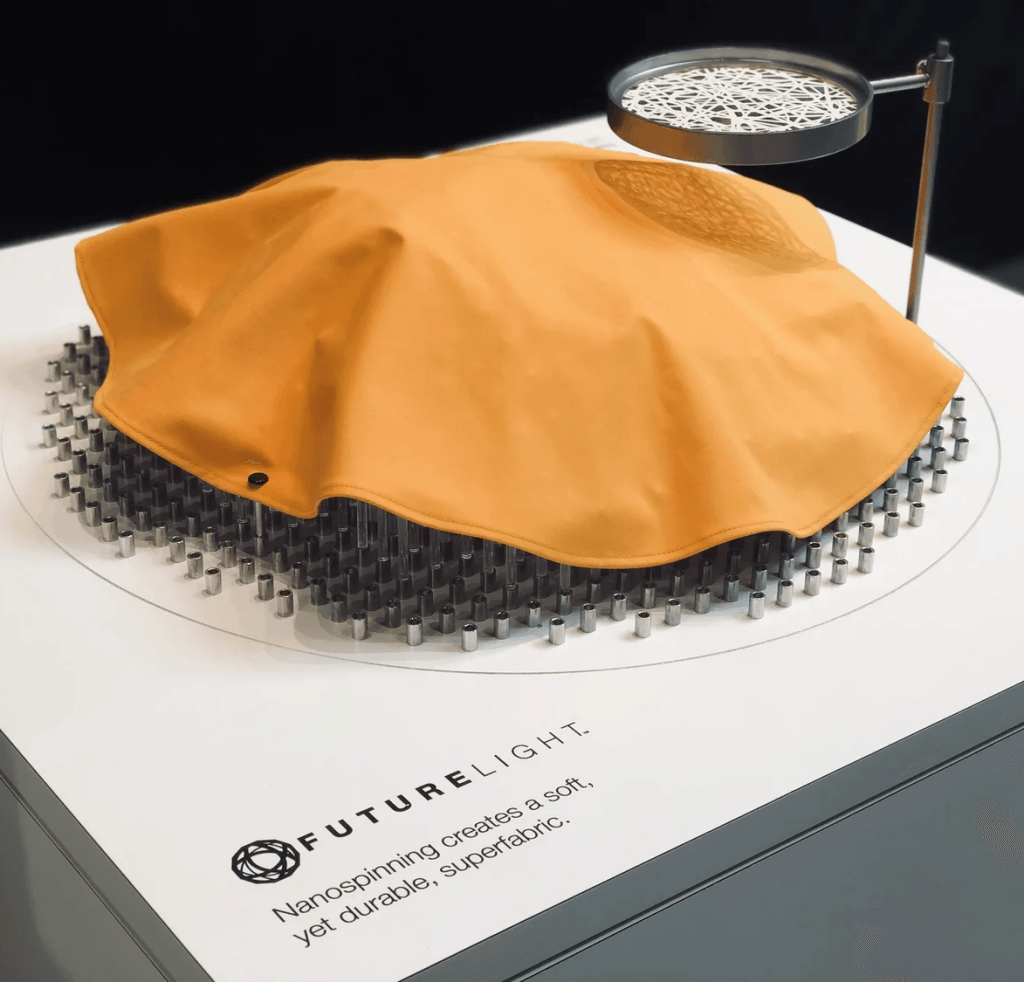
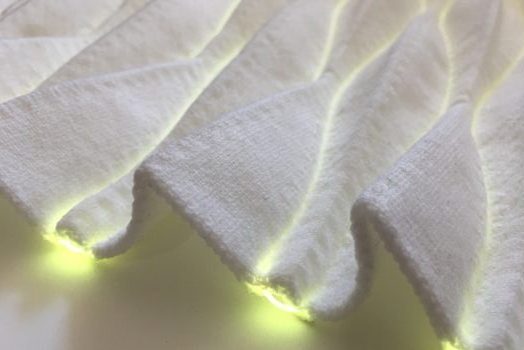
The North Face Futurelight Technology

  • Wear-All-Day Technical Apparel: The North Face FutureLight (2019) introduced a soft, stretchy, waterproof fabric that redefined shell performance. Unlike the stiff, crinkly shells of earlier generations, FutureLight was designed to be worn continuously, whether hiking, climbing, or transitioning between weather systems. Similarly, Patagonia’s Nano-Air (2014) and Arc’teryx’s Proton series offered breathable insulation layers that moved with the body, eliminating the need to remove or swap layers during activity.
  • Stretch-Integrated Backpacks: Packs like the Hyperlite Mountain Gear Junction or the updated Gregory Zulu integrated flexible panels, harness systems, and body-conforming shapes. These designs moved beyond rigid framing and embraced soft structure, offering support while adapting to different body types, movements, and load shifts across terrain.
  • Minimalist Footwear: The rise of lightweight trail shoes like the Altra Lone Peak and HOKA Speedgoat marked a departure from heavy, armored boots. With wide toe boxes, cushioned midsoles, and responsive rock plates, these shoes prioritized natural foot movement and fatigue reduction over brute protection, reflecting a broader shift toward gear that works with the body, not against it.

The Human-Centered Flexibility Era redefined outdoor gear as an extension of the body rather than just a shield against the environment. By prioritizing dynamic comfort, adaptability, and intuitive use, this era reflects a matured understanding of outdoor users’ needs. Gear is no longer designed for one function or one condition, it’s built to move, shift, and respond. As materials and technologies continue to evolve, this era sets the foundation for even smarter, more personalized soft goods design in the years ahead.

The Future is Flexible

As we look to the future of outdoor design, soft goods are set to play a pivotal role at the intersection of technology, sustainability, and emotional connection. Next-generation textiles and design systems will offer a new kind of intelligence: one that not only protects but learns, adapts, and responds. Tomorrow’s outdoor gear won’t just perform in the elements, it will understand the user, minimize environmental impact, and offer a more personal relationship with the product itself. This future is already beginning to take shape across three key frontiers:

Project “Lumanit” by Interwoven Design Group

  • Smart Textiles
    Emerging materials equipped with embedded sensors or reactive fibers are enabling apparel and gear to adjust dynamically based on environmental and physiological inputs. For example, Polartec Delta is engineered to increase airflow and reduce wet clinging during intense activity, while more experimental prototypes like MIT’s “Second Skin” suit explore clothing that opens and closes ventilation flaps based on body temperature. These innovations point to a future where garments can actively manage temperature, moisture, and pressure in real time.
  • Sustainable Materials
    As outdoor users become more conscious of their environmental footprint, the industry is shifting toward biodegradable, bio-based, and recyclable materials. Companies like Vaude are pioneering fully compostable backpacks, while Norrøna has integrated ocean-recycled nylon into its technical apparel. These shifts go beyond trend, they represent a systemic change in how gear is made, used, and disposed of, aligning product development with regenerative design principles.
  • Emotional Design
    Beyond performance and sustainability, future soft goods will increasingly speak to identity and meaning. Whether it’s gear that tells a story through localized materials or customizable elements that allow users to imprint their personality, emotional resonance is becoming a design priority.
    Cotopaxi, for instance, uses remnant materials to create one-of-a-kind packs that reflect a commitment to both resourcefulness and individuality. In this model, products aren’t just tools—they become companions and symbols of personal values and lived experience.

Studios like Interwoven Design play a vital role at this soft goods frontier, bringing together advanced materials, human factors research, and an agile design approach to redefine what soft goods can be. Rather than treating products as static, independent tools, Interwoven Design creates tailored systems that respond to human behavior, activity, and comfort. The studio philosophy? Soft goods should adapt to the user, not the other way around.

Interwoven Design is a design consultancy that is positioned at the intersection of soft goods and wearable technology, creating products that function with the body and offer comfort as well as the superb performance that arises through the innovative incorporation of rigid, often electronic and responsive elements. Sign up for our newsletter and follow us on Instagram and LinkedIn for design news, multi-media recommendations, and to learn more about product design and development!
3 Must-Know Brand Strategy Frameworks for Wearable Technology

3 Must-Know Brand Strategy Frameworks for Wearable Technology

A Guide to Building a Strong, Differentiated Wearable Tech Brand

In the fast-evolving world of wearable technology, having a great product isn’t enough—you need a strong brand strategy to stand out. Whether you’re designing smart textiles, medical wearables, or consumer tech that seamlessly integrates into daily life, your brand is what builds trust, loyalty, and excitement around your innovation. At Interwoven Design, we’ve seen firsthand how the right brand strategy can transform a wearable tech product from a niche idea into a market leader. In this Insight article, we’ll walk you through 3 useful brand strategy frameworks that will help shape a compelling, differentiated brand—one that connects with users, communicates value, and carves out a unique space in this competitive industry. Let’s dive in!

Understanding Brand Strategy for Wearable Tech

Brand strategy is more than just a logo or a catchy tagline—it’s the foundation of how your wearable tech product is perceived, who it resonates with, and why customers choose it over the competition. Unlike other industries, wearable technology sits at the crossroads of fashion, health, and innovation, meaning that a strong brand must balance aesthetics, functionality, and emotional connection.

A great wearable product seamlessly integrates into people’s lives, but a great wearable brand does something more—it builds trust, creates desire, and tells a story that makes people feel like they need it. Whether it’s a fitness tracker, a medical device, or a next-gen smart fabric, how you position your brand can determine whether customers embrace it or overlook it.

In the sections ahead, we’ll break down some of the most powerful brand strategy frameworks that will help you define your brand’s purpose, differentiate it in the market, and create lasting connections with your audience. We like to have a toolkit of options, as we don’t use every framework for every project, we custom build the design process for each challenge. Let’s start with positioning—because knowing where you stand in the market is the first step to making an impact.

Positioning Your Wearable Tech Brand

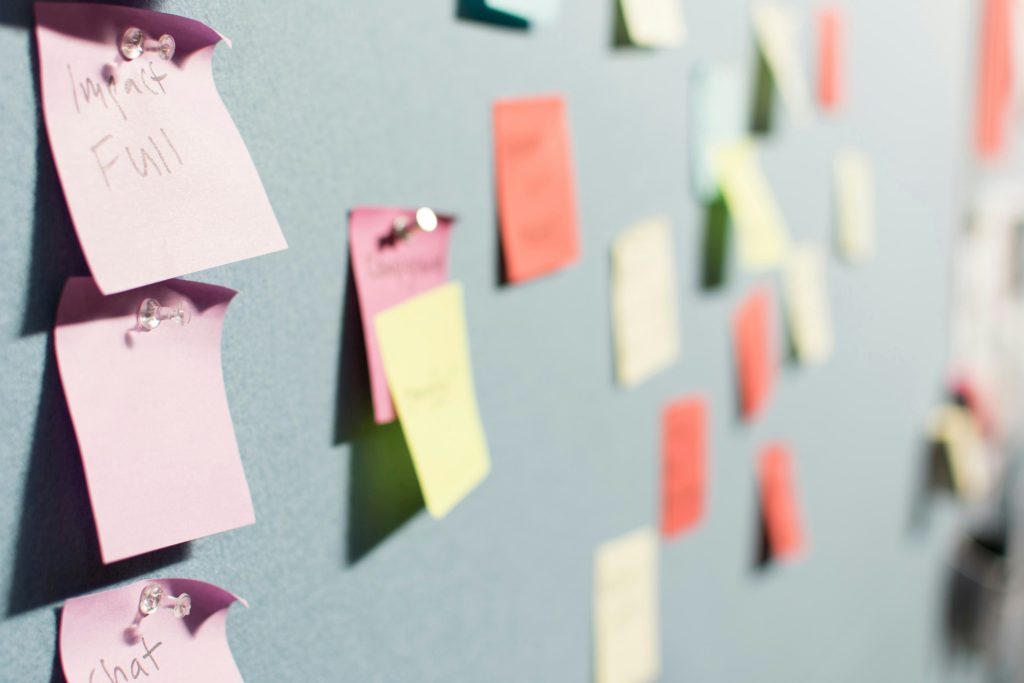
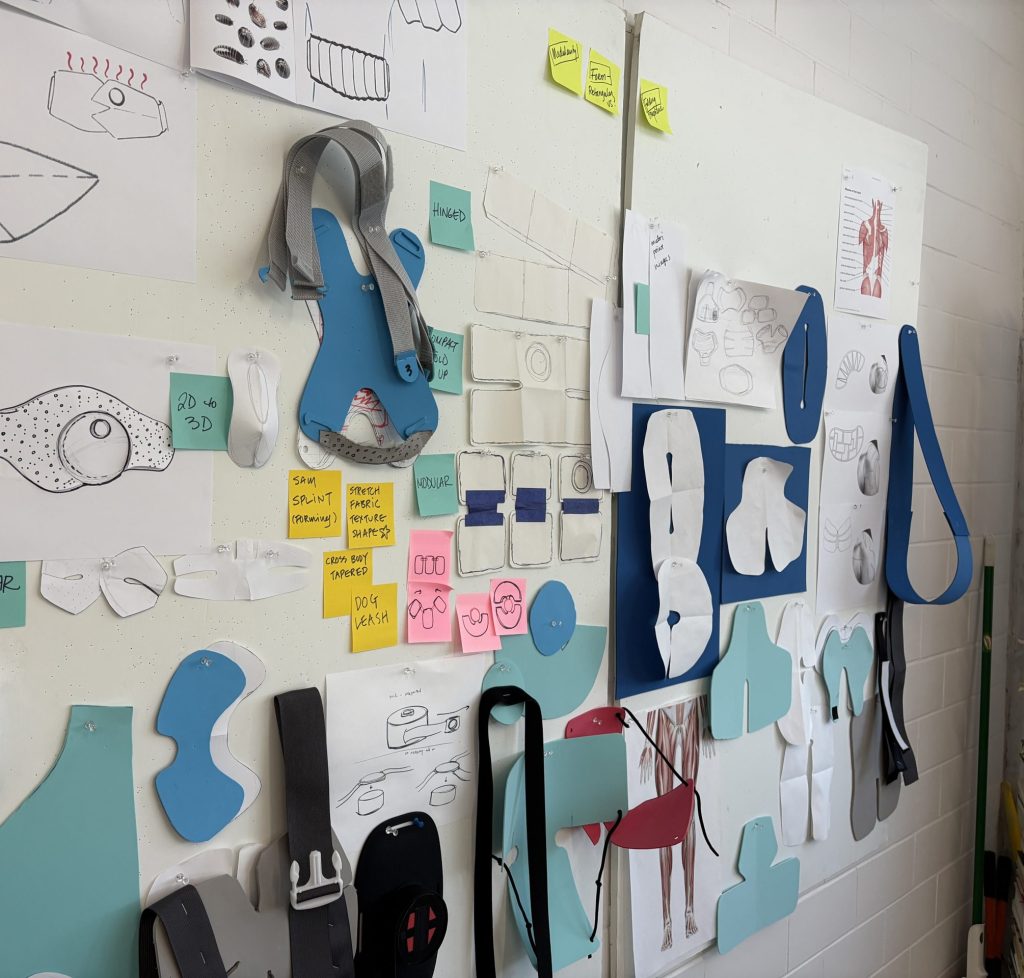
multi-color post-its on a wall

Before a customer even experiences your product, they experience your brand. Brand positioning is about defining what makes your wearable tech unique and why it matters to your target audience. In a crowded market, positioning helps you stand out—not just as another smart device, but as a brand with a clear purpose and value proposition.

To craft strong positioning, ask yourself:

  • Who is your ideal customer? Are you designing for athletes, healthcare professionals, everyday consumers, or fashion-forward early adopters?
  • What problem does your wearable tech solve? Is it enhancing performance, improving health outcomes, or providing a seamless user experience?
  • How does your brand’s personality and messaging reflect this? Should your tone be clinical and data-driven, sleek and futuristic, or approachable and lifestyle-oriented?

Key Brand Strategy Frameworks for Wearable Tech

Building a strong, recognizable brand in the wearable technology space requires more than just great design and cutting-edge innovation—it demands a strategic foundation that connects with users on a deeper level. To create a brand that resonates, companies must define their purpose, craft a compelling identity, and establish a clear and consistent message. In this section, we’ll explore three essential brand strategy frameworks—Simon Sinek’s Golden Circle, The Archetype Framework, and The Brand Identity Prism—that can help wearable tech brands differentiate themselves, foster loyalty, and create a lasting impact.

1. The Golden Circle

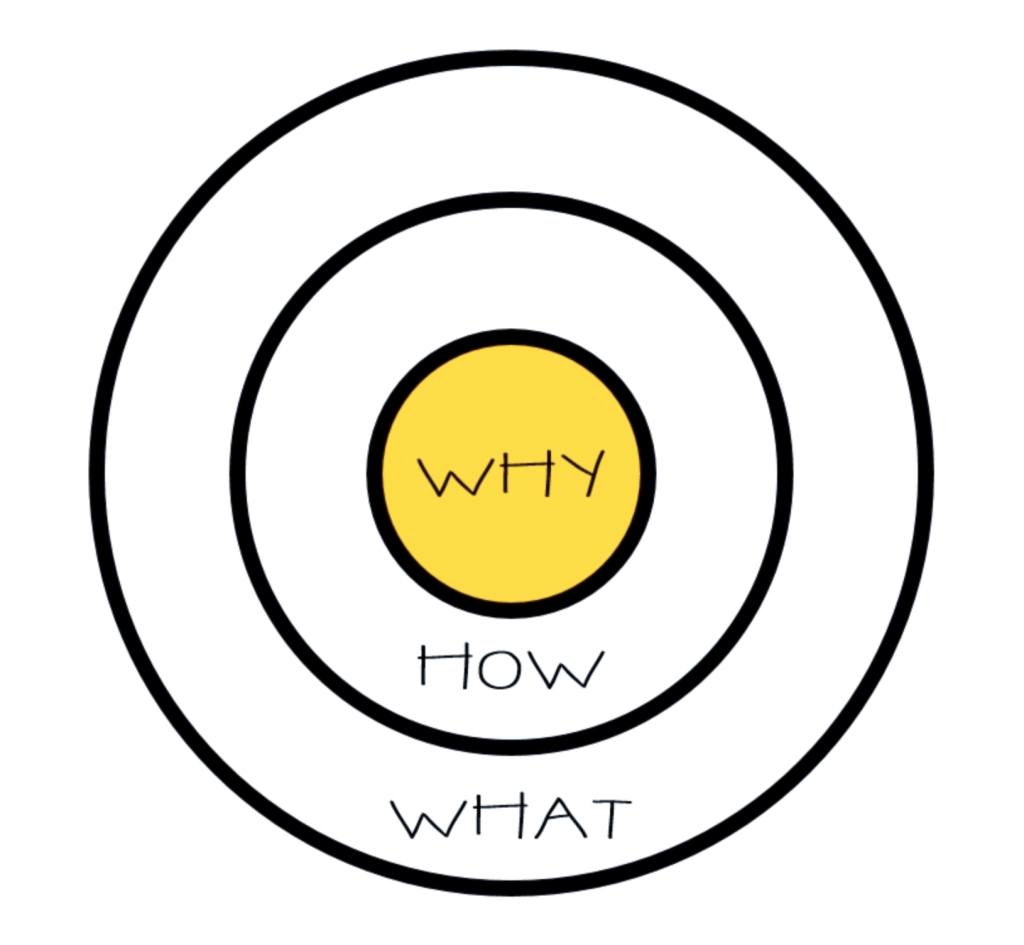
Simon Sinek Golden Circle Brand Strategy Framework
Simon Sinek’s Golden Circle

At the heart of every great brand is a compelling “why.” Simon Sinek’s Golden Circle framework —starting with why, then how, and finally what—popularized by his book Start with Why helps brands connect with customers on a deeper, purpose-driven level. Wearable tech brands that communicate a strong purpose inspire loyalty beyond just product features. For example, WHOOP’s why isn’t just to track biometrics—it’s to empower users with data-driven insights to perform at their best. In contrast, brands that focus solely on what they do, like offering another fitness tracker with heart rate monitoring, often struggle to stand out. By leading with purpose, wearable brands create an emotional connection that turns users into advocates.

2. The Archetype Framework

Brand archetypes, rooted in Carl Jung’s psychological theory, help brands develop strong personalities that resonate with their audiences. When wearable tech brands embrace a clear archetype, their storytelling becomes more cohesive and engaging. For example, Apple’s wearable tech aligns with The Innovator—pushing boundaries and redefining personal technology. Meanwhile, a brand like Fitbit embodies The Caregiver, prioritizing health, well-being, and accessibility. For adventure-driven audiences, Garmin wearables embrace The Explorer, appealing to those who seek rugged, off-the-grid experiences. By choosing the right archetype, wearable brands craft a more humanized identity, making it easier for customers to relate to and trust their products.

3. The Brand Identity Prism

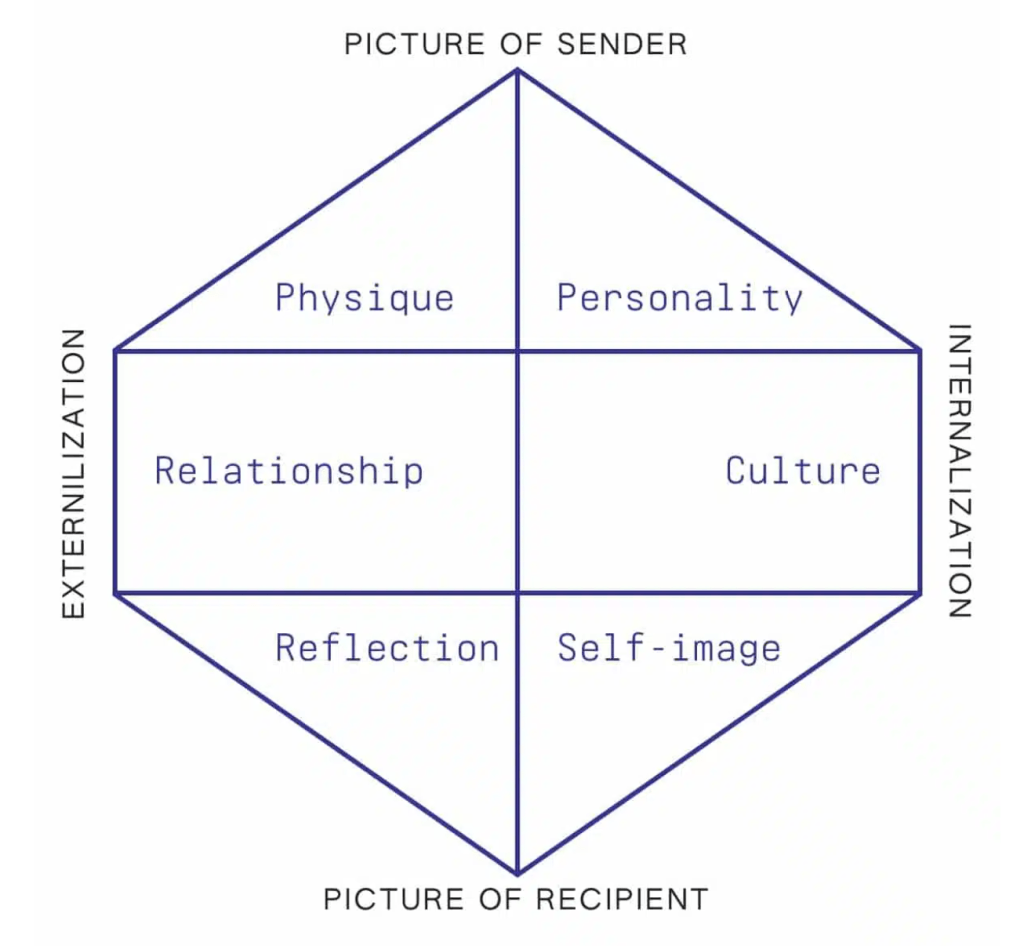
Jean-Noël Kapferer’s Brand Identity Prism

Jean-Noël Kapferer’s Brand Identity Prism provides a structured way to build a strong and consistent brand identity. The framework breaks branding into six key elements: Physique (the tangible product and design), Personality (the brand’s character and tone), Culture (values and beliefs), Relationship (how the brand interacts with users), Reflection (how customers see themselves using the product), and Self-image (the aspirational identity it creates for users). Applied to wearable tech, this framework ensures a holistic brand strategy. Take Oura Ring, for example—its physique is sleek and discreet, its personality is refined and data-driven, its culture emphasizes wellness, and its relationship with users is built on trust in its health insights. By aligning all six elements, brands create a distinctive and cohesive presence in the market, reinforcing long-term loyalty.

Case Studies: Standout Positioning in Wearable Tech

1. WHOOP 

Health & Performance Optimization 

WHOOP has positioned itself as the go-to wearable for serious athletes and health enthusiasts. Unlike mainstream fitness trackers, WHOOP doesn’t have a screen—it’s all about data-driven insights, personalized recovery coaching, and subscription-based access to health analytics. The brand’s positioning is clear: If you’re serious about performance, WHOOP is for you.

2. Oura Ring

Discreet & Stylish Health Tracking

 The Oura Ring takes a different approach, offering an ultra-sleek, screen-free wearable that blends seamlessly into everyday life. By focusing on wellness, sleep tracking, and an elegant, jewelry-like design, Oura appeals to a lifestyle-conscious audience that values aesthetics as much as technology.

3. L’Oréal’s My Skin Track UV

Beauty & Health Awareness

L’Oréal entered the wearable space with a completely different angle—combining skincare with technology. Their My Skin Track UV sensor helps users monitor sun exposure, reinforcing their brand’s commitment to skin health and beauty. This kind of niche positioning allows them to stand out in a tech space dominated by fitness and medical brands.

The key takeaway? Positioning isn’t just about features—it’s about aligning your product with the right audience, telling a compelling story, and ensuring your wearable tech solves a clear, meaningful problem.

Aim for Early Integration

A strong brand strategy shouldn’t be an afterthought—it needs to be embedded into every stage of product development. In wearable technology, where user trust and engagement are critical, aligning brand identity with product design ensures consistency and a seamless customer experience. From the materials chosen to the user interface, every touchpoint should reinforce the brand’s core values. For instance, a company focused on sustainability should integrate eco-friendly materials and transparent sourcing into their wearable products, not just market sustainability as a selling point. Similarly, a brand positioning itself as a leader in precision health should prioritize data accuracy and intuitive user experiences. By integrating brand strategy from the start, wearable tech companies create products that feel authentic, purposeful, and deeply connected to their audience’s needs.

Create Experiences that Resonate

Effective brand strategy is the foundation of a strong, enduring wearable technology brand. Whether leveraging The Golden Circle to define purpose, choosing an archetype to build a relatable personality, or using the Brand Identity Prism to shape perception, these frameworks ensure a cohesive and compelling brand presence. The most successful wearable brands don’t just develop products—they craft experiences that resonate. At Interwoven Design, we specialize in bringing brand strategy and product development together, helping wearable tech companies create meaningful, high-impact innovations. Whether you’re launching a new device or refining an existing brand, our team is here to guide you through every step of the process. Looking to create something extraordinary? Reach out to us to discuss how we can help shape your brand and product vision.

Check out the rest of our Insight series to learn more about the design industry. Sign up for our newsletter and follow us on Instagram and LinkedIn for design news, multi-media recommendations, and to learn more about product design and development!