A Q&A with Chamille Thayer, Industrial Designer and Educator: Navigating Empathetic Engineering and Industrial Realities
Spotlight articles shine a light on designers, engineers, researchers, and creative thinkers we admire and the ideas shaping design today.

This month, we’re turning to industrial design education and practice with a provocative question: How do we balance human empathy, technical rigor, and the massive economic forces of mass production?
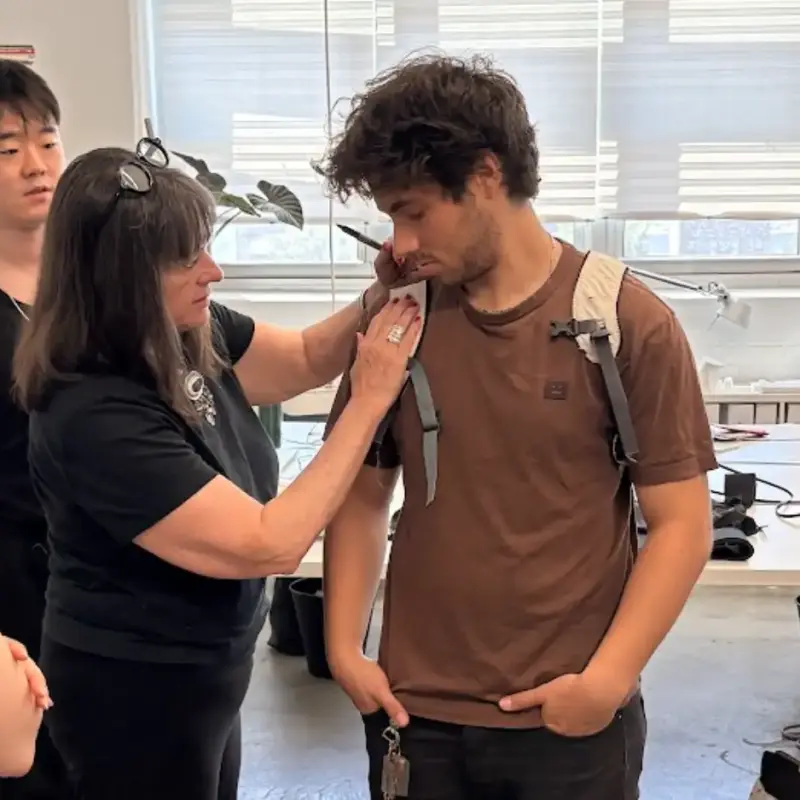
We spoke with Chamille Thayer, industrial design educator at Pratt Institute and seasoned design engineer with over a decade in corporate R&D at Estée Lauder. Chamille brings the seasoned perspective of an active practitioner and relentless advocate for manufacturability to the classroom.
Our conversation ranged from the delicate balance between physical needs and emotional wants to the hidden corporate politics behind industrial manufacturing. We talked about how digital tools and AI affect tactile intuition, why true empathy requires personal vulnerability, and what it really takes to navigate “industrial realities” without losing a product’s soul.
Q:
You’ve engineered products that meet physical needs, like mobility aids, as well as products for emotional wants, like beauty products. Does empathy for a “need” require a different instinct than empathy for a “want”?
A:
It’s a question of the magnitude of the imperative. Designing to satisfy an unmet, foundational need, like a walker that allows someone to ambulate without assistance, is where we start. Without that product, the person cannot walk without assistance. The need is met once the product exists.
When a landscape of products already satisfies that core need, design shifts toward “wants”: styling, single-handed folding, or extra storage. We’re obliged to encompass a broader set of user wants to distinguish a product in the marketplace.
The designer sits at the hub of the wheel, and the spokes of obligation reach out to manufacturing, marketing, regulatory agencies, the user, and the environment. All of those need to be satisfied and synthesized in the center by the designer. While there’s an opportunity for designers to add a piece of themselves, I tell my students that should be the last five percent of the solution. Design is like Thanksgiving dinner: you make sure every single guest is completely full and satisfied before you make a plate for yourself.
Q:
What is a memorable design “failure” that taught you a hard lesson about human behavior and empathy?
A:
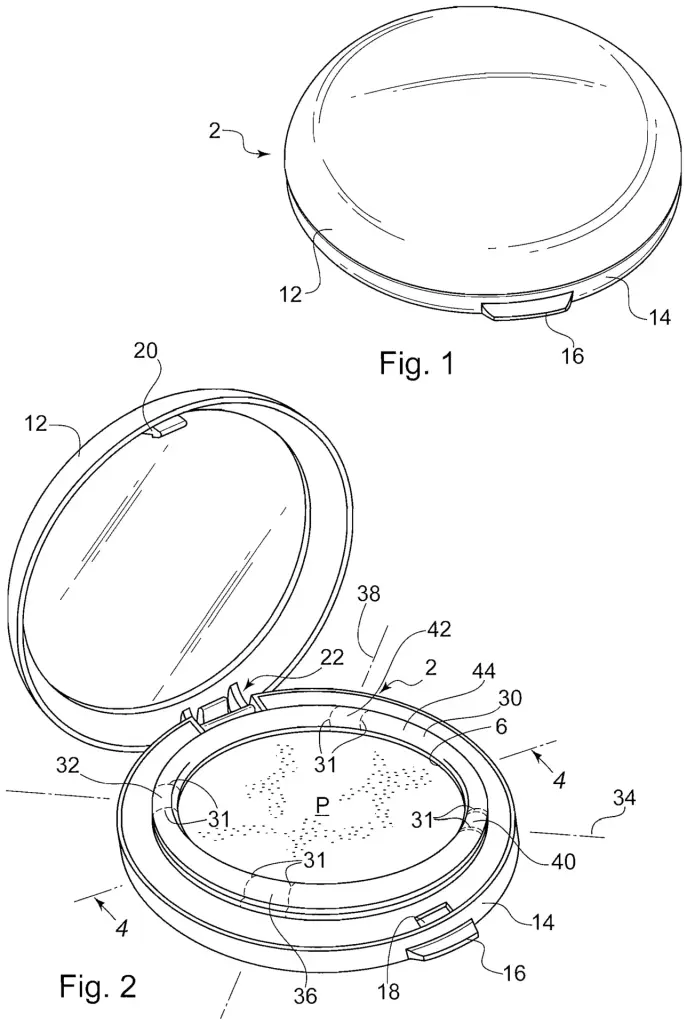
In research and development at Estée Lauder, over 90% of what we invented never made it to market. But one specific lipstick mechanism project stands out. We designed a propel-repel mechanism that reduced manufacturing costs from $0.27 to $0.17 per unit. When a company gives away 50 million units a year as gift-with-purchase, saving a dime per unit is a massive $5 million cost saving.
I worked for five years on that project, qualifying tooling, solving engineering hurdles, traveling back and forth to France, and testing filling lines. When we finally had a viable product, purchasing went back to our primary supplier, who had just invested $4 million automating their existing assembly line, and demanded an 8 cent price drop on their existing case, threatening to switch to our new design. The supplier folded and dropped their price.
Our product never launched. The company got the cost savings using our innovation as a bargaining chip, but our technology was shelved. The lesson? The magnitude of economic realities at an industrial scale is an unstoppable force. It’s not the polite suggestion of economics, it’s the law of economics. Products must be economically sustainable within the actual systems that build them.
Q:
Engineers often get a bad rap for focusing on specs over empathy. As a designer with strong mechanical savvy, how do you bridge that gap when working alongside them?
A:
An industrial designer must be a competent engineer conceptually. Engineers are constantly looking for the less expensive, more efficient solution. If you want a rectangular volume, an engineer might prefer 45 degrees of draft so it pops out of the mold instantly and stacks easily. But now you have a trapezoid, not a rectangle.
To bridge that gap, you need baseline credibility. Go to the manufacturer with a great technical drawing. A clean, accurate drawing gives you instantaneous credibility: it proves you know what you’re talking about and that your request is reasonable.
From there, pick your fights. You can’t fight across the entire landscape of a product. Understand your hierarchy of what actually matters. I once designed a mascara brush that used a threaded stainless steel spring to bypass a competitor’s patent. I arbitrarily set a microscopic tolerance without realizing how hard it was for manufacturing engineers to hold. Instead of telling me, they put workers on the line manually inspecting and turning every piece, which blew up our costs. You have to know what is worth fighting for and where you can yield so engineers trust you when it counts.
Q:
You’re known for being tough and exacting about manufacturability. Does a concept usually lose some of its freshness by the time it survives the engineering and manufacturing process?
A:
Absolutely. There is a dream of the product, and you have to understand what is at the heart of that dream. Students often struggle because they have three good ideas and are convinced their product should do all three, when really, those should be three separate products.
When you’re designing something and planning multiple innovations, you have to be clear: if you can only keep three, what are they? If you can only keep two? If you can only keep one, what is the single thing this product has to do? Constraints are real. Everyone has a dream, but if you can’t propose a realistic path to execution, you don’t actually have a design. That’s the difference between fiction and design.
Q:
In prosthetics and body-adjacent devices, what’s a mechanical decision that seems purely technical on paper but actually changes how someone feels about their own body?
A:
In the realm of seen objects, nothing is a purely mechanical choice. Psychology and identity are embedded in everything, especially when amending a human body.
Some people want a prosthetic arm that is completely indistinguishable from their natural arm; others want an aesthetic that has no visual relationship to a human limb at all. I personally believe there is far too much styling masquerading as design intended to disguise or hide the truth of what an object is.
Look at 1930s car engines: the carburetors were polished, the wire arrangements were minimalist and artful, and every functional element was beautifully composed. Today, engines are hidden under a molded piece of plastic that mimics a valve cover to disguise an engineering mess of wires and hoses underneath. Conversely, look at custom gaming PCs: people build liquid-cooled systems with transparent cases and backlighting, celebrating function as art. We should be celebrating the possibilities of beauty in functional mechanics rather than hiding them under shrouds.
Q:
How do you teach students to step outside their own body and habits when designing for someone whose needs or wants are completely different from their own?
A:
You can’t teach it in a vacuum. You have to get the student in direct contact with a real user, and they have to be willing to be wrong. Being wrong often is an absolute prerequisite for good design.
I had a student who wanted to design a prosthetic hand for a musician. He tracked down a professional drummer in California who had lost his hand in a fireworks accident. They collaborated all semester, measuring the residual limb remotely and refining the mechanism. At the end of the term, the drummer flew out to Pratt with his drum kit, tried on the custom prosthetic, and was able to execute drumming techniques he couldn’t perform with his commercial device.
Good designers find real users, talk to them directly, and stay open to having their assumptions shattered.
Q:
When a project is completely foreign to your own experience, how do you summon empathy for that user?
A:

Firsthand, un-curated observation is essential. The designer has to walk out of the office and observe the world directly.
If you want to understand the problems of subway stairs, go sit in the subway for an afternoon every day for a week. Watch someone try to navigate the stairs with a baby carriage, a laundry cart, and a musical instrument. Watch a street vendor set up their table and realize it takes them two hours to set up, two hours to tear down, and an hour of travel each way: that’s six hours of logistics before an eight-hour workday.
Once you observe that 14-hour day, you realize that streamlining their setup could radically improve their life. Ethnographic research, direct observation, and speculative narrative (constructing narrative stories about why someone needs an object) are the foundational skills of empathy.
Q:
If a designer is looking to become genuinely more empathetic in their practice, what are some personal habits or inner work they need to do?
A:
Real empathy starts by understanding your own feelings: your own joy, your own failures, and your own ego. You can’t ignore empathy in your personal life and then simply turn it on as a designer when you walk into the studio. That isn’t empathy; at best, it’s sympathy, which is just feeling bad for someone rather than sharing what they feel.
Design is an intensely mental exercise deeply attached to our own ego and fear of failure. If you are bound by your reputation or fear of looking foolish, you cannot design freely or connect authentically with others. The centeredness and self-awareness you cultivate as a person directly dictate your freedom and capacity as a designer.
Q:
You introduced 3D CAD and digital fabrication to Pratt in the late ’90s. Now that digital workflows move even faster, do young designers still understand materials and physics as intuitively as they used to?
A:

In the early days, digital tools freed us from an unhealthy emotional attachment to physical artifacts. If you spent six hours hand-sanding a mahogany model and a professor told you to make it 10% larger, you were crushed because you couldn’t just add wood back. Digital output allowed us to iterate without that emotional paralysis.
Today, 3D printing is so ubiquitous that we see the opposite problem: zero physical investment and a loss of unconscious, intuitive decision-making. When you bend a wire with pliers, your eye measures the curve, your hands feel the tension, and you make dozens of sophisticated aesthetic choices without calculating an exact 26.7° angle.
In CAD, a user spends 30% to 50% of their cognitive energy managing the logistics of the software rather than exploring the idea. When you hold a pencil, you’re 98% in the idea. Digital tools offer a faster, less time-consuming path, but often, it becomes a faster path to poorer ideas.
Q:
With AI tools becoming more prevalent in the studio, how will this affect the role of empathy in design and our ability to understand users?
A:
AI is a useful tool, but it has zero empathy: it has statistical probability.
When we encourage AI to lead, we do poorly. Asking AI what should exist or what people care about is a terrible plan. However, if you have designed six handle concepts and ask AI to analyze similar existing forms in the sports product market, that is a great use case.
Design is the experience of self in the world, and it’s the source of my greatest joy. Why delegate that to a bot? I need to catch my own mouse; I don’t want the cat’s mouse. Use technology as an accessory, but do the heavy lifting yourself. Go hunting for your own insights.
–
Check out the rest of our Spotlight series to hear more from leaders in the design industry. Sign up for our newsletter and follow us on Instagram and LinkedIn for design news, multi-media recommendations, and to learn more about product design and development!