Empathetic Engineering: Designing for Real People
As designers, we regularly design for people whose experiences may be very different from our own. We design for bodies with different proportions, abilities, sensitivities, and needs, and for people who may use a product in environments we have never experienced ourselves. Understanding those differences, and translating them into better design decisions, is where empathy becomes an essential part of design.
Empathy is more than imagining ourselves in someone else’s shoes. It is an active process of questioning our assumptions, observing how people actually behave, and using research, prototyping, and testing to understand experiences beyond our own. It can shape everything from the pressure of a strap or placement of a seam to the force required to operate a mechanism. Understanding someone’s experience is only the beginning. The real value of empathy comes from what designers do with that understanding. Ideally, these empathetic observations result in smart structural decisions; mechanical function and human interaction work in harmony to create a good user experience.
As AI becomes increasingly integrated into that process, the question of empathy becomes even more relevant. AI can help us generate ideas, synthesize information, and explore possibilities faster, but it cannot replace the human experience at the center of the design problem.
At Interwoven Design, designing around real human needs is fundamental to our work in wearable technology, soft goods, and products that interact directly with the body. In this Insight article, we explore what empathetic engineering really means, how it manifests in the smallest design decisions, and why understanding people remains one of the most important aspects of creating products that work in the real world.
From Empathy to Engineering
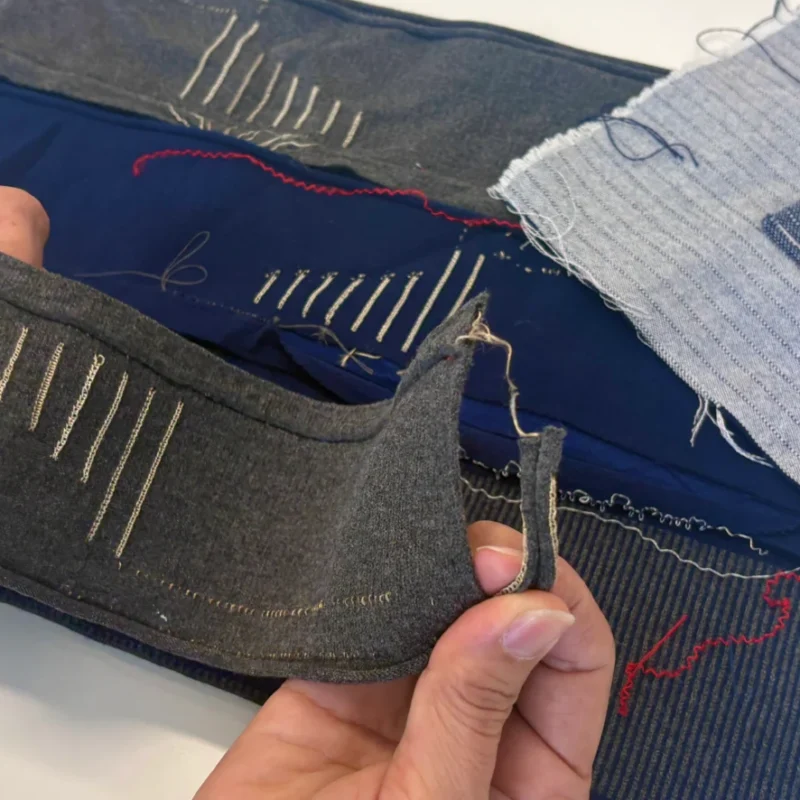
Empathy becomes meaningful when it impacts the design outcome. Consider a seemingly simple piece of user feedback: “This gets uncomfortable after an hour.” On its own, the statement describes an experience, not a design problem. The designer’s job is to investigate what is happening beneath it. Where does the discomfort occur? Is it caused by pressure, friction, heat, weight, or restricted movement? Does it happen only during certain activities? Does the product shift as the body moves? Is the problem caused by the material itself, or by the way that material is constructed? Each question moves the observation closer to an actionable specification. A pressure point might lead to a change in geometry or load distribution. Heat might suggest a more breathable material or a different ventilation strategy. Restricted movement could require rethinking the construction or introducing flexibility at a key joint. A few millimeters of additional clearance, a different seam placement, a softer edge, or a change in how components connect can fundamentally alter the experience of wearing or using a product.
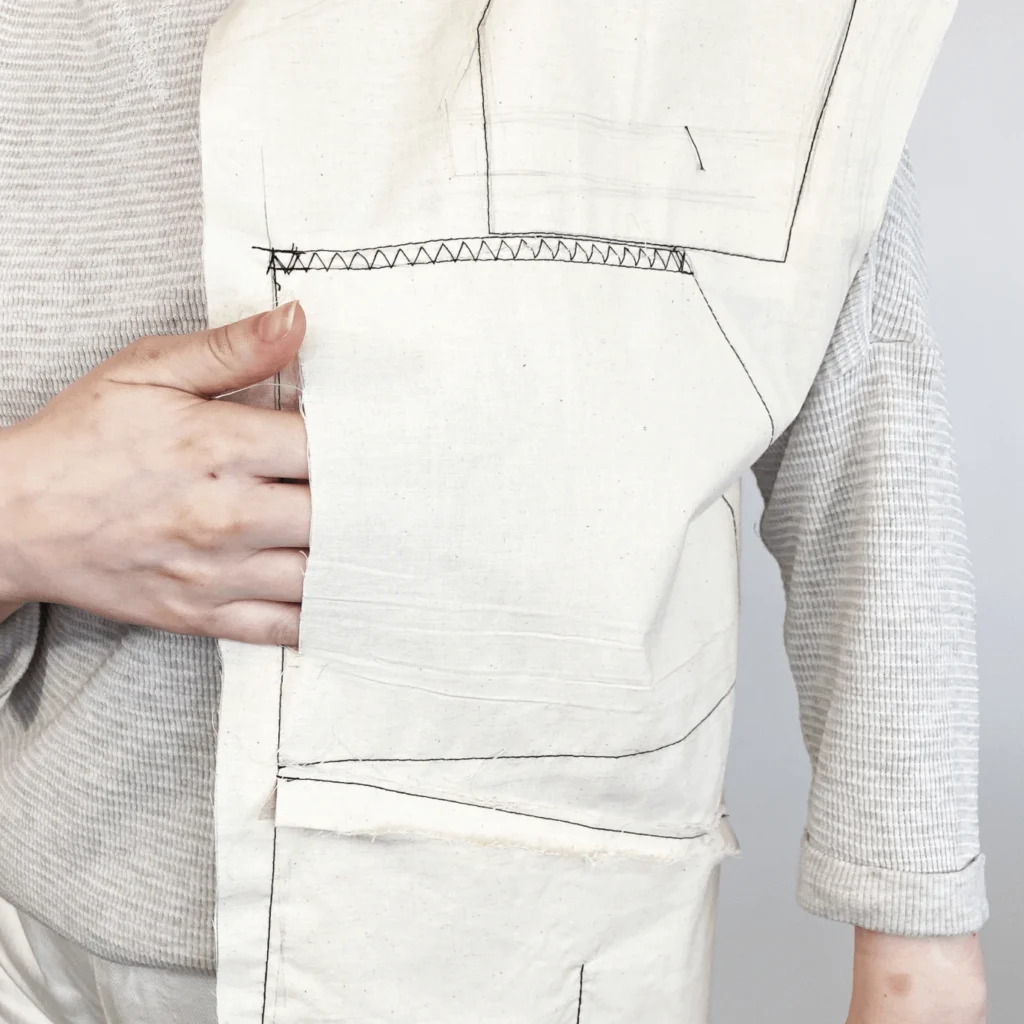
This is where empathy intersects with engineering. Ergonomics and human factors help us understand how a product interacts with the body and how people perceive and operate it. Materials determine not only durability and performance, but also how something feels against the skin, flexes with movement, or responds over time. Mechanisms dictate the force required to operate a product; manufacturing processes determine which solutions are possible at scale; and UX considers how all of these physical decisions come together in the user’s interaction with the product.
Empathy is not a separate step that happens before the “real” design work begins. It is an ongoing mindset that informs the specifications, constraints, materials, mechanisms, and decisions that make up that work. The designer listens to an experience, investigates the underlying need, and translates it into something that can be designed, prototyped, tested, and refined.
Designing Through Observation and Iteration
Understanding people requires more than asking what they want. People are often very good at describing an experience—“this feels awkward,” “I don’t know how to use this,” “I wish this were easier”—but they may not know exactly why something isn’t working. They may also adapt to a product’s shortcomings so completely that the behavior no longer feels worth mentioning, or know a topic so deeply that they wouldn’t think to mention details that seem foundational and obvious to them.
Observation can reveal what conversation misses. A user may repeatedly adjust a strap without realizing it, develop a workaround for a difficult closure, hesitate before performing an unfamiliar action, or move their body in an unexpected way to accommodate a product. These small behaviors can be more revealing than a direct answer because they show what people actually do rather than what they remember doing or believe they do.
For designers, this means paying attention to behavior as much as opinion. Contextual research, interviews, hands-on testing, and observation can help uncover the conditions surrounding an interaction: where a product is being used, what the person is doing at the same time, what they instinctively reach for, and where they encounter friction. We don’t assume that users can articulate the solution, but try to create a holistic picture of their experience so we can design for it.

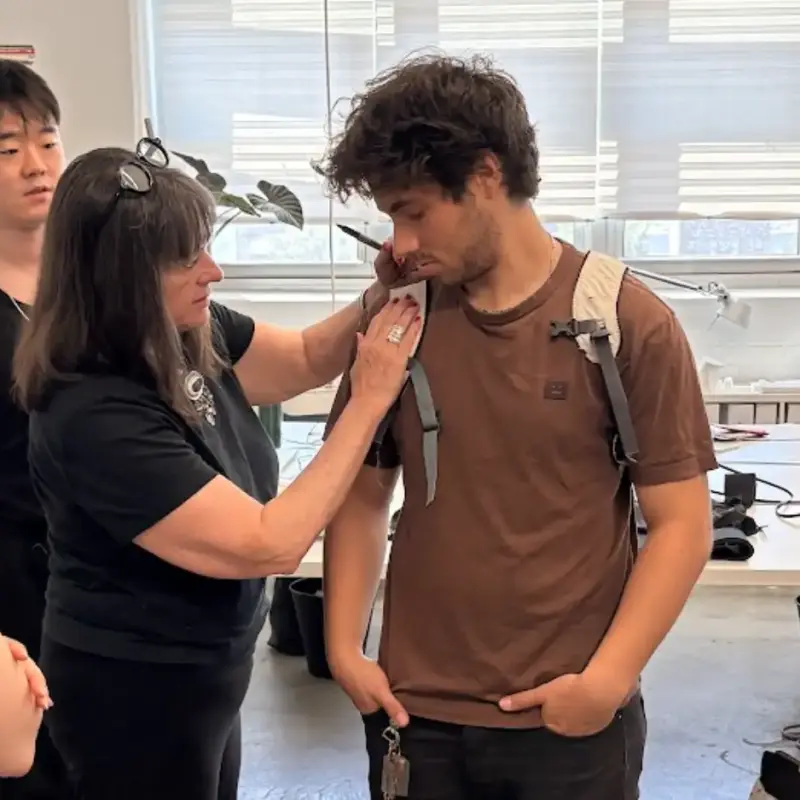
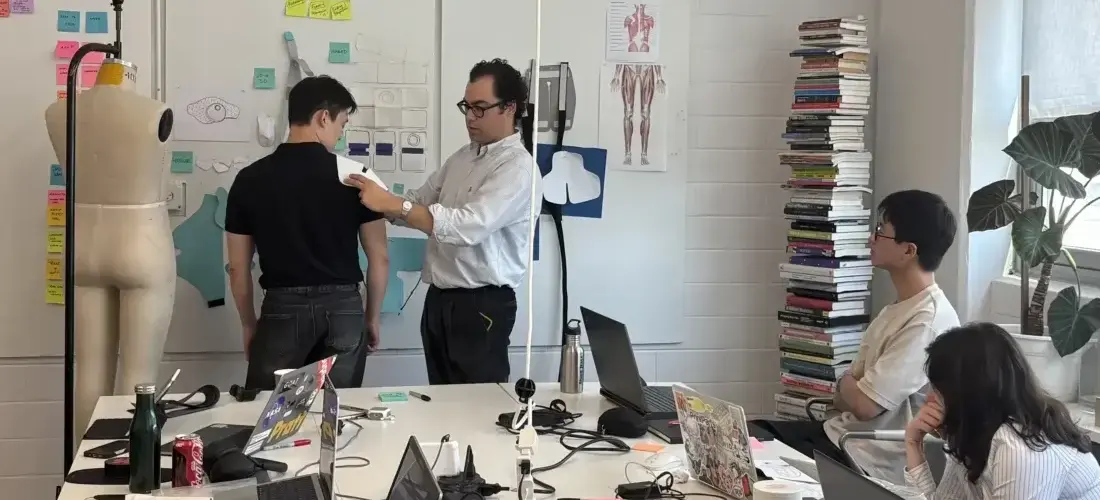
Physical interaction becomes particularly valuable when a product has to work with the body. A rendering can communicate form, but it cannot fully communicate pressure, weight, reach, grip, movement, or the way a material responds as someone wears it. A prototype can. Once someone physically interacts with a product, assumptions that seemed reasonable on screen can quickly become visible—and sometimes the design needs to change substantially as a result. Project Firefly, developed with Red Kap, offers a clear example of how observation can reshape a design problem. Rather than looking only at the garment itself, the Interwoven team studied how workers moved in the environments where Type O workwear is used, observing common movements, abrasion, soiling, comfort, and mobility. The team also visited industrial laundry facilities to understand how garments were actually cared for and maintained. These observations, combined with research into reflective materials and their performance, informed the development and testing of new garment concepts designed to improve mobility and comfort while increasing durability and extending the garment’s lifespan.
A designer’s first interpretation of a user’s needs will rarely be perfect. Instead of treating the first concept as an answer, prototyping creates a continuous loop: design, experience, observe, learn, refine. Each iteration provides another opportunity to compare what we expected to happen with what actually happened. We aren’t just asking, Did we get it right? We’re asking, What did we misunderstand? What surprised us? Where did the user’s behavior differ from our expectations? The body often tells us something the user can’t articulate.
Designing for Bodies That Aren’t Our Own
Designers inevitably bring their own bodies into the design process. We reach for a product, put it on, operate it, and make judgments based on what we see and feel. Our own experiences provide a useful starting point, but they can also become an invisible reference point for what we consider comfortable, intuitive, or easy to use. The people we design for rarely share exactly the same set of physical characteristics or abilities. Products may need to accommodate differences in size and proportion, age, mobility, strength, dexterity, and sensory ability. They may also need to account for pain, injury, or physical limitations that are not immediately visible.
This is particularly important when a product interacts directly with the body. A medical brace, adaptive garment, wearable device, or performance product cannot simply be designed around a static model of the human form. Bodies move. Dimensions change with posture and activity. Pressure that feels negligible while standing may become uncomfortable when sitting. A closure that seems effortless to one user may require significant strength or dexterity from someone else.
Soft goods make these challenges especially apparent. Unlike a rigid product, a garment or wearable system has to negotiate a constantly changing surface. Its success depends not only on its individual components, but on how those components behave together as the body moves through space. Ergonomic research, observation, physical testing, and working directly with users are strategies designers use to expose assumptions that are difficult to identify from a desk or CAD screen. A designer might assume a particular adjustment is intuitive until someone struggles to reach it, or believe a product feels secure until testing reveals that it shifts during a specific movement. The goal is not simply to collect feedback, but to uncover the physical realities that should shape the design itself.
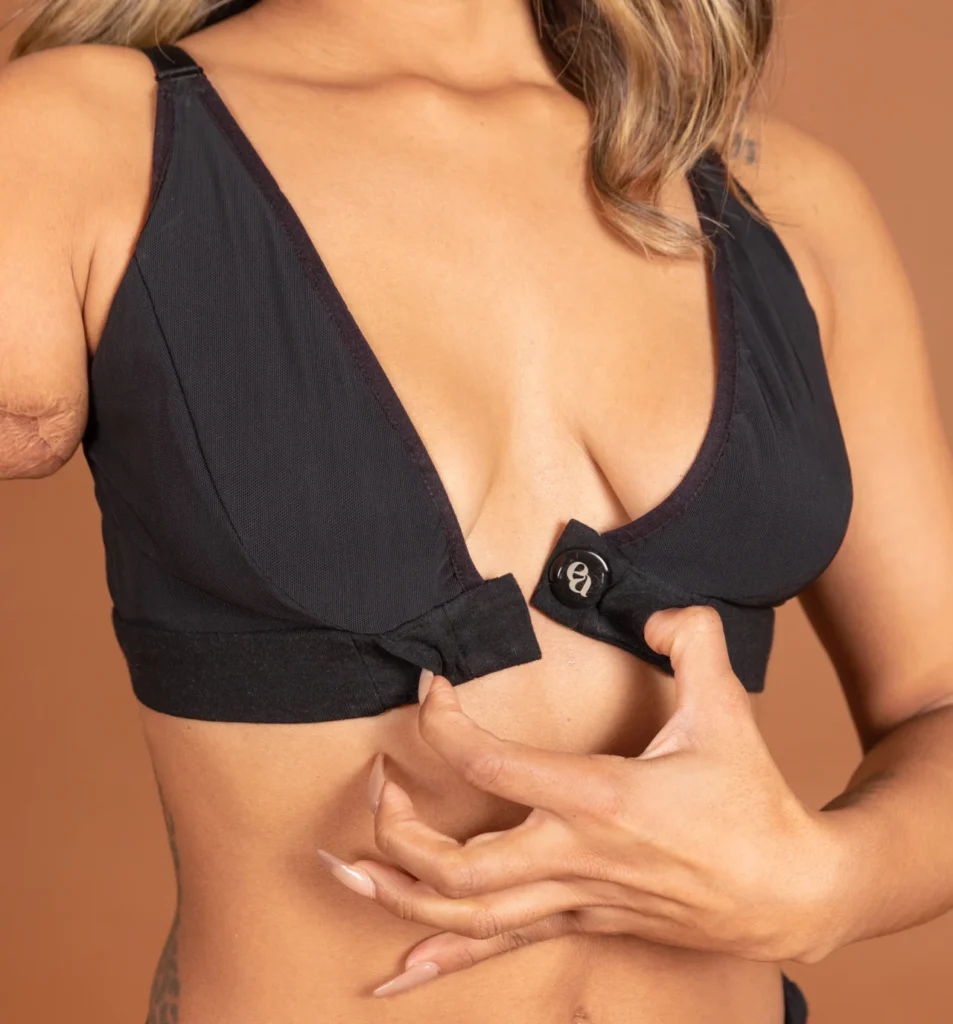
For us at Interwoven Design, this perspective is relevant across medical devices, adaptive apparel, wearable technology, and performance garments. These products have to perform within the complexity of real human bodies, accommodating movement, varying physical needs, and prolonged interaction rather than a single moment of use. Our lingerie design for Even Adaptive illustrates how designing for a specific physical need can lead to a more thoughtful product overall. Interwoven developed the lingerie around the needs of women who may need to dress using one hand, rethinking both the garment and its closure system rather than simply adapting an existing bra. Prototypes of different magnetic clasps were tested for engagement force, durability, comfort, and ease of single-hand operation, ultimately leading to the development of finger loops that make the fastening easier to manipulate. The garment itself was also redesigned around accessibility, with front-adjustable straps and construction that supports easier reach and use. The result was a product designed around a wider range of bodies and abilities without sacrificing comfort, aesthetics, or the experience of wearing beautiful lingerie.
Designing for difference does not mean creating a separate solution for every possible user. It means questioning the assumptions built into the original solution and designing enough flexibility, adjustability, and consideration into the product to serve a target range of people. Often, the result is simply a better product. Features developed to help someone with limited dexterity can make a product easier for anyone to operate. Greater adjustability can improve fit across a wider range of bodies. Reduced pressure or weight can make a wearable more comfortable for everyone over a longer period of time. Designing for difference often produces better products for everyone.
When Empathy Meets AI
As AI becomes more integrated into the design process, it offers new ways to work with information. Designers can use it to generate concepts, synthesize research, explore variations, create visualizations, and identify patterns across large datasets. Used well, these tools can help designers process more information and explore more possibilities in less time. That said, there is an important distinction between having more information about people and understanding people. AI can summarize what users have said about a product, but it cannot experience the frustration of struggling with a clasp, and it can’t observe the physical awkwardness of moving in a garment that does not fit as intended. Those experiences still have to come from people.
It’s also a double edged sword. The same technology that makes research more efficient could also make it easier to simulate those interactions instead: generating personas, synthetic user quotes, or generalized assumptions about what a particular demographic wants. The result can look like empathy without being grounded in anyone’s actual experience. The distinction matters because empathy is not simply the ability to produce a convincing description of another person’s perspective. It requires designers to remain curious about what they might be missing. AI can help surface patterns, identify gaps in research, suggest questions, and accelerate the exploration of solutions, but designers still have to decide which questions matter, whose voices are missing, and whether a proposed solution actually works for the person who will use it. It cannot replace the human experience that empathy depends upon.
Empathy as Design Practice
Design is an act of translation: taking human needs, behaviors, limitations, and aspirations and turning them into physical and experiential realities. Empathy helps us make that translation accurately. It does not sit apart from engineering, ergonomics, aesthetics, or manufacturing, but is embedded in the decisions that connect them; the form of a product, the material against the skin, the fit across different bodies, the force required to operate a mechanism, the accessibility of an interaction, or the way something can be manufactured and used over time.
AI will undoubtedly change how designers make those decisions. As our tools become increasingly capable of generating concepts, processing information, and exploring solutions, however, understanding who we are designing for becomes even more important. When the number of possible solutions expands, the ability to identify the right problem—and understand the human experience behind it—becomes a critical part of design judgment.
This is why human-centered research, engineering, soft goods expertise, prototyping, and iterative testing are deeply interconnected here at Interwoven Design. The goal is not simply to create products that function, but products that function for real people, in real contexts, over time. We embed empathy into everything we make, resulting in a product that fits better, moves more naturally, requires less effort, or simply makes someone’s day a little easier.
Interwoven Design is a design consultancy that is positioned at the intersection of soft goods and wearable technology, creating products that function with the body and offer comfort as well as the superb performance that arises through the innovative incorporation of rigid, often electronic and responsive elements. Sign up for our newsletter and follow us on Instagram and LinkedIn for design news, multi-media recommendations, and to learn more about product design and development!