A Q&A with Jackie Lai, Designing Wearable Technology for the Real World
Spotlight articles shine a light on designers, engineers, researchers, and creative thinkers we admire and the ideas shaping design today.
Designing technology to improve human performance is one thing. Designing technology that people can comfortably wear, intuitively operate, and depend on is another. When sophisticated electronics become part of something worn on the body, the challenge extends well beyond technical performance.
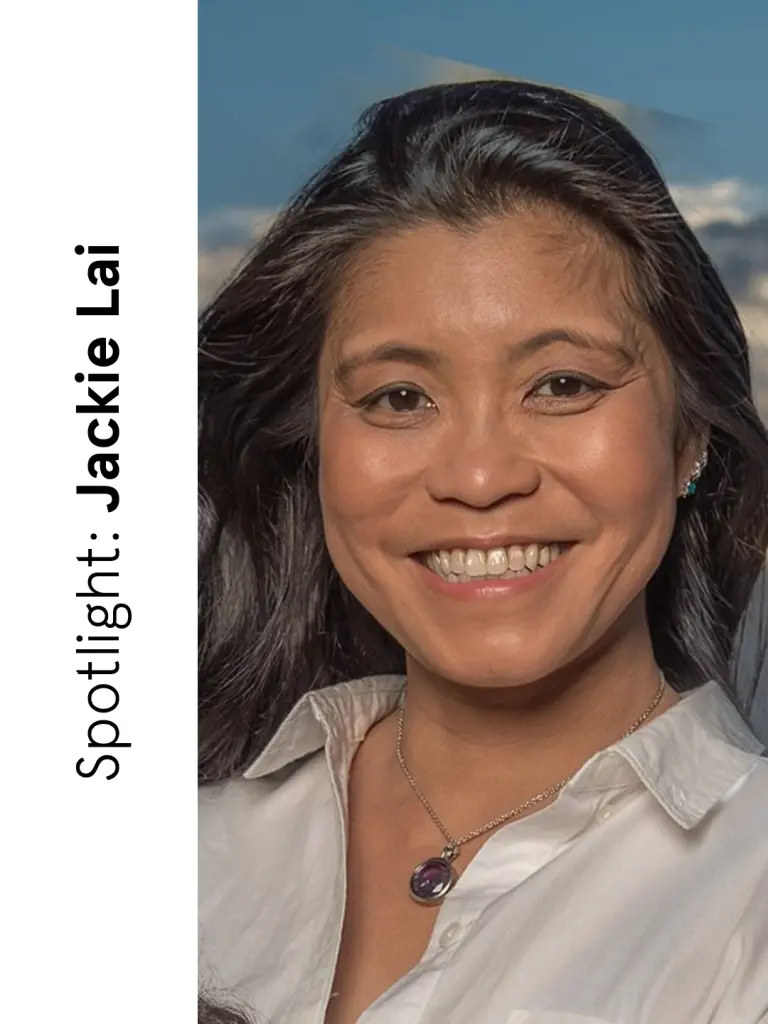
Jackie Lai, engineering and product development leader at Knightscope, specializing in robotics, wearable technology, and human-centered design.
Success depends on understanding the people who will use the product, how they work, and what happens when real-world conditions challenge even the most carefully considered design assumptions.
This month, our Spotlight series explores the importance of user testing in product development through a conversation with Jackie Lai of Knightscope, Inc., a company developing integrated security solutions that bring together autonomous robots, artificial intelligence, and human security personnel.
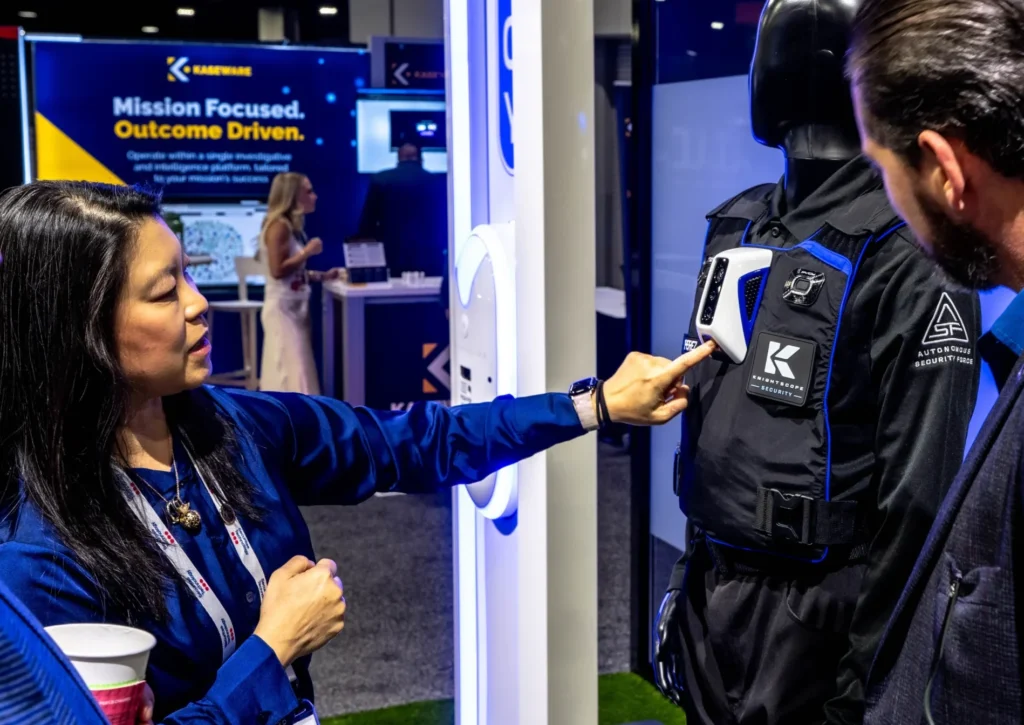
Jackie’s career has taken her from automotive engineering and consumer product development to entrepreneurship and robotics. Throughout these experiences, she has maintained a consistent philosophy: technology should serve a meaningful human purpose. At Knightscope, that philosophy guides her work on the H1 Device Augmented Security Agent, a wearable system designed to integrate cameras, sensors, and communication technologies into equipment worn by security personnel.
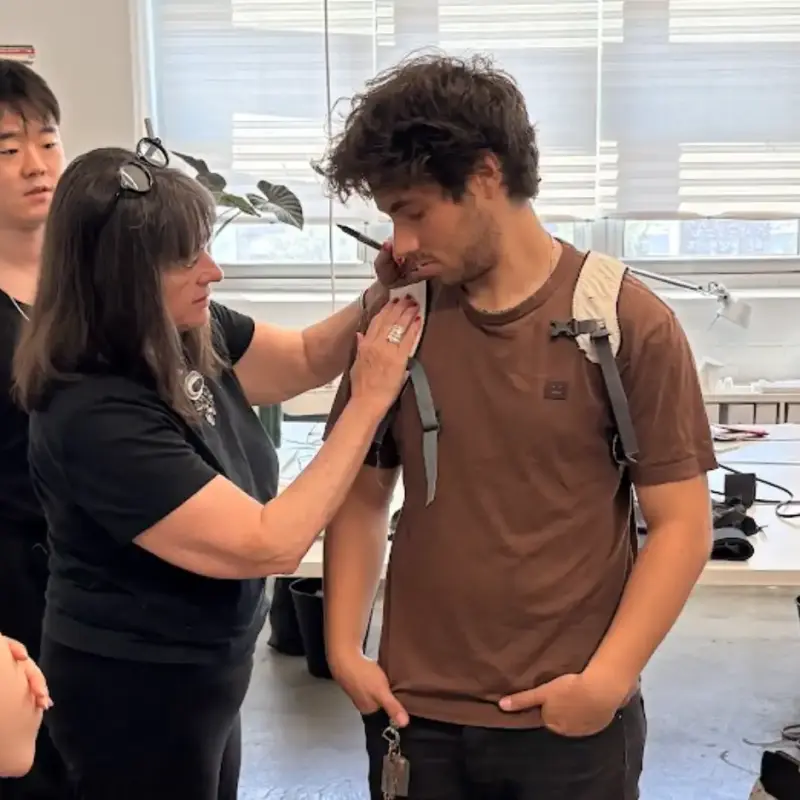
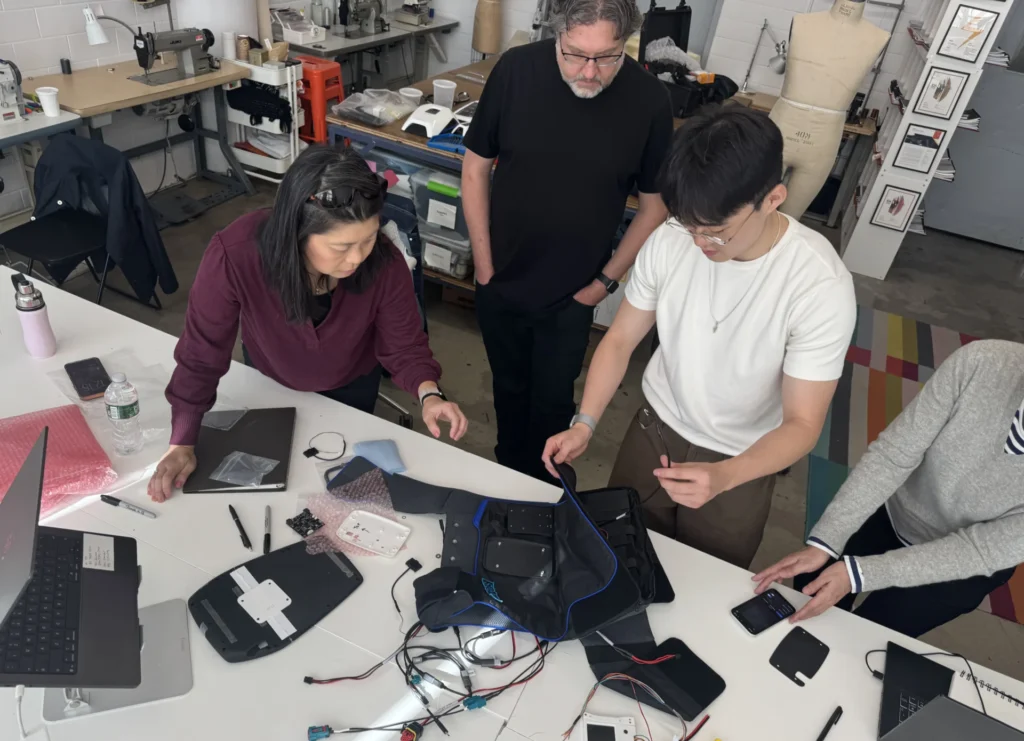
Jackie and the H1 Team at Knightscope and the Interwoven Design team have been collaborating on the development of the H1 Device wearable vest, navigating the complex relationship between technical requirements, human factors, safety, and usability. What makes this collaboration particularly interesting is the opportunity to work directly with Knightscope’s own security agents throughout the development process, bringing their firsthand experience into design decisions as they evolve.
We sat down with Jackie to discuss what happens when users challenge engineering assumptions, why familiar solutions sometimes outperform innovative ones, and how collaboration across disciplines leads to more thoughtful, human-centered products.
Q:
You’ve had an interesting career spanning automotive engineering, consumer products, entrepreneurship, and robotics. Tell us a little about your background.
A:
I started with a general engineering degree from Harvey Mudd College. I went to work at General Motors Truck Group, mostly because I liked cars. But I realized I couldn’t handle the winters in Michigan. I lasted one winter.
I came out to the Bay Area for graduate school in structural engineering at Stanford, but after graduation, I realized I preferred cars to buildings. I ended up at Volkswagen of America’s Electronics Research Lab, which was a satellite lab bringing Silicon Valley technologies into vehicles.
Eventually, I moved to D2M, Inc., a product design and engineering firm, where I worked on everything from medical devices to toilets and plumbing. That’s where I experienced not just design but also manufacturing. I went to China, visited factories, and helped set up production lines. I got to experience all the different parts of developing a product, from design through manufacturing.
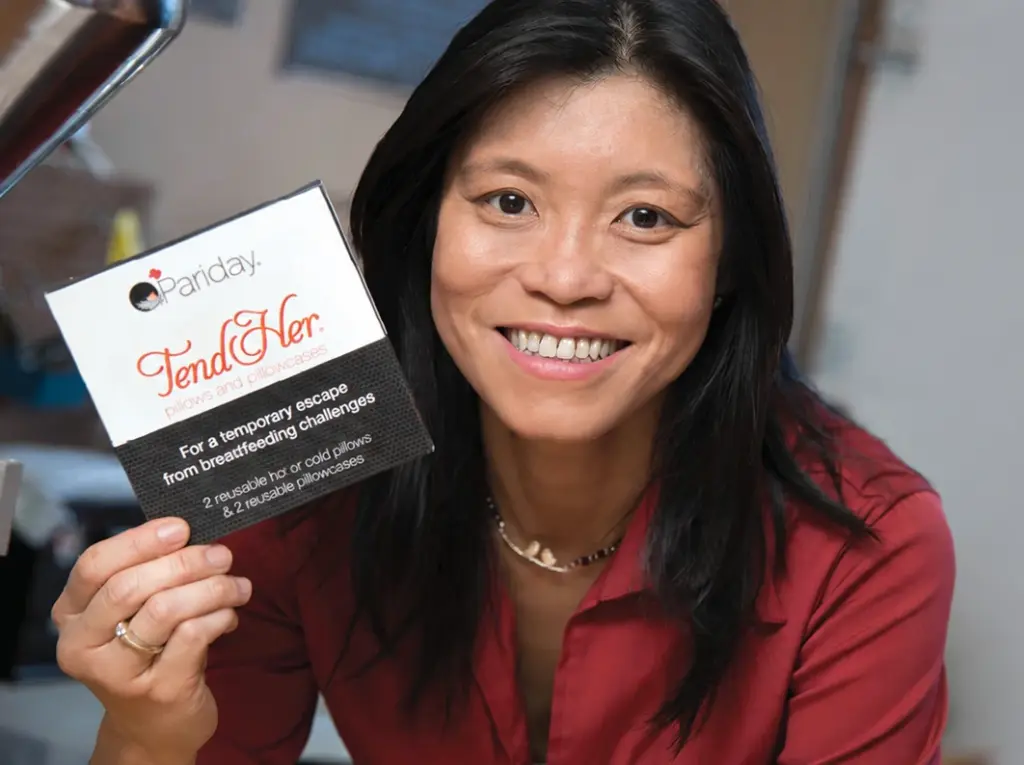
Then I had a baby, and a colleague and I started talking about why breastfeeding was so painful. We thought, “there’s got to be a better way to soothe this pain.” From that conversation, our company, Pariday, LLC, was born.
We started developing products for pain relief for new mothers. I did everything from need-finding to conceptualizing and designing the products, manufacturing, branding and packaging.
When I became pregnant with my second child, we expanded beyond breastfeeding pain to childbirth as well. Pariday is still the company I hold closest to my heart. It’s also where my soft goods experience came from.
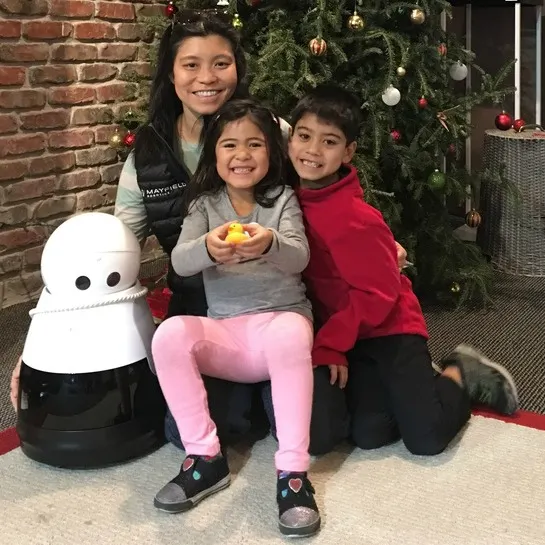
Then robotics came knocking, and I couldn’t resist the technology. Knightscope is now my third robotics company. Before this, I worked on a robot named Kuri that roamed the home capturing family moments, and then at Bear Robotics, developing robots that bring food from the kitchen to the dining table in restaurants.
Through all these experiences, the thing I’ve always had as my North Star is that I need to work on something that helps people.
Most of the products I’ve worked on, if they don’t help people, they’re not doing their job. Why would we make products that aren’t useful? That’s where I lead from, a little bit from the heart, making sure that what we do helps people.
Q:
Engineers focus on specifications and performance, but users don’t always behave as expected. How has working with users challenged your assumptions?
A:
Engineers always want to design and engineer under perfect conditions, right?
One story I tell my team goes back to when I was at D2M. We were designing a steam inhaler for a client as a consumer product. The engineers designed it the way they thought it would be used. It sits on the table, someone breathes through it, and then they put it back.
The moment the client came into the meeting, he pushed it over. It fell, and water spilled everywhere.
They hadn’t thought about that because they wanted it to stay upright. But the client was correct. Someone is going to push it over.
I think working with users is especially important for the H1 Device because we’re designing for an industry and a field that we ourselves aren’t in. We’re not walking patrols all day. We’re not security agents. Having those people working directly with us has been extremely useful.
Q:
One of the interesting aspects of developing the Knightscope security vest is having direct, ongoing access to the security agents who will wear it. How has this influenced the design process, and what have you learned that you might not have discovered through conventional user testing?
A:
It’s made it so much easier.
With Pariday, I was my own customer. I was nursing and I needed something to help soothe the pain. Then when I was pregnant again, I needed something to help myself somewhere else. I knew what I, and as a result, what other women needed, because I was the user.
With the H1 Device, I’m not necessarily the user, but I have people I can ask, “Hey, does this work for you? Is this useful?” I don’t have to go somewhere else to ask those questions.
The Knightscope security agents are the ones with the knowledge of their field. I’ve learned what an agent does on a day-to-day basis, what they have to withstand, and what’s important to them.
As a result, I have to balance the human needs with the company’s desires and what our clients want on the technology side. I have to balance comfort and human factors against technical requirements, like whether the sensors are located properly, or if it’s even needed in the first place.
One of the things I learned came from a conversation with the agents. I asked them, “I don’t mean to diminish your work, but your job on a day-to-day basis could seem kind of boring, right?”
And they said, “The boring days are the good days.”
Which is true, because it means they don’t have incidents. An exciting day is actually a really bad day because somebody is in trouble.
That’s something I wouldn’t have known because I’m not in their shoes. Being close enough to ask those questions has been really valuable.
Now our device has to withstand the really bad days but be comfortable enough to be worn on the good days.
That’s a pretty extreme range of requirements.
Q:
There’s often a difference between what users say they want and what they actually need?
A:
I think you experienced this with us during the development between the Alpha and Beta prototypes.
We had to change how we don and doff the device, because what they said they needed didn’t translate to what we designed for them. Eventually, they ended up picking a familiar donning and doffing approach so that we could accommodate a large percentage of the infinite body sizes that agents come in.
Q:
How important is familiarity and muscle memory when designing equipment like tactical vests that must be operated intuitively, particularly in high-stress situations?
A:
I think it’s very important. In fact, that’s what they told us.
They would rather have something they already know and remember how to use. Even if they haven’t worn a vest in the past, it’s a system that people have seen enough times to understand how it works.
I think muscle memory won out in terms of usability.
Q:
The H1 Device has to accommodate sensors and other technology while remaining comfortable and practical for someone wearing it through a long shift. When technical performance and human comfort come into conflict, how do you prioritize them?
A:
For this particular project, my North Star is human safety.
Those conflicts are everywhere. A longer battery life means more weight for the human to carry. But I have to prioritize human safety, which means it can’t be too heavy.
During the need-finding phase, we surveyed as many agents as possible. We asked what they would be happy carrying every day, what they would be okay carrying, and what would be a stretch.
We got numbers that swung in a 4 lb range which allowed me to pick a mid point as my target threshold.
The way we’ve distributed the weight makes a difference, too. Our product doesn’t feel heavy because of the way we have distributed the weight.
Then there’s the color – In order to keep the agents inconspicuous, we need a darker color. But that makes the entire system hotter for the electronics and the wearer.
I’m working with the mechanical team and even the electrical team to figure out how we can mitigate the heat while still allowing for that dark color. The agents know they don’t want a white shell walking around at night.
We also have to accommodate temperatures that span all seasons across the US.
I don’t know how we’re going to do all of that yet. That’s what we’re figuring out together.
We can’t do everything, we can’t accommodate every size and every climate perfectly. But we do our best to target 70 to 80 percent of the situations.
There are always going to be trade-offs.
Q:
What makes collaboration across disciplines successful, and where does it create opportunities for innovation?
A:
I think for collaboration to work, it’s always communication, transparency, and respect for each other. There’s no other way around it.
For collaboration to be successful, we need all three.
When we can take away egos and acknowledge that everyone brings something to the table, then step back and recognize that everyone has the same goal in mind, we can design the best product.
Resources are always going to be limited because nobody is going to tell you that you have infinite money and infinite time. It’s always going to be less than what you want.
But if we can take away the egos and know where we’re trying to row our boat, then we can succeed together.
I think my approach to bringing people into the process early comes from my D2M days. I went from design engineering into manufacturing engineering, and they made me the Manufacturing Liaison specifically to prevent engineers from finishing a design, handing it over to manufacturing, and saying, “Now you do it.”
That experience of bringing manufacturing into the design process early influences how I work today.
Q:
User testing can challenge our original design assumptions. What’s the most important lesson you’ve learned from testing the H1 Device with security agents?
A:
I’ve always known that everyone is different. Designing the H1 has really hit home that every body is different too.
I experienced this when I designed our products for Pariday. I’d like to think I’m rather “averaged sized” – for an Asian woman, at least.
I learned back then that every person and every body experiences things differently. Gratefully, back then, I was limited to the child-bearing portion of the human population, and a smaller age range.
That was still a lot of types of people to accommodate for.
Now with H1, agents come in all types of genders, sizes, heights and ages, which I am trying to accommodate for. A 20 year old will be able to use a product differently than a 70 year old.
The best we can do is be empathetic about the fact that it’s other people we’re making a product for and accommodate their personal needs as best we can.
It all comes down to the fact of usability – What’s the point of designing anything if people aren’t going to use it?

Q:
As autonomous robots and security personnel become more integrated, how do you decide what technology should handle and what requires human judgment?
A:
I don’t know yet.
One of the things that came up early was the idea that we needed to augment our agents with as many sensors as possible.
We did studies looking at different sensor configurations, including the number of sensors and where we placed them.
When we showed them to the agents, they said, “I’ve got my head, too. I have my own eyes, and I can turn my body.”
I knew that, but I also needed to explain to leadership why we didn’t necessarily need all the sensors.
We had data showing that too many sensors would be overkill and that fewer were sufficient. We also had agents telling us the same thing.
They were saying, “It takes me half a second to turn my body when I hear a sound.”
So we had our own instincts, we had the technical data, and we had the agents confirming those decisions for us.
That’s really important because more technology isn’t necessarily better. You have to understand what the person is already capable of doing.
Q:
As cameras, sensors, and AI become integrated into security equipment, how do you ensure the technology empowers users without interfering with their work or changing their behavior?
A:
You’re right. When we’re on camera or recording what’s around us, we behave differently. And I’d like to think that’s a good thing. I can only hope it’s a good thing.
I think it comes down to how people see the technology and whether they understand how it helps them do their job.
If I were a security agent and my company told me, “Wearing this vest also keeps you safe,” I would want to wear it.
Why? Because now somebody can tell me if someone is coming up behind me.
I think the people who see the technology as something that’s helpful and empowering will enjoy using it.
There’s also something unique about the H1 Device because we actually have two different end users. The ones who wear it don’t see the videos, and the ones who see the videos don’t wear it.
That’s a really important distinction.
The security agents need something that’s safe, comfortable, and practical to wear. But the people in Mission Intelligence who review the video feeds also need information that’s consistent and useful.
With a conventional body camera, someone can put it almost anywhere they want. As a result, you get all kinds of different camera feeds. You don’t know exactly what you’re going to be recording.
With an integrated vest, the sensor placement is standardized. There are still differences in the user’s height and body shape, but the information coming back is much more consistent.
We actually test the video output with the Mission Intelligence team because they’re also end users of the system.
So we have to design for both groups: the people wearing the technology and the people using the information it produces.