Beyond Devices: The Future of Smart Textiles

Beyond Devices: The Future of Smart Textiles

For years, wearable technology has been defined by devices; watches, bands, clips, and sensors attached to the body. These products brought computing closer to us, but they remained distinct objects, layered onto daily life rather than fully integrated within it. Today, that boundary is beginning to dissolve. Advances in miniaturization, materials, and fabrication are enabling a new generation of wearable technology that is built directly into what we wear. Electronics are becoming so small, flexible, and adaptable that they can be embedded into fibers, yarns, and fabrics, transforming textiles into intelligent systems. In this emerging paradigm, clothing transforms from a passive to an active layer; capable of sensing, communicating, and supporting the body in real time.

At Interwoven Design, we operate at the intersection of soft goods, wearable technology, and human-centered design. Our team brings together expertise in textiles, engineering, and product development to translate complex technologies into wearable solutions that feel intuitive and natural. In this Insight article, we explore how smart textiles are redefining wearable technology, and the design challenges that come with embedding intelligence into fabric. We also examine IARPA’s SMART ePANTS program as a case study in how next-generation textile systems are being developed and what they signal for the future of wearable design across industries.

From Wearables to Woven Systems

Early wearable technologies succeeded by attaching intelligence to the body. Devices were clipped, strapped, or adhered, creating a clear distinction between the user and the technology. While effective, this approach introduced friction, both physical and cognitive. Devices had to be managed, charged, positioned, and maintained.

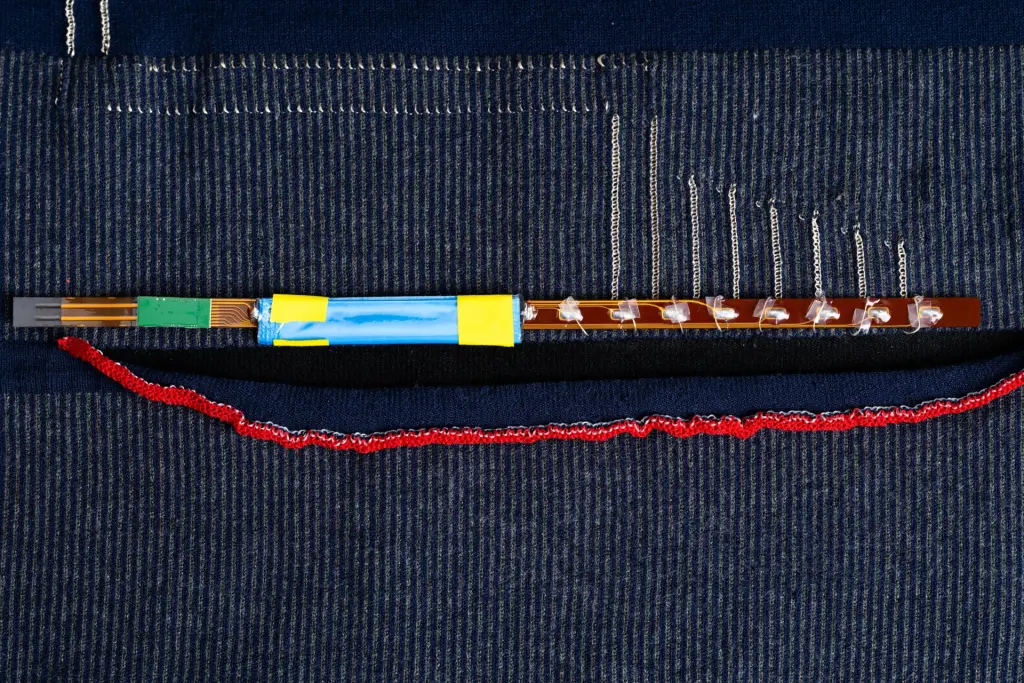
A flexible circuit with sensor pad, PCB, power module, and surface-mount components integrated into a knit textile alongside conductive threads and stitching, illustrating smart textile construction
Sensors, circuitry, and power integrated directly into the fabric. The electronics are not attached to the textile; they are part of it.

Smart textiles represent a fundamental shift away from this model. Instead of discrete objects, intelligence becomes distributed across the garment itself. Sensors, conductive pathways, and responsive elements are integrated into the fabric, allowing the entire system to function as a cohesive whole. The garment is no longer a carrier of technology; it is the technology.

This shift enables interaction that is continuous and embedded in daily life. Rather than engaging with a device, users inhabit a system. Clothing can sense movement, monitor physiological signals, respond to environmental changes, and communicate data without requiring direct input. At the core of this transformation is the rapid miniaturization of electronic components. Sensors, conductors, power sources, and processing units are shrinking to the point where they can be incorporated into fibers and yarns without compromising flexibility or comfort. Conductive threads can function as wiring, while micro-scale sensors can be embedded directly into the structure of a textile.

This evolution changes how designers think about materials. Electronics shift from separate components to be housed within a product to intrinsic properties of the material itself. A fabric can conduct, sense, heat, or transmit information, not because something has been added to it, but because it has been engineered to do so at a fundamental level. As a result, the role of design expands. Decisions about weave structure, fiber composition, and material layering become as critical as traditional considerations like form and enclosure. Designing a smart textile is not just about integrating technology, it is about orchestrating performance at the level of the material system.

The Challenges of Translation

For designers, the central challenge of smart textiles is not simply technical integration, it is experiential translation. Electronics and textiles are fundamentally different systems, governed by opposing constraints. One is rigid, precise, and sensitive; the other is soft, adaptive, and expected to endure constant movement, friction, and environmental exposure. Bridging these worlds requires more than embedding components into fabric; it demands rethinking how products are conceived from the ground up. Traditional product design often treats materials as a means of housing or protecting internal components. In smart textiles, the material is the system. Decisions about fiber composition, knit structure, layering, and seam construction directly impact not only comfort and durability, but also electrical performance. Stretch, for example, is no longer just a fit consideration, it affects conductivity, signal stability, and sensor accuracy. Similarly, the placement of seams or zones of tension can influence how reliably a system performs over time.

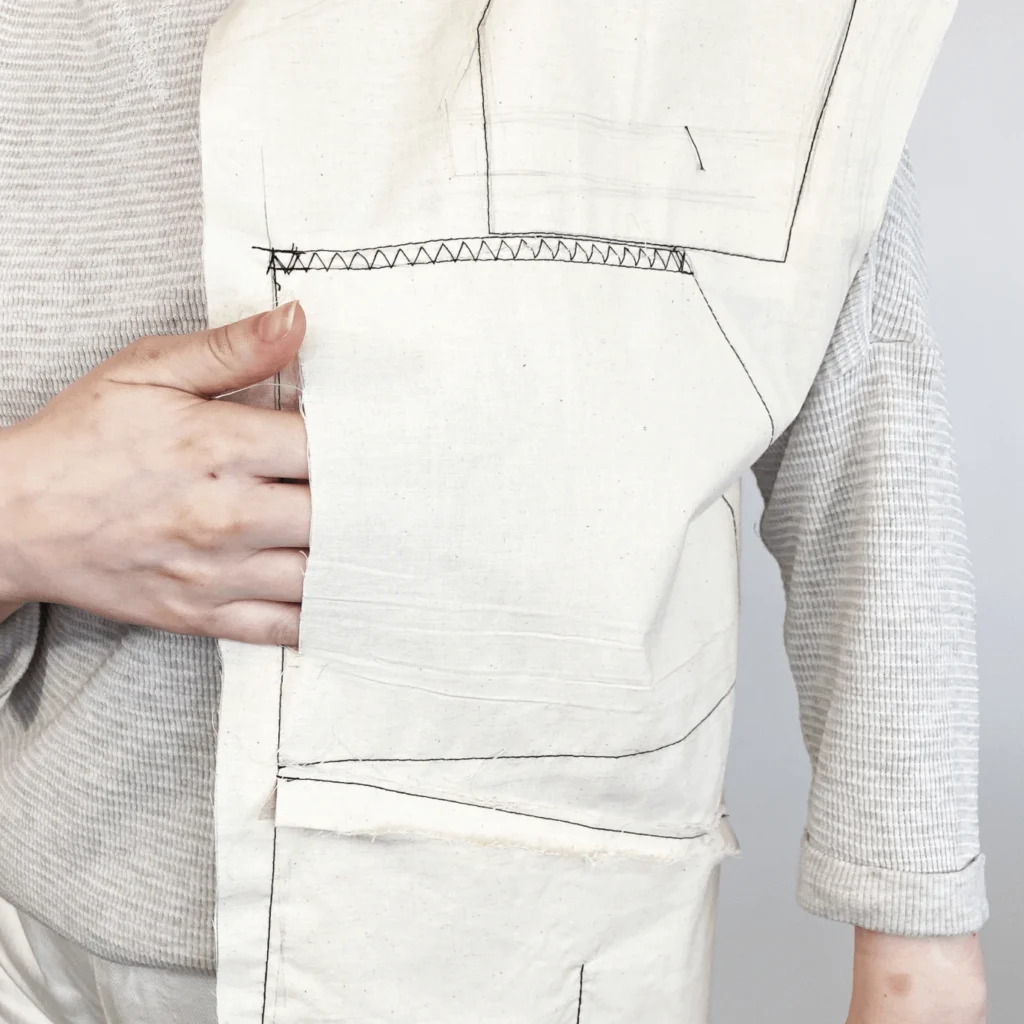
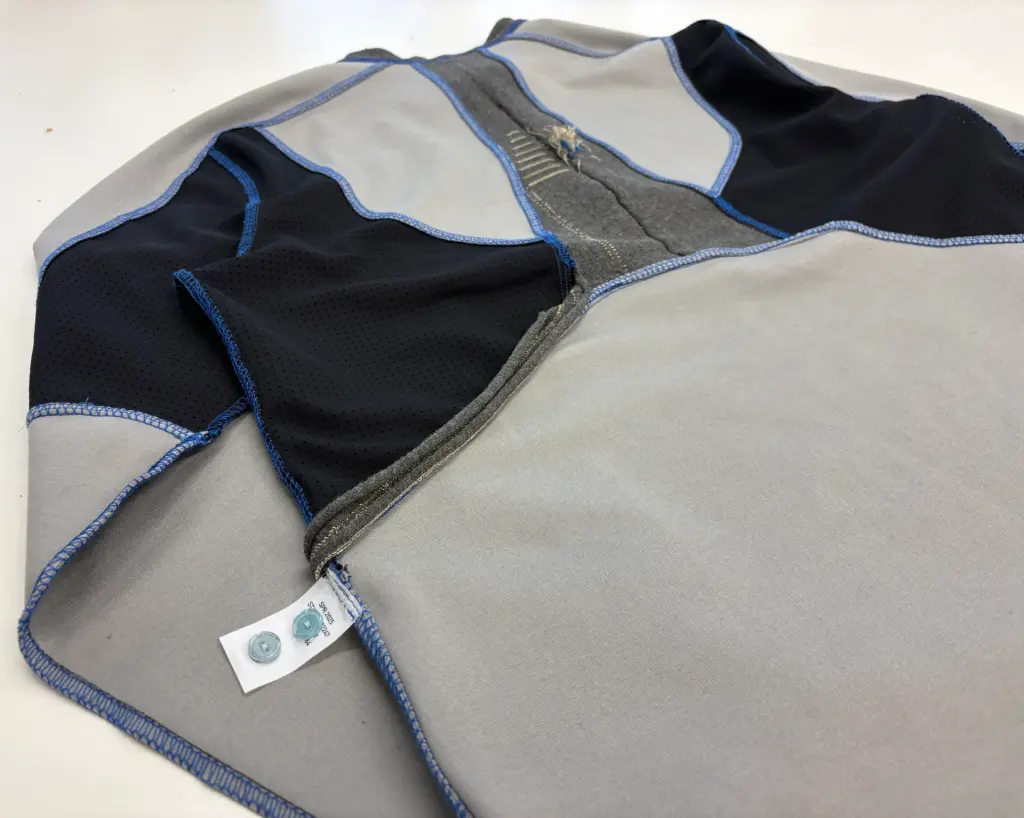
Inside view of an Interwoven concept garment for SMART ePANTS. Conductive channels follow the seams, making construction decisions inseparable from electrical performance.

Designing at this level introduces a new set of constraints that must be balanced simultaneously. A garment must stretch, but not in ways that compromise embedded circuits. It must be breathable, while still protecting sensitive elements from moisture. It must withstand washing, abrasion, and repeated wear cycles without degrading performance. Each of these requirements influences the others, creating a tightly interdependent system where small decisions can have cascading effects.

Durability and lifecycle are also notable challenges. Unlike traditional electronics, which are often treated as discrete, replaceable objects, smart textiles are expected to behave like clothing: washed frequently, worn in varied conditions, and maintained over time. Designers must consider how these products age, how components are protected or exposed, and what failure looks like. Does the garment continue to function if one element degrades? Can it be repaired, or is it disposable? These questions push design beyond form and function into systems thinking.

Equally important is the user experience. Smart textiles must feel indistinguishable from traditional garments, even as they perform complex functions. This requires careful attention to weight, drape, texture, and fit. Hard points, bulk, or inconsistencies in material can quickly break the illusion, reminding the user that they are wearing a device rather than clothing. The goal is to achieve a level of integration where the technology disappears; where the garment behaves exactly as expected while quietly delivering enhanced capability. Designers must also consider how to communicate functionality through material, form, and experience. Feedback may come through changes in temperature, pressure, or texture rather than visual interfaces. The product must feel reliable and intuitive, even when its most advanced features are hidden from view.

Designing smart textiles is an exercise in reconciliation. It requires aligning the precision of electronics with the fluidity of textiles, the demands of performance with the expectations of comfort, and the complexity of systems with the simplicity of everyday use. 

Case Study: SMART ePANTS

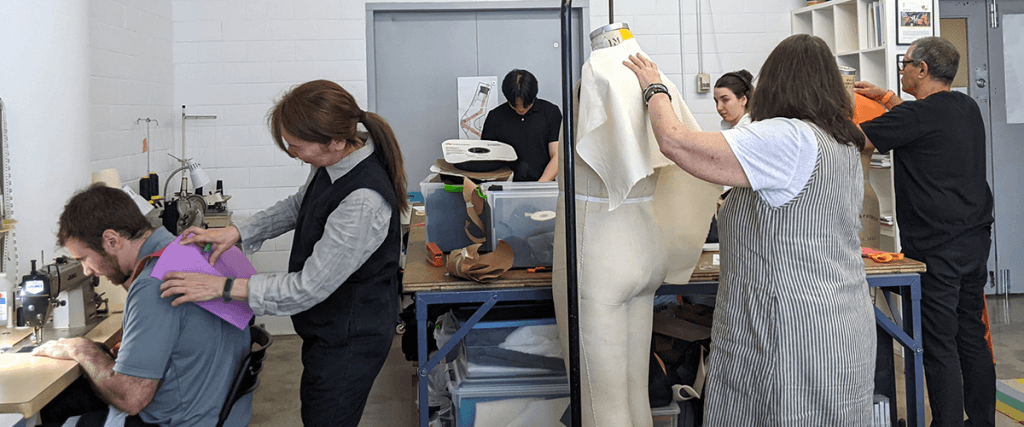
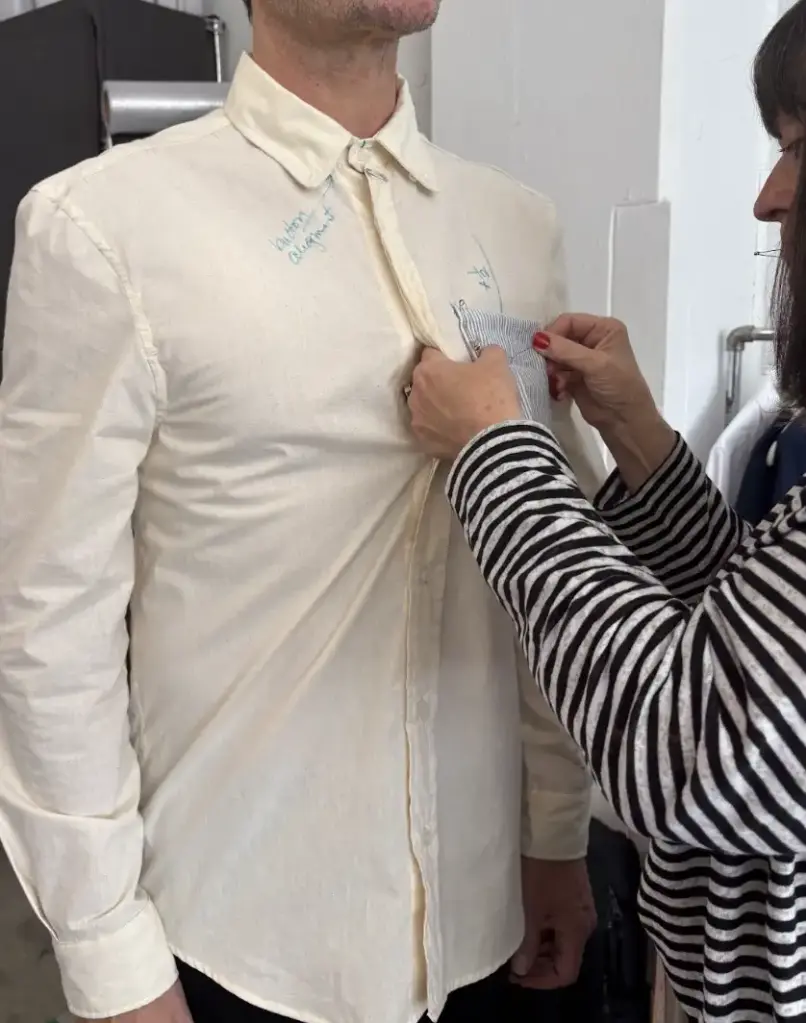
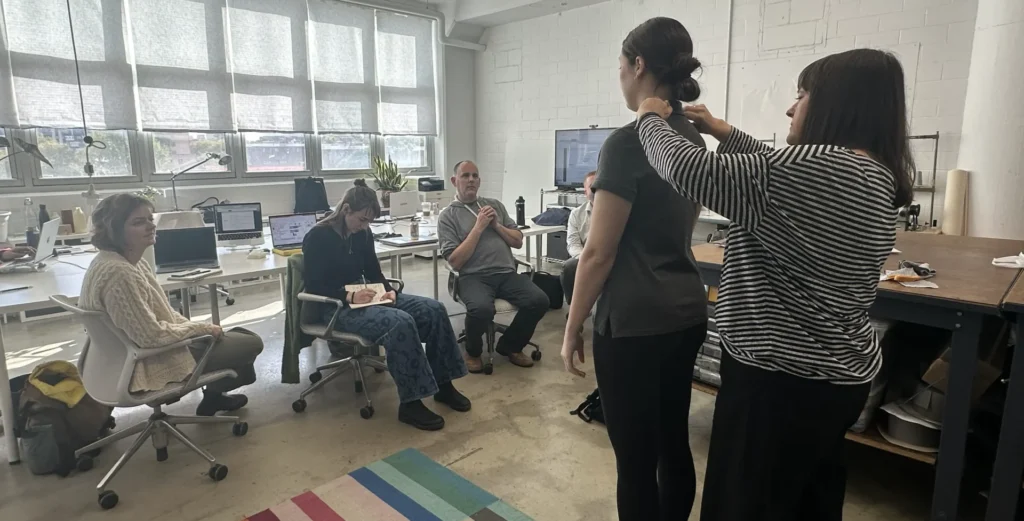
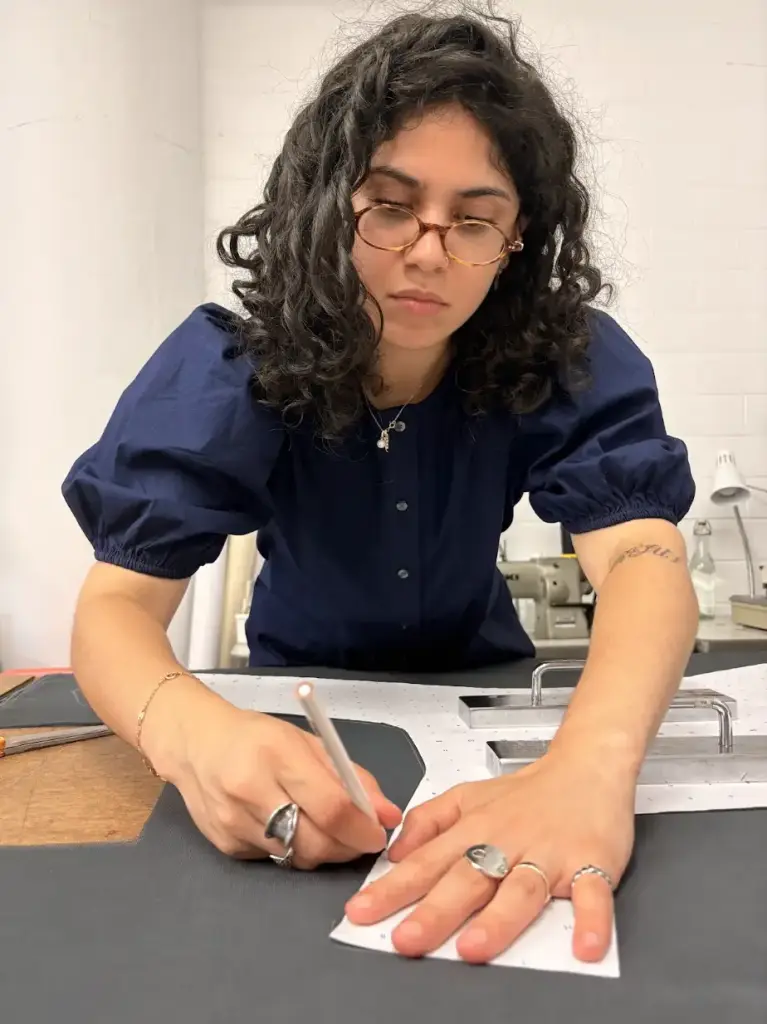
An Interwoven designer adjusting the fit of a cream-colored shirt on a fit model during a SMART ePANTS garment development session
A fit model session for an Interwoven garment developed for the SMART ePANTS program, where pattern and fit are refined to keep embedded technology comfortable and unobtrusive in wear.

One of the most ambitious explorations of this concept is the SMART ePANTS program, developed by the Intelligence Advanced Research Projects Activity (IARPA). The initiative focuses on creating fully integrated textile systems: garments that incorporate sensing, power, computation, and communication directly into the fabric.

The goal of SMART ePANTS is to develop clothing that can capture and process information about the wearer and their environment without relying on external devices. Sensors capable of detecting audio, movement, and location are woven into the garment, while conductive fibers act as wiring to connect these systems. Power is supplied through flexible, deformable energy solutions, and data is processed using ultra-low-power electronics embedded within the textile structure.

What distinguishes this program is not any single technology, but the level of integration. Rather than assembling components into a wearable device, SMART ePANTS treats the garment itself as a platform where every element, from fiber to system architecture, contributes to overall performance. The result is a product that maintains the look and feel of everyday clothing while functioning as a sophisticated technological system. This approach has significant implications for design. By embedding intelligence directly into textiles, the need for bulky hardware is reduced, and the user experience becomes more seamless. The garment can be worn naturally, without requiring adjustment or awareness, allowing technology to operate in the background.

From Research to Real-World Applications

While programs like SMART ePANTS are rooted in advanced research, their implications extend far beyond specialized applications. As these technologies mature, they will begin to influence a wide range of industries, from healthcare and wellness to performance apparel and everyday clothing, translating into applications that prioritize comfort, wearability, and seamless integration into daily life. The trajectory is familiar: high-performance, research-driven innovation gradually becomes refined, simplified, and accessible to broader audiences.

In healthcare, this shift is particularly evident. Garments designed for continuous physiological monitoring are moving away from rigid patches and adhesive sensors toward soft, wearable formats that can be worn over extended periods. For example, products like the Hexoskin Smart Shirt integrate sensors directly into the fabric to monitor respiration, heart rate, and activity without requiring additional devices. Similarly, platforms such as the Sensoria Smart Socks embed pressure sensors into knit structures to analyze gait and movement, demonstrating how everyday apparel can double as a data collection system without sacrificing comfort.

Performance apparel is another area where smart textiles are gaining traction. Brands are exploring garments that actively support the body through embedded functionality rather than external hardware. The Ralph Lauren PoloTech Shirt tracks biometric data and streams it to your device, while recovery-focused compression garments incorporate engineered fabrics that enhance circulation and muscle support. 

In wellness and lifestyle applications, smart textiles are becoming increasingly discreet and intuitive. Sleep-focused products, posture-correcting garments, and stress-responsive wearables are leveraging soft, flexible materials to deliver benefits without introducing friction into daily routines. Early-stage innovations, such as textiles that can subtly adjust temperature in response to the body or fabrics that incorporate haptic feedback for relaxation, point toward a future where garments play an active role in regulating comfort and well-being.

In industrial and safety contexts, smart textiles are moving beyond rigid equipment toward more wearable solutions. High-visibility clothing with embedded sensors can monitor worker fatigue or environmental conditions, while military and first-responder gear is beginning to incorporate distributed sensing systems that enhance situational awareness without adding bulk. 

Across these categories, a consistent pattern emerges: the most successful products are those that translate complex technology into familiar, wearable formats. Rather than introducing entirely new behaviors, they enhance existing ones, turning shirts, socks, and outerwear into platforms for sensing, response, and support. As the underlying technologies continue to mature, the distinction between “technology” and “textile” will become increasingly blurred, paving the way for products that feel less like innovations and more like natural evolutions of what we already wear.

The Future: Textile as Interface, System, and Platform

The future of smart textiles is one where the textile itself becomes the interface, the system, and the platform. Clothing will no longer be a static layer, but an active participant in how we experience the world: sensing, responding, and adapting in real time. For designers, this represents a fundamental shift in how products are conceived and developed. It requires thinking beyond objects and toward systems, beyond components and toward materials, and beyond interaction and toward experience. The challenge is to harness the potential of embedded intelligence while maintaining the qualities that make textiles inherently wearable: softness, flexibility, and comfort. The most successful solutions will not be those that showcase technology, but those that integrate it so seamlessly that it becomes invisible, leaving behind only the experience of wearing something that works effortlessly with the body.

At Interwoven Design, we partner with clients to navigate this evolving landscape, translating emerging technologies into products that balance innovation with usability. By integrating expertise in soft goods, textiles, and wearable systems, we help bring the next generation of smart textiles from concept to reality. 

Interwoven Design is a design consultancy that is positioned at the intersection of soft goods and wearable technology, creating products that function with the body and offer comfort as well as the superb performance that arises through the innovative incorporation of rigid, often electronic and responsive elements. Sign up for our newsletter and follow us on Instagram and LinkedIn for design news, multi-media recommendations, and to learn more about product design and development!
Beyond the Portfolio: Starting a Career in Industrial Design

Beyond the Portfolio: Starting a Career in Industrial Design

Product design is evolving rapidly. Across industries, the boundaries between physical products, digital experiences, and wearable systems are becoming increasingly fluid, creating new opportunities for designers. Designers today are expected to think beyond form alone, considering how products function within broader systems of manufacturing, interaction, human behavior, and experience.

For new graduates entering the field, this moment is both exciting and challenging. The range of possible career paths has expanded dramatically, but so have expectations. Many emerging designers find themselves asking the same questions: How do I stand out in a competitive market? What kind of portfolio do design firms actually want to see? How do I gain experience when most opportunities seem to require it already? Navigating the transition from school to industry can feel uncertain, particularly as the profession itself continues to evolve.

At Interwoven Design, we seek new industrial design interns every year, giving us a firsthand perspective on what differentiates successful candidates in today’s hiring landscape. In this Insight article, we explore what studios are actually looking for in new graduates, and how emerging designers can position themselves more strategically as they search for internships and full-time roles. We also examine the power of a point of view, and how to develop meaningful industry connections.

Develop a Point of View

A quality that immediately distinguishes strong emerging designers is the presence of a clear point of view. In a highly competitive hiring landscape, portfolios can begin to look visually similar, featuring comparable software skills, renderings, and project structures. What often separates memorable candidates is a visible sense of curiosity, direction, and intellectual engagement with the kinds of problems they want to solve.

Developing a point of view does not mean locking yourself into a narrow specialty early in your career. One of the advantages of being a new graduate is the freedom to explore different industries, methodologies, and interests. However, employers are often drawn to candidates who demonstrate genuine enthusiasm for particular areas of design, whether that involves wearable technology, medical devices, soft goods, sustainable packaging, furniture, transportation, consumer electronics, or emerging material systems.

A point of view is often communicated subtly through project choices, research topics, material explorations, and even the way a portfolio is organized. A student who consistently explores human-centered healthcare solutions, for example, signals a different perspective than someone focused heavily on speculative consumer electronics or sustainable systems. Neither direction is inherently better, but each tells a story about what motivates the designer and how they think about the role of design in the world.

Developing a point of view is not the same as building a personal brand around aesthetics alone. While visual consistency can be valuable, firms are often more interested in conceptual consistency; evidence that a designer is asking meaningful questions and engaging thoughtfully with a set of ideas over time. This could involve an interest in emotional durability, accessibility, wearable systems, manufacturing innovation, circular design, or the relationship between digital and physical experiences. These through-lines create coherence across projects and help transform a portfolio from a collection of assignments into a reflection of a designer’s perspective. Candidates who can clearly articulate what excites them about design tend to create more engaging and memorable discussions. Employers are not simply hiring for current projects; they are hiring people they can imagine growing alongside future opportunities and challenges.

Understand the System

Once a designer has developed a point of view and a body of work that reflects how they think, the next challenge is often not capability, it is visibility. Many strong candidates struggle because they are unclear about where opportunities exist and how to position themselves within a highly fragmented hiring landscape. Unlike more centralized industries, product design opportunities rarely exist in a single, predictable place. While large companies and well-known studios do post openings on public job boards, many roles are filled through more direct or informal channels. Studio websites remain one of the most consistent sources of opportunities, particularly for internships, where smaller teams often manage hiring directly. Alumni networks also play a significant role, as many designers enter studios through personal or academic connections that extend beyond formal application systems.

For emerging designers, this shifts the application process from reactive to proactive. Rather than waiting for the “right” posting to appear, successful candidates often identify studios whose work aligns with their interests and reach out directly. In these cases, specificity matters. Generic applications tend to disappear quickly, while targeted outreach that demonstrates an understanding of a studio’s focus—whether that is soft goods, wearable technology, consumer electronics, or medical devices—immediately signals intent and relevance.

Timing also plays a role. Many studios operate on flexible hiring cycles, especially for internships. Applying early, even when positions are not formally advertised, can be advantageous, as teams often keep strong candidates in mind when future projects arise. In some cases, opportunities are created in response to interest rather than pre-existing job postings, particularly in smaller or mid-sized practices. Translating work into opportunity is not just about applying widely; it is about applying strategically. 

Design Your Outreach

While the portfolio is important, even strong portfolios can go unnoticed if they are not introduced effectively. The reality is that most studios are not short on capable applicants; they are short on time. What often determines whether a portfolio is reviewed in detail is not its quality alone, but how it first enters a studio’s attention. The initial email, message, or application note is a filter that determines if your work is reviewed at all. A well-crafted introduction does not need to be long or overly polished, but it does need to be intentional. Studios are looking for signals of clarity: who you are, what you are interested in, and why you are reaching out to them specifically.

Effective outreach in design is itself an act of design thinking. It requires editing, prioritization, and an understanding of your audience. A strong message typically introduces the designer in a few sentences, highlights one or two relevant projects, and clearly explains why the studio’s work is meaningful to them.

The goal is not to summarize an entire portfolio, but to create enough alignment and curiosity for the reviewer to click through. What tends to weaken applications is not lack of talent, but lack of specificity. Generic messages sent to dozens of studios often read as disconnected from the work they reference. In contrast, even a short message that references a studio’s recent project, design focus, or material approach immediately establishes relevance. This demonstrates that the applicant has taken the time to understand the practice they are engaging with, which is often as important as the work itself.

Outreach does not need to be formal to be effective, but it should be professional, direct, and respectful of the reader’s time. Studios are often reviewing applications between project deadlines, so clarity and brevity are not just stylistic choices, they are practical advantages. This activity, done well, is an extension of a design practice; it requires understanding context, communicating intent, and guiding someone through an experience in a way that feels effortless and considered.

Network for Exposure

While networking can feel transactional at its worst, it should be about building visibility, familiarity, and trust over time. In product design especially, hiring is rarely a single-moment decision. Studios tend to hire people they have seen before, heard about through peers, or encountered multiple times in different contexts. This means that networking is less about one perfect interaction and more about becoming a recognizable presence within the design ecosystem. Exposure, consistency, and clarity of interest matter more than any single conversation. For emerging designers, this shift in perspective is critical. Instead of approaching networking as a performance or a pitch, it becomes an opportunity to engage with the industry in a more natural and ongoing way. 

Here are some practical ways to build meaningful exposure:

  • Attending portfolio reviews hosted by organizations such as IDSA, universities, and design festivals.
  • Reaching out to alumni who are working in studios you admire, particularly those a few years ahead in their careers
  • Engaging in informational conversations with junior and mid-level designers, who are often more accessible and candid about their experiences
  • Participating in design events, talks, and workshops where informal conversations can lead to longer-term recognition
  • Maintaining a consistent presence on platforms like LinkedIn or Instagram by sharing process work, sketches, or project thinking rather than only final renders
  • Contributing to student exhibitions, competitions, or collaborative projects that extend your visibility beyond your immediate academic environment
  • Signing up for the mailing lists of studios and companies you admire and watching for open houses and studio events

Over time, these actions build familiarity. A studio may not respond immediately to a message or application, but repeated exposure to a designer’s name, work, or ideas can create recognition when opportunities arise later. In many cases, hiring decisions are influenced by this accumulated awareness as much as by formal applications. Networking in design is about showing up consistently within the spaces where design conversations are happening, contributing meaningfully when possible, and allowing your perspective to become part of the broader dialogue.

Build Momentum Over Time

Unlike fields with clearly defined entry points, design careers often unfold unevenly; shaped by timing, exposure, relationships, portfolio development, and a degree of persistence that extends beyond any single application cycle. For emerging designers, this can feel uncertain at first, especially when comparing their progress to seemingly more direct success stories. In reality, momentum matters more than a perfect starting point. Each project, conversation, internship, and piece of outreach contributes to a broader trajectory. Designers who remain engaged—continuing to refine their portfolios, explore new ideas, and participate in the broader design community—tend to create more opportunities for themselves over time. 

For new graduates entering the field today, the opportunity lies not in finding the “correct” path, but in actively creating one—through work, relationships, and a continued commitment to evolving as a designer. Studios are looking for evidence of how candidates think, collaborate, communicate, and solve problems. Technical skills remain important, but process, adaptability, trustworthiness, and curiosity often determine which candidates stand out. At Interwoven Design, we find that the most compelling designers are rarely defined by a single aesthetic or specialty. Instead, they distinguish themselves through clarity of thought, engagement with the design process, and the ability to communicate ideas effectively.

Interwoven Design is a design consultancy that is positioned at the intersection of soft goods and wearable technology, creating products that function with the body and offer comfort as well as the superb performance that arises through the innovative incorporation of rigid, often electronic and responsive elements. Sign up for our newsletter and follow us on Instagram and LinkedIn for design news, multi-media recommendations, and to learn more about product design and development!
From Clinical to Comfortable: The Future of Therapeutic Wearables

From Clinical to Comfortable: The Future of Therapeutic Wearables

For decades, devices designed to deliver therapy to the body have been defined by function first and everything else second. Braces, wraps, compression systems, and externally applied treatments have historically been rigid, cumbersome, and visually clinical, often interrupting daily life as much as they support recovery. While effective, many of these solutions have required compromise, asking users to tolerate discomfort in exchange for benefit.

Today, that equation is changing. A new generation of therapeutic wearables is emerging; one that prioritizes not only efficacy, but also comfort, flexibility, and long-term usability. From magnetic therapy wraps designed to reduce pain and inflammation to soft, body-conforming systems that support circulation and oxygenation, these products are evolving into forms that feel lighter, more breathable, and more intuitive to wear. Increasingly, therapy is no longer something users engage with intermittently, it is something that integrates seamlessly into everyday life.

This shift is being driven by advances in soft goods, material innovation, and a growing expectation that products designed for the body should work with it, not against it. As therapeutic wearables move out of strictly clinical settings and into daily routines, their success depends not only on what they do, but on how they feel; how they move, how they breathe, and how naturally they fit into the rhythms of the user.

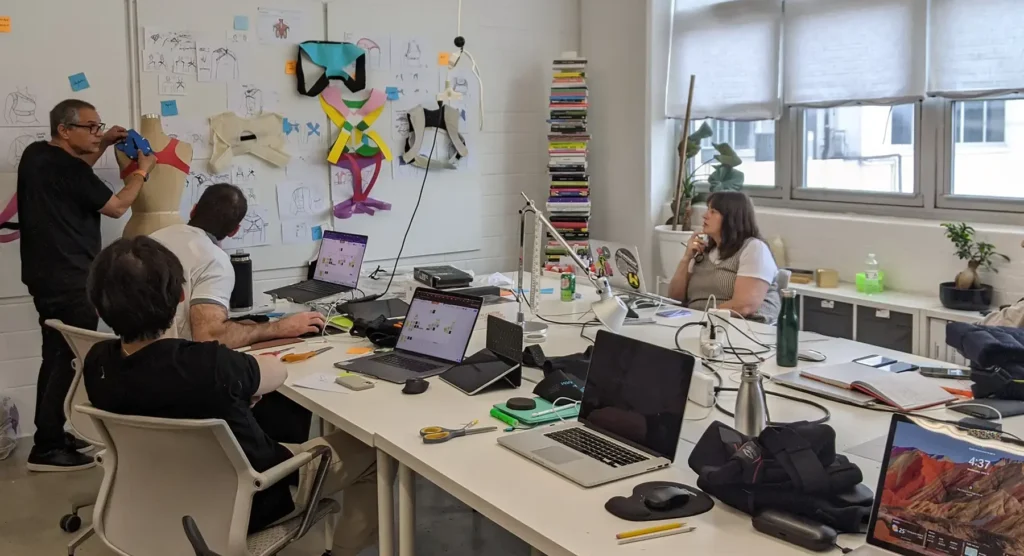
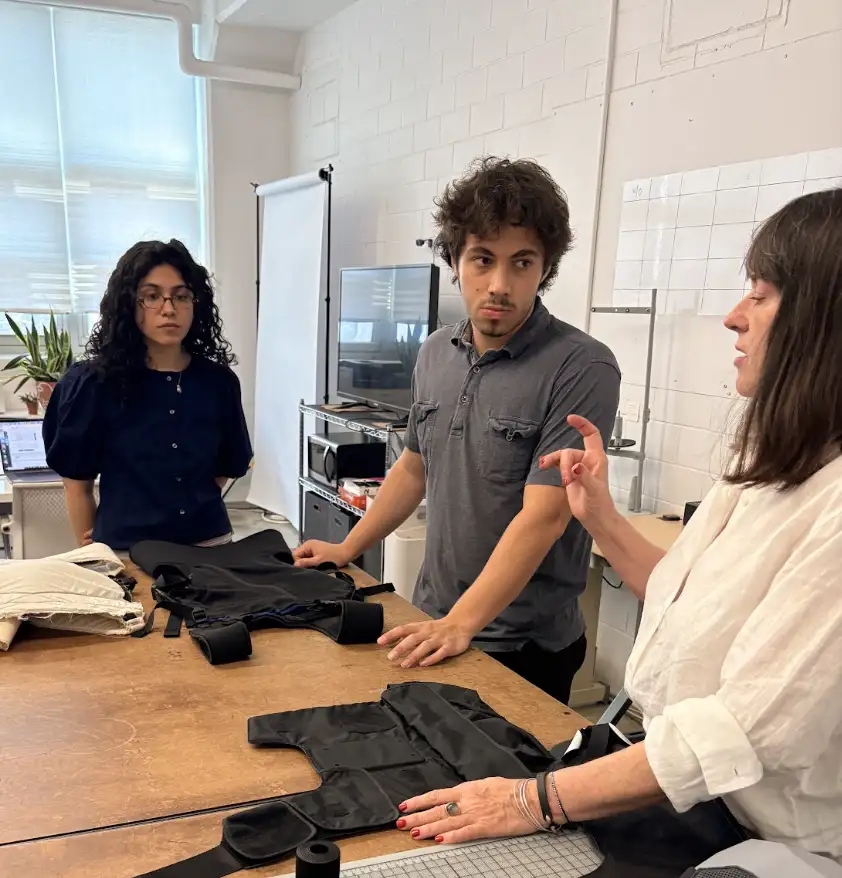
Interwoven Design Group team members reviewing a wearable prototype during a studio meeting, with anatomical references and design notes on the wall

At Interwoven Design, we operate at the intersection of soft goods, human factors, and performance-driven product design. Our team brings together expertise in textiles, ergonomics, and design to create wearable solutions that deliver therapeutic benefit while maintaining comfort and usability over extended periods of wear. From early-stage concept development through prototyping and refinement, our work focuses on translating clinical intent into products that people can incorporate into their lives with minimal friction.

In this Insight article, we explore the evolution of therapeutic wearables, examining how advances in materials and design are reshaping the category. We look at the key principles driving this shift and highlight the opportunities for innovation as medical and consumer expectations continue to converge.

From Treatment to Integration

Historically, therapies applied to the body have been ad hoc and temporary, something users put on for a defined period, often in response to pain, injury, or recovery. These products were designed around moments of intervention rather than continuous use. They served a purpose, but rarely integrated seamlessly into the flow of daily life. As a result, adherence was often inconsistent, limited not by efficacy, but by inconvenience and discomfort.

Today, therapeutic wearables are shifting toward a model of continuous, integrated support. Rather than being reserved for isolated moments of treatment, they are designed to move with the user throughout the day, supporting circulation during work, aiding recovery during rest, or maintaining therapeutic benefits during light activity. This evolution reflects a broader rethinking of how care is delivered; not as a discrete event, but as an ongoing condition that can be supported passively over time.

This shift expands both the opportunity and the responsibility for designers. Products must now function across a range of contexts—sitting, walking, working, and sleeping—without requiring constant adjustment. They must be adaptable, discreet, and resilient, capable of maintaining performance without interrupting the user’s routine. In this model, therapy becomes less about compliance and more about compatibility. The more naturally a product fits into daily life, the more effective it ultimately becomes.

Designing for Continuous Contact

As therapeutic wearables move toward all-day use, the nature of their interaction with the body fundamentally changes. These products are no longer worn briefly or intermittently; they remain in direct contact with the skin for extended periods, often across varying conditions of movement, temperature, and activity. This makes comfort not just a desirable feature, but a core component of functionality.

Designing for continuous contact requires a deep understanding of how materials behave against the body over time. Breathability becomes essential to prevent heat buildup and moisture retention, particularly in areas of compression or limited airflow. Weight must be minimized to reduce fatigue, while flexibility ensures that the product can adapt to movement without creating pressure points or restricting motion. Even subtle inconsistencies in fit or texture can become amplified over hours of wear, leading to irritation or disengagement.

The distribution of pressure across the body is another key consideration. Therapeutic wearables often rely on compression or stable contact to function effectively, but this must be carefully balanced to avoid discomfort. A product that is too loose risks losing efficacy, while one that is too tight can create friction, restrict circulation, or discourage use altogether. Achieving this balance requires thoughtful integration of form, material, and construction techniques.

The Softening of Medical Devices Through Material Innovation

Breg knee brace designed by Interwoven Design Group.

One of the most significant shifts in therapeutic wearables is the transition from rigid, hardware-driven devices to soft, textile-based systems. Historically, medical products prioritized structural stability and clinical performance, often resulting in hard casings, bulky components, and strap-heavy constructions that signaled their function but limited their wearability. Today, advances in materials and fabrication are enabling a fundamentally different approach, one where softness, flexibility, and adaptability are not secondary features, but central to how the product performs.

This evolution is being driven in large part by innovation in textiles and material science. High-performance knits, engineered compression fabrics, and breathable mesh structures allow products to conform closely to the body while maintaining airflow and comfort over extended periods. These materials can stretch, recover, and distribute pressure in ways that rigid components cannot, creating a more responsive and personalized fit. At the same time, the integration of functional elements—such as embedded magnets, conductive fibers, or thermal-regulating layers—allows therapeutic benefits to be delivered directly through the material itself, rather than relying on external attachments or add-ons.

As a result, the boundary between product and garment is beginning to blur. Therapeutic wearables are increasingly designed as systems where structure, function, and material are fully integrated. Instead of layering technology onto the body, the material becomes the interface, carrying out therapeutic functions while maintaining a soft, unobtrusive presence. This shift reduces bulk, simplifies use, and enhances the overall experience of wearing the product.

There is also an important shift taking place in the way these wearables are perceived. As devices become softer and more refined, they move away from the visual language of clinical equipment and toward something more discreet and lifestyle-oriented. This not only improves comfort, but also reduces the stigma that can be associated with wearing medical devices in everyday settings. Products that feel and look like apparel are more likely to be worn consistently, which in turn improves their effectiveness.

Case Study: Rethinking Oxygen Monitoring with Moxy

As therapeutic wearables continue to evolve, products that successfully bridge performance, physiology, and wearability offer valuable insight into the future of the category. The Moxy Monitor is one such example: a wearable device designed to measure muscle oxygen saturation in real time, providing critical insight into how the body is performing and recovering under strain. While rooted in performance analytics, its design reflects many of the same principles shaping the broader shift toward more wearable, body-integrated therapeutic systems.

Design Objective

Translate complex physiological monitoring into a wearable format that can maintain accurate, continuous contact with the body while minimizing disruption to movement and comfort.

Key Features & Design Considerations

Compact, Body-Conforming Form Factor
The device is designed to sit close to the skin, reducing bulk and minimizing interference during activity. Its small footprint allows it to be worn across different muscle groups without restricting motion.

Wearable system for the Moxy Monitor, designed by Interwoven Design Group.

Soft Integration with the Body
Rather than relying on rigid mounting systems, Moxy is typically secured using soft straps or compression garments. This approach stabilizes the sensor while distributing pressure more evenly, improving both comfort and data consistency.

Lightweight Construction
A low-profile, lightweight build reduces fatigue during extended wear, making it suitable for use across training sessions, recovery periods, and longer durations of monitoring.

Breathability and Skin Compatibility
Because the device is worn directly against the body, it must accommodate heat, sweat, and movement. Pairing the sensor with breathable, skin-friendly materials helps maintain comfort and reduces the likelihood of irritation over time.

Secure Yet Flexible Fit
Maintaining accurate readings requires consistent contact, but not at the expense of comfort. The system balances compression and flexibility, ensuring the device stays in place while adapting to dynamic movement.

Design Insight

The effectiveness of a wearable like Moxy depends on more than just sensor accuracy, it relies on the product’s ability to remain comfortably in place over time. This reinforces a broader principle in therapeutic wearable design: performance is inseparable from wearability.

Devices like Moxy are no longer confined to controlled or clinical environments; they are used during training, recovery, and daily activity. This requires a design approach that prioritizes discretion, ease of use, and adaptability. The product must be simple to apply and remove, compatible with clothing, and unobtrusive in both form and appearance. By reducing visual and physical friction, and by aligning with the realities of how people move through their day, therapeutic wearables can achieve consistent use and deliver more meaningful results.

The Future: Therapy You Can Wear All Day

The future of therapeutic wearables lies in their ability to disappear into daily life while continuously delivering benefit. As materials become more advanced and technologies more compact, these products are evolving toward forms that feel less like devices and more like extensions of the body. Lightweight, breathable, and flexible systems will enable users to wear therapeutic solutions throughout the day—at work, in transit, during rest—without disruption or self-consciousness. In this model, therapy is no longer a scheduled activity, but an ambient layer of support that moves with the user.

As these products become more integrated into everyday life, expectations will continue to rise. Users will demand solutions that are not only clinically effective, but also comfortable, discreet, and aligned with their personal routines. For design teams, this evolution represents a significant opportunity. The challenge is no longer simply to create functional devices, but to develop wearable systems that balance medical efficacy with human-centered design. This requires a holistic approach, one that considers how products interact with the body over time, how they integrate into real-world contexts, and how they communicate value without relying on overtly clinical cues.

At Interwoven Design, this is where we focus our partnership with clients. We work to translate clinical intent into wearable solutions that prioritize comfort, adaptability, and long-duration use, leveraging our expertise in soft goods, materials, and human factors. Through iterative prototyping, wear testing, and refinement, we help ensure that therapeutic performance is delivered through products that people can and will wear consistently. Interwoven Design is a design consultancy that is positioned at the intersection of soft goods and wearable technology, creating products that function with the body and offer comfort as well as the superb performance that arises through the innovative incorporation of rigid, often electronic and responsive elements. Sign up for our newsletter and follow us on Instagram and LinkedIn for design news, multi-media recommendations, and to learn more about product design and development!
Beyond Metrics: The New Frontier of Wellness and Beauty

Beyond Metrics: The New Frontier of Wellness and Beauty

For over a decade, wearable technology has been synonymous with tracking; steps counted, calories burned, sleep scored. However, as the category matures, a quiet but significant shift is underway. Today’s most compelling wellness and beauty wearables are no longer focused on data collection. They are designed to deliver outcomes.

From infrared facial masks promising clearer skin to sensory sleep tools engineered for restoration, a new generation of products is redefining what it means to “wear” wellness. These devices don’t just observe the body, they actively support it. For designers, this evolution opens a new frontier: creating products that merge performance, comfort, and emotional experience into something people will not only use but trust.

At Interwoven Design, we operate at the intersection of soft goods, sensory experience, and performance-driven product design. Our team brings together expertise in textiles, human factors, and material innovation to create wearable solutions that integrate seamlessly into daily life. Whether developing next-generation beauty tools or sleep-enhancing products, our work is grounded in designing objects that feel intuitive, comfortable, and inherently beneficial to the user.

In this Insight article, we explore the rapid expansion of wellness and beauty wearables, what distinguishes this category from traditional performance-based devices, and how design can elevate passive products into meaningful daily rituals. We also share a conceptual case study that reimagines a familiar object, the sleep mask, as a multi-sensory therapeutic experience.

From Quantification to Transformation

Early wearables succeeded by making the invisible visible. Metrics became motivation. But over time, saturation and fatigue set in. Users began asking a more fundamental question: What is all this data actually doing for me? 

The next wave of products answers that question directly. Rather than interpreting information, these products are designed to intervene directly in the body’s natural processes, delivering benefits through continuous, often passive interaction. They can improve skin tone and texture through targeted light therapy, support hair growth with precise stimulation, enhance sleep quality by carefully controlling sensory inputs like light and sound, and reduce stress through tactile feedback or environmental modulation. In each case, the emphasis shifts from observation to action, allowing the product to play an active role in improving well-being rather than merely reporting on it.

This approach marks a shift from quantified self to augmented self, and it fundamentally changes how products must be designed. In the quantified era, value was delivered through information: dashboards, metrics, and feedback loops that relied on user interpretation and behavior change. The burden was on the user to translate insight into action. In contrast, augmented products are designed to act on the body directly, reducing friction between intention and outcome.

For designers, this means moving beyond interface-driven thinking toward experience-driven performance. Success is no longer defined by clarity of data visualization, but by the consistency and quality of the outcome itself: clearer skin, deeper sleep, reduced tension. This requires a deeper integration of material science, ergonomics, and physiology, where form is not just about usability, but about enabling sustained, passive benefit over time.

Designing for Passive Benefit

Unlike performance wearables, benefit-driven devices succeed when they disappear into routine. They must function seamlessly within moments of rest, recovery, or self-care. This introduces a unique set of design challenges:

1. Comfort Is Core Functionality

If a product is worn during sleep or relaxation, discomfort isn’t just a flaw, it’s failure. Materials, weight distribution, and thermal regulation become primary design drivers, not secondary considerations.

2. Sensory Design Becomes Critical

These products operate in low-stimulus environments where every sensory detail is amplified, requiring light, sound, and touch to be carefully calibrated. Excessive pressure can disrupt rest and undermine comfort, while too little feedback may diminish the user’s perception of effectiveness. Even material choices play a critical role, as the wrong texture can break the experience entirely, shifting the product from something that soothes to something that distracts.

3. Trust Through Subtlety

Unlike fitness trackers, where feedback is immediate and quantifiable, the benefits of these products are often gradual and less directly measurable. As a result, design must work harder to communicate credibility and build trust over time. This is achieved through the careful selection of high-quality materials, a level of form precision that signals intentionality and performance, and a brand language that strikes a balance between scientific rigor and a sense of calm, reinforcing both efficacy and emotional reassurance.

4. Aesthetic Integration

These objects live in intimate spaces like bedrooms and bathrooms. They must feel less like devices and more like extensions of lifestyle.

The Convergence of Beauty, Wellness, and Soft Goods

Many of the most compelling products in this emerging category exist at the intersection of wearable technology and soft goods. This convergence is not incidental, it reflects a fundamental shift in how wellness is delivered through design. As products move closer to the body and into moments of rest and recovery, rigid, device-driven form factors give way to flexible, textile-based solutions that feel more intuitive and less invasive.

Soft goods play a critical role in establishing immediate comfort and familiarity. Textiles signal comfort, safety, and approachability in a way that traditional hard goods often cannot. They allow products to conform to a wide range of body types and positions, accommodating movement during sleep or relaxation without disrupting the experience. Just as importantly, they introduce an emotional dimension, through softness, drape, and tactility, that aligns closely with the expectations of both wellness and beauty products.

At the same time, the integration of technology elevates these familiar formats into something more purposeful. Features such as light therapy, cooling properties, or acoustic dampening introduce clear functional benefits that go beyond traditional textiles. This fusion enables products to deliver measurable outcomes while maintaining the sensory qualities users associate with comfort and care.

The result is a new product typology: therapeutic wearables that are embedded seamlessly into everyday rituals. These are not devices that demand attention or learning curves, but objects that feel immediately usable and inherently personal. By blending the performance of technology with the intimacy of soft goods, designers can create products that users not only adopt, but incorporate into their daily lives with little resistance.

Designing for Ritual, Not Routine

Another defining characteristic of this category is its alignment with personal rituals rather than structured routines. Unlike fitness-oriented products, which are often tied to goals, metrics, and repeated behaviors, wellness and beauty wearables tend to exist within quieter, more intentional moments. These include the transition into sleep, the process of unwinding after a long day, or small acts of self-care that signal a shift from activity to rest.

Designing for these moments requires a fundamentally different approach. Products must feel intuitive and inviting, with minimal setup or cognitive effort. This places a greater emphasis on how a product is introduced into a user’s environment; how it feels in the hand, how naturally it integrates into existing habits, and how effectively it supports a sense of calm without demanding attention.

There is also an emotional dimension that distinguishes ritual-based design. These products often become part of deeply personal behaviors, where consistency is driven not by obligation, but by desire. As a result, aesthetic choices, material quality, and sensory cues take on heightened importance. A product that feels considered, comfortable, and aligned with a user’s lifestyle is far more likely to be adopted over time.

Designing for ritual means prioritizing presence over performance. The goal is not to push users toward optimization, but to support moments of restoration in a way that feels natural and unobtrusive. In this context, success is measured not by frequency of use alone, but by the depth of integration into daily life and the extent to which the product enhances the quality of those moments.

Case Study: Reimagining the Sleep Mask as a Therapeutic Device

As the wellness and beauty wearable space continues to expand, opportunities lie in reframing how we think about value. To explore this category, we developed a conceptual product that elevates a familiar object, the sleep mask, into a multi-sensory wellness tool.

Design Objective

Transform a basic accessory into a performance-driven sleep aid that enhances recovery without introducing complexity.

Therapeutic sleep mask concept designed by Interwoven Design Group.

Key Features & Design Considerations

1. Total Light Elimination Without Pressure
A 3D contoured structure ensures complete darkness while maintaining zero contact with the eyelids and lashes.

  • Prevents REM disruption
  • Eliminates cosmetic friction concerns
  • Enhances perceived luxury through spatial design

2. Breathable, Cooling Materials
Material selection prioritizes thermoregulation and skin comfort.

  • Silk and modal blends reduce heat retention
  • Cooling properties help minimize puffiness and inflammation
  • Soft-touch finishes reinforce a calming sensory experience
Therapeutic sleep mask concept designed by Interwoven Design Group.

3. Integrated Acoustic Dampening
An over-ear extension introduces subtle sound reduction.

  • Soft compression reduces ambient noise without isolation
  • Maintains awareness while minimizing disturbance
  • Avoids the invasiveness of in-ear solutions

4. Side-Sleeper Optimization
Ultra-thin construction ensures comfort across sleep positions.

  • Eliminates pressure points at the temples and ears
  • Maintains structural integrity without bulk
  • Supports uninterrupted movement throughout the night

The innovation is not in any single feature, but in the integration. By addressing light, sound, temperature, and pressure simultaneously, the product creates a holistic sleep environment, one that works passively, without requiring behavioral change. This reflects a broader truth in wellness design: The most successful products don’t ask users to do more. They do more for the user.

The Future is Personal

The next generation of wellness and beauty wearables will not be defined by dashboards, alerts, or metrics. Instead, their value will be measured by outcomes that are immediately perceptible and deeply personal; more restorative sleep, calmer transitions between states of activity and rest, and visible improvements in skin and hair. These products succeed not by asking for attention, but by earning trust through tangible, consistent results.

For designers, this represents a meaningful shift in perspective. It is an invitation to think beyond interfaces and into experience, where the true measure of success is not what a product shows, but what it changes. This requires a more holistic approach to design, one that considers the full spectrum of interaction: how a product is introduced into a user’s environment, how it feels over extended periods of use, how it responds to the body, and how it supports both physical and emotional well-being without adding friction.

Behind the scenes: sleep mask design process at Interwoven Design Group.

At Interwoven Design, this philosophy shapes how we partner with clients from the earliest stages of development through to final production. Our process begins with a deep understanding of the intended outcome, whether that is improved sleep quality, enhanced skin health, or reduced stress, and translates those goals into design strategies grounded in material science, ergonomics, and human behavior. Rather than starting with technology and searching for an application, we work in the opposite direction, identifying the desired user experience and engineering solutions that deliver it as seamlessly as possible. Ultimately, the future of wellness design lies in this convergence of performance, comfort, and meaning. 

Interwoven Design is a design consultancy that is positioned at the intersection of soft goods and wearable technology, creating products that function with the body and offer comfort as well as the superb performance that arises through the innovative incorporation of rigid, often electronic and responsive elements. Sign up for our newsletter and follow us on Instagram and LinkedIn for design news, multi-media recommendations, and to learn more about product design and development!
Soft Goods in Athletics: Designing for Performance

Soft Goods in Athletics: Designing for Performance

Athletics place unique demands on the body. From training and competition to recovery and everyday wear, athletes rely on products that support movement, regulate the body, and perform under constant stress. Unlike casual apparel, athletic soft goods must respond dynamically to speed, impact, repetition, and fatigue, often across long durations and varied environments. Soft goods are foundational to this ecosystem. Apparel, supports, accessories, and hybrid soft–hard systems sit directly against the body, shaping how athletes move, feel, and perform. When designed well, they enhance mobility, manage heat and moisture, reduce distraction, and support confidence. When designed poorly, they restrict movement, cause irritation, or interfere with performance.

At Interwoven Design, we specialize in soft goods that move with the body. Our work in athletics combines textile innovation, ergonomics, and human-centered design to create performance-driven products that feel intuitive in motion. By designing for real bodies in real athletic contexts, we help brands create products that support both peak performance and long-term use.

In this Insight article, we explore what makes athletic soft goods design distinct, the challenges and opportunities within this space, and how thoughtful design can elevate performance, comfort, and user experience. Through examples from across the athletic landscape, we highlight how soft goods function as essential infrastructure for modern sport.

When Apparel Becomes Equipment

Athletic soft goods operate in a fundamentally different context than lifestyle apparel or fashion-driven performance wear. These products are not designed for occasional movement or visual expression alone; they are worn through repetition, strain, sweat, and fatigue. They must perform reliably under physical stress, often for hours at a time, and across a wide range of environments and body types. Designing for athletics means designing for use, not appearance first.

Unlike everyday apparel, athletic soft goods are in constant dialogue with the body. They stretch, compress, resist, and recover in response to motion. A poorly placed seam can cause chafing. Excess material can disrupt movement or trap heat. Insufficient structure can compromise stability and lead to injury.In this context, comfort is not a luxury, it is a performance requirement.

Athletic products must also account for intensity and repetition. Runners log thousands of steps per session. Training garments endure repeated washing, abrasion, and exposure to sweat and friction. Soft goods must maintain their integrity and fit over time, not just during initial wear. This demands careful material selection, durable construction methods, and patterning that supports long-term use without breakdown.

There is also a psychological dimension to athletic soft goods. When equipment fits well and moves naturally with the body, it fades into the background, allowing athletes to focus fully on performance. When it doesn’t, it becomes a distraction. Confidence, trust, and mental clarity are directly influenced by how gear feels in motion. The best athletic soft goods support not only physical performance, but also the athlete’s sense of readiness and control. They must earn their place through performance: working with the body, adapting to motion, and standing up to the realities of athletic use.

Designing for the Body in Constant Motion

In athletics, soft goods are not passive layers. They are active interfaces between the body, the environment, and performance demands. From training apparel and compression systems to protective gear and integrated wearables, these products must move dynamically with the athlete while maintaining structure, control, and comfort under stress. Designing for this context requires a deep understanding of the body in motion and the realities of how athletic products are actually used.

Designing for Dynamic Movement

Athletic soft goods must accommodate complex, repetitive movement patterns: sprinting, cutting, rotating, reaching, absorbing impact, and recovering between efforts. Unlike everyday apparel, these products are subjected to continuous mechanical stress, sweat, heat buildup, and friction. Seams, stretch zones, and reinforcement areas must be placed with intention, aligning with muscle groups, joints, and patterns of load. Poorly placed construction details can restrict movement, cause chafing, or create pressure points that distract from performance.

Effective design begins with understanding how the body behaves under exertion. This includes how muscles expand and contract, how posture shifts during fatigue, and how movement changes across different intensities. Soft goods that perform well in athletics are designed not just for a static fit, but for how they stretch, compress, and recover throughout an entire training session or match. They are also tailored to the specific movements that are unique to a given sport or activity.

Balancing Support and Freedom

One of the central challenges in athletic soft goods design is balancing support with mobility. Athletes often need targeted compression, stabilization, or protection without sacrificing range of motion or speed. This balance is achieved through thoughtful material zoning and construction strategies rather than relying on bulk or rigidity.

Strategic use of elastic and non-elastic materials can provide structure where it is needed and flexibility where it is essential. Paneling, knit variation, and layered systems allow designers to fine-tune how a product behaves across different areas of the body. When executed well, this approach creates products that feel secure without feeling restrictive, enabling athletes to move confidently and naturally.

Comfort as a Performance Factor

In athletic contexts, comfort is inseparable from performance. Heat retention, moisture management, and skin interaction all influence endurance, focus, and recovery. Fabrics must manage sweat efficiently, dry quickly, and maintain a consistent feel against the skin even during prolonged use. Construction details such as bindings, hems, and closures must remain stable under movement without digging in or shifting.

Extended wear is common in athletics, whether during long training sessions, tournaments, or back-to-back competitions. Soft goods that cause irritation or distraction can negatively affect performance long before physical fatigue sets in. Designing for comfort means anticipating these long-duration use cases and prioritizing material behavior and construction quality at every point of contact with the body.

Iteration Through Real-World Testing

Designing for athletic performance demands rigorous, real-world testing. Prototypes must be worn, trained in, and stressed in the environments they are intended for. Observing how products shift, stretch, retain shape, or fail under real movement reveals critical insights that inform refinement. his iterative process is central to how we approach athletic soft goods at Interwoven Design. By evaluating products in motion and under load, we identify opportunities to improve durability, comfort, and performance, ensuring that the final design supports the athlete rather than working against them.

Designing for the body in motion means respecting the physical realities of athletic performance. While the challenges are significant, they also represent meaningful opportunities for innovation. Well-designed athletic soft goods can improve performance, reduce injury risk, enhance comfort, and build stronger emotional connections between athletes and their gear. Products that perform reliably over time earn trust, becoming essential parts of an athlete’s training and competition routine.

Case Studies: Design for Athletics in Action

Performance apparel and wearable systems are shaped by how athletes move, train, and compete across varying conditions and levels of intensity. The following case studies highlight Interwoven Design’s approach to athletic soft goods, showcasing how thoughtful material selection, ergonomic construction, and brand-driven design come together to support performance, comfort, and identity on and off the field.

Case Study 1: GLDN PNT Padelwear

Premium activewear brand GLDN PNT partnered with Interwoven Design to create their first men’s and women’s padelwear collections, launching a brand built specifically around the movement patterns, performance needs, and aesthetic expectations of the sport. As the sport of padel continues to grow globally, athletes are demanding apparel that reflects the intensity, precision, and social culture of the game. 

Unlike crossover tennis or general training apparel, padel requires clothing that supports rapid lateral movement, extended rallies, sun exposure, and frequent ball handling. GLDN PNT’s goal was to introduce a collection that felt intentional, elevated, and authentic to padel, while establishing a strong visual identity that could scale with the brand.

GLDN PNT - Photo by Ton Gomes
GLDN PNT – Photo by Ton Gomes

The Design Challenge

Padel occupies a distinct space between tennis and squash, with its own cadence, court dynamics, and player culture. However, the apparel market had yet to fully reflect those differences. The challenge was twofold: to design sport-specific garments that performed under the physical demands of padel, and to simultaneously define a cohesive brand language that would differentiate GLDN PNT in a growing, style-conscious market.

From a performance standpoint, garments needed to support explosive movement, sustained play, and outdoor conditions without compromising comfort or fit. From a brand perspective, the collection had to feel modern and premium, appealing to both competitive players and lifestyle-driven athletes who engage with padel as a social sport.

Our Approach

Interwoven Design led a comprehensive, end-to-end design process that integrated brand strategy, soft goods expertise, and technical apparel development. The project began with identifying market gaps and analyzing both competitive sportswear and emerging padel culture. Through trend research, event observation, and consumer insight, Interwoven Design established a clear design direction for the GLDN PNT brand. Mood boards and color stories were developed to define the collection’s tone, ensuring visual cohesion across men’s and women’s lines. Silhouette development focused on balancing clean, contemporary styling with functional performance, resulting in a capsule collection that included athletic tanks, t-shirts, shorts, skirts, and complementary accessories.

As always, material selection played a central role in the design. Drawing from an extensive textile library and industry partnerships, Interwoven Design sourced high-performance fabrics selected for stretch, breathability, durability, and sun protection. Each fabric choice was evaluated not only for performance, but for how it contributed to the overall brand feel and on-court presence.

Branding and Visual Integration

Beyond garment design, Interwoven developed GLDN PNT’s branding system across apparel and accessories. This included custom graphics, reflective heat-seal logos, embroidered elements for visors and hats, and garment labels. Each branding element was strategically placed to enhance visibility and identity without interfering with performance or comfort. The result is a cohesive visual language that reinforces GLDN PNT’s positioning as a premium padel brand while remaining functional on the court.

Impact

Launched in June 2024, the GLDN PNT padelwear collection established a strong foundation for the brand, delivering sport-specific performance apparel with a distinct identity. By designing soft goods that respond directly to the physical demands and cultural nuances of padel, Interwoven helped GLDN PNT enter the market with clarity, confidence, and credibility.

Case Study 2: Miami Dolphins Cheerleader Uniforms

Miami Dolphins cheerleaders performing on the field wearing team performance uniforms
Miami Dolphins – Photo by Miami Dolphins Cheer

Elite cheerleading sits at the intersection of athletic performance, visual precision, and public-facing brand representation. The Miami Dolphins Cheerleaders partnered with Interwoven Design Group to modernize their uniforms and practice apparel, with the goal of creating performance-driven soft goods that support high-energy routines while empowering individual expression within a cohesive team identity.

Interwoven Design was commissioned to redesign the on-field uniforms, practice apparel, and a complementary cheer sneaker, elevating the cheerleaders’ wardrobe to reflect their dual roles as professional athletes and ambassadors for the Miami Dolphins organization. The project emphasized comfort, functionality, and confidence, ensuring that each garment

performed under physical intensity while presenting a polished, contemporary aesthetic on and off the field.

The Design Challenge

Cheerleading places exceptional demands on apparel. Garments must support explosive movement, jumps, lifts, and sustained choreography under stadium lights, heat, and long performance durations. At the same time, cheer uniforms are highly visible, serving as a key expression of team identity and brand values.

The challenge was to design a system of soft goods that could withstand athletic rigor without restricting movement, manage heat and perspiration, and maintain visual consistency across the team. Equally important was creating a wardrobe that allowed cheerleaders agency over their appearance, enabling personalization while preserving a unified, professional look.

Our Approach

Interwoven Design approached the project as a modular performance system rather than a single uniform. The design process began with direct engagement with the cheerleaders, gathering insight into their preferences, pain points, and performance requirements. This collaborative approach ensured that the final collection responded to real athletic needs rather than surface-level aesthetics alone. The concept of a “cheer closet” guided the development of a capsule collection composed of nine core silhouettes designed to be mixed and matched by individual team members. These included a crop top, sports bras, unitard, track jacket, skirt, leggings, and boy shorts, offered in a range of Miami Dolphins–branded colorways.

This system-based approach allowed each cheerleader to select combinations that best suited her body, role, and performance needs while maintaining visual cohesion across the squad. Soft goods design focused on creating garments that moved seamlessly with the body, supported dynamic routines, and felt comfortable throughout long rehearsals, games, and appearances.

Engineered for Movement and Durability

Material selection was central to the success of the collection, and a particular challenge here. Interwoven sourced a breathable, moisture-wicking performance fabric engineered to resist visible color changes from perspiration, ensuring the uniforms maintained a fresh, polished appearance even during high-intensity routines. Strategically placed perforated textiles enhanced ventilation while adding subtle textural detail to the garments.

Athletic construction techniques were used throughout, incorporating internal support features and carefully engineered paneling to improve fit, stability, and comfort. These decisions allowed the garments to support demanding choreography without restricting range of motion or causing distraction during performance.

Impact

The final uniform and practice collection successfully unified performance and style, delivering soft goods that support athletic excellence while reinforcing brand identity. The “cheer closet” model gives team members agency and confidence, allowing them to personalize their look while presenting a consistent, elevated image as a squad.

A complementary makeup kit was also designed to align with the apparel color strategy, enabling a cohesive head-to-toe presentation for games, practices, and appearances. Together, the system underscores the Miami Dolphins Cheerleaders’ role as elite athletes and public representatives of the organization.

Supporting Movement, Comfort, and Confidence

Athletics is defined by movement, repetition, and intensity. Every sprint, pivot, jump, and recovery phase places unique demands on the body and on the products worn in motion. In this context, soft goods are not passive layers or branding surfaces; they are active participants in performance. The way a garment stretches, compresses, breathes, or stabilizes can influence confidence, endurance, and precision in ways that are felt long before they are noticed.

Well-designed athletic soft goods regulate temperature without distraction, support muscles without restricting movement, and adapt across training, competition, and recovery. When these systems are thoughtfully engineered, athletes can focus fully on their sport. When they fall short, friction appears in the form of discomfort, distraction, or compromised performance. The difference often lies in details: patterning, material behavior under sweat and strain, seam placement, and how a product responds over time.

At Interwoven Design, we approach athletic soft goods as performance systems rather than isolated products. Our work blends material intelligence, ergonomic construction, and brand strategy to create apparel and wearable solutions that move with the body and evolve with the demands of sport. Whether designing for emerging athletic categories or established performance disciplines, we prioritize comfort, adaptability, and long-term wearability alongside visual identity and market relevance.

We collaborate with athletic brands, innovators, and performance-driven organizations who recognize that great design is built through deep understanding of the body in motion. Together, we design soft goods that support athletes where it matters most: in the moments of effort, focus, and flow that define sport.Interwoven Design is a design consultancy that is positioned at the intersection of soft goods and wearable technology, creating products that function with the body and offer comfort as well as the superb performance that arises through the innovative incorporation of rigid, often electronic and responsive elements. Sign up for our newsletter and follow us on Instagram and LinkedIn for design news, multi-media recommendations, and to learn more about product design and development!