Soft Goods, Smart Care: Designing the Next Generation of Medical Wearables
The Stakes of Medical Design
Designing for the medical field is unlike designing for any other industry. Here, the stakes are measured not just in performance or user satisfaction, but in people’s health, safety, and wellbeing. A device that fails to deliver comfort or reliability isn’t just inconvenient, it can directly affect quality of life or clinical outcomes. Medical design demands a balance of precision, empathy, and usability.

At Interwoven Design, we specialize in working at this intersection. Our team combines expertise in soft goods and hard goods, bringing together textiles, mechanics, and electronics into products that are as wearable as they are functional. From early research to final prototyping, our focus is on creating medical wearables that fit seamlessly into people’s lives—solutions that are technically robust, clinically sound, and human-centered by design. In this Insight article we will outline the unique considerations of medical design, our approach to designing medical wearables, the challenges and opportunities inherent in this area of the design industry, and three case studies of medical wearables that showcase the value of Interwoven Design’s human-centered approach.
Why Medical Design Is Unique
Medical design brings a set of challenges and responsibilities that set it apart from other categories of product development. Every decision, from material selection to interface design, must be made with an acute awareness of the user’s physical and emotional context, as well as strict regulatory and clinical requirements.
Regulatory Context
Medical devices are subject to rigorous approval processes, with agencies such as the FDA or EMA requiring extensive validation and documentation. This means that every design decision must be defensible, testable, and aligned with compliance standards, not only to achieve certification but also to ensure long-term patient safety.
Emotional Context
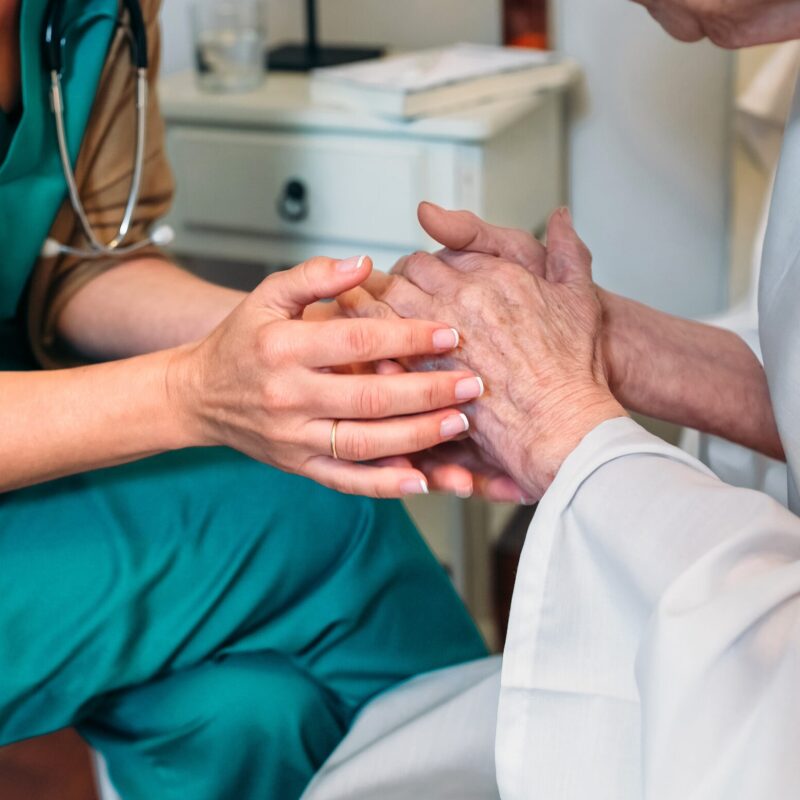
Unlike consumer wearables, medical products often enter a user’s life during moments of stress, vulnerability, or recovery. Designers must anticipate not just the functional needs of patients and clinicians but also the emotional impact of the device. A poorly considered interface or material can heighten anxiety, while thoughtful design can build confidence and trust.
Usability Context

For a medical device to be effective, it must be intuitive to use, not just for patients but also for clinicians, caregivers, and sometimes even first responders. Accessibility, clarity, and ergonomics are not “nice to haves” but essential design principles. This often means extensive rounds of testing and iteration to make sure that products can be used correctly and consistently, even in high-pressure situations.
Together, these contexts shape a design discipline that is both technically demanding and deeply human. It’s this balance of rigor and empathy that drives successful medical innovation.
Designing for the Body and for Care
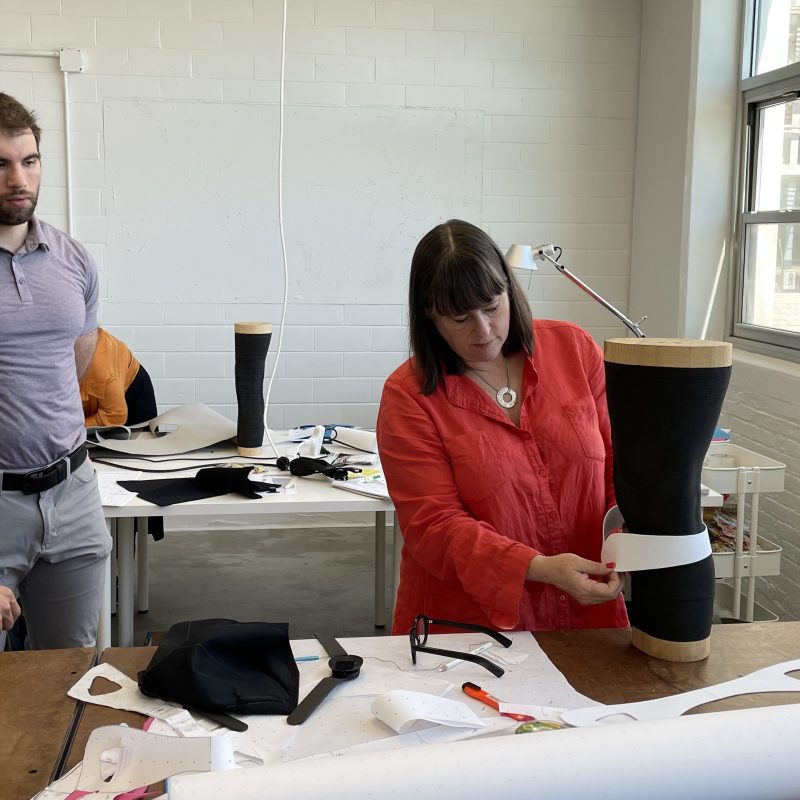
At Interwoven Design, we see medical wearables as more than devices, they are extensions of the body and tools for care. Designing them requires an iterative, human-centered approach that prioritizes the user at every stage. Prototyping is central to this process. Early models are tested not just in the studio but in real-world conditions, allowing us to observe how products perform during daily routines, clinical use, or extended wear. This cycle of making, testing, and refining ensures that each design evolves in direct response to user needs and feedback.

Ergonomics, hygiene, and comfort are treated as non-negotiables. Materials must withstand the realities of long-term use, remaining breathable, easy to clean, and gentle against the skin. Attention to these details transforms functional devices into trusted companions for the people who rely on them. Every strap, sleeve, or modular component is designed to accommodate movement, protect sensitive areas, and support extended wear without fatigue or discomfort.
Collaboration drives the process forward. We work closely with clinicians to align with medical best practices, with engineers to ensure technical performance, and with end users to guarantee that the product is intuitive and usable across contexts. By integrating insights from soft goods design, we go beyond wearable devices alone, creating patient safety garments, rehabilitation aids, and hybrid systems that bridge clinical care and consumer wellness. Our expertise allows us to design accessories, support systems, and healthcare environments that not only meet functional requirements but also enhance comfort, confidence, and dignity.
The result is a wearable or healthcare system that not only performs its intended medical function but does so in a way that feels natural, safe, and empowering for the user, extending the body, supporting care, and enabling better health outcomes.
The Challenge (and Opportunity) of Medical Wearables
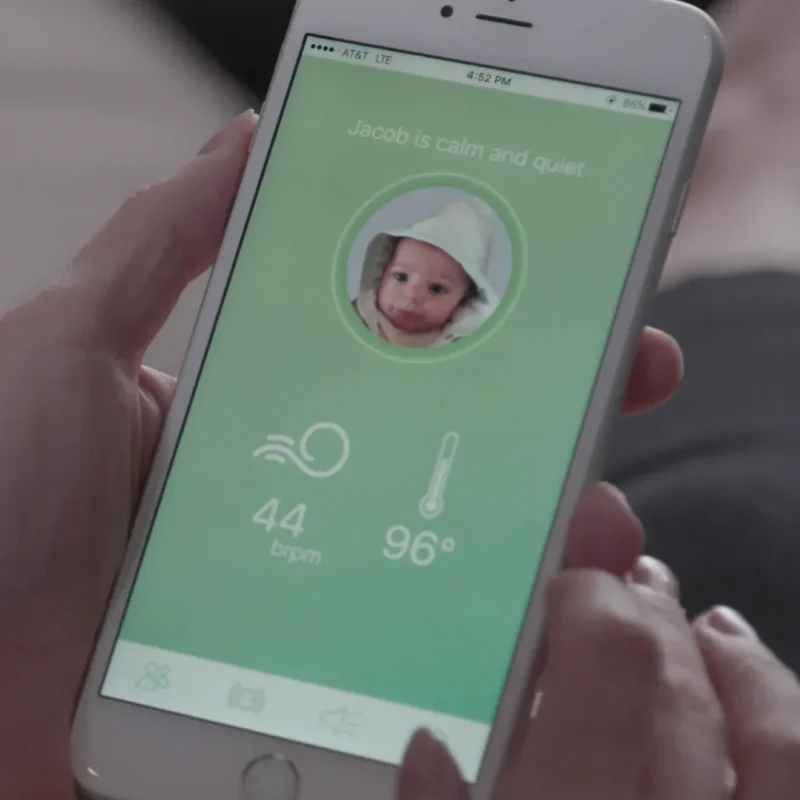
Medical wearables are evolving rapidly, from rehabilitation devices to continuous monitoring systems and preventative tools. While their potential to improve health outcomes is immense, designing these products presents a unique set of challenges. Unlike conventional consumer wearables, medical devices must integrate electronics, mechanics, and textiles into a seamless system that functions reliably in clinical settings, daily life, and even high-movement scenarios.

At Interwoven Design, our specialty lies in creating soft goods that feel natural against the body while incorporating hard goods—sensors, actuators, structural supports—that deliver precise performance. Every strap, sleeve, or interface must balance technical requirements with comfort, fit, and intuitive usability. A device that performs flawlessly but feels awkward, restrictive, or irritating will quickly be abandoned by the people who need it most.
Long-term wearability adds another layer of complexity. Medical wearables often remain in contact with the skin for hours or even days, requiring careful attention to materials, pressure distribution, and ventilation. Devices must support patient mobility, prevent injury, and integrate seamlessly into clinical protocols, all while maintaining hygiene standards and durability.
These challenges, however, are also opportunities. By addressing the intersection of comfort, ergonomics, and performance, Interwoven Design can create medical wearables that are not only clinically effective but also empowering and dignified for the people who use them. Our integrated approach ensures that each product functions as an extension of the body, helping patients and clinicians alike achieve better health outcomes through thoughtful, human-centered design.
Case Studies: Medical Design in Action
Interwoven Design’s work in medical wearables and healthcare soft goods spans a wide spectrum, from patient-focused therapeutic devices to clinician-centered support tools. Each project demonstrates how thoughtful design can bridge the gap between technology, the human body, and the demanding realities of healthcare environments. Whether stabilizing a catheter for heart failure patients, creating a flexible armband for continuous glucose monitoring, or integrating back support into a utility bag for nurses, our approach remains the same: combine clinical insight with human-centered design to deliver solutions that are safe, functional, and comfortable for real-world use.
Case Study 1: Nuwellis Device for Aquapheresis Therapy

Interwoven Design partnered with TKDG and Nuwellis to design a wearable solution that improves the patient experience during Aquapheresis therapy, a treatment used to safely remove excess fluid in people with Congestive Heart Failure (CHF). For patients already navigating a fragile health condition, maintaining catheter stability is critical: dislodgement, vein compression, or accidental interference can compromise treatment and patient safety.
The Design Challenge
The goal was to create an external arm stabilization device that protects the catheter while remaining comfortable enough for extended wear. The solution needed to work across different patient anatomies and treatment contexts, from resting in bed to moving around a hospital room, without restricting mobility or adding undue burden.
Our Approach

Through research with clinicians and patients, we identified key risks such as poor arm positioning, excessive elbow bending, and unconscious interference with the catheter site. These insights guided the development of multiple wearable prototypes designed to protect access points, promote healthy blood flow, and maintain comfort. Materials like Baymedix® froth foams were chosen for their softness, breathability, and ability to reduce pressure on the skin.
Impact
Clinical feedback highlighted two standout prototypes that offered strong catheter protection while preserving freedom of movement. Follow-up testing confirmed that these designs maintained vein access and minimized risks during therapy. By combining thoughtful ergonomics with material innovation, Interwoven Design delivered a solution that reduces complications, improves patient confidence, and supports more effective treatment outcomes.
Case Study 2: Senseonics Continuous Glucose Monitor
Senseonics is advancing diabetes care with the first long-term, implantable continuous glucose monitoring (CGM) system, designed to measure glucose levels for up to 90 days compared to the five-to-seven-day lifespan of most existing systems. Interwoven Design partnered with the Senseonics team to design the external armband that houses the system’s electronic component, ensuring comfort and reliability for everyday use.

The Design Challenge
The armband needed to balance durability, security, and comfort for wearers managing diabetes around the clock. From moments of high activity to periods of rest and sleep, the device had to stay securely in place without causing discomfort or drawing unwanted attention.
Our Approach
We developed a flexible, two-part band featuring a seamlessly knit inner layer and a reversible over-cuff. This design gave users both comfort and choice—adjusting for security, flexibility, and even color preference—while ensuring that the device remained unobtrusive during daily activities.
Impact
The resulting armband delivers a secure, user-friendly solution that integrates naturally into the wearer’s lifestyle. By prioritizing comfort and adaptability, the design supports Senseonics’ mission to make glucose monitoring easier, more accurate, and less intrusive for people living with diabetes.
Case Study 3: Whitecloud Medical Utility Bag

Whitecloud Medical set out to solve two everyday challenges faced by nurses and medical technicians: back strain from strenuous lifting and the need to carry essential supplies throughout long shifts. Interwoven Design partnered with Whitecloud to design and prototype a first-of-its-kind product that combines a supportive back brace with a utility bag, purpose-built for demanding healthcare environments.
The Design Challenge
Medical professionals often lift patients, maneuver equipment, and push gurneys, all while carrying syringes, bandages, and other tools in overloaded pockets. This combination leads to back strain, discomfort, and inefficiency. Whitecloud’s founders, medical professionals themselves, envisioned a wearable solution that could ease physical strain while keeping supplies accessible.
Our Approach

We designed a modular waist pack and back support system that functions as one unit but allows flexibility in use. The bag slides around the belt for quick access to supplies or can be secured over the back support during strenuous movement. Both the bag and the back support can also be detached and used independently. Interior compartments include a fold-down main pocket for medical tools and a rear pocket for personal items, streamlining organization.
Impact
The Whitecloud Medical Utility Bag provides healthcare workers with reliable back support and accessible storage in a single wearable solution. By combining ergonomics with practical functionality, the design reduces strain, improves efficiency, and directly responds to the daily realities of clinical work.
Designing Confidence Into Care
Medical design is about more than solving functional problems, it’s about building trust, safety, and dignity into every interaction. From stabilizing a catheter during Aquapheresis therapy to creating flexible wearable monitors and clinician-focused utility solutions, the challenges are as much human as they are technical. Through rigorous testing, iterative prototyping, and a deep commitment to human-centered thinking, Interwoven Design ensures that every product performs reliably while feeling intuitive, comfortable, and approachable in real-world use.
Our expertise in seamlessly combining soft goods and hard goods gives us a unique advantage: we can craft wearable medical solutions that are both technically sophisticated and thoughtfully tailored to the body. Every strap, sleeve, or modular component is designed with the user’s comfort, mobility, and safety in mind.
We invite clinicians, medical device companies, and innovators to collaborate with Interwoven Design to create medical products that not only meet clinical standards but also resonate with the people who use them every day. Designing for care means designing for confidence, and that is a principle at the heart of everything we do.
Interwoven Design is a design consultancy that is positioned at the intersection of soft goods and wearable technology, creating products that function with the body and offer comfort as well as the superb performance that arises through the innovative incorporation of rigid, often electronic and responsive elements. Sign up for our newsletter and follow us on Instagram and LinkedIn for design news, multi-media recommendations, and to learn more about product design and development!