A Q&A with Roger Schmitz, Founder of Moxy Monitor
Rethinking athlete performance through muscle oxygen data
Spotlight articles shine a light on designers and engineers we admire, asking leaders in the field about their work and their creative journey. Roger Schmitz, founder and CEO of Moxy Monitor, has spent more than a decade doing exactly that. A mechanical engineer by training, Schmitz developed a wearable sensor that measures muscle oxygen saturation using near-infrared spectroscopy. The technology gives athletes, coaches, and performance scientists direct insight into how muscles are working under load.

Originally inspired by medical device research, Moxy has become a powerful tool for endurance athletes, professional teams, and researchers studying human performance.
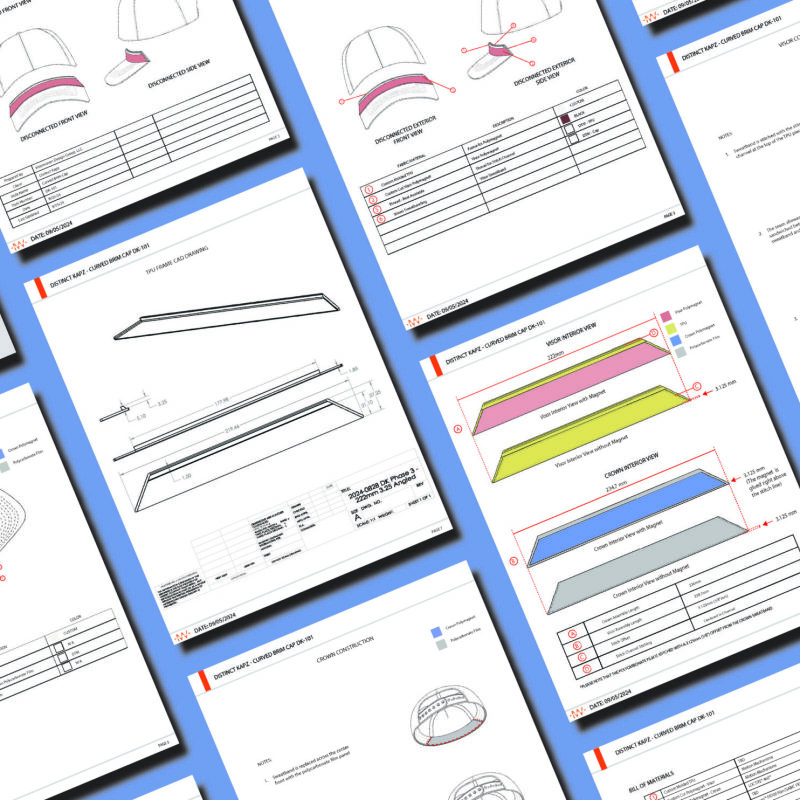
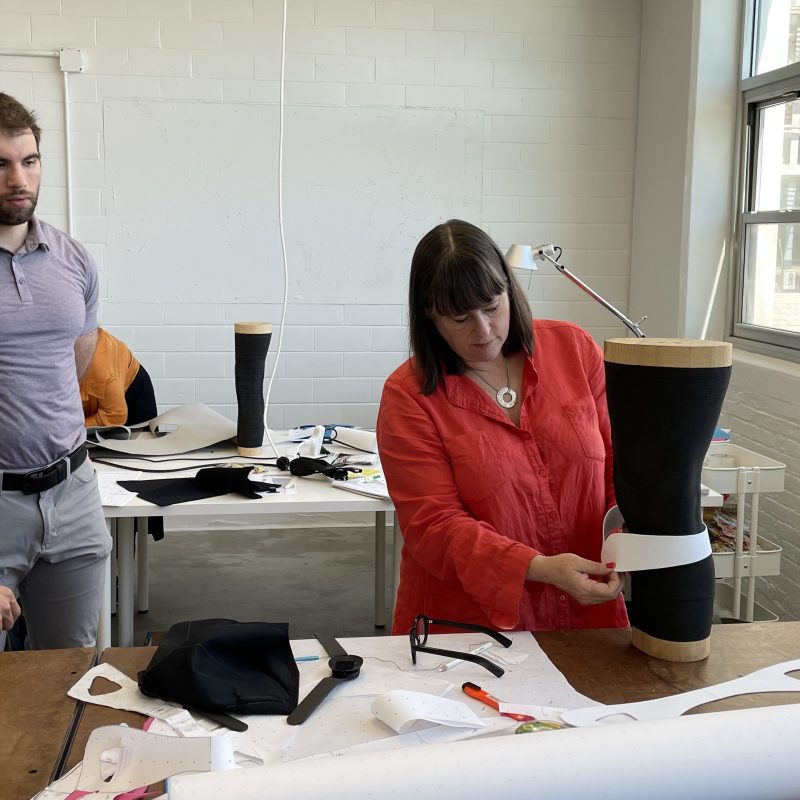
More recently, Schmitz partnered with Interwoven Design Group to solve a particularly difficult challenge: how to integrate a precision sensor into athletic apparel in a way that is reliable, comfortable, and almost invisible to the athlete wearing it.
We spoke with Roger about the origins of Moxy, what muscle oxygen reveals that other metrics miss, and what happens when engineers and designers collaborate to solve hard problems.
Q:
Could you start by telling us about yourself and the story behind Moxy?
A:
My name is Roger Schmitz. I’m the CEO and founder of Moxy Monitor, and I developed the technology that takes muscle oxygen measurements and allows us to do it accurately.
My background is in engineering—I’m a mechanical engineer by training. I worked in the disc drive industry for a while and later in medical devices. Around that time I was working with near-infrared spectroscopy, which is the core technology behind Moxy.
Those devices were large benchtop systems used for trauma patients. They had cables running to the patient and cost about $15,000. After that company failed and I was laid off, I started thinking about how to make the technology much smaller, more accurate, and dramatically less expensive.
The idea was to create a wearable, battery-powered device that cost under $1,000. I originally thought it would become a medical device, but a cardiologist I met with said something that changed everything. He said, “You should make it for athletes. The regulatory burden will be dramatically smaller.”
That’s what we did. And interestingly, a lot of researchers still buy the device today and use it to study heart failure—just not in a clinical setting.
Q:
We often hear about metrics like heart rate, GPS tracking, or power output. What does muscle oxygen reveal that those metrics don’t?
A:
Those metrics can be divided into two categories: external load and internal load.
External load is how much work the body is doing—things like GPS speed or power meters. Internal load is how hard the body has to work to produce that output.
Heart rate is one measure of internal load, but it has limitations. It responds slowly to changes in effort and it’s influenced by a lot of other factors.
Muscle oxygen is different because it reacts immediately. When you change the load, we see a change in muscle oxygen right away. We’re measuring what’s happening in the muscle in real time. That makes it incredibly useful for adjusting training intensity.
It becomes another tool athletes and coaches can use to understand what’s really happening inside the body based on those deeper insights.

Q:
So athletes and coaches can see that data in real time?
A:
Yes. The data can show up directly on a GPS watch for endurance athletes—we integrate well with Garmin. For team sports we connect with systems like WIMU GPS.
That means trainers or performance staff can monitor muscle oxygen while athletes are actually playing on the pitch. They can watch the data live on the sideline and even monitor the entire team.
It gives them a lot more information than they’ve traditionally had.
Q:
How do coaches actually use that information in training?
A:
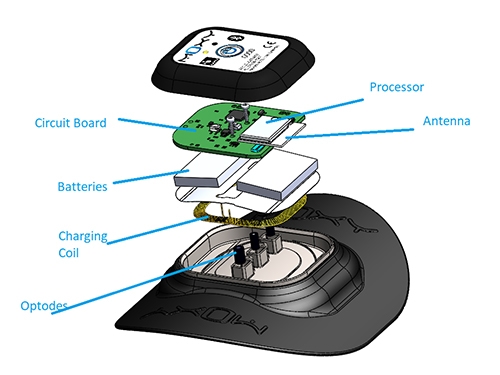
Exploded view of the Moxy Monitor sensor showing its internal components.
One example comes from a professional soccer team in Germany. During practice they alternate between small-sided games—maybe four-on-four—and full-team play. They assumed the full-team drills were more demanding.
But when they looked at the muscle oxygen data they saw that the short-sided play was actually creating more physiological load because of the constant quick bursts of action. It wasn’t showing up in heart rate, but it showed up clearly in the muscle oxygen data.
So they adjusted their training and backed off those drills slightly to avoid overloading the athletes.
Q:
Has Moxy ever contradicted what a coach believed about a player?
A:
Yes, we see that fairly often.
One example involved a professional triathlete who had two bikes—a road bike and a time-trial bike. She kept telling her coach she couldn’t produce the same power on one of them.
The coach initially thought she just needed to get used to the bike. But when they compared the Moxy data between the two bikes, the readings were dramatically different.
At that point the coach said, “This isn’t just in your head—this is a physiologic difference.”
They made some adjustments to the bike fit and her performance improved significantly.
Having objective data can validate what the athlete is feeling.
Q:
Performance staff in elite sports are very data-savvy—but also skeptical of new technology. How did you earn their trust?
A:
That’s a great observation. People approach them with gadgets all the time.
Our approach has been to work closely with both the research community and the high-performance sport community.
Moxy has now been used in hundreds of scientific studies, and those results get published in peer-reviewed journals. Early on people would say the device was too inexpensive to be credible—they assumed it must be a toy.
But as more researchers began publishing results, perceptions changed.
We also host a Moxy Summit, where our power users present how they’re using the technology with athletes. It’s about half researchers and half high-performance sports practitioners.
The key is consistency. Don’t overpromise. Stick to what the science supports.
Over time people start to realize the technology is legitimate.
Q:
With global events like the World Cup, where every performance detail matters, how does muscle oxygen data help teams prepare?
A:
Teams often conduct physiological testing in the lab—treadmill tests, breath analysis, lactate measurements.
The challenge is that you can’t do those tests during an actual match.
But you can measure muscle oxygen on the field. So teams can translate what they learned in the lab to real game situations.
They might know that a certain athlete can sustain a given workload for ninety minutes, while another athlete might only sustain it for sixty or seventy.
At that level, everyone is already operating near their limits. You’re not making huge changes—just small adjustments.
But those small tweaks can be the difference between winning and losing.
Q:
Moxy started in endurance sports. Where else are you seeing it used?
A:
Triathlon probably has the most users because the training is so intense and athletes need careful control of their effort.
Cycling is another big area because we integrate with many data systems already used by cyclists.
We’re also starting to see more use in running and swimming. Swimming is particularly interesting because there’s very little physiological data available when athletes are underwater.
Team sports are expanding too—soccer, hockey, and others—especially as we integrate with GPS systems used by teams.
And there are applications in strength training as well, where coaches want to understand how specific muscles are being loaded.
Q:
Wearables take a beating in contact sports. What was the biggest challenge in making Moxy work on the field cycle?
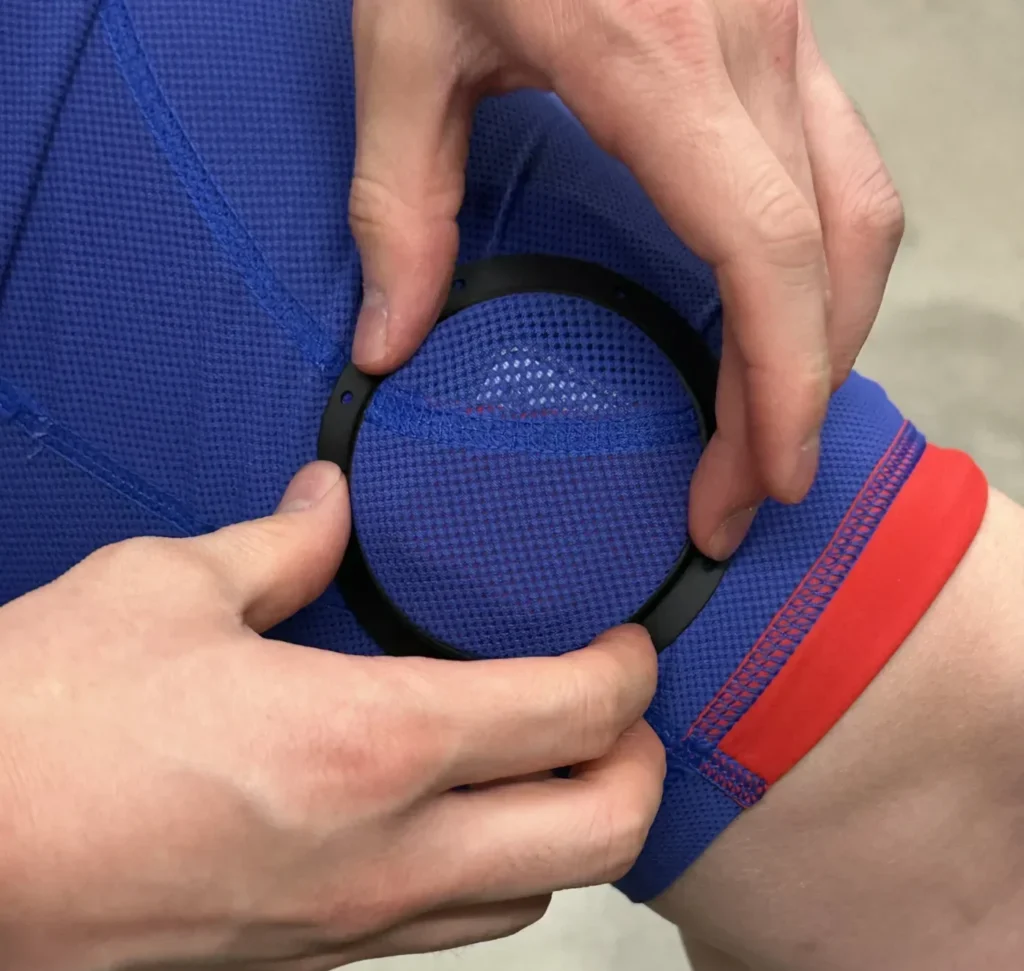
A:
Attachment.
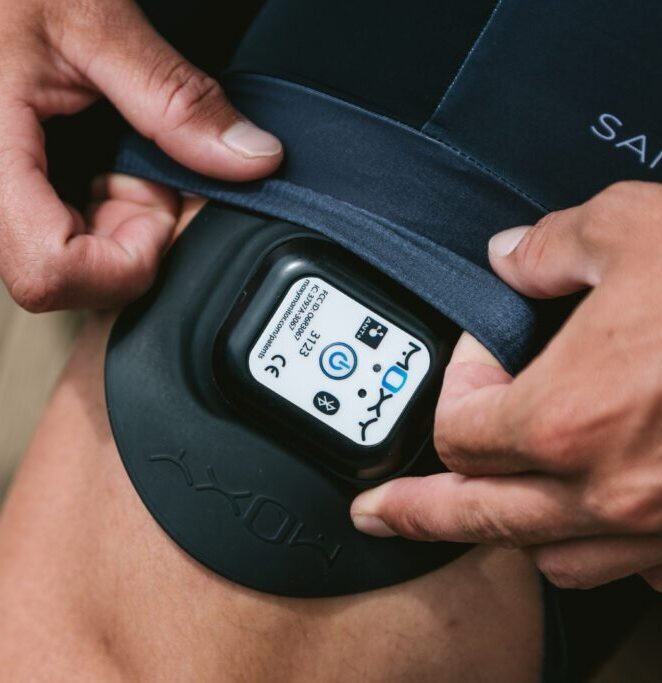
We could get the sensor to stay on, but it required tape, wraps, and a lot of effort from trainers. That’s not practical for daily use.
The breakthrough needed to be something that athletes could put on themselves so the sensor
would essentially disappear into the process of getting dressed. The thigh is a very difficult place to locate a sensor. There’s sweat, extreme movement, cutting, sprinting—it’s a tough environment.
We also discovered that muscle placement varies between athletes, so we needed a solution that allowed customized positioning.
Q:
That challenge is what led you to collaborate with Interwoven. What motivated that partnership?
A:
First of all, this is a really hard problem. It seems simple, but we’ve worked on it for ten years.
What motivated the contact with Interwoven was the need for a solution for soccer—something that worked at a team scale. Trainers needed to set the optimal location, but after that the athlete had to be able to place the sensor themselves.
It also needed to be rugged, durable, and easy to use.
To be honest, I was skeptical it was even possible. We had tried so many things already.
But it was a problem we needed to solve.
Q:
What has the feedback been on the design Interwoven developed?
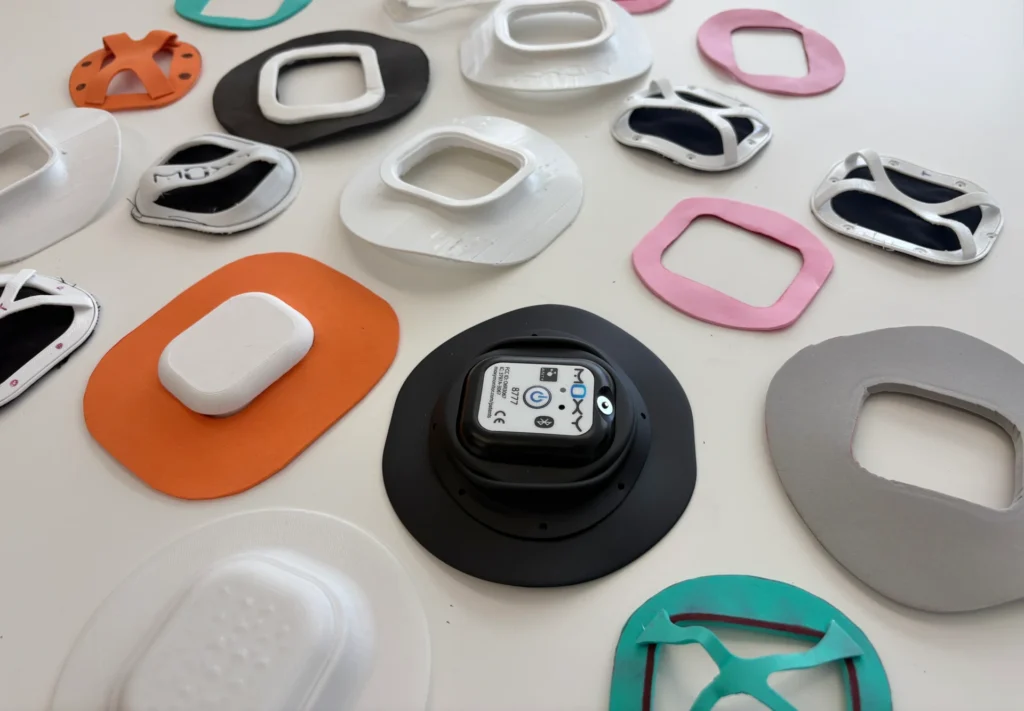
A:
When people see it, they pause for a moment. You can see the gears turning.
They look at it and say, “That is really good.”
A good design always looks easy in the end. It looks obvious—like of course that’s how it should work.
But it wasn’t obvious before. That’s the hallmark of great design. It looks simple, but getting there is not simple at all.
Q:
Engineers and designers don’t always speak the same language. What did you learn from working with Interwoven?
A:
One thing that stood out was that Interwoven had a system for arriving at creative solutions.
It wasn’t luck. There was a structured method for working through the problem.
I remember coming to the studio for a design session that lasted several hours. At one point I thought we might not get there—but the team kept working through the process.
Eventually the solution emerged.
As an engineer, I tend to focus heavily on functional requirements: the sensor has to stay in place, the data has to be accurate.
But there are other equally important needs—ease of use, adaptability, and even aesthetics.
These athletes earn millions of dollars. They wear expensive gear and jewelry. The product has to look good as well as function well.
Interwoven kept the entire picture in mind. If a product doesn’t meet all of those needs, it isn’t viable.
That was a really valuable part of the collaboration.

Final Thoughts
From laboratory technology to elite sports performance, Moxy Monitor represents a new way of understanding the body under load. By measuring muscle oxygen directly, athletes and coaches gain a window into physiology that traditional metrics often miss.
For Roger Schmitz, the journey has been one of constant iteration—engineering breakthroughs, scientific validation, and collaboration across disciplines.
And as wearable technology continues to evolve, the partnership between engineers, researchers, and designers will remain essential to turning complex ideas into tools athletes can use every day.
—
Check out the rest of our Spotlight series to hear more from leaders in the design industry. Sign up for our newsletter and follow us on Instagram and LinkedIn for design news, multi-media recommendations, and to learn more about product design and development!