A Q&A with Technical Designer Ryu Tomita

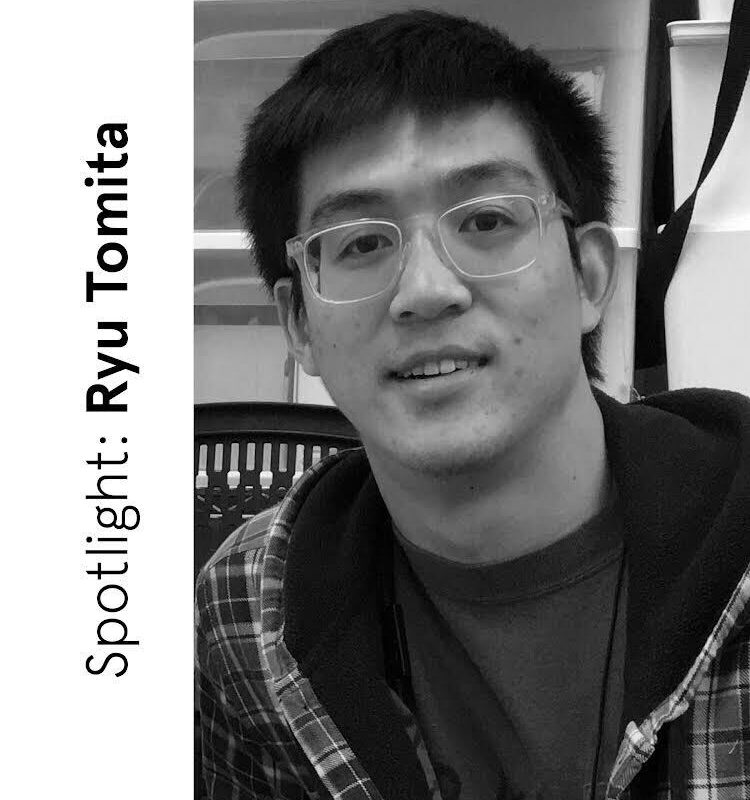
This month’s Spotlight turns to Technical Design — the quiet, intricate work that transforms ideas into products that actually perform. We sat down with Ryu Tomita, a former member of the Interwoven team and one of the most precise technical designers we’ve had the pleasure of working with.
Ryu’s career bridges industrial design, soft goods, wearables, and fashion, his strength lies in the details: how materials behave, how components integrate, and how thoughtful engineering elevates user experience. In this conversation, he reflects on his path, his process, and the craft behind technical design.
Q:
You’ve had a really dynamic career, spanning fashion, industrial design, soft goods, and wearables. What originally drew you into design, and what keeps you excited about it now?
A:
I’ve always just loved making things—assembling pieces, figuring out how they fit together, and then seeing something take shape from nothing. That’s really the common denominator across all those fields. You start with an idea you can’t fully see yet, and through the process you discover what it becomes. That moment when everything comes together is incredibly satisfying. That’s what pulled me into design in the first place, and it’s still what keeps me excited about the work today.
Q:
When you think back on your time at Interwoven—it’s been about four years now, which is wild—what are the projects or moments that really shaped you? What have you carried into your current career?
A:
Definitely HeroWear and working on the Apex. I had no idea what to expect because we were designing a product none of us had ever seen before, and we had almost no information in the beginning about what it should ultimately be. We had to research everything: going into warehouses, understanding what the end users were doing, what they needed, and how a solution might actually support them.
From there it was really just creating something step by step, little by little, and trusting the process—that if we kept working, we’d eventually land on the right product. Embracing that unknown, and not being afraid of it, was a huge learning experience for me.

Q:
Do you still approach your work the same way today—observing the user, embracing the unknown, and figuring things out step-by-step?
A:
I don’t have as many opportunities now to do direct user observation, but yes—the mindset is still the same. Embracing the unknown and taking things one step at a time was such a valuable lesson, and it’s something I still rely on in my work today.
Q:
What’s one thing people often misunderstand about the work of a technical designer?
A:
People sometimes get caught up in the tiny details and forget that technical designers always have to hold the big picture. You have to step back and think about how everything will come together and what the overall goal is—not just where a piece of Velcro lands. Remembering that bigger vision is really important.
Q:
How would you define technical design for someone outside our industry? People don’t always understand how valuable it is or how it differs from concept design or styling.
A:
Honestly, it’s hard to define because so much of it happens in your head. But for me,

Q:
Why do you think technical design matters, especially in categories like wearables, medical devices, and soft goods?
A:
Everyday items require a lot of thought because people use them constantly. Even something simple—like a belt or a holster—needs a slight curve so it hugs the hips instead of sitting straight. Those small decisions make a big difference when something is worn daily. Technical design is what makes those details functional and comfortable in real life.
Q:
You’re known for being incredibly detail-oriented—something I always appreciated in your work ethic. How does that mindset translate into the work you do now compared to more conceptual work?
A:
Believe it or not, I’m not as detail-oriented as I used to be. Things move so fast here that I’ve had to learn to let go of some of the minutiae. But I still think details are incredibly important. In tailoring, for example—where the hem goes, how the fusible is shaped inside a sleeve—those choices really affect how the final garment looks and performs. Even when the big picture matters more, the details still play a role in shaping the outcome.

Q:
Do you have an example—without breaking any NDAs—of a project where the details really drove the success of the design, or where you had to let go of details?
A:
I do, actually. I’m looking at the sample right now. We were working on a pleated dress, and the director wanted it to fit closely around the hips. With individually pleated pieces, it’s much easier to sew everything straight. But if you add a small dart to each pleat, the dress hugs the body much better. It was more work for the seamstresses and definitely more tedious, but it made a noticeable difference in the final result.
Q:
When you start a new project with big technical unknowns, where do you begin? And how is that process different from the product-focused work you did at Interwoven?
A:
Fundamentally, it’s the same. You lay out all the pieces, look at the sketch, and try to understand the big picture first—how the shape forms, where you need more volume, how things come together. Then you work through the smaller issues as you see the prototype.
The difference now is scale. In fashion, I’m working on collections with 120–140 styles, split between two people, instead of a single deep-dive product. But the mindset is the same: start broad, then solve the details.
Q:
What kinds of fabrics or garment types do you prefer working with?
A:
Wovens. I’ve learned to appreciate them more. Knits can be easier because there’s less room for error, but I work with both.
Q:
Tell me about your iterative process. How do you move from prototype to final sample?
A:
We usually make an initial prototype in a comparable fabric—we almost never use muslin. We fit it, review it, and make adjustments. If there’s a major design change, we start over. If not, we refine it and then move into a final salesman sample.

Q:
How much of the pattern work do you handle, and how long does a garment take?
A:
I draft from start to finish. A simple dress with four or five panels might take two and a half to three hours. A jacket could take three-quarters of a day to a full day. It really depends on the style.
Understanding the hidden architecture of a product — whether a wearable or a tailored jacket — is where technical design becomes almost invisible, yet absolutely essential.
Q:
Most people don’t realize how much inner structure goes into a tailored garment. Can you walk us through that?
A:
I didn’t realize it either until I opened up a men’s jacket. There’s a lot inside: canvas, padded chest pieces, Heimo, shoulder pads to hold the shape, sleeve structuring, and fusible layers that add support.
The heaviest structure is on the upper body—chest and shoulders. Fusible can run through the whole front and usually across the back shoulder blade. Anywhere there’s a turned hem, you’ll often find fusible to hold the shape.
Q:
Is that construction similar between men’s and women’s garments?
A:
The sewing is similar, but the fit is completely different because of physiological differences—especially the bust. You have to alter patterns significantly to account for that.
Q:
Can you give an example of a small technical detail that makes a big impact?
A:
A two-piece sleeve. People don’t notice it, but it feels so much more natural because the sleeve can actually follow the bend of your arm. A one-piece sleeve is basically a tube—it doesn’t guide the arm forward in the same way.
Q:
What’s next for you? What are you exploring personally right now?
A:
I’ve been experimenting with denim washes at home—doing potassium permanganate treatments on my patio, which is probably dangerous but fun. There’s so much science behind wash techniques that I never knew. I’m not inventing a new wash, but I’m trying to create my own personality in how the denim wears and ages.
Q:
What advice would you give to young designers starting out in technical design?
A:
I’d say it’s important to keep one eye on the bigger picture while you’re deep in the details. You have to be able to zoom out and look at the whole garment or product, then zoom back in to solve the small problems. It took me a while to learn that balance, but having both perspectives is essential.

Q:
Last question: if you had to start all over again, would you still choose to be a designer?
A:
Yes, absolutely.

—
Check out the rest of our Spotlight series to hear more from leaders in the design industry. Sign up for our newsletter and follow us on Instagram and LinkedIn for design news, multi-media recommendations, and to learn more about product design and development!