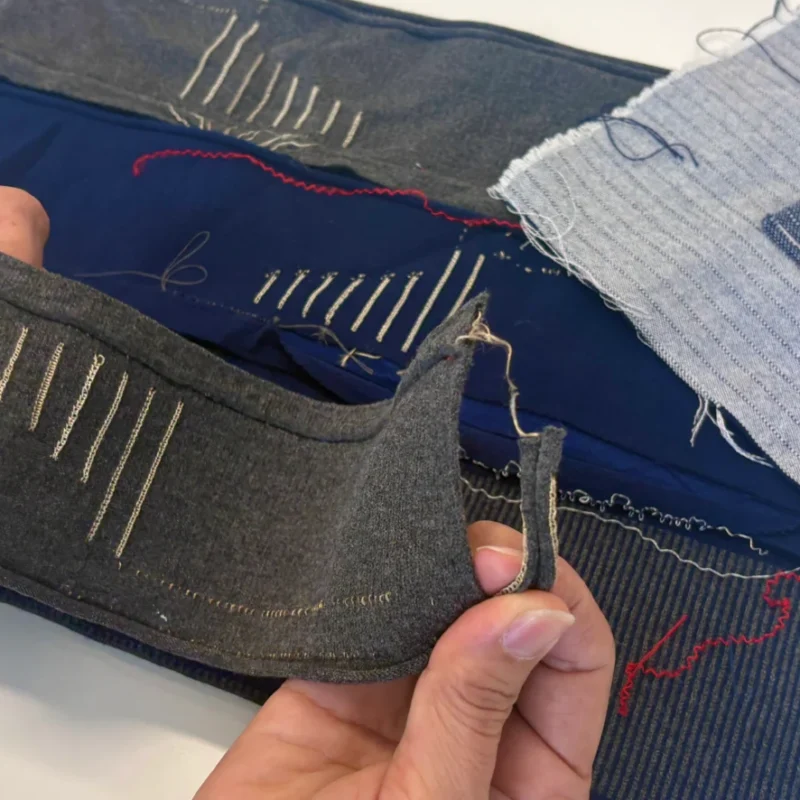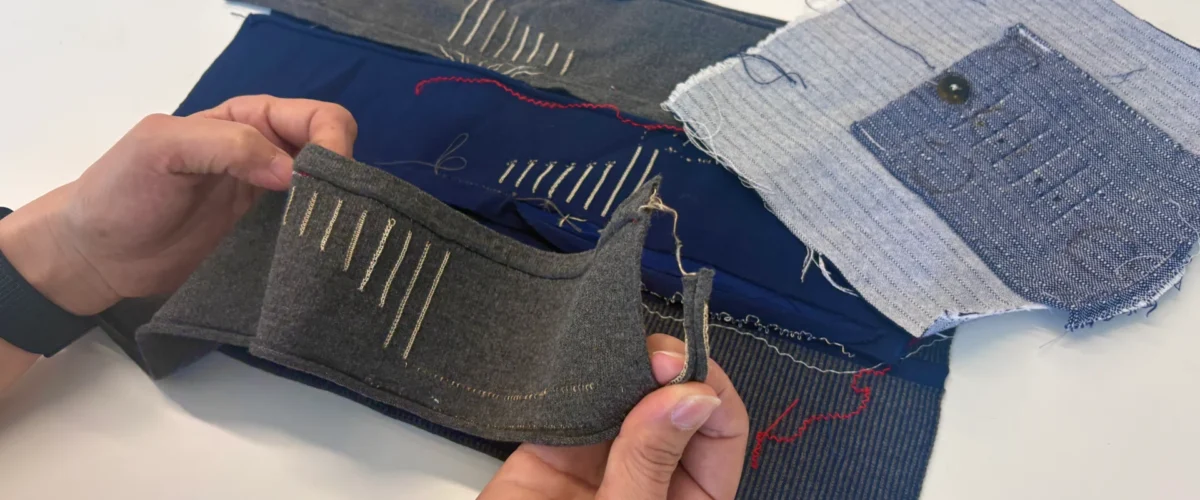
Beyond Devices: The Future of Smart Textiles
For years, wearable technology has been defined by devices; watches, bands, clips, and sensors attached to the body. These products brought computing closer to us, but they remained distinct objects, layered onto daily life rather than fully integrated within it. Today, that boundary is beginning to dissolve. Advances in miniaturization, materials, and fabrication are enabling a new generation of wearable technology that is built directly into what we wear. Electronics are becoming so small, flexible, and adaptable that they can be embedded into fibers, yarns, and fabrics, transforming textiles into intelligent systems. In this emerging paradigm, clothing transforms from a passive to an active layer; capable of sensing, communicating, and supporting the body in real time.
At Interwoven Design, we operate at the intersection of soft goods, wearable technology, and human-centered design. Our team brings together expertise in textiles, engineering, and product development to translate complex technologies into wearable solutions that feel intuitive and natural. In this Insight article, we explore how smart textiles are redefining wearable technology, and the design challenges that come with embedding intelligence into fabric. We also examine IARPA’s SMART ePANTS program as a case study in how next-generation textile systems are being developed and what they signal for the future of wearable design across industries.
From Wearables to Woven Systems
Early wearable technologies succeeded by attaching intelligence to the body. Devices were clipped, strapped, or adhered, creating a clear distinction between the user and the technology. While effective, this approach introduced friction, both physical and cognitive. Devices had to be managed, charged, positioned, and maintained.
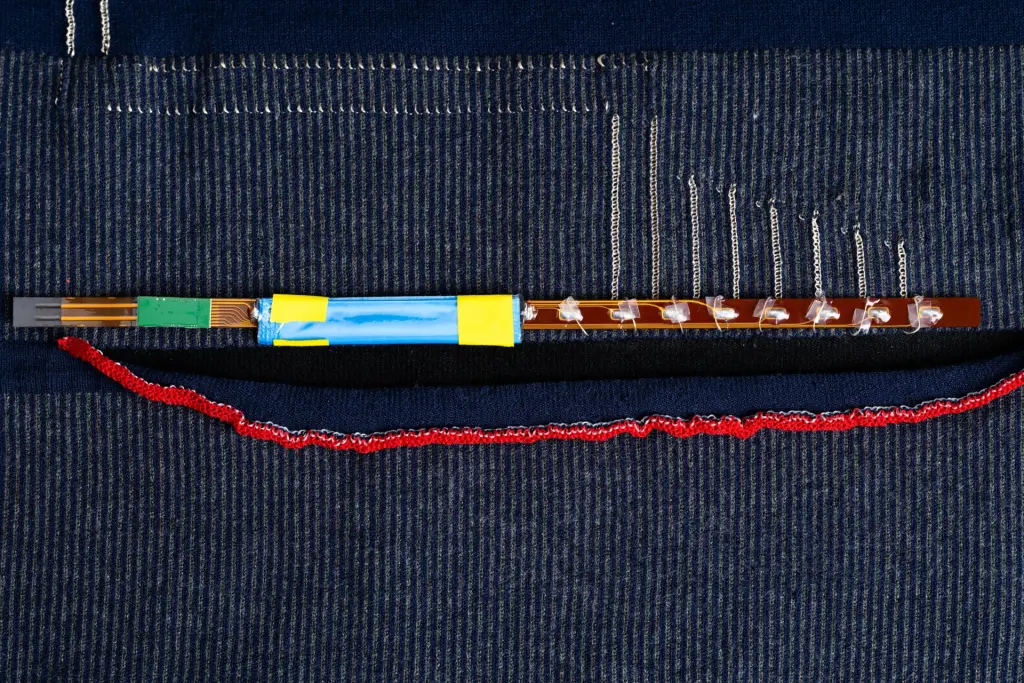
Smart textiles represent a fundamental shift away from this model. Instead of discrete objects, intelligence becomes distributed across the garment itself. Sensors, conductive pathways, and responsive elements are integrated into the fabric, allowing the entire system to function as a cohesive whole. The garment is no longer a carrier of technology; it is the technology.
This shift enables interaction that is continuous and embedded in daily life. Rather than engaging with a device, users inhabit a system. Clothing can sense movement, monitor physiological signals, respond to environmental changes, and communicate data without requiring direct input. At the core of this transformation is the rapid miniaturization of electronic components. Sensors, conductors, power sources, and processing units are shrinking to the point where they can be incorporated into fibers and yarns without compromising flexibility or comfort. Conductive threads can function as wiring, while micro-scale sensors can be embedded directly into the structure of a textile.
This evolution changes how designers think about materials. Electronics shift from separate components to be housed within a product to intrinsic properties of the material itself. A fabric can conduct, sense, heat, or transmit information, not because something has been added to it, but because it has been engineered to do so at a fundamental level. As a result, the role of design expands. Decisions about weave structure, fiber composition, and material layering become as critical as traditional considerations like form and enclosure. Designing a smart textile is not just about integrating technology, it is about orchestrating performance at the level of the material system.
The Challenges of Translation
For designers, the central challenge of smart textiles is not simply technical integration, it is experiential translation. Electronics and textiles are fundamentally different systems, governed by opposing constraints. One is rigid, precise, and sensitive; the other is soft, adaptive, and expected to endure constant movement, friction, and environmental exposure. Bridging these worlds requires more than embedding components into fabric; it demands rethinking how products are conceived from the ground up. Traditional product design often treats materials as a means of housing or protecting internal components. In smart textiles, the material is the system. Decisions about fiber composition, knit structure, layering, and seam construction directly impact not only comfort and durability, but also electrical performance. Stretch, for example, is no longer just a fit consideration, it affects conductivity, signal stability, and sensor accuracy. Similarly, the placement of seams or zones of tension can influence how reliably a system performs over time.
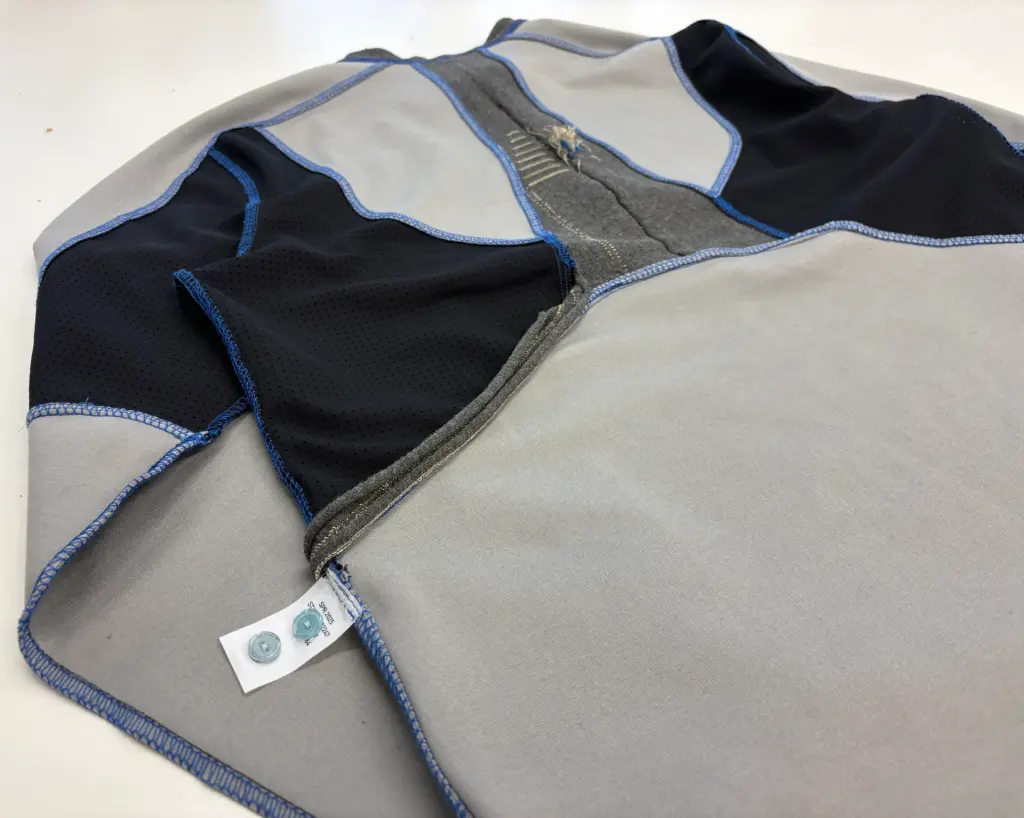
Designing at this level introduces a new set of constraints that must be balanced simultaneously. A garment must stretch, but not in ways that compromise embedded circuits. It must be breathable, while still protecting sensitive elements from moisture. It must withstand washing, abrasion, and repeated wear cycles without degrading performance. Each of these requirements influences the others, creating a tightly interdependent system where small decisions can have cascading effects.
Durability and lifecycle are also notable challenges. Unlike traditional electronics, which are often treated as discrete, replaceable objects, smart textiles are expected to behave like clothing: washed frequently, worn in varied conditions, and maintained over time. Designers must consider how these products age, how components are protected or exposed, and what failure looks like. Does the garment continue to function if one element degrades? Can it be repaired, or is it disposable? These questions push design beyond form and function into systems thinking.
Equally important is the user experience. Smart textiles must feel indistinguishable from traditional garments, even as they perform complex functions. This requires careful attention to weight, drape, texture, and fit. Hard points, bulk, or inconsistencies in material can quickly break the illusion, reminding the user that they are wearing a device rather than clothing. The goal is to achieve a level of integration where the technology disappears; where the garment behaves exactly as expected while quietly delivering enhanced capability. Designers must also consider how to communicate functionality through material, form, and experience. Feedback may come through changes in temperature, pressure, or texture rather than visual interfaces. The product must feel reliable and intuitive, even when its most advanced features are hidden from view.
Designing smart textiles is an exercise in reconciliation. It requires aligning the precision of electronics with the fluidity of textiles, the demands of performance with the expectations of comfort, and the complexity of systems with the simplicity of everyday use.
Case Study: SMART ePANTS
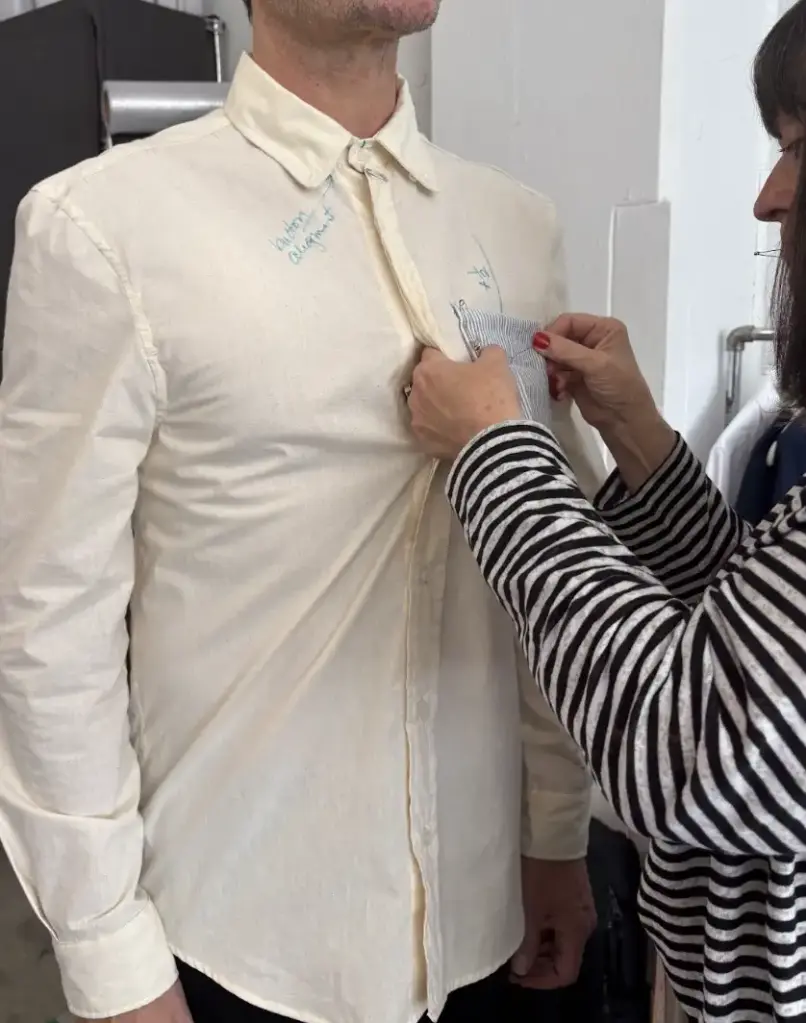
One of the most ambitious explorations of this concept is the SMART ePANTS program, developed by the Intelligence Advanced Research Projects Activity (IARPA). The initiative focuses on creating fully integrated textile systems: garments that incorporate sensing, power, computation, and communication directly into the fabric.
The goal of SMART ePANTS is to develop clothing that can capture and process information about the wearer and their environment without relying on external devices. Sensors capable of detecting audio, movement, and location are woven into the garment, while conductive fibers act as wiring to connect these systems. Power is supplied through flexible, deformable energy solutions, and data is processed using ultra-low-power electronics embedded within the textile structure.
What distinguishes this program is not any single technology, but the level of integration. Rather than assembling components into a wearable device, SMART ePANTS treats the garment itself as a platform where every element, from fiber to system architecture, contributes to overall performance. The result is a product that maintains the look and feel of everyday clothing while functioning as a sophisticated technological system. This approach has significant implications for design. By embedding intelligence directly into textiles, the need for bulky hardware is reduced, and the user experience becomes more seamless. The garment can be worn naturally, without requiring adjustment or awareness, allowing technology to operate in the background.
From Research to Real-World Applications
While programs like SMART ePANTS are rooted in advanced research, their implications extend far beyond specialized applications. As these technologies mature, they will begin to influence a wide range of industries, from healthcare and wellness to performance apparel and everyday clothing, translating into applications that prioritize comfort, wearability, and seamless integration into daily life. The trajectory is familiar: high-performance, research-driven innovation gradually becomes refined, simplified, and accessible to broader audiences.
In healthcare, this shift is particularly evident. Garments designed for continuous physiological monitoring are moving away from rigid patches and adhesive sensors toward soft, wearable formats that can be worn over extended periods. For example, products like the Hexoskin Smart Shirt integrate sensors directly into the fabric to monitor respiration, heart rate, and activity without requiring additional devices. Similarly, platforms such as the Sensoria Smart Socks embed pressure sensors into knit structures to analyze gait and movement, demonstrating how everyday apparel can double as a data collection system without sacrificing comfort.
Performance apparel is another area where smart textiles are gaining traction. Brands are exploring garments that actively support the body through embedded functionality rather than external hardware. The Ralph Lauren PoloTech Shirt tracks biometric data and streams it to your device, while recovery-focused compression garments incorporate engineered fabrics that enhance circulation and muscle support.
In wellness and lifestyle applications, smart textiles are becoming increasingly discreet and intuitive. Sleep-focused products, posture-correcting garments, and stress-responsive wearables are leveraging soft, flexible materials to deliver benefits without introducing friction into daily routines. Early-stage innovations, such as textiles that can subtly adjust temperature in response to the body or fabrics that incorporate haptic feedback for relaxation, point toward a future where garments play an active role in regulating comfort and well-being.
In industrial and safety contexts, smart textiles are moving beyond rigid equipment toward more wearable solutions. High-visibility clothing with embedded sensors can monitor worker fatigue or environmental conditions, while military and first-responder gear is beginning to incorporate distributed sensing systems that enhance situational awareness without adding bulk.
Across these categories, a consistent pattern emerges: the most successful products are those that translate complex technology into familiar, wearable formats. Rather than introducing entirely new behaviors, they enhance existing ones, turning shirts, socks, and outerwear into platforms for sensing, response, and support. As the underlying technologies continue to mature, the distinction between “technology” and “textile” will become increasingly blurred, paving the way for products that feel less like innovations and more like natural evolutions of what we already wear.
The Future: Textile as Interface, System, and Platform
The future of smart textiles is one where the textile itself becomes the interface, the system, and the platform. Clothing will no longer be a static layer, but an active participant in how we experience the world: sensing, responding, and adapting in real time. For designers, this represents a fundamental shift in how products are conceived and developed. It requires thinking beyond objects and toward systems, beyond components and toward materials, and beyond interaction and toward experience. The challenge is to harness the potential of embedded intelligence while maintaining the qualities that make textiles inherently wearable: softness, flexibility, and comfort. The most successful solutions will not be those that showcase technology, but those that integrate it so seamlessly that it becomes invisible, leaving behind only the experience of wearing something that works effortlessly with the body.
At Interwoven Design, we partner with clients to navigate this evolving landscape, translating emerging technologies into products that balance innovation with usability. By integrating expertise in soft goods, textiles, and wearable systems, we help bring the next generation of smart textiles from concept to reality.
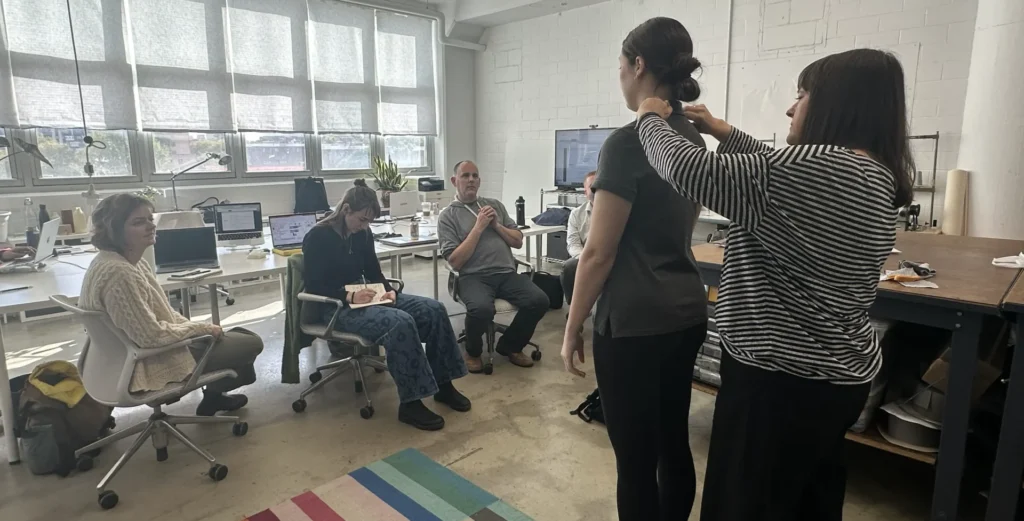
Interwoven Design is a design consultancy that is positioned at the intersection of soft goods and wearable technology, creating products that function with the body and offer comfort as well as the superb performance that arises through the innovative incorporation of rigid, often electronic and responsive elements. Sign up for our newsletter and follow us on Instagram and LinkedIn for design news, multi-media recommendations, and to learn more about product design and development!