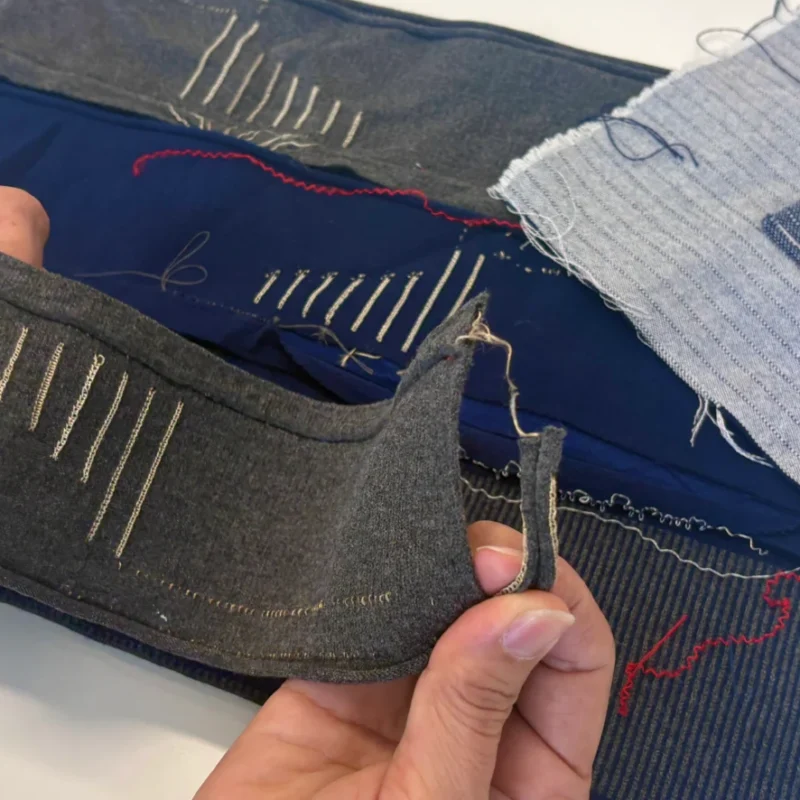
A Q&A with Medical Device Engineer Ivan Lin
Spotlight articles shine a light on designers, engineers, researchers, and creative thinkers we admire and the ideas shaping design today.
Designing wearable technology is one thing. Designing something people actually want to wear is another. When a product needs to move with the body, accommodate different shapes and sizes, and remain comfortable throughout the day, even the smallest design decisions can have an enormous impact.

This month, our Spotlight series explores Constructing Fit: Designing for Bodies in Motion through a conversation with Ivan Lin, a medical device engineer whose work bridges technology, product development, and the complex challenges of designing for the human body.
Ivan and the Interwoven Design team have collaborated on medical wearable design projects, navigating everything from integrating rigid electronics with soft textiles to balancing comfort, manufacturability, and cost. His engineering perspective brings a valuable dimension to the conversation about fit, particularly when the success of a medical device depends on whether someone is willing to wear it.
We sat down with Ivan to discuss why engineers need to embrace imperfection, what happens when users behave differently than expected, and why the most successful wearable products begin with the human experience.
Q:
Tell us a little about your career. How did you move from a traditional engineering background into developing wearable products, and how has that experience changed the way you approach design?
A:
I feel like the not-so-sexy answer is that I blundered into it.
The medical device industry is very interesting. It’s this unusual little part of the universe, and the wearables portion is even more so.
I think wearables are often treated as just an accessory. The primary device is what gets the focus until it’s almost too late, and then suddenly you need a wearable in time for launch.
Once you realize that the wearable is the thing that has the everyday touchpoint with your end user, the patient, it changes how you think about its importance. It’s something they interact with day in and day out, sometimes up to 24 hours a day. Fit and comfort become paramount.
Q:
Medical wearables are often developed around the technology first, with fit addressed later. Why do you think that approach is problematic?
A:
I think wearables are often an afterthought in the medical device industry. The primary device gets all the focus until it’s almost too late, and then someone needs to put together a wearable in time for launch. That seems to be a common approach throughout the industry.
At Nevro, with our second- and third-generation products, we recognized that gap and decided we needed to build the wearable into the development process from the start.
Once you realize that the wearable is the thing that has the everyday touchpoint with your end user, the patient, it should become one of the most important things you’re thinking about. It’s what they have to interact with day in and day out, sometimes up to 24 hours a day. Fit and comfort become paramount because that’s what they have to deal with.
Q:
The human body doesn’t behave like a predictable mechanical system. What’s something you’ve learned about designing for the body that challenged your engineering instincts?
A:
My ability to accept imperfection. I think most engineers, especially coming out of school, have the instinct to find the perfect fix or the perfect solution.
With wearables, you have to accept imperfection. You have to look for features, designs, and fits that cover a broad range of bodies, and you have to be flexible. You can’t design things with extremely tight tolerances. There has to be some give, and your product has to function with those imperfections.

Q:
And by imperfection, you mean recognizing that no two bodies are exactly alike? Rather than designing something to fit one person perfectly, you’re designing to accommodate a range of different bodies?
A:
Correct. And especially when you add motion. If the human body were static, you could design something to fit two different bodies, even if they weren’t quite the same. But when you add motion, it introduces an entirely new dimension.
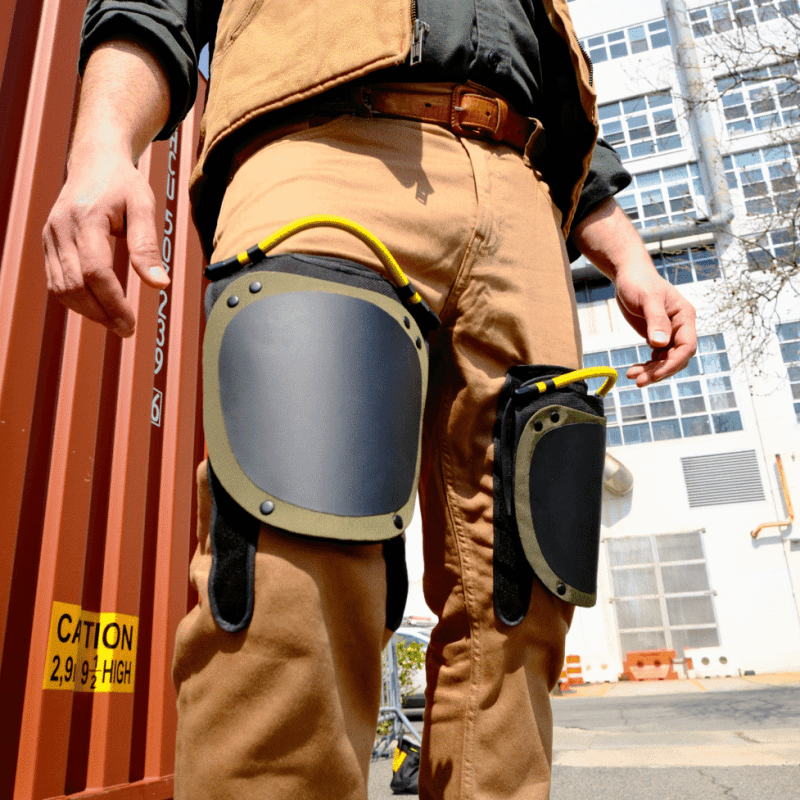
We’ve experienced that with products worn around the thigh. They might fit well on two different bodies when standing still, but once those people start walking, differences in musculature and muscle tone can change the fit considerably.
Q:
Wearable products often combine rigid electronics with flexible textiles. What’s the biggest challenge in integrating hard and soft goods into a system that moves with the body?
A:
I think the best approach is to allow the soft textiles to be the elastic, conformable part of the system. The biggest challenge is that you don’t always have that flexibility.
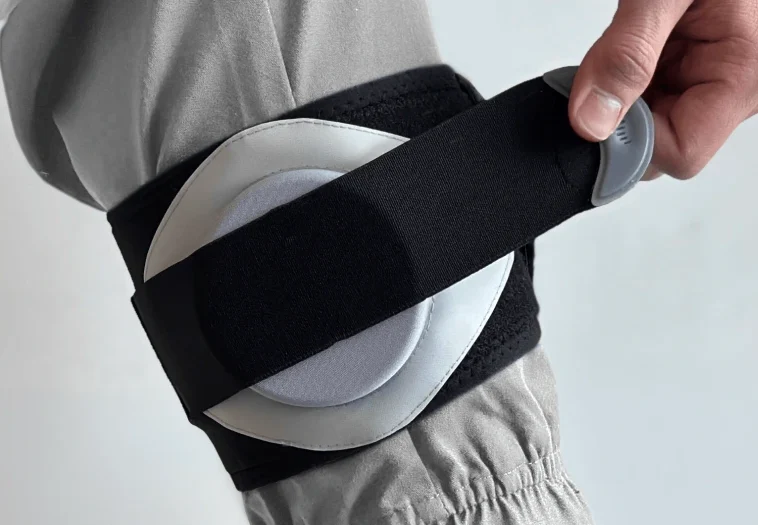
One of the hardest things is designing good detachable interfaces between rigid electronics and soft, pliable textiles. Those interfaces can disrupt the aesthetics, add bulk, and introduce complexity, especially when you’re trying to protect the electronics.
For one of our products, the unexpected solution was simply to create a slightly undersized pocket that we could slip the device into. Rather than developing a complicated mechanical interface, we used the stretch of the textile to hold the device securely.
It worked well for what we needed, and we were able to hide the device pretty effectively. Sometimes the simplest solution is the right one.
Q:
Engineers are trained to solve problems with measurable outcomes, but ergonomic testing often reveals how subjective comfort and fit can be. How do you reconcile what the data tells you with what a person says they feel?
A:
That’s a hard one. I think it comes down to how you structure your usability studies and how specific your questions are.
If you’re simply asking someone, “How’s your comfort?” That’s too broad. You need to drill down and ask more specific questions that help you understand what they’re experiencing.
You can start with purely subjective feedback, but as you iterate the design and gather more information, you should begin combining subjective and quantitative measures.
As you get further into development, you’ll have better ways of describing the experience and more specific categories that you can evaluate. The key is to make that subjective feedback useful in guiding the design.
Q:
We’ve worked together on medical wearable prototyping and development, where seemingly small design decisions had a significant impact on the user experience. Can you recall a discovery that changed the direction of a project?
A:
Definitely. That discovery is ultimately what led us to Interwoven Design.
We had been looking at existing wearable products that could hold a device around the waist, positioned behind the back. We explored jogging belts and similar products, trying to figure out how to accommodate a wide range of waist sizes.
We developed something that was essentially a belt with stretch material and a buckle. The idea was that users would tighten it until it was just snug, then secure it with Velcro. We even included instructions telling them to make it just snug.
That was not what happened.
Instead, people would really crank down on the belt, stretching it until it was uncomfortably tight. Then they’d complain that the belt was uncomfortable.
We thought using something familiar, like a belt buckle, would make it intuitive. But it actually backfired.
And these were people testing it in-house, people who were already familiar with medical devices and thinking about comfort. We realized that if they were doing this, our end users were probably going to do the same thing.
As an engineer, you’re already thinking about these issues in manufacturing. You consider how an assembly operator might do something differently than intended, and you develop processes to prevent mistakes. You have to think the same way about your end user.
Q:
Fit is often something companies try to refine toward the end of development. How should the process change when fit is considered alongside the technology from the beginning?
A:
You really can’t treat it as an afterthought. Mechanisms or features designed to secure a product to the body may not work well, or at all, when you’re looking at the extremes of the size range.
You have to determine what sizes you want to accommodate first and whether you can achieve that with one size. We’ve rarely encountered a situation where one size works for everyone.
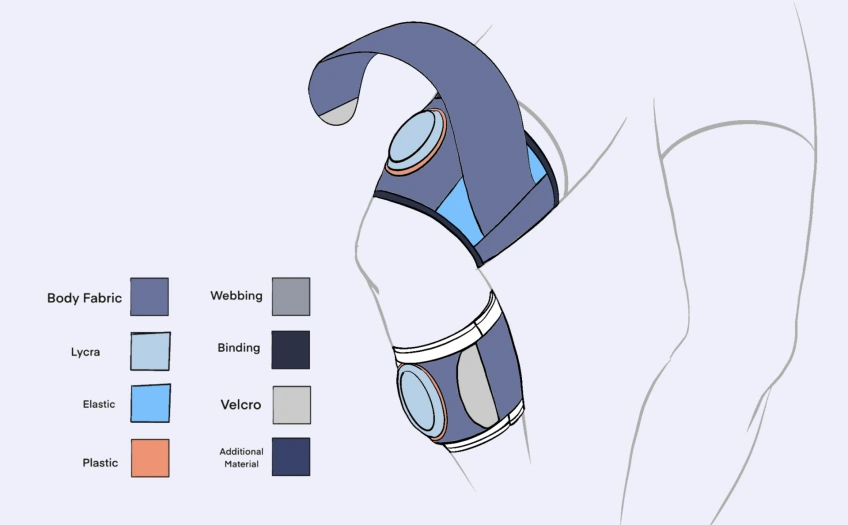
If you need two or three sizes, you have to design the mechanisms and features to work across those sizes. You can’t simply assume that the same design will work when it’s made larger or smaller.
With textiles, you’re dealing with shapes, cuts, and proportions. Those features need to be graded appropriately for different body sizes.
You need to make those decisions early because they affect the entire product architecture.
Q:
A medical device can be technically successful, but that doesn’t necessarily mean someone will want to wear it. Beyond comfort and aesthetics, what makes a wearable product something people will actually use?
A:
I think the real trick is designing it so that the user forgets they’re wearing it at all.
I like to use headphones as an example. With something like AirPods, you usually have multiple sizes of silicone adapters, but fit can still be a challenge. You often still feel them in your ears.
I’ve switched to headphones that clip around the ear like little cuffs. When I wear those, I completely forget they’re there. Sometimes after a workout, I worry I’ll walk into the shower without remembering to take them off.
That made me think about our wearable development. That’s what we’re shooting for.
The headphones aren’t necessarily lighter, but because of how they’re worn, you don’t feel the weight in the same way.
For our medical wearables, we wanted to keep the weight as close to the body as possible. A device can be a little heavy, but if you position it properly and use anchor points on the body that are accustomed to carrying weight, you’ll feel it much less.
The goal is to make the wearable feel like a natural part of the body.
Q:
Looking back at the wearable products you’ve developed, is there a design decision you would approach differently today?
A:
Not really with the projects we’ve worked on together. I think we developed those with a lot of lessons already learned.
There is one small detail from another adhesive wearable that still bothers me. We had a thermoformed component designed to encapsulate a device, and we were moving very quickly through development.
By the time I realized that the components didn’t nest together particularly well when stacked and stored after they were thermoformed, it was too late to change them. In production, they could become slightly warped or wrinkled during packing.
It wasn’t a major issue, and it wasn’t worth delaying the product to fix it. Speed was the priority, and the product worked well.
When you’re developing a product, you have to prioritize. First, you’re designing for the overall product experience. Then you’re designing for manufacturing. After that, you’re considering things like transportation, storage, and supply chain efficiency.
We had achieved what we needed in terms of cost and manufacturing, but that one detail still bugs me personally.
Q:
As wearable technology continues to evolve, what emerging materials or engineering approaches do you think have the greatest potential to improve the way devices interface with the body?
A:
I think additive manufacturing has a lot of potential. The industry is still figuring out how it fits alongside traditional manufacturing, but I think there are opportunities to integrate stiffer materials with textiles in new ways.
Another major area is energy storage. If we can change the form factor of batteries and other power components to make them flatter, less bulky, or even flexible, that would be a significant advancement for textile wearables.
Power supplies and capacitors are often the components that contribute the most bulk to medical wearables. As engineers, we’re frequently stuck working around them because that’s the best technology available.
If we can develop technologies that allow those components to become flatter or more flexible, I think that would absolutely change the game.
Of course, there’s always a trade-off between battery runtime and comfort, and sometimes that’s a trade-off you can make.
Q:
What’s one thing you wish more designers and engineers understood before beginning the development of a wearable product?
A:
Usability first.
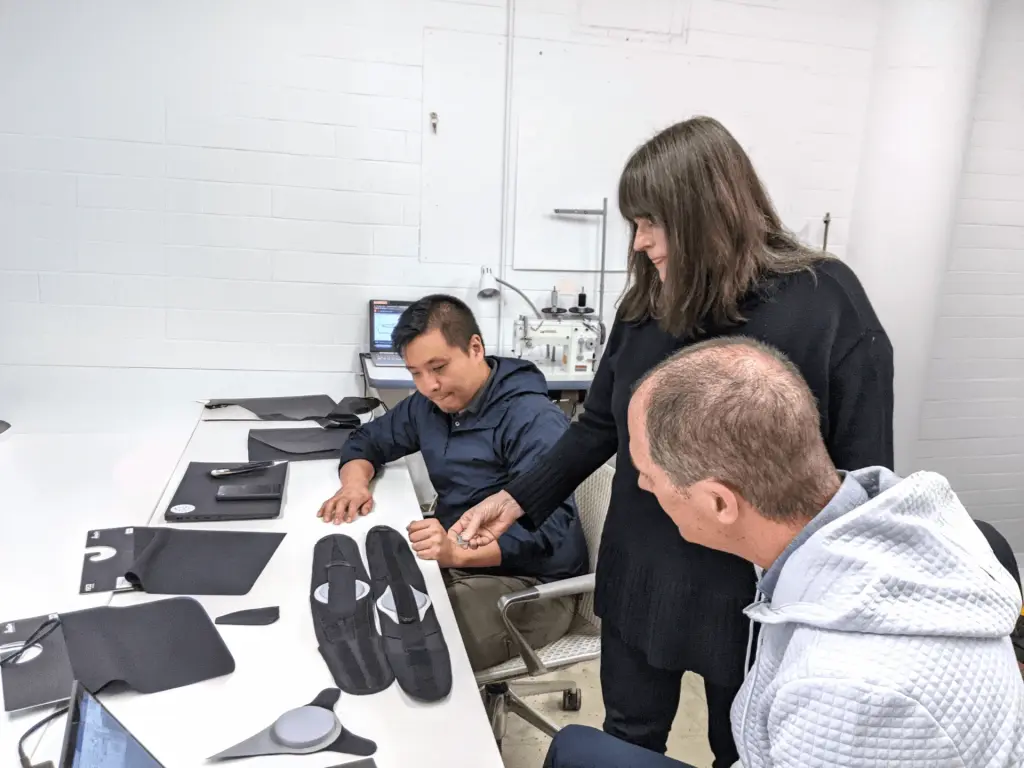
Especially in startups, where teams are sprinting toward clinical endpoints, usability can fall by the wayside. There’s a tendency to say, “We don’t have time for it. We just need something clinically viable.”
But if the wearable is critical to the success of your system, you cannot skip that step.
You need to take the time to do it. You can be smart about how much time and effort you invest, but usability has to be a priority.
Otherwise, you’re going to learn that lesson far too late, and it’s going to be much more costly, especially in terms of development time, to address it later.
Q:
Finally, what have you learned about the importance of collaboration between designers, engineers, and manufacturers in developing successful wearable products?
A:
I think a lot of the best discoveries and creativity happen at the intersection of disciplines, especially when those disciplines come into conflict with each other.
For our project, that intersection was always going to involve cost and manufacturing. We started by designing around the intended use of the product, and I think that’s always where you have to begin.
If you reverse the process and design for cost and manufacturing first, then try to build usability into it afterward, you’re not going to achieve the same results.
You have to start with the use and usability of the product, then have those uncomfortable conversations about how to make it less expensive and where to compromise on materials or manufacturing processes.
I think it’s extremely important to have designers in those conversations, especially when they bring expertise that the engineers don’t have.
I strongly advocated for Interwoven Design to be involved when we met with our chosen manufacturer. We needed to understand what machines and processes were available, where we could reduce production time, and what compromises made sense.
That’s where you get the most productivity: when everyone can get into a room together, discuss what works and what doesn’t, and ultimately create a product that’s economically viable while still performing the way you intended.
–
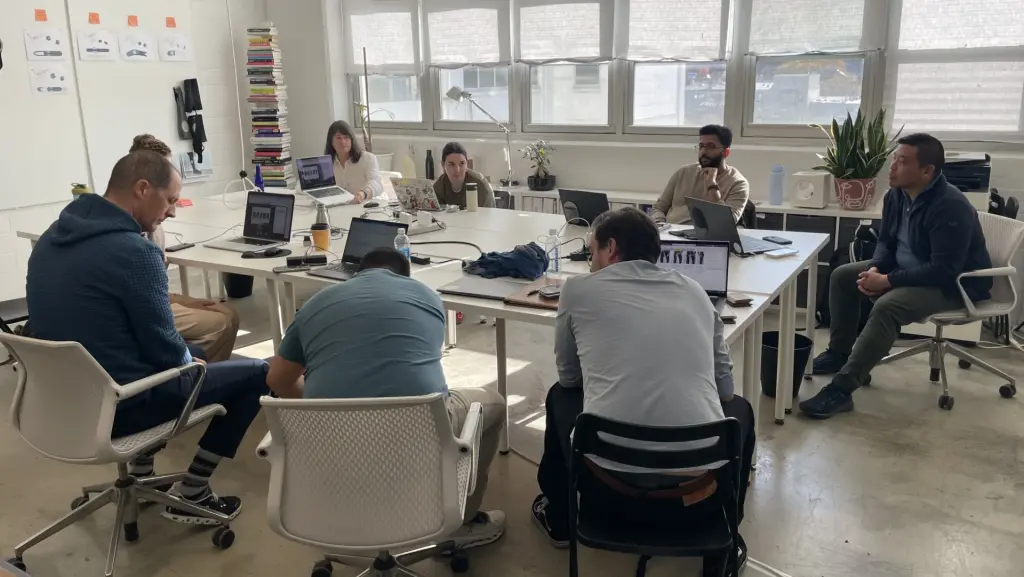
Ivan’s perspective reinforces something we believe strongly at Interwoven Design: successful wearable technology isn’t simply about making a device fit the body. It’s about understanding how people move, how they behave, and how they experience a product over time.
What makes our collaboration with engineers like Ivan so valuable is the opportunity to approach these challenges from different perspectives. Engineering brings a deep understanding of technology, performance, and manufacturing, while soft goods design brings expertise in materials, construction, fit, and the nuances of the human body. Bringing these disciplines together early in wearable technology development leads to more thoughtful, user-centered products.
The most interesting solutions often emerge where these disciplines intersect. As Ivan reminds us, designing for the body requires a willingness to embrace imperfection, question assumptions, and put usability first. Because ultimately, the most sophisticated wearable technology can only succeed if people are willing to wear it.