A Q&A with Soft Goods Designer Anthony Parrucci

A Q&A with Soft Goods Designer Anthony Parrucci

For this installment of our Spotlight series, we caught up with former Interwoven Design Group designer Anthony Parrucci, now a Soft Goods Designer at Newell Brands in Atlanta. From his early days dreaming of designing hockey gear to building innovative products for the baby industry, Anthony has carved a path defined by curiosity, collaboration, and a deep respect for hands-on making. In this conversation with Interwoven founder Rebeccah Pailes-Friedman, he reflects on conceptual prototyping, the power of “sketching in 3D,” and how early models can unlock new insights into user interaction and scale.

Photo courtesy of Anthony Parrucci

Anthony earned his master’s degree in Industrial Design from Rochester Institute of Technology after completing undergraduate studies in Business Administration and Art at Elmira College. Before joining Newell Brands, he spent three years at Interwoven Design Group, where he helped develop products across the athletic, medical, and military sectors—ranging from exoskeleton suits to technical bags and soft goods. His approach blends material experimentation with a strong focus on real-world usability. Outside the studio, Anthony brings the same discipline and drive he once applied to ice hockey, which he played at the professional and collegiate levels. Whether on the rink or in the workshop, he’s always been drawn to how performance, form, and human connection intersect.

Q:

Tell us a little bit about your background and how you found your way into industrial design.

A:

As far back as I can remember, I always wanted to be a hockey player. That was the dream. But what I found most exciting was the equipment—sticks, pads, helmets—and the idea of designing it myself. I knew I wanted to be the person behind the gear, making things better for athletes. But the funny thing was, while everyone could tell me how to become a pro hockey player, no one had any clue how to become a product designer. I kept asking, but nobody could point me in the right direction.

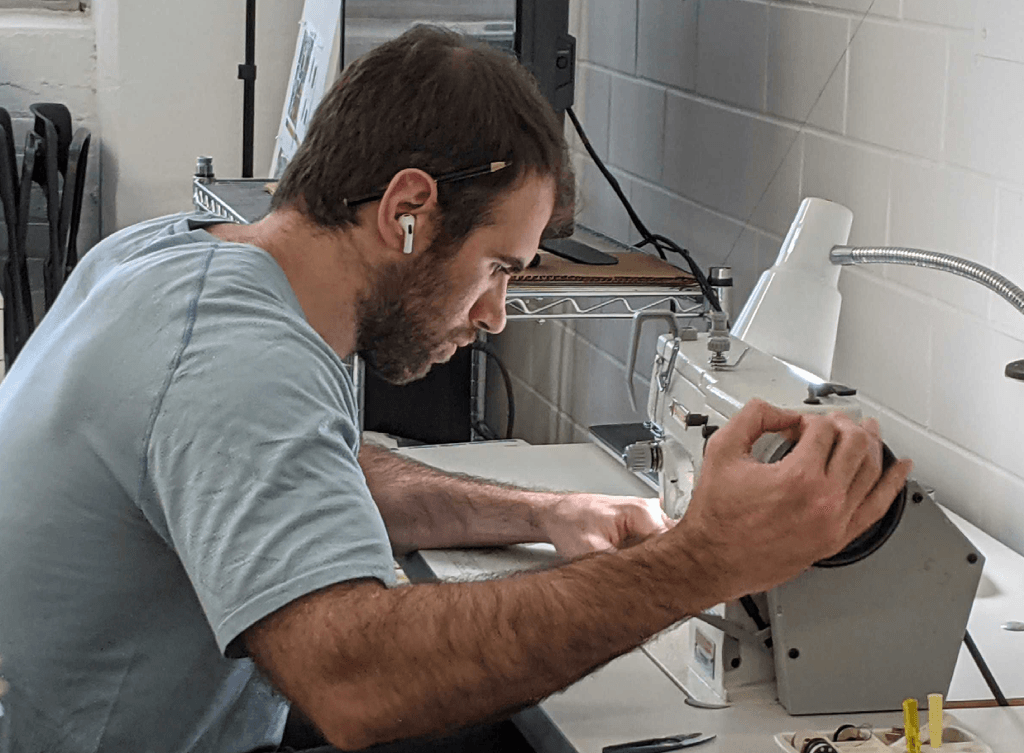
Anthony Parrucci sewing a prototype at Interwoven, working on soft goods design.
Anthony Parrucci at Interwoven, focused on soft goods prototyping

It wasn’t until undergrad that I met a professor who changed everything. He helped me find the path and really took me under his wing. I went to RIT, studied industrial design, and honed my skills while finishing up my hockey career. After graduation, I interned at Interwoven, and that turned into a full-time job—which was honestly one of the best places to grow as a young designer. I spent about three years there, getting my hands dirty, building fast mockups, and learning how to make ideas real. Now, I’m working at Newell Brands as a soft goods designer, focusing on the baby space. It’s a change of pace from Interwoven—bigger team, different structure—but the fundamentals of good design still apply.

Q:

What does conceptual prototyping mean to you, and what role does it play in your process?

A:

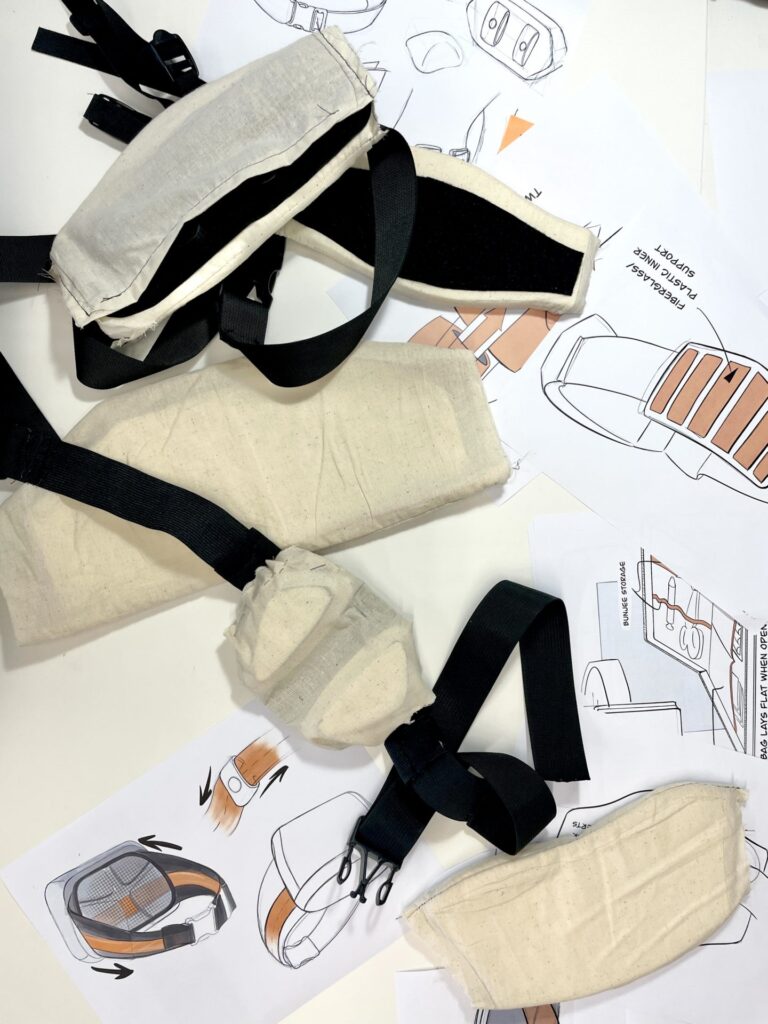
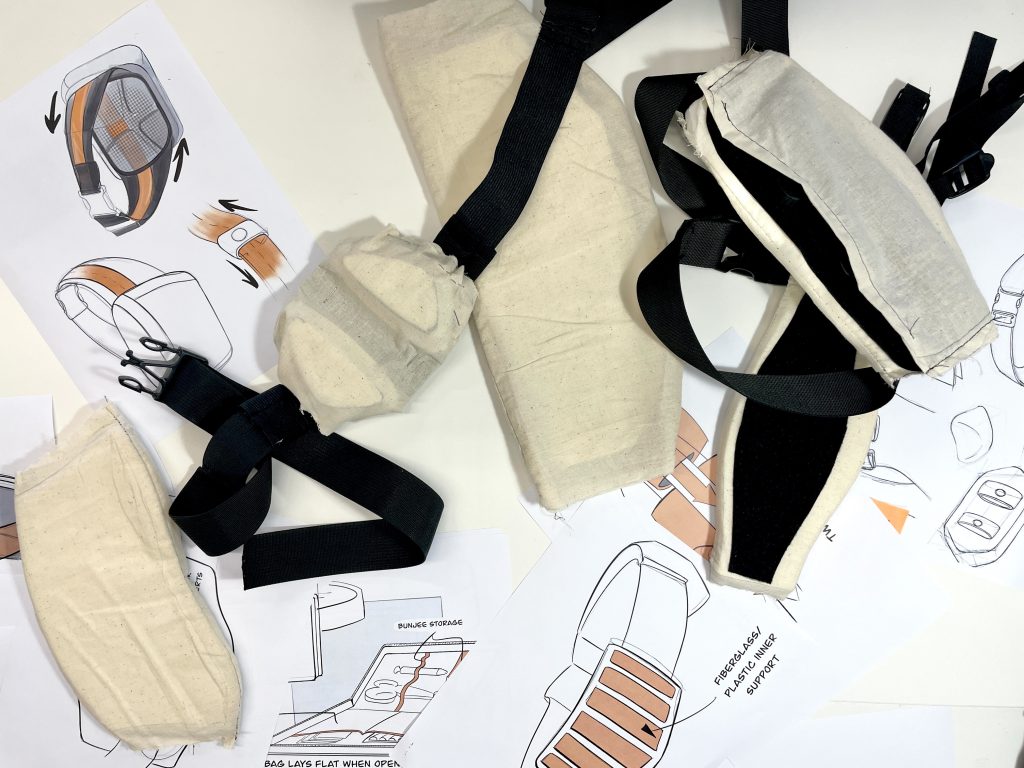
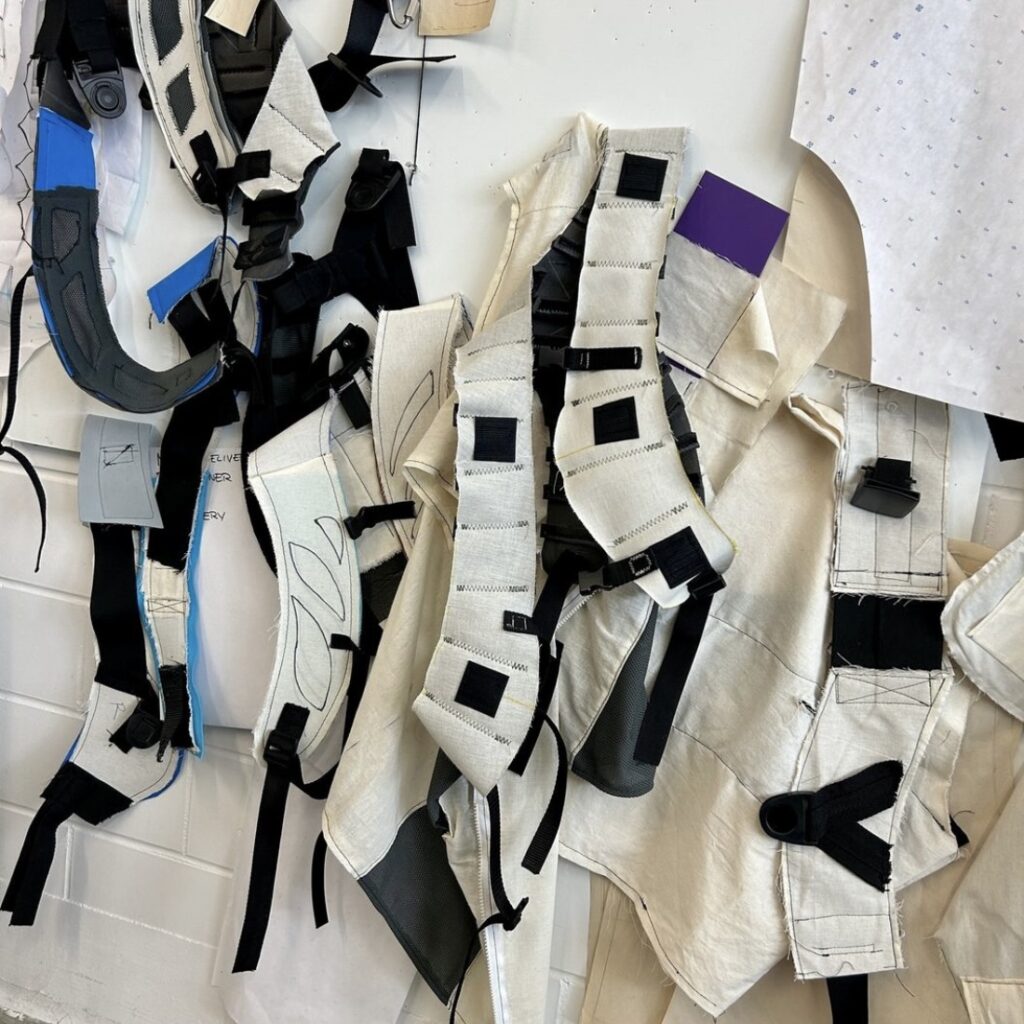
To me, conceptual prototyping is one of the most important parts of product design—especially when you’re working on the front end of a project. In fast-paced environments, having a way to quickly explore and communicate ideas is everything. I remember when I was in school, I was so hesitant to make mockups. I worried that if something was built with cardboard or hot glue, people would judge it. I’d think, “This muslin has raw edges—are they going to take it seriously?” It took me a while to realize that the point of those early models isn’t perfection—it’s validation. You’re trying to test an idea, not deliver a polished object.

Whitecloud Ideation
At Interwoven, muslin prototypes help bring design ideas to life.

Once you get over that mental hurdle and stop caring about fidelity, you’re limitless. You can make a crude mockup and say, “Imagine this part holds electronics,” and suddenly you’re in a conversation about function, user interaction, and viability. At Interwoven, that was a big part of the culture. You could build something messy, cheap, fast—and the point was to learn. It wasn’t about impressing people with how pretty something looked; it was about getting information quickly, failing fast, and saving money in the process.

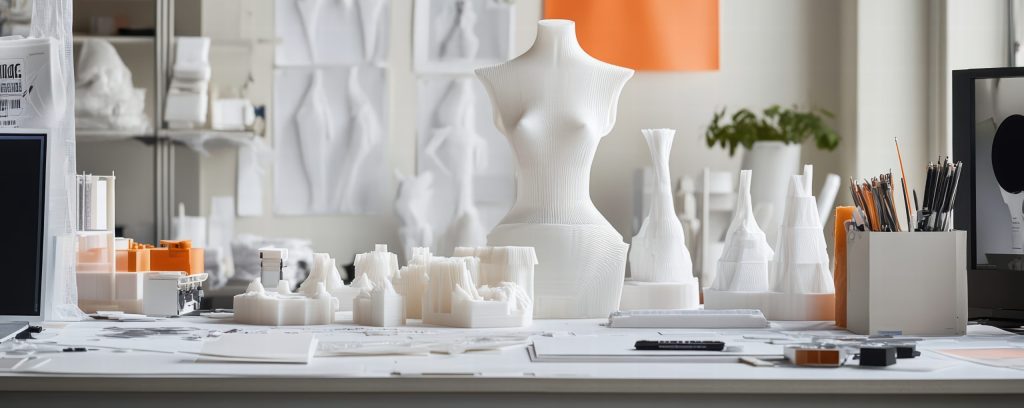
Sometimes a $1 muslin model tells you more than a $300 3D print. That’s the ROI of prototyping. Even though there’s no exact formula for it, you learn so much by making something tangible. And that knowledge pays off tenfold when you move to the next stage.

Q:

At Interwoven Design, we often talk about “sketching in 3D.” How do you think 3D prototyping compares to 2D sketching in your process? When do you choose one over the other—or do you use both?

A:

A lot of the time, they happen in parallel. I’ll jump back and forth between 2D sketching and physical prototyping depending on what I’m trying to figure out. But if I’m being honest, there were definitely moments—especially during projects at Interwoven—where I found myself sketching too much. I’d get stuck in the lines, trying to make things look good on paper, but I wasn’t really proving anything. I’d realize I was spending all this time drawing, but not actually learning how something would work in the real world.

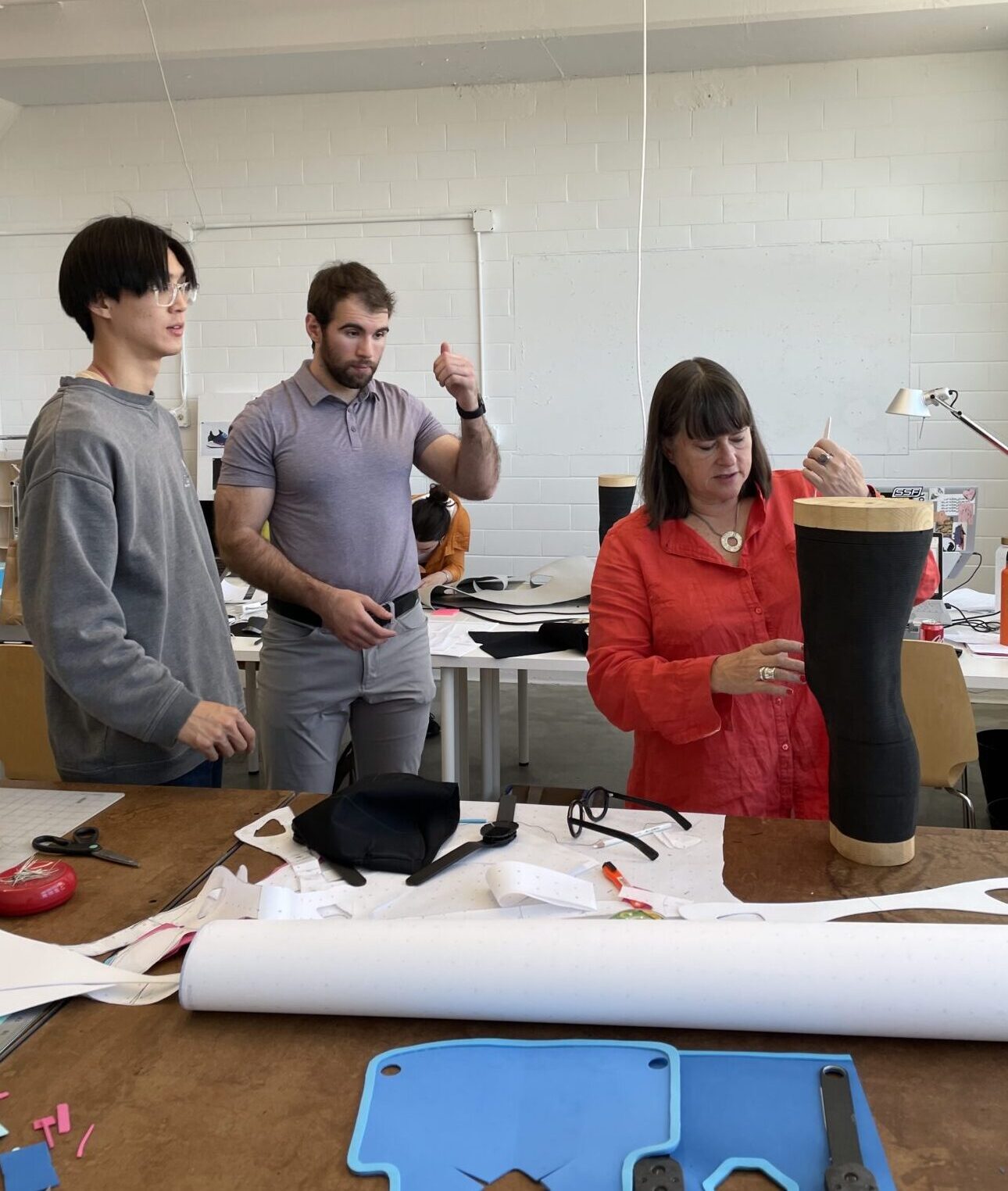
That’s why I’ve always loved working in 3D early. I remember being in the studio with muslin draped on a form, sketching right on the body, ripping paper, taping things together. There’s just something about the immediacy of that. You’re not just imagining a form—you’re shaping it in real time, and often that translates right into pattern-making or the next stage of development.

Sometimes, when you’ve got a tight timeline or the project is super function-driven, I’ll skip 2D altogether and go straight to building. I’ll bring a quick muslin or cardboard mock-up to a team meeting and say, “This is what I think it’s doing.” That way, people can touch it, react to it, and we can talk through pros and cons on the spot. You don’t get that level of feedback from a sketch alone.

So yeah, I still sketch—but physical modeling is where I uncover the really good stuff. And often, once I understand how something works in 3D, then I’ll go back to 2D to refine the aesthetics or create a more polished representation. It’s a constant back-and-forth.

Q:

Can you share a specific example of a conceptual prototype that helped solve a problem or clarified your thinking during a project?

A:

Woman wearing the Ninja Frost Vault soft cooler backpack outdoors, surrounded by trees.
The Ninja Frost Vault soft cooler — a functional, fun design born from rapid prototyping.

The Ninja Frost Valut soft cooler project comes to mind immediately. That one was a wild ride in the best way. They came to us with a super tight turnaround—like two weeks—and said, “We need something functional and fun, and we need to validate the user interaction.” And keep in mind, this was a client with all the resources in the world. They had access to 3D printers, high-end materials, whatever they wanted. But even they knew that to move fast, we needed to get scrappy.

So instead of building out a full-size, high-fidelity prototype, we started with quick, rough mockups—cardboard, muslin, whatever we could use to visualize the structure. It was about figuring out how the top door worked, how the zipper would interact with the opening, how the compartments connected on the inside. They told us, “We want to fit 18 cans and a wine bottle,” which sounds specific but gets tricky once you start shaping the actual space.

That’s the beauty of these early mockups. They let you work within constraints and still explore. You’re building something real enough to evaluate, but flexible enough to change on the fly. We’d hold the model, try different openings, move things around. If we’d started with a polished CAD file or waited on a perfect 3D print, we would’ve lost valuable time—and we probably wouldn’t have caught some of the spatial issues until much later.

So even in a super corporate environment, the quick and dirty models were essential. They gave us clarity, speed, and insight—all things you can’t afford to miss when you’re on a tight timeline.

Q:

Can you give an example of a quick model that taught you something you wouldn’t have learned on paper?

A:

a warehouse worker wears the Apex Exosuit
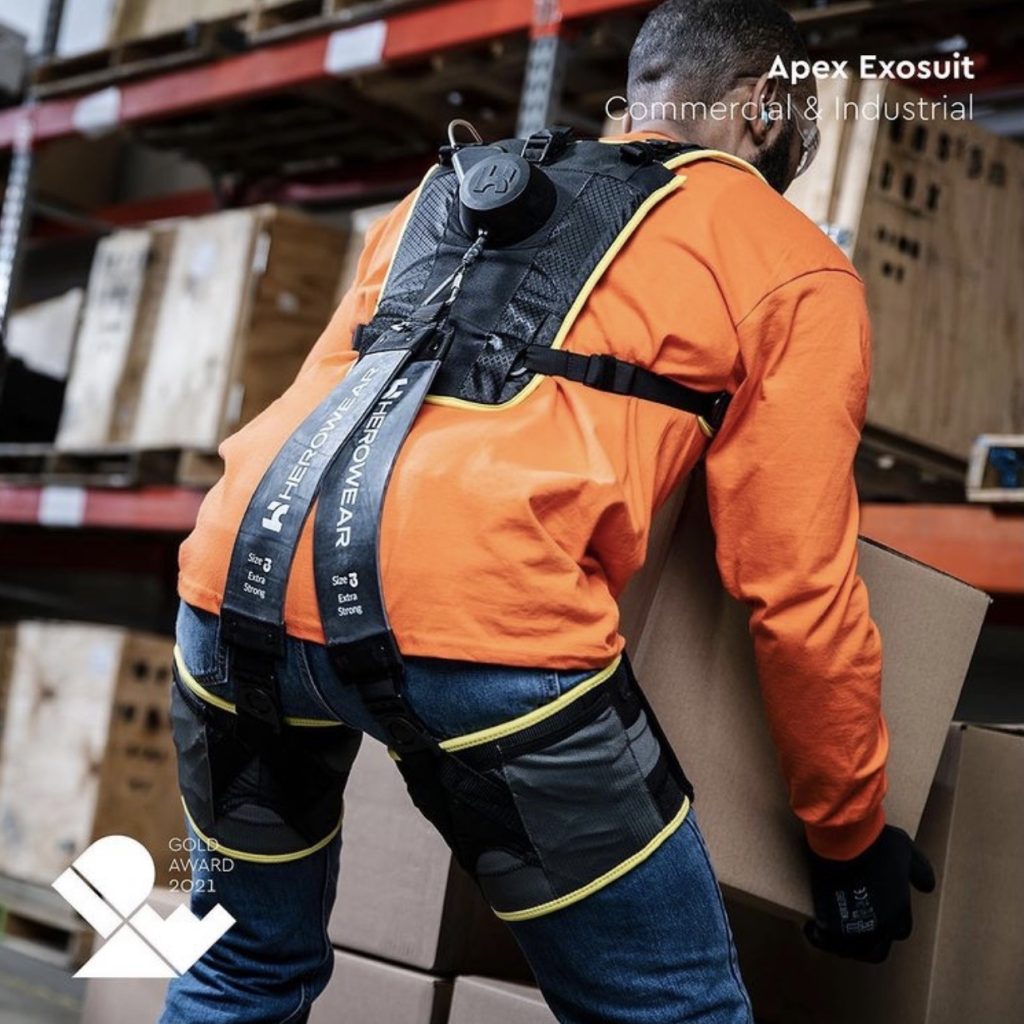
IDEA Gold Award 2021 winner: Apex Exosuit

Totally. One of the best examples I can think of actually goes back to the HeroWear Apex exosuit. We were working on the early development of the wearable, and we were designing things like the shoulder straps and leg portions—really important areas for comfort and function. And the thing is, you can look at all the biomechanics research in the world, but until you physically mock something up and put it on a body, you don’t feel the impact of the design.

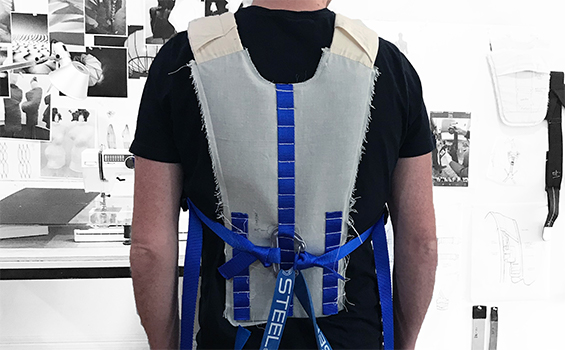
I remember making these super rudimentary models—muslin straps, cardboard cutouts, foam forms—and just trying things on. One tiny change, like shifting the sternum strap half an inch higher, would totally throw off the balance. It would start pulling back on the upper plate in this weird way, or it would choke you a little if there was any tension. It was a great reminder that the human body doesn’t care what the sketch says—it cares how it feels.

model wearing exosuit mockup harness
A model wearing a mockup of the the Apex Exosuit, rear view

That was especially true when we were testing on different bodies. Something that fit me well didn’t necessarily work on Aybuke or Meghan. We were seeing, in real-time, how much variation there is in anatomy. And we weren’t just looking at fit—we were watching how people used the prototypes. One person would put on a backpack starting with their left arm, another would hoist it from the bottom, someone else would swing it over their shoulder. All of those micro-behaviors matter.

So in that case, the mockups weren’t just about proving fit—they were about revealing differences in interaction, body types, motion, all of it. None of that was visible in the drawings. You had to build it and put it on people. That was the only way to really learn.

Q:

What kinds of materials do you gravitate toward when making these sketch models, and how do those choices shape the way you think through a problem?

A:

It really depends on what I’m trying to solve. I’ll use muslin if I need something that drapes or behaves like fabric, cardboard when I’m looking at form and structure, and EVA foam is kind of the wildcard that I love to use when I need something that does a little bit of everything. That stuff is gold—it can act like a soft shell, a flexible strap, even simulate Velcro depending on how you cut and tape it.

The thing you have to watch out for, though, is that people will take whatever you show them literally. If you’re showing a conceptual prototype to marketing or upper leadership and you use a stretchy mesh just because it looks good or is easy to sew with, they might say, “Oh wow, this feels amazing—we should use this!” And you’re like, “No, no, this isn’t the real material! It’s just here for the mock-up.” So I’ve gotten more strategic over time.

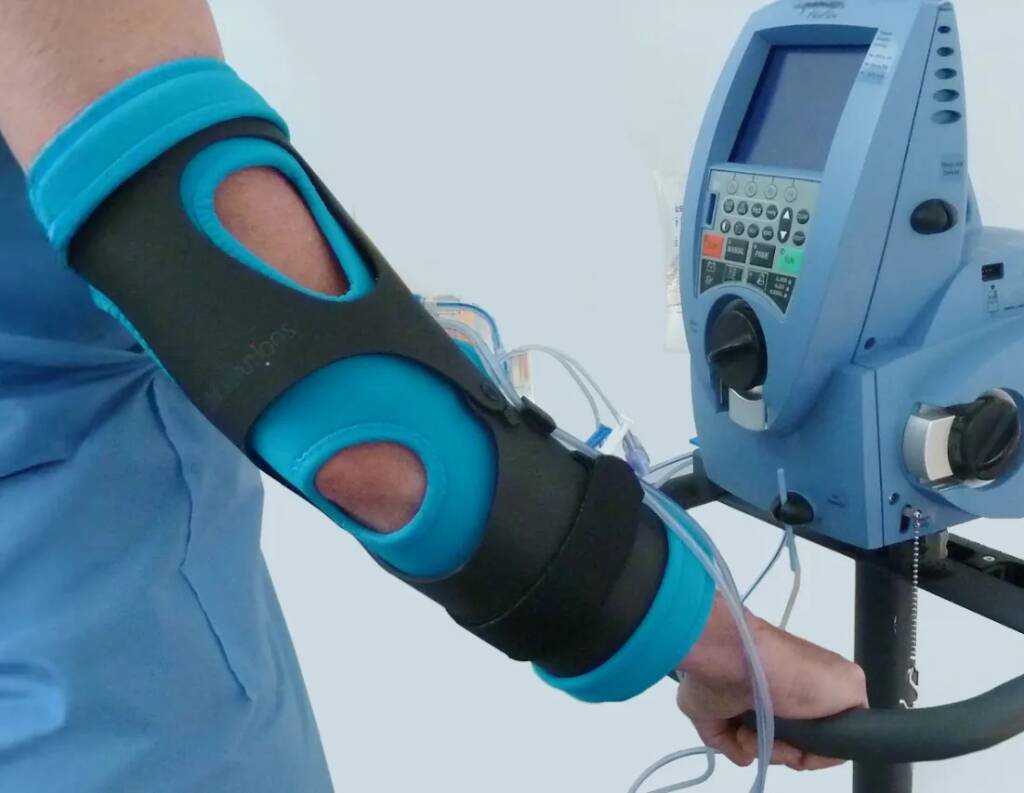
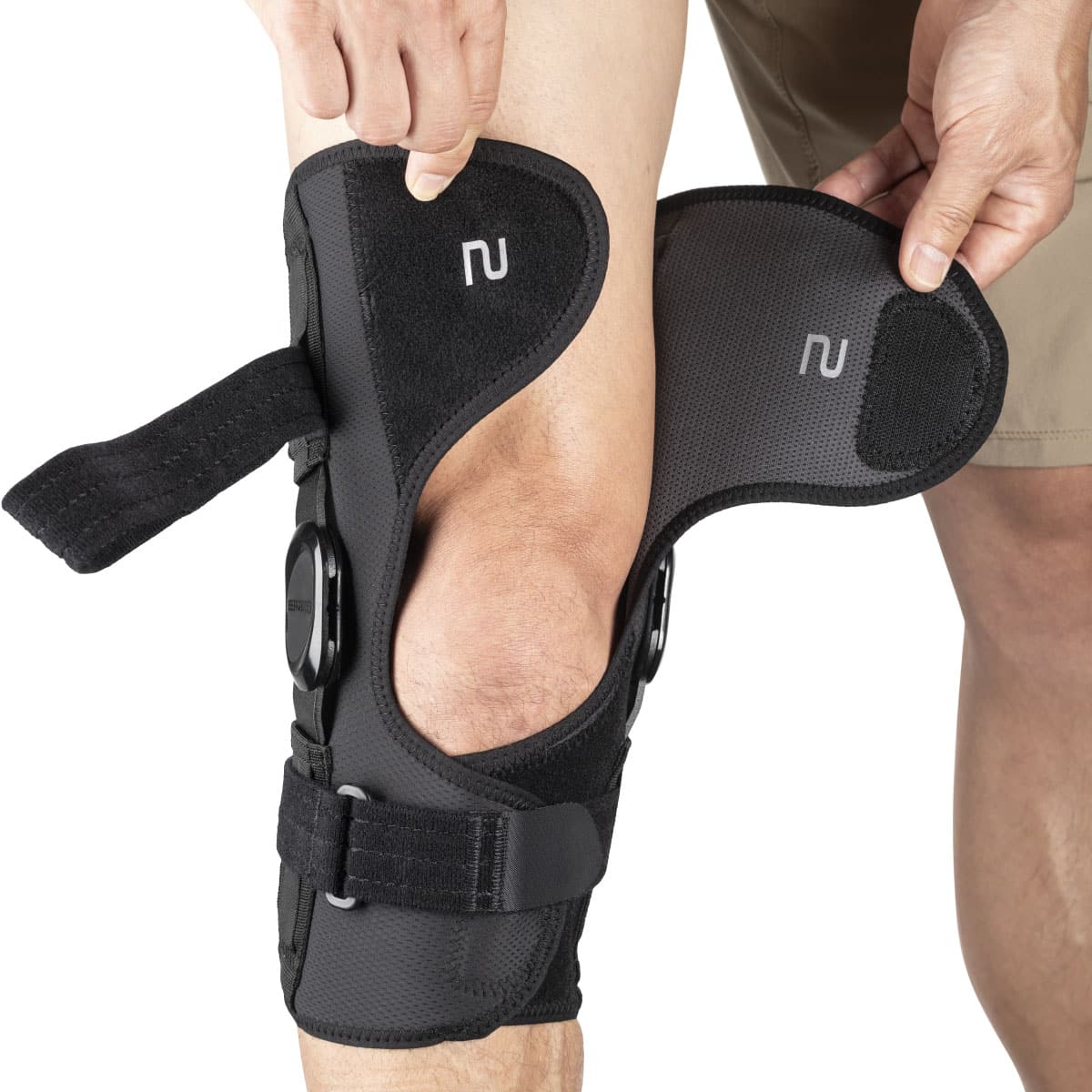
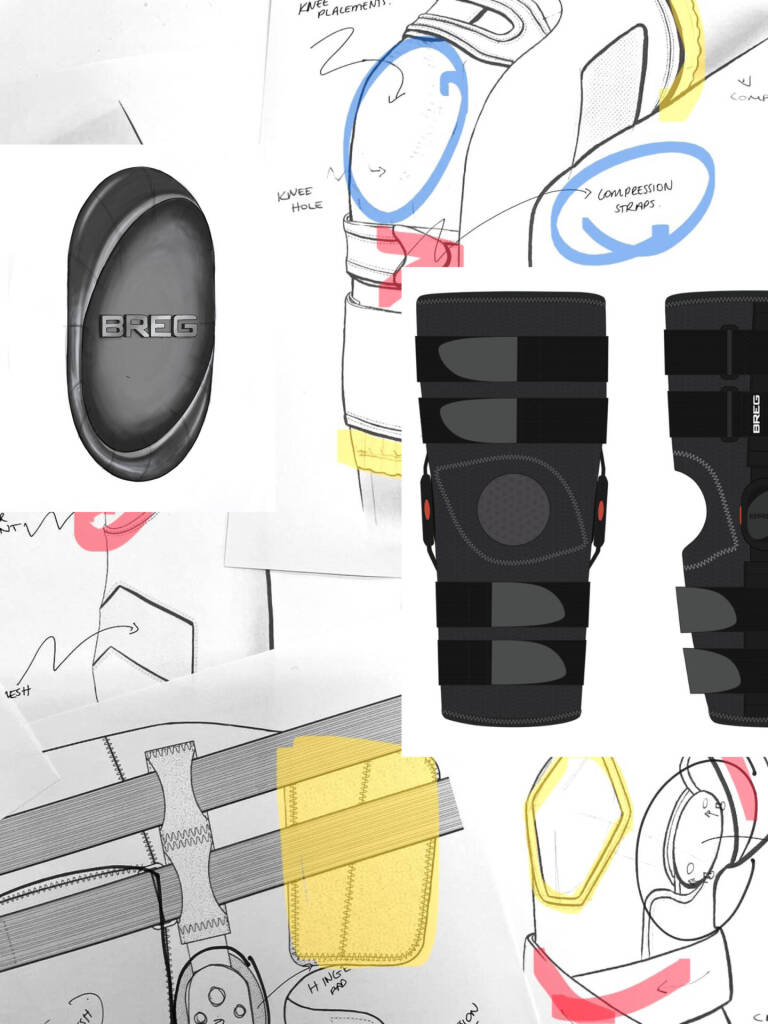
Breg CrossRunner™ Soft Knee Brace illustration and prototype on user
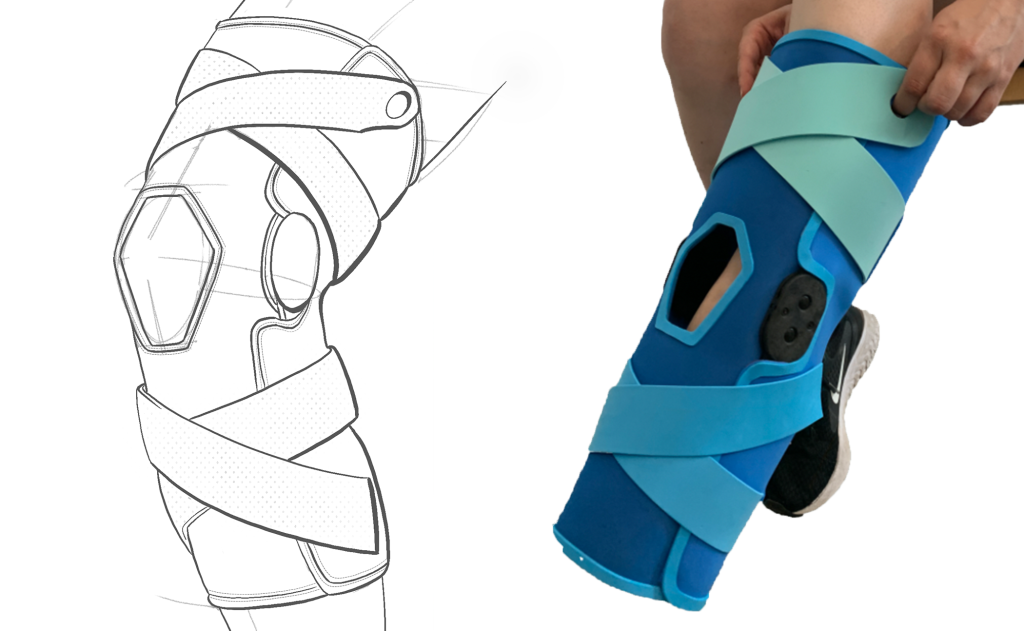
A colorful EVA foam prototype of the Breg knee brace

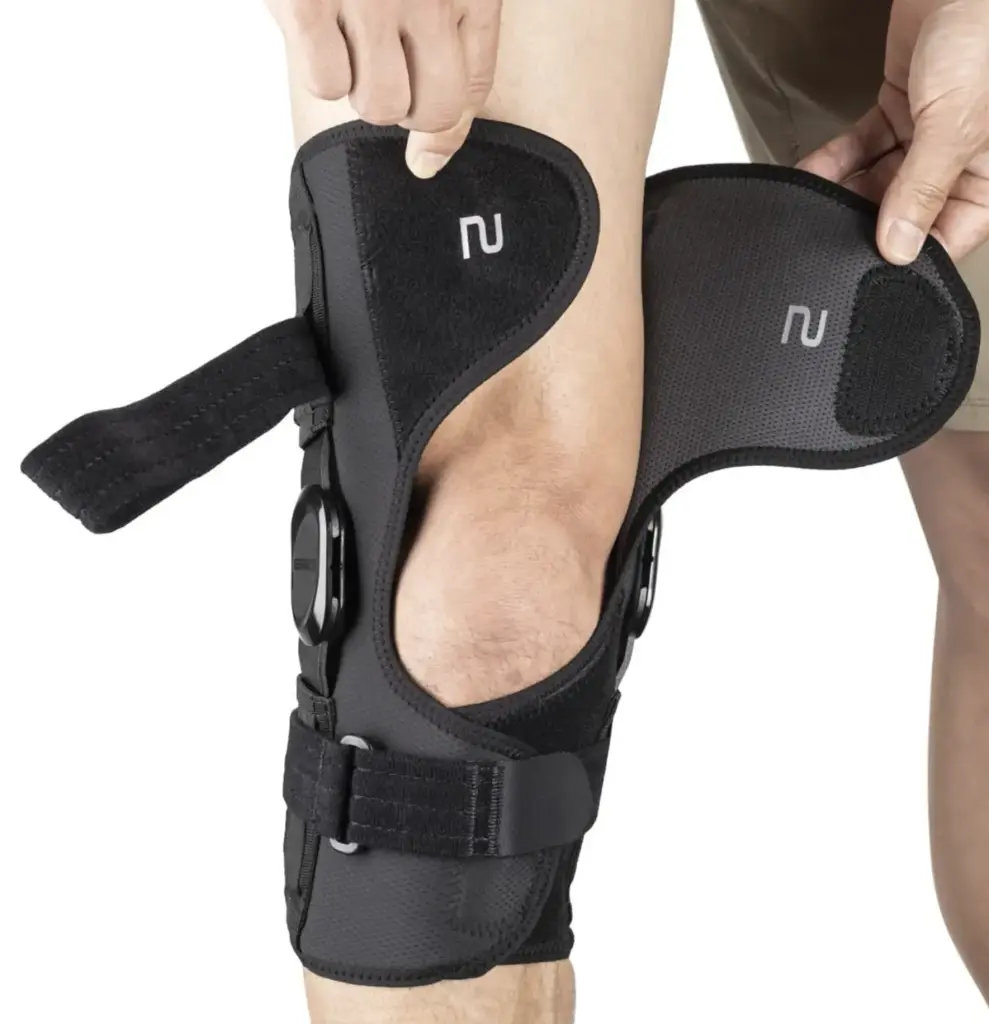
For example, when I was working on the Breg knee brace, I used EVA foam in all these crazy colors—turquoise, lime green, bright yellow—on purpose. If I’d made the models in black, which is what the final product was supposed to be, people would’ve gotten way too literal. But the wild colors kind of divorced the client from the final form just enough so they could focus on what the prototype was doing, not what it looked like.

So material choice isn’t just about function—it’s about communication. It’s about knowing who you’re showing it to and what message they might take away from it. I’ve learned to be really intentional about that.

Q:

What kinds of insights have you gained from building models that surprised you?

A:

So many. One of the most memorable was while working on the Apex exosuit for HeroWear. We were testing strap placements, and even with minimal tension, a small shift in sternum strap height could cause major fit issues. It made us more aware of how anatomical differences—especially between male and female bodies—affect fit. You also learn a lot just by watching how people put things on. No two users interact the same way.

Q:

How did your time at Interwoven shape the way you design and prototype today? Are there any techniques, habits, or philosophies you still carry with you?

A:

For sure. I think the biggest thing that Interwoven gave me—besides hands-on experience—was confidence. Confidence to put unfinished ideas in front of other people and say, “Here’s where I’m at,” even if it’s not polished. That’s a hard thing to do straight out of school. I was so used to trying to perfect everything before I shared it. But at Interwoven, we moved so fast. You didn’t have time to obsess. You had to get your idea out there, test it, talk about it, and then move on to the next iteration.

I remember the first time Rebeccah handed me a piece of EVA foam and said, “Just mark it up. Make a model.” And I was like, “Wait—what?” But once I did it, it unlocked something. It gave me permission to try things and not worry if they were ugly or halfway done. That mindset—that a rough idea is still a valid idea—has stayed with me. I carry that into everything I do now.

At Interwoven, we prototyped constantly. Blue-sky concepts, tech that didn’t even exist yet—we still made physical mockups to explore layout, user interface, ergonomics. Whether it was figuring out battery placement in a pet harness or mapping electronics onto soft goods, we always built first, then refined. That method taught me how valuable foam, muslin, and tape can be.

So even now, when I’m working at a much bigger company, that habit of diving in, getting hands-on early, and iterating fast is something I always go back to. It’s fundamental.

Q:

Conceptual prototypes aren’t always easy for clients or stakeholders to understand. How do you communicate their value without people taking them too literally?

A:

That’s such a good question—and it’s a challenge for sure. I think the biggest thing is knowing your audience. You have to anticipate what people are going to expect based on who they are and what kind of background they’re coming from. If you’re dealing with a huge corporation, they might be used to seeing fully 3D-printed, sanded, spray-painted mockups. That’s their norm. But someone else might be totally fine with cardboard and tape if it helps them understand the idea.

What I try to do is build in smaller checkpoints. Instead of waiting for a big Phase 2 presentation where everything’s supposed to be clean and “done,” I’ll push for a mid-phase touchpoint. It gives you a chance to say, “Here’s where we’re at—we haven’t spent too much time or money yet, but we’re getting important feedback now so we can steer in the right direction.” That sets expectations early and helps people focus on the ideas, not the finish.

Another trick I use is playing with scale and color. If you build something small, or in colors that clearly don’t belong in the final product—like making a knee brace mockup in bright turquoise and neon yellow—people immediately understand that it’s not final. It helps create that separation, so they look at the concept, not the aesthetics.

And sometimes you just have to say it directly: “This isn’t a final product. This is about exploring function, interaction, or layout.” That helps shift the mindset. The point is to open the door for feedback—not to get approval on a finished design.

Q:

In what ways does physical modeling—taping, folding, building—inform your digital work, and vice versa? When do you bring CAD into your process?

A:

I think physical and digital work are more intertwined than people realize. For me, they constantly inform each other. If I’ve built something to scale—like a muslin vest or a foam form—I’ll take photos of it and bring those into Illustrator. I might drop the opacity down and sketch over it. Or I’ll use it as the base for a tech pack, especially if we’re moving into a pattern-making phase.

Interwoven muslin prototype pinup
At Interwoven, hands-on muslin builds inform the digital process, revealing nuances that screens alone can’t show.

Sometimes I’ll scan the flats of a muslin build and start drawing from there. That becomes the foundation for my Illustrator files or even for 3D modeling. And then as you start building in CAD, that’s when you find the real-world limitations—like, “Oh, we can’t mount this piece the way I thought,” or “This part is interfering with another component.” It’s like a back-and-forth conversation between the physical model and the digital file.

If you jump straight into CAD without building anything first, you miss so much nuance—especially around ergonomics and body interaction. The screen gives you precision, but the shop gives you truth. And once you have something physical, even a rough version, it makes your digital work smarter and more intentional.

Q:

What’s your take on failure in the prototyping process?

A:

Failure is 95% of it. You build quick mock-ups, find out what doesn’t work, and share them anyway. At Interwoven, we’d make 10 different models and walk through them as a team. Even if three of mine failed, someone else might spot something worth carrying forward. That back-and-forth was always valuable.

Q:

Final question: What advice would you give a young designer about sketch modeling?

A:

Get up from your desk. Go to the shop. Talk to people. Learn how things are made. And most importantly—don’t be afraid to fail in front of others. That confidence builds with time. Every mock-up, even the rough ones, teaches you something. And you never know who might see something in it that you missed.

Check out the rest of our Spotlight series to hear more from leaders in the design industry. Sign up for our newsletter and follow us on Instagram and LinkedIn for design news, multi-media recommendations, and to learn more about product design and development!
Please reach out!

Rebeccah Pailes-Friedman & Aybüke Şahin on Bridging Hard and Soft Goods in Industrial Design

Rebeccah Pailes-Friedman&Aybüke Şahin on Bridging Hard and Soft Goods in Industrial Design

For this Spotlight conversation, Interwoven founder Rebeccah Pailes-Friedman sits down with Aybüke Şahin, a Senior Industrial Designer who recently marked her fifth year with the studio. What begins as a casual conversation quickly turns into an expansive dialogue on what sets soft goods apart from traditional product design, why prototyping with fabric requires intuition as much as tools, and how the studio’s hybrid expertise shapes innovation across consumer, medical, and lifestyle categories.

Photo courtesy of Rebeccah Pailes-Friedman & Aybüke Şahin

In this rare peer-to-peer exchange, Rebeccah and Aybüke open up about shifting user expectations, navigating clients with very different design cultures, and how understanding human behavior continues to shape the way Interwoven brings ideas to life.

RPF: Okay, let’s get started. First, I just want to say thank you for taking some time out of your busy day to have this conversation about soft goods.

AS: Yes, absolutely—this is fun. We’re usually deep in projects, so it’s nice to step back and talk about how we actually approach the work.

RPF: So, to begin with, how long have you worked here now?

AS: It’s been a full five years.

RPF: Amazing. It went by fast.

RPF: What do you think is the biggest difference between traditional industrial design and the kind of soft goods work we do here at Interwoven?

a designer references a sketch of a buckle while prototyping
Hands-on with fabric prototypes at Interwoven to understand material behavior.

AS: I think the way we think about problems—or not even problems, but the conditions that come with softer materials like fabrics—are really different. In traditional hard goods, it’s sometimes easier to imagine things on paper or in CAD with rapid prototyping. But with fabric, we can imagine something and then it ends up behaving completely differently when we actually prototype it. I find there’s more back-and-forth, more revisions, especially in how components interact with softer materials.

RPF: I know exactly what you mean. Textiles behave differently than any other material. When you’re working in plastic or metal, the sky’s the limit—whatever you can CAD, you can produce. But with textiles, you’re limited by how the material behaves. You have to understand the material’s behavior in order to design something effective.

AS: So Rebeccah, in your expertise—and you’ve been in the field for quite some time now—how do you think user behaviors in relation to wearables or soft goods shape the way we prototype and test?

RPF: I think it all comes down to people’s behavior—how they move, how they feel comfortable. If something is uncomfortable, it literally changes the way you behave. Think about how dress clothes used to be the norm. Who wants to wear a dress shirt or a blazer now? You can’t move your arms, you can’t breathe—it’s physically restricting. I think that shift in tolerance—people just aren’t willing to be uncomfortable anymore—is huge. Understanding human behavior and translating that into the products we design is a core part of what we do. And you really saw that shift during the pandemic. People got used to wearing comfortable clothing at home and now they don’t want to go back to discomfort. That changes how we think about designing soft goods.

AS: I totally agree. And soft goods is definitely growing as an industry. When we first started doing this, there weren’t many people in the space who did what we do. Now there are a lot more. There’s more research, more product development, and more technologies popping up that incorporate wearable or soft systems.

RPF: Yeah, and it all comes back to how people want better experiences—something that’s easier to use, something that gives them value in their daily life.

Arete Swatch team consideration
Interwoven’s design process involves testing and iterating materials to uncover their unique properties.

AS: Exactly. But with soft goods, it’s not that simple. You can imagine something perfectly in your head, or even draw it out precisely, but the moment you start working with the fabric, it surprises you. Textiles behave in really unique ways. They stretch, fold, collapse, resist—things you can’t always predict until you physically make the piece.

RPF: Yes! With textiles, behavior is everything. When you’re designing in metal or plastic, you’re only limited by the constraints of your tooling or manufacturing method. But with textiles, you’re also designing within the behavior of the material. If you don’t understand how it drapes, stretches, or responds to tension, you’re lost.

AS: That’s why I think our design process here often involves more back-and-forth between ideation and physical prototyping. There’s more revision, more iteration, because the material itself is such a big part of the equation.

RPF: It’s funny—sometimes the constraints of fabric can be frustrating, but they also force you to get creative. And over time, we’ve built our own internal “library” of material behaviors and techniques. It’s experience, but also intuition.

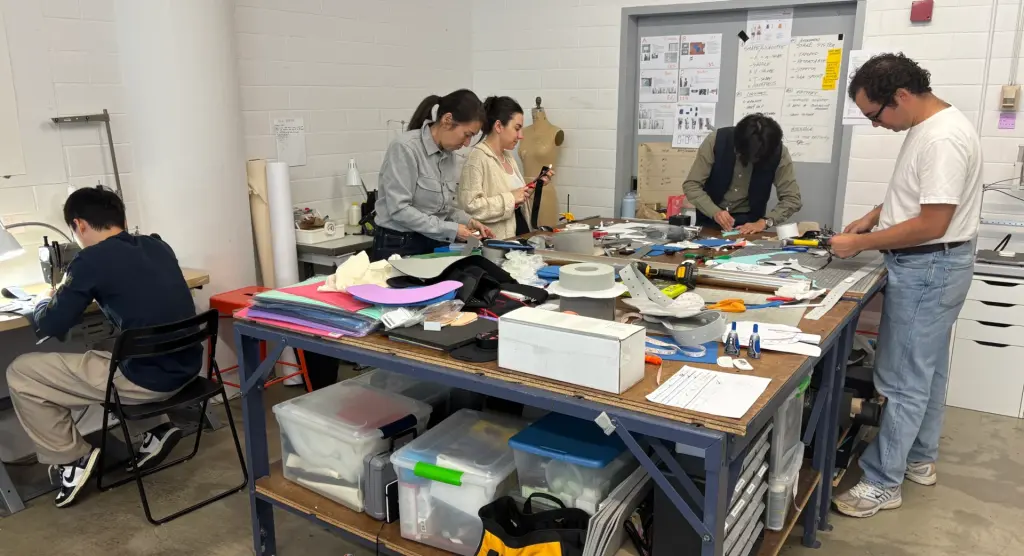
AS: And it’s collaborative. We learn from each other all the time here—about materials, patterning, construction, testing. It’s not just about getting a good idea out; it’s about translating that idea into something functional, wearable, and manufacturable.

AS: So building on that—let’s talk about our methodology for designing comfortable, inclusive, and high-performing soft goods?

RPF: It’s not just about softness or flexibility. It’s about how products move with your body, how they accommodate different sizes and shapes. Designing for comfort now means understanding biomechanics, posture, and even emotional cues.

AS: It’s part of why soft goods are growing so quickly as a category. There’s more demand, more innovation, more cross-pollination between fashion, health, tech, and lifestyle. When we started doing this work, there weren’t a lot of people combining design and engineering in this way. Now it’s really taking off.

Rebeccah Pailes-Friedman and Aybüke Şahin in conversation at Interwoven studio, seated at a white table with books in the background.

RPF: Another thing I think sets our work apart at Interwoven is the way we merge soft and hard components. I’ve always been drawn to that crossover, and it was one of the reasons I was so excited to bring you onto the team—your background in hard goods really expanded what we could do.

AS: Thank you! I’ve really enjoyed that part of the work—figuring out how to integrate structural components like electronics, batteries, or sensors into wearable products without compromising comfort.

RPF: There’s a long tradition of wearing textiles, of course—clothing has been around forever—but there’s not a long tradition of integrating textiles with technology. It’s still relatively new. We’ve been on the forefront of this field for over 15 years.

AS: That’s what makes this work so exciting. Depending on the product category—whether it’s medical, travel, lifestyle—we have to adapt our approach. The way we combine soft and hard materials changes depending on regulatory standards, user context, durability needs, even washability.

RPF: We’ve developed a methodology, but it’s flexible. Every project brings new questions. And our experience becomes this evolving library that we draw from—but never apply in exactly the same way twice.

AS: We’ve worked on projects where even the smallest detail—like the orientation of a seam or the coating on a zipper—can make or break the user experience.

RPF: Yes. And I think this is especially true in health and medical products. More and more, users expect those products to offer experiences, not just functions. They want something intuitive, comfortable, attractive—not just technically correct.

Even Adaptive
Even Adaptive lingerie

AS: That was a big part of our work on the Even Adaptive lingerie line. It needed to function for people with limited mobility, but it also had to feel empowering. It had to look good. It couldn’t just scream “assistive device.”

RPF: Exactly. It had to be part of a person’s daily life, not a constant reminder of their limitations. And I think the final result really achieved that. It wasn’t just helpful—it was beautiful. And it ended up being useful for more people than we originally imagined.

AS: That’s one of my favorite kinds of outcomes: when inclusive design leads to better design for everyone.

RPF: Let’s switch gears for a moment. Over the years, we’ve worked on all kinds of products, but one of the more recent launches was the SharkNinja FrostVault cooler backpack. What did you find particularly interesting—or challenging—about that project?

AS: A lot, actually. First, working with the SharkNinja team was really interesting. Their internal process is very fast-paced, and different from ours. They had multiple teams working on different parts of the product simultaneously, so we weren’t always privy to the full picture. That made collaboration a little tricky sometimes.

RPF: Yes, I remember feeling like we were coming in to solve parts of a puzzle, but we weren’t always sure what the final image would be.

A woman sitting outdoors using the SharkNinja FrostVault cooler backpack, with food stored in its compartments.
SharkNinja FrostVault combines structure and soft straps for comfort.

AS: Exactly. That said, I really enjoyed the challenge. From a product standpoint, it was technically fascinating. We had to think about waterproofing, insulation, internal organization—all while making it wearable and comfortable.

RPF: And even though the exterior was technically textile-covered, it wasn’t a soft good in the traditional sense. Most of the bag was rigid, with plastic-coated fabric to repel water. The true soft goods component was the strap system.

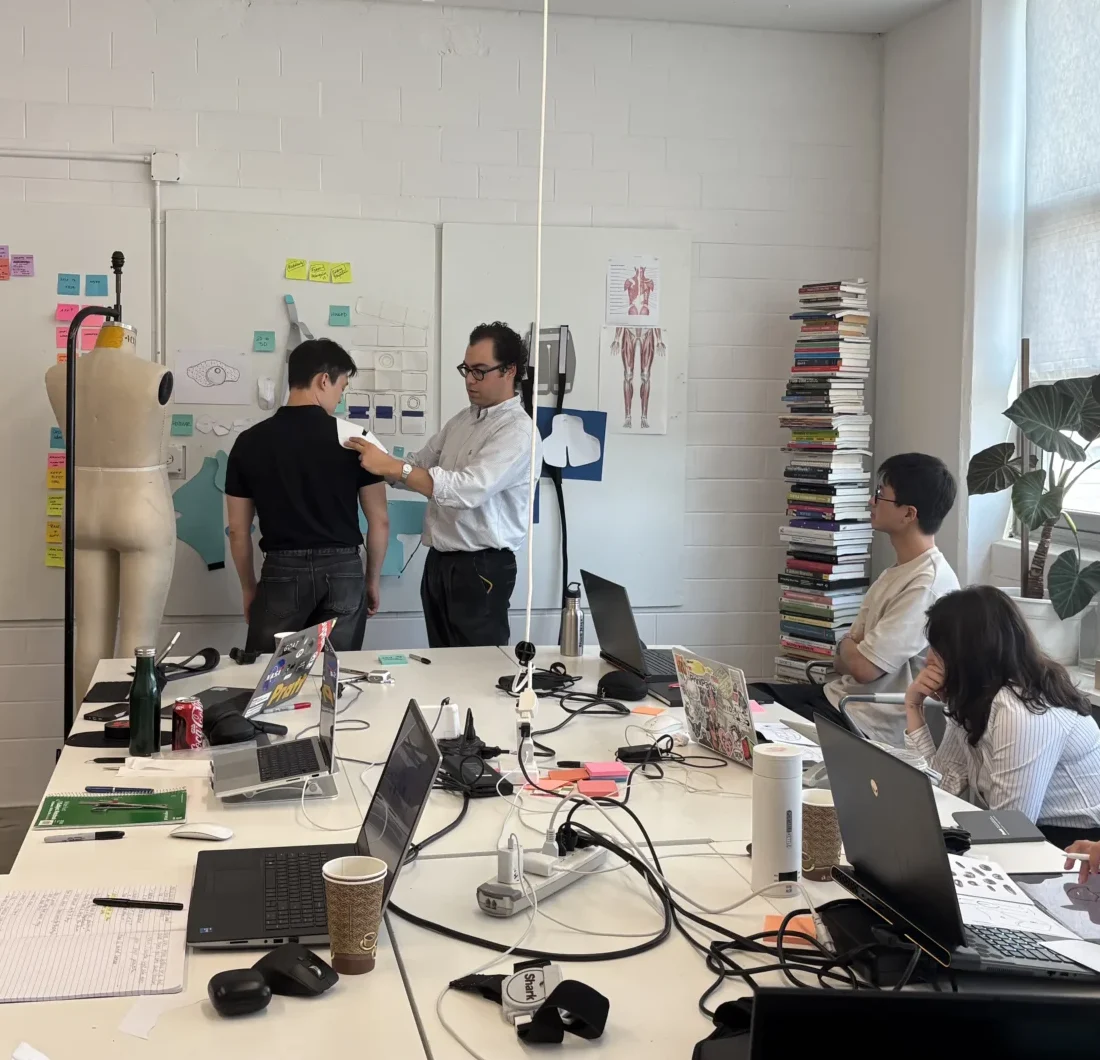
AS: That’s where we had the most impact—designing for fit and comfort across a range of body types. I remember testing on you and Anthony and realizing how much the same strap design could feel completely different depending on the user.

RPF: It was a real lesson in anthropometrics. And it goes back to that idea of merging hard and soft—making something that performs structurally but feels good on the body.

AS: There was also the challenge of sealing off the internal compartments. One section needed to stay cold and insulated, while the upper section needed to be separate for dry storage. Getting that internal seal right—without adding bulk—was no small feat.

RPF: It was a tight balance between design, engineering, and user comfort. But the final product is really strong, and I think our collaboration with their team made it better.

RPF: One thing I’ve noticed is that we often partner with teams who share similar skills to us—but not our specific expertise. We’re frequently brought in to bridge gaps, especially when it comes to human interaction and wearability.

AS: Yes, and I really enjoy that. Sometimes we work with an engineering team that knows everything about mechanics, but hasn’t thought much about how something will actually feel on the body. Or we work with an industrial design team that hasn’t dealt with textiles before.

RPF: It’s a good reminder that design is never one-size-fits-all. It’s always collaborative, always context-driven.

RPF: Okay, time for a fun question: What’s one soft goods or wearable product you absolutely can’t live without?

AS: I have two! First is my sleep mask. It’s simple, but I love it. It covers my eyes and has a puffy filling—not just dense foam. The headband is really soft and comfortable. I use it every night.

RPF: That’s a good one. And the second?

AS: My dog’s harness and leash! I’ve gone through so many versions to find the right one—something he’s comfortable wearing, that I can easily use, and that doesn’t mess up his fur. One of them even made him limp because of how it applied pressure to his shoulder. I didn’t realize a harness could do that until I switched to a different one and the limp disappeared.

RPF: Wow. That really shows how critical good soft goods design is—even for pets. Pressure distribution, material selection, adjustability—it all matters.

AS: It does. It’s made me hyper-aware of how even small design choices can have huge consequences for comfort and safety.

RPF: That really brings it full circle. What we do here—whether it’s for people or pets, medical or lifestyle—comes down to paying attention. To behavior, to comfort, to context.

AS: Exactly. And honestly, this has been really nice. We work next to each other every day, but we rarely stop and have a full conversation like this.

RPF: I know! This was so fun—and a great way to mark five years. Here’s to the next chapter.

Check out the rest of our Spotlight series to hear more from leaders in the design industry. Sign up for our newsletter and follow us on Instagram and LinkedIn for design news, multi-media recommendations, and to learn more about product design and development!
Please reach out!

Bridging the Gap: Strategies for Collaboration Between Designers and Engineers

Bridging the Gap: Strategies for Collaboration Between Designers and Engineers

At Interwoven, we routinely collaborate with engineers to develop innovative products. The Apex Exosuit we developed with HeroWear is a great example of how powerful a design and engineering collaboration can be. They appreciate our commitment to creating a fantastic user experience, and we appreciate their expertise in developing a reliable product that really works. The line between design and engineering can be hazy, as demonstrated by this famously long and hotly debated Core 77 forum thread, “Do engineers really “design” anything?” 

While some designers have a strong understanding of engineering principles, and some engineers have a strong understanding of design principles, it is rare to find professionals who are experts in both fields. Engineers specialize in engineering knowledge, designers specialize in design knowledge, and product development teams need both. In this Insight article we discuss what designers and engineers bring to the table and share key strategies for working with the other team. This article has two parts: part one contains tips for designers working with engineers and part two contains tips for engineers working with designers.

University Robotics Class

Value Added

We have found, with any collaboration, that the more each side appreciates the value the other side brings, and the more each side communicates with and invites the ideas of the other, the more successful the project is. In a product development team, synergy between designers and engineers is indispensable, with each discipline bringing distinct and complementary skills to the table. Designers play a key role in shaping the user experience, focusing on aesthetics, functionality, overall usability, and the big picture value of the solution. Their creativity and user-centric mindset contribute to crafting visually appealing and intuitive interfaces. Engineers serve as the architects who bring these designs to life, leveraging their technical expertise to implement and optimize functionalities. Their proficiency ensures that the product not only meets design expectations but also adheres to technical constraints and achieves optimal performance. 

architect video conference

Part 1: Tips for Designers Working with Engineers

  1. Acknowledge the Role of Engineers

In the collaborative landscape of product development, designers and engineers form a dynamic partnership to transform ideas into tangible realities. Engineers, often regarded as the interpreters of conceptual visions, play a pivotal role in translating proposals into functional, scalable, and reliable products. Some of the most iconic products of the 21st century came out of collaborations between designers and engineers, like the Nest Thermostat, developed by Nest designers (who were formerly Apple designers) and Google engineers.

  1. Seek Their Contribution Early

Regardless of the abundance of engineers within a company, it is imperative to view them not only as useful resources but as the architects of foundational elements of a project. They are essential contributors to a product’s core functionality, speed, and scalability. Their innovation drives technological advancements and transforms a sheet of requirements into meaningful outcomes. Inviting engineers into the vision of the project at the start fosters excitement and ownership, keeping teams aligned and efficient. This tip works in both directions; having both teams on the same page from project inception results in powerful projects that develop efficiently. Each will see opportunities and potential pitfalls that the other might miss.

  1. Understand their Constraints Early

Understanding the constraints of the engineering team is related to the previous strategy but so critical that we felt we needed to call it out separately. Engineering-savvy designers can understand engineering constraints early in the process to avoid becoming attached to or spending too long on impractical designs. By consulting engineers before finalizing designs, designers can ensure that creative ideas align with technical and time limitations, preventing wasted effort on unfeasible concepts. Ask them questions, and respect their answers.

  1. Make Friends

To work seamlessly with engineers, designers can recognize the influential impact engineers can have on the development process. Convincing a small group of engineers can be the key to implementing a product idea. Establishing robust relationships and addressing design issues directly with engineers, rather than relying solely on formal channels, can expedite the problem resolution process exponentially. Quick, casual check-ins can catch major issues, clarify important constraints, inspire innovation, and more. Bonus: more friends.

  1. Foster Design Appreciation

The atmosphere of collaboration improves when engineers value good design. Designers can either recruit engineers with a discerning eye for design or cultivate an understanding of design principles among existing engineering teams. This involves explaining design decisions, sharing values, and educating engineers on aligning their implementations with design intentions. This strategy reflects a broader need for an understanding of what design brings to the table; not just a pretty shell but a careful consideration of the functionality and usability of a product. Engineers care about this, too!

  1. Communicate Design Evolutions

Designers can communicate the evolving nature of designs to save engineers from investing time in a solution that may undergo significant changes. Transparent discussions about potential modifications allow engineers to create more adaptable and flexible code. This means staying in close collaboration through the implementation phase to resolve issues promptly and to encourage a solution-oriented mindset in both teams. When communicating, consider adopting a format of modular workflows and roadmaps that will look familiar to engineers.

  1. Be Meticulous

Meticulousness and attention to detail in design are crucial aspects that help anticipate and address potential issues during implementation. Designers are famous for caring about details, and engineers, though they may be focusing on different details, are as detail-oriented as designers, if not more so. To win the hearts of engineers, designers can demonstrate that they also care about engineering priorities. Considering edge cases, such as error states, user extremes, and transitions, not only enhances the overall design but also aids engineers in planning and estimating project timelines.

Male and female engineers

Part 2: Tips for Engineers Working with Designers

  1. Learn the Lingo

As with navigating any new territory, learning a bit of the local language goes a long way. To effectively collaborate with designers, engineers can shift their communication focus from metrics to user-centric language. Instead of discussing optimizing conversion rates or increasing click-through rates, engineers can frame discussions around simplifying user interactions and ensuring a seamless user experience. 

  1. Recognize Design’s Diversity

Engineers can acknowledge the diverse strengths of designers and apply these strengths to the right problems. Understanding that design encompasses graphic design, interaction design, product design, and more, is crucial. The specialities present within a team may not be immediately visible. Recognizing that different designers excel in various areas fosters an appreciation for those skills and ensures that the right designers tackle the right problems, contributing to a more effective and well-rounded design team. 

  1. Understand Design’s Hierarchy

Designers operate at different levels, each with distinct responsibilities. From designing specific forms to crafting comprehensive systems, engineers can recognize the varying levels of design complexity. The more senior a designer is, the more likely they are to focus on abstract problem-solving, contributing to the overall vision and strategy of a product. 

  1. Solicit Feedback

The collaborative aspect of design thrives on critique and feedback, which is the cornerstone of design education and the design process. Engineers can enhance their collaboration with designers by encouraging regular feedback sessions. During the developmental stages of a project, designers benefit from interacting with their peers to refine ideas, while collaboration with engineers becomes more prominent during the execution phase. See also Part 1, Strategy 4: Make Friends.

  1. Embrace Qualitative Data

Engineers need to understand that much of what designers value is challenging to measure quantitatively. A quality user experience, long-term sentiment, and overall delight are integral aspects that designers aim to achieve, and these elements may not be easily captured by short-term quantitative metrics. Engineers can recognize the qualitative impact of design decisions on the overall user perception and experience. 

  1. Prioritize Consistency

Design-savvy engineers can appreciate the importance of consistency in design across different parts of an application or system. Recognizing that users engage with various features, engineers can avoid designing in isolation, ensuring coherence in user interactions. Consistency contributes to a seamless and less confusing user experience. This is part of embracing and leveraging the power of a design language.

  1. Value Design Details

Recognizing the significance of details is crucial for engineers working with designers. Implementing designs with precision, setting high-quality standards, and going the extra mile to perfect small details contribute to a positive collaboration. Valuing design details is a direct path to a designer’s heart and fosters a shared commitment to building exceptional and user-centric products. Engineers who demonstrate that they understand the importance and the value of these details will be in a powerful position to encourage designers to care about their own priorities and to build lasting relationships that can lead to future collaborations.

Get Collaborating!

It is no coincidence that Part 1 and Part 2 feel like mirrors of one another. Great collaborations involve respect and understanding between teams.  Ideally, the collaboration between designers and engineers is a dynamic exchange, where innovative concepts are translated into tangible, functional solutions. Together they form a cohesive team that combines creativity with technical proficiency, delivering products that resonate with users and stand out in the competitive landscape. Here is a great article from Spotify outlining what a successful collaboration between engineering and design looks like for their teams.

Successful collaboration between design and engineering hinges on recognizing the pivotal role engineers play, building strong relationships, fostering an appreciation for design, understanding constraints, maintaining transparent communication, working closely during implementation, and delivering complete and detailed designs. These strategies form the foundation for a symbiotic and effective partnership in the realm of product development.

Check out the rest of our Insight series to learn more about the design industry. Sign up for our newsletter and follow us on Instagram and LinkedIn for design news, multi-media recommendations, and to learn more about product design and development!
Design History Series N. 018

Dava Newman and the MIT BioSuit™

In our Design History Series we highlight iconic women in design history and their innovative work. The historic contributions of women to design are many, and we aim to increase the awareness of these contributions in order to counteract a general trend of underrepresentation. In this issue we celebrate Dava Newman, an American aerospace engineer, director of the MIT Media Lab, and former NASA deputy director. Newman was instrumental in designing a spacesuit specifically tailored for female astronauts, addressing long-standing issues of ill-fitting suits for women.

Smart Start

Dava Newman, born in Montana in 1964, developed a deep fascination with space exploration and engineering from a young age. She earned a Bachelor of Science degree in aerospace engineering from the University of Notre Dame in 1986, followed by a Master of Science degree in aerospace engineering from the Massachusetts Institute of Technology (MIT) in 1989 and a Ph.D. in aerospace biomedical engineering in 1992. She’s been a professor of aeronautics and astronautics (the science and construction of space vehicles) at MIT since the 90s and became the director of the prestigious MIT Media Lab in 2021. Impressed yet?

Dava Newman Aerospace Engineer

The MIT BioSuit™

Throughout her career, Newman has been a trailblazer, developing innovative technologies that advance the field of space exploration. One of her most significant contributions is the development of the MIT BioSuit™, a spacesuit concept designed to revolutionize extravehicular activities (EVAs) for astronauts. Unlike traditional bulky spacesuits, the BioSuit™ acts like a second skin, enhancing mobility and reducing fatigue, offering astronauts greater flexibility during space missions. 

In 2019, NASA’s cancellation of the first all-women spacewalk due to ill-fitting spacesuits highlighted a critical issue: the outdated design of spacesuits. NASA’s Extravehicular Mobility Units (EMUs) dated back to 1978, and their maintenance costs limited the availability of suits, particularly in smaller sizes. This poses significant challenges for smaller astronauts, especially women, affecting their mobility and comfort during space missions. Newman recognized the need for innovation in spacesuit technology to address these limitations and was already leading a research team that was tackling them head-on.

The development of the BioSuit™ represents a collaborative effort involving engineers, designers, textile specialists, and students from various disciplines. By leveraging expertise from diverse fields and incorporating cutting-edge materials and design principles, Newman’s team aims to revolutionize spacesuit technology. The BioSuit™ prototype is a lightweight, stretchy, 3D knit garment that is customized to each astronaut. These “second-skin” spacesuits incorporate small, spring-like coils made from a shape-memory alloy (SMA) that contract in response to heat, essentially shrink-wrapping the garment around the astronaut’s body. Controlling contraction and expansion with heat was a key innovation to solving the problem of how to get in and out of a skintight suit. 

The key breakthrough in the design lies in the application of mechanical counterpressure, which directly applies pressure to the skin, eliminating the need for the traditional gas-pressurized suits. Made from elastic and active fabrics and designed to provide the pressure necessary to inhabit space (equivalent to one-third of sea level atmospheric pressure), the suit achieves the same pressurization as traditional spacesuits while enhancing mobility and reducing the overall weight. This approach supports astronauts in the vacuum of space while providing them with unprecedented freedom of movement during planetary exploration.

Newman’s vision for the future of spacesuits aligns with NASA’s goal of maximizing efficiency and mobility for astronauts on long-duration space missions. The suit has been improving steadily since the early 2000s, incorporating more and increasingly sophisticated technology (an accelerometer, gyroscope, and on-board machine learning algorithms, among others), and has been featured in a wide range of international exhibitions, including the Museum of Modern Art. The latest iteration of the suit was presented at the 2022 Mars conference. Newman’s work represents a significant advancement in spacesuit technology with potential applications for future Mars exploration missions, a particular interest of hers. With continued research and development, these “second-skin” spacesuits could revolutionize space exploration, enabling astronauts to explore distant planets with greater ease and agility. Newman’s life and work exemplify the transformative power of engineering in advancing space exploration and human understanding of the universe.

Sign up for our newsletter and follow us on Instagram and LinkedIn for design news, multi-media recommendations, and to learn more about product design and development!
A Q&A with Footwear Designer Charlotte Logeais

A Q&A with Footwear Designer Charlotte Logeais

Spotlight articles shine a light on designers and design materials we admire. Our founder and principal designer Rebeccah Pailes-Friedman has met many wonderful designers as an educator and career designer, and in our Spotlight interviews we ask them about their work and their design journey. In this interview we spoke with senior footwear designer and art director Charlotte Logeais. Charlotte has been a designer at Nike* for over two years. She began in the kids division and is currently a senior designer on the Women’s Lifestyle team. To her, design has always been about storytelling and problem solving. With a bachelor’s degree in industrial design from Pratt Institute and a Master’s degree from USC integrating design, business, and technology, she is well versed in the power of design as well as the power of style. Her experience as a professional ballet dancer gave her an athlete’s mindset, and she knows the value of performance footwear firsthand. We asked her about the challenges of footwear design, emerging trends in the footwear industry, and what makes a great shoe.

Portrait of shoe designer Charlotte Logeais.
Photo courtesy of Charlotte Logeais.

Q: What is inspiring you at the moment?

A: The biggest thing that’s inspiring me at the moment are fashion week runway shows. I love  seeing all the runway collections and how each designer creates their own world while still aligning with the history of the brand. I also enjoy seeing how the runway trickles down into street style. 

Q: Could you tell us about your role at Nike? How do you fit into your team there?

A: I work on the Nike kids design team. I’m technically on the performance side, but the cool thing about the kids team—especially for me, being newer to the footwear industry—is that you get to work on a broad range of products. I’ve been able to work on lifestyle shoes, like the Air Max 1, and on performance product as well, like running. It’s been great to get to work on such a wide range of products and it’s  helped me discover what I’m most passionate about. It’s been a great team to first start on at Nike. 

On the kids team you can push the boundaries a little bit more and really have fun with the design. Kids love bright colors, they love shoes that are playful and energetic. They get super excited about designs that are colorful and vibrant – it’s the first thing they notice about a shoe. 

In footwear, we work two years out. The process is kicked off by a brief and then the design team begins pulling inspiration and sketching. Various priorities in the product brief will inspire the visual direction of the design. If it’s a shoe that needs to emphasize comfort, it’s probably going to be a more rounded form language. If it needs to emphasize speed, maybe it’s more angular. Those notes help us determine the visual language. 

My favorite part of the product creation process is when the team comes together to sketch together on a new project. It’s the most creative time we have each season. We go find a room—the whole kids team—and we sketch together all day for a couple of weeks on the projects of the season. Then each project lead will take all of those sketches, identify the common threads, and bring it to the finish line. 

Once the design has been finalized, we send out a tech pack and get our first samples back to revise. 

Q: What drew you to footwear design? 

A: I kind of stumbled upon it, which is funny considering I grew up in Portland, Nike’s backyard. When I was at Pratt doing my undergrad degree, I applied to a footwear design internship at Adidas and interned with them for six months. I’d never really sketched sneakers before and fell in love with it during that internship. I’ve always loved fashion and sport, and did classical ballet for 10 years, culminating in one year professionally before going to Pratt. In ballet, your feet are your main tool, but pointe shoes  have barely evolved since the 19th century. So it’s rewarding for me to be able to bring innovation to athletes through footwear design.  

Q: Of the skills that you learned at Pratt, which do you find most valuable in your work?

A: Design thinking is a big one, and the design process overall. In footwear, we’re given a product brief by our marketing team. That brief tells us who the consumer is, what they’re looking for, and what the priorities of the product need to be. Then it’s the designer’s job to take that information and create a design. At Pratt it was definitely drilled into us that you get your brief, you find inspiration, you sketch, you refine your idea, you present it, and then begin the development process.  

Q: Footwear is an industry known for inspiring cult followings. What are your main challenges as a footwear designer?

A: Being on the kids team is definitely a design challenge for me. I’m not the target consumer, and I think it’s a big challenge to design for someone who isn’t you while still wanting to imbue  the project with your personal aesthetic and sensibility. It’s a good challenge: to keep the consumer at the center of the product while still being able to bring in my perspective. Whenever we get to interact directly with the consumer it helps us to understand what they want from a product. As the kids team covers toddler through grade school, it’s a pretty large range and we have to tailor each design to what the specific age group needs. 

Q: From a personal standpoint, what makes a great shoe? One you’re excited to wear? 

A: For me, comfort is a huge thing. I want a shoe that I can wear all day long and it will be super comfortable. Also, a shoe that feels versatile and can transition between working all day at the office to going out for a drink or going to a pilates class. Having a shoe that can move with you throughout the day and keep you comfortable the whole day is the biggest thing for me. Beyond that, I like having some sort of icon on the shoe, a hero aspect of the shoe.

The shoes that I’ve been wearing the most right now are the Vomero 5s, they’re an old school running shoe that have now pivoted into lifestyle. 

Q: How does sustainability factor into design and production at Nike? 

A:  Sustainability is definitely a big priority. As a designer, I partner with material and color designers, and materials are usually the biggest sustainability play. We’ll often make sure to prioritize materials that have a certain percentage of recycled content to try to reduce the amount of new materials being brought in and reuse as much as possible. That’s a big priority, especially in the kids business. I think we’re one of the teams that is making the biggest effort with that. The youngest consumer really does care about the environment and about what their future is going to look like, so sustainability is especially important for them, and knowing that we also care. 

Q: What do you see as interesting emerging trends in the footwear industry today?

A: Some of the biggest trends are new digital tools. AI has been a huge one, getting to input a prompt and have ideas generated for you, often ideas that you couldn’t imagine or that are just super out there. AI is a powerful initial ideation tool for brainstorming and creating concepts. Midjourney is one of my favorites right now, I actually discovered it while pursuing  my master’s at USC. 

In the past, I’d just go on Pinterest and scroll for aesthetically pleasing imagery to create a mood board, but now you can create your own imagery for that mood board through AI. It makes each mood board a bit more unique, and you have the control to create the imagery that you want to work with. Now I do a bit of a combination of both, searching for inspiration images as well as generating them myself. I still do love Pinterest though… and I have so many boards.

Q: Are there other areas of design you would like to explore?

A: I purchased an apartment last May and have spent the last seven months renovating it. It’s in a hundred-year-old loft building in downtown Portland and it was a blank canvas, so I did all the interior design for it, working with the contractor and everything. That’s been a journey! But, It’s super rewarding to see it come together. The results of interior design are so physical. Whatever decision you make, you’re going to see it in real life. That has so much impact. Interior design is something that I’ve discovered I really enjoy doing, and I would love to do more projects like this.

Being in footwear, I’ve realized that lines are so important to me, when things align and how they are offset from each other. I think I’m driving my contractor a little bit insane, making sure everything is perfectly aligned and organized. Design to me is seeing how forms have relationships and fit together.

Footwear designers look at trends and forecasting. We are tied to the fashion world, so part of the job is keeping up with that, seeing what people are drawn to, whether that’s in person or through social media. On the performance side, we follow the different sporting events. In the NBA, there’s an interesting intersection of style and sport every time the athletes walk down the tunnel onto the court. Following influencers on Instagram is another good way to keep up with global fashion trends. Maybe I like their style or the way that they combine different clothing items in unexpected ways. Following those creators helps me stay connected to fashion and innovation. When I lived in New York, I could just go for a walk and see amazing street style everywhere. Living in Portland that’s a bit more difficult, so I rely on travel and Instagram.

Q: What do you see for yourself as a designer and for your career going forward?

A: I feel like I’m just getting started in footwear but I see a long future for myself in the industry. I’d love to work on more adult performance product. 

I also value  having my own design pursuits on the side, like interior design. I used to paint a lot and that’s fallen off in the past couple of years. I think it’s important to find the time to keep yourself fulfilled, to have those external pursuits that don’t involve the pressure to perform as much as your day-to-day work. The renovation project has been taking all of my energy so I think, once that is finished, I can find time to paint again. I also used to meditate every morning and I haven’t done that in a while. For me, finding the time for mindfulness and sport helps me stay balanced.

*Views are her own and do not reflect those of her employer.

Check out the rest of our Insight series to learn more about the design industry. Sign up for our newsletter and follow us on Instagram and LinkedIn for design news, multi-media recommendations, and to learn more about product design and development!