Soft Goods in Athletics: Designing for Performance

Soft Goods in Athletics: Designing for Performance

Athletics place unique demands on the body. From training and competition to recovery and everyday wear, athletes rely on products that support movement, regulate the body, and perform under constant stress. Unlike casual apparel, athletic soft goods must respond dynamically to speed, impact, repetition, and fatigue, often across long durations and varied environments. Soft goods are foundational to this ecosystem. Apparel, supports, accessories, and hybrid soft–hard systems sit directly against the body, shaping how athletes move, feel, and perform. When designed well, they enhance mobility, manage heat and moisture, reduce distraction, and support confidence. When designed poorly, they restrict movement, cause irritation, or interfere with performance.

At Interwoven Design, we specialize in soft goods that move with the body. Our work in athletics combines textile innovation, ergonomics, and human-centered design to create performance-driven products that feel intuitive in motion. By designing for real bodies in real athletic contexts, we help brands create products that support both peak performance and long-term use.

In this Insight article, we explore what makes athletic soft goods design distinct, the challenges and opportunities within this space, and how thoughtful design can elevate performance, comfort, and user experience. Through examples from across the athletic landscape, we highlight how soft goods function as essential infrastructure for modern sport.

When Apparel Becomes Equipment

Athletic soft goods operate in a fundamentally different context than lifestyle apparel or fashion-driven performance wear. These products are not designed for occasional movement or visual expression alone; they are worn through repetition, strain, sweat, and fatigue. They must perform reliably under physical stress, often for hours at a time, and across a wide range of environments and body types. Designing for athletics means designing for use, not appearance first.

Unlike everyday apparel, athletic soft goods are in constant dialogue with the body. They stretch, compress, resist, and recover in response to motion. A poorly placed seam can cause chafing. Excess material can disrupt movement or trap heat. Insufficient structure can compromise stability and lead to injury.In this context, comfort is not a luxury, it is a performance requirement.

Athletic products must also account for intensity and repetition. Runners log thousands of steps per session. Training garments endure repeated washing, abrasion, and exposure to sweat and friction. Soft goods must maintain their integrity and fit over time, not just during initial wear. This demands careful material selection, durable construction methods, and patterning that supports long-term use without breakdown.

There is also a psychological dimension to athletic soft goods. When equipment fits well and moves naturally with the body, it fades into the background, allowing athletes to focus fully on performance. When it doesn’t, it becomes a distraction. Confidence, trust, and mental clarity are directly influenced by how gear feels in motion. The best athletic soft goods support not only physical performance, but also the athlete’s sense of readiness and control. They must earn their place through performance: working with the body, adapting to motion, and standing up to the realities of athletic use.

Designing for the Body in Constant Motion

In athletics, soft goods are not passive layers. They are active interfaces between the body, the environment, and performance demands. From training apparel and compression systems to protective gear and integrated wearables, these products must move dynamically with the athlete while maintaining structure, control, and comfort under stress. Designing for this context requires a deep understanding of the body in motion and the realities of how athletic products are actually used.

Designing for Dynamic Movement

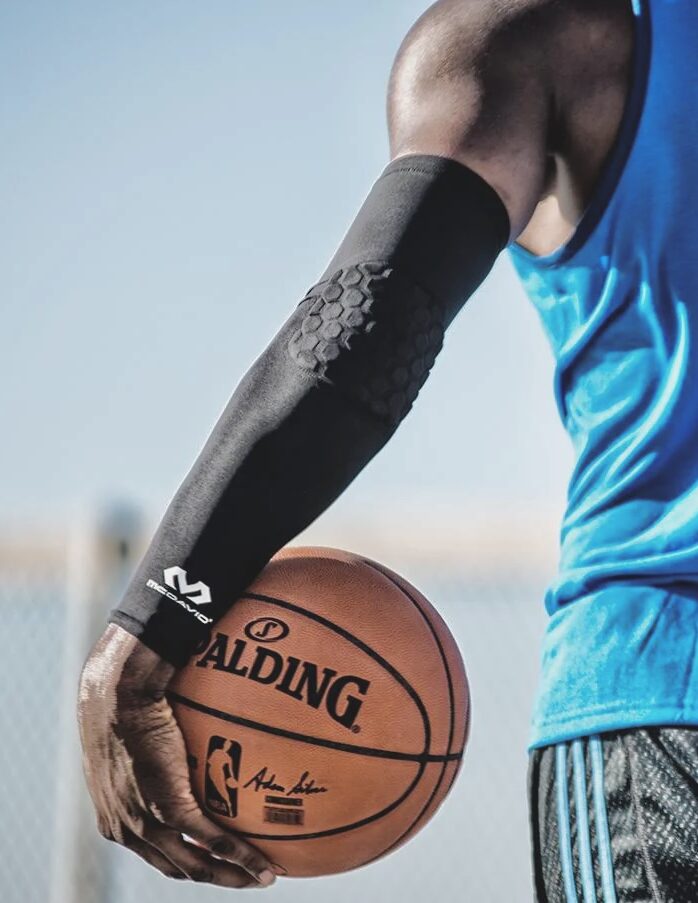
Athletic soft goods must accommodate complex, repetitive movement patterns: sprinting, cutting, rotating, reaching, absorbing impact, and recovering between efforts. Unlike everyday apparel, these products are subjected to continuous mechanical stress, sweat, heat buildup, and friction. Seams, stretch zones, and reinforcement areas must be placed with intention, aligning with muscle groups, joints, and patterns of load. Poorly placed construction details can restrict movement, cause chafing, or create pressure points that distract from performance.

Effective design begins with understanding how the body behaves under exertion. This includes how muscles expand and contract, how posture shifts during fatigue, and how movement changes across different intensities. Soft goods that perform well in athletics are designed not just for a static fit, but for how they stretch, compress, and recover throughout an entire training session or match. They are also tailored to the specific movements that are unique to a given sport or activity.

Balancing Support and Freedom

One of the central challenges in athletic soft goods design is balancing support with mobility. Athletes often need targeted compression, stabilization, or protection without sacrificing range of motion or speed. This balance is achieved through thoughtful material zoning and construction strategies rather than relying on bulk or rigidity.

Strategic use of elastic and non-elastic materials can provide structure where it is needed and flexibility where it is essential. Paneling, knit variation, and layered systems allow designers to fine-tune how a product behaves across different areas of the body. When executed well, this approach creates products that feel secure without feeling restrictive, enabling athletes to move confidently and naturally.

Comfort as a Performance Factor

In athletic contexts, comfort is inseparable from performance. Heat retention, moisture management, and skin interaction all influence endurance, focus, and recovery. Fabrics must manage sweat efficiently, dry quickly, and maintain a consistent feel against the skin even during prolonged use. Construction details such as bindings, hems, and closures must remain stable under movement without digging in or shifting.

Extended wear is common in athletics, whether during long training sessions, tournaments, or back-to-back competitions. Soft goods that cause irritation or distraction can negatively affect performance long before physical fatigue sets in. Designing for comfort means anticipating these long-duration use cases and prioritizing material behavior and construction quality at every point of contact with the body.

Iteration Through Real-World Testing

Designing for athletic performance demands rigorous, real-world testing. Prototypes must be worn, trained in, and stressed in the environments they are intended for. Observing how products shift, stretch, retain shape, or fail under real movement reveals critical insights that inform refinement. his iterative process is central to how we approach athletic soft goods at Interwoven Design. By evaluating products in motion and under load, we identify opportunities to improve durability, comfort, and performance, ensuring that the final design supports the athlete rather than working against them.

Designing for the body in motion means respecting the physical realities of athletic performance. While the challenges are significant, they also represent meaningful opportunities for innovation. Well-designed athletic soft goods can improve performance, reduce injury risk, enhance comfort, and build stronger emotional connections between athletes and their gear. Products that perform reliably over time earn trust, becoming essential parts of an athlete’s training and competition routine.

Case Studies: Design for Athletics in Action

Performance apparel and wearable systems are shaped by how athletes move, train, and compete across varying conditions and levels of intensity. The following case studies highlight Interwoven Design’s approach to athletic soft goods, showcasing how thoughtful material selection, ergonomic construction, and brand-driven design come together to support performance, comfort, and identity on and off the field.

Case Study 1: GLDN PNT Padelwear

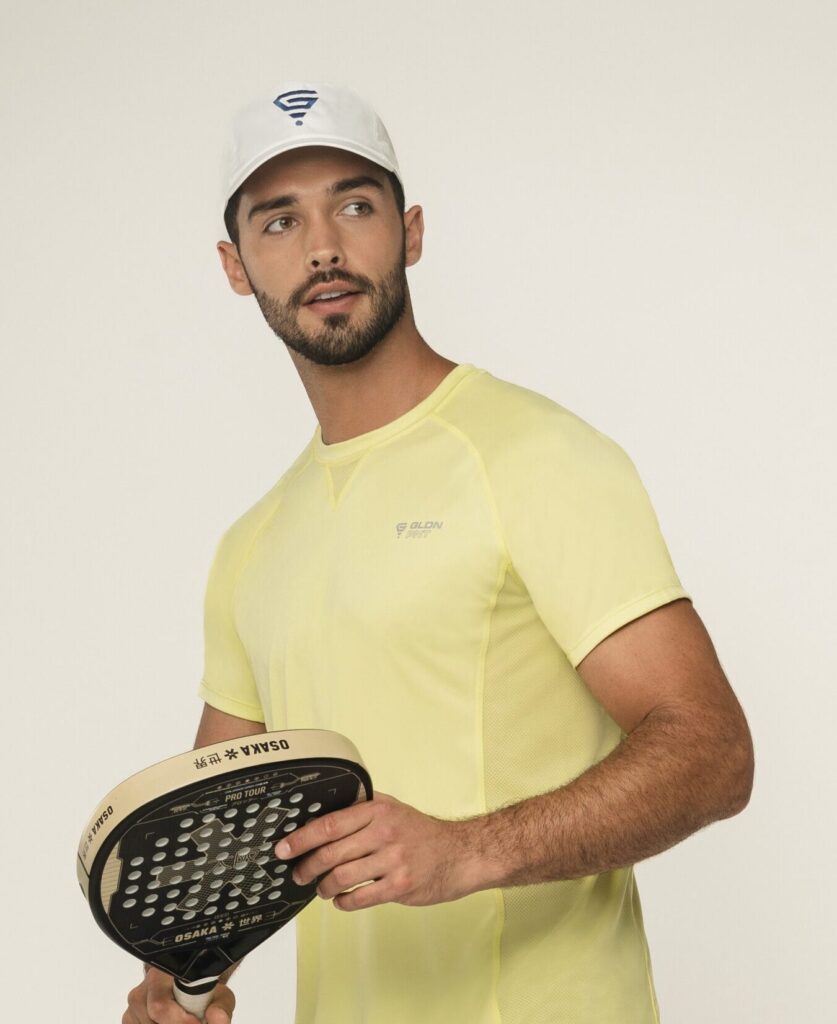
Premium activewear brand GLDN PNT partnered with Interwoven Design to create their first men’s and women’s padelwear collections, launching a brand built specifically around the movement patterns, performance needs, and aesthetic expectations of the sport. As the sport of padel continues to grow globally, athletes are demanding apparel that reflects the intensity, precision, and social culture of the game. 

Unlike crossover tennis or general training apparel, padel requires clothing that supports rapid lateral movement, extended rallies, sun exposure, and frequent ball handling. GLDN PNT’s goal was to introduce a collection that felt intentional, elevated, and authentic to padel, while establishing a strong visual identity that could scale with the brand.

GLDN PNT - Photo by Ton Gomes
GLDN PNT – Photo by Ton Gomes

The Design Challenge

Padel occupies a distinct space between tennis and squash, with its own cadence, court dynamics, and player culture. However, the apparel market had yet to fully reflect those differences. The challenge was twofold: to design sport-specific garments that performed under the physical demands of padel, and to simultaneously define a cohesive brand language that would differentiate GLDN PNT in a growing, style-conscious market.

From a performance standpoint, garments needed to support explosive movement, sustained play, and outdoor conditions without compromising comfort or fit. From a brand perspective, the collection had to feel modern and premium, appealing to both competitive players and lifestyle-driven athletes who engage with padel as a social sport.

Our Approach

Interwoven Design led a comprehensive, end-to-end design process that integrated brand strategy, soft goods expertise, and technical apparel development. The project began with identifying market gaps and analyzing both competitive sportswear and emerging padel culture. Through trend research, event observation, and consumer insight, Interwoven Design established a clear design direction for the GLDN PNT brand. Mood boards and color stories were developed to define the collection’s tone, ensuring visual cohesion across men’s and women’s lines. Silhouette development focused on balancing clean, contemporary styling with functional performance, resulting in a capsule collection that included athletic tanks, t-shirts, shorts, skirts, and complementary accessories.

As always, material selection played a central role in the design. Drawing from an extensive textile library and industry partnerships, Interwoven Design sourced high-performance fabrics selected for stretch, breathability, durability, and sun protection. Each fabric choice was evaluated not only for performance, but for how it contributed to the overall brand feel and on-court presence.

Branding and Visual Integration

Beyond garment design, Interwoven developed GLDN PNT’s branding system across apparel and accessories. This included custom graphics, reflective heat-seal logos, embroidered elements for visors and hats, and garment labels. Each branding element was strategically placed to enhance visibility and identity without interfering with performance or comfort. The result is a cohesive visual language that reinforces GLDN PNT’s positioning as a premium padel brand while remaining functional on the court.

Impact

Launched in June 2024, the GLDN PNT padelwear collection established a strong foundation for the brand, delivering sport-specific performance apparel with a distinct identity. By designing soft goods that respond directly to the physical demands and cultural nuances of padel, Interwoven helped GLDN PNT enter the market with clarity, confidence, and credibility.

Case Study 2: Miami Dolphins Cheerleader Uniforms

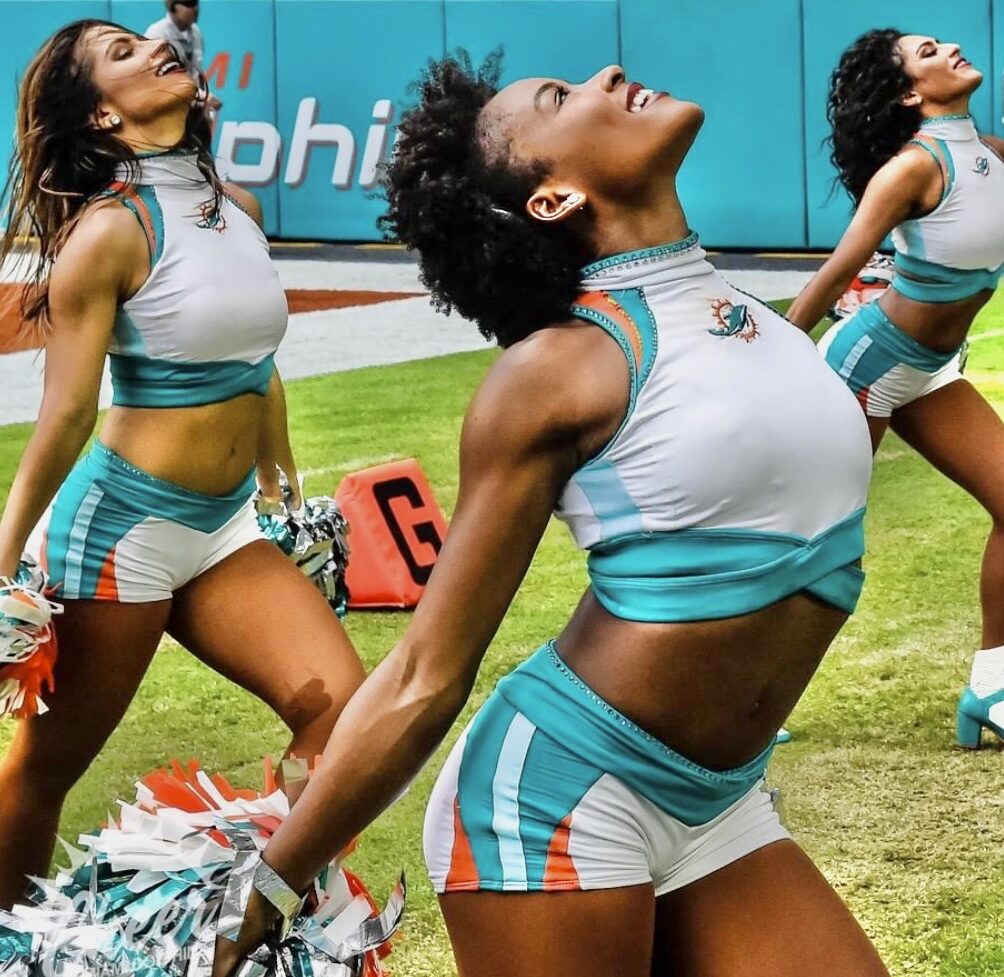
Miami Dolphins cheerleaders performing on the field wearing team performance uniforms
Miami Dolphins – Photo by Miami Dolphins Cheer

Elite cheerleading sits at the intersection of athletic performance, visual precision, and public-facing brand representation. The Miami Dolphins Cheerleaders partnered with Interwoven Design Group to modernize their uniforms and practice apparel, with the goal of creating performance-driven soft goods that support high-energy routines while empowering individual expression within a cohesive team identity.

Interwoven Design was commissioned to redesign the on-field uniforms, practice apparel, and a complementary cheer sneaker, elevating the cheerleaders’ wardrobe to reflect their dual roles as professional athletes and ambassadors for the Miami Dolphins organization. The project emphasized comfort, functionality, and confidence, ensuring that each garment

performed under physical intensity while presenting a polished, contemporary aesthetic on and off the field.

The Design Challenge

Cheerleading places exceptional demands on apparel. Garments must support explosive movement, jumps, lifts, and sustained choreography under stadium lights, heat, and long performance durations. At the same time, cheer uniforms are highly visible, serving as a key expression of team identity and brand values.

The challenge was to design a system of soft goods that could withstand athletic rigor without restricting movement, manage heat and perspiration, and maintain visual consistency across the team. Equally important was creating a wardrobe that allowed cheerleaders agency over their appearance, enabling personalization while preserving a unified, professional look.

Our Approach

Interwoven Design approached the project as a modular performance system rather than a single uniform. The design process began with direct engagement with the cheerleaders, gathering insight into their preferences, pain points, and performance requirements. This collaborative approach ensured that the final collection responded to real athletic needs rather than surface-level aesthetics alone. The concept of a “cheer closet” guided the development of a capsule collection composed of nine core silhouettes designed to be mixed and matched by individual team members. These included a crop top, sports bras, unitard, track jacket, skirt, leggings, and boy shorts, offered in a range of Miami Dolphins–branded colorways.

This system-based approach allowed each cheerleader to select combinations that best suited her body, role, and performance needs while maintaining visual cohesion across the squad. Soft goods design focused on creating garments that moved seamlessly with the body, supported dynamic routines, and felt comfortable throughout long rehearsals, games, and appearances.

Engineered for Movement and Durability

Material selection was central to the success of the collection, and a particular challenge here. Interwoven sourced a breathable, moisture-wicking performance fabric engineered to resist visible color changes from perspiration, ensuring the uniforms maintained a fresh, polished appearance even during high-intensity routines. Strategically placed perforated textiles enhanced ventilation while adding subtle textural detail to the garments.

Athletic construction techniques were used throughout, incorporating internal support features and carefully engineered paneling to improve fit, stability, and comfort. These decisions allowed the garments to support demanding choreography without restricting range of motion or causing distraction during performance.

Impact

The final uniform and practice collection successfully unified performance and style, delivering soft goods that support athletic excellence while reinforcing brand identity. The “cheer closet” model gives team members agency and confidence, allowing them to personalize their look while presenting a consistent, elevated image as a squad.

A complementary makeup kit was also designed to align with the apparel color strategy, enabling a cohesive head-to-toe presentation for games, practices, and appearances. Together, the system underscores the Miami Dolphins Cheerleaders’ role as elite athletes and public representatives of the organization.

Supporting Movement, Comfort, and Confidence

Athletics is defined by movement, repetition, and intensity. Every sprint, pivot, jump, and recovery phase places unique demands on the body and on the products worn in motion. In this context, soft goods are not passive layers or branding surfaces; they are active participants in performance. The way a garment stretches, compresses, breathes, or stabilizes can influence confidence, endurance, and precision in ways that are felt long before they are noticed.

Well-designed athletic soft goods regulate temperature without distraction, support muscles without restricting movement, and adapt across training, competition, and recovery. When these systems are thoughtfully engineered, athletes can focus fully on their sport. When they fall short, friction appears in the form of discomfort, distraction, or compromised performance. The difference often lies in details: patterning, material behavior under sweat and strain, seam placement, and how a product responds over time.

At Interwoven Design, we approach athletic soft goods as performance systems rather than isolated products. Our work blends material intelligence, ergonomic construction, and brand strategy to create apparel and wearable solutions that move with the body and evolve with the demands of sport. Whether designing for emerging athletic categories or established performance disciplines, we prioritize comfort, adaptability, and long-term wearability alongside visual identity and market relevance.

We collaborate with athletic brands, innovators, and performance-driven organizations who recognize that great design is built through deep understanding of the body in motion. Together, we design soft goods that support athletes where it matters most: in the moments of effort, focus, and flow that define sport.Interwoven Design is a design consultancy that is positioned at the intersection of soft goods and wearable technology, creating products that function with the body and offer comfort as well as the superb performance that arises through the innovative incorporation of rigid, often electronic and responsive elements. Sign up for our newsletter and follow us on Instagram and LinkedIn for design news, multi-media recommendations, and to learn more about product design and development!
Soft Goods in Healthcare: The Human Stakes of Healthcare Design

Soft Goods in Healthcare: The Human Stakes of Healthcare Design

Healthcare is about more than treating illness. While medical care focuses on diagnosing and addressing physical conditions, healthcare takes a broader view, supporting a patient’s overall wellbeing and enabling the professionals who deliver that care every day. From long hospital shifts and rehabilitation routines to outpatient care and home recovery, healthcare unfolds across environments that demand comfort, safety, efficiency, and trust.

Soft goods play a critical but often overlooked role in this ecosystem. Braces, supports, wearable devices, utility systems, and hybrid soft–hard products are in constant contact with the body, shaping how care is delivered and experienced. When designed well, they reduce strain, support movement, and integrate seamlessly into clinical workflows. When designed poorly, they can introduce discomfort, fatigue, inefficiency, or even risk. In healthcare settings, where products are worn for hours, used repeatedly, and relied upon in high-pressure situations, these details matter.

At Interwoven Design, we specialize in designing soft goods that support care beyond the clinic. Our work spans patient-facing therapeutic devices and clinician-focused tools, combining expertise in textiles, ergonomics, and integrated hard goods. By approaching healthcare design through a human-centered lens, we create products that balance clinical requirements with real-world usability, creating solutions that feel natural on the body while performing reliably in demanding environments.

In this Insight article, we explore what makes soft goods design in healthcare unique, the challenges and opportunities inherent in this field, and how thoughtful design can support both patient wellbeing and the professionals who provide care. Through real-world examples, we’ll highlight how soft goods can function not just as medical products, but as essential components of a more humane, effective healthcare system.

Why Healthcare Requires a Different Design Lens

Designing for healthcare presents a unique set of challenges that extend well beyond traditional product development. Unlike consumer or lifestyle products, healthcare soft goods operate at the intersection of physical care, emotional vulnerability, and professional responsibility. These products are worn longer, used more intensely, and trusted more deeply by patients and healthcare professionals alike.

Clinical & Operational Context

Healthcare products must perform reliably across highly controlled clinical environments and unpredictable real-world settings. Soft goods are exposed to constant movement, repeated donning and doffing, frequent cleaning, and long hours of wear. Materials must be durable, hygienic, and easy to maintain, while construction methods must withstand intensive daily use without compromising comfort or performance. For clinicians, design decisions can directly affect efficiency, safety, and physical strain during demanding shifts.

Human & Emotional Context

Unlike many consumer products, healthcare soft goods often enter a user’s life during moments of stress, pain, or vulnerability. Patients may be recovering from injury, managing chronic conditions, or navigating uncertainty about their health. Clinicians, meanwhile, work under sustained pressure, balancing precision, speed, and empathy. Thoughtful soft goods design can help reduce anxiety, restore confidence, and preserve dignity, while poorly considered products can amplify discomfort or frustration.

Regulatory & Risk Context

Many healthcare products, particularly those involved in treatment or rehabilitation, must meet strict regulatory, safety, and performance standards. Even non-regulated soft goods used in healthcare environments are influenced by infection control protocols, ergonomic guidelines, and institutional requirements. Designers must ensure that materials, construction, and interfaces are defensible, testable, and aligned with compliance standards, without losing sight of usability and human experience.

Together, these contexts make healthcare design uniquely demanding. Success depends not only on technical performance, but on an ability to understand how products are worn, moved, cleaned, trusted, and relied upon over time. It is this combination of precision and empathy that defines effective healthcare soft goods and sets the foundation for meaningful innovation in the field.

Integrating Comfort, Function, and Care

In healthcare, soft goods become part of how care is delivered. From support garments and protective equipment to clinician tools and patient mobility aids, these products sit at the intersection of the human body and complex care workflows. Designing for this space requires a dual focus: supporting the physical realities of the body while enabling the practical realities of care.

Human-Centered, Iterative Design

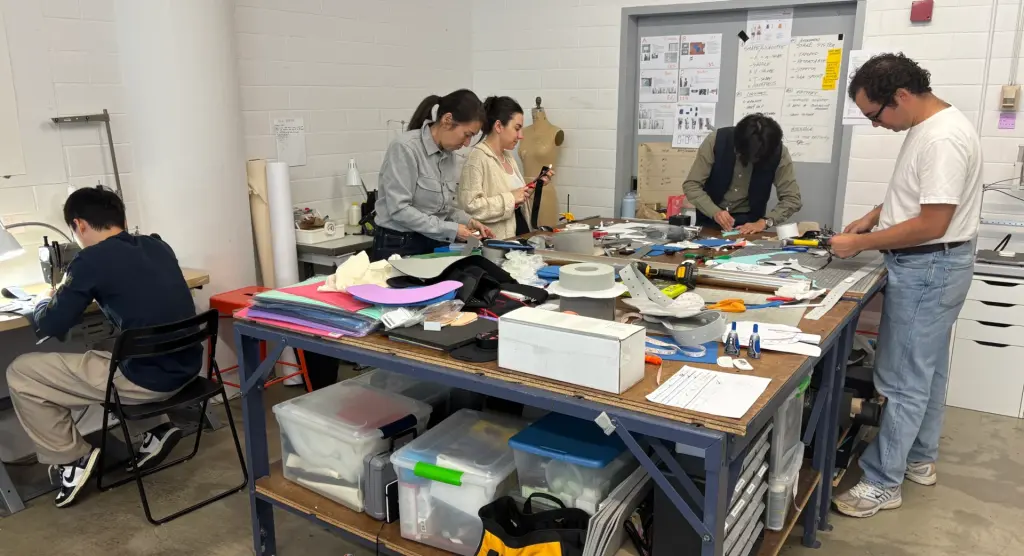
At Interwoven Design, we approach healthcare soft goods as extensions of both the body and the care environment. A brace, garment, or wearable system must accommodate anatomy, movement, and long-term comfort, while also integrating seamlessly into clinical routines. This means accounting for how products are put on and taken off, how they are adjusted, cleaned, shared, or stored, and how they perform across long shifts, repeated use, and changing patient needs. Prototyping and real-world testing are central to this process. Early concepts are evaluated not only for fit and function, but for how they behave in real care scenarios: during patient transfers, extended wear, frequent donning and doffing, or high-movement tasks.

Observing products in context reveals friction points that would be invisible in a purely technical review, informing refinements that improve usability, safety, and adoption.

Design Priorities

Material selection is always important in soft goods design, but in the context of healthcare it plays a critical role. Healthcare soft goods must balance durability with softness, breathability with protection, and structure with flexibility. Fabrics and foams must withstand cleaning protocols, resist wear, and remain comfortable against sensitive skin. Thoughtful construction helps distribute pressure, reduce heat and moisture buildup, and support natural movement, turning functional products into wearable systems that users can rely on over time.

Collaborating with Healthcare Professionals

Just as important as performance materials and ergonomic construction is designing for the people who deliver care. Nurses, technicians, and other healthcare professionals interact with soft goods in fast-paced, high-stakes environments. Products must be intuitive, efficient, and easy to integrate into existing workflows. When soft goods are designed with caregivers in mind, they can reduce physical strain, improve organization, and support safer, more efficient care delivery. At Interwoven Design, we interview and observe healthcare professionals in action in order to deeply understand their needs and their day-to-day tasks. By designing simultaneously for the body and for care delivery, we develop healthcare soft goods that support mobility, comfort, and dignity for patients while enabling clinicians to work more effectively. The result is design that fits the body while also supporting the realities of healthcare.

The Challenges of Designing for High-Impact Healthcare

Soft goods in healthcare sit at a demanding crossroads. They must perform reliably in clinical environments, remain comfortable during extended wear, and adapt to the unpredictable realities of human movement and care delivery. Unlike many consumer products, healthcare soft goods are not optional accessories, they are tools that people depend on daily, often under physical or emotional strain. As a result, long-term wearability is a key challenge. Braces, supports, and clinician-worn systems are frequently worn for hours at a time, across repetitive motions and varied postures.

Poorly distributed pressure, inadequate ventilation, or rigid construction can lead to discomfort, fatigue, or skin irritation, issues that may reduce compliance or interfere with care. Designing for healthcare means anticipating not just how a product fits at rest, but how it performs across an entire day of use.

Integration of soft and hard elements adds another layer of complexity. Many healthcare products must accommodate structural supports, sensors, fasteners, or storage components without sacrificing comfort or mobility. Every seam, closure, and interface becomes a design decision with real consequences for usability and safety. A technically sound system that feels awkward or cumbersome risks being underused, modified incorrectly, or abandoned altogether.

Hygiene and durability further shape the design landscape. Healthcare soft goods must withstand frequent cleaning, exposure to bodily fluids, and institutional laundering processes while maintaining their performance and integrity. Materials and construction methods must be chosen not only for comfort and strength, but for longevity and ease of maintenance.

These challenges represent powerful opportunities for thoughtful design. When soft goods are developed with a deep understanding of healthcare contexts, they can actively improve outcomes. Well-designed products can reduce physical strain for clinicians, support proper body mechanics, improve patient confidence, improve usage rates, and streamline daily workflows. They can also help bridge gaps between clinical settings and everyday life, supporting continuity of care beyond the hospital or clinic. For our design team at Interwoven Design, these constraints are catalysts for innovation. By balancing ergonomics, material performance, and system integration, we create healthcare soft goods that are not only functional, but genuinely supportive of the people who rely on them. 

Case Studies: Design for Healthcare in Action

Healthcare design is ultimately measured in real-world use: how a product performs across long shifts, repeated motions, and moments where comfort, efficiency, and reliability directly affect care delivery. Soft goods play a critical role in how patients move, how clinicians work, and how support systems integrate into daily routines. The difference between a well-intentioned product and a truly effective one often lies in the details: fit, material behavior, adjustability, and how seamlessly a system becomes part of the body. The following case studies highlight Interwoven Design’s approach to healthcare soft goods across different contexts of care.

Case Study 1: Whitecloud Medical Utility Bag

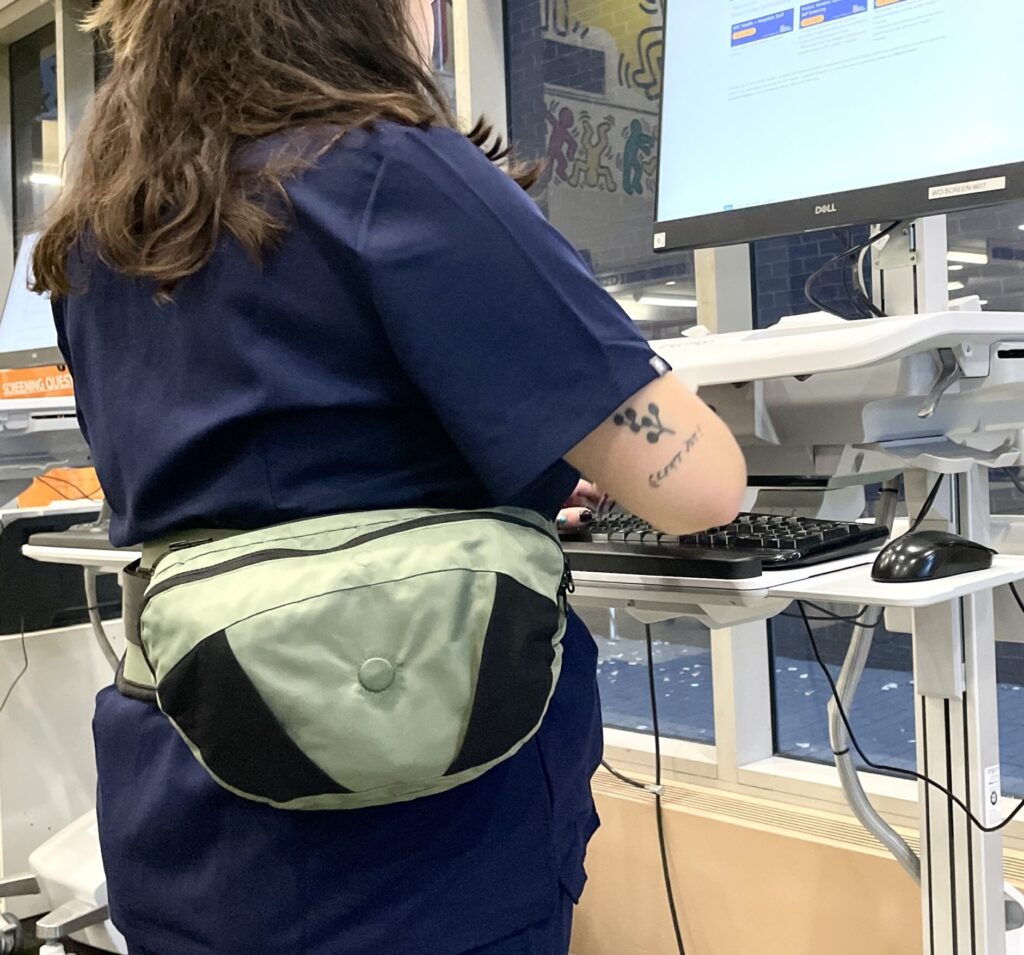
Whitecloud Medical partnered with Interwoven Design to develop a wearable medical utility bag that directly supports the bodies and workflows of healthcare workers on the job. Healthcare professionals operate in environments defined by physical intensity, constant movement, and limited margin for error. Nurses and medical technicians routinely lift patients, transport equipment, and transition rapidly between tasks, all while carrying the tools they need to deliver care. Over time, this combination of physical strain and inefficient load carryingcontributes to fatigue, musculoskeletal injury, and reduced focus on patient care. 

The Design Challenge

In clinical settings, caregivers often rely on overfilled pockets or ad-hoc storage to keep essential supplies within reach. At the same time, repeated lifting, bending, and twisting place significant stress on the lower back. Existing solutions typically addressed these issues in isolation, either offering storage without ergonomic support or back braces without functional integration into daily work routines. The challenge was to design a single, wearable that could reduce physical strain while improving access to tools without restricting movement or adding complexity during fast-paced clinical work.

Our Approach

Interwoven Design developed a modular utility system that integrates a supportive back brace with a flexible waist-mounted storage solution. The utility bag can slide along the belt for quick, one-handed access to supplies or be secured over the back support during physically demanding tasks. Both components can be detached and used independently, allowing caregivers to adapt the system to different roles, shifts, or levels of activity.

Soft goods construction was central to the design. Materials were selected for durability, comfort, and long-term wear, ensuring the system could withstand repeated use while remaining comfortable against the body. Interior organization was carefully considered, with dedicated compartments for a curated suite of medical tools, consumables, and personal items, reducing the need for overloaded pockets and minimizing unnecessary movement during care delivery.

Impact

The Whitecloud Medical Utility System supports healthcare workers where it matters most: at the intersection of physical health and daily efficiency. By combining ergonomic back support with accessible, body-centered storage, the design helps reduce strain, improve posture during demanding tasks, and streamline workflows throughout long shifts. The result is a wearable solution that not only protects the caregiver’s body but also enables them to focus more fully on their patients, demonstrating how thoughtful soft goods design can directly support the people who deliver care every day.

Case Study 2: Breg CrossRunner™ Soft Knee Brace

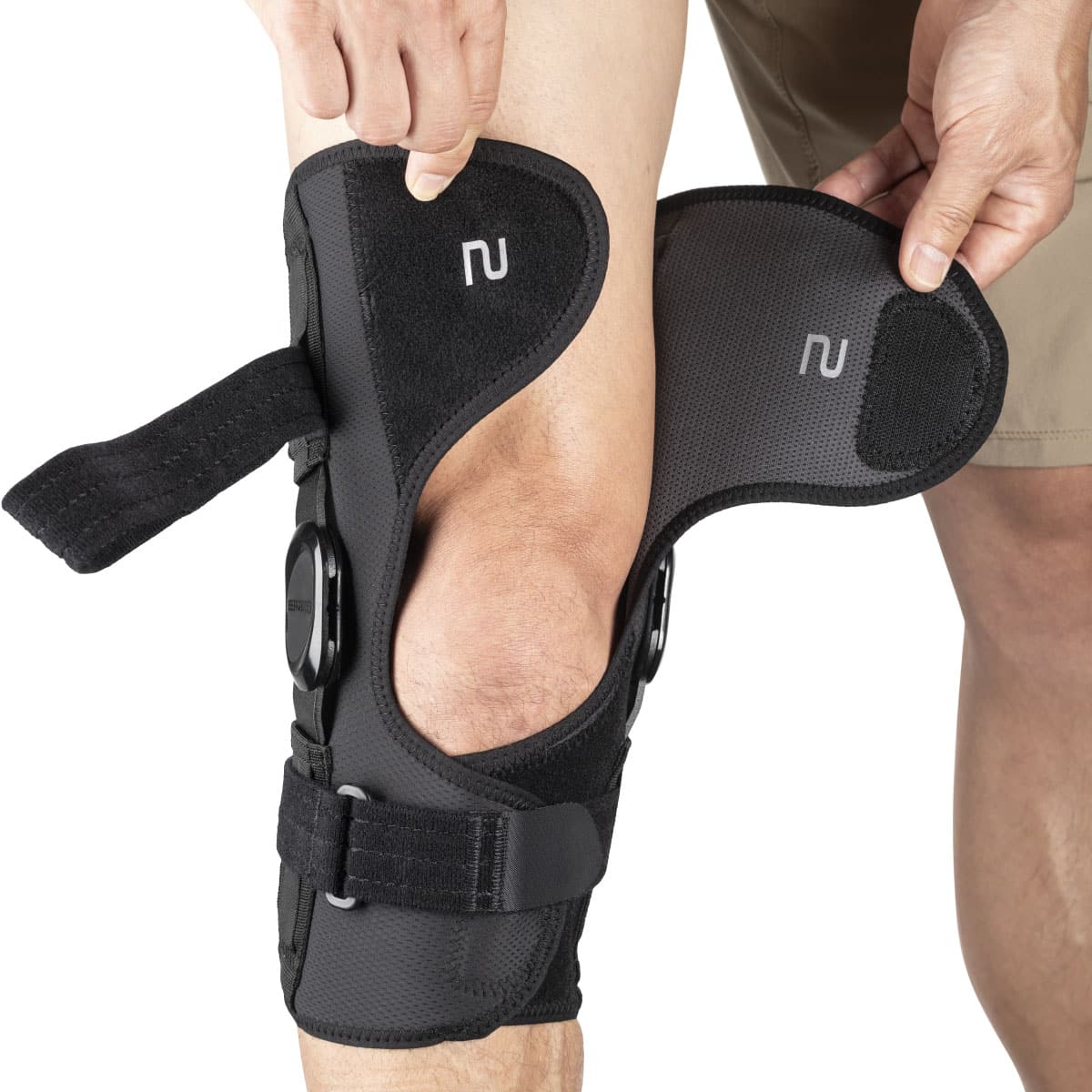
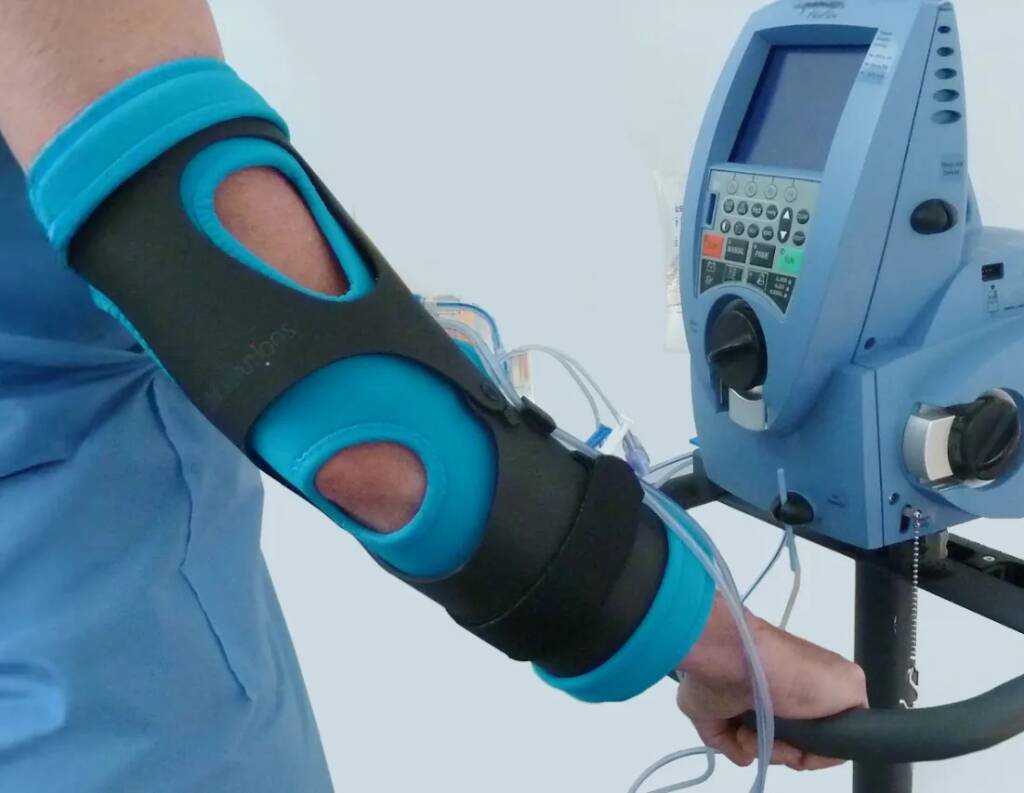
Breg, a leader in orthopedic bracing solutions, partnered with Interwoven Design Group to develop the next generation of their soft, hinged knee brace product line, with a focus on comfort, adaptability, and clinical performance. Orthopedic bracing plays a critical role in healthcare by supporting mobility, reducing pain, and enabling patients to stay active during recovery or long-term joint management. For individuals managing knee instability, ligament injuries, or early-stage osteoarthritis, a brace must do more than provide support, it must integrate comfortably into daily life to ensure consistent use and positive outcomes.

The Design Challenge

The challenge was to create a versatile knee brace system that could serve a wide range of patients and clinical indications, from mild osteoarthritis to a range of ligament injuries. The product needed to deliver reliable mechanical support while remaining lightweight, breathable, and easy to use. For patients, ease of donning and doffing, comfort during extended wear, and a low-profile appearance were essential to encourage adherence. For clinicians, consistent hinge alignment, predictable sizing, and clear functional differentiation across models were critical to effective prescription and fitting.

Our Approach

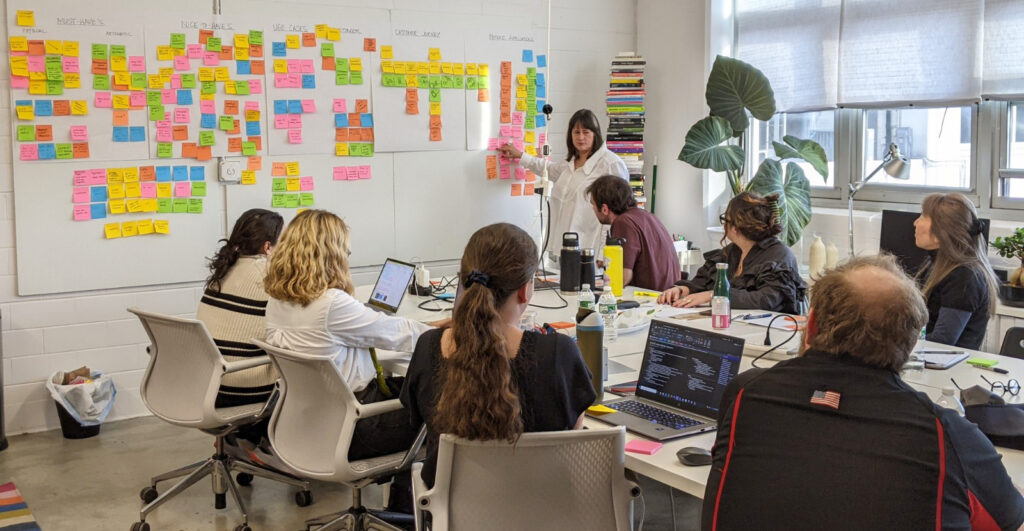
Interwoven Design worked closely with Breg’s internal engineering and manufacturing teams to develop a cohesive, patient-centered brace system. Early concept development focused on understanding user interaction with the brace: how it feels to put on, adjust, and wear throughout a full day of movement. Mood boards and design research established a visual and functional language rooted in anatomy, clarity, and ease of use.

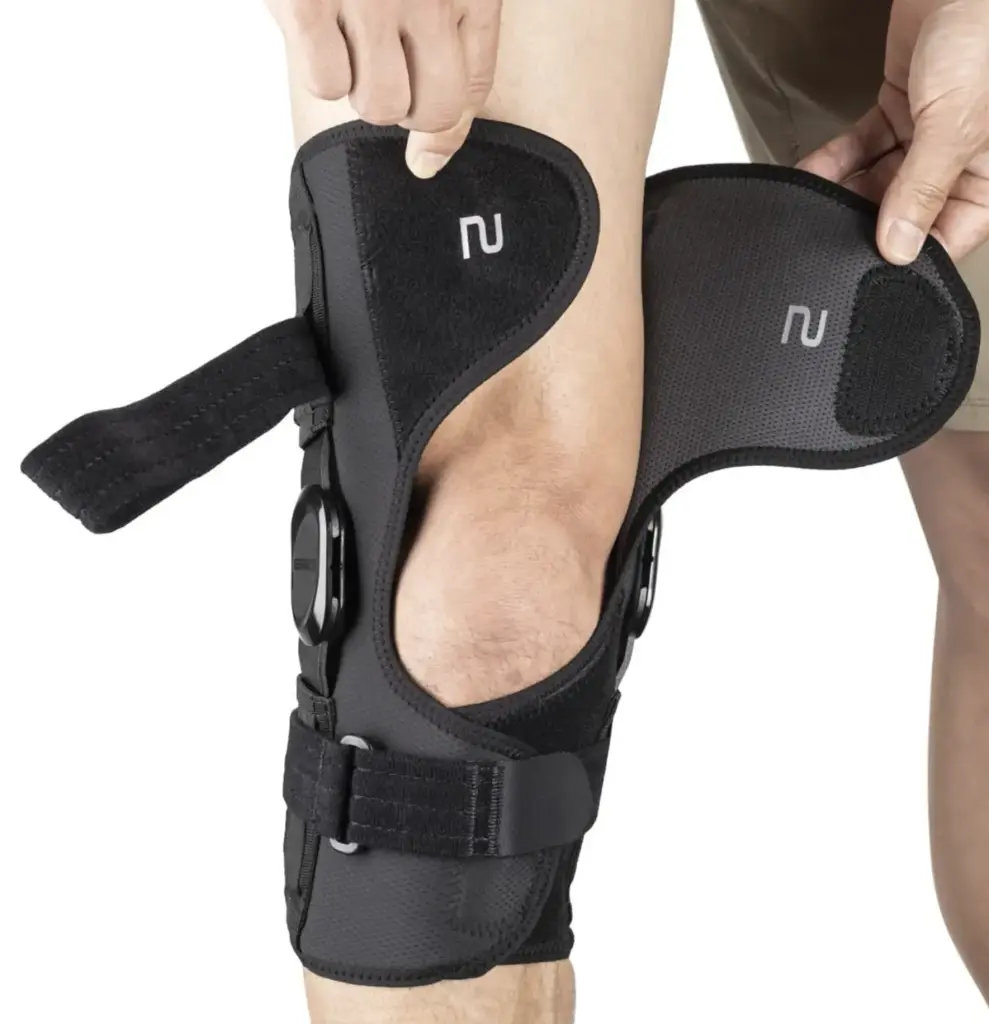
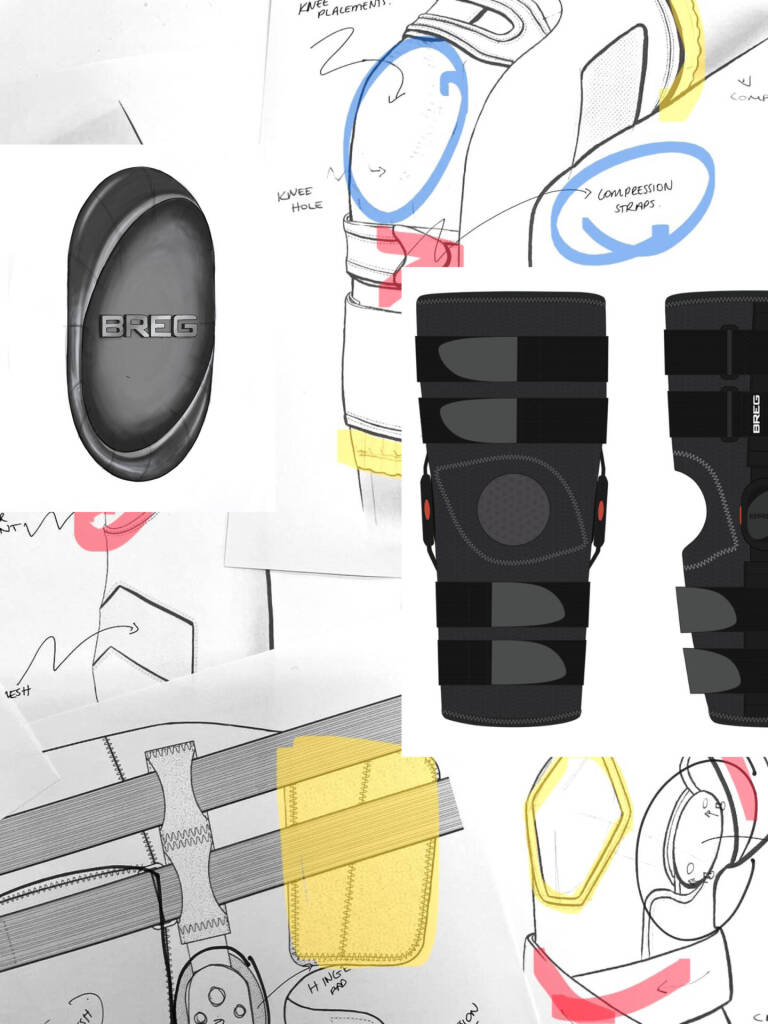
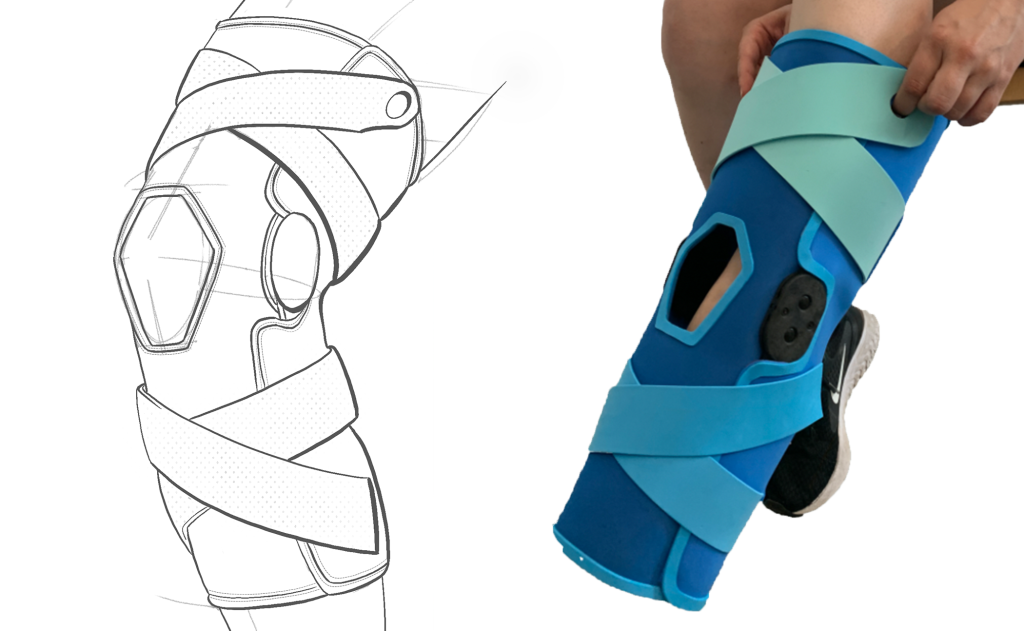
Through 2D sketching and 3D foam mockups, the team explored compression zoning, material placement, and hinge positioning to balance stability with comfort and thermoregulation. The resulting CrossRunner™ line features four configurations—wraparound, pull-on, long, and short—ensuring that clinicians can select the most appropriate solution for each patient’s anatomy, condition, and lifestyle.

Soft goods design was central to the brace’s performance. The body of the brace utilizes Breathefit™ fabric, combining neoprene and Airmesh® to deliver therapeutic compression while maintaining breathability during extended wear. A sleek, low-profile hinge with customizable range-of-motion stops allows clinicians to fine-tune support while preserving a streamlined, wearable form. Interwoven also designed key user-facing elements including strap configurations, hinge covers, tabs, bindings, branding, and colorways; details that improve usability, durability, and overall patient experience.

Technical Development and Production Support

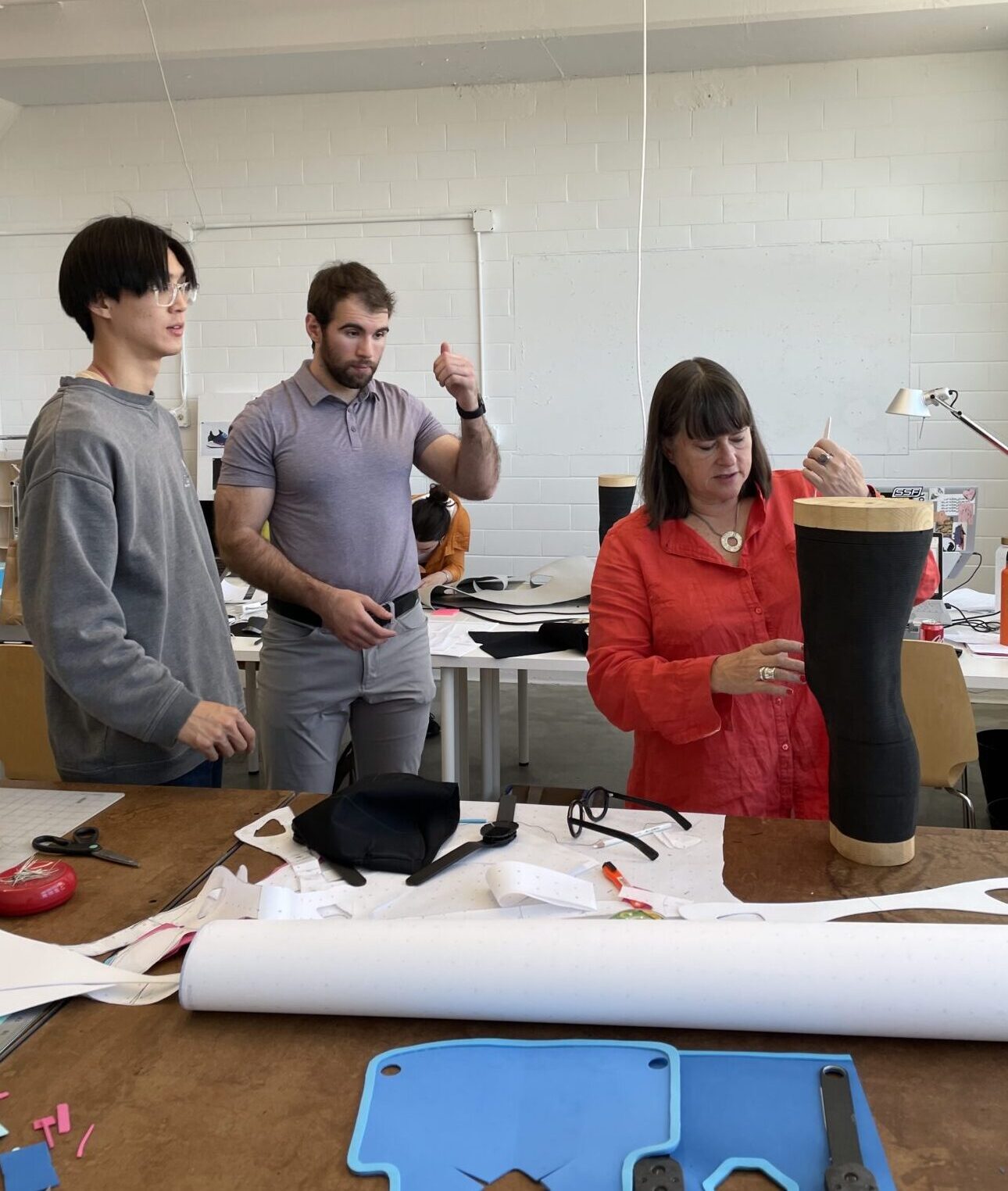
To ensure accurate fit and clinical reliability, Interwoven collaborated with Breg to develop custom leg forms representing each brace size and led the size grading process across eight distinct sizes. Technical patterns were engineered to maintain consistent hinge placement across diverse leg shapes, a critical factor in brace effectiveness. Detailed CAD drawings and technical documentation clearly communicated material layers, strap alignment, and construction details to Breg’s manufacturing team. 

Interwoven remained engaged through sampling, refinement, and production, supporting quality control and ensuring the final product met both clinical and manufacturing standards. This ongoing collaboration helped translate design intent into a scalable, high-quality medical product.

Impact

The Breg CrossRunner™ Soft Knee Brace delivers a patient-centered solution that supports mobility, comfort, and confidence throughout recovery and daily activity. By combining precise orthopedic function with thoughtful soft goods design, the brace encourages consistent wear, which is an essential factor in achieving positive clinical outcomes. For healthcare providers, the cohesive product line simplifies fitting and prescription, while offering adaptable options for a wide range of conditions.

Designing Systems of Care

Healthcare extends beyond the treatment of illness. It encompasses the everyday systems that support wellbeing: comfort during long hours, mobility through recovery, efficiency in demanding environments, and emotional reassurance in moments of uncertainty. While medical care often focuses on diagnosis and intervention, healthcare design must account for the lived experience of both patients and the professionals who care for them. This is where soft goods play an essential, and often underappreciated, role. A knee brace is not just a product; it is part of a recovery process. A utility bag is not just storage; it is a mobile workstation for a nurse navigating a twelve-hour shift. 

Soft goods function as the quiet infrastructure of healthcare. When designed well, they fade into the background, supporting movement, reducing strain, and enabling care without calling attention to themselves. When designed poorly, they become barriers: restricting motion, causing discomfort, or adding friction to already complex workflows. Their impact may be subtle, but it is deeply felt across long shifts, repeated use, and extended recovery periods. Every design decision must account for a complex web of users, environments, and expectations. 

At Interwoven Design, we believe healthcare products should work with people, not against them. Our approach centers on designing systems that support care teams, protect bodies, and respect the physical and emotional realities of healthcare environments. By integrating soft goods expertise with human-centered thinking, we create solutions that align performance with comfort, structure with flexibility, and durability with dignity.

We collaborate with healthcare innovators, medical companies, and care organizations who recognize that better care is built through thoughtful design. Together, we design soft goods that elevate care delivery, strengthen wellbeing, and improve the human experience at every point of contact.

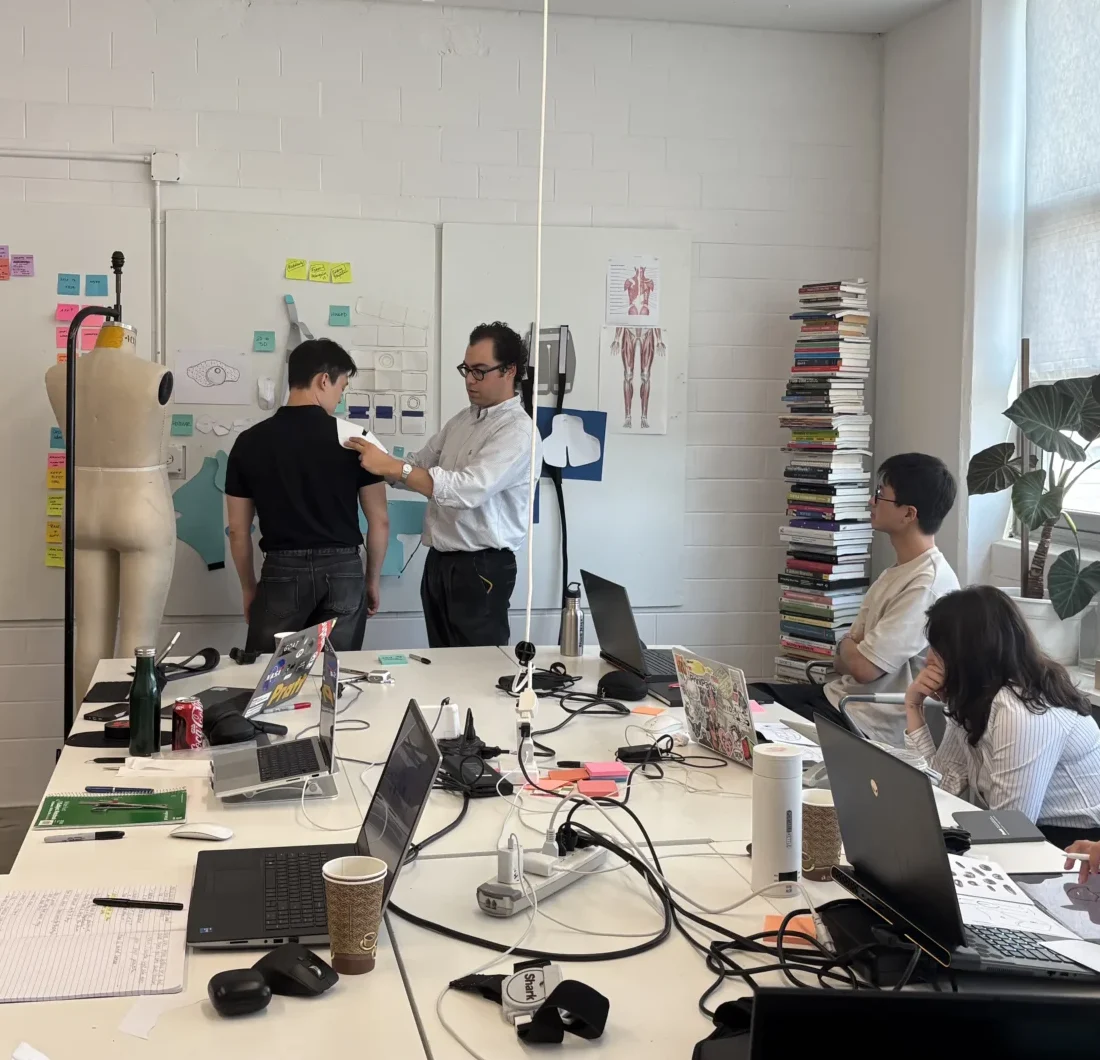
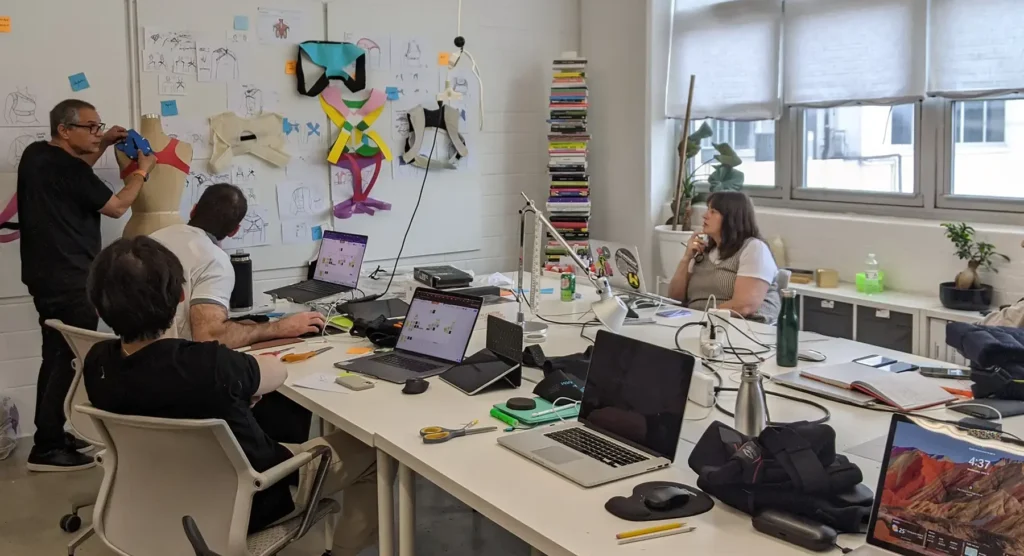
Client Meeting for Koldbot at Interwoven Design Group

Interwoven Design is a design consultancy that is positioned at the intersection of soft goods and wearable technology, creating products that function with the body and offer comfort as well as the superb performance that arises through the innovative incorporation of rigid, often electronic and responsive elements. Sign up for our newsletter and follow us on Instagram and LinkedIn for design news, multi-media recommendations, and to learn more about product design and development!


Designing for Manufacture: Inside the Soft Goods Tech Pack

Designing for Manufacture: Inside the Soft Goods Tech Pack

From Concept to Creation

Every great product begins with a spark of creativity—a sketch, a mood board, a prototype. But in order for that idea to become a physical object, it needs more than inspiration. It needs precision. Technical design is the step that translates vision into manufacturable reality, turning abstract concepts into clear instructions that factories can execute.

At the heart of this process is the technical design pack, or “tech pack.” It is more than just a set of drawings. A tech pack is a comprehensive roadmap and outlines exactly how a product is built, down to the smallest stitch, seam, or material choice. Without it, even the most innovative wearable or softgoods design are at risk being misinterpreted or poorly executed in production.

At Interwoven Design, we view technical design as a creative act in itself. It is a discipline that ensures ideas retain their integrity as they move from the studio to the factory floor. In this article, we outline what a tech pack includes, why it matters, and how we use it to bridge the gap between concept and creation.

What is a Technical Design Pack?

A technical design pack (tech pack) is the universal language between designers and manufacturers. It ensures that everyone—from patternmakers to production partners—shares the same understanding of how a product is meant to look, feel, and function. Think of it as the blueprint for softgoods and wearable technology. A typical tech pack includes:

  • Technical Drawings & Callouts
    Precise line drawings with notes on construction details, stitching, seams, hardware, and placement.
  • Bill of Materials (BOM)
    A complete breakdown of all materials and components. It includes fabrics, foams, fasteners, sensors—required to build the product.
  • Measurements & Grading
    Dimensions, tolerances, and size variations to ensure consistent fit across different body types or product sizes.
  • Assembly Instructions
    Step-by-step construction methods that guide how pieces come together, whether sewn, bonded, or mechanically fastened.
  • Testing & Performance Standards
    Requirements for durability, washability, strength, or medical-grade compliance, depending on the product category.
  • Labeling & Branding
    Placement of logos, care instructions, or certifications that connect the product to its brand identity and compliance needs.
Perci Emergency Preparedness Vest Branding

At its core, the tech pack is about clarity and accountability. It creates a shared framework where manufacturers know exactly what to deliver—and designers can trust the product will match their intent.

Why Technical Design Matters

Without a clear technical foundation, even the most brilliant creative concept risks breaking down in production. Technical design ensures that wearable products are not only beautiful and functional but also manufacturable, repeatable, and safe for users.

For softgoods and wearable technology, this precision becomes even more critical:

  • Integration of Textiles and Hardware
    A garment that incorporates sensors or mechanical components must balance flexibility, comfort, and durability. Tech packs detail how fabrics stretch, where reinforcements are placed, and how electronics are housed without compromising user comfort.
  • Consistency at Scale
    A prototype may be hand-built with care, but manufacturers need exact instructions to replicate that quality across hundreds or thousands of units. Tech packs standardize stitching, finishes, and tolerances so every piece delivers the same performance.
  • Risk Reduction
    By spelling out materials, testing requirements, and construction methods, technical design minimizes costly production errors and prevents miscommunication with suppliers.
  • User-Centered Reliability
    In wearables, failure isn’t just inconvenient—it can mean loss of trust. Technical documentation ensures durability and reliability in real-world contexts, whether that’s a medical device worn 24/7 or a back-assist exosuit in a warehouse.

In short, technical design translates creativity into reality. It bridges the gap between the designer’s vision and the user’s everyday experience, ensuring that innovation holds up in practice.

Inside an Interwoven Design Tech Pack

Every product we design—whether it’s a medical brace or adaptive lingerie—requires a set of technical design assets that guide manufacturers from concept to production.

These documents are roadmaps that ensure the integrity of the design across fit, function, and user experience. This matters even more in the case studies below, where we integrate hard goods and soft goods within the same wearable. Alongside the tech pack, we create a high-fidelity mockup that serves as a companion to the technical specs, bringing them into three dimensions and demonstrating complex construction at scale.

Case Study 1: Breg CrossRunner™ Soft Knee Brace

For the Breg CrossRunner™ Soft Knee Brace, precision was non-negotiable. The brace needed to fit a wide range of leg shapes while maintaining consistent hinge placement—essential for safe, effective joint support.

Interwoven Design developed custom leg forms to represent each size, then engineered a size grading system that scaled patterns evenly without shifting key hinge locations. We created multi-layered technical drawings to capture every detail of the brace’s flaps, straps, and fabric panels. By translating these patterns into CAD and supporting the manufacturing team through sample reviews, we ensured the final product matched the vision: a premium brace that’s both supportive and comfortable.

Case Study 2: Even Adaptive Lingerie

For Even Adaptive lingerie, the tech pack became the bridge between inclusive innovation and manufacturable detail. Alongside garment design, we developed a magnetized clasp system that users could operate with one hand.

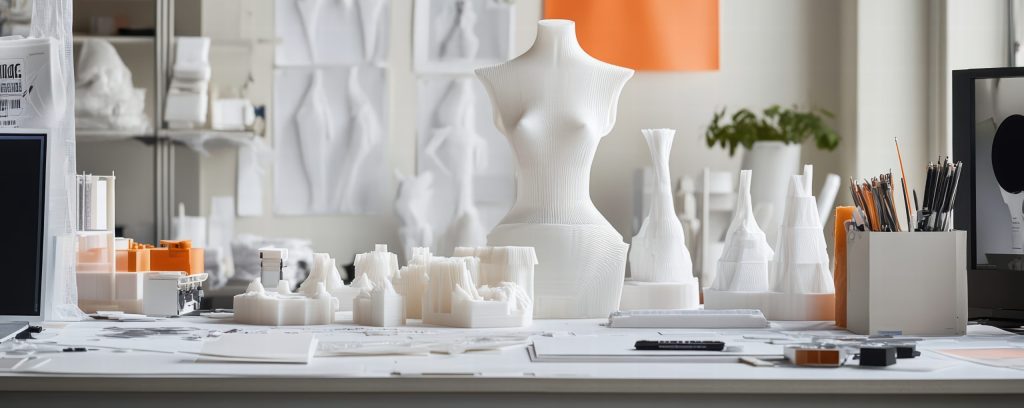
Our industrial design and garment design teams worked in parallel, using 3D-printed prototypes with embedded magnets to test usability, strength, and comfort. We documented each iteration in technical drawings and specifications so manufacturers clearly understood how to integrate the clasp into the fabric without compromising softness or fit. The result was a low-profile, reliable closure that delivered on both aesthetics and accessibility. 

From Documentation to Collaboration

At Interwoven Design, we see tech packs not only as instructions for manufacturers, but as living tools. These align every stakeholder in the process, from clients and engineers to production partners. A strong pack captures the full intent of a design: the dimensions, construction methods, materials, finishes, and functional details that define how a product should look, feel, and perform. By consolidating all of this into a single, reliable reference, everyone involved—from brand stakeholders reviewing the concept to factory technicians cutting patterns—works from the same shared vision.

But we also know that design doesn’t end at handoff. Even the most detailed tech pack is only part of the equation. Manufacturing is an iterative process, and unexpected challenges can arise when ideas meet real-world production. That’s why success depends on pairing precision documentation with open, ongoing relationships with manufacturers. At Interwoven, we don’t just pass off a tech pack. We stay engaged throughout production, reviewing prototypes, answering questions, and refining details.

This collaborative approach helps bridge logistical gaps, ensures that subtle but important design decisions are preserved, and reduces costly missteps. A well-crafted tech pack minimizes guesswork, but it’s the combination of clear documentation and active partnership that guarantees the best outcomes: products that deliver on both creative vision and practical performance.

Precision as a Creative Act

Technical design is where creativity transforms into reality. The sketches, prototypes, and ideas that spark innovation become manufacturable products through careful documentation and technical rigor. At Interwoven Design, our expertise lies in creating these assets with the same care we bring to concepting and design. So, we ensure every product we hand off is made with accuracy, quality, and intent.

If you’re looking to take your concept from an idea to a market-ready product, we’d love to partner with you. With our vision and professional-grade technical documentation, we turn your ideas into fully realized products.

Interwoven Design is a design consultancy positioned at the intersection of soft goods and wearable technology. Sign up for our newsletter and follow us on Instagram and LinkedIn to learn more about design and development! 

A Q&A with Soft Goods Designer Anthony Parrucci

A Q&A with Soft Goods Designer Anthony Parrucci

Spotlight articles shine a light on designers we admire, asking leaders in the field about their work and their design journey. For this installment of our Spotlight series, we caught up with former Interwoven Design Group designer Anthony Parrucci, now a Soft Goods Designer at Newell Brands in Atlanta. From his early days dreaming of designing hockey gear to building innovative products for the baby industry, Anthony has carved a path defined by curiosity, collaboration, and a deep respect for hands-on making. In this conversation with Interwoven founder Rebeccah Pailes-Friedman, he reflects on conceptual prototyping, the power of “sketching in 3D,” and how early models can unlock new insights into user interaction and scale.

Photo courtesy of Anthony Parrucci

Anthony earned his master’s degree in Industrial Design from Rochester Institute of Technology after completing undergraduate studies in Business Administration and Art at Elmira College. Before joining Newell Brands, he spent three years at Interwoven Design Group, where he helped develop products across the athletic, medical, and military sectors—ranging from exoskeleton suits to technical bags and soft goods. His approach blends material experimentation with a strong focus on real-world usability. Outside the studio, Anthony brings the same discipline and drive he once applied to ice hockey, which he played at the professional and collegiate levels. Whether on the rink or in the workshop, he’s always been drawn to how performance, form, and human connection intersect.

Q:

Tell us a little bit about your background and how you found your way into industrial design.

A:

As far back as I can remember, I always wanted to be a hockey player. That was the dream. But what I found most exciting was the equipment—sticks, pads, helmets—and the idea of designing it myself. I knew I wanted to be the person behind the gear, making things better for athletes. But the funny thing was, while everyone could tell me how to become a pro hockey player, no one had any clue how to become a product designer. I kept asking, but nobody could point me in the right direction.

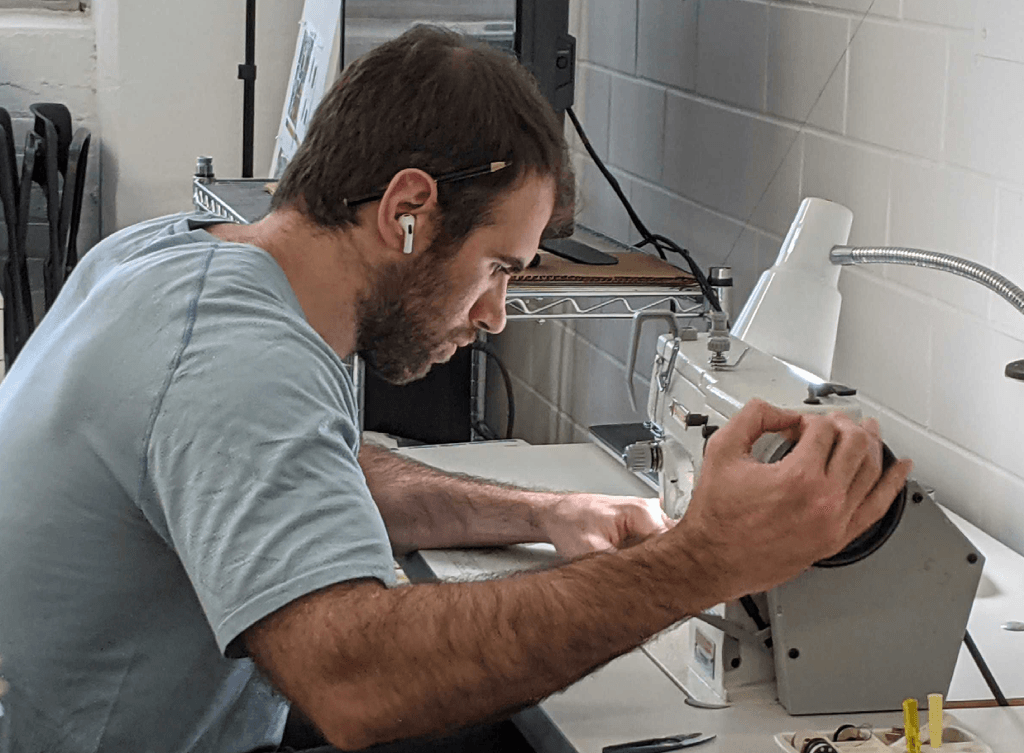
Anthony Parrucci sewing a prototype at Interwoven, working on soft goods design.
Anthony Parrucci at Interwoven, focused on soft goods prototyping

It wasn’t until undergrad that I met a professor who changed everything. He helped me find the path and really took me under his wing. I went to RIT, studied industrial design, and honed my skills while finishing up my hockey career. After graduation, I interned at Interwoven, and that turned into a full-time job—which was honestly one of the best places to grow as a young designer. I spent about three years there, getting my hands dirty, building fast mockups, and learning how to make ideas real. Now, I’m working at Newell Brands as a soft goods designer, focusing on the baby space. It’s a change of pace from Interwoven—bigger team, different structure—but the fundamentals of good design still apply.

Q:

What does conceptual prototyping mean to you, and what role does it play in your process?

A:

To me, conceptual prototyping is one of the most important parts of product design—especially when you’re working on the front end of a project. In fast-paced environments, having a way to quickly explore and communicate ideas is everything. I remember when I was in school, I was so hesitant to make mockups. I worried that if something was built with cardboard or hot glue, people would judge it. I’d think, “This muslin has raw edges—are they going to take it seriously?” It took me a while to realize that the point of those early models isn’t perfection—it’s validation. You’re trying to test an idea, not deliver a polished object.

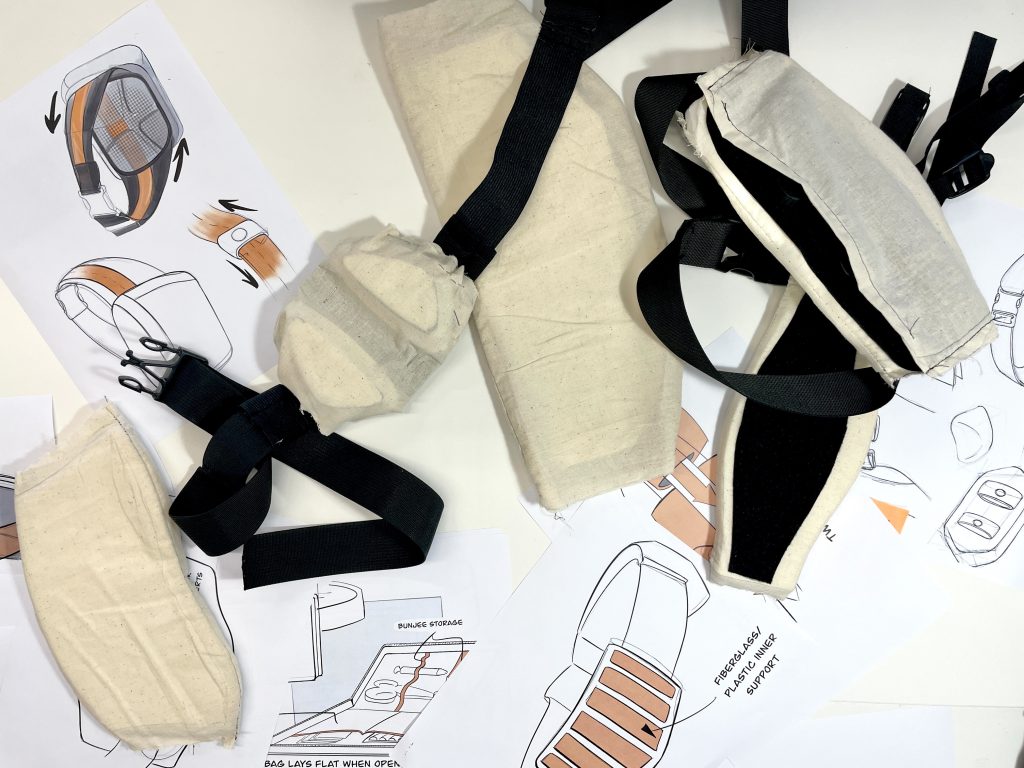
Whitecloud Ideation
At Interwoven, muslin prototypes help bring design ideas to life.

Once you get over that mental hurdle and stop caring about fidelity, you’re limitless. You can make a crude mockup and say, “Imagine this part holds electronics,” and suddenly you’re in a conversation about function, user interaction, and viability. At Interwoven, that was a big part of the culture. You could build something messy, cheap, fast—and the point was to learn. It wasn’t about impressing people with how pretty something looked; it was about getting information quickly, failing fast, and saving money in the process.

Sometimes a $1 muslin model tells you more than a $300 3D print. That’s the ROI of prototyping. Even though there’s no exact formula for it, you learn so much by making something tangible. And that knowledge pays off tenfold when you move to the next stage.

Q:

At Interwoven Design, we often talk about “sketching in 3D.” How do you think 3D prototyping compares to 2D sketching in your process? When do you choose one over the other—or do you use both?

A:

A lot of the time, they happen in parallel. I’ll jump back and forth between 2D sketching and physical prototyping depending on what I’m trying to figure out. But if I’m being honest, there were definitely moments—especially during projects at Interwoven—where I found myself sketching too much. I’d get stuck in the lines, trying to make things look good on paper, but I wasn’t really proving anything. I’d realize I was spending all this time drawing, but not actually learning how something would work in the real world.

That’s why I’ve always loved working in 3D early. I remember being in the studio with muslin draped on a form, sketching right on the body, ripping paper, taping things together. There’s just something about the immediacy of that. You’re not just imagining a form—you’re shaping it in real time, and often that translates right into pattern-making or the next stage of development.

Sometimes, when you’ve got a tight timeline or the project is super function-driven, I’ll skip 2D altogether and go straight to building. I’ll bring a quick muslin or cardboard mock-up to a team meeting and say, “This is what I think it’s doing.” That way, people can touch it, react to it, and we can talk through pros and cons on the spot. You don’t get that level of feedback from a sketch alone.

So yeah, I still sketch—but physical modeling is where I uncover the really good stuff. And often, once I understand how something works in 3D, then I’ll go back to 2D to refine the aesthetics or create a more polished representation. It’s a constant back-and-forth.

Q:

Can you share a specific example of a conceptual prototype that helped solve a problem or clarified your thinking during a project?

A:

Woman wearing the Ninja Frost Vault soft cooler backpack outdoors, surrounded by trees.
The Ninja Frost Vault soft cooler — a functional, fun design born from rapid prototyping.

The Ninja Frost Valut soft cooler project comes to mind immediately. That one was a wild ride in the best way. They came to us with a super tight turnaround—like two weeks—and said, “We need something functional and fun, and we need to validate the user interaction.” And keep in mind, this was a client with all the resources in the world. They had access to 3D printers, high-end materials, whatever they wanted. But even they knew that to move fast, we needed to get scrappy.

So instead of building out a full-size, high-fidelity prototype, we started with quick, rough mockups—cardboard, muslin, whatever we could use to visualize the structure. It was about figuring out how the top door worked, how the zipper would interact with the opening, how the compartments connected on the inside. They told us, “We want to fit 18 cans and a wine bottle,” which sounds specific but gets tricky once you start shaping the actual space.

That’s the beauty of these early mockups. They let you work within constraints and still explore. You’re building something real enough to evaluate, but flexible enough to change on the fly. We’d hold the model, try different openings, move things around. If we’d started with a polished CAD file or waited on a perfect 3D print, we would’ve lost valuable time—and we probably wouldn’t have caught some of the spatial issues until much later.

So even in a super corporate environment, the quick and dirty models were essential. They gave us clarity, speed, and insight—all things you can’t afford to miss when you’re on a tight timeline.

Q:

Can you give an example of a quick model that taught you something you wouldn’t have learned on paper?

A:

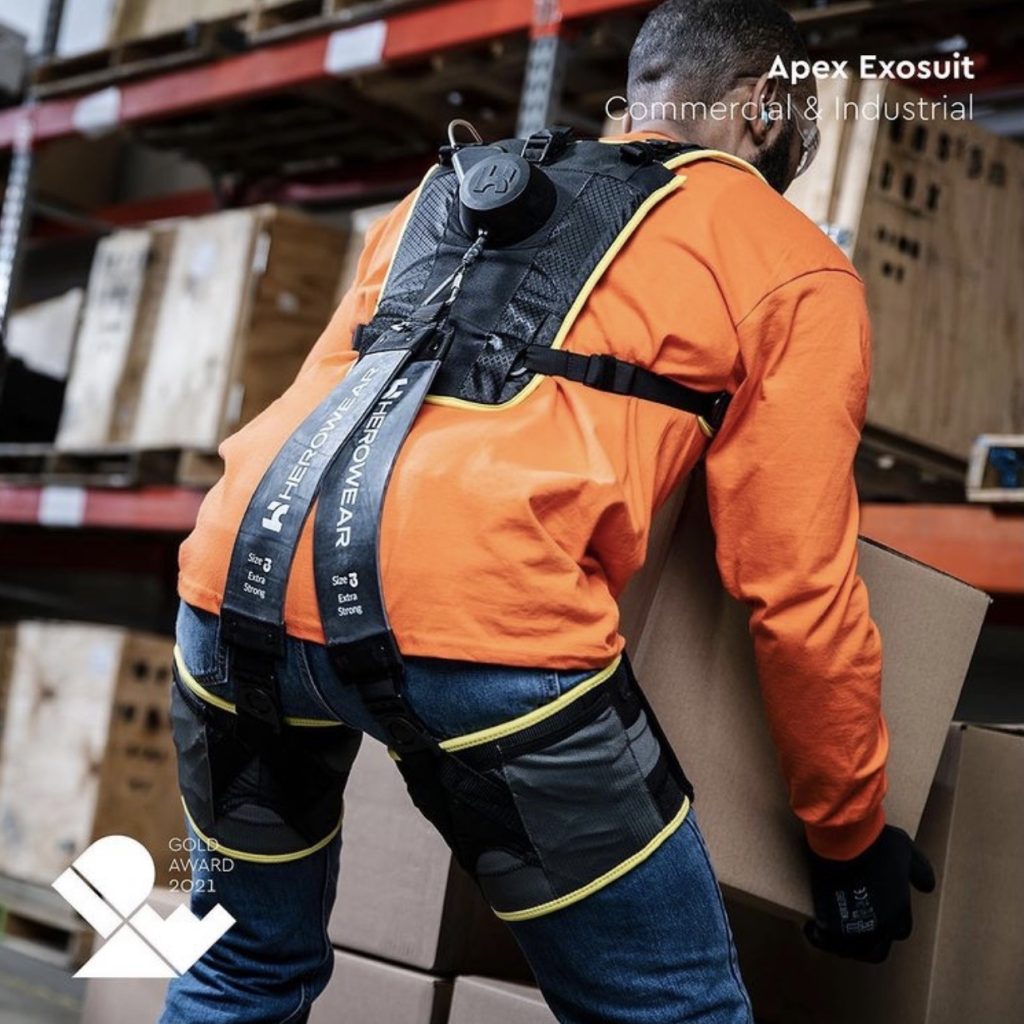
a warehouse worker wears the Apex Exosuit
IDEA Gold Award 2021 winner: Apex Exosuit

Totally. One of the best examples I can think of actually goes back to the HeroWear Apex exosuit. We were working on the early development of the wearable, and we were designing things like the shoulder straps and leg portions—really important areas for comfort and function. And the thing is, you can look at all the biomechanics research in the world, but until you physically mock something up and put it on a body, you don’t feel the impact of the design.

I remember making these super rudimentary models—muslin straps, cardboard cutouts, foam forms—and just trying things on. One tiny change, like shifting the sternum strap half an inch higher, would totally throw off the balance. It would start pulling back on the upper plate in this weird way, or it would choke you a little if there was any tension. It was a great reminder that the human body doesn’t care what the sketch says—it cares how it feels.

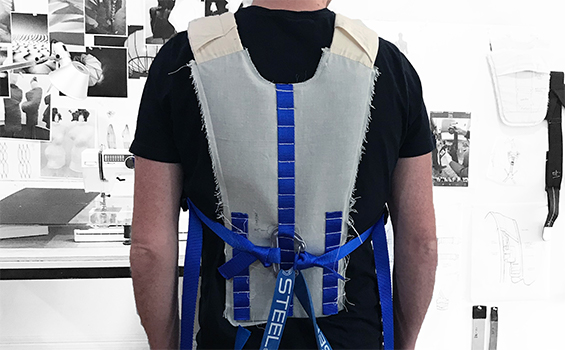
model wearing exosuit mockup harness
A model wearing a mockup of the the Apex Exosuit, rear view

That was especially true when we were testing on different bodies. Something that fit me well didn’t necessarily work on Aybuke or Meghan. We were seeing, in real-time, how much variation there is in anatomy. And we weren’t just looking at fit—we were watching how people used the prototypes. One person would put on a backpack starting with their left arm, another would hoist it from the bottom, someone else would swing it over their shoulder. All of those micro-behaviors matter.

So in that case, the mockups weren’t just about proving fit—they were about revealing differences in interaction, body types, motion, all of it. None of that was visible in the drawings. You had to build it and put it on people. That was the only way to really learn.

Q:

What kinds of materials do you gravitate toward when making these sketch models, and how do those choices shape the way you think through a problem?

A:

It really depends on what I’m trying to solve. I’ll use muslin if I need something that drapes or behaves like fabric, cardboard when I’m looking at form and structure, and EVA foam is kind of the wildcard that I love to use when I need something that does a little bit of everything. That stuff is gold—it can act like a soft shell, a flexible strap, even simulate Velcro depending on how you cut and tape it.

The thing you have to watch out for, though, is that people will take whatever you show them literally. If you’re showing a conceptual prototype to marketing or upper leadership and you use a stretchy mesh just because it looks good or is easy to sew with, they might say, “Oh wow, this feels amazing—we should use this!” And you’re like, “No, no, this isn’t the real material! It’s just here for the mock-up.” So I’ve gotten more strategic over time.

Breg CrossRunner™ Soft Knee Brace illustration and prototype on user
A colorful EVA foam prototype of the Breg knee brace

For example, when I was working on the Breg knee brace, I used EVA foam in all these crazy colors—turquoise, lime green, bright yellow—on purpose. If I’d made the models in black, which is what the final product was supposed to be, people would’ve gotten way too literal. But the wild colors kind of divorced the client from the final form just enough so they could focus on what the prototype was doing, not what it looked like.

So material choice isn’t just about function—it’s about communication. It’s about knowing who you’re showing it to and what message they might take away from it. I’ve learned to be really intentional about that.

Q:

What kinds of insights have you gained from building models that surprised you?

A:

So many. One of the most memorable was while working on the Apex exosuit for HeroWear. We were testing strap placements, and even with minimal tension, a small shift in sternum strap height could cause major fit issues. It made us more aware of how anatomical differences—especially between male and female bodies—affect fit. You also learn a lot just by watching how people put things on. No two users interact the same way.

Q:

How did your time at Interwoven shape the way you design and prototype today? Are there any techniques, habits, or philosophies you still carry with you?

A:

For sure. I think the biggest thing that Interwoven gave me—besides hands-on experience—was confidence. Confidence to put unfinished ideas in front of other people and say, “Here’s where I’m at,” even if it’s not polished. That’s a hard thing to do straight out of school. I was so used to trying to perfect everything before I shared it. But at Interwoven, we moved so fast. You didn’t have time to obsess. You had to get your idea out there, test it, talk about it, and then move on to the next iteration.

I remember the first time Rebeccah handed me a piece of EVA foam and said, “Just mark it up. Make a model.” And I was like, “Wait—what?” But once I did it, it unlocked something. It gave me permission to try things and not worry if they were ugly or halfway done. That mindset—that a rough idea is still a valid idea—has stayed with me. I carry that into everything I do now.

At Interwoven, we prototyped constantly. Blue-sky concepts, tech that didn’t even exist yet—we still made physical mockups to explore layout, user interface, ergonomics. Whether it was figuring out battery placement in a pet harness or mapping electronics onto soft goods, we always built first, then refined. That method taught me how valuable foam, muslin, and tape can be.

So even now, when I’m working at a much bigger company, that habit of diving in, getting hands-on early, and iterating fast is something I always go back to. It’s fundamental.

Q:

Conceptual prototypes aren’t always easy for clients or stakeholders to understand. How do you communicate their value without people taking them too literally?

A:

That’s such a good question—and it’s a challenge for sure. I think the biggest thing is knowing your audience. You have to anticipate what people are going to expect based on who they are and what kind of background they’re coming from. If you’re dealing with a huge corporation, they might be used to seeing fully 3D-printed, sanded, spray-painted mockups. That’s their norm. But someone else might be totally fine with cardboard and tape if it helps them understand the idea.

What I try to do is build in smaller checkpoints. Instead of waiting for a big Phase 2 presentation where everything’s supposed to be clean and “done,” I’ll push for a mid-phase touchpoint. It gives you a chance to say, “Here’s where we’re at—we haven’t spent too much time or money yet, but we’re getting important feedback now so we can steer in the right direction.” That sets expectations early and helps people focus on the ideas, not the finish.

Another trick I use is playing with scale and color. If you build something small, or in colors that clearly don’t belong in the final product—like making a knee brace mockup in bright turquoise and neon yellow—people immediately understand that it’s not final. It helps create that separation, so they look at the concept, not the aesthetics.

And sometimes you just have to say it directly: “This isn’t a final product. This is about exploring function, interaction, or layout.” That helps shift the mindset. The point is to open the door for feedback—not to get approval on a finished design.

Q:

In what ways does physical modeling—taping, folding, building—inform your digital work, and vice versa? When do you bring CAD into your process?

A:

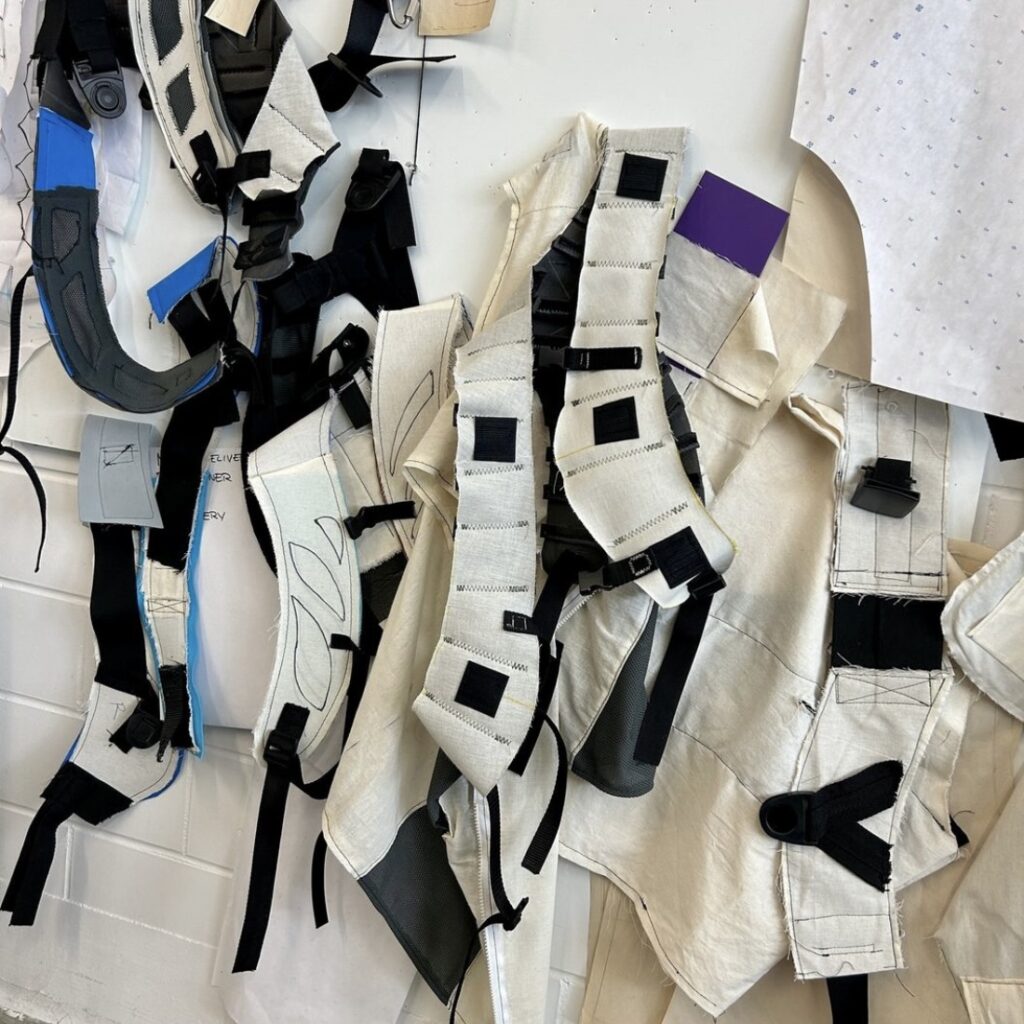
I think physical and digital work are more intertwined than people realize. For me, they constantly inform each other. If I’ve built something to scale—like a muslin vest or a foam form—I’ll take photos of it and bring those into Illustrator. I might drop the opacity down and sketch over it. Or I’ll use it as the base for a tech pack, especially if we’re moving into a pattern-making phase.

Interwoven muslin prototype pinup
At Interwoven, hands-on muslin builds inform the digital process, revealing nuances that screens alone can’t show.

Sometimes I’ll scan the flats of a muslin build and start drawing from there. That becomes the foundation for my Illustrator files or even for 3D modeling. And then as you start building in CAD, that’s when you find the real-world limitations—like, “Oh, we can’t mount this piece the way I thought,” or “This part is interfering with another component.” It’s like a back-and-forth conversation between the physical model and the digital file.

If you jump straight into CAD without building anything first, you miss so much nuance—especially around ergonomics and body interaction. The screen gives you precision, but the shop gives you truth. And once you have something physical, even a rough version, it makes your digital work smarter and more intentional.

Q:

What’s your take on failure in the prototyping process?

A:

Failure is 95% of it. You build quick mock-ups, find out what doesn’t work, and share them anyway. At Interwoven, we’d make 10 different models and walk through them as a team. Even if three of mine failed, someone else might spot something worth carrying forward. That back-and-forth was always valuable.

Q:

Final question: What advice would you give a young designer about sketch modeling?

A:

Get up from your desk. Go to the shop. Talk to people. Learn how things are made. And most importantly—don’t be afraid to fail in front of others. That confidence builds with time. Every mock-up, even the rough ones, teaches you something. And you never know who might see something in it that you missed.

Check out the rest of our Spotlight series to hear more from leaders in the design industry. Sign up for our newsletter and follow us on Instagram and LinkedIn for design news, multi-media recommendations, and to learn more about product design and development!
Please reach out!

Rebeccah Pailes-Friedman & Aybüke Şahin on Bridging Hard and Soft Goods in Industrial Design

Rebeccah Pailes-Friedman & Aybüke Şahin on Bridging Hard and Soft Goods in Industrial Design


Spotlight articles shine a light on designers we admire, asking leaders in the field about their work and their design journey. For this Spotlight conversation, Interwoven founder Rebeccah Pailes-Friedman sits down with Aybüke Şahin, a Senior Industrial Designer who recently marked her fifth year with the studio. What begins as a casual conversation quickly turns into an expansive dialogue on what sets soft goods apart from traditional product design, why prototyping with fabric requires intuition as much as tools, and how the studio’s hybrid expertise shapes innovation across consumer, medical, and lifestyle categories.

In this rare peer-to-peer exchange, Rebeccah and Aybüke open up about shifting user expectations, navigating clients with very different design cultures, and how understanding human behavior continues to shape the way Interwoven brings ideas to life.

RPF: Okay, let’s get started. First, I just want to say thank you for taking some time out of your busy day to have this conversation about soft goods.

AS: Yes, absolutely—this is fun. We’re usually deep in projects, so it’s nice to step back and talk about how we actually approach the work.

RPF: So, to begin with, how long have you worked here now?

AS: It’s been a full five years.

RPF: Amazing. It went by fast.

RPF: What do you think is the biggest difference between traditional industrial design and the kind of soft goods work we do here at Interwoven?

a designer references a sketch of a buckle while prototyping
Hands-on with fabric prototypes at Interwoven to understand material behavior.

AS: I think the way we think about problems—or not even problems, but the conditions that come with softer materials like fabrics—are really different. In traditional hard goods, it’s sometimes easier to imagine things on paper or in CAD with rapid prototyping. But with fabric, we can imagine something and then it ends up behaving completely differently when we actually prototype it. I find there’s more back-and-forth, more revisions, especially in how components interact with softer materials.

RPF: I know exactly what you mean. Textiles behave differently than any other material. When you’re working in plastic or metal, the sky’s the limit—whatever you can CAD, you can produce. But with textiles, you’re limited by how the material behaves. You have to understand the material’s behavior in order to design something effective.

AS: So Rebeccah, in your expertise—and you’ve been in the field for quite some time now—how do you think user behaviors in relation to wearables or soft goods shape the way we prototype and test?

RPF: I think it all comes down to people’s behavior—how they move, how they feel comfortable. If something is uncomfortable, it literally changes the way you behave. Think about how dress clothes used to be the norm. Who wants to wear a dress shirt or a blazer now? You can’t move your arms, you can’t breathe—it’s physically restricting. I think that shift in tolerance—people just aren’t willing to be uncomfortable anymore—is huge. Understanding human behavior and translating that into the products we design is a core part of what we do. And you really saw that shift during the pandemic. People got used to wearing comfortable clothing at home and now they don’t want to go back to discomfort. That changes how we think about designing soft goods.

AS: I totally agree. And soft goods is definitely growing as an industry. When we first started doing this, there weren’t many people in the space who did what we do. Now there are a lot more. There’s more research, more product development, and more technologies popping up that incorporate wearable or soft systems.

RPF: Yeah, and it all comes back to how people want better experiences—something that’s easier to use, something that gives them value in their daily life.

Arete Swatch team consideration
Interwoven’s design process involves testing and iterating materials to uncover their unique properties.

AS: Exactly. But with soft goods, it’s not that simple. You can imagine something perfectly in your head, or even draw it out precisely, but the moment you start working with the fabric, it surprises you. Textiles behave in really unique ways. They stretch, fold, collapse, resist—things you can’t always predict until you physically make the piece.

RPF: Yes! With textiles, behavior is everything. When you’re designing in metal or plastic, you’re only limited by the constraints of your tooling or manufacturing method. But with textiles, you’re also designing within the behavior of the material. If you don’t understand how it drapes, stretches, or responds to tension, you’re lost.

AS: That’s why I think our design process here often involves more back-and-forth between ideation and physical prototyping. There’s more revision, more iteration, because the material itself is such a big part of the equation.

RPF: It’s funny—sometimes the constraints of fabric can be frustrating, but they also force you to get creative. And over time, we’ve built our own internal “library” of material behaviors and techniques. It’s experience, but also intuition.

AS: And it’s collaborative. We learn from each other all the time here—about materials, patterning, construction, testing. It’s not just about getting a good idea out; it’s about translating that idea into something functional, wearable, and manufacturable.

AS: So building on that—let’s talk about our methodology for designing comfortable, inclusive, and high-performing soft goods?

RPF: It’s not just about softness or flexibility. It’s about how products move with your body, how they accommodate different sizes and shapes. Designing for comfort now means understanding biomechanics, posture, and even emotional cues.

AS: It’s part of why soft goods are growing so quickly as a category. There’s more demand, more innovation, more cross-pollination between fashion, health, tech, and lifestyle. When we started doing this work, there weren’t a lot of people combining design and engineering in this way. Now it’s really taking off.

Rebeccah Pailes-Friedman and Aybüke Şahin in conversation at Interwoven studio, seated at a white table with books in the background.

RPF: Another thing I think sets our work apart at Interwoven is the way we merge soft and hard components. I’ve always been drawn to that crossover, and it was one of the reasons I was so excited to bring you onto the team—your background in hard goods really expanded what we could do.

AS: Thank you! I’ve really enjoyed that part of the work—figuring out how to integrate structural components like electronics, batteries, or sensors into wearable products without compromising comfort.

RPF: There’s a long tradition of wearing textiles, of course—clothing has been around forever—but there’s not a long tradition of integrating textiles with technology. It’s still relatively new. We’ve been on the forefront of this field for over 15 years.

AS: That’s what makes this work so exciting. Depending on the product category—whether it’s medical, travel, lifestyle—we have to adapt our approach. The way we combine soft and hard materials changes depending on regulatory standards, user context, durability needs, even washability.

RPF: We’ve developed a methodology, but it’s flexible. Every project brings new questions. And our experience becomes this evolving library that we draw from—but never apply in exactly the same way twice.

AS: We’ve worked on projects where even the smallest detail—like the orientation of a seam or the coating on a zipper—can make or break the user experience.

RPF: Yes. And I think this is especially true in health and medical products. More and more, users expect those products to offer experiences, not just functions. They want something intuitive, comfortable, attractive—not just technically correct.

Even Adaptive
Even Adaptive lingerie

AS: That was a big part of our work on the Even Adaptive lingerie line. It needed to function for people with limited mobility, but it also had to feel empowering. It had to look good. It couldn’t just scream “assistive device.”

RPF: Exactly. It had to be part of a person’s daily life, not a constant reminder of their limitations. And I think the final result really achieved that. It wasn’t just helpful—it was beautiful. And it ended up being useful for more people than we originally imagined.

AS: That’s one of my favorite kinds of outcomes: when inclusive design leads to better design for everyone.

RPF: Let’s switch gears for a moment. Over the years, we’ve worked on all kinds of products, but one of the more recent launches was the SharkNinja FrostVault cooler backpack. What did you find particularly interesting—or challenging—about that project?

AS: A lot, actually. First, working with the SharkNinja team was really interesting. Their internal process is very fast-paced, and different from ours. They had multiple teams working on different parts of the product simultaneously, so we weren’t always privy to the full picture. That made collaboration a little tricky sometimes.

RPF: Yes, I remember feeling like we were coming in to solve parts of a puzzle, but we weren’t always sure what the final image would be.

A woman sitting outdoors using the SharkNinja FrostVault cooler backpack, with food stored in its compartments.
SharkNinja FrostVault combines structure and soft straps for comfort.

AS: Exactly. That said, I really enjoyed the challenge. From a product standpoint, it was technically fascinating. We had to think about waterproofing, insulation, internal organization—all while making it wearable and comfortable.

RPF: And even though the exterior was technically textile-covered, it wasn’t a soft good in the traditional sense. Most of the bag was rigid, with plastic-coated fabric to repel water. The true soft goods component was the strap system.

AS: That’s where we had the most impact—designing for fit and comfort across a range of body types. I remember testing on you and Anthony and realizing how much the same strap design could feel completely different depending on the user.

RPF: It was a real lesson in anthropometrics. And it goes back to that idea of merging hard and soft—making something that performs structurally but feels good on the body.

AS: There was also the challenge of sealing off the internal compartments. One section needed to stay cold and insulated, while the upper section needed to be separate for dry storage. Getting that internal seal right—without adding bulk—was no small feat.

RPF: It was a tight balance between design, engineering, and user comfort. But the final product is really strong, and I think our collaboration with their team made it better.

RPF: One thing I’ve noticed is that we often partner with teams who share similar skills to us—but not our specific expertise. We’re frequently brought in to bridge gaps, especially when it comes to human interaction and wearability.

AS: Yes, and I really enjoy that. Sometimes we work with an engineering team that knows everything about mechanics, but hasn’t thought much about how something will actually feel on the body. Or we work with an industrial design team that hasn’t dealt with textiles before.

RPF: It’s a good reminder that design is never one-size-fits-all. It’s always collaborative, always context-driven.

RPF: Okay, time for a fun question: What’s one soft goods or wearable product you absolutely can’t live without?

AS: I have two! First is my sleep mask. It’s simple, but I love it. It covers my eyes and has a puffy filling—not just dense foam. The headband is really soft and comfortable. I use it every night.

RPF: That’s a good one. And the second?

AS: My dog’s harness and leash! I’ve gone through so many versions to find the right one—something he’s comfortable wearing, that I can easily use, and that doesn’t mess up his fur. One of them even made him limp because of how it applied pressure to his shoulder. I didn’t realize a harness could do that until I switched to a different one and the limp disappeared.

RPF: Wow. That really shows how critical good soft goods design is—even for pets. Pressure distribution, material selection, adjustability—it all matters.

AS: It does. It’s made me hyper-aware of how even small design choices can have huge consequences for comfort and safety.

RPF: That really brings it full circle. What we do here—whether it’s for people or pets, medical or lifestyle—comes down to paying attention. To behavior, to comfort, to context.

AS: Exactly. And honestly, this has been really nice. We work next to each other every day, but we rarely stop and have a full conversation like this.

RPF: I know! This was so fun—and a great way to mark five years. Here’s to the next chapter.

Check out the rest of our Spotlight series to hear more from leaders in the design industry. Sign up for our newsletter and follow us on Instagram and LinkedIn for design news, multi-media recommendations, and to learn more about product design and development!
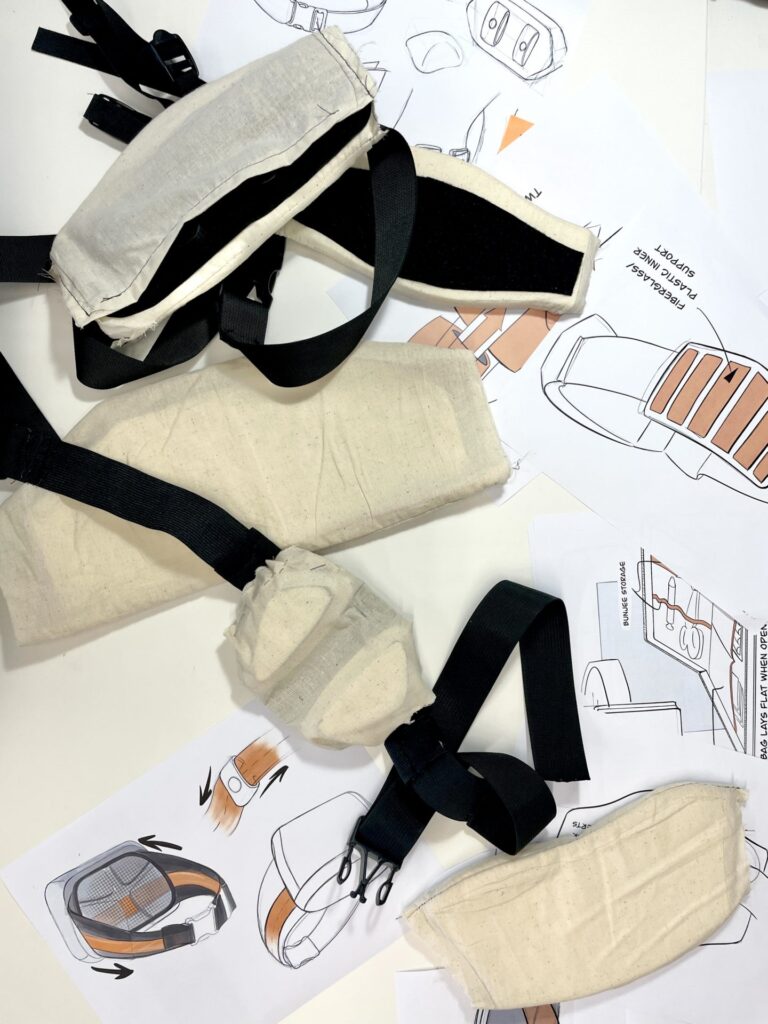
Please reach out!