A Q&A with Roger Schmitz, Founder of Moxy Monitor

A Q&A with Roger Schmitz, Founder of Moxy Monitor

Rethinking athlete performance through muscle oxygen data

Spotlight articles shine a light on designers and engineers we admire, asking leaders in the field about their work and their creative journey. Roger Schmitz, founder and CEO of Moxy Monitor, has spent more than a decade doing exactly that. A mechanical engineer by training, Schmitz developed a wearable sensor that measures muscle oxygen saturation using near-infrared spectroscopy. The technology gives athletes, coaches, and performance scientists direct insight into how muscles are working under load.

Photo of Roger Schmitz
Roger Schmitz, Founder and CEO of Moxy Monitor

Originally inspired by medical device research, Moxy has become a powerful tool for endurance athletes, professional teams, and researchers studying human performance.

More recently, Schmitz partnered with Interwoven Design Group to solve a particularly difficult challenge: how to integrate a precision sensor into athletic apparel in a way that is reliable, comfortable, and almost invisible to the athlete wearing it.

We spoke with Roger about the origins of Moxy, what muscle oxygen reveals that other metrics miss, and what happens when engineers and designers collaborate to solve hard problems.

Q:

Could you start by telling us about yourself and the story behind Moxy?

A:

My name is Roger Schmitz. I’m the CEO and founder of Moxy Monitor, and I developed the technology that takes muscle oxygen measurements and allows us to do it accurately.

My background is in engineering—I’m a mechanical engineer by training. I worked in the disc drive industry for a while and later in medical devices. Around that time I was working with near-infrared spectroscopy, which is the core technology behind Moxy.

Those devices were large benchtop systems used for trauma patients. They had cables running to the patient and cost about $15,000. After that company failed and I was laid off, I started thinking about how to make the technology much smaller, more accurate, and dramatically less expensive.

The idea was to create a wearable, battery-powered device that cost under $1,000. I originally thought it would become a medical device, but a cardiologist I met with said something that changed everything. He said, “You should make it for athletes. The regulatory burden will be dramatically smaller.”

That’s what we did. And interestingly, a lot of researchers still buy the device today and use it to study heart failure—just not in a clinical setting.

Q:

We often hear about metrics like heart rate, GPS tracking, or power output. What does muscle oxygen reveal that those metrics don’t?

A:

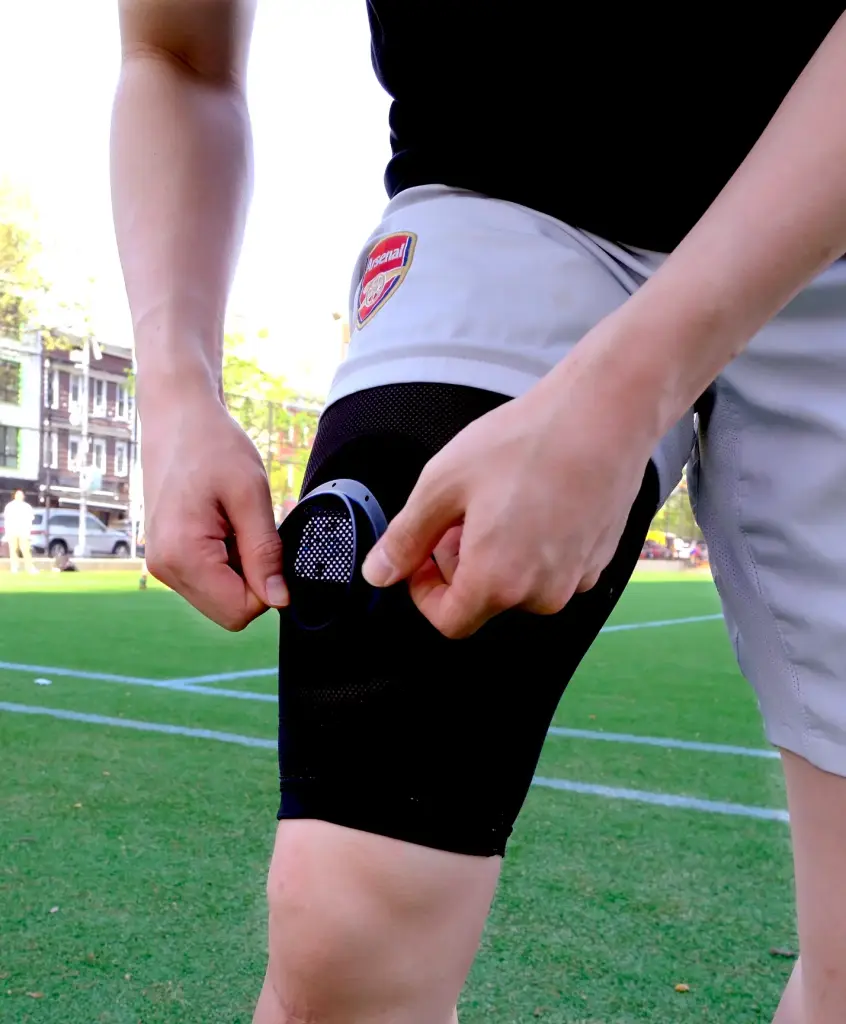
Athlete wearing Moxy Monitor sensor during field performance testing
Moxy Monitor sensor placed on the thigh to measure muscle oxygen during activity.

Those metrics can be divided into two categories: external load and internal load.

External load is how much work the body is doing—things like GPS speed or power meters. Internal load is how hard the body has to work to produce that output.

Heart rate is one measure of internal load, but it has limitations. It responds slowly to changes in effort and it’s influenced by a lot of other factors.

Muscle oxygen is different because it reacts immediately. When you change the load, we see a change in muscle oxygen right away. We’re measuring what’s happening in the muscle in real time. That makes it incredibly useful for adjusting training intensity.

It becomes another tool athletes and coaches can use to understand what’s really happening inside the body based on those deeper insights.

Q:

So athletes and coaches can see that data in real time?

A:

Yes. The data can show up directly on a GPS watch for endurance athletes—we integrate well with Garmin. For team sports we connect with systems like WIMU GPS.

That means trainers or performance staff can monitor muscle oxygen while athletes are actually playing on the pitch. They can watch the data live on the sideline and even monitor the entire team.

It gives them a lot more information than they’ve traditionally had.

Q:

How do coaches actually use that information in training?

A:

Exploded view diagram of Moxy Monitor sensor showing internal components including circuit board, battery, antenna, and optical sensors
Exploded view of the Moxy Monitor sensor showing its internal components.

One example comes from a professional soccer team in Germany. During practice they alternate between small-sided games—maybe four-on-four—and full-team play. They assumed the full-team drills were more demanding.

But when they looked at the muscle oxygen data they saw that the short-sided play was actually creating more physiological load because of the constant quick bursts of action. It wasn’t showing up in heart rate, but it showed up clearly in the muscle oxygen data.

So they adjusted their training and backed off those drills slightly to avoid overloading the athletes.

Q:

Has Moxy ever contradicted what a coach believed about a player?

A:

Yes, we see that fairly often.

One example involved a professional triathlete who had two bikes—a road bike and a time-trial bike. She kept telling her coach she couldn’t produce the same power on one of them.

The coach initially thought she just needed to get used to the bike. But when they compared the Moxy data between the two bikes, the readings were dramatically different.

At that point the coach said, “This isn’t just in your head—this is a physiologic difference.”

They made some adjustments to the bike fit and her performance improved significantly.

Having objective data can validate what the athlete is feeling.

Q:

Performance staff in elite sports are very data-savvy—but also skeptical of new technology. How did you earn their trust?

A:

That’s a great observation. People approach them with gadgets all the time.

Our approach has been to work closely with both the research community and the high-performance sport community.

Moxy has now been used in hundreds of scientific studies, and those results get published in peer-reviewed journals. Early on people would say the device was too inexpensive to be credible—they assumed it must be a toy.

But as more researchers began publishing results, perceptions changed.

We also host a Moxy Summit, where our power users present how they’re using the technology with athletes. It’s about half researchers and half high-performance sports practitioners.

The key is consistency. Don’t overpromise. Stick to what the science supports.

Over time people start to realize the technology is legitimate.

Q:

With global events like the World Cup, where every performance detail matters, how does muscle oxygen data help teams prepare?

A:

Teams often conduct physiological testing in the lab—treadmill tests, breath analysis, lactate measurements.

The challenge is that you can’t do those tests during an actual match.

But you can measure muscle oxygen on the field. So teams can translate what they learned in the lab to real game situations.

They might know that a certain athlete can sustain a given workload for ninety minutes, while another athlete might only sustain it for sixty or seventy.

At that level, everyone is already operating near their limits. You’re not making huge changes—just small adjustments.

But those small tweaks can be the difference between winning and losing.

Q:

Moxy started in endurance sports. Where else are you seeing it used?

A:

Triathlon probably has the most users because the training is so intense and athletes need careful control of their effort.

Cycling is another big area because we integrate with many data systems already used by cyclists.

We’re also starting to see more use in running and swimming. Swimming is particularly interesting because there’s very little physiological data available when athletes are underwater.

Team sports are expanding too—soccer, hockey, and others—especially as we integrate with GPS systems used by teams.

And there are applications in strength training as well, where coaches want to understand how specific muscles are being loaded.

Q:

Wearables take a beating in contact sports. What was the biggest challenge in making Moxy work on the field cycle?

Athlete placing a Moxy Monitor sensor into a custom wearable ring on the thigh
Moxy Monitor wearable system designed by Interwoven Design Group.

A:

Attachment.
We could get the sensor to stay on, but it required tape, wraps, and a lot of effort from trainers. That’s not practical for daily use.

The breakthrough needed to be something that athletes could put on themselves so the sensor
would essentially disappear into the process of getting dressed. The thigh is a very difficult place to locate a sensor. There’s sweat, extreme movement, cutting, sprinting—it’s a tough environment.

We also discovered that muscle placement varies between athletes, so we needed a solution that allowed customized positioning.

Q:

That challenge is what led you to collaborate with Interwoven. What motivated that partnership?

A:

First of all, this is a really hard problem. It seems simple, but we’ve worked on it for ten years.

What motivated the contact with Interwoven was the need for a solution for soccer—something that worked at a team scale. Trainers needed to set the optimal location, but after that the athlete had to be able to place the sensor themselves.

It also needed to be rugged, durable, and easy to use.

To be honest, I was skeptical it was even possible. We had tried so many things already.

But it was a problem we needed to solve.

Q:

What has the feedback been on the design Interwoven developed?

Design iterations of Moxy Monitor sensor light shield and mounting ring components
Design iterations of the Moxy Monitor light shield and ring system developed by Interwoven Design Group.

A:

When people see it, they pause for a moment. You can see the gears turning.

They look at it and say, “That is really good.”

A good design always looks easy in the end. It looks obvious—like of course that’s how it should work.

But it wasn’t obvious before. That’s the hallmark of great design. It looks simple, but getting there is not simple at all.

Q:

Engineers and designers don’t always speak the same language. What did you learn from working with Interwoven?

A:

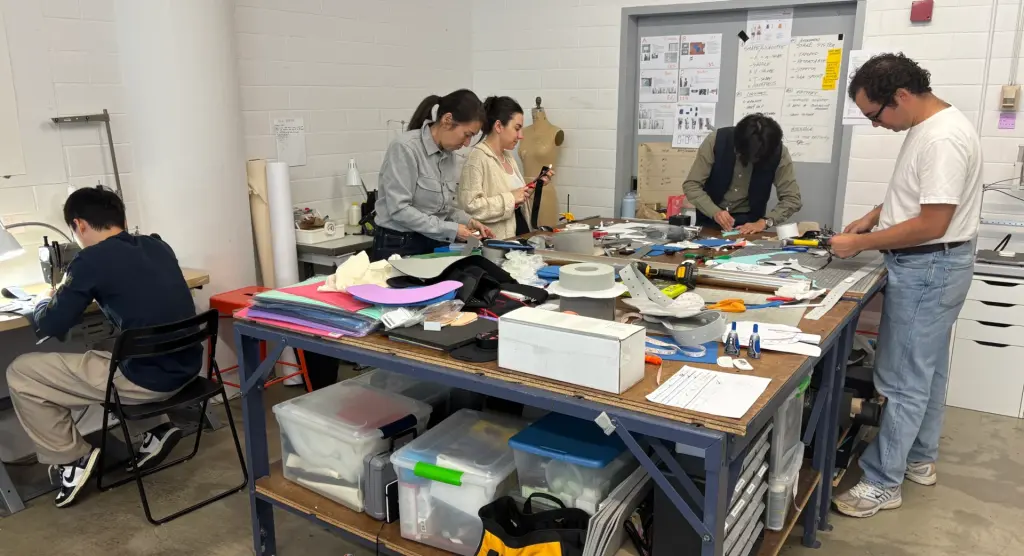
One thing that stood out was that Interwoven had a system for arriving at creative solutions.

It wasn’t luck. There was a structured method for working through the problem.

I remember coming to the studio for a design session that lasted several hours. At one point I thought we might not get there—but the team kept working through the process.

Eventually the solution emerged.

As an engineer, I tend to focus heavily on functional requirements: the sensor has to stay in place, the data has to be accurate.

But there are other equally important needs—ease of use, adaptability, and even aesthetics.

These athletes earn millions of dollars. They wear expensive gear and jewelry. The product has to look good as well as function well.

Interwoven kept the entire picture in mind. If a product doesn’t meet all of those needs, it isn’t viable.

That was a really valuable part of the collaboration.

Final Thoughts

From laboratory technology to elite sports performance, Moxy Monitor represents a new way of understanding the body under load. By measuring muscle oxygen directly, athletes and coaches gain a window into physiology that traditional metrics often miss.

For Roger Schmitz, the journey has been one of constant iteration—engineering breakthroughs, scientific validation, and collaboration across disciplines.

And as wearable technology continues to evolve, the partnership between engineers, researchers, and designers will remain essential to turning complex ideas into tools athletes can use every day.

Check out the rest of our Spotlight series to hear more from leaders in the design industry. Sign up for our newsletter and follow us on Instagram and LinkedIn for design news, multi-media recommendations, and to learn more about product design and development!

Please reach out!

Soft Goods in Healthcare: The Human Stakes of Healthcare Design

Soft Goods in Healthcare: The Human Stakes of Healthcare Design

Healthcare is about more than treating illness. While medical care focuses on diagnosing and addressing physical conditions, healthcare takes a broader view, supporting a patient’s overall wellbeing and enabling the professionals who deliver that care every day. From long hospital shifts and rehabilitation routines to outpatient care and home recovery, healthcare unfolds across environments that demand comfort, safety, efficiency, and trust.

Soft goods play a critical but often overlooked role in this ecosystem. Braces, supports, wearable devices, utility systems, and hybrid soft–hard products are in constant contact with the body, shaping how care is delivered and experienced. When designed well, they reduce strain, support movement, and integrate seamlessly into clinical workflows. When designed poorly, they can introduce discomfort, fatigue, inefficiency, or even risk. In healthcare settings, where products are worn for hours, used repeatedly, and relied upon in high-pressure situations, these details matter.

At Interwoven Design, we specialize in designing soft goods that support care beyond the clinic. Our work spans patient-facing therapeutic devices and clinician-focused tools, combining expertise in textiles, ergonomics, and integrated hard goods. By approaching healthcare design through a human-centered lens, we create products that balance clinical requirements with real-world usability, creating solutions that feel natural on the body while performing reliably in demanding environments.

In this Insight article, we explore what makes soft goods design in healthcare unique, the challenges and opportunities inherent in this field, and how thoughtful design can support both patient wellbeing and the professionals who provide care. Through real-world examples, we’ll highlight how soft goods can function not just as medical products, but as essential components of a more humane, effective healthcare system.

Why Healthcare Requires a Different Design Lens

Designing for healthcare presents a unique set of challenges that extend well beyond traditional product development. Unlike consumer or lifestyle products, healthcare soft goods operate at the intersection of physical care, emotional vulnerability, and professional responsibility. These products are worn longer, used more intensely, and trusted more deeply by patients and healthcare professionals alike.

Clinical & Operational Context

Healthcare products must perform reliably across highly controlled clinical environments and unpredictable real-world settings. Soft goods are exposed to constant movement, repeated donning and doffing, frequent cleaning, and long hours of wear. Materials must be durable, hygienic, and easy to maintain, while construction methods must withstand intensive daily use without compromising comfort or performance. For clinicians, design decisions can directly affect efficiency, safety, and physical strain during demanding shifts.

Human & Emotional Context

Unlike many consumer products, healthcare soft goods often enter a user’s life during moments of stress, pain, or vulnerability. Patients may be recovering from injury, managing chronic conditions, or navigating uncertainty about their health. Clinicians, meanwhile, work under sustained pressure, balancing precision, speed, and empathy. Thoughtful soft goods design can help reduce anxiety, restore confidence, and preserve dignity, while poorly considered products can amplify discomfort or frustration.

Regulatory & Risk Context

Many healthcare products, particularly those involved in treatment or rehabilitation, must meet strict regulatory, safety, and performance standards. Even non-regulated soft goods used in healthcare environments are influenced by infection control protocols, ergonomic guidelines, and institutional requirements. Designers must ensure that materials, construction, and interfaces are defensible, testable, and aligned with compliance standards, without losing sight of usability and human experience.

Together, these contexts make healthcare design uniquely demanding. Success depends not only on technical performance, but on an ability to understand how products are worn, moved, cleaned, trusted, and relied upon over time. It is this combination of precision and empathy that defines effective healthcare soft goods and sets the foundation for meaningful innovation in the field.

Integrating Comfort, Function, and Care

In healthcare, soft goods become part of how care is delivered. From support garments and protective equipment to clinician tools and patient mobility aids, these products sit at the intersection of the human body and complex care workflows. Designing for this space requires a dual focus: supporting the physical realities of the body while enabling the practical realities of care.

Human-Centered, Iterative Design

At Interwoven Design, we approach healthcare soft goods as extensions of both the body and the care environment. A brace, garment, or wearable system must accommodate anatomy, movement, and long-term comfort, while also integrating seamlessly into clinical routines. This means accounting for how products are put on and taken off, how they are adjusted, cleaned, shared, or stored, and how they perform across long shifts, repeated use, and changing patient needs. Prototyping and real-world testing are central to this process. Early concepts are evaluated not only for fit and function, but for how they behave in real care scenarios: during patient transfers, extended wear, frequent donning and doffing, or high-movement tasks.

Observing products in context reveals friction points that would be invisible in a purely technical review, informing refinements that improve usability, safety, and adoption.

Design Priorities

Material selection is always important in soft goods design, but in the context of healthcare it plays a critical role. Healthcare soft goods must balance durability with softness, breathability with protection, and structure with flexibility. Fabrics and foams must withstand cleaning protocols, resist wear, and remain comfortable against sensitive skin. Thoughtful construction helps distribute pressure, reduce heat and moisture buildup, and support natural movement, turning functional products into wearable systems that users can rely on over time.

Collaborating with Healthcare Professionals

Just as important as performance materials and ergonomic construction is designing for the people who deliver care. Nurses, technicians, and other healthcare professionals interact with soft goods in fast-paced, high-stakes environments. Products must be intuitive, efficient, and easy to integrate into existing workflows. When soft goods are designed with caregivers in mind, they can reduce physical strain, improve organization, and support safer, more efficient care delivery. At Interwoven Design, we interview and observe healthcare professionals in action in order to deeply understand their needs and their day-to-day tasks. By designing simultaneously for the body and for care delivery, we develop healthcare soft goods that support mobility, comfort, and dignity for patients while enabling clinicians to work more effectively. The result is design that fits the body while also supporting the realities of healthcare.

The Challenges of Designing for High-Impact Healthcare

Soft goods in healthcare sit at a demanding crossroads. They must perform reliably in clinical environments, remain comfortable during extended wear, and adapt to the unpredictable realities of human movement and care delivery. Unlike many consumer products, healthcare soft goods are not optional accessories, they are tools that people depend on daily, often under physical or emotional strain. As a result, long-term wearability is a key challenge. Braces, supports, and clinician-worn systems are frequently worn for hours at a time, across repetitive motions and varied postures.

Poorly distributed pressure, inadequate ventilation, or rigid construction can lead to discomfort, fatigue, or skin irritation, issues that may reduce compliance or interfere with care. Designing for healthcare means anticipating not just how a product fits at rest, but how it performs across an entire day of use.

Integration of soft and hard elements adds another layer of complexity. Many healthcare products must accommodate structural supports, sensors, fasteners, or storage components without sacrificing comfort or mobility. Every seam, closure, and interface becomes a design decision with real consequences for usability and safety. A technically sound system that feels awkward or cumbersome risks being underused, modified incorrectly, or abandoned altogether.

Hygiene and durability further shape the design landscape. Healthcare soft goods must withstand frequent cleaning, exposure to bodily fluids, and institutional laundering processes while maintaining their performance and integrity. Materials and construction methods must be chosen not only for comfort and strength, but for longevity and ease of maintenance.

These challenges represent powerful opportunities for thoughtful design. When soft goods are developed with a deep understanding of healthcare contexts, they can actively improve outcomes. Well-designed products can reduce physical strain for clinicians, support proper body mechanics, improve patient confidence, improve usage rates, and streamline daily workflows. They can also help bridge gaps between clinical settings and everyday life, supporting continuity of care beyond the hospital or clinic. For our design team at Interwoven Design, these constraints are catalysts for innovation. By balancing ergonomics, material performance, and system integration, we create healthcare soft goods that are not only functional, but genuinely supportive of the people who rely on them. 

Case Studies: Design for Healthcare in Action

Healthcare design is ultimately measured in real-world use: how a product performs across long shifts, repeated motions, and moments where comfort, efficiency, and reliability directly affect care delivery. Soft goods play a critical role in how patients move, how clinicians work, and how support systems integrate into daily routines. The difference between a well-intentioned product and a truly effective one often lies in the details: fit, material behavior, adjustability, and how seamlessly a system becomes part of the body. The following case studies highlight Interwoven Design’s approach to healthcare soft goods across different contexts of care.

Case Study 1: Whitecloud Medical Utility Bag

Whitecloud Medical partnered with Interwoven Design to develop a wearable medical utility bag that directly supports the bodies and workflows of healthcare workers on the job. Healthcare professionals operate in environments defined by physical intensity, constant movement, and limited margin for error. Nurses and medical technicians routinely lift patients, transport equipment, and transition rapidly between tasks, all while carrying the tools they need to deliver care. Over time, this combination of physical strain and inefficient load carryingcontributes to fatigue, musculoskeletal injury, and reduced focus on patient care. 

The Design Challenge

In clinical settings, caregivers often rely on overfilled pockets or ad-hoc storage to keep essential supplies within reach. At the same time, repeated lifting, bending, and twisting place significant stress on the lower back. Existing solutions typically addressed these issues in isolation, either offering storage without ergonomic support or back braces without functional integration into daily work routines. The challenge was to design a single, wearable that could reduce physical strain while improving access to tools without restricting movement or adding complexity during fast-paced clinical work.

Our Approach

Interwoven Design developed a modular utility system that integrates a supportive back brace with a flexible waist-mounted storage solution. The utility bag can slide along the belt for quick, one-handed access to supplies or be secured over the back support during physically demanding tasks. Both components can be detached and used independently, allowing caregivers to adapt the system to different roles, shifts, or levels of activity.

Soft goods construction was central to the design. Materials were selected for durability, comfort, and long-term wear, ensuring the system could withstand repeated use while remaining comfortable against the body. Interior organization was carefully considered, with dedicated compartments for a curated suite of medical tools, consumables, and personal items, reducing the need for overloaded pockets and minimizing unnecessary movement during care delivery.

Impact

The Whitecloud Medical Utility System supports healthcare workers where it matters most: at the intersection of physical health and daily efficiency. By combining ergonomic back support with accessible, body-centered storage, the design helps reduce strain, improve posture during demanding tasks, and streamline workflows throughout long shifts. The result is a wearable solution that not only protects the caregiver’s body but also enables them to focus more fully on their patients, demonstrating how thoughtful soft goods design can directly support the people who deliver care every day.

Case Study 2: Breg CrossRunner™ Soft Knee Brace

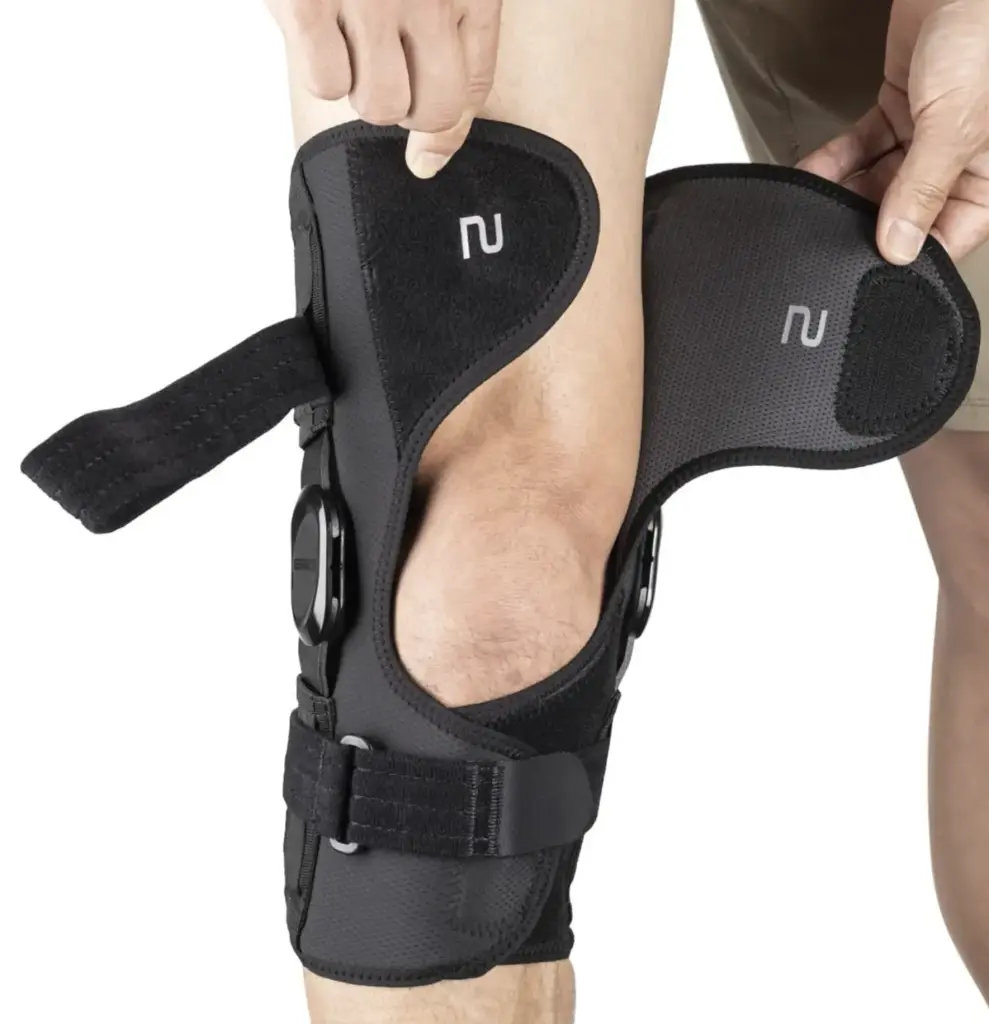
Breg, a leader in orthopedic bracing solutions, partnered with Interwoven Design Group to develop the next generation of their soft, hinged knee brace product line, with a focus on comfort, adaptability, and clinical performance. Orthopedic bracing plays a critical role in healthcare by supporting mobility, reducing pain, and enabling patients to stay active during recovery or long-term joint management. For individuals managing knee instability, ligament injuries, or early-stage osteoarthritis, a brace must do more than provide support, it must integrate comfortably into daily life to ensure consistent use and positive outcomes.

The Design Challenge

The challenge was to create a versatile knee brace system that could serve a wide range of patients and clinical indications, from mild osteoarthritis to a range of ligament injuries. The product needed to deliver reliable mechanical support while remaining lightweight, breathable, and easy to use. For patients, ease of donning and doffing, comfort during extended wear, and a low-profile appearance were essential to encourage adherence. For clinicians, consistent hinge alignment, predictable sizing, and clear functional differentiation across models were critical to effective prescription and fitting.

Our Approach

Interwoven Design worked closely with Breg’s internal engineering and manufacturing teams to develop a cohesive, patient-centered brace system. Early concept development focused on understanding user interaction with the brace: how it feels to put on, adjust, and wear throughout a full day of movement. Mood boards and design research established a visual and functional language rooted in anatomy, clarity, and ease of use.

Through 2D sketching and 3D foam mockups, the team explored compression zoning, material placement, and hinge positioning to balance stability with comfort and thermoregulation. The resulting CrossRunner™ line features four configurations—wraparound, pull-on, long, and short—ensuring that clinicians can select the most appropriate solution for each patient’s anatomy, condition, and lifestyle.

Soft goods design was central to the brace’s performance. The body of the brace utilizes Breathefit™ fabric, combining neoprene and Airmesh® to deliver therapeutic compression while maintaining breathability during extended wear. A sleek, low-profile hinge with customizable range-of-motion stops allows clinicians to fine-tune support while preserving a streamlined, wearable form. Interwoven also designed key user-facing elements including strap configurations, hinge covers, tabs, bindings, branding, and colorways; details that improve usability, durability, and overall patient experience.

Technical Development and Production Support

To ensure accurate fit and clinical reliability, Interwoven collaborated with Breg to develop custom leg forms representing each brace size and led the size grading process across eight distinct sizes. Technical patterns were engineered to maintain consistent hinge placement across diverse leg shapes, a critical factor in brace effectiveness. Detailed CAD drawings and technical documentation clearly communicated material layers, strap alignment, and construction details to Breg’s manufacturing team. 

Interwoven remained engaged through sampling, refinement, and production, supporting quality control and ensuring the final product met both clinical and manufacturing standards. This ongoing collaboration helped translate design intent into a scalable, high-quality medical product.

Impact

The Breg CrossRunner™ Soft Knee Brace delivers a patient-centered solution that supports mobility, comfort, and confidence throughout recovery and daily activity. By combining precise orthopedic function with thoughtful soft goods design, the brace encourages consistent wear, which is an essential factor in achieving positive clinical outcomes. For healthcare providers, the cohesive product line simplifies fitting and prescription, while offering adaptable options for a wide range of conditions.

Designing Systems of Care

Healthcare extends beyond the treatment of illness. It encompasses the everyday systems that support wellbeing: comfort during long hours, mobility through recovery, efficiency in demanding environments, and emotional reassurance in moments of uncertainty. While medical care often focuses on diagnosis and intervention, healthcare design must account for the lived experience of both patients and the professionals who care for them. This is where soft goods play an essential, and often underappreciated, role. A knee brace is not just a product; it is part of a recovery process. A utility bag is not just storage; it is a mobile workstation for a nurse navigating a twelve-hour shift. 

Soft goods function as the quiet infrastructure of healthcare. When designed well, they fade into the background, supporting movement, reducing strain, and enabling care without calling attention to themselves. When designed poorly, they become barriers: restricting motion, causing discomfort, or adding friction to already complex workflows. Their impact may be subtle, but it is deeply felt across long shifts, repeated use, and extended recovery periods. Every design decision must account for a complex web of users, environments, and expectations. 

At Interwoven Design, we believe healthcare products should work with people, not against them. Our approach centers on designing systems that support care teams, protect bodies, and respect the physical and emotional realities of healthcare environments. By integrating soft goods expertise with human-centered thinking, we create solutions that align performance with comfort, structure with flexibility, and durability with dignity.

We collaborate with healthcare innovators, medical companies, and care organizations who recognize that better care is built through thoughtful design. Together, we design soft goods that elevate care delivery, strengthen wellbeing, and improve the human experience at every point of contact.

Client Meeting for Koldbot at Interwoven Design Group

Interwoven Design is a design consultancy that is positioned at the intersection of soft goods and wearable technology, creating products that function with the body and offer comfort as well as the superb performance that arises through the innovative incorporation of rigid, often electronic and responsive elements. Sign up for our newsletter and follow us on Instagram and LinkedIn for design news, multi-media recommendations, and to learn more about product design and development!



Soft Goods, Seamless Performance: Designing for Movement in Entertainment

Soft Goods, Seamless Performance: Designing for Movement in Entertainment

The Stakes of Entertainment Design

Designing soft goods for entertainment is a uniquely challenging discipline. Whether for stage, film, live events, or dance, these products must push the limits of movement, durability, and visual storytelling. Costumes, wearables, and accessories must look compelling under lights, but also support choreography, withstand repeated use, and integrate seamlessly. A garment that restricts motion or fails mid-performance doesn’t just interrupt the experience; it can compromise safety, storytelling, and the creative vision itself.

At Interwoven Design, we operate at this intersection of craft, performance, and technical problem-solving. Our team brings together expertise in soft goods, human movement, textiles, and engineering to create products that enhance performers’ abilities while preserving artistic integrity. From early movement studies to stage-tested prototypes, our work is grounded in creating pieces that feel natural to wear, perform reliably under stress, and advance creative expression.

In this article, we’ll explore what makes soft goods design for the entertainment industry distinct, how our approach supports both performers and creators, the opportunities emerging in this category, and case studies showcasing our work designing high-performance costumes.

Why Entertainment Design Is Unique

Designing for entertainment involves a set of conditions unlike any other category of soft goods development. Every decision must account for artistic intent, technical performance, performer safety, and the physical realities of movement.

Artistic Context
Costumes and performance wear must communicate character, story, and emotion at a glance. Designers navigate through color, silhouette, texture, and historical or stylistic accuracy. At the same time they ensure the garment supports the artistic direction of the production. A costume must function as both a tool for expression and a technical piece of equipment.

Physical Context
Performers push their bodies to extremes. Garments must allow full range of motion, distribute pressure evenly, manage heat, and remain comfortable over hours of rehearsal and performance. Fabrics that restrict, chafe, or overheat can hinder movement, increase fatigue, or lead to injury.

Technical Context

Modern entertainment frequently integrates technology; LEDs, sensors, animatronics, quick-change mechanisms, or modular components. These technologies must be embedded into costumes in ways that preserve flexibility, balance, and aesthetics while remaining easy to service backstage.
Together, these contexts shape a design discipline that is part engineering, part artistry, part biomechanics, requiring solutions that are expressive, durable, wearable, and safe.

Designing for Movement and Expression

At Interwoven Design, we view entertainment soft goods as extensions of the performer’s body and tools for storytelling. Our design process centers on an iterative, movement-driven approach that ensures each piece supports expressive freedom, technical performance, and long-term durability.
Prototyping is core to this philosophy. Early iterations are tested in rehearsals or motion studies, allowing designers to observe how garments behave during jumps, lifts, spins, or rapid transitions. We refine patterning, materials, seam placement, and support structures based on how performers actually move.

Comfort, breathability, and ergonomics are fundamental. Materials must balance stretch, drape, durability, and heat management. Every strap, panel, or internal structure is placed intentionally to reduce friction, support high motion, and maintain stability across repeated performances. When costumes incorporate technology, components must integrate seamlessly without compromising aesthetics or mobility.

Collaboration is also essential. We work with choreographers, costume designers, technical directors, and performers to ensure alignment between artistic vision and physical reality. This cross-disciplinary approach results in costumes and wearables that not only look extraordinary but perform flawlessly under demanding conditions.

The Challenge (and Opportunity) of Soft Goods in Entertainment

Soft goods for entertainment represent a rapidly evolving category, from high-tech performance to interactive costumes and modular pieces designed for quick changes or complex choreography. The opportunities are exciting, but the technical demands are significant.

Wearables must withstand extraordinary levels of physical stress. Unlike daily apparel, performance costumes experience constant stretching, repeated laundering, rapid changes, and sometimes rough backstage handling. Seams must hold, materials must last, and designs must maintain their appearance under stage lighting or camera scrutiny.

Technological integration adds further complexity. Whether incorporating electronics, sculptural elements, or mechanical activation, designers must ensure the costume remains balanced, lightweight, and flexible. A component that shifts or detaches mid-performance can jeopardize both safety and continuity.

These challenges, however, create room for innovation. Soft goods designers are uniquely equipped to bridge artistry and engineering. They develop costumes that feel weightless, move effortlessly, integrate technology invisibly, and elevate the creative vision. Our ability to unify soft materials with structural or technological components allows us to deliver reliable and expressive solutions.

Case Studies: Soft Goods for the Stage

Interwoven Design’s work in entertainment showcases how a human-centered soft goods approach can enhance artistry. It enables complex movement, and support demanding performance environments. To illustrate what we mean, here are two case studies illustrating how we’ve applied this expertise to ballet costume innovation.

Case Study 1: Fiber Optic Tutu for the Brooklyn Ballet

Interwoven Design partnered with the Brooklyn Ballet to bring a new dimension of storytelling to their production of The Brooklyn Nutcracker, creating a collection of illuminated costumes that merge classical craft with cutting-edge technology. The centerpiece of this collaboration, the Fiber Optic Tutu for the Waltz of the Flowers, unites traditional ballet couture with programmable light, transforming the stage into a living, glowing garden.

The Design Challenge

Ballet costumes must be expressive, lightweight, and durable, capable of withstanding continuous movement and intense performance demands. For this production, the creative direction introduced an additional layer of complexity. The challenge was to integrate lighting technology into garments that maintain the delicate elegance of a classical tutu.

The challenge was to create costumes that illuminated dynamically without compromising a dancer’s range of motion, stage presence, or safety. The light effects needed to be bright enough to read from the audience. They also needed to be subtle enough to blend with hand-dyed fabrics, layered tulle, and artisanal detailing inspired by botanicals.

Our Approach

Interwoven Design explored the intersection of craft and circuitry, building the tutus using traditional multi-layered foundations reinforced with boning and custom-fit top plates. Then, an intricate network of fiber optic strands were hand-sewn onto the garment, bending and weaving with the dancer’s movement. When paired with high-intensity LED wands concealed at the lower back, the fiber optics created a shimmering glow across the costume.

To maintain the natural, garden-inspired palette of the ballet, the LED control boards were custom-programmed to precise hues of blue and green, ensuring that the illumination supported the choreography’s aesthetic rather than overpowering it. Additional costume elements for Garden Sprites and demi-soloists incorporated UV-reactive inks and screen-printed artwork that appeared only under ultraviolet stage lighting, creating a layered visual reveal. The Dew Drop character’s tutu featured laser-cut mylar florals and Swarovski crystals that refracted both ambient and programmed light, adding to the performance’s visual richness.

Behind the scenes, electronics were housed discreetly within the skirt structure. The housing protected the components while distributing weight in a way that preserved balance for the dancers. The integration of soft goods, illumination technology, and performance ergonomics was refined through iterative prototyping and collaboration with the ballet’s artistic and technical teams.
Impact

The Fiber Optic Tutu elevated The Brooklyn Nutcracker with a sense of wonder that blended seamlessly into the choreography. Onstage, the tutus appeared to bloom as dancers moved, bending light through the fibers to create glimmers, twinkles, and radiant washes that felt almost alive. The effect reinforced the narrative of a secret garden, bringing modern technology into harmony with classical ballet traditions.

For the performers, the costumes remained lightweight, wearable, and unobtrusive, supporting full movement while integrating a sophisticated lighting system. They delivered an unforgettable visual experience that captured the magic of nature, craft, and technology working in concert. This project highlights Interwoven Design’s ability to merge soft goods expertise with electronic integration. Hence, creating expressive, high-performance costumes that expand what is possible in live entertainment.

Case Study 2: Mechanical Doll Costume for The Brooklyn Nutcracker

More recently, for the 2025 season of The Brooklyn Nutcracker, Interwoven Design developed a new mechanical doll costume for the Waltz of the Flowers. This introduced a striking counterpoint to the fluidity and naturalism of the surrounding dancers. While the Flowers bloom and unfurl across the stage, the mechanical doll moves with intentional rigidity and precision. This created an aesthetic contrast reflected in the costume’s blend of structured hardware and soft textile elements.

The Design Challenge

Mechanical doll characters in The Nutcracker traditionally embody stiffness, rhythm, and clockwork-like gestures. For Brooklyn Ballet’s contemporary reinterpretation, the goal was to amplify this contrast. To create a costume that expressed mechanical articulation while still supporting the dancer’s mobility and performance.

The challenge centered on integrating rigid components in a way that conveyed a sculptural, almost automaton-like quality, without hindering choreography. Hardware needed to appear functional—even if only representational—while also being lightweight, safe, and capable of withstanding repeated performances. The soft elements, inspired by the surrounding cast, required balancing so that the mechanical doll felt visually connected while maintaining its personality.

Our Approach

Interwoven Design created the costume as a hybrid system, hard elements with soft materials that allowed for motion. Hard components—such as articulated panels, structured bodice, or mechanical-inspired detailing. We positioned them strategically to enhance the signature movements: sharp turns, precise steps, and sudden pauses.

Soft goods were incorporated to facilitate comfort and fluid transitions between poses, using textiles that complemented the production’s botanical palette without softening the character’s mechanical silhouette. The internal structure was designed to distribute weight evenly, so the dancer could perform full choreography while maintaining the illusion of rigidity.

We designed the hardware, embellishments, or frame-like structures to be secure yet flexible, allowing them to move subtly with the body. Throughout development, prototypes explored different ratios of soft-to-hard materials to achieve the right blend of theatrical expression, safety, and durability.

Impact

The resulting costume offered a visually arresting contrast within the Waltz of the Flowers, transforming the mechanical doll into a focal point of sculptural, rhythmic motion. The interplay of rigid and soft surfaces heightened the character’s stylized choreography, allowing the dancer to embody a precise, clockwork energy while remaining fully supported by the garment’s underlying ergonomic design.

For Brooklyn Ballet, the mechanical doll costume reinforced the production’s signature blend of tradition and innovation. Additionally, it showcased how contemporary design techniques, when thoughtfully integrated, can expand the vocabulary of classical performance.

Designing Confidence Into Performance

Entertainment design is about more than achieving visual impact, it is about building trust between performer, costume, and creative team. A well-designed garment supports movement effortlessly, withstands the rigors of performance, and reinforces the emotional world of the production. Whether crafting dynamic ballet costumes or integrating technology into stage wear, our mission is to blend artistic expression with technical excellence.

Through testing, movement-driven design, and respect for both performers and creative collaborators, we create intuitive, reliable, and empowering products. Our expertise in combining soft and structural elements ensures that each piece fulfills its artistic role and elevates the experience.

We invite choreographers, entertainment designers, and creative teams to partner with Interwoven Design to bring ambitious ideas to life. Designing for performance means designing for confidence, and that principle is central to everything we create.

Interwoven Design is a design consultancy that is positioned at the intersection of soft goods and wearable technology, creating products that function with the body and offer comfort as well as the superb performance that arises through the innovative incorporation of rigid, often electronic and responsive elements. Sign up for our newsletter and follow us on Instagram and LinkedIn to learn more about design and development! 

Designing for Manufacture: Inside the Soft Goods Tech Pack

Designing for Manufacture: Inside the Soft Goods Tech Pack

From Concept to Creation

Every great product begins with a spark of creativity—a sketch, a mood board, a prototype. But in order for that idea to become a physical object, it needs more than inspiration. It needs precision. Technical design is the step that translates vision into manufacturable reality, turning abstract concepts into clear instructions that factories can execute.

At the heart of this process is the technical design pack, or “tech pack.” It is more than just a set of drawings. A tech pack is a comprehensive roadmap and outlines exactly how a product is built, down to the smallest stitch, seam, or material choice. Without it, even the most innovative wearable or softgoods design are at risk being misinterpreted or poorly executed in production.

At Interwoven Design, we view technical design as a creative act in itself. It is a discipline that ensures ideas retain their integrity as they move from the studio to the factory floor. In this article, we outline what a tech pack includes, why it matters, and how we use it to bridge the gap between concept and creation.

What is a Technical Design Pack?

A technical design pack (tech pack) is the universal language between designers and manufacturers. It ensures that everyone—from patternmakers to production partners—shares the same understanding of how a product is meant to look, feel, and function. Think of it as the blueprint for softgoods and wearable technology. A typical tech pack includes:

  • Technical Drawings & Callouts
    Precise line drawings with notes on construction details, stitching, seams, hardware, and placement.
  • Bill of Materials (BOM)
    A complete breakdown of all materials and components. It includes fabrics, foams, fasteners, sensors—required to build the product.
  • Measurements & Grading
    Dimensions, tolerances, and size variations to ensure consistent fit across different body types or product sizes.
  • Assembly Instructions
    Step-by-step construction methods that guide how pieces come together, whether sewn, bonded, or mechanically fastened.
  • Testing & Performance Standards
    Requirements for durability, washability, strength, or medical-grade compliance, depending on the product category.
  • Labeling & Branding
    Placement of logos, care instructions, or certifications that connect the product to its brand identity and compliance needs.
Perci Emergency Preparedness Vest Branding

At its core, the tech pack is about clarity and accountability. It creates a shared framework where manufacturers know exactly what to deliver—and designers can trust the product will match their intent.

Why Technical Design Matters

Without a clear technical foundation, even the most brilliant creative concept risks breaking down in production. Technical design ensures that wearable products are not only beautiful and functional but also manufacturable, repeatable, and safe for users.

For softgoods and wearable technology, this precision becomes even more critical:

  • Integration of Textiles and Hardware
    A garment that incorporates sensors or mechanical components must balance flexibility, comfort, and durability. Tech packs detail how fabrics stretch, where reinforcements are placed, and how electronics are housed without compromising user comfort.
  • Consistency at Scale
    A prototype may be hand-built with care, but manufacturers need exact instructions to replicate that quality across hundreds or thousands of units. Tech packs standardize stitching, finishes, and tolerances so every piece delivers the same performance.
  • Risk Reduction
    By spelling out materials, testing requirements, and construction methods, technical design minimizes costly production errors and prevents miscommunication with suppliers.
  • User-Centered Reliability
    In wearables, failure isn’t just inconvenient—it can mean loss of trust. Technical documentation ensures durability and reliability in real-world contexts, whether that’s a medical device worn 24/7 or a back-assist exosuit in a warehouse.

In short, technical design translates creativity into reality. It bridges the gap between the designer’s vision and the user’s everyday experience, ensuring that innovation holds up in practice.

Inside an Interwoven Design Tech Pack

Every product we design—whether it’s a medical brace or adaptive lingerie—requires a set of technical design assets that guide manufacturers from concept to production.

These documents are roadmaps that ensure the integrity of the design across fit, function, and user experience. This matters even more in the case studies below, where we integrate hard goods and soft goods within the same wearable. Alongside the tech pack, we create a high-fidelity mockup that serves as a companion to the technical specs, bringing them into three dimensions and demonstrating complex construction at scale.

Case Study 1: Breg CrossRunner™ Soft Knee Brace

For the Breg CrossRunner™ Soft Knee Brace, precision was non-negotiable. The brace needed to fit a wide range of leg shapes while maintaining consistent hinge placement—essential for safe, effective joint support.

Interwoven Design developed custom leg forms to represent each size, then engineered a size grading system that scaled patterns evenly without shifting key hinge locations. We created multi-layered technical drawings to capture every detail of the brace’s flaps, straps, and fabric panels. By translating these patterns into CAD and supporting the manufacturing team through sample reviews, we ensured the final product matched the vision: a premium brace that’s both supportive and comfortable.

Case Study 2: Even Adaptive Lingerie

For Even Adaptive lingerie, the tech pack became the bridge between inclusive innovation and manufacturable detail. Alongside garment design, we developed a magnetized clasp system that users could operate with one hand.

Our industrial design and garment design teams worked in parallel, using 3D-printed prototypes with embedded magnets to test usability, strength, and comfort. We documented each iteration in technical drawings and specifications so manufacturers clearly understood how to integrate the clasp into the fabric without compromising softness or fit. The result was a low-profile, reliable closure that delivered on both aesthetics and accessibility. 

From Documentation to Collaboration

At Interwoven Design, we see tech packs not only as instructions for manufacturers, but as living tools. These align every stakeholder in the process, from clients and engineers to production partners. A strong pack captures the full intent of a design: the dimensions, construction methods, materials, finishes, and functional details that define how a product should look, feel, and perform. By consolidating all of this into a single, reliable reference, everyone involved—from brand stakeholders reviewing the concept to factory technicians cutting patterns—works from the same shared vision.

But we also know that design doesn’t end at handoff. Even the most detailed tech pack is only part of the equation. Manufacturing is an iterative process, and unexpected challenges can arise when ideas meet real-world production. That’s why success depends on pairing precision documentation with open, ongoing relationships with manufacturers. At Interwoven, we don’t just pass off a tech pack. We stay engaged throughout production, reviewing prototypes, answering questions, and refining details.

This collaborative approach helps bridge logistical gaps, ensures that subtle but important design decisions are preserved, and reduces costly missteps. A well-crafted tech pack minimizes guesswork, but it’s the combination of clear documentation and active partnership that guarantees the best outcomes: products that deliver on both creative vision and practical performance.

Precision as a Creative Act

Technical design is where creativity transforms into reality. The sketches, prototypes, and ideas that spark innovation become manufacturable products through careful documentation and technical rigor. At Interwoven Design, our expertise lies in creating these assets with the same care we bring to concepting and design. So, we ensure every product we hand off is made with accuracy, quality, and intent.

If you’re looking to take your concept from an idea to a market-ready product, we’d love to partner with you. With our vision and professional-grade technical documentation, we turn your ideas into fully realized products.

Interwoven Design is a design consultancy positioned at the intersection of soft goods and wearable technology. Sign up for our newsletter and follow us on Instagram and LinkedIn to learn more about design and development! 
Building Ideas: The Role of Conceptual Mock-Ups in Soft Goods Design

Building Ideas: The Role of Conceptual Mock-Ups in Soft Goods Design

Thinking in Three Dimensions

Design rarely happens in a straight line. In soft goods design, where products must conform to the body, support movement, and feel comfortable in real-world use, mock-ups are especially crucial. Subtle differences in fit, tension, or material behavior can completely change how a garment or wearable feels, yet these nuances are often invisible in drawings or CAD renderings. Rough 3D models allow designers to evaluate ergonomics, assess how straps, seams, or closures interact with the body, and ensure that the product performs intuitively and comfortably before a higher fidelity prototype is made.

While drawings and digital files are powerful tools, they can only go so far. Sometimes the only way to know whether a curve feels natural in the hand, a hinge aligns with joint movement, or a strap sits comfortably across the body is to build it in the real world, however roughly. That’s where conceptual mock-ups come in. These early, low-fidelity models aren’t meant to be polished or permanent; they’re tools for thinking. They expose hidden challenges, spark unexpected directions, and make the abstract tangible. Just as importantly, they allow both designers and clients to engage with an idea in ways that are more intuitive than a flat image or diagram could ever provide.

At Interwoven Design, we see mock-ups as a bridge between imagination and execution. Building in 3D is how we explore questions that sketches can’t answer, and it’s how we make sure our concepts are grounded in the realities of human use. For us, mock-ups aren’t just a stage in the process; they’re an act of curiosity, iteration, and craft that defines how ideas come to life. In this Insight article, we’ll discuss the value of mock-ups, outline various methods of making them, and share three case studies of studio projects that showcase the ability of mock-ups to elevate the design process at every level of fidelity. 

Why We Build to Think

Design is, at its core, a process of discovery. Even the most carefully considered sketch or digital model can miss details that only emerge when something is built in physical space. By working in three dimensions, designers invite surprise into the process, sometimes confirming assumptions, other times revealing issues that couldn’t have been predicted on paper.

Conceptual mock-ups are powerful because they shift the question from “Does this look right?” to “Does this work in real life?” A quick foam cut-out can reveal that a button is too far for the thumb to reach, or that a curve looks elegant in renderings but feels awkward when held. Fabric mock-ups can show how material drapes, stretches, or resists movement, helping teams anticipate comfort and durability before investing in higher-fidelity prototypes.

Just as importantly, building early and often keeps the design process agile. A mock-up doesn’t have to be precious; in fact, its roughness is part of the point. The less time invested, the easier it is to test, critique, and move on. This freedom encourages exploration rather than perfectionism, giving space for bolder ideas to emerge and evolve.

At Interwoven Design, we use mock-ups not just to validate concepts, but to provoke questions. What happens if this element shifts by an inch? How does the design change if the material is softer, stiffer, lighter? Every build is a chance to learn something new, and often those discoveries become the foundation for the next round of design.

Methods of Mock-Up Making

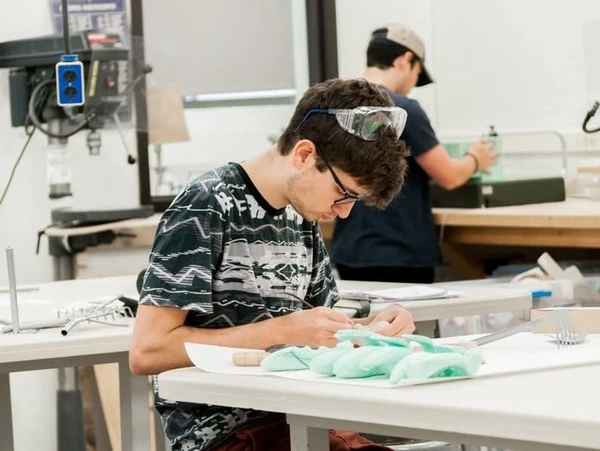
There’s no one right way to make a conceptual mock-up, only the method that best suits the question at hand. Also, we never make just one! Sometimes the goal is to understand form and scale, other times it’s about testing flexibility, ergonomics, or how a feature behaves when it meets the body. Because of this, the process often spans a wide spectrum of materials and techniques, from the scrappiest cardboard approximation to precision 3D prints.

Paper and Foam Models
When speed matters, nothing beats the simplicity of paper, foam, or cardboard. These materials are quick to cut, shape, and tape together, allowing designers to test proportions, angles, and spatial relationships in minutes. They’re the fastest way to move an idea out of a sketchbook and into the real world. At Interwoven Design, we love paper as a tool, as it behaves a lot like a textile.

Fabric and Soft Goods Constructions
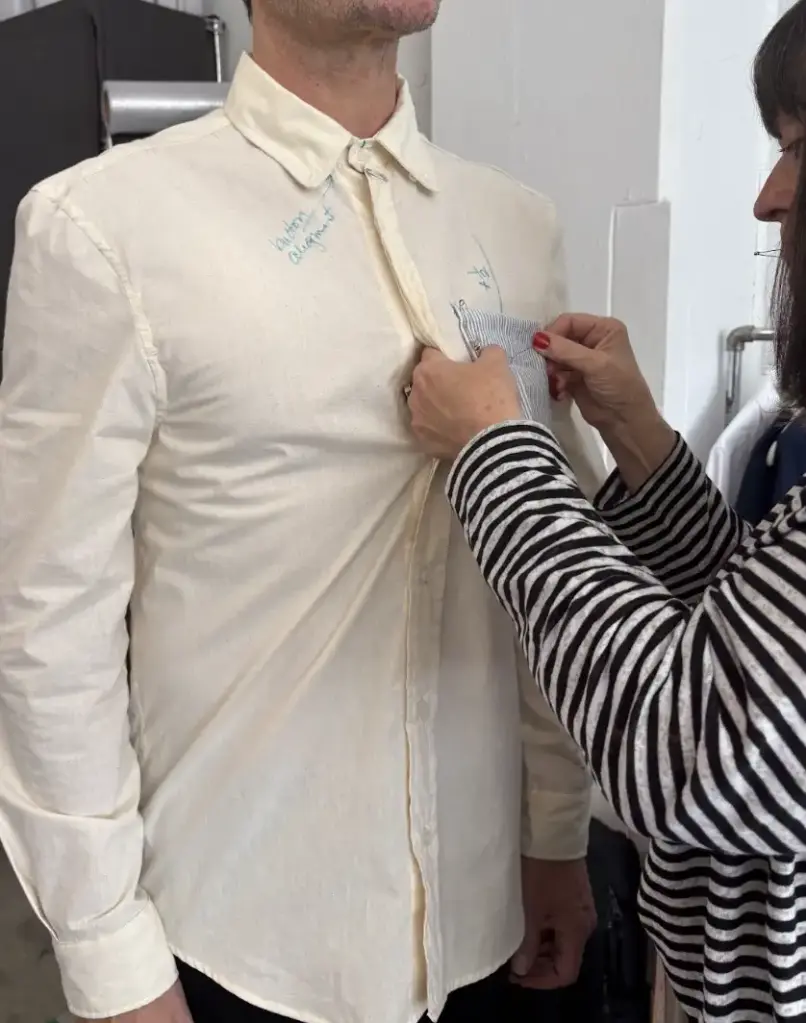
For wearables or textile-based products, mock-ups made from muslin, mesh, or other inexpensive fabrics can reveal how a design drapes, folds, and moves against the body. These rough-sewn models often expose ergonomic insights that drawings can’t capture, like how a strap pulls across the shoulder or how a pocket can be accessed in motion.

Digital-to-Physical Hybrids
Sometimes, precision is the priority. Tools like 3D printing, laser cutting, or CNC machining allow teams to translate digital models into physical parts with exact dimensions. These methods are especially valuable when testing components that interact mechanically or when verifying that multiple parts fit together as intended. Like the design process itself, mock-up making is rarely linear. A paper sketch model may inspire a fabric iteration, which then sparks a 3D-printed test. Each build answers some questions while raising others, creating a feedback loop that moves the design steadily closer to resolution.

At Interwoven Design, we embrace this iterative mix—shifting tools and materials as needed to keep ideas moving and evolving. We are nearly always combining soft goods and hard goods in the same product, and we use a range of construction methods to build the components needed to test the interaction between the two.

Mock-Ups as Communication Tools

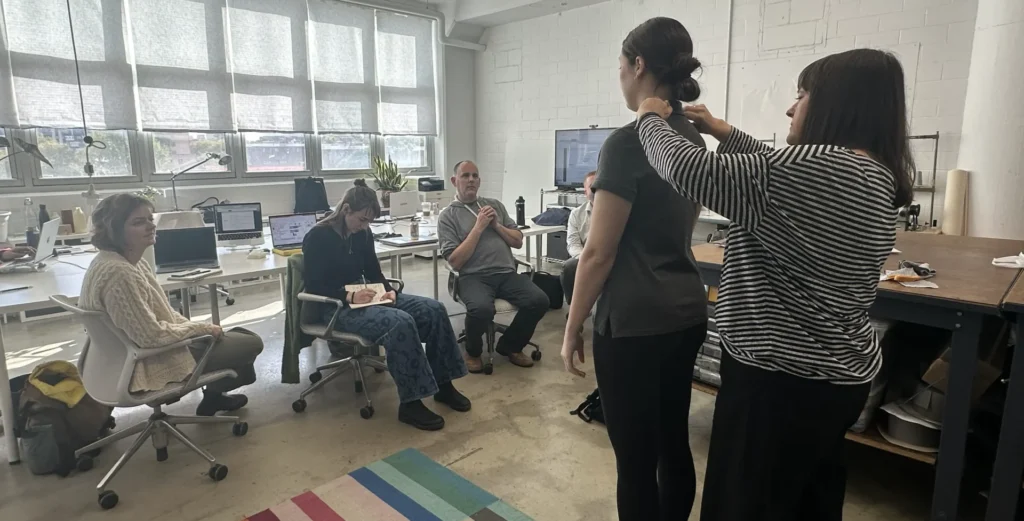
Mock-ups are more than internal design aids, they are powerful tools for communication. A sketch can suggest form, and a CAD file can demonstrate function, but nothing replaces the clarity of a physical object. When stakeholders can hold, wear, or manipulate a mock-up, abstract ideas become concrete. The conversation shifts from speculation to lived experience.

For clients, this means gaining confidence that the product is on the right track. Engineers can assess feasibility, materials, and assembly details. Users, meanwhile, provide feedback that is grounded in the reality of use rather than imagination. Each group engages with the same artifact, but through their own lens, creating a richer and more specific dialogue.

This shared understanding is critical. By aligning expectations early in the process, mock-ups reduce the risk of costly misunderstandings later. Questions of scale, ergonomics, or usability are resolved in the physical world rather than in post-production fixes. In this way, mock-ups not only accelerate collaboration but also protect both the integrity of the design and the efficiency of the project timeline.

Case Studies: Mock-Ups in Action

Case Study 1: The Breg CrossRunner™ Soft Knee Brace

When Breg set out to reinvent their soft knee brace line, they partnered with Interwoven Design to merge engineering precision with human-centered comfort. The challenge was to create a premium brace that could address a wide spectrum of injuries and instabilities while remaining easy to use, breathable, and adaptable to different body types. 

Early in the process, mock-ups played a critical role: foam models and fabric constructions allowed the team to explore how hinges aligned with anatomy, how straps wrapped and adjusted, and how materials compressed or released tension in motion.

These quick builds revealed insights that sketches alone couldn’t capture, helping refine ergonomics, donning sequences, and user comfort long before committing to a final design direction. By iterating through mock-ups, the team established a design language that balanced sleek aesthetics with technical performance. The result, the Breg CrossRunner™ Soft Knee Brace, exemplifies how physical mock-ups can bridge vision and execution, ensuring that every detail—fit, function, and feel—was tested and validated in three dimensions.

Case Study 2: The Perci Emergency Preparedness Vest

When INVICTA Ready set out to design a product that could help families face the growing threat of natural disasters, they partnered with Interwoven Design to create something intuitive, wearable, and life-saving: the Perci Emergency Preparedness Vest. The challenge was complex: developing a garment that could store and organize critical supplies, remain comfortable during rapid evacuations, and be universally adaptable across diverse users. 

Early mock-ups were essential in shaping the vest’s design: muslin and fabric prototypes allowed the team to test how tools and essentials could be organized into categories, ensuring each pocket was ergonomic, accessible, and balanced against the body.

These rough builds revealed whether wearers could move freely—carrying a child, lifting luggage, or running—without being restricted by bulk or weight distribution. These iterative mock-ups uncovered design insights that made the vest both practical and confidence-inspiring: reflective icons and graphic labeling clarified what each pocket contained, while ergonomic patterning and stretch panels improved comfort and mobility. The inclusion of a collapsible hood, internal storage systems, and integration with a companion mobile app extended its functionality, making the vest a true system for preparedness rather than just a garment.

Recognized internationally, the Perci Vest won Gold in Industrial and Life Science Design – Safety Designs and Bronze in Design for Society at the 2022 International Design Awards (IDA). The project underscores the value of mock-ups as more than just prototypes: they were the means of simulating real-world scenarios, uncovering challenges, and validating design decisions. For the Interwoven Design delivery team, building in three dimensions was the key to transforming the abstract concept of “preparedness” into a product that is intuitive, wearable, and empowering in moments of crisis.

Case Study 3: The HeroWear Apex Exosuit

Warehouse work places enormous strain on the body. Long shifts, hot environments, and constant bending and lifting often leave workers fatigued and injured, especially in the lower back. When a team from Vanderbilt’s Center for Rehabilitation Engineering & Assistive Technology developed a proof-of-concept for a mechanical exoskeleton, they partnered with Interwoven Design to transform their idea into a fully commercialized product: the HeroWear Apex Exosuit. Mock-ups were central to the exosuit’s design process. Our delivery team built garment and hardware mock-ups to test placement of mechanical components, optimize body heat management, and fine-tune ergonomics in real time.

Dozens of soft goods mock-ups were created and tested, shaping the design’s modular fit system, strength adjustability, and range of motion. By iterating through muslin mock-ups to increasingly high fidelity prototypes, the team ensured that the exosuit was not only effective in reducing strain but also intuitive and comfortable enough to gain worker acceptance, an essential factor for adoption on the job floor.

The final design balances technology with wearability: lightweight, breathable, and easy to don and doff, the Apex relieves more than 50 pounds of strain from the lower back. Its garment-based system manages body heat while remaining easy to clean and maintain, enabling daily use in demanding environments. The Apex Exosuit has been celebrated internationally, winning Gold at the 2021 IDEA International Design Excellence Awards (Commercial & Industrial), Platinum at the 2020 Spark Design Awards, and recognition as a 2021 Core77 Design Awards Notable winner (Commercial Equipment). These honors highlight not only the strength of the final product but also the value of mock-ups and iterative design in transforming breakthrough research into a scalable, worker-centered solution.

Building Toward Better Ideas

In soft goods design, mock-ups are more than a step in the process, they are essential to understanding how a product interacts with the body. They transform abstract concepts into tangible experiences, allowing designers to evaluate fit, tension, mobility, and comfort in ways that sketches or digital models alone cannot. This hands-on approach fosters a studio culture of experimentation, openness to failure, and playful discovery, while balancing intuition with practical constraints. 

At Interwoven Design, building mock-ups, whether for wearable braces, ergonomic vests, or modular exosuits, brings ideas to life, revealing hidden opportunities and guiding iteration. By seeing, touching, and testing concepts in three dimensions, we ensure that every soft goods product is not only functional and durable, but also intuitive, human-centered, and aligned with real-world use. In short, making shapes the trajectory of design, producing solutions that resonate with both people and their bodies.

Interwoven Design is a design consultancy that is positioned at the intersection of soft goods and wearable technology, creating products that function with the body and offer comfort as well as the superb performance that arises through the innovative incorporation of rigid, often electronic and responsive elements. Sign up for our newsletter and follow us on Instagram and LinkedIn for design news, multi-media recommendations, and to learn more about product design and development!