A Q&A with James Rudolph, Industrial Design Educator and Founder of Rudolph Design Studio

A Q&A with James Rudolph, Industrial Design Educator and Founder of Rudolph Design Studio

Spotlight articles shine a light on designers, engineers, researchers, and creative thinkers we admire and the ideas shaping design today. This month, as students head back to school, we’re turning to industrial design education with a provocative question: Are we teaching young designers the right things?

James Rudolph, Assistant Professor of Industrial Design at the University of Notre Dame and founder of Rudolph Design Studio, smiling in an outdoor headshot
James Rudolf, industrial design educator at the University of Notre Dame and founder of Rudolf Design Studio

We sat down with James Rudolph, Paul Down Assistant Professor of Industrial Design at the University of Notre Dame and founder and principal designer of Rudolph Design Studio. With more than 20 years of industry experience, James brings the perspective of an active practitioner to the classroom.

Our conversation ranged from AI-generated renderings to the enduring value of making, craftsmanship, and putting an idea into someone else’s hands. We talked about what students may be spending too much time learning, whether designers have become too focused on solving problems, and James’s growing interest in what he calls “speculative design for the real world.”

Q:

What’s one skill that students obsess over right now that you don’t think is going to matter as much in five years? And conversely, what’s one “old-school” skill that you think is going to become even more valuable?

A:

A lot of students are obsessed with being able to render at a fidelity that creates engaging, compelling, interesting visuals. In the past, that was such an important skill. If you’re a young designer, your concepts get more attention if they’re visually compelling, have high contrast and perfect perspective, and integrate color, material, and texture in a compelling way.

Some students get stuck on that to the detriment of thinking about the gesture, the overall form, and the general first impression of a physical thing. AI can help young designers create stronger, more compelling visualizations. The designer, in turn, brings the critical thinking and analysis needed to give those visualizations meaning and direction.

Conversely, the more traditional industrial design skill of model making and physical making is an area where I think we could all use a little more time. It doesn’t have to be hand carving, but it has to be the ability to show your idea in a three-dimensional form and put it in somebody’s hand.

And it’s not only model making, but craftsmanship. People respond to craftsmanship. Taking the time to make well-crafted, low-fidelity mockups allows people to evaluate the things you want them to evaluate—the ergonomics, the gesture, the space it takes up, the volume—rather than looking at how poorly something is made.

Q:

Is industrial design education keeping pace with the profession—or is it still preparing students for a version of design that no longer exists?

A:

My research and practice are closely intertwined. I continue to work with industry clients, particularly in healthcare, where I collaborate with engineers, scientists, and researchers to understand people and their needs and bring that perspective to the development of critical technologies. Those experiences also shape my research, giving me an opportunity to reflect and write about the role design can play in advancing healthcare innovation.

Those challenges, processes, and methodologies that I practice are what I try to bring into the classroom. With younger students, I provide more constraints so they can learn some of the fundamentals. As they progress, I give them fewer constraints and more of a framework for the types of questions they should be answering and the work they should be doing from the beginning of a project through the end.

In some ways, I guess it’s going back to an apprentice-style model of education: learning through doing, learning through dialogue, learning through feedback, and learning through interaction with physical things.
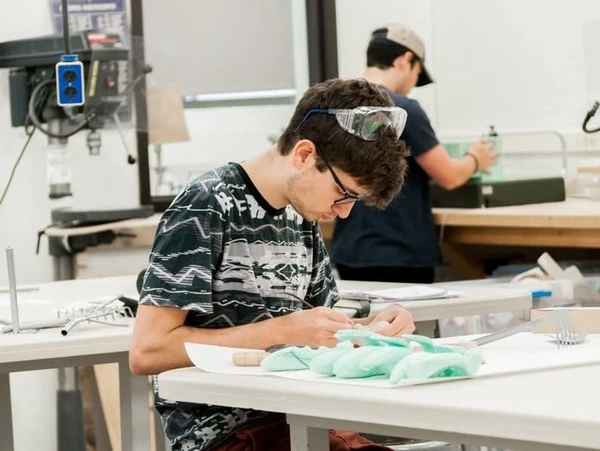
Industrial design student wearing safety goggles working on a project in a design studio workshop at the University of Notre Dame
Design student working on a project in West Lake Hall. Photo courtesy of the University of Notre Dame Department of Art, Art History, and Design.

Q:

Has making become optional? What role does physical making still play in industrial design education?

A:

For me, it’s still so critical. The act of making has obviously expanded.  When I was in school, it was about working directly with materials—shaping foam, building three-dimensional forms in the wood shop, and learning the fundamentals of form through craft. It meant creating physical objects you could hold, interact with, and put into other people’s hands.

That’s still so critical to industrial design and the physical world, but the ways in which we can make things has grown. Now we’re 3D printing a lot. You can iterate quicker, create quick mockups in CAD, and add more content to your models through displays or digital experiences.

I think making is absolutely critical. It’s part of our approach to research and understanding people. You learn by making in a couple of different ways. You learn yourself through a kind of dialogue with the three-dimensional object, and you respond as a designer to what you’re making. But the real power is being able to learn from others through your making.

Q:

Are we graduating designers who know how to make things—or designers who know how to present things really well?

A:

I think every school is a little bit different. Some schools are certainly doing a better job of making sure that the craft of design is still at the forefront of their curriculum. A lot of it has to do with the expertise of the faculty. We tend to teach what we know, so a lot has to do with the values of the different departments and what areas of design they want to highlight.

There are certainly programs that excel at really strong presentations and portfolios—the ability to tell a compelling narrative through the visual storytelling of their projects. There may be some truth to the trend that a lot of the content in those portfolios tends to be more rendering-heavy, more digital-heavy, and less prototyping-heavy.

But I still see a lot of portfolios that show early, low-fidelity prototyping. I love to see that. I think it’s still paramount to the way designers learn from their own mistakes.

Q:

How do you define design research, what impact does it have, and how might we encourage more students to become design researchers?

A:

For me, design research is really about understanding people: their needs, their wants, their desires. Then, if you move beyond that, thinking about people in terms of social dynamics, behavioral dynamics, and common cognitive things that you need to think through from a human factors perspective.

It’s understanding people within a context, and that means understanding what their common goals, activities, and tasks are. When we start a design research project in my class, it’s about understanding a group or groups of people that have a shared task, activity, or goal. 

At Notre Dame, we put a heavy emphasis on design research. In fact, one of the areas of feedback we sometimes receive is that we graduate students who almost have too much design research and less design refinement on the back end.

We start with an area of inquiry and go through the process of: What are the questions we have? How do we frame a research effort around that? What are some of the questions you might want to ask? What are some of the observations you might want to make? What type of people should you include to be more representative of a broader population?

Then, on the back end, how do you turn those observations into insights? How do you communicate what’s important—what you found that was interesting, compelling, and meaningful—to whoever your audience is?

Q:

Has industrial design become too focused on solving problems? Is there still room for work that’s speculative, poetic, or simply asks different types of questions?

A:

I certainly hope so. I grapple with this issue myself all the time. I have a real appreciation for speculative design work and for design work that is not intended only to inform products or practical things in your life. The idea of using the methods, skills, and tools of design to inform dialogue and debate has always been interesting to me. In fact, I wanted to be an artist originally. I went to school for fine art. So the idea of using the object to solicit or evoke dialogue and critical thinking is really compelling to me.

I think that’s a way to inspire students to think beyond practical objects or objects that are meant just to bring utility to your life—introducing projects intended to provoke, prompt, or incite dialogue. There’s this whole other world of design that takes place in art galleries, community settings, and social settings. Students can use their skills in more ways than just developing utilitarian products.

You also have the freedom not to design something. Maybe a product isn’t the right solution. Maybe it’s a system or service, or maybe it’s meant for a gallery or museum setting.

Q:

Everyone is talking about AI replacing designers. Is that the wrong question? Should we really be worried, or should we be excited?

A:

I struggle with AI a little bit because I haven’t found a way in my practice to use it successfully. I go to conferences and watch demonstrations of different workflows for incorporating AI into the design process, and at the end it’s like a coffee maker shrouded in camouflage. The forms don’t make sense and there’s no thought around the workflow or usability.

For more complex healthcare devices—wearables and things that have surgical robotics-like complexity—the results initially look compelling. They’re rendered very nicely, the forms look real, and they have compelling contrast and lighting. But I haven’t been able to use it in a way where I see real value. I can sit down with my partner and brainstorm 20 more reasonable, meaningful ideas. Maybe they’re not perfect or rendered very well, but they actually address the issues that we want to solve.

OneAir Medical and OneAir Environment handheld devices, healthcare and environmental monitoring products designed by Rudolph Design Studio
OneAir Medical and OneAir Environment devices, designed by Rudolph Design Studio.

It’s not to say that AI isn’t going to be there soon. I think it will become a great tool. But it won’t replace your ability to analyze and critique from a human perspective. I’m not scared. I’m frustrated with my own inability to use it successfully. It falls on me to continue to use the tools, understand the tools, and introduce them when I think they’re appropriate.

Q:

You mentioned speculative design earlier, and it’s clearly something you’re thinking about a lot. Where do you see speculative design fitting into the future of industrial design practice and education?

A:

One area that you might have seen me light up about is this idea of speculative design. Early in my career, my research was heavily focused on traditional ways of thinking about design: How do we better understand people’s needs? How do we define needs? How do we create procedures and processes to translate those needs into user-need statements and then into product requirements?

But my own research is going back to what I was more interested in as a student, which is this idea of speculative design. I’ve been rereading Victor Papanek’s Design for the Real World and also reading about speculative work, speculative everything, and discursive design. They often talk to each other as if they’re very different camps—speculative design on one side and traditional industrial design, where we make things useful, practical, and usable, on the other. 

Why do they have to be so different? I think there’s room for both, and both camps can learn from each other.  I’ve got this idea I’m calling “speculative design for the real world.” How do you leverage the methodologies and thinking of speculative design, and how can those things inform real-world initiatives—important societal and cultural initiatives?

When you think through the lens of speculative design, it opens up an entirely new range of possibilities for where the research might lead. You don’t have to constrain yourself to a thing. It could be an experience. It could be an exhibit. It could be a social initiative. It opens a lot of opportunities for different types of solutions that, as an industrial designer, you might not have thought of at the onset.

–

Check out the rest of our Spotlight series to hear more from leaders in the design industry. Sign up for our newsletter and follow us on Instagram and LinkedIn for design news, multi-media recommendations, and to learn more about product design and development!

Rethinking the Uni-form: Designing for Every Body

Rethinking the Uni-form: Designing for Every Body

A uniform is designed to create unity. By definition, it means remaining the same in all cases and at all times. In sports, it symbolizes equity, shared identity, and belonging. But human bodies are anything but uniform. For decades, uniform design has mastered the art of creating visual unity. As our understanding of human anatomy, movement, and performance materials continues to evolve, it’s worth asking: What’s next for the uniform?

There is an inherent tension between a standardized product and the fluid, unpredictable reality of human anatomy. Rather than seeing today’s athletic apparel as a limitation, I see it as a foundation—one that invites us to rethink how performance products can evolve. The future isn’t about replacing the traditional playbook; it’s about expanding it to embrace human variability as a design opportunity.

The Clues in the Micro-Adjustments

Watching professional sports closely reveals a fascinating trend: elite athletes making subtle, intuitive making subtle, intuitive adjustments to their gear.

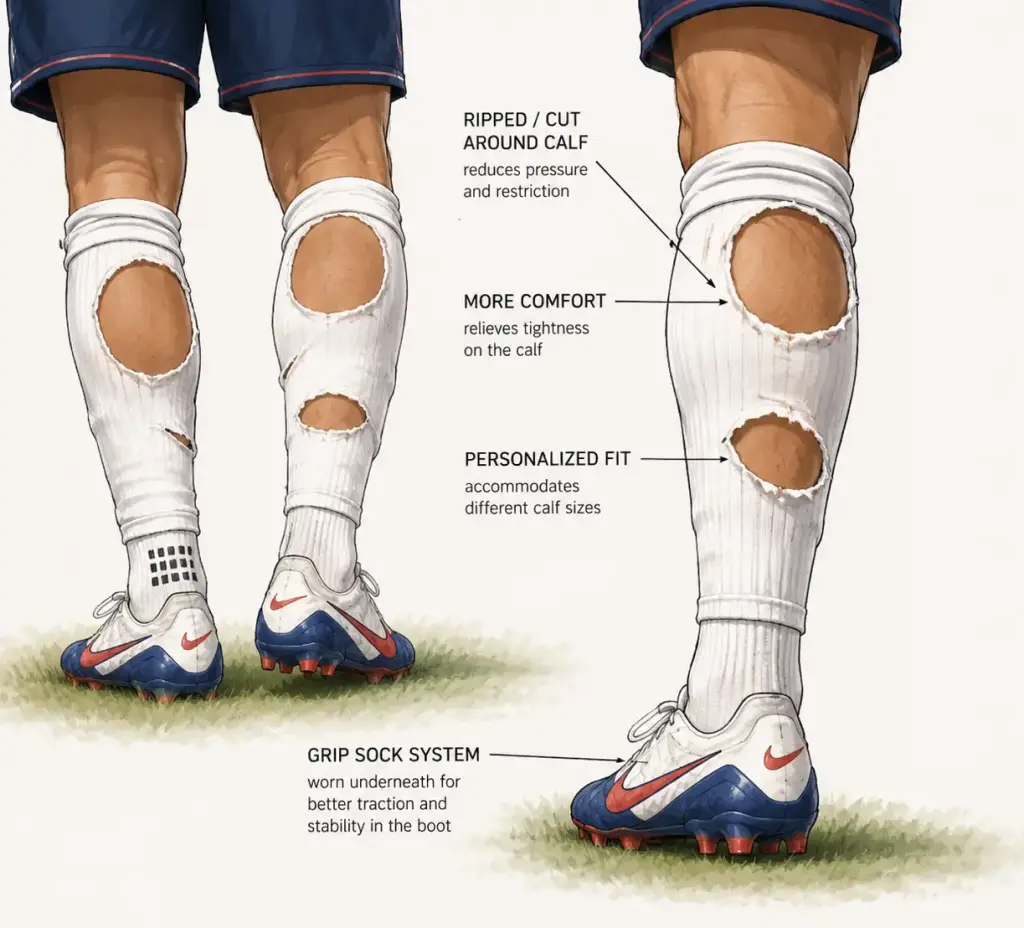
Close-up of a soccer player's lower legs showing team-issued socks with holes cut around the calves, revealing the compression layer underneath.
Professional athletes often make small modifications to their uniforms to improve comfort and performance. These adjustments can offer valuable insights for future sportswear design.

Soccer players routinely modify their team-issued socks to improve comfort and reduce pressure. Basketball players roll waistbands or adjust their collars during play. These aren’t acts of self-expression. They’re performance-driven adjustments that help athletes optimize fit, comfort, and movement while remaining visually united as a team.

Designing a uniform means balancing many priorities: performance, durability, manufacturability, and a shared visual identity. Yet no two bodies move exactly alike. As athletes sprint, twist, jump, and stretch, subtle differences in anatomy and movement naturally emerge.

Rather than seeing these adaptations as exceptions, we can view them as valuable design feedback. They reveal opportunities for apparel to better support the individual while preserving the collective identity that uniforms are meant to represent.

Designing from the Body Outward

An inspiring example of this mindset shift can be found in highly specialized performance gear—such as custom racing wheelchairs engineered for Special Olympics athletes.

Custom racing wheelchair designed for a Special Olympics athlete, highlighting individualized seating, support, and frame geometry.
High-performance adaptive equipment begins with the athlete’s body. Every component is engineered to support individual movement, comfort, and performance.

Here, the equipment adapts to the athlete—not the other way around. Because a project cannot start with a generic template, the engineering must begin entirely with the athlete’s unique body, posture, and movement patterns. Every decision—from the frame geometry to the seating angle—is tailored to an individual’s specific capability.

What makes these projects so compelling is how seamlessly hard and soft systems work together. While the rigid frame delivers mechanical speed, the athlete’s safety and endurance depend entirely on the softer touchpoints: pressure-mapped cushions, custom-contoured supports, and anatomical strapping. It proves that when design starts from the body and builds outward, it unlocks a completely different level of synergy between the user and the product.

An Unexplored Space for Future Possibilities

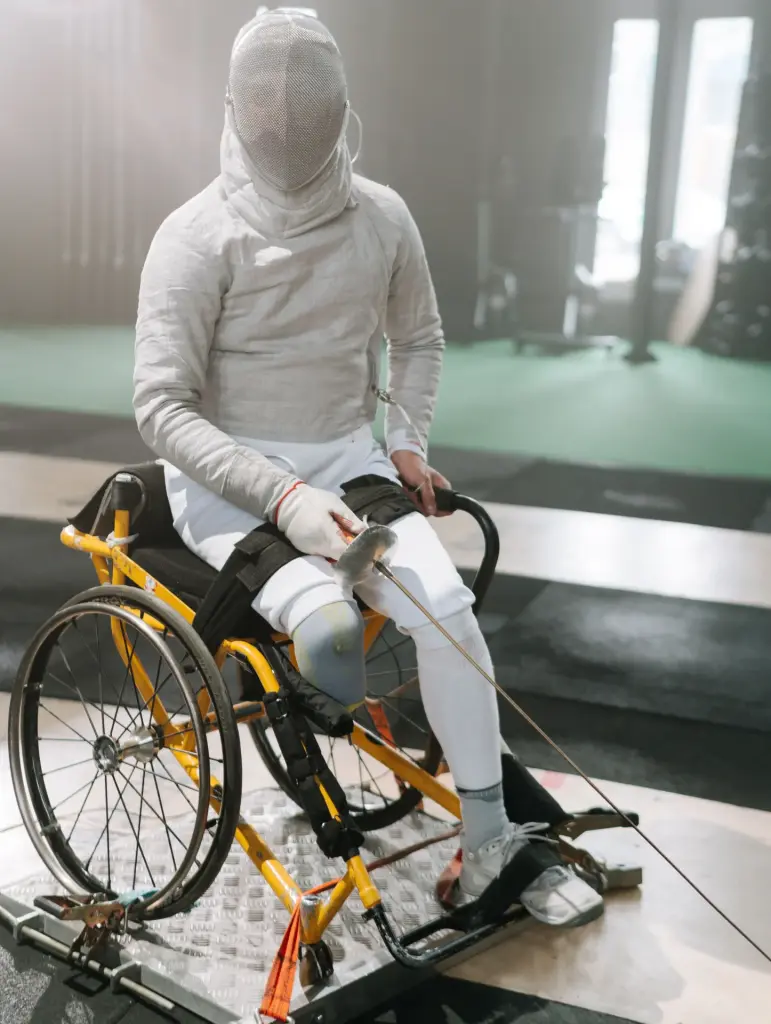
Wheelchair fencer in full protective uniform seated in a specialized sports wheelchair during training.

If complex performance equipment can be engineered to adapt so precisely, it opens up a largely unexplored opportunity for the future of team apparel.

The future of sportswear doesn’t have to mean a uniform that simply scales rigidly from XS to XXL. Instead, the “uni-form” can be imagined as an adaptable, modular system—one that maintains a shared team identity on the outside, while flexing to accommodate different body geometries and abilities on the inside.

That shift could lead to uniforms with modular paneling that accommodates different postures or prosthetics, adaptive seam placement that follows movement rather than symmetry, intuitive closures that support independent dressing, and material zones tuned for comfort, breathability, or sensory needs. The goal isn’t to change what a team looks like. It’s to expand how many athletes can perform at their best while sharing the same identity.

Belonging and Performing Together

Belonging to a team is an emotional experience, and the uniform is the visual anchor of that bond. True innovation in this space doesn’t mean sacrificing visual unity; it means evolving the underlying architecture so that the uniform supports every athlete’s peak expression.

Uniform design has always been about creating belonging.
The next chapter isn’t about changing that purpose. It’s about expanding who that belonging is designed for. Perhaps the future of the uni-form isn’t one form at all.

It’s designing for every body.

Diverse group of people representing individuality, body diversity, and personalized design possibilities for the future of apparel.
The human body is the starting point for thoughtful design. Understanding individual form, movement, and personal needs opens new possibilities for the future of adaptive apparel and performance products.

Interwoven Design is a design consultancy that is positioned at the intersection of soft goods and wearable technology, creating products that function with the body and offer comfort as well as the superb performance that arises through the innovative incorporation of rigid, often electronic and responsive elements. Sign up for our newsletter and follow us on Instagram and LinkedIn for design news, multi-media recommendations, and to learn more about product design and development!
Beyond Devices: The Future of Smart Textiles

Beyond Devices: The Future of Smart Textiles

For years, wearable technology has been defined by devices; watches, bands, clips, and sensors attached to the body. These products brought computing closer to us, but they remained distinct objects, layered onto daily life rather than fully integrated within it. Today, that boundary is beginning to dissolve. Advances in miniaturization, materials, and fabrication are enabling a new generation of wearable technology that is built directly into what we wear. Electronics are becoming so small, flexible, and adaptable that they can be embedded into fibers, yarns, and fabrics, transforming textiles into intelligent systems. In this emerging paradigm, clothing transforms from a passive to an active layer; capable of sensing, communicating, and supporting the body in real time.

At Interwoven Design, we operate at the intersection of soft goods, wearable technology, and human-centered design. Our team brings together expertise in textiles, engineering, and product development to translate complex technologies into wearable solutions that feel intuitive and natural. In this Insight article, we explore how smart textiles are redefining wearable technology, and the design challenges that come with embedding intelligence into fabric. We also examine IARPA’s SMART ePANTS program as a case study in how next-generation textile systems are being developed and what they signal for the future of wearable design across industries.

From Wearables to Woven Systems

Early wearable technologies succeeded by attaching intelligence to the body. Devices were clipped, strapped, or adhered, creating a clear distinction between the user and the technology. While effective, this approach introduced friction, both physical and cognitive. Devices had to be managed, charged, positioned, and maintained.

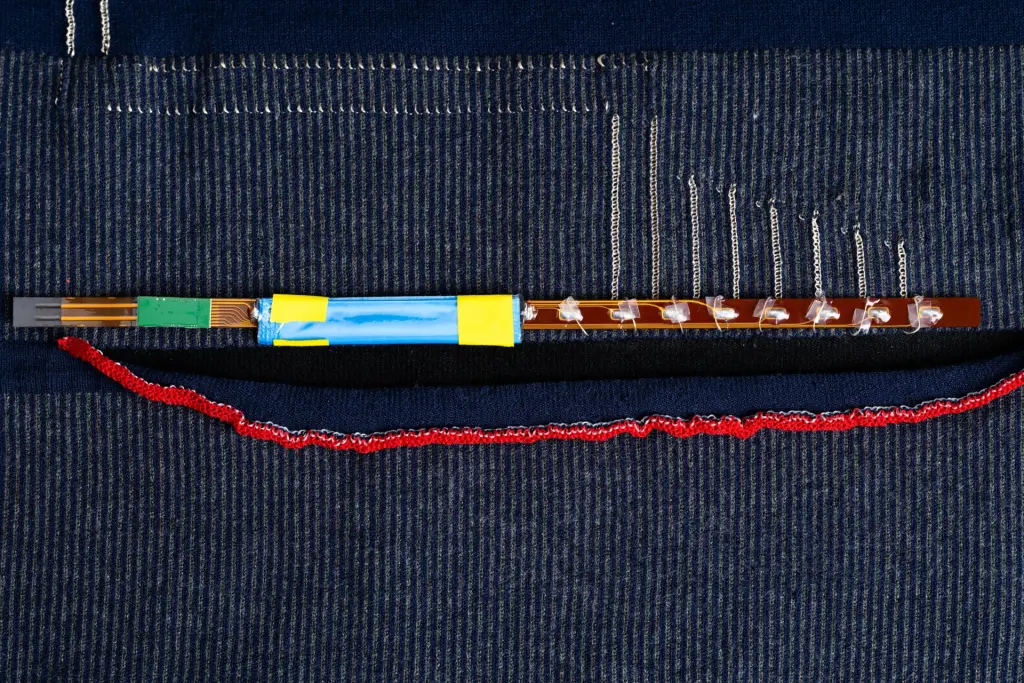
A flexible circuit with sensor pad, PCB, power module, and surface-mount components integrated into a knit textile alongside conductive threads and stitching, illustrating smart textile construction
Sensors, circuitry, and power integrated directly into the fabric. The electronics are not attached to the textile; they are part of it.

Smart textiles represent a fundamental shift away from this model. Instead of discrete objects, intelligence becomes distributed across the garment itself. Sensors, conductive pathways, and responsive elements are integrated into the fabric, allowing the entire system to function as a cohesive whole. The garment is no longer a carrier of technology; it is the technology.

This shift enables interaction that is continuous and embedded in daily life. Rather than engaging with a device, users inhabit a system. Clothing can sense movement, monitor physiological signals, respond to environmental changes, and communicate data without requiring direct input. At the core of this transformation is the rapid miniaturization of electronic components. Sensors, conductors, power sources, and processing units are shrinking to the point where they can be incorporated into fibers and yarns without compromising flexibility or comfort. Conductive threads can function as wiring, while micro-scale sensors can be embedded directly into the structure of a textile.

This evolution changes how designers think about materials. Electronics shift from separate components to be housed within a product to intrinsic properties of the material itself. A fabric can conduct, sense, heat, or transmit information, not because something has been added to it, but because it has been engineered to do so at a fundamental level. As a result, the role of design expands. Decisions about weave structure, fiber composition, and material layering become as critical as traditional considerations like form and enclosure. Designing a smart textile is not just about integrating technology, it is about orchestrating performance at the level of the material system.

The Challenges of Translation

For designers, the central challenge of smart textiles is not simply technical integration, it is experiential translation. Electronics and textiles are fundamentally different systems, governed by opposing constraints. One is rigid, precise, and sensitive; the other is soft, adaptive, and expected to endure constant movement, friction, and environmental exposure. Bridging these worlds requires more than embedding components into fabric; it demands rethinking how products are conceived from the ground up. Traditional product design often treats materials as a means of housing or protecting internal components. In smart textiles, the material is the system. Decisions about fiber composition, knit structure, layering, and seam construction directly impact not only comfort and durability, but also electrical performance. Stretch, for example, is no longer just a fit consideration, it affects conductivity, signal stability, and sensor accuracy. Similarly, the placement of seams or zones of tension can influence how reliably a system performs over time.

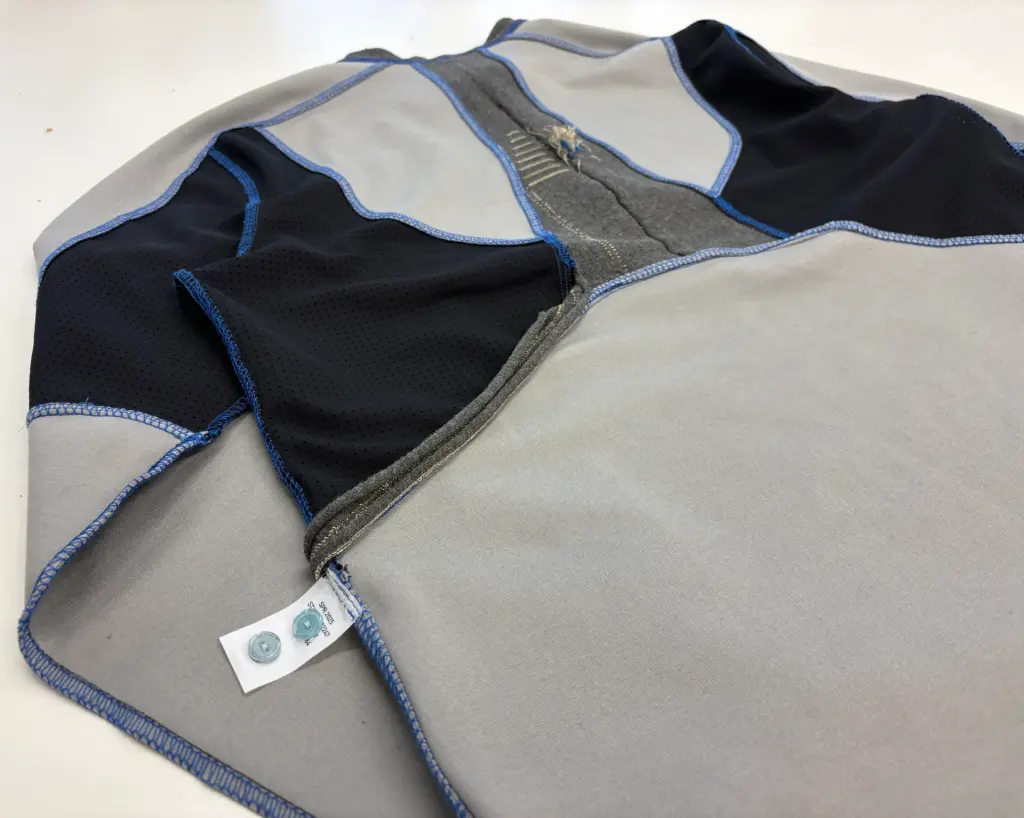
Inside view of an Interwoven concept garment for SMART ePANTS. Conductive channels follow the seams, making construction decisions inseparable from electrical performance.

Designing at this level introduces a new set of constraints that must be balanced simultaneously. A garment must stretch, but not in ways that compromise embedded circuits. It must be breathable, while still protecting sensitive elements from moisture. It must withstand washing, abrasion, and repeated wear cycles without degrading performance. Each of these requirements influences the others, creating a tightly interdependent system where small decisions can have cascading effects.

Durability and lifecycle are also notable challenges. Unlike traditional electronics, which are often treated as discrete, replaceable objects, smart textiles are expected to behave like clothing: washed frequently, worn in varied conditions, and maintained over time. Designers must consider how these products age, how components are protected or exposed, and what failure looks like. Does the garment continue to function if one element degrades? Can it be repaired, or is it disposable? These questions push design beyond form and function into systems thinking.

Equally important is the user experience. Smart textiles must feel indistinguishable from traditional garments, even as they perform complex functions. This requires careful attention to weight, drape, texture, and fit. Hard points, bulk, or inconsistencies in material can quickly break the illusion, reminding the user that they are wearing a device rather than clothing. The goal is to achieve a level of integration where the technology disappears; where the garment behaves exactly as expected while quietly delivering enhanced capability. Designers must also consider how to communicate functionality through material, form, and experience. Feedback may come through changes in temperature, pressure, or texture rather than visual interfaces. The product must feel reliable and intuitive, even when its most advanced features are hidden from view.

Designing smart textiles is an exercise in reconciliation. It requires aligning the precision of electronics with the fluidity of textiles, the demands of performance with the expectations of comfort, and the complexity of systems with the simplicity of everyday use. 

Case Study: SMART ePANTS

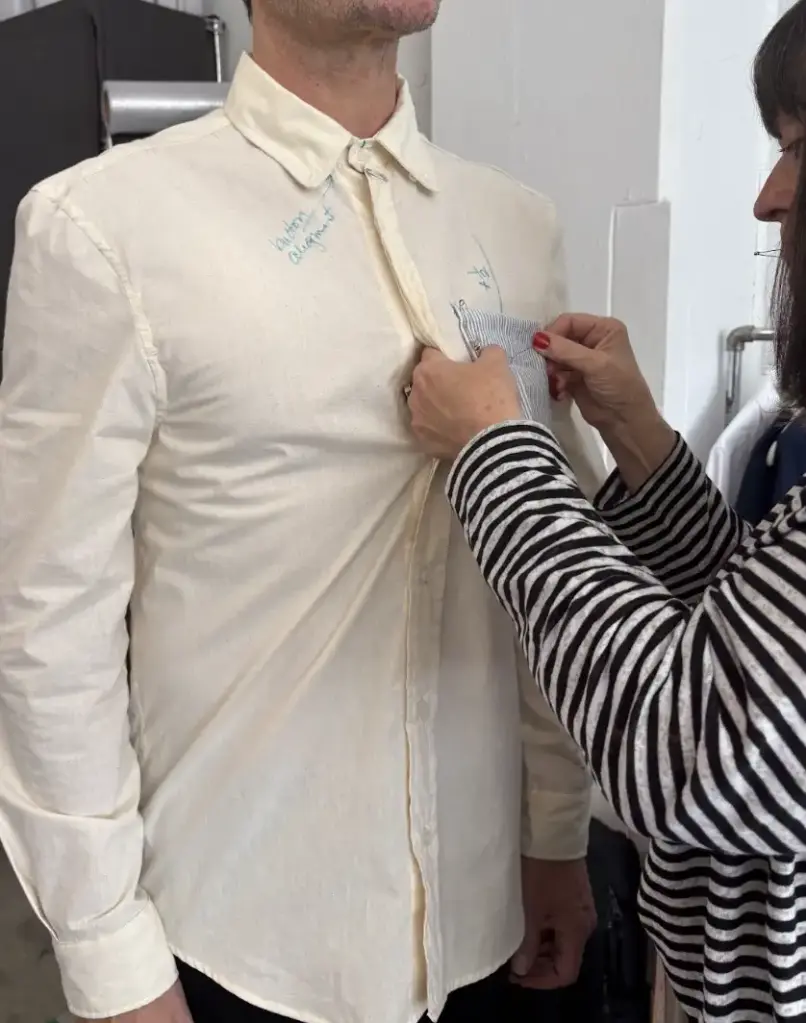
An Interwoven designer adjusting the fit of a cream-colored shirt on a fit model during a SMART ePANTS garment development session
A fit model session for an Interwoven garment developed for the SMART ePANTS program, where pattern and fit are refined to keep embedded technology comfortable and unobtrusive in wear.

One of the most ambitious explorations of this concept is the SMART ePANTS program, developed by the Intelligence Advanced Research Projects Activity (IARPA). The initiative focuses on creating fully integrated textile systems: garments that incorporate sensing, power, computation, and communication directly into the fabric.

The goal of SMART ePANTS is to develop clothing that can capture and process information about the wearer and their environment without relying on external devices. Sensors capable of detecting audio, movement, and location are woven into the garment, while conductive fibers act as wiring to connect these systems. Power is supplied through flexible, deformable energy solutions, and data is processed using ultra-low-power electronics embedded within the textile structure.

What distinguishes this program is not any single technology, but the level of integration. Rather than assembling components into a wearable device, SMART ePANTS treats the garment itself as a platform where every element, from fiber to system architecture, contributes to overall performance. The result is a product that maintains the look and feel of everyday clothing while functioning as a sophisticated technological system. This approach has significant implications for design. By embedding intelligence directly into textiles, the need for bulky hardware is reduced, and the user experience becomes more seamless. The garment can be worn naturally, without requiring adjustment or awareness, allowing technology to operate in the background.

From Research to Real-World Applications

While programs like SMART ePANTS are rooted in advanced research, their implications extend far beyond specialized applications. As these technologies mature, they will begin to influence a wide range of industries, from healthcare and wellness to performance apparel and everyday clothing, translating into applications that prioritize comfort, wearability, and seamless integration into daily life. The trajectory is familiar: high-performance, research-driven innovation gradually becomes refined, simplified, and accessible to broader audiences.

In healthcare, this shift is particularly evident. Garments designed for continuous physiological monitoring are moving away from rigid patches and adhesive sensors toward soft, wearable formats that can be worn over extended periods. For example, products like the Hexoskin Smart Shirt integrate sensors directly into the fabric to monitor respiration, heart rate, and activity without requiring additional devices. Similarly, platforms such as the Sensoria Smart Socks embed pressure sensors into knit structures to analyze gait and movement, demonstrating how everyday apparel can double as a data collection system without sacrificing comfort.

Performance apparel is another area where smart textiles are gaining traction. Brands are exploring garments that actively support the body through embedded functionality rather than external hardware. The Ralph Lauren PoloTech Shirt tracks biometric data and streams it to your device, while recovery-focused compression garments incorporate engineered fabrics that enhance circulation and muscle support. 

In wellness and lifestyle applications, smart textiles are becoming increasingly discreet and intuitive. Sleep-focused products, posture-correcting garments, and stress-responsive wearables are leveraging soft, flexible materials to deliver benefits without introducing friction into daily routines. Early-stage innovations, such as textiles that can subtly adjust temperature in response to the body or fabrics that incorporate haptic feedback for relaxation, point toward a future where garments play an active role in regulating comfort and well-being.

In industrial and safety contexts, smart textiles are moving beyond rigid equipment toward more wearable solutions. High-visibility clothing with embedded sensors can monitor worker fatigue or environmental conditions, while military and first-responder gear is beginning to incorporate distributed sensing systems that enhance situational awareness without adding bulk. 

Across these categories, a consistent pattern emerges: the most successful products are those that translate complex technology into familiar, wearable formats. Rather than introducing entirely new behaviors, they enhance existing ones, turning shirts, socks, and outerwear into platforms for sensing, response, and support. As the underlying technologies continue to mature, the distinction between “technology” and “textile” will become increasingly blurred, paving the way for products that feel less like innovations and more like natural evolutions of what we already wear.

The Future: Textile as Interface, System, and Platform

The future of smart textiles is one where the textile itself becomes the interface, the system, and the platform. Clothing will no longer be a static layer, but an active participant in how we experience the world: sensing, responding, and adapting in real time. For designers, this represents a fundamental shift in how products are conceived and developed. It requires thinking beyond objects and toward systems, beyond components and toward materials, and beyond interaction and toward experience. The challenge is to harness the potential of embedded intelligence while maintaining the qualities that make textiles inherently wearable: softness, flexibility, and comfort. The most successful solutions will not be those that showcase technology, but those that integrate it so seamlessly that it becomes invisible, leaving behind only the experience of wearing something that works effortlessly with the body.

At Interwoven Design, we partner with clients to navigate this evolving landscape, translating emerging technologies into products that balance innovation with usability. By integrating expertise in soft goods, textiles, and wearable systems, we help bring the next generation of smart textiles from concept to reality. 

Interwoven Design is a design consultancy that is positioned at the intersection of soft goods and wearable technology, creating products that function with the body and offer comfort as well as the superb performance that arises through the innovative incorporation of rigid, often electronic and responsive elements. Sign up for our newsletter and follow us on Instagram and LinkedIn for design news, multi-media recommendations, and to learn more about product design and development!

A Q&A with Dr. Candace Chan, Materials Scientist and Battery Researcher in Smart Textiles

A Q&A with Dr. Candace Chan, Materials Scientist and Battery Researcher in Smart Textiles

Spotlight articles shine a light on designers, engineers and scientists we admire, asking leaders in the field about their work and their creative journey. This month’s Spotlight interview explores the rapidly evolving world of Smart Textiles — a space where materials science, wearable technology, and garment design are beginning to blur together in fascinating ways. While wearable tech often focuses on sensors, data, and interfaces, one of the biggest challenges has always been power: how do you create energy systems that are small, flexible, safe, and comfortable enough to disappear into the garment itself?

Dr. Candace Chan, materials scientist and battery researcher based in Arizona and professor at Arizona State University.

To dig deeper into that question, we spoke with Dr. Candace Chan, a materials scientist and battery researcher at Arizon State University, whose work focuses on developing advanced energy storage systems, including flexible batteries for wearable applications.

Candace collaborated with Interwoven Design Group as part of the SMART ePANTS initiative — a multi-disciplinary research project exploring how electronics, conductive textiles, and embedded systems can be integrated directly into garments without compromising comfort or movement.

With a background in chemistry and nanomaterials, Candace brings a perspective that bridges fundamental science with real-world applications. What makes her especially compelling to talk to is the way she translates incredibly complex technology into ideas that feel surprisingly human and relatable.

Q:

Can you tell us a little about your background and how you first became interested in battery technology?

A:

My training is actually in chemistry. When I first went to college, I thought I was probably going to go to medical school like a lot of people do. But then I started taking chemistry courses and became really interested in materials science — especially nanomaterials. At the time, nanotechnology was becoming a huge area of research, and there was a lot of excitement around how materials behave differently at very small scales.

When I was a graduate student, I became involved in a research project exploring nanostructured materials for batteries, and what we found was that by making materials smaller, you could improve their mechanical properties, lifetime, and charge storage. That work eventually spun off into a startup company, which was exciting because it showed how fundamental research could become a real product.

I’ve always been interested in understanding the chemistry and fundamentals of materials, but also in figuring out how to leverage that understanding to improve everyday technologies. It just happened that batteries became the area where I could really see that impact.

Q:

In very simple terms, how does a battery actually work?

A:

In a nutshell, a battery is an energy conversion device. There’s chemical energy stored in the materials inside the battery, and through electrochemical reactions that energy gets converted into electrical energy that we can use.

Basically, the reactions allow electrons to move from one material to another, and the battery is designed so we can leverage those electrons by running them through a circuit to power a device.

What’s interesting is that different batteries work in different ways depending on the materials and reactions involved. Some batteries, like a typical 9-volt battery, aren’t rechargeable because the reactions happening inside them can’t easily be reversed. In rechargeable batteries, you can apply electricity to reverse those reactions and restore the stored energy.

There’s actually a lot happening at the atomic level inside a battery. It’s not just electrons moving around — in many cases the atomic structure of the materials themselves is changing during the reaction process. Sometimes those changes are reversible, and sometimes they’re not.

Q:

Most people picture batteries as hard, rigid objects. How do you even begin to make a battery small and flexible enough to live inside a textile or garment?

A:

That’s actually a really big challenge, and it’s one of the reasons this project was so interesting. A lot of traditional batteries are rigid because they’re designed to contain corrosive liquids and protect the materials inside. The hard casing is really there to keep everything sealed and stable.

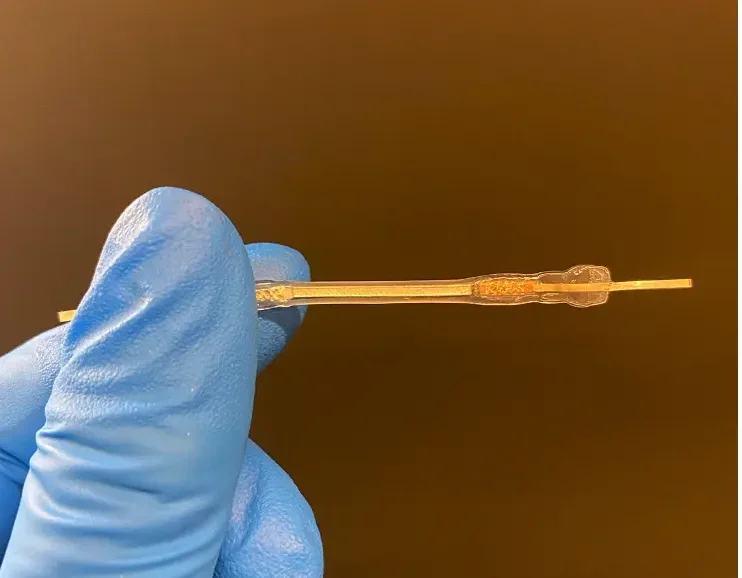
Flexible ribbon battery developed for smart textiles, held between gloved fingers
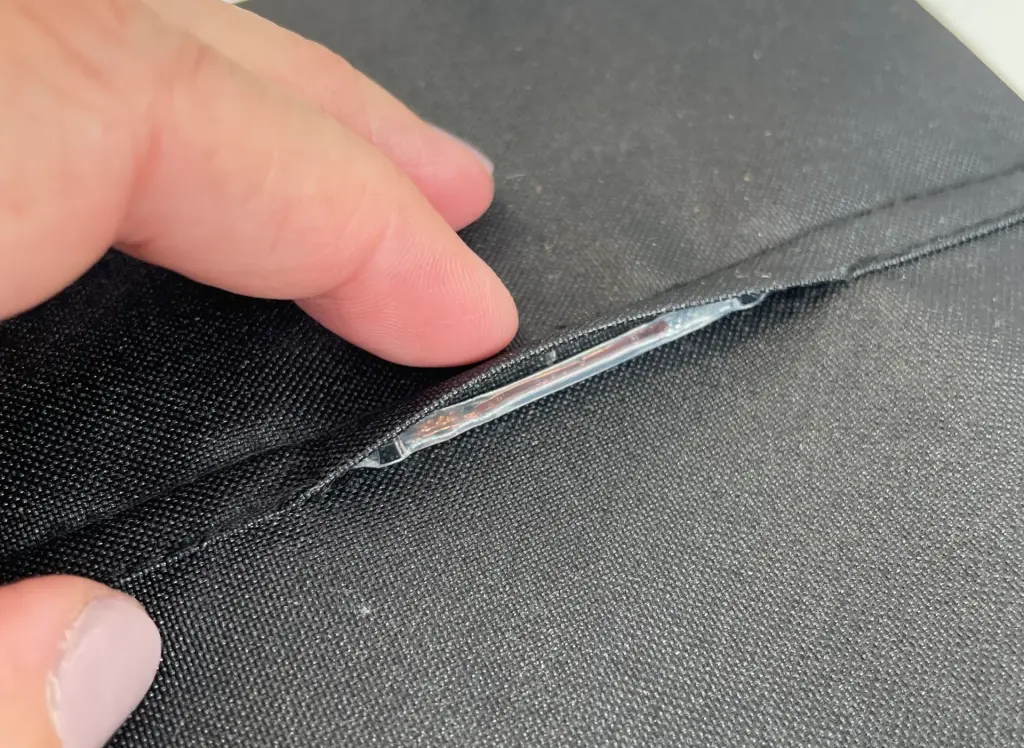
The ribbon battery developed for the SMART ePANTS project.

But batteries don’t necessarily have to be rigid. If you look at lithium batteries — like the ones in phones or laptops — many are already packaged inside flexible polymer films instead of hard metal casings. So the question becomes: how do you take that idea even further and make something small and flexible enough to disappear into a textile?

A big part of it is balancing the power requirements of the device with how small you can realistically make the battery. In the SMART ePANTS project, we were fortunate to work with a team developing very low-power electronics, which meant we could design a much smaller battery, which we call a ribbon battery. That really opened the door to creating something that could integrate more naturally into the garment itself.

What’s interesting is that so much development has happened with sensors, wearable interfaces, and data systems, but the battery is still often the limiting factor. In a lot of ways, the battery has become the “ugly duckling” of wearable technology — everyone wants devices to be smaller, lighter, and more invisible, but power is still the thing holding many of those ideas back.

Q:

For people who may not be familiar with the field, how would you explain what smart textiles are and why people should be excited about them?

Flexible battery embedded into a black textile swatch as a smart textile prototype
A flexible battery embedded into a textile swatch.

A:

For me, a smart textile is really a textile with improved functionality because it has embedded electronics integrated into it — including the power source. What’s exciting is that the possibilities are so broad. Smart textiles could support healthcare monitoring, athletic performance, mobility assistance, or entirely new types of wearable experiences that we haven’t even fully imagined yet.

Q:

The Smart ePants project brought together textiles, electronics, engineering, and garment design. What was most exciting or surprising to you about working in such a cross-disciplinary space?

A:

Everything about it was really interesting to me because I had never worked so closely with people from the textile and garment world before. I didn’t fully appreciate how much development had already happened in smart textiles — from conductive threads to knitting structures to the different ways electronics can be integrated into garments.

What was most exciting was seeing all these different disciplines come together around a common goal. It really showed how much innovation can happen when engineers, scientists, and designers are all approaching the same problem from completely different perspectives.

One thing I realized during the project was how valuable co-design can be. We initially approached it as, “Okay, we’ll make the battery and then figure out how to integrate it into the garment.” But I think if we had collaborated even earlier in the process, the battery itself might have evolved differently. I learned that the way a garment moves, stretches, and behaves on the body can actually influence how you design the technology inside it.

Q:

One of the biggest goals in wearable technology is making the technology almost invisible to the user. How close do you think we are to smart garments that truly feel natural and comfortable?

A:

I think we’re getting much closer. One of the really interesting things about the SMART ePANTS project was that so much of the testing focused on comfort and durability, asking whether the garment still felt natural once the electronics and battery were embedded inside it.

Flexible batteries connected to test leads for performance and durability evaluation
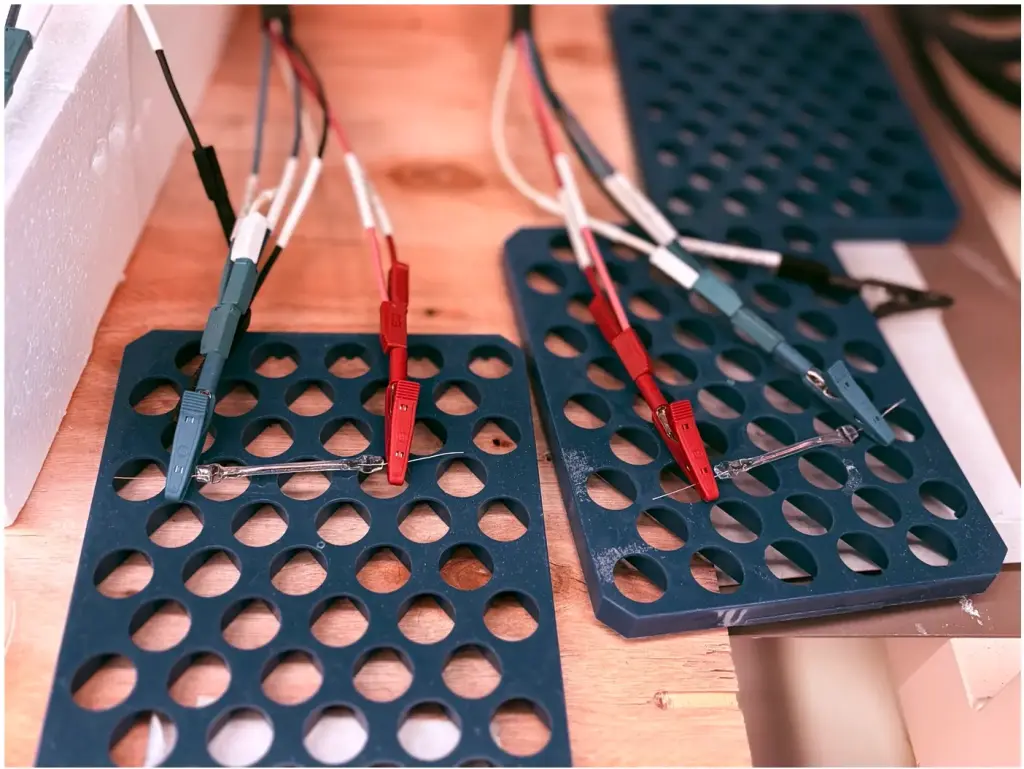
Testing the battery for performance and durability.

Our team really tried to make the battery as small and non-detectable as possible rather than simply integrating an off-the-shelf component. We customized the battery specifically around the low-power devices the electronics team was developing, which allowed us to make it much smaller and more flexible.

I was actually really proud that we exceeded the comfort and durability metrics. Even after aggressive bend testing, the battery still functioned and the stiffness change in the fabric was less than 10%, which was far better than the project requirements. That was a big moment for us because it demonstrated that these systems really can begin to integrate naturally into textiles.

Q:

Where do you think smart textiles and embedded power systems are going to have the biggest impact first, healthcare, sports, military, consumer products, or somewhere else entirely?

A:

Historically, military applications are often the first place these technologies gain traction because that’s where a lot of the early funding and development happens. There’s still a huge need for better embedded power systems for soldier-worn devices — in some cases, people are carrying nearly 30 pounds of batteries to support different equipment.

That said, I think healthcare and consumer wellness are going to continue pushing the field forward as well. Right now there’s enormous interest in wearable technology for monitoring health, exercise, recovery, and performance, but almost everyone is still struggling with the same issue: the battery. I was at a flexible electronics conference earlier this year, and it felt like every company had a battery problem. There’s clearly a lot of opportunity — it’s just a matter of finding the right applications first.

Q:

Looking ahead five or ten years, what excites you most about the future of smart textiles, wearable technology, and flexible batteries?

A:

What excites me most is that it finally feels like all the different pieces are starting to come together. The electronics are getting smaller, the textiles are becoming more advanced, and there’s a much greater understanding now of how to integrate these systems into something people can actually wear comfortably.

Materials scientist Candace Chan working in a lab on flexible battery research for wearable technology
Candace Chan in the lab, where her research focuses on advanced energy storage and flexible batteries for wearable applications.

From the battery side, there’s still a huge opportunity. Everywhere I go, whether it’s healthcare, flexible electronics, or wearable technology conferences, people are still talking about the same challenge: they need better power systems. It almost feels like everyone has a battery problem right now.

That makes me optimistic because it means there’s still so much room for innovation. I think the future will come from much closer collaboration between scientists, engineers, and designers. The more these technologies are developed together — instead of as separate parts added at the end — the more natural and invisible wearable technology is going to become.

–

Speaking with Candace was a fascinating reminder that some of the most important innovations in wearable technology are happening behind the scenes. While sensors, interfaces, and data often get the attention, our conversation highlighted just how critical — and challenging — power systems really are. Her perspective as a materials scientist brought a completely different lens to the SMART ePANTS project and revealed how much thoughtful engineering goes into making technology feel seamless, flexible, and almost invisible on the body.

At Interwoven Design Group, collaborations like this are a huge part of what makes our work so meaningful. Many of the projects we work on exist at the intersection of design, engineering, material science, healthcare, and emerging technology. Working alongside experts like Candace not only pushes the work further technically, but also expands how we think about problem solving, comfort, usability, and the future of wearable systems. It’s this cross-disciplinary exchange that continues to make the field of smart textiles such an exciting space to work in.

Check out the rest of our Spotlight series to hear more from leaders in the design industry. Sign up for our newsletter and follow us on Instagram and LinkedIn for design news, multi-media recommendations, and to learn more about product design and development!
From Clinical to Comfortable: The Future of Therapeutic Wearables

From Clinical to Comfortable: The Future of Therapeutic Wearables

For decades, devices designed to deliver therapy to the body have been defined by function first and everything else second. Braces, wraps, compression systems, and externally applied treatments have historically been rigid, cumbersome, and visually clinical, often interrupting daily life as much as they support recovery. While effective, many of these solutions have required compromise, asking users to tolerate discomfort in exchange for benefit.

Today, that equation is changing. A new generation of therapeutic wearables is emerging; one that prioritizes not only efficacy, but also comfort, flexibility, and long-term usability. From magnetic therapy wraps designed to reduce pain and inflammation to soft, body-conforming systems that support circulation and oxygenation, these products are evolving into forms that feel lighter, more breathable, and more intuitive to wear. Increasingly, therapy is no longer something users engage with intermittently, it is something that integrates seamlessly into everyday life.

This shift is being driven by advances in soft goods, material innovation, and a growing expectation that products designed for the body should work with it, not against it. As therapeutic wearables move out of strictly clinical settings and into daily routines, their success depends not only on what they do, but on how they feel; how they move, how they breathe, and how naturally they fit into the rhythms of the user.

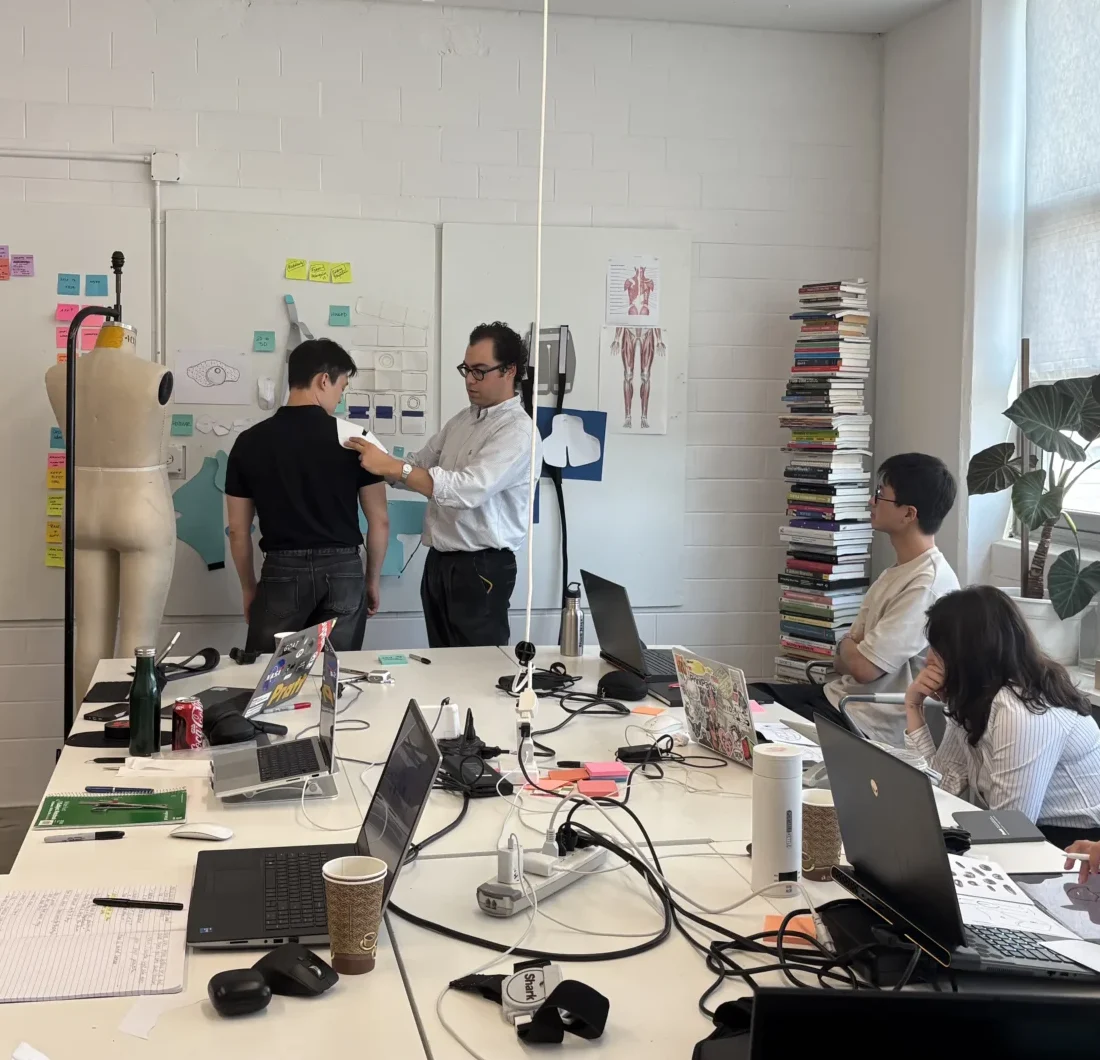
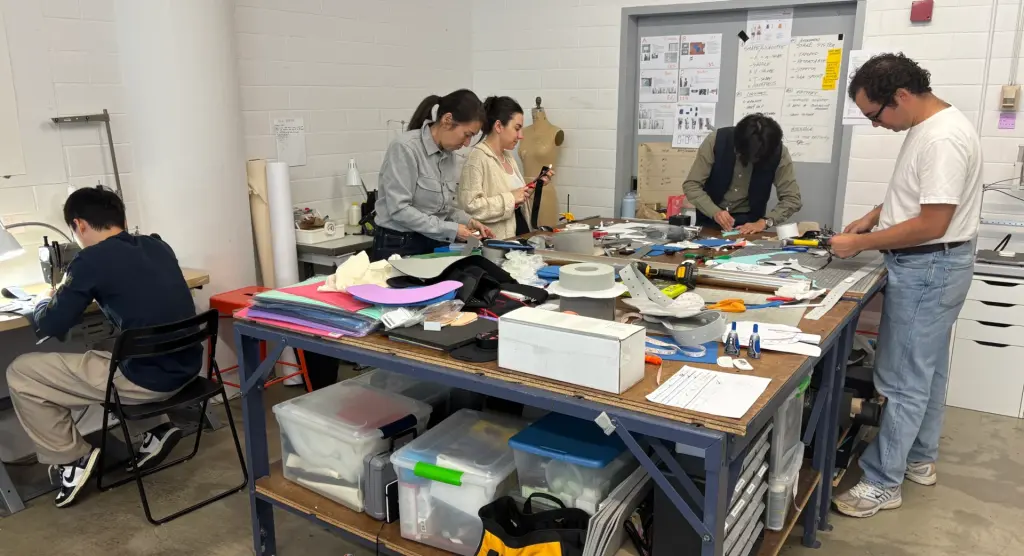
Interwoven Design Group team members reviewing a wearable prototype during a studio meeting, with anatomical references and design notes on the wall

At Interwoven Design, we operate at the intersection of soft goods, human factors, and performance-driven product design. Our team brings together expertise in textiles, ergonomics, and design to create wearable solutions that deliver therapeutic benefit while maintaining comfort and usability over extended periods of wear. From early-stage concept development through prototyping and refinement, our work focuses on translating clinical intent into products that people can incorporate into their lives with minimal friction.

In this Insight article, we explore the evolution of therapeutic wearables, examining how advances in materials and design are reshaping the category. We look at the key principles driving this shift and highlight the opportunities for innovation as medical and consumer expectations continue to converge.

From Treatment to Integration

Historically, therapies applied to the body have been ad hoc and temporary, something users put on for a defined period, often in response to pain, injury, or recovery. These products were designed around moments of intervention rather than continuous use. They served a purpose, but rarely integrated seamlessly into the flow of daily life. As a result, adherence was often inconsistent, limited not by efficacy, but by inconvenience and discomfort.

Today, therapeutic wearables are shifting toward a model of continuous, integrated support. Rather than being reserved for isolated moments of treatment, they are designed to move with the user throughout the day, supporting circulation during work, aiding recovery during rest, or maintaining therapeutic benefits during light activity. This evolution reflects a broader rethinking of how care is delivered; not as a discrete event, but as an ongoing condition that can be supported passively over time.

This shift expands both the opportunity and the responsibility for designers. Products must now function across a range of contexts—sitting, walking, working, and sleeping—without requiring constant adjustment. They must be adaptable, discreet, and resilient, capable of maintaining performance without interrupting the user’s routine. In this model, therapy becomes less about compliance and more about compatibility. The more naturally a product fits into daily life, the more effective it ultimately becomes.

Designing for Continuous Contact

As therapeutic wearables move toward all-day use, the nature of their interaction with the body fundamentally changes. These products are no longer worn briefly or intermittently; they remain in direct contact with the skin for extended periods, often across varying conditions of movement, temperature, and activity. This makes comfort not just a desirable feature, but a core component of functionality.

Designing for continuous contact requires a deep understanding of how materials behave against the body over time. Breathability becomes essential to prevent heat buildup and moisture retention, particularly in areas of compression or limited airflow. Weight must be minimized to reduce fatigue, while flexibility ensures that the product can adapt to movement without creating pressure points or restricting motion. Even subtle inconsistencies in fit or texture can become amplified over hours of wear, leading to irritation or disengagement.

The distribution of pressure across the body is another key consideration. Therapeutic wearables often rely on compression or stable contact to function effectively, but this must be carefully balanced to avoid discomfort. A product that is too loose risks losing efficacy, while one that is too tight can create friction, restrict circulation, or discourage use altogether. Achieving this balance requires thoughtful integration of form, material, and construction techniques.

The Softening of Medical Devices Through Material Innovation

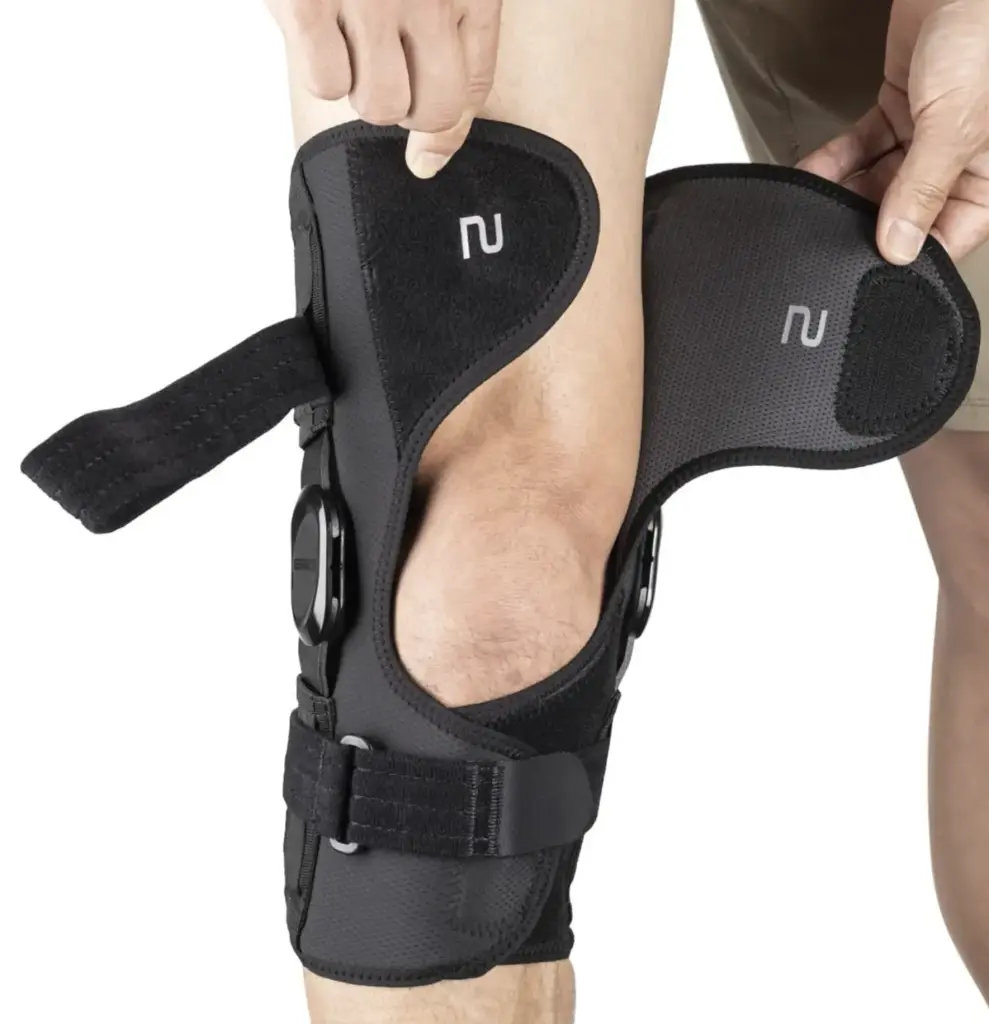
Breg knee brace designed by Interwoven Design Group.

One of the most significant shifts in therapeutic wearables is the transition from rigid, hardware-driven devices to soft, textile-based systems. Historically, medical products prioritized structural stability and clinical performance, often resulting in hard casings, bulky components, and strap-heavy constructions that signaled their function but limited their wearability. Today, advances in materials and fabrication are enabling a fundamentally different approach, one where softness, flexibility, and adaptability are not secondary features, but central to how the product performs.

This evolution is being driven in large part by innovation in textiles and material science. High-performance knits, engineered compression fabrics, and breathable mesh structures allow products to conform closely to the body while maintaining airflow and comfort over extended periods. These materials can stretch, recover, and distribute pressure in ways that rigid components cannot, creating a more responsive and personalized fit. At the same time, the integration of functional elements—such as embedded magnets, conductive fibers, or thermal-regulating layers—allows therapeutic benefits to be delivered directly through the material itself, rather than relying on external attachments or add-ons.

As a result, the boundary between product and garment is beginning to blur. Therapeutic wearables are increasingly designed as systems where structure, function, and material are fully integrated. Instead of layering technology onto the body, the material becomes the interface, carrying out therapeutic functions while maintaining a soft, unobtrusive presence. This shift reduces bulk, simplifies use, and enhances the overall experience of wearing the product.

There is also an important shift taking place in the way these wearables are perceived. As devices become softer and more refined, they move away from the visual language of clinical equipment and toward something more discreet and lifestyle-oriented. This not only improves comfort, but also reduces the stigma that can be associated with wearing medical devices in everyday settings. Products that feel and look like apparel are more likely to be worn consistently, which in turn improves their effectiveness.

Case Study: Rethinking Oxygen Monitoring with Moxy

As therapeutic wearables continue to evolve, products that successfully bridge performance, physiology, and wearability offer valuable insight into the future of the category. The Moxy Monitor is one such example: a wearable device designed to measure muscle oxygen saturation in real time, providing critical insight into how the body is performing and recovering under strain. While rooted in performance analytics, its design reflects many of the same principles shaping the broader shift toward more wearable, body-integrated therapeutic systems.

Design Objective

Translate complex physiological monitoring into a wearable format that can maintain accurate, continuous contact with the body while minimizing disruption to movement and comfort.

Key Features & Design Considerations

Compact, Body-Conforming Form Factor
The device is designed to sit close to the skin, reducing bulk and minimizing interference during activity. Its small footprint allows it to be worn across different muscle groups without restricting motion.

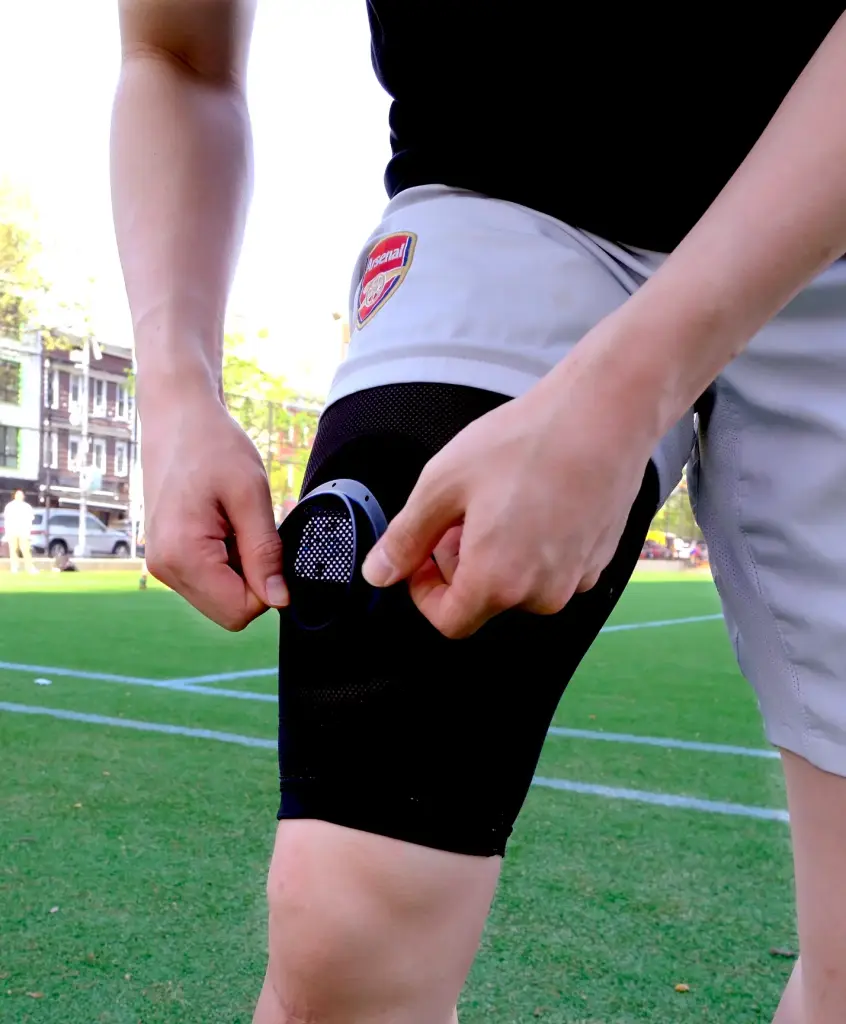
Wearable system for the Moxy Monitor, designed by Interwoven Design Group.

Soft Integration with the Body
Rather than relying on rigid mounting systems, Moxy is typically secured using soft straps or compression garments. This approach stabilizes the sensor while distributing pressure more evenly, improving both comfort and data consistency.

Lightweight Construction
A low-profile, lightweight build reduces fatigue during extended wear, making it suitable for use across training sessions, recovery periods, and longer durations of monitoring.

Breathability and Skin Compatibility
Because the device is worn directly against the body, it must accommodate heat, sweat, and movement. Pairing the sensor with breathable, skin-friendly materials helps maintain comfort and reduces the likelihood of irritation over time.

Secure Yet Flexible Fit
Maintaining accurate readings requires consistent contact, but not at the expense of comfort. The system balances compression and flexibility, ensuring the device stays in place while adapting to dynamic movement.

Design Insight

The effectiveness of a wearable like Moxy depends on more than just sensor accuracy, it relies on the product’s ability to remain comfortably in place over time. This reinforces a broader principle in therapeutic wearable design: performance is inseparable from wearability.

Devices like Moxy are no longer confined to controlled or clinical environments; they are used during training, recovery, and daily activity. This requires a design approach that prioritizes discretion, ease of use, and adaptability. The product must be simple to apply and remove, compatible with clothing, and unobtrusive in both form and appearance. By reducing visual and physical friction, and by aligning with the realities of how people move through their day, therapeutic wearables can achieve consistent use and deliver more meaningful results.

The Future: Therapy You Can Wear All Day

The future of therapeutic wearables lies in their ability to disappear into daily life while continuously delivering benefit. As materials become more advanced and technologies more compact, these products are evolving toward forms that feel less like devices and more like extensions of the body. Lightweight, breathable, and flexible systems will enable users to wear therapeutic solutions throughout the day—at work, in transit, during rest—without disruption or self-consciousness. In this model, therapy is no longer a scheduled activity, but an ambient layer of support that moves with the user.

As these products become more integrated into everyday life, expectations will continue to rise. Users will demand solutions that are not only clinically effective, but also comfortable, discreet, and aligned with their personal routines. For design teams, this evolution represents a significant opportunity. The challenge is no longer simply to create functional devices, but to develop wearable systems that balance medical efficacy with human-centered design. This requires a holistic approach, one that considers how products interact with the body over time, how they integrate into real-world contexts, and how they communicate value without relying on overtly clinical cues.

At Interwoven Design, this is where we focus our partnership with clients. We work to translate clinical intent into wearable solutions that prioritize comfort, adaptability, and long-duration use, leveraging our expertise in soft goods, materials, and human factors. Through iterative prototyping, wear testing, and refinement, we help ensure that therapeutic performance is delivered through products that people can and will wear consistently. Interwoven Design is a design consultancy that is positioned at the intersection of soft goods and wearable technology, creating products that function with the body and offer comfort as well as the superb performance that arises through the innovative incorporation of rigid, often electronic and responsive elements. Sign up for our newsletter and follow us on Instagram and LinkedIn for design news, multi-media recommendations, and to learn more about product design and development!