A Q&A with James Rudolph, Industrial Design Educator and Founder of Rudolph Design Studio
Spotlight articles shine a light on designers, engineers, researchers, and creative thinkers we admire and the ideas shaping design today. This month, as students head back to school, we’re turning to industrial design education with a provocative question: Are we teaching young designers the right things?

We sat down with James Rudolph, Paul Down Assistant Professor of Industrial Design at the University of Notre Dame and founder and principal designer of Rudolph Design Studio. With more than 20 years of industry experience, James brings the perspective of an active practitioner to the classroom.
Our conversation ranged from AI-generated renderings to the enduring value of making, craftsmanship, and putting an idea into someone else’s hands. We talked about what students may be spending too much time learning, whether designers have become too focused on solving problems, and James’s growing interest in what he calls “speculative design for the real world.”
Q:
What’s one skill that students obsess over right now that you don’t think is going to matter as much in five years? And conversely, what’s one “old-school” skill that you think is going to become even more valuable?
A:
A lot of students are obsessed with being able to render at a fidelity that creates engaging, compelling, interesting visuals. In the past, that was such an important skill. If you’re a young designer, your concepts get more attention if they’re visually compelling, have high contrast and perfect perspective, and integrate color, material, and texture in a compelling way.
Some students get stuck on that to the detriment of thinking about the gesture, the overall form, and the general first impression of a physical thing. AI can help young designers create stronger, more compelling visualizations. The designer, in turn, brings the critical thinking and analysis needed to give those visualizations meaning and direction.
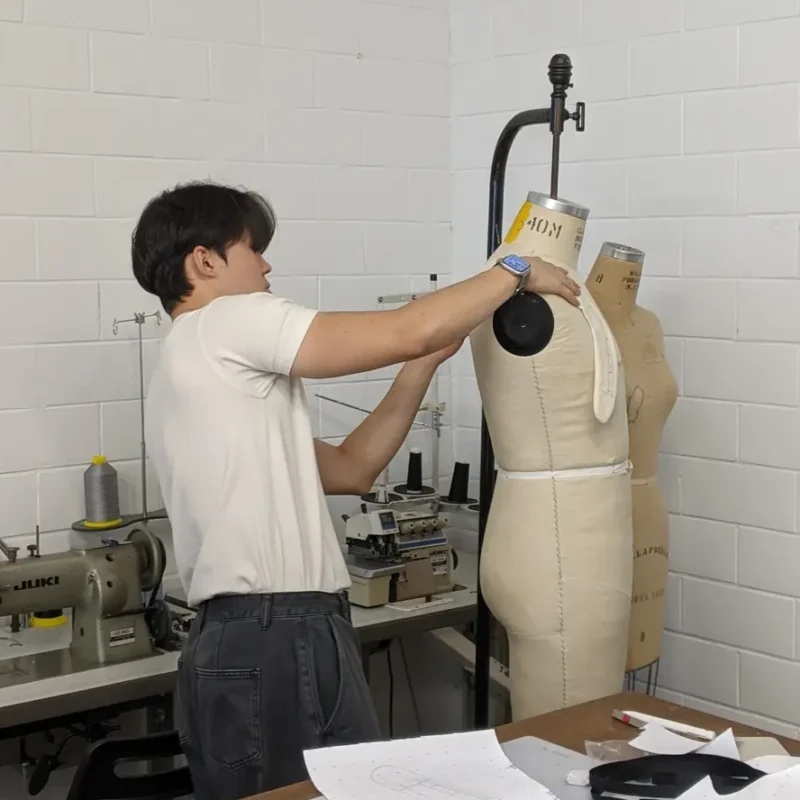
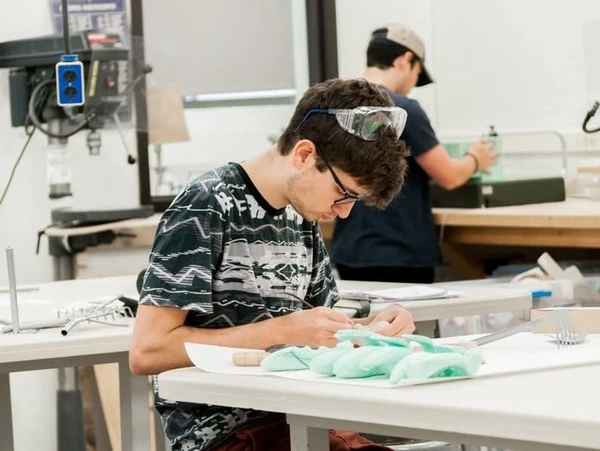
Conversely, the more traditional industrial design skill of model making and physical making is an area where I think we could all use a little more time. It doesn’t have to be hand carving, but it has to be the ability to show your idea in a three-dimensional form and put it in somebody’s hand.
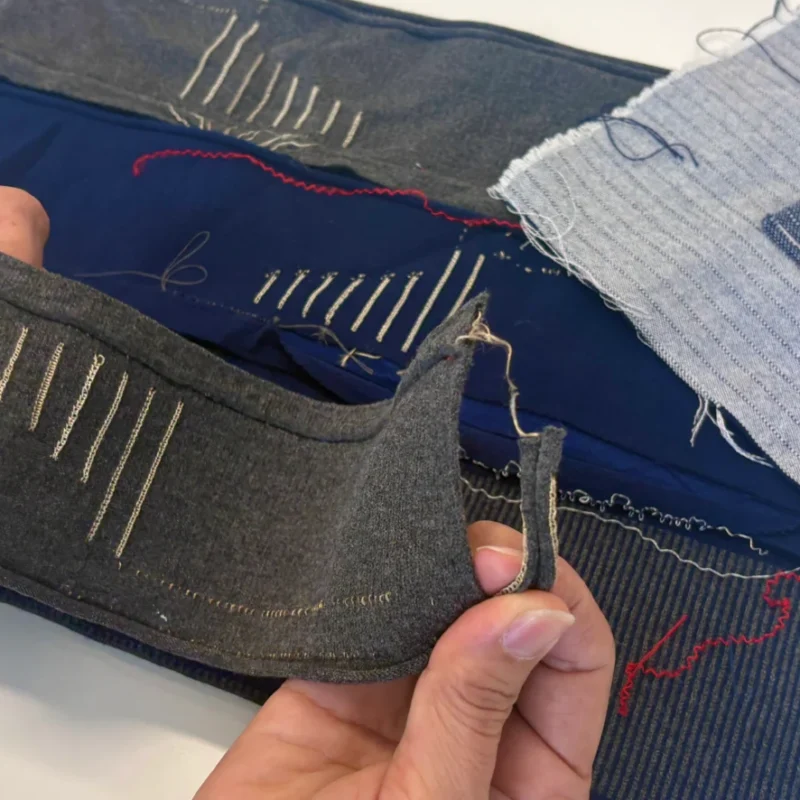
And it’s not only model making, but craftsmanship. People respond to craftsmanship. Taking the time to make well-crafted, low-fidelity mockups allows people to evaluate the things you want them to evaluate—the ergonomics, the gesture, the space it takes up, the volume—rather than looking at how poorly something is made.
Q:
Is industrial design education keeping pace with the profession—or is it still preparing students for a version of design that no longer exists?
A:
My research and practice are closely intertwined. I continue to work with industry clients, particularly in healthcare, where I collaborate with engineers, scientists, and researchers to understand people and their needs and bring that perspective to the development of critical technologies. Those experiences also shape my research, giving me an opportunity to reflect and write about the role design can play in advancing healthcare innovation.
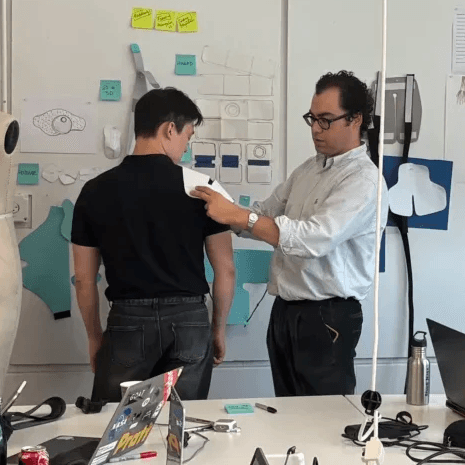
Those challenges, processes, and methodologies that I practice are what I try to bring into the classroom. With younger students, I provide more constraints so they can learn some of the fundamentals. As they progress, I give them fewer constraints and more of a framework for the types of questions they should be answering and the work they should be doing from the beginning of a project through the end.
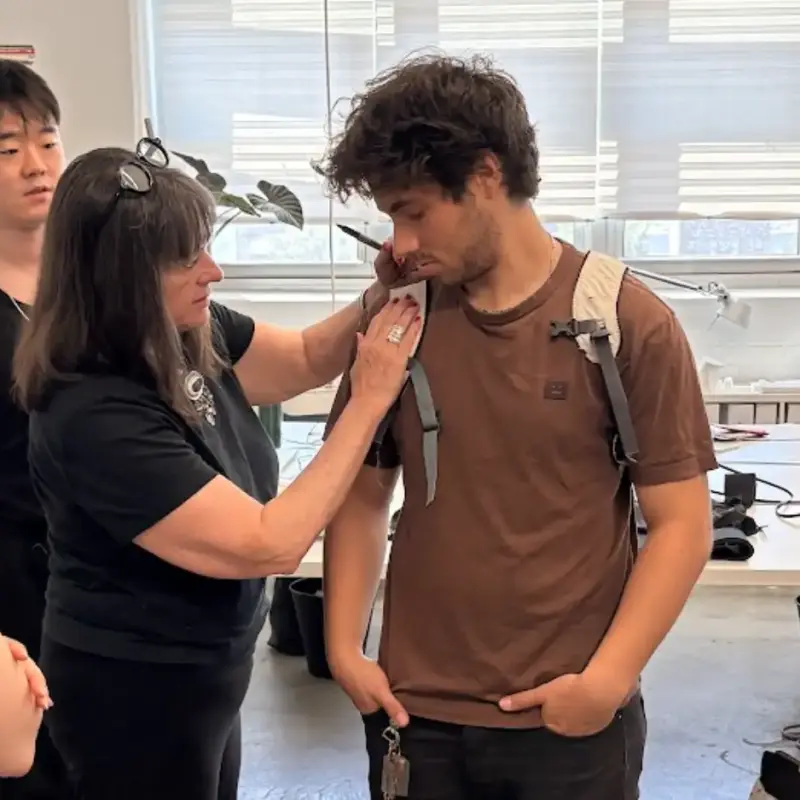
In some ways, I guess it’s going back to an apprentice-style model of education: learning through doing, learning through dialogue, learning through feedback, and learning through interaction with physical things.
Q:
Has making become optional? What role does physical making still play in industrial design education?
A:
For me, it’s still so critical. The act of making has obviously expanded. When I was in school, it was about working directly with materials—shaping foam, building three-dimensional forms in the wood shop, and learning the fundamentals of form through craft. It meant creating physical objects you could hold, interact with, and put into other people’s hands.
That’s still so critical to industrial design and the physical world, but the ways in which we can make things has grown. Now we’re 3D printing a lot. You can iterate quicker, create quick mockups in CAD, and add more content to your models through displays or digital experiences.
I think making is absolutely critical. It’s part of our approach to research and understanding people. You learn by making in a couple of different ways. You learn yourself through a kind of dialogue with the three-dimensional object, and you respond as a designer to what you’re making. But the real power is being able to learn from others through your making.

Q:
Are we graduating designers who know how to make things—or designers who know how to present things really well?
A:
I think every school is a little bit different. Some schools are certainly doing a better job of making sure that the craft of design is still at the forefront of their curriculum. A lot of it has to do with the expertise of the faculty. We tend to teach what we know, so a lot has to do with the values of the different departments and what areas of design they want to highlight.
There are certainly programs that excel at really strong presentations and portfolios—the ability to tell a compelling narrative through the visual storytelling of their projects. There may be some truth to the trend that a lot of the content in those portfolios tends to be more rendering-heavy, more digital-heavy, and less prototyping-heavy.
But I still see a lot of portfolios that show early, low-fidelity prototyping. I love to see that. I think it’s still paramount to the way designers learn from their own mistakes.
Q:
How do you define design research, what impact does it have, and how might we encourage more students to become design researchers?
A:
For me, design research is really about understanding people: their needs, their wants, their desires. Then, if you move beyond that, thinking about people in terms of social dynamics, behavioral dynamics, and common cognitive things that you need to think through from a human factors perspective.
It’s understanding people within a context, and that means understanding what their common goals, activities, and tasks are. When we start a design research project in my class, it’s about understanding a group or groups of people that have a shared task, activity, or goal.
At Notre Dame, we put a heavy emphasis on design research. In fact, one of the areas of feedback we sometimes receive is that we graduate students who almost have too much design research and less design refinement on the back end.
We start with an area of inquiry and go through the process of: What are the questions we have? How do we frame a research effort around that? What are some of the questions you might want to ask? What are some of the observations you might want to make? What type of people should you include to be more representative of a broader population?
Then, on the back end, how do you turn those observations into insights? How do you communicate what’s important—what you found that was interesting, compelling, and meaningful—to whoever your audience is?
Q:
Has industrial design become too focused on solving problems? Is there still room for work that’s speculative, poetic, or simply asks different types of questions?
A:
I certainly hope so. I grapple with this issue myself all the time. I have a real appreciation for speculative design work and for design work that is not intended only to inform products or practical things in your life. The idea of using the methods, skills, and tools of design to inform dialogue and debate has always been interesting to me. In fact, I wanted to be an artist originally. I went to school for fine art. So the idea of using the object to solicit or evoke dialogue and critical thinking is really compelling to me.
I think that’s a way to inspire students to think beyond practical objects or objects that are meant just to bring utility to your life—introducing projects intended to provoke, prompt, or incite dialogue. There’s this whole other world of design that takes place in art galleries, community settings, and social settings. Students can use their skills in more ways than just developing utilitarian products.
You also have the freedom not to design something. Maybe a product isn’t the right solution. Maybe it’s a system or service, or maybe it’s meant for a gallery or museum setting.
Q:
Everyone is talking about AI replacing designers. Is that the wrong question? Should we really be worried, or should we be excited?
A:
I struggle with AI a little bit because I haven’t found a way in my practice to use it successfully. I go to conferences and watch demonstrations of different workflows for incorporating AI into the design process, and at the end it’s like a coffee maker shrouded in camouflage. The forms don’t make sense and there’s no thought around the workflow or usability.
For more complex healthcare devices—wearables and things that have surgical robotics-like complexity—the results initially look compelling. They’re rendered very nicely, the forms look real, and they have compelling contrast and lighting. But I haven’t been able to use it in a way where I see real value. I can sit down with my partner and brainstorm 20 more reasonable, meaningful ideas. Maybe they’re not perfect or rendered very well, but they actually address the issues that we want to solve.

It’s not to say that AI isn’t going to be there soon. I think it will become a great tool. But it won’t replace your ability to analyze and critique from a human perspective. I’m not scared. I’m frustrated with my own inability to use it successfully. It falls on me to continue to use the tools, understand the tools, and introduce them when I think they’re appropriate.
Q:
You mentioned speculative design earlier, and it’s clearly something you’re thinking about a lot. Where do you see speculative design fitting into the future of industrial design practice and education?
A:
One area that you might have seen me light up about is this idea of speculative design. Early in my career, my research was heavily focused on traditional ways of thinking about design: How do we better understand people’s needs? How do we define needs? How do we create procedures and processes to translate those needs into user-need statements and then into product requirements?
But my own research is going back to what I was more interested in as a student, which is this idea of speculative design. I’ve been rereading Victor Papanek’s Design for the Real World and also reading about speculative work, speculative everything, and discursive design. They often talk to each other as if they’re very different camps—speculative design on one side and traditional industrial design, where we make things useful, practical, and usable, on the other.
Why do they have to be so different? I think there’s room for both, and both camps can learn from each other. I’ve got this idea I’m calling “speculative design for the real world.” How do you leverage the methodologies and thinking of speculative design, and how can those things inform real-world initiatives—important societal and cultural initiatives?
When you think through the lens of speculative design, it opens up an entirely new range of possibilities for where the research might lead. You don’t have to constrain yourself to a thing. It could be an experience. It could be an exhibit. It could be a social initiative. It opens a lot of opportunities for different types of solutions that, as an industrial designer, you might not have thought of at the onset.
–
Check out the rest of our Spotlight series to hear more from leaders in the design industry. Sign up for our newsletter and follow us on Instagram and LinkedIn for design news, multi-media recommendations, and to learn more about product design and development!