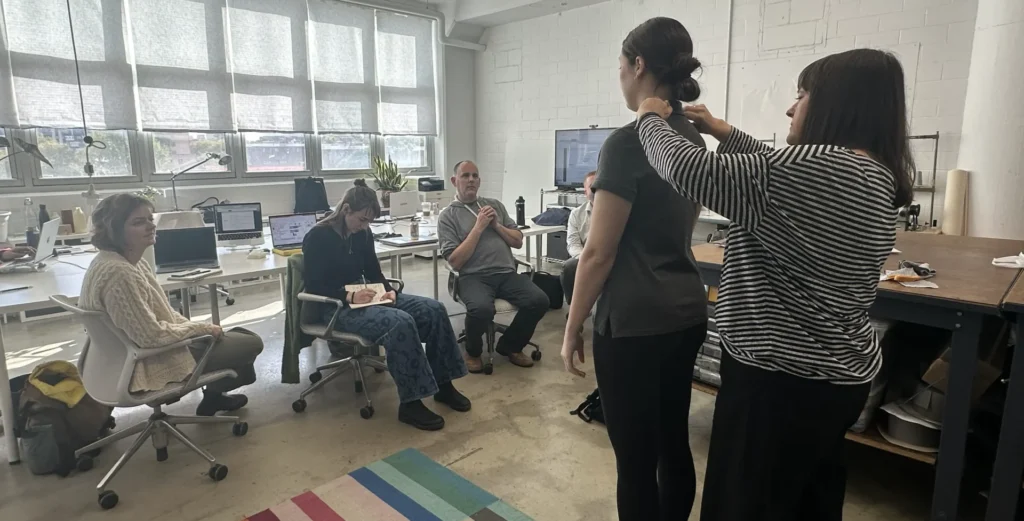
Beyond the Portfolio: Starting a Career in Industrial Design

Beyond the Portfolio: Starting a Career in Industrial Design

Product design is evolving rapidly. Across industries, the boundaries between physical products, digital experiences, and wearable systems are becoming increasingly fluid, creating new opportunities for designers. Designers today are expected to think beyond form alone, considering how products function within broader systems of manufacturing, interaction, human behavior, and experience.

For new graduates entering the field, this moment is both exciting and challenging. The range of possible career paths has expanded dramatically, but so have expectations. Many emerging designers find themselves asking the same questions: How do I stand out in a competitive market? What kind of portfolio do design firms actually want to see? How do I gain experience when most opportunities seem to require it already? Navigating the transition from school to industry can feel uncertain, particularly as the profession itself continues to evolve.

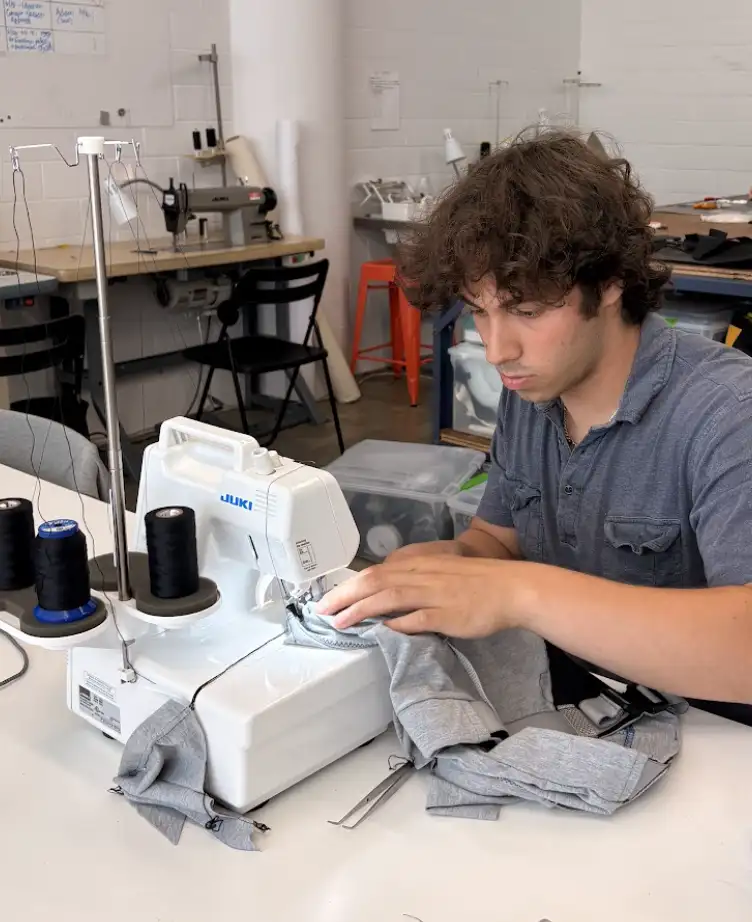
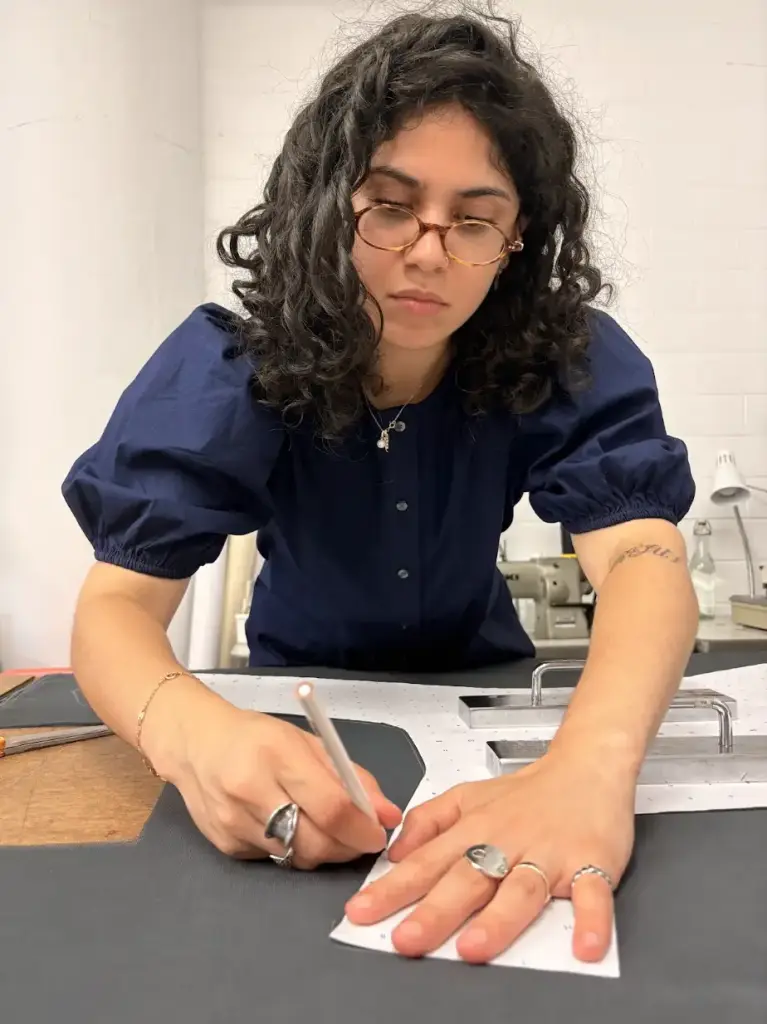
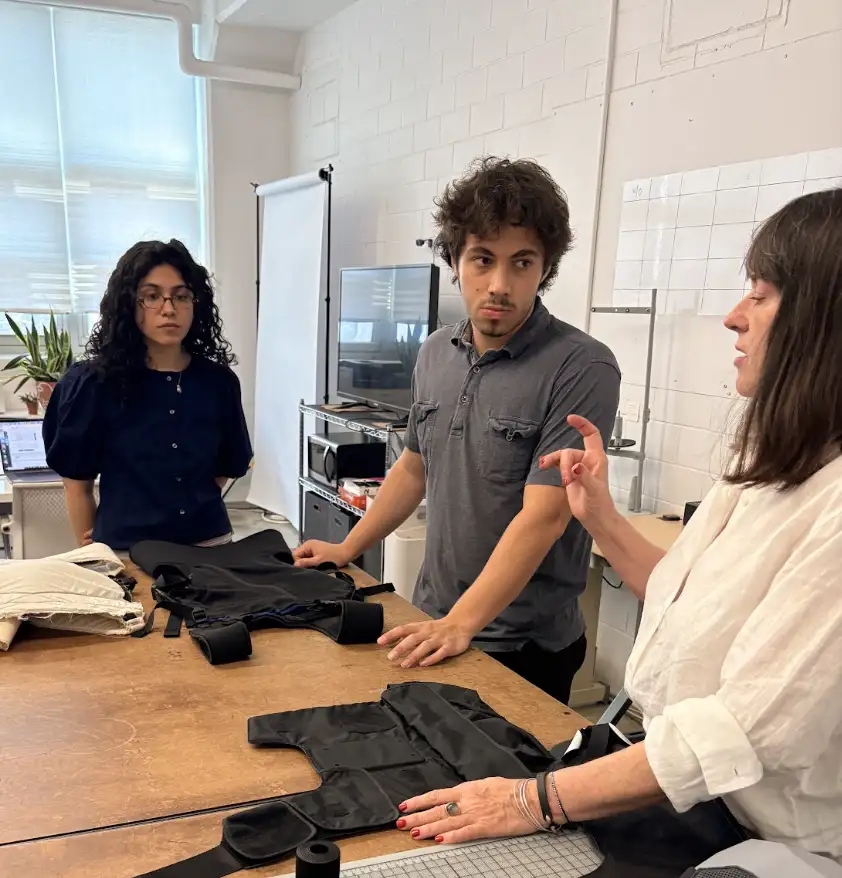
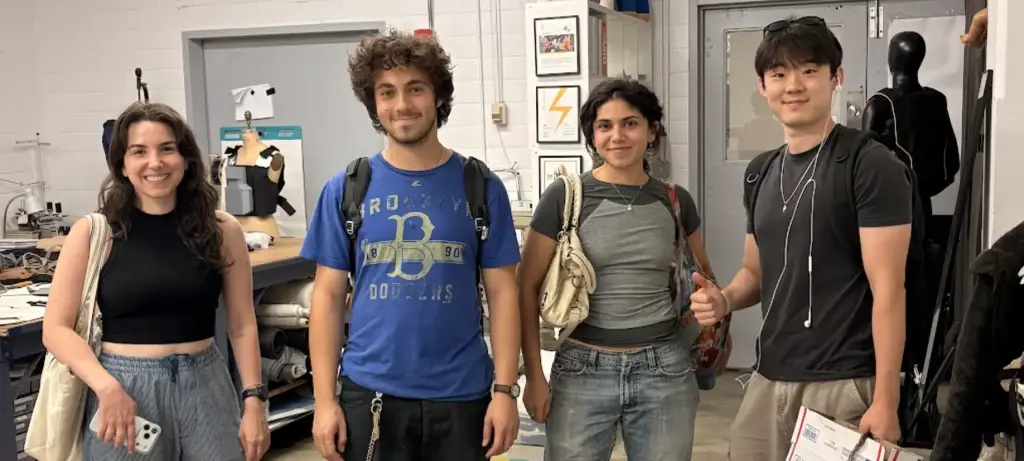
At Interwoven Design, we seek new industrial design interns every year, giving us a firsthand perspective on what differentiates successful candidates in today’s hiring landscape. In this Insight article, we explore what studios are actually looking for in new graduates, and how emerging designers can position themselves more strategically as they search for internships and full-time roles. We also examine the power of a point of view, and how to develop meaningful industry connections.

Develop a Point of View

A quality that immediately distinguishes strong emerging designers is the presence of a clear point of view. In a highly competitive hiring landscape, portfolios can begin to look visually similar, featuring comparable software skills, renderings, and project structures. What often separates memorable candidates is a visible sense of curiosity, direction, and intellectual engagement with the kinds of problems they want to solve.

Developing a point of view does not mean locking yourself into a narrow specialty early in your career. One of the advantages of being a new graduate is the freedom to explore different industries, methodologies, and interests. However, employers are often drawn to candidates who demonstrate genuine enthusiasm for particular areas of design, whether that involves wearable technology, medical devices, soft goods, sustainable packaging, furniture, transportation, consumer electronics, or emerging material systems.

A point of view is often communicated subtly through project choices, research topics, material explorations, and even the way a portfolio is organized. A student who consistently explores human-centered healthcare solutions, for example, signals a different perspective than someone focused heavily on speculative consumer electronics or sustainable systems. Neither direction is inherently better, but each tells a story about what motivates the designer and how they think about the role of design in the world.

Developing a point of view is not the same as building a personal brand around aesthetics alone. While visual consistency can be valuable, firms are often more interested in conceptual consistency; evidence that a designer is asking meaningful questions and engaging thoughtfully with a set of ideas over time. This could involve an interest in emotional durability, accessibility, wearable systems, manufacturing innovation, circular design, or the relationship between digital and physical experiences. These through-lines create coherence across projects and help transform a portfolio from a collection of assignments into a reflection of a designer’s perspective. Candidates who can clearly articulate what excites them about design tend to create more engaging and memorable discussions. Employers are not simply hiring for current projects; they are hiring people they can imagine growing alongside future opportunities and challenges.

Understand the System

Once a designer has developed a point of view and a body of work that reflects how they think, the next challenge is often not capability, it is visibility. Many strong candidates struggle because they are unclear about where opportunities exist and how to position themselves within a highly fragmented hiring landscape. Unlike more centralized industries, product design opportunities rarely exist in a single, predictable place. While large companies and well-known studios do post openings on public job boards, many roles are filled through more direct or informal channels. Studio websites remain one of the most consistent sources of opportunities, particularly for internships, where smaller teams often manage hiring directly. Alumni networks also play a significant role, as many designers enter studios through personal or academic connections that extend beyond formal application systems.

For emerging designers, this shifts the application process from reactive to proactive. Rather than waiting for the “right” posting to appear, successful candidates often identify studios whose work aligns with their interests and reach out directly. In these cases, specificity matters. Generic applications tend to disappear quickly, while targeted outreach that demonstrates an understanding of a studio’s focus—whether that is soft goods, wearable technology, consumer electronics, or medical devices—immediately signals intent and relevance.

Timing also plays a role. Many studios operate on flexible hiring cycles, especially for internships. Applying early, even when positions are not formally advertised, can be advantageous, as teams often keep strong candidates in mind when future projects arise. In some cases, opportunities are created in response to interest rather than pre-existing job postings, particularly in smaller or mid-sized practices. Translating work into opportunity is not just about applying widely; it is about applying strategically. 

Design Your Outreach

While the portfolio is important, even strong portfolios can go unnoticed if they are not introduced effectively. The reality is that most studios are not short on capable applicants; they are short on time. What often determines whether a portfolio is reviewed in detail is not its quality alone, but how it first enters a studio’s attention. The initial email, message, or application note is a filter that determines if your work is reviewed at all. A well-crafted introduction does not need to be long or overly polished, but it does need to be intentional. Studios are looking for signals of clarity: who you are, what you are interested in, and why you are reaching out to them specifically.

Effective outreach in design is itself an act of design thinking. It requires editing, prioritization, and an understanding of your audience. A strong message typically introduces the designer in a few sentences, highlights one or two relevant projects, and clearly explains why the studio’s work is meaningful to them.

The goal is not to summarize an entire portfolio, but to create enough alignment and curiosity for the reviewer to click through. What tends to weaken applications is not lack of talent, but lack of specificity. Generic messages sent to dozens of studios often read as disconnected from the work they reference. In contrast, even a short message that references a studio’s recent project, design focus, or material approach immediately establishes relevance. This demonstrates that the applicant has taken the time to understand the practice they are engaging with, which is often as important as the work itself.

Outreach does not need to be formal to be effective, but it should be professional, direct, and respectful of the reader’s time. Studios are often reviewing applications between project deadlines, so clarity and brevity are not just stylistic choices, they are practical advantages. This activity, done well, is an extension of a design practice; it requires understanding context, communicating intent, and guiding someone through an experience in a way that feels effortless and considered.

Network for Exposure

While networking can feel transactional at its worst, it should be about building visibility, familiarity, and trust over time. In product design especially, hiring is rarely a single-moment decision. Studios tend to hire people they have seen before, heard about through peers, or encountered multiple times in different contexts. This means that networking is less about one perfect interaction and more about becoming a recognizable presence within the design ecosystem. Exposure, consistency, and clarity of interest matter more than any single conversation. For emerging designers, this shift in perspective is critical. Instead of approaching networking as a performance or a pitch, it becomes an opportunity to engage with the industry in a more natural and ongoing way. 

Here are some practical ways to build meaningful exposure:

  • Attending portfolio reviews hosted by organizations such as IDSA, universities, and design festivals.
  • Reaching out to alumni who are working in studios you admire, particularly those a few years ahead in their careers
  • Engaging in informational conversations with junior and mid-level designers, who are often more accessible and candid about their experiences
  • Participating in design events, talks, and workshops where informal conversations can lead to longer-term recognition
  • Maintaining a consistent presence on platforms like LinkedIn or Instagram by sharing process work, sketches, or project thinking rather than only final renders
  • Contributing to student exhibitions, competitions, or collaborative projects that extend your visibility beyond your immediate academic environment
  • Signing up for the mailing lists of studios and companies you admire and watching for open houses and studio events

Over time, these actions build familiarity. A studio may not respond immediately to a message or application, but repeated exposure to a designer’s name, work, or ideas can create recognition when opportunities arise later. In many cases, hiring decisions are influenced by this accumulated awareness as much as by formal applications. Networking in design is about showing up consistently within the spaces where design conversations are happening, contributing meaningfully when possible, and allowing your perspective to become part of the broader dialogue.

Build Momentum Over Time

Unlike fields with clearly defined entry points, design careers often unfold unevenly; shaped by timing, exposure, relationships, portfolio development, and a degree of persistence that extends beyond any single application cycle. For emerging designers, this can feel uncertain at first, especially when comparing their progress to seemingly more direct success stories. In reality, momentum matters more than a perfect starting point. Each project, conversation, internship, and piece of outreach contributes to a broader trajectory. Designers who remain engaged—continuing to refine their portfolios, explore new ideas, and participate in the broader design community—tend to create more opportunities for themselves over time. 

For new graduates entering the field today, the opportunity lies not in finding the “correct” path, but in actively creating one—through work, relationships, and a continued commitment to evolving as a designer. Studios are looking for evidence of how candidates think, collaborate, communicate, and solve problems. Technical skills remain important, but process, adaptability, trustworthiness, and curiosity often determine which candidates stand out. At Interwoven Design, we find that the most compelling designers are rarely defined by a single aesthetic or specialty. Instead, they distinguish themselves through clarity of thought, engagement with the design process, and the ability to communicate ideas effectively.

Interwoven Design is a design consultancy that is positioned at the intersection of soft goods and wearable technology, creating products that function with the body and offer comfort as well as the superb performance that arises through the innovative incorporation of rigid, often electronic and responsive elements. Sign up for our newsletter and follow us on Instagram and LinkedIn for design news, multi-media recommendations, and to learn more about product design and development!


From Clinical to Comfortable: The Future of Therapeutic Wearables

From Clinical to Comfortable: The Future of Therapeutic Wearables

For decades, devices designed to deliver therapy to the body have been defined by function first and everything else second. Braces, wraps, compression systems, and externally applied treatments have historically been rigid, cumbersome, and visually clinical, often interrupting daily life as much as they support recovery. While effective, many of these solutions have required compromise, asking users to tolerate discomfort in exchange for benefit.

Today, that equation is changing. A new generation of therapeutic wearables is emerging; one that prioritizes not only efficacy, but also comfort, flexibility, and long-term usability. From magnetic therapy wraps designed to reduce pain and inflammation to soft, body-conforming systems that support circulation and oxygenation, these products are evolving into forms that feel lighter, more breathable, and more intuitive to wear. Increasingly, therapy is no longer something users engage with intermittently, it is something that integrates seamlessly into everyday life.

This shift is being driven by advances in soft goods, material innovation, and a growing expectation that products designed for the body should work with it, not against it. As therapeutic wearables move out of strictly clinical settings and into daily routines, their success depends not only on what they do, but on how they feel; how they move, how they breathe, and how naturally they fit into the rhythms of the user.

Interwoven Design Group team members reviewing a wearable prototype during a studio meeting, with anatomical references and design notes on the wall

At Interwoven Design, we operate at the intersection of soft goods, human factors, and performance-driven product design. Our team brings together expertise in textiles, ergonomics, and design to create wearable solutions that deliver therapeutic benefit while maintaining comfort and usability over extended periods of wear. From early-stage concept development through prototyping and refinement, our work focuses on translating clinical intent into products that people can incorporate into their lives with minimal friction.

In this Insight article, we explore the evolution of therapeutic wearables, examining how advances in materials and design are reshaping the category. We look at the key principles driving this shift and highlight the opportunities for innovation as medical and consumer expectations continue to converge.

From Treatment to Integration

Historically, therapies applied to the body have been ad hoc and temporary, something users put on for a defined period, often in response to pain, injury, or recovery. These products were designed around moments of intervention rather than continuous use. They served a purpose, but rarely integrated seamlessly into the flow of daily life. As a result, adherence was often inconsistent, limited not by efficacy, but by inconvenience and discomfort.

Today, therapeutic wearables are shifting toward a model of continuous, integrated support. Rather than being reserved for isolated moments of treatment, they are designed to move with the user throughout the day, supporting circulation during work, aiding recovery during rest, or maintaining therapeutic benefits during light activity. This evolution reflects a broader rethinking of how care is delivered; not as a discrete event, but as an ongoing condition that can be supported passively over time.

This shift expands both the opportunity and the responsibility for designers. Products must now function across a range of contexts—sitting, walking, working, and sleeping—without requiring constant adjustment. They must be adaptable, discreet, and resilient, capable of maintaining performance without interrupting the user’s routine. In this model, therapy becomes less about compliance and more about compatibility. The more naturally a product fits into daily life, the more effective it ultimately becomes.

Designing for Continuous Contact

As therapeutic wearables move toward all-day use, the nature of their interaction with the body fundamentally changes. These products are no longer worn briefly or intermittently; they remain in direct contact with the skin for extended periods, often across varying conditions of movement, temperature, and activity. This makes comfort not just a desirable feature, but a core component of functionality.

Designing for continuous contact requires a deep understanding of how materials behave against the body over time. Breathability becomes essential to prevent heat buildup and moisture retention, particularly in areas of compression or limited airflow. Weight must be minimized to reduce fatigue, while flexibility ensures that the product can adapt to movement without creating pressure points or restricting motion. Even subtle inconsistencies in fit or texture can become amplified over hours of wear, leading to irritation or disengagement.

The distribution of pressure across the body is another key consideration. Therapeutic wearables often rely on compression or stable contact to function effectively, but this must be carefully balanced to avoid discomfort. A product that is too loose risks losing efficacy, while one that is too tight can create friction, restrict circulation, or discourage use altogether. Achieving this balance requires thoughtful integration of form, material, and construction techniques.

The Softening of Medical Devices Through Material Innovation

Breg knee brace designed by Interwoven Design Group.

One of the most significant shifts in therapeutic wearables is the transition from rigid, hardware-driven devices to soft, textile-based systems. Historically, medical products prioritized structural stability and clinical performance, often resulting in hard casings, bulky components, and strap-heavy constructions that signaled their function but limited their wearability. Today, advances in materials and fabrication are enabling a fundamentally different approach, one where softness, flexibility, and adaptability are not secondary features, but central to how the product performs.

This evolution is being driven in large part by innovation in textiles and material science. High-performance knits, engineered compression fabrics, and breathable mesh structures allow products to conform closely to the body while maintaining airflow and comfort over extended periods. These materials can stretch, recover, and distribute pressure in ways that rigid components cannot, creating a more responsive and personalized fit. At the same time, the integration of functional elements—such as embedded magnets, conductive fibers, or thermal-regulating layers—allows therapeutic benefits to be delivered directly through the material itself, rather than relying on external attachments or add-ons.

As a result, the boundary between product and garment is beginning to blur. Therapeutic wearables are increasingly designed as systems where structure, function, and material are fully integrated. Instead of layering technology onto the body, the material becomes the interface, carrying out therapeutic functions while maintaining a soft, unobtrusive presence. This shift reduces bulk, simplifies use, and enhances the overall experience of wearing the product.

There is also an important shift taking place in the way these wearables are perceived. As devices become softer and more refined, they move away from the visual language of clinical equipment and toward something more discreet and lifestyle-oriented. This not only improves comfort, but also reduces the stigma that can be associated with wearing medical devices in everyday settings. Products that feel and look like apparel are more likely to be worn consistently, which in turn improves their effectiveness.

Case Study: Rethinking Oxygen Monitoring with Moxy

As therapeutic wearables continue to evolve, products that successfully bridge performance, physiology, and wearability offer valuable insight into the future of the category. The Moxy Monitor is one such example: a wearable device designed to measure muscle oxygen saturation in real time, providing critical insight into how the body is performing and recovering under strain. While rooted in performance analytics, its design reflects many of the same principles shaping the broader shift toward more wearable, body-integrated therapeutic systems.

Design Objective

Translate complex physiological monitoring into a wearable format that can maintain accurate, continuous contact with the body while minimizing disruption to movement and comfort.

Key Features & Design Considerations

Compact, Body-Conforming Form Factor
The device is designed to sit close to the skin, reducing bulk and minimizing interference during activity. Its small footprint allows it to be worn across different muscle groups without restricting motion.

Wearable system for the Moxy Monitor, designed by Interwoven Design Group.

Soft Integration with the Body
Rather than relying on rigid mounting systems, Moxy is typically secured using soft straps or compression garments. This approach stabilizes the sensor while distributing pressure more evenly, improving both comfort and data consistency.

Lightweight Construction
A low-profile, lightweight build reduces fatigue during extended wear, making it suitable for use across training sessions, recovery periods, and longer durations of monitoring.

Breathability and Skin Compatibility
Because the device is worn directly against the body, it must accommodate heat, sweat, and movement. Pairing the sensor with breathable, skin-friendly materials helps maintain comfort and reduces the likelihood of irritation over time.

Secure Yet Flexible Fit
Maintaining accurate readings requires consistent contact, but not at the expense of comfort. The system balances compression and flexibility, ensuring the device stays in place while adapting to dynamic movement.

Design Insight

The effectiveness of a wearable like Moxy depends on more than just sensor accuracy, it relies on the product’s ability to remain comfortably in place over time. This reinforces a broader principle in therapeutic wearable design: performance is inseparable from wearability.

Devices like Moxy are no longer confined to controlled or clinical environments; they are used during training, recovery, and daily activity. This requires a design approach that prioritizes discretion, ease of use, and adaptability. The product must be simple to apply and remove, compatible with clothing, and unobtrusive in both form and appearance. By reducing visual and physical friction, and by aligning with the realities of how people move through their day, therapeutic wearables can achieve consistent use and deliver more meaningful results.

The Future: Therapy You Can Wear All Day

The future of therapeutic wearables lies in their ability to disappear into daily life while continuously delivering benefit. As materials become more advanced and technologies more compact, these products are evolving toward forms that feel less like devices and more like extensions of the body. Lightweight, breathable, and flexible systems will enable users to wear therapeutic solutions throughout the day—at work, in transit, during rest—without disruption or self-consciousness. In this model, therapy is no longer a scheduled activity, but an ambient layer of support that moves with the user.

As these products become more integrated into everyday life, expectations will continue to rise. Users will demand solutions that are not only clinically effective, but also comfortable, discreet, and aligned with their personal routines. For design teams, this evolution represents a significant opportunity. The challenge is no longer simply to create functional devices, but to develop wearable systems that balance medical efficacy with human-centered design. This requires a holistic approach, one that considers how products interact with the body over time, how they integrate into real-world contexts, and how they communicate value without relying on overtly clinical cues.

At Interwoven Design, this is where we focus our partnership with clients. We work to translate clinical intent into wearable solutions that prioritize comfort, adaptability, and long-duration use, leveraging our expertise in soft goods, materials, and human factors. Through iterative prototyping, wear testing, and refinement, we help ensure that therapeutic performance is delivered through products that people can and will wear consistently. Interwoven Design is a design consultancy that is positioned at the intersection of soft goods and wearable technology, creating products that function with the body and offer comfort as well as the superb performance that arises through the innovative incorporation of rigid, often electronic and responsive elements. Sign up for our newsletter and follow us on Instagram and LinkedIn for design news, multi-media recommendations, and to learn more about product design and development!

A Q&A with India Pearlman, Packaging Designer for Beauty and Wellness

A Q&A with India Pearlman, Packaging Designer for Beauty and Wellness

Spotlight articles shine a light on designers and engineers we admire, asking leaders in the field about their work and their creative journey. This month’s Spotlight focuses on the world of wellness and beauty through the lens of India Pearlman, a packaging designer whose work sits at the intersection of industrial design, branding, and product experience.

india pearlman spotlight portrait
India Pearlman, packaging designer based in New York and Pratt Institute graduate.

A graduate of Pratt Institute, India brings a distinctly three-dimensional, systems-driven mindset to a field often perceived as purely graphic. Her approach reflects a broader shift in design—where packaging is no longer just a container, but part of a larger ecosystem shaping how products are experienced, displayed, and lived with over time.

We spoke with India about how she found her way into packaging, how industrial design continues to inform her work, and the details she notices that most people miss.

Q:

Can you tell us a bit about your background and what led you into the wellness and beauty space?

A:

I’m a designer based in Queens, currently living in Ridgewood. I graduated from Pratt in 2020 with a degree in industrial design, which was honestly a wild time to enter the workforce. A lot of traditional industrial design roles were hard to find, especially because so much of that work is hands-on.

At the same time, there were a lot of packaging roles opening up. I hadn’t studied packaging in school and wasn’t initially interested in it, but I ended up falling into it because of the timing.

Looking back, it makes sense. My dad works in marketing, and growing up he would show me different pieces of packaging and ask which one I liked more. I think that kind of thinking was always there, even before I realized it.

Eva NYC Freshen Up dry shampoo duo pack featuring stock aluminum cans with custom graphics, an example of hair care packaging design
Eva NYC Freshen Up Invisible Dry Shampoo, a hair care product that combines stock packaging with custom graphics and color application.

Q:

Do you specialize in a particular area of packaging?

A:

I primarily work in beauty and wellness. I got my start in hair care, and the work tends to involve a mix of stock and custom packaging, with a strong focus on graphics, color, and application.

Q:

Do you think industrial design is becoming broader again as categories like beauty and wellness evolve?

A:

I definitely think so. At first, it felt strange to move from identifying as an industrial designer to working as a packaging designer, but over time I’ve seen how closely those disciplines are connected.

There’s a strong overlap between graphic thinking and the physical object—how something exists in space, how it’s held, how it’s experienced. Packaging and industrial design really do belong to the same world.

Q:

How does your industrial design background show up in your work today?

A:

I still rely on it constantly. Having that three-dimensional understanding has allowed me to go further in my role and take on more than just packaging. I often work on retail displays and spatial elements as well, which are very much rooted in industrial design.

Kourtney Kardashian posing with Lemme wellness supplement retail display at Walmart, showing retail packaging and spatial design
Lemme’s Walmart retail display, where packaging extends into spatial and retail design.

My understanding of materials also helps me collaborate more effectively with other teams. I’m able to bring ideas that are creative but also feasible, and sometimes even anticipate challenges before engineering gets involved. That foundation makes a big difference in how projects move forward.

Q:

What usually comes first for you: visual idea, tactile experience, or story?

A:

I typically work under the brand design team, and branding involves a lot more story-based thinking.  I like to start with that because it gives me a direction and purpose. Because I work closely with brand teams, there’s often a strong narrative behind the product, and that gives me direction and purpose.

Packaging design involves a lot more brand thinking. Working within brand guidelines might seem limiting, but I actually find it freeing. It allows me to focus more deeply on the design itself, knowing that I’m working toward a clear and intentional goal.

Q:

Beauty trends move fast. How do you think about what lasts versus what’s fleeting?

A:

It can be tricky. Right now, we’re seeing a lot of minimal, sans-serif typography and simple, blocky forms, and that’s been around for a while.

I look at a lot of references. I scroll through Pinterest, study retail environments, and look at other brands, but I also rely heavily on intuition. One of the biggest considerations for me is how a product will live in someone’s home. Is it something they’ll want to keep and display, or something more temporary?

I also look to interior design trends for inspiration. There’s a movement toward more expressive, colorful spaces, what people call ‘dopamine interiors’, and that’s influencing packaging as well, especially for younger brands.

Q:

What’s a packaging detail most people never notice, but you always do?

A:

I immediately notice when things don’t align across a product line. If packaging isn’t proportionate or the typography shifts from one SKU to another, it really stands out to me.

A lot of my work has focused on refining those details. In one role, I did a full packaging revamp that addressed inconsistencies most people wouldn’t consciously see, but that make a big difference in how cohesive the line feels. I’m always thinking about how everything works together as a system. 

Q:

NEST New York and Drawbertson holiday collection showing cohesive packaging design across candles, diffusers, and gift boxes
NEST x Drawbertson Holiday Collection, an example of packaging that functions as a unified system across an entire product line.

When you’re shopping, are you able to enjoy it? Or are you redesigning everything?

A:

It depends on where I am. In a typical grocery store, I’m definitely redesigning things in my head and questioning a lot of decisions.

But I love going into smaller markets that carry emerging brands. Those spaces tend to have really thoughtful, exciting packaging, and I find them genuinely inspiring. I also take a lot of photos when I’m out, especially in places like Sephora, whenever something catches my attention.

Grocery stores are hard. there’s a lot of packaging that’s been around a long time where I’m like – we could do this better. 

Q:

What materials or sustainability approaches are you most interested in right now?

A:

 Post-consumer recycled plastic has become much more standard, which is great to see. Beyond that, I’m really interested in paper-based and refillable packaging systems.

Refillable design is especially exciting because it allows you to create a more permanent, beautiful object that people want to keep, paired with a more sustainable refill system.

I’m also paying close attention to finishes. For example, traditional foil treatments make packaging harder to recycle, so I try to push toward alternatives that achieve a similar effect while remaining recyclable. You can also get a lot out of embossing and debossing. There’s a lot of innovation happening there right now. 

Q:

If you could collaborate with any brand right now, what would it be?

A:

I would love to work with Prada, especially on fragrance. Their packaging is very architectural, which really resonates with me.

There’s also something interesting about their fashion and accessories, like their bags that translate into form and function. I think there’s a lot of opportunity to bring that same thinking into packaging design. It would be interesting to see how their fashion informs cosmetics, and how something like a handbag, which is itself a functional industrial design object, could inform packaging.

Check out the rest of our Spotlight series to hear more from leaders in the design industry. Sign up for our newsletter and follow us on Instagram and LinkedIn for design news, multi-media recommendations, and to learn more about product design and development!
Please reach out!

Beyond Metrics: The New Frontier of Wellness and Beauty

Beyond Metrics: The New Frontier of Wellness and Beauty

For over a decade, wearable technology has been synonymous with tracking; steps counted, calories burned, sleep scored. However, as the category matures, a quiet but significant shift is underway. Today’s most compelling wellness and beauty wearables are no longer focused on data collection. They are designed to deliver outcomes.

From infrared facial masks promising clearer skin to sensory sleep tools engineered for restoration, a new generation of products is redefining what it means to “wear” wellness. These devices don’t just observe the body, they actively support it. For designers, this evolution opens a new frontier: creating products that merge performance, comfort, and emotional experience into something people will not only use but trust.

At Interwoven Design, we operate at the intersection of soft goods, sensory experience, and performance-driven product design. Our team brings together expertise in textiles, human factors, and material innovation to create wearable solutions that integrate seamlessly into daily life. Whether developing next-generation beauty tools or sleep-enhancing products, our work is grounded in designing objects that feel intuitive, comfortable, and inherently beneficial to the user.

In this Insight article, we explore the rapid expansion of wellness and beauty wearables, what distinguishes this category from traditional performance-based devices, and how design can elevate passive products into meaningful daily rituals. We also share a conceptual case study that reimagines a familiar object, the sleep mask, as a multi-sensory therapeutic experience.

From Quantification to Transformation

Early wearables succeeded by making the invisible visible. Metrics became motivation. But over time, saturation and fatigue set in. Users began asking a more fundamental question: What is all this data actually doing for me? 

The next wave of products answers that question directly. Rather than interpreting information, these products are designed to intervene directly in the body’s natural processes, delivering benefits through continuous, often passive interaction. They can improve skin tone and texture through targeted light therapy, support hair growth with precise stimulation, enhance sleep quality by carefully controlling sensory inputs like light and sound, and reduce stress through tactile feedback or environmental modulation. In each case, the emphasis shifts from observation to action, allowing the product to play an active role in improving well-being rather than merely reporting on it.

This approach marks a shift from quantified self to augmented self, and it fundamentally changes how products must be designed. In the quantified era, value was delivered through information: dashboards, metrics, and feedback loops that relied on user interpretation and behavior change. The burden was on the user to translate insight into action. In contrast, augmented products are designed to act on the body directly, reducing friction between intention and outcome.

For designers, this means moving beyond interface-driven thinking toward experience-driven performance. Success is no longer defined by clarity of data visualization, but by the consistency and quality of the outcome itself: clearer skin, deeper sleep, reduced tension. This requires a deeper integration of material science, ergonomics, and physiology, where form is not just about usability, but about enabling sustained, passive benefit over time.

Designing for Passive Benefit

Unlike performance wearables, benefit-driven devices succeed when they disappear into routine. They must function seamlessly within moments of rest, recovery, or self-care. This introduces a unique set of design challenges:

1. Comfort Is Core Functionality

If a product is worn during sleep or relaxation, discomfort isn’t just a flaw, it’s failure. Materials, weight distribution, and thermal regulation become primary design drivers, not secondary considerations.

2. Sensory Design Becomes Critical

These products operate in low-stimulus environments where every sensory detail is amplified, requiring light, sound, and touch to be carefully calibrated. Excessive pressure can disrupt rest and undermine comfort, while too little feedback may diminish the user’s perception of effectiveness. Even material choices play a critical role, as the wrong texture can break the experience entirely, shifting the product from something that soothes to something that distracts.

3. Trust Through Subtlety

Unlike fitness trackers, where feedback is immediate and quantifiable, the benefits of these products are often gradual and less directly measurable. As a result, design must work harder to communicate credibility and build trust over time. This is achieved through the careful selection of high-quality materials, a level of form precision that signals intentionality and performance, and a brand language that strikes a balance between scientific rigor and a sense of calm, reinforcing both efficacy and emotional reassurance.

4. Aesthetic Integration

These objects live in intimate spaces like bedrooms and bathrooms. They must feel less like devices and more like extensions of lifestyle.

The Convergence of Beauty, Wellness, and Soft Goods

Many of the most compelling products in this emerging category exist at the intersection of wearable technology and soft goods. This convergence is not incidental, it reflects a fundamental shift in how wellness is delivered through design. As products move closer to the body and into moments of rest and recovery, rigid, device-driven form factors give way to flexible, textile-based solutions that feel more intuitive and less invasive.

Soft goods play a critical role in establishing immediate comfort and familiarity. Textiles signal comfort, safety, and approachability in a way that traditional hard goods often cannot. They allow products to conform to a wide range of body types and positions, accommodating movement during sleep or relaxation without disrupting the experience. Just as importantly, they introduce an emotional dimension, through softness, drape, and tactility, that aligns closely with the expectations of both wellness and beauty products.

At the same time, the integration of technology elevates these familiar formats into something more purposeful. Features such as light therapy, cooling properties, or acoustic dampening introduce clear functional benefits that go beyond traditional textiles. This fusion enables products to deliver measurable outcomes while maintaining the sensory qualities users associate with comfort and care.

The result is a new product typology: therapeutic wearables that are embedded seamlessly into everyday rituals. These are not devices that demand attention or learning curves, but objects that feel immediately usable and inherently personal. By blending the performance of technology with the intimacy of soft goods, designers can create products that users not only adopt, but incorporate into their daily lives with little resistance.

Designing for Ritual, Not Routine

Another defining characteristic of this category is its alignment with personal rituals rather than structured routines. Unlike fitness-oriented products, which are often tied to goals, metrics, and repeated behaviors, wellness and beauty wearables tend to exist within quieter, more intentional moments. These include the transition into sleep, the process of unwinding after a long day, or small acts of self-care that signal a shift from activity to rest.

Designing for these moments requires a fundamentally different approach. Products must feel intuitive and inviting, with minimal setup or cognitive effort. This places a greater emphasis on how a product is introduced into a user’s environment; how it feels in the hand, how naturally it integrates into existing habits, and how effectively it supports a sense of calm without demanding attention.

There is also an emotional dimension that distinguishes ritual-based design. These products often become part of deeply personal behaviors, where consistency is driven not by obligation, but by desire. As a result, aesthetic choices, material quality, and sensory cues take on heightened importance. A product that feels considered, comfortable, and aligned with a user’s lifestyle is far more likely to be adopted over time.

Designing for ritual means prioritizing presence over performance. The goal is not to push users toward optimization, but to support moments of restoration in a way that feels natural and unobtrusive. In this context, success is measured not by frequency of use alone, but by the depth of integration into daily life and the extent to which the product enhances the quality of those moments.

Case Study: Reimagining the Sleep Mask as a Therapeutic Device

As the wellness and beauty wearable space continues to expand, opportunities lie in reframing how we think about value. To explore this category, we developed a conceptual product that elevates a familiar object, the sleep mask, into a multi-sensory wellness tool.

Design Objective

Transform a basic accessory into a performance-driven sleep aid that enhances recovery without introducing complexity.

Therapeutic sleep mask concept designed by Interwoven Design Group.

Key Features & Design Considerations

1. Total Light Elimination Without Pressure
A 3D contoured structure ensures complete darkness while maintaining zero contact with the eyelids and lashes.

  • Prevents REM disruption
  • Eliminates cosmetic friction concerns
  • Enhances perceived luxury through spatial design

2. Breathable, Cooling Materials
Material selection prioritizes thermoregulation and skin comfort.

  • Silk and modal blends reduce heat retention
  • Cooling properties help minimize puffiness and inflammation
  • Soft-touch finishes reinforce a calming sensory experience
Therapeutic sleep mask concept designed by Interwoven Design Group.

3. Integrated Acoustic Dampening
An over-ear extension introduces subtle sound reduction.

  • Soft compression reduces ambient noise without isolation
  • Maintains awareness while minimizing disturbance
  • Avoids the invasiveness of in-ear solutions

4. Side-Sleeper Optimization
Ultra-thin construction ensures comfort across sleep positions.

  • Eliminates pressure points at the temples and ears
  • Maintains structural integrity without bulk
  • Supports uninterrupted movement throughout the night

The innovation is not in any single feature, but in the integration. By addressing light, sound, temperature, and pressure simultaneously, the product creates a holistic sleep environment, one that works passively, without requiring behavioral change. This reflects a broader truth in wellness design: The most successful products don’t ask users to do more. They do more for the user.

The Future is Personal

The next generation of wellness and beauty wearables will not be defined by dashboards, alerts, or metrics. Instead, their value will be measured by outcomes that are immediately perceptible and deeply personal; more restorative sleep, calmer transitions between states of activity and rest, and visible improvements in skin and hair. These products succeed not by asking for attention, but by earning trust through tangible, consistent results.

For designers, this represents a meaningful shift in perspective. It is an invitation to think beyond interfaces and into experience, where the true measure of success is not what a product shows, but what it changes. This requires a more holistic approach to design, one that considers the full spectrum of interaction: how a product is introduced into a user’s environment, how it feels over extended periods of use, how it responds to the body, and how it supports both physical and emotional well-being without adding friction.

Behind the scenes: sleep mask design process at Interwoven Design Group.

At Interwoven Design, this philosophy shapes how we partner with clients from the earliest stages of development through to final production. Our process begins with a deep understanding of the intended outcome, whether that is improved sleep quality, enhanced skin health, or reduced stress, and translates those goals into design strategies grounded in material science, ergonomics, and human behavior. Rather than starting with technology and searching for an application, we work in the opposite direction, identifying the desired user experience and engineering solutions that deliver it as seamlessly as possible. Ultimately, the future of wellness design lies in this convergence of performance, comfort, and meaning. 

Interwoven Design is a design consultancy that is positioned at the intersection of soft goods and wearable technology, creating products that function with the body and offer comfort as well as the superb performance that arises through the innovative incorporation of rigid, often electronic and responsive elements. Sign up for our newsletter and follow us on Instagram and LinkedIn for design news, multi-media recommendations, and to learn more about product design and development!

A Q&A with Roger Schmitz, Founder of Moxy Monitor

A Q&A with Roger Schmitz, Founder of Moxy Monitor

Rethinking athlete performance through muscle oxygen data

Spotlight articles shine a light on designers and engineers we admire, asking leaders in the field about their work and their creative journey. Roger Schmitz, founder and CEO of Moxy Monitor, has spent more than a decade doing exactly that. A mechanical engineer by training, Schmitz developed a wearable sensor that measures muscle oxygen saturation using near-infrared spectroscopy. The technology gives athletes, coaches, and performance scientists direct insight into how muscles are working under load.

Photo of Roger Schmitz
Roger Schmitz, Founder and CEO of Moxy Monitor

Originally inspired by medical device research, Moxy has become a powerful tool for endurance athletes, professional teams, and researchers studying human performance.

More recently, Schmitz partnered with Interwoven Design Group to solve a particularly difficult challenge: how to integrate a precision sensor into athletic apparel in a way that is reliable, comfortable, and almost invisible to the athlete wearing it.

We spoke with Roger about the origins of Moxy, what muscle oxygen reveals that other metrics miss, and what happens when engineers and designers collaborate to solve hard problems.

Q:

Could you start by telling us about yourself and the story behind Moxy?

A:

My name is Roger Schmitz. I’m the CEO and founder of Moxy Monitor, and I developed the technology that takes muscle oxygen measurements and allows us to do it accurately.

My background is in engineering—I’m a mechanical engineer by training. I worked in the disc drive industry for a while and later in medical devices. Around that time I was working with near-infrared spectroscopy, which is the core technology behind Moxy.

Those devices were large benchtop systems used for trauma patients. They had cables running to the patient and cost about $15,000. After that company failed and I was laid off, I started thinking about how to make the technology much smaller, more accurate, and dramatically less expensive.

The idea was to create a wearable, battery-powered device that cost under $1,000. I originally thought it would become a medical device, but a cardiologist I met with said something that changed everything. He said, “You should make it for athletes. The regulatory burden will be dramatically smaller.”

That’s what we did. And interestingly, a lot of researchers still buy the device today and use it to study heart failure—just not in a clinical setting.

Q:

We often hear about metrics like heart rate, GPS tracking, or power output. What does muscle oxygen reveal that those metrics don’t?

A:

Athlete wearing Moxy Monitor sensor during field performance testing
Moxy Monitor sensor placed on the thigh to measure muscle oxygen during activity.

Those metrics can be divided into two categories: external load and internal load.

External load is how much work the body is doing—things like GPS speed or power meters. Internal load is how hard the body has to work to produce that output.

Heart rate is one measure of internal load, but it has limitations. It responds slowly to changes in effort and it’s influenced by a lot of other factors.

Muscle oxygen is different because it reacts immediately. When you change the load, we see a change in muscle oxygen right away. We’re measuring what’s happening in the muscle in real time. That makes it incredibly useful for adjusting training intensity.

It becomes another tool athletes and coaches can use to understand what’s really happening inside the body based on those deeper insights.

Q:

So athletes and coaches can see that data in real time?

A:

Yes. The data can show up directly on a GPS watch for endurance athletes—we integrate well with Garmin. For team sports we connect with systems like WIMU GPS.

That means trainers or performance staff can monitor muscle oxygen while athletes are actually playing on the pitch. They can watch the data live on the sideline and even monitor the entire team.

It gives them a lot more information than they’ve traditionally had.

Q:

How do coaches actually use that information in training?

A:

Exploded view diagram of Moxy Monitor sensor showing internal components including circuit board, battery, antenna, and optical sensors
Exploded view of the Moxy Monitor sensor showing its internal components.

One example comes from a professional soccer team in Germany. During practice they alternate between small-sided games—maybe four-on-four—and full-team play. They assumed the full-team drills were more demanding.

But when they looked at the muscle oxygen data they saw that the short-sided play was actually creating more physiological load because of the constant quick bursts of action. It wasn’t showing up in heart rate, but it showed up clearly in the muscle oxygen data.

So they adjusted their training and backed off those drills slightly to avoid overloading the athletes.

Q:

Has Moxy ever contradicted what a coach believed about a player?

A:

Yes, we see that fairly often.

One example involved a professional triathlete who had two bikes—a road bike and a time-trial bike. She kept telling her coach she couldn’t produce the same power on one of them.

The coach initially thought she just needed to get used to the bike. But when they compared the Moxy data between the two bikes, the readings were dramatically different.

At that point the coach said, “This isn’t just in your head—this is a physiologic difference.”

They made some adjustments to the bike fit and her performance improved significantly.

Having objective data can validate what the athlete is feeling.

Q:

Performance staff in elite sports are very data-savvy—but also skeptical of new technology. How did you earn their trust?

A:

That’s a great observation. People approach them with gadgets all the time.

Our approach has been to work closely with both the research community and the high-performance sport community.

Moxy has now been used in hundreds of scientific studies, and those results get published in peer-reviewed journals. Early on people would say the device was too inexpensive to be credible—they assumed it must be a toy.

But as more researchers began publishing results, perceptions changed.

We also host a Moxy Summit, where our power users present how they’re using the technology with athletes. It’s about half researchers and half high-performance sports practitioners.

The key is consistency. Don’t overpromise. Stick to what the science supports.

Over time people start to realize the technology is legitimate.

Q:

With global events like the World Cup, where every performance detail matters, how does muscle oxygen data help teams prepare?

A:

Teams often conduct physiological testing in the lab—treadmill tests, breath analysis, lactate measurements.

The challenge is that you can’t do those tests during an actual match.

But you can measure muscle oxygen on the field. So teams can translate what they learned in the lab to real game situations.

They might know that a certain athlete can sustain a given workload for ninety minutes, while another athlete might only sustain it for sixty or seventy.

At that level, everyone is already operating near their limits. You’re not making huge changes—just small adjustments.

But those small tweaks can be the difference between winning and losing.

Q:

Moxy started in endurance sports. Where else are you seeing it used?

A:

Triathlon probably has the most users because the training is so intense and athletes need careful control of their effort.

Cycling is another big area because we integrate with many data systems already used by cyclists.

We’re also starting to see more use in running and swimming. Swimming is particularly interesting because there’s very little physiological data available when athletes are underwater.

Team sports are expanding too—soccer, hockey, and others—especially as we integrate with GPS systems used by teams.

And there are applications in strength training as well, where coaches want to understand how specific muscles are being loaded.

Q:

Wearables take a beating in contact sports. What was the biggest challenge in making Moxy work on the field cycle?

Athlete placing a Moxy Monitor sensor into a custom wearable ring on the thigh
Moxy Monitor wearable system designed by Interwoven Design Group.

A:

Attachment.
We could get the sensor to stay on, but it required tape, wraps, and a lot of effort from trainers. That’s not practical for daily use.

The breakthrough needed to be something that athletes could put on themselves so the sensor
would essentially disappear into the process of getting dressed. The thigh is a very difficult place to locate a sensor. There’s sweat, extreme movement, cutting, sprinting—it’s a tough environment.

We also discovered that muscle placement varies between athletes, so we needed a solution that allowed customized positioning.

Q:

That challenge is what led you to collaborate with Interwoven. What motivated that partnership?

A:

First of all, this is a really hard problem. It seems simple, but we’ve worked on it for ten years.

What motivated the contact with Interwoven was the need for a solution for soccer—something that worked at a team scale. Trainers needed to set the optimal location, but after that the athlete had to be able to place the sensor themselves.

It also needed to be rugged, durable, and easy to use.

To be honest, I was skeptical it was even possible. We had tried so many things already.

But it was a problem we needed to solve.

Q:

What has the feedback been on the design Interwoven developed?

Design iterations of Moxy Monitor sensor light shield and mounting ring components
Design iterations of the Moxy Monitor light shield and ring system developed by Interwoven Design Group.

A:

When people see it, they pause for a moment. You can see the gears turning.

They look at it and say, “That is really good.”

A good design always looks easy in the end. It looks obvious—like of course that’s how it should work.

But it wasn’t obvious before. That’s the hallmark of great design. It looks simple, but getting there is not simple at all.

Q:

Engineers and designers don’t always speak the same language. What did you learn from working with Interwoven?

A:

One thing that stood out was that Interwoven had a system for arriving at creative solutions.

It wasn’t luck. There was a structured method for working through the problem.

I remember coming to the studio for a design session that lasted several hours. At one point I thought we might not get there—but the team kept working through the process.

Eventually the solution emerged.

As an engineer, I tend to focus heavily on functional requirements: the sensor has to stay in place, the data has to be accurate.

But there are other equally important needs—ease of use, adaptability, and even aesthetics.

These athletes earn millions of dollars. They wear expensive gear and jewelry. The product has to look good as well as function well.

Interwoven kept the entire picture in mind. If a product doesn’t meet all of those needs, it isn’t viable.

That was a really valuable part of the collaboration.

Final Thoughts

From laboratory technology to elite sports performance, Moxy Monitor represents a new way of understanding the body under load. By measuring muscle oxygen directly, athletes and coaches gain a window into physiology that traditional metrics often miss.

For Roger Schmitz, the journey has been one of constant iteration—engineering breakthroughs, scientific validation, and collaboration across disciplines.

And as wearable technology continues to evolve, the partnership between engineers, researchers, and designers will remain essential to turning complex ideas into tools athletes can use every day.

Check out the rest of our Spotlight series to hear more from leaders in the design industry. Sign up for our newsletter and follow us on Instagram and LinkedIn for design news, multi-media recommendations, and to learn more about product design and development!
Please reach out!