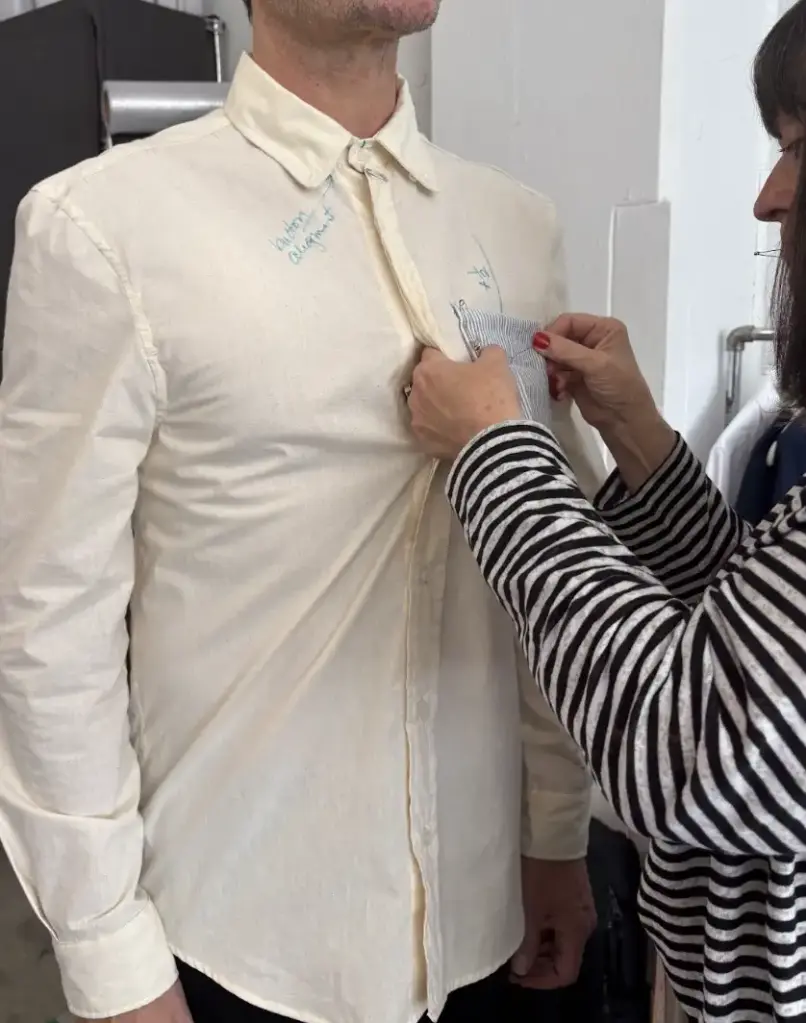
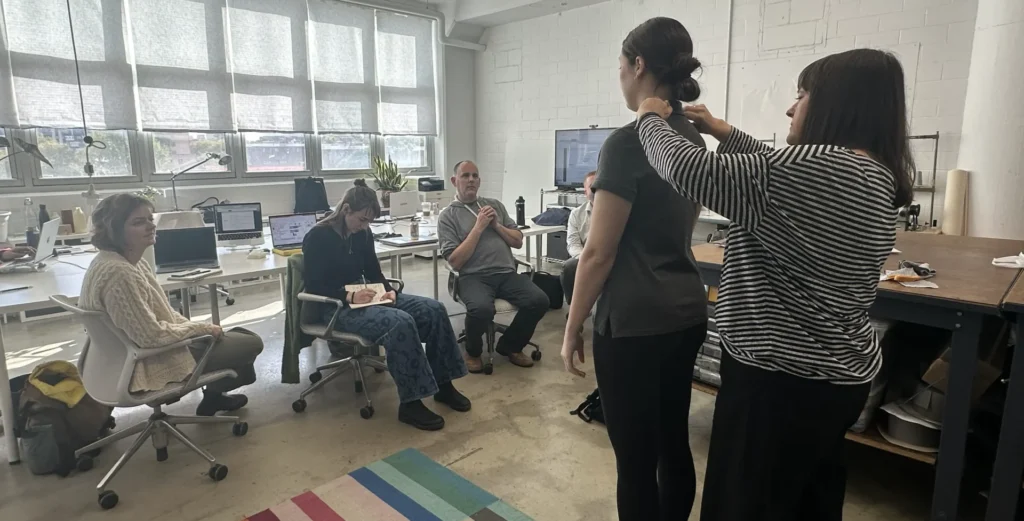
A Q&A with Dr. Candace Chan, Materials Scientist and Battery Researcher in Smart Textiles

Q&A with Dr. Candace Chan, Materials Scientist and Battery Researcher in Smart Textiles

Spotlight articles shine a light on designers, engineers and scientists we admire, asking leaders in the field about their work and their creative journey. This month’s Spotlight interview explores the rapidly evolving world of Smart Textiles — a space where materials science, wearable technology, and garment design are beginning to blur together in fascinating ways. While wearable tech often focuses on sensors, data, and interfaces, one of the biggest challenges has always been power: how do you create energy systems that are small, flexible, safe, and comfortable enough to disappear into the garment itself?

Dr. Candace Chan, materials scientist and battery researcher based in Arizona and professor at Arizona State University.

To dig deeper into that question, we spoke with Dr. Candace Chan, a materials scientist and battery researcher at Arizon State University, whose work focuses on developing advanced energy storage systems, including flexible batteries for wearable applications.

Candace collaborated with Interwoven Design Group as part of the SMART ePANTS initiative — a multi-disciplinary research project exploring how electronics, conductive textiles, and embedded systems can be integrated directly into garments without compromising comfort or movement.

With a background in chemistry and nanomaterials, Candace brings a perspective that bridges fundamental science with real-world applications. What makes her especially compelling to talk to is the way she translates incredibly complex technology into ideas that feel surprisingly human and relatable.

Q:

Can you tell us a little about your background and how you first became interested in battery technology?

A:

My training is actually in chemistry. When I first went to college, I thought I was probably going to go to medical school like a lot of people do. But then I started taking chemistry courses and became really interested in materials science — especially nanomaterials. At the time, nanotechnology was becoming a huge area of research, and there was a lot of excitement around how materials behave differently at very small scales.

When I was a graduate student, I became involved in a research project exploring nanostructured materials for batteries, and what we found was that by making materials smaller, you could improve their mechanical properties, lifetime, and charge storage. That work eventually spun off into a startup company, which was exciting because it showed how fundamental research could become a real product.

I’ve always been interested in understanding the chemistry and fundamentals of materials, but also in figuring out how to leverage that understanding to improve everyday technologies. It just happened that batteries became the area where I could really see that impact.

Q:

In very simple terms, how does a battery actually work?

A:

In a nutshell, a battery is an energy conversion device. There’s chemical energy stored in the materials inside the battery, and through electrochemical reactions that energy gets converted into electrical energy that we can use.

Basically, the reactions allow electrons to move from one material to another, and the battery is designed so we can leverage those electrons by running them through a circuit to power a device.

What’s interesting is that different batteries work in different ways depending on the materials and reactions involved. Some batteries, like a typical 9-volt battery, aren’t rechargeable because the reactions happening inside them can’t easily be reversed. In rechargeable batteries, you can apply electricity to reverse those reactions and restore the stored energy.

There’s actually a lot happening at the atomic level inside a battery. It’s not just electrons moving around — in many cases the atomic structure of the materials themselves is changing during the reaction process. Sometimes those changes are reversible, and sometimes they’re not.

Q:

Most people picture batteries as hard, rigid objects. How do you even begin to make a battery small and flexible enough to live inside a textile or garment?

A:

That’s actually a really big challenge, and it’s one of the reasons this project was so interesting. A lot of traditional batteries are rigid because they’re designed to contain corrosive liquids and protect the materials inside. The hard casing is really there to keep everything sealed and stable.

Flexible ribbon battery developed for smart textiles, held between gloved fingers
The ribbon battery developed for the SMART ePANTS project.

But batteries don’t necessarily have to be rigid. If you look at lithium batteries — like the ones in phones or laptops — many are already packaged inside flexible polymer films instead of hard metal casings. So the question becomes: how do you take that idea even further and make something small and flexible enough to disappear into a textile?

A big part of it is balancing the power requirements of the device with how small you can realistically make the battery. In the SMART ePANTS project, we were fortunate to work with a team developing very low-power electronics, which meant we could design a much smaller battery, which we call a ribbon battery. That really opened the door to creating something that could integrate more naturally into the garment itself.

What’s interesting is that so much development has happened with sensors, wearable interfaces, and data systems, but the battery is still often the limiting factor. In a lot of ways, the battery has become the “ugly duckling” of wearable technology — everyone wants devices to be smaller, lighter, and more invisible, but power is still the thing holding many of those ideas back.

Q:

For people who may not be familiar with the field, how would you explain what smart textiles are and why people should be excited about them?

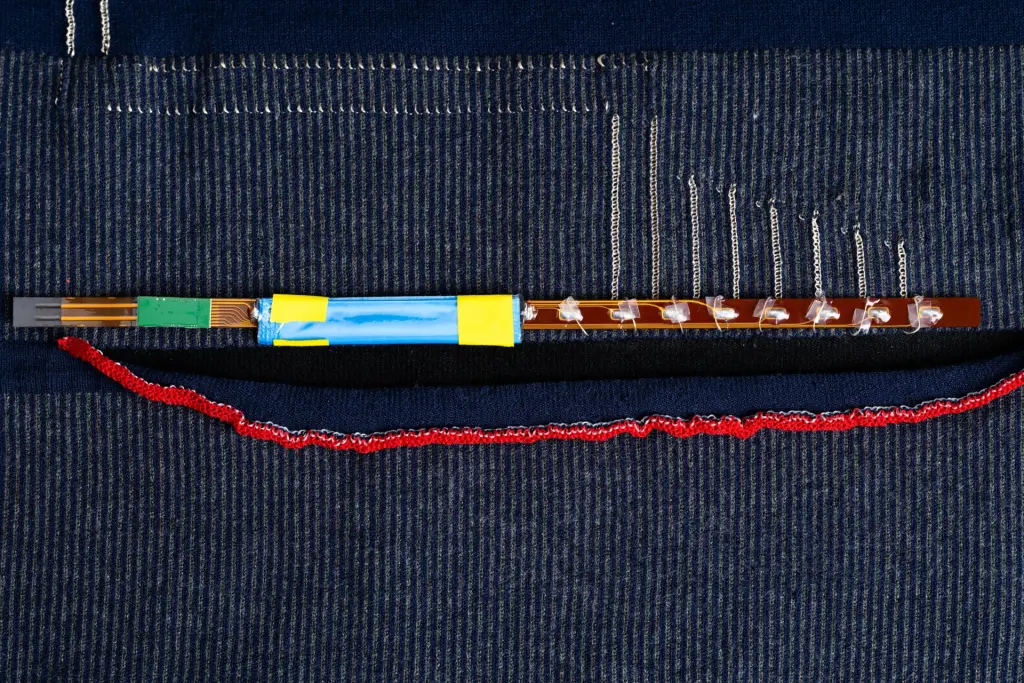
Flexible battery embedded into a black textile swatch as a smart textile prototype
A flexible battery embedded into a textile swatch.

A:

For me, a smart textile is really a textile with improved functionality because it has embedded electronics integrated into it — including the power source. What’s exciting is that the possibilities are so broad. Smart textiles could support healthcare monitoring, athletic performance, mobility assistance, or entirely new types of wearable experiences that we haven’t even fully imagined yet.

Q:

The Smart ePants project brought together textiles, electronics, engineering, and garment design. What was most exciting or surprising to you about working in such a cross-disciplinary space?

A:

Everything about it was really interesting to me because I had never worked so closely with people from the textile and garment world before. I didn’t fully appreciate how much development had already happened in smart textiles — from conductive threads to knitting structures to the different ways electronics can be integrated into garments.

What was most exciting was seeing all these different disciplines come together around a common goal. It really showed how much innovation can happen when engineers, scientists, and designers are all approaching the same problem from completely different perspectives.

One thing I realized during the project was how valuable co-design can be. We initially approached it as, “Okay, we’ll make the battery and then figure out how to integrate it into the garment.” But I think if we had collaborated even earlier in the process, the battery itself might have evolved differently. I learned that the way a garment moves, stretches, and behaves on the body can actually influence how you design the technology inside it.

Q:

One of the biggest goals in wearable technology is making the technology almost invisible to the user. How close do you think we are to smart garments that truly feel natural and comfortable?

A:

I think we’re getting much closer. One of the really interesting things about the SMART ePANTS project was that so much of the testing focused on comfort and durability, asking whether the garment still felt natural once the electronics and battery were embedded inside it.

Flexible batteries connected to test leads for performance and durability evaluation
Testing the battery for performance and durability.

Our team really tried to make the battery as small and non-detectable as possible rather than simply integrating an off-the-shelf component. We customized the battery specifically around the low-power devices the electronics team was developing, which allowed us to make it much smaller and more flexible.

I was actually really proud that we exceeded the comfort and durability metrics. Even after aggressive bend testing, the battery still functioned and the stiffness change in the fabric was less than 10%, which was far better than the project requirements. That was a big moment for us because it demonstrated that these systems really can begin to integrate naturally into textiles.

Q:

Where do you think smart textiles and embedded power systems are going to have the biggest impact first, healthcare, sports, military, consumer products, or somewhere else entirely?

A:

Historically, military applications are often the first place these technologies gain traction because that’s where a lot of the early funding and development happens. There’s still a huge need for better embedded power systems for soldier-worn devices — in some cases, people are carrying nearly 30 pounds of batteries to support different equipment.

That said, I think healthcare and consumer wellness are going to continue pushing the field forward as well. Right now there’s enormous interest in wearable technology for monitoring health, exercise, recovery, and performance, but almost everyone is still struggling with the same issue: the battery. I was at a flexible electronics conference earlier this year, and it felt like every company had a battery problem. There’s clearly a lot of opportunity — it’s just a matter of finding the right applications first.

Q:

Looking ahead five or ten years, what excites you most about the future of smart textiles, wearable technology, and flexible batteries?

A:

What excites me most is that it finally feels like all the different pieces are starting to come together. The electronics are getting smaller, the textiles are becoming more advanced, and there’s a much greater understanding now of how to integrate these systems into something people can actually wear comfortably.

Materials scientist Candace Chan working in a lab on flexible battery research for wearable technology
Candace Chan in the lab, where her research focuses on advanced energy storage and flexible batteries for wearable applications.

From the battery side, there’s still a huge opportunity. Everywhere I go, whether it’s healthcare, flexible electronics, or wearable technology conferences, people are still talking about the same challenge: they need better power systems. It almost feels like everyone has a battery problem right now.

That makes me optimistic because it means there’s still so much room for innovation. I think the future will come from much closer collaboration between scientists, engineers, and designers. The more these technologies are developed together — instead of as separate parts added at the end — the more natural and invisible wearable technology is going to become.

Speaking with Candace was a fascinating reminder that some of the most important innovations in wearable technology are happening behind the scenes. While sensors, interfaces, and data often get the attention, our conversation highlighted just how critical — and challenging — power systems really are. Her perspective as a materials scientist brought a completely different lens to the SMART ePANTS project and revealed how much thoughtful engineering goes into making technology feel seamless, flexible, and almost invisible on the body.

At Interwoven Design Group, collaborations like this are a huge part of what makes our work so meaningful. Many of the projects we work on exist at the intersection of design, engineering, material science, healthcare, and emerging technology. Working alongside experts like Candace not only pushes the work further technically, but also expands how we think about problem solving, comfort, usability, and the future of wearable systems. It’s this cross-disciplinary exchange that continues to make the field of smart textiles such an exciting space to work in.

Check out the rest of our Spotlight series to hear more from leaders in the design industry. Sign up for our newsletter and follow us on Instagram and LinkedIn for design news, multi-media recommendations, and to learn more about product design and development!

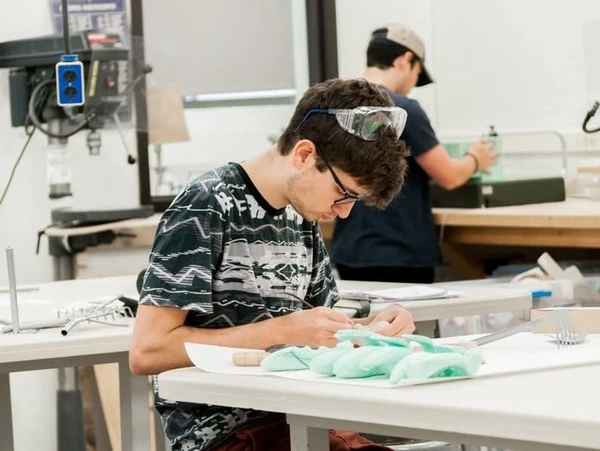
A Q&A with Cordy Swope, Designer and Strategist in MedTech and Human Experience

A Q&A with Cordy Swope, Designer and Strategist in MedTech and Human Experience

Spotlight articles shine a light on designers and engineers we admire, asking leaders in the field about their work and their creative journey. This month’s Spotlight explores MedTech through the perspective of designer and strategist Cordy Swope — whose career has moved from automotive and consumer products into healthcare innovation, global consulting, and corporate leadership.

Portrait of Cordy Swope, designer and strategist at Seven19 and Pratt Institute graduate.
Cordy Swope, designer and strategist at Seven19 and Pratt Institute graduate.

From IDEO to Johnson & Johnson, Novartis, BMW, Toyota, and now Seven19, Cordy has spent decades navigating the intersection of design, systems thinking, and human experience. In this conversation, we discuss the complexity of designing for healthcare, the realities of bringing human-centered design into large organizations, the influence of living abroad, and why optimism may be the defining trait of every designer.

Q:

Your career has spanned IDEO, healthcare, automotive, consulting, and international work. How did you first find your way into MedTech?

A:

I wouldn’t say that I’m a MedTech or healthcare native by any stretch. I grew up personally terrified of hospitals and anything to do with doctors until I was well into my thirties.  Then, when I was working at IDEO and got assigned to a pharma project for Eli Lilly. Part of the project involved developing injection devices, but the part I was leading focused on adherence — how to help women in their late sixties stick to a treatment that required daily self-injections and refrigeration.  We built prototype kits with fake pens and visited patients in their homes in places like Georgia and Florida. We’d interview them, leave the kits with them for about ten days, then come back to see what actually worked for them — not necessarily what they liked, but what worked.  Up until then, I had mostly worked on projects centered around desirability — BMW, Coca-Cola, consumer brands. This was different. These treatments had the potential to prolong life or significantly improve quality of life. That’s really when I fell in love with healthcare and MedTech.

Q:

What separates a medical product that simply works from one that truly improves a patient’s life?

A:

The design process in healthcare is a multistakeholder ecosystem. To put it another way — it’s damn complex. There are layers of competing needs between doctors, patients, caregivers, payers, manufacturers, regulatory requirements, and business concerns. You have to disentangle those competing needs and reformulate them into something workable. In a way, it’s the ultimate design problem. I’ve always been attracted to problems that are greater than any one person’s ability to solve. In healthcare, every project requires a team of people who know more than you in different areas. Otherwise, you’re going to be very limited in what you can do. There’s real satisfaction in producing something that gets into the hands of doctors, patients, and caregivers and genuinely changes someone’s experience — even if you’re not the person inventing the medicine itself.

Q:

IDEO is famous for design thinking and human-centered design. What changed when you moved into large corporations like Johnson & Johnson and Novartis?

A:

Hand-drawn patient journey map titled Diane, illustrating a 40-year-old teacher's experience moving from pain and diagnosis to fear, side effect concerns, and the difficulty of weekly self-injections.
A patient journey map exploring the realities of self-injection therapy.

The hardest adjustment was around access to users and patients. At IDEO, we had systems around how data was collected, protected, and managed. We could do deep ethnographic research because the patient owned the data and we owned the process. Inside a corporation, especially a pharmaceutical company, everything becomes much more regulated. You’re really limited in your interactions with patients, so we had to hire outside researchers or find workarounds.

The other big shift is that in consulting you’re judged on the impact you create for the client and the customer. Inside a corporation, success depends much more on internal relationships. You have direct access to the means of production, which is amazing, but getting things implemented requires relationship-building. From the outside, people might call it politics. Inside, it’s how things move forward.  One executive once gave me a piece of advice I’ve never forgotten. She said, “I want you guys to do the work. I don’t want you teaching marketers and engineers how to do design thinking because they’ll learn just enough to crash the plane into the side of a mountain — and then they’ll blame you. She was absolutely right.

Q:

We’ve seen a huge rise — and now some backlash — around design thinking, AI, and innovation culture inside corporations. From your perspective, what happened?

A:

Cordy Swope giving a lecture on design thinking fundamentals in front of a red slide showing mindsets, principles, skillsets, and a Venn diagram of desirability, viability, and feasibility.
Cordy Swope presenting the fundamentals of design thinking.

I think there was a period where companies were falling all over themselves to bring in designers and redesign their processes and workflows. But a lot of it was poorly managed. You had people halfway learning design thinking, claiming to be experts, selling services, and often misunderstanding what design actually is. There’s a reason there’s been backlash over the last few years. The way designers work is fundamentally different from how corporations work.

Corporations are often in the business of being inevitable — wanting to own everything, standardize everything, reduce risk. Designers are exploratory. Designers are trying to figure out a preferred future. That tension is always going to exist. In some ways it’s productive because it defines where designers add value, but it also creates friction. Now with AI, people are asking whether design itself is going away. Personally, I don’t think so. Some days it feels overwhelming, but other days AI just feels like another tool in the toolbox. I still remain optimistic despite all the turmoil.

Q:

You’ve now gone full circle — from consulting to corporate and back into consulting again. How has that changed your perspective?

A:

Going back into consulting feels a little bit like coming home. A lot of the methods and practices I used fifteen years ago were still there like muscle memory, even if I had to work the kinks out. It’s liberating in some ways because you don’t have to constantly compromise or go along with things you know are going to be mediocre — which everybody does in the corporate world at some point. I once heard someone say that when you go from consulting to corporate, you’re trading insecurity for frustration. And when you go back to consulting, you trade frustration for insecurity. That’s pretty accurate. In consulting, you’re always thinking about the pipeline. But you also get the excitement of solving new problems and working across industries.

Q:

You’ve also spent significant time living and working abroad. How did those experiences shape your approach to design?

A:

One of my first jobs was at Toyota. I had lived in Japan before that, and the role involved future-focused storytelling for designers — looking at culture, architecture, fashion, and behavioral trends and translating them into inspiration for automotive design.  Later, at Continuum, I worked extensively with BMW in both Europe and North America. A lot of the features we developed back then are still in BMWs today because the work was so deeply human-centered.  Eventually, I met my wife through that work, moved to Munich, and lived in Germany for years. I think you can learn a language relatively quickly. But learning a culture — the unwritten rules, the mentality, the references — can take a lifetime. It’s similar to learning the culture inside a corporation. You have to understand the invisible systems. People often focus on the linguistic challenge of living abroad, but I think it’s really the cultural challenge that gets you.

Q:

As fellow Pratt graduates, I have to ask — what stayed with you from your Pratt education throughout your career?

A:

I came into Pratt from an English literature background, so I felt like a bit of a black sheep. But one thing that stayed with me forever was the fearlessness of prototyping. At Pratt, there was this mentality of: what if we just build something immediately? It might be mostly wrong, but maybe it’s not all wrong — and we can use it to ask better questions. Later at IDEO, I recognized the same philosophy. “Build to think.” Using a physical prototype or mockup to ask better questions is still one of the most valuable design tools I know. You don’t always need the perfect words to formulate the perfect question. Sometimes you just put something in front of people and learn from the reaction.

Q:

Final question. From Pratt to Germany, from IDEO to Seven19 — what’s the thread that connects everything you’ve done?

A:

I think it’s dissatisfaction with the current state combined with an optimism that the future can be better. About eighteen years ago, when my first child was born, I realized that since I had the privilege of working as a designer, I wanted to help design the kind of world I’d want my kids to live in. So I look around, and usually I’m dissatisfied with what I see. Then I use the tools of design — prototyping, visualization, whatever tools my team and I have — to build momentum toward some kind of preferred future. Designers are uniquely equipped to visualize what could be before most people can. And honestly, I still remain optimistic. 

At the end of our conversation, Cordy and I found ourselves reflecting on something that feels increasingly important right now: optimism. Despite rapid technological change, AI disruption, corporate upheaval, and the growing complexity of the systems designers work within, there remains a shared belief that things can be improved. That belief may ultimately be one of the defining characteristics of design itself.  As Cordy put it, designers are in the business of “figuring out the preferred future.” And perhaps that ability — to imagine something better before it exists — is exactly what makes design such a powerful force within healthcare, technology, and beyond.

Beyond the Portfolio: Starting a Career in Industrial Design

Beyond the Portfolio: Starting a Career in Industrial Design

Product design is evolving rapidly. Across industries, the boundaries between physical products, digital experiences, and wearable systems are becoming increasingly fluid, creating new opportunities for designers. Designers today are expected to think beyond form alone, considering how products function within broader systems of manufacturing, interaction, human behavior, and experience.

For new graduates entering the field, this moment is both exciting and challenging. The range of possible career paths has expanded dramatically, but so have expectations. Many emerging designers find themselves asking the same questions: How do I stand out in a competitive market? What kind of portfolio do design firms actually want to see? How do I gain experience when most opportunities seem to require it already? Navigating the transition from school to industry can feel uncertain, particularly as the profession itself continues to evolve.

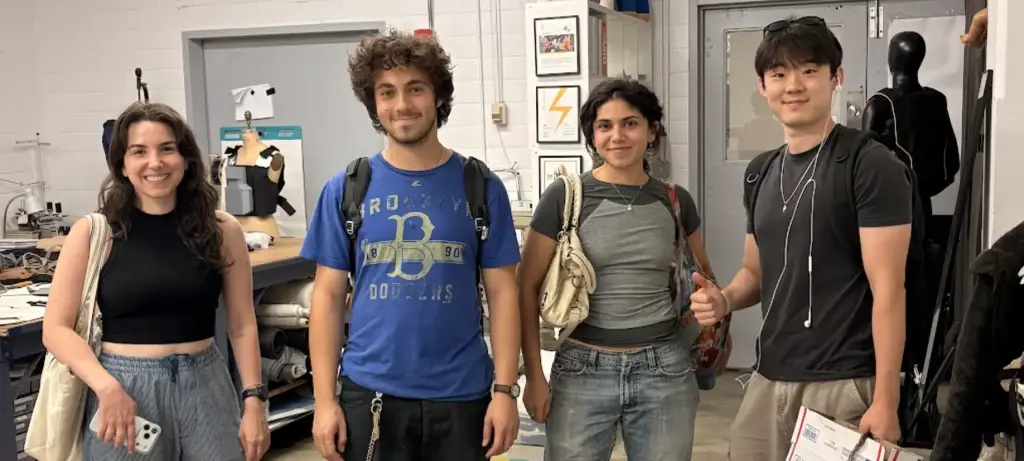
At Interwoven Design, we seek new industrial design interns every year, giving us a firsthand perspective on what differentiates successful candidates in today’s hiring landscape. In this Insight article, we explore what studios are actually looking for in new graduates, and how emerging designers can position themselves more strategically as they search for internships and full-time roles. We also examine the power of a point of view, and how to develop meaningful industry connections.

Develop a Point of View

A quality that immediately distinguishes strong emerging designers is the presence of a clear point of view. In a highly competitive hiring landscape, portfolios can begin to look visually similar, featuring comparable software skills, renderings, and project structures. What often separates memorable candidates is a visible sense of curiosity, direction, and intellectual engagement with the kinds of problems they want to solve.

Developing a point of view does not mean locking yourself into a narrow specialty early in your career. One of the advantages of being a new graduate is the freedom to explore different industries, methodologies, and interests. However, employers are often drawn to candidates who demonstrate genuine enthusiasm for particular areas of design, whether that involves wearable technology, medical devices, soft goods, sustainable packaging, furniture, transportation, consumer electronics, or emerging material systems.

A point of view is often communicated subtly through project choices, research topics, material explorations, and even the way a portfolio is organized. A student who consistently explores human-centered healthcare solutions, for example, signals a different perspective than someone focused heavily on speculative consumer electronics or sustainable systems. Neither direction is inherently better, but each tells a story about what motivates the designer and how they think about the role of design in the world.

Developing a point of view is not the same as building a personal brand around aesthetics alone. While visual consistency can be valuable, firms are often more interested in conceptual consistency; evidence that a designer is asking meaningful questions and engaging thoughtfully with a set of ideas over time. This could involve an interest in emotional durability, accessibility, wearable systems, manufacturing innovation, circular design, or the relationship between digital and physical experiences. These through-lines create coherence across projects and help transform a portfolio from a collection of assignments into a reflection of a designer’s perspective. Candidates who can clearly articulate what excites them about design tend to create more engaging and memorable discussions. Employers are not simply hiring for current projects; they are hiring people they can imagine growing alongside future opportunities and challenges.

Understand the System

Once a designer has developed a point of view and a body of work that reflects how they think, the next challenge is often not capability, it is visibility. Many strong candidates struggle because they are unclear about where opportunities exist and how to position themselves within a highly fragmented hiring landscape. Unlike more centralized industries, product design opportunities rarely exist in a single, predictable place. While large companies and well-known studios do post openings on public job boards, many roles are filled through more direct or informal channels. Studio websites remain one of the most consistent sources of opportunities, particularly for internships, where smaller teams often manage hiring directly. Alumni networks also play a significant role, as many designers enter studios through personal or academic connections that extend beyond formal application systems.

For emerging designers, this shifts the application process from reactive to proactive. Rather than waiting for the “right” posting to appear, successful candidates often identify studios whose work aligns with their interests and reach out directly. In these cases, specificity matters. Generic applications tend to disappear quickly, while targeted outreach that demonstrates an understanding of a studio’s focus—whether that is soft goods, wearable technology, consumer electronics, or medical devices—immediately signals intent and relevance.

Timing also plays a role. Many studios operate on flexible hiring cycles, especially for internships. Applying early, even when positions are not formally advertised, can be advantageous, as teams often keep strong candidates in mind when future projects arise. In some cases, opportunities are created in response to interest rather than pre-existing job postings, particularly in smaller or mid-sized practices. Translating work into opportunity is not just about applying widely; it is about applying strategically. 

Design Your Outreach

While the portfolio is important, even strong portfolios can go unnoticed if they are not introduced effectively. The reality is that most studios are not short on capable applicants; they are short on time. What often determines whether a portfolio is reviewed in detail is not its quality alone, but how it first enters a studio’s attention. The initial email, message, or application note is a filter that determines if your work is reviewed at all. A well-crafted introduction does not need to be long or overly polished, but it does need to be intentional. Studios are looking for signals of clarity: who you are, what you are interested in, and why you are reaching out to them specifically.

Effective outreach in design is itself an act of design thinking. It requires editing, prioritization, and an understanding of your audience. A strong message typically introduces the designer in a few sentences, highlights one or two relevant projects, and clearly explains why the studio’s work is meaningful to them.

The goal is not to summarize an entire portfolio, but to create enough alignment and curiosity for the reviewer to click through. What tends to weaken applications is not lack of talent, but lack of specificity. Generic messages sent to dozens of studios often read as disconnected from the work they reference. In contrast, even a short message that references a studio’s recent project, design focus, or material approach immediately establishes relevance. This demonstrates that the applicant has taken the time to understand the practice they are engaging with, which is often as important as the work itself.

Outreach does not need to be formal to be effective, but it should be professional, direct, and respectful of the reader’s time. Studios are often reviewing applications between project deadlines, so clarity and brevity are not just stylistic choices, they are practical advantages. This activity, done well, is an extension of a design practice; it requires understanding context, communicating intent, and guiding someone through an experience in a way that feels effortless and considered.

Network for Exposure

While networking can feel transactional at its worst, it should be about building visibility, familiarity, and trust over time. In product design especially, hiring is rarely a single-moment decision. Studios tend to hire people they have seen before, heard about through peers, or encountered multiple times in different contexts. This means that networking is less about one perfect interaction and more about becoming a recognizable presence within the design ecosystem. Exposure, consistency, and clarity of interest matter more than any single conversation. For emerging designers, this shift in perspective is critical. Instead of approaching networking as a performance or a pitch, it becomes an opportunity to engage with the industry in a more natural and ongoing way. 

Here are some practical ways to build meaningful exposure:

  • Attending portfolio reviews hosted by organizations such as IDSA, universities, and design festivals.
  • Reaching out to alumni who are working in studios you admire, particularly those a few years ahead in their careers
  • Engaging in informational conversations with junior and mid-level designers, who are often more accessible and candid about their experiences
  • Participating in design events, talks, and workshops where informal conversations can lead to longer-term recognition
  • Maintaining a consistent presence on platforms like LinkedIn or Instagram by sharing process work, sketches, or project thinking rather than only final renders
  • Contributing to student exhibitions, competitions, or collaborative projects that extend your visibility beyond your immediate academic environment
  • Signing up for the mailing lists of studios and companies you admire and watching for open houses and studio events

Over time, these actions build familiarity. A studio may not respond immediately to a message or application, but repeated exposure to a designer’s name, work, or ideas can create recognition when opportunities arise later. In many cases, hiring decisions are influenced by this accumulated awareness as much as by formal applications. Networking in design is about showing up consistently within the spaces where design conversations are happening, contributing meaningfully when possible, and allowing your perspective to become part of the broader dialogue.

Build Momentum Over Time

Unlike fields with clearly defined entry points, design careers often unfold unevenly; shaped by timing, exposure, relationships, portfolio development, and a degree of persistence that extends beyond any single application cycle. For emerging designers, this can feel uncertain at first, especially when comparing their progress to seemingly more direct success stories. In reality, momentum matters more than a perfect starting point. Each project, conversation, internship, and piece of outreach contributes to a broader trajectory. Designers who remain engaged—continuing to refine their portfolios, explore new ideas, and participate in the broader design community—tend to create more opportunities for themselves over time. 

For new graduates entering the field today, the opportunity lies not in finding the “correct” path, but in actively creating one—through work, relationships, and a continued commitment to evolving as a designer. Studios are looking for evidence of how candidates think, collaborate, communicate, and solve problems. Technical skills remain important, but process, adaptability, trustworthiness, and curiosity often determine which candidates stand out. At Interwoven Design, we find that the most compelling designers are rarely defined by a single aesthetic or specialty. Instead, they distinguish themselves through clarity of thought, engagement with the design process, and the ability to communicate ideas effectively.

Interwoven Design is a design consultancy that is positioned at the intersection of soft goods and wearable technology, creating products that function with the body and offer comfort as well as the superb performance that arises through the innovative incorporation of rigid, often electronic and responsive elements. Sign up for our newsletter and follow us on Instagram and LinkedIn for design news, multi-media recommendations, and to learn more about product design and development!

From Clinical to Comfortable: The Future of Therapeutic Wearables

From Clinical to Comfortable: The Future of Therapeutic Wearables

For decades, devices designed to deliver therapy to the body have been defined by function first and everything else second. Braces, wraps, compression systems, and externally applied treatments have historically been rigid, cumbersome, and visually clinical, often interrupting daily life as much as they support recovery. While effective, many of these solutions have required compromise, asking users to tolerate discomfort in exchange for benefit.

Today, that equation is changing. A new generation of therapeutic wearables is emerging; one that prioritizes not only efficacy, but also comfort, flexibility, and long-term usability. From magnetic therapy wraps designed to reduce pain and inflammation to soft, body-conforming systems that support circulation and oxygenation, these products are evolving into forms that feel lighter, more breathable, and more intuitive to wear. Increasingly, therapy is no longer something users engage with intermittently, it is something that integrates seamlessly into everyday life.

This shift is being driven by advances in soft goods, material innovation, and a growing expectation that products designed for the body should work with it, not against it. As therapeutic wearables move out of strictly clinical settings and into daily routines, their success depends not only on what they do, but on how they feel; how they move, how they breathe, and how naturally they fit into the rhythms of the user.

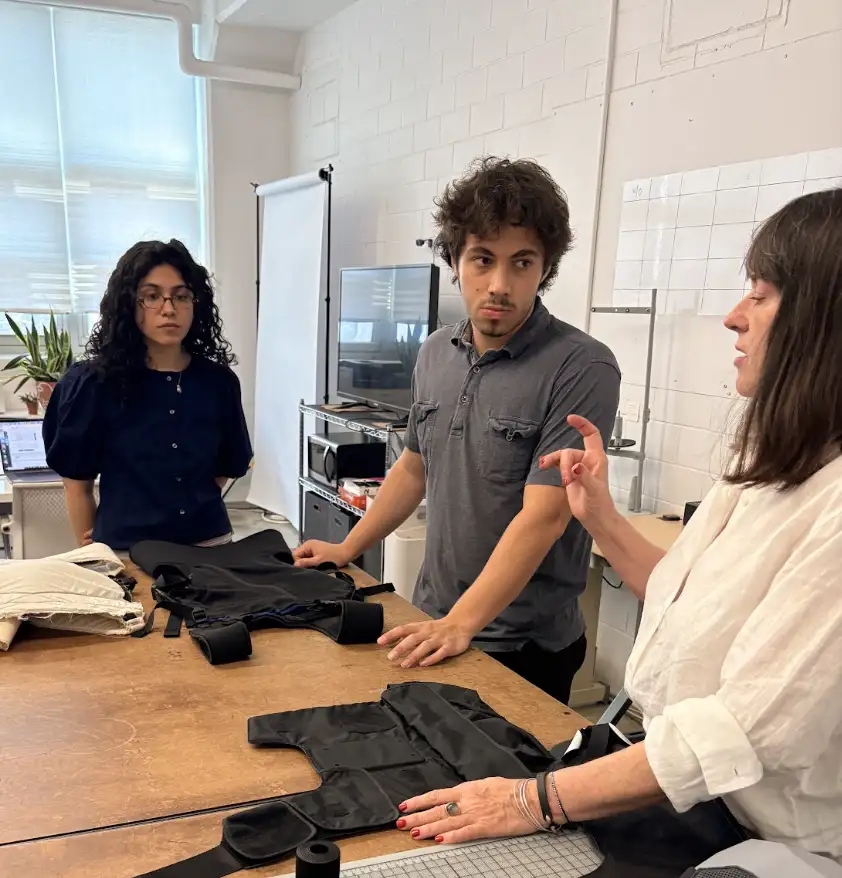
Interwoven Design Group team members reviewing a wearable prototype during a studio meeting, with anatomical references and design notes on the wall

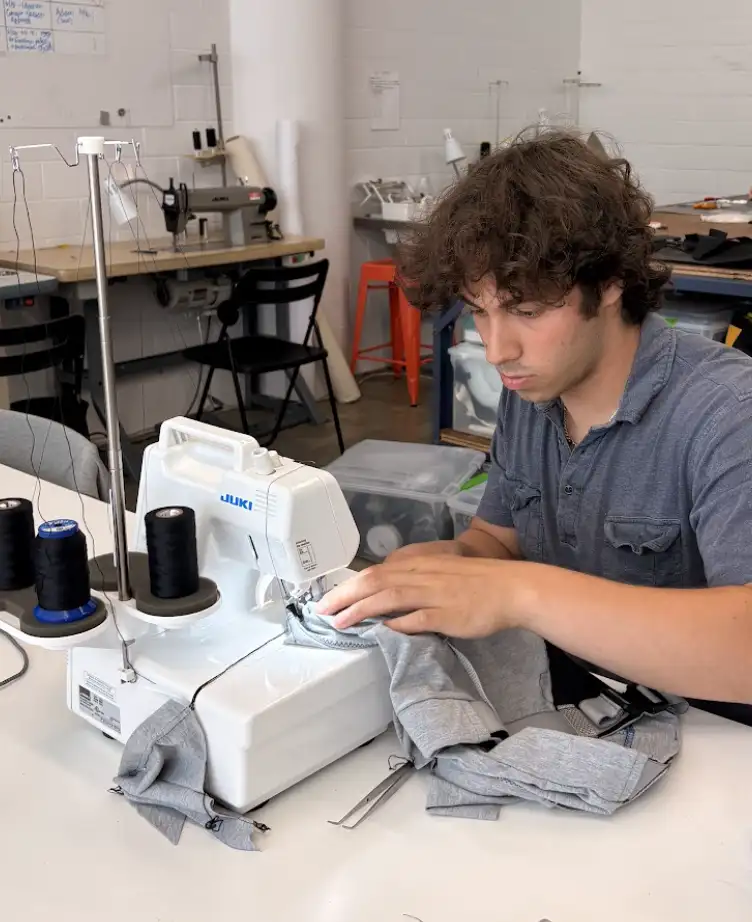
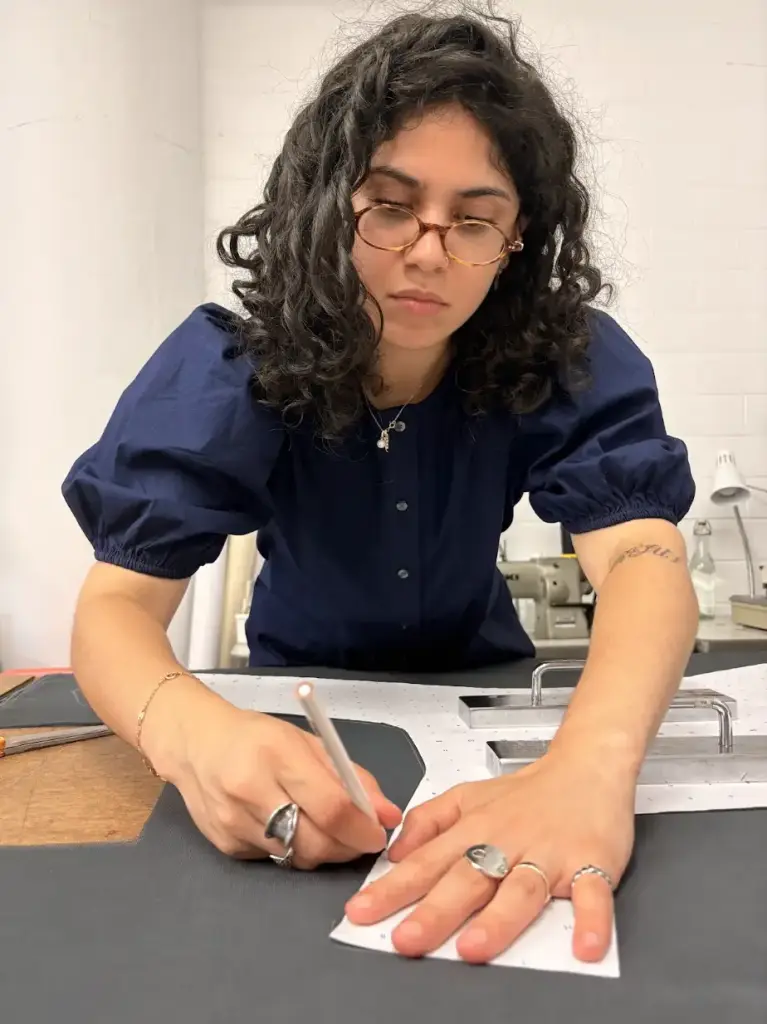
At Interwoven Design, we operate at the intersection of soft goods, human factors, and performance-driven product design. Our team brings together expertise in textiles, ergonomics, and design to create wearable solutions that deliver therapeutic benefit while maintaining comfort and usability over extended periods of wear. From early-stage concept development through prototyping and refinement, our work focuses on translating clinical intent into products that people can incorporate into their lives with minimal friction.

In this Insight article, we explore the evolution of therapeutic wearables, examining how advances in materials and design are reshaping the category. We look at the key principles driving this shift and highlight the opportunities for innovation as medical and consumer expectations continue to converge.

From Treatment to Integration

Historically, therapies applied to the body have been ad hoc and temporary, something users put on for a defined period, often in response to pain, injury, or recovery. These products were designed around moments of intervention rather than continuous use. They served a purpose, but rarely integrated seamlessly into the flow of daily life. As a result, adherence was often inconsistent, limited not by efficacy, but by inconvenience and discomfort.

Today, therapeutic wearables are shifting toward a model of continuous, integrated support. Rather than being reserved for isolated moments of treatment, they are designed to move with the user throughout the day, supporting circulation during work, aiding recovery during rest, or maintaining therapeutic benefits during light activity. This evolution reflects a broader rethinking of how care is delivered; not as a discrete event, but as an ongoing condition that can be supported passively over time.

This shift expands both the opportunity and the responsibility for designers. Products must now function across a range of contexts—sitting, walking, working, and sleeping—without requiring constant adjustment. They must be adaptable, discreet, and resilient, capable of maintaining performance without interrupting the user’s routine. In this model, therapy becomes less about compliance and more about compatibility. The more naturally a product fits into daily life, the more effective it ultimately becomes.

Designing for Continuous Contact

As therapeutic wearables move toward all-day use, the nature of their interaction with the body fundamentally changes. These products are no longer worn briefly or intermittently; they remain in direct contact with the skin for extended periods, often across varying conditions of movement, temperature, and activity. This makes comfort not just a desirable feature, but a core component of functionality.

Designing for continuous contact requires a deep understanding of how materials behave against the body over time. Breathability becomes essential to prevent heat buildup and moisture retention, particularly in areas of compression or limited airflow. Weight must be minimized to reduce fatigue, while flexibility ensures that the product can adapt to movement without creating pressure points or restricting motion. Even subtle inconsistencies in fit or texture can become amplified over hours of wear, leading to irritation or disengagement.

The distribution of pressure across the body is another key consideration. Therapeutic wearables often rely on compression or stable contact to function effectively, but this must be carefully balanced to avoid discomfort. A product that is too loose risks losing efficacy, while one that is too tight can create friction, restrict circulation, or discourage use altogether. Achieving this balance requires thoughtful integration of form, material, and construction techniques.

The Softening of Medical Devices Through Material Innovation

Breg knee brace designed by Interwoven Design Group.

One of the most significant shifts in therapeutic wearables is the transition from rigid, hardware-driven devices to soft, textile-based systems. Historically, medical products prioritized structural stability and clinical performance, often resulting in hard casings, bulky components, and strap-heavy constructions that signaled their function but limited their wearability. Today, advances in materials and fabrication are enabling a fundamentally different approach, one where softness, flexibility, and adaptability are not secondary features, but central to how the product performs.

This evolution is being driven in large part by innovation in textiles and material science. High-performance knits, engineered compression fabrics, and breathable mesh structures allow products to conform closely to the body while maintaining airflow and comfort over extended periods. These materials can stretch, recover, and distribute pressure in ways that rigid components cannot, creating a more responsive and personalized fit. At the same time, the integration of functional elements—such as embedded magnets, conductive fibers, or thermal-regulating layers—allows therapeutic benefits to be delivered directly through the material itself, rather than relying on external attachments or add-ons.

As a result, the boundary between product and garment is beginning to blur. Therapeutic wearables are increasingly designed as systems where structure, function, and material are fully integrated. Instead of layering technology onto the body, the material becomes the interface, carrying out therapeutic functions while maintaining a soft, unobtrusive presence. This shift reduces bulk, simplifies use, and enhances the overall experience of wearing the product.

There is also an important shift taking place in the way these wearables are perceived. As devices become softer and more refined, they move away from the visual language of clinical equipment and toward something more discreet and lifestyle-oriented. This not only improves comfort, but also reduces the stigma that can be associated with wearing medical devices in everyday settings. Products that feel and look like apparel are more likely to be worn consistently, which in turn improves their effectiveness.

Case Study: Rethinking Oxygen Monitoring with Moxy

As therapeutic wearables continue to evolve, products that successfully bridge performance, physiology, and wearability offer valuable insight into the future of the category. The Moxy Monitor is one such example: a wearable device designed to measure muscle oxygen saturation in real time, providing critical insight into how the body is performing and recovering under strain. While rooted in performance analytics, its design reflects many of the same principles shaping the broader shift toward more wearable, body-integrated therapeutic systems.

Design Objective

Translate complex physiological monitoring into a wearable format that can maintain accurate, continuous contact with the body while minimizing disruption to movement and comfort.

Key Features & Design Considerations

Compact, Body-Conforming Form Factor
The device is designed to sit close to the skin, reducing bulk and minimizing interference during activity. Its small footprint allows it to be worn across different muscle groups without restricting motion.

Wearable system for the Moxy Monitor, designed by Interwoven Design Group.

Soft Integration with the Body
Rather than relying on rigid mounting systems, Moxy is typically secured using soft straps or compression garments. This approach stabilizes the sensor while distributing pressure more evenly, improving both comfort and data consistency.

Lightweight Construction
A low-profile, lightweight build reduces fatigue during extended wear, making it suitable for use across training sessions, recovery periods, and longer durations of monitoring.

Breathability and Skin Compatibility
Because the device is worn directly against the body, it must accommodate heat, sweat, and movement. Pairing the sensor with breathable, skin-friendly materials helps maintain comfort and reduces the likelihood of irritation over time.

Secure Yet Flexible Fit
Maintaining accurate readings requires consistent contact, but not at the expense of comfort. The system balances compression and flexibility, ensuring the device stays in place while adapting to dynamic movement.

Design Insight

The effectiveness of a wearable like Moxy depends on more than just sensor accuracy, it relies on the product’s ability to remain comfortably in place over time. This reinforces a broader principle in therapeutic wearable design: performance is inseparable from wearability.

Devices like Moxy are no longer confined to controlled or clinical environments; they are used during training, recovery, and daily activity. This requires a design approach that prioritizes discretion, ease of use, and adaptability. The product must be simple to apply and remove, compatible with clothing, and unobtrusive in both form and appearance. By reducing visual and physical friction, and by aligning with the realities of how people move through their day, therapeutic wearables can achieve consistent use and deliver more meaningful results.

The Future: Therapy You Can Wear All Day

The future of therapeutic wearables lies in their ability to disappear into daily life while continuously delivering benefit. As materials become more advanced and technologies more compact, these products are evolving toward forms that feel less like devices and more like extensions of the body. Lightweight, breathable, and flexible systems will enable users to wear therapeutic solutions throughout the day—at work, in transit, during rest—without disruption or self-consciousness. In this model, therapy is no longer a scheduled activity, but an ambient layer of support that moves with the user.

As these products become more integrated into everyday life, expectations will continue to rise. Users will demand solutions that are not only clinically effective, but also comfortable, discreet, and aligned with their personal routines. For design teams, this evolution represents a significant opportunity. The challenge is no longer simply to create functional devices, but to develop wearable systems that balance medical efficacy with human-centered design. This requires a holistic approach, one that considers how products interact with the body over time, how they integrate into real-world contexts, and how they communicate value without relying on overtly clinical cues.

At Interwoven Design, this is where we focus our partnership with clients. We work to translate clinical intent into wearable solutions that prioritize comfort, adaptability, and long-duration use, leveraging our expertise in soft goods, materials, and human factors. Through iterative prototyping, wear testing, and refinement, we help ensure that therapeutic performance is delivered through products that people can and will wear consistently. Interwoven Design is a design consultancy that is positioned at the intersection of soft goods and wearable technology, creating products that function with the body and offer comfort as well as the superb performance that arises through the innovative incorporation of rigid, often electronic and responsive elements. Sign up for our newsletter and follow us on Instagram and LinkedIn for design news, multi-media recommendations, and to learn more about product design and development!
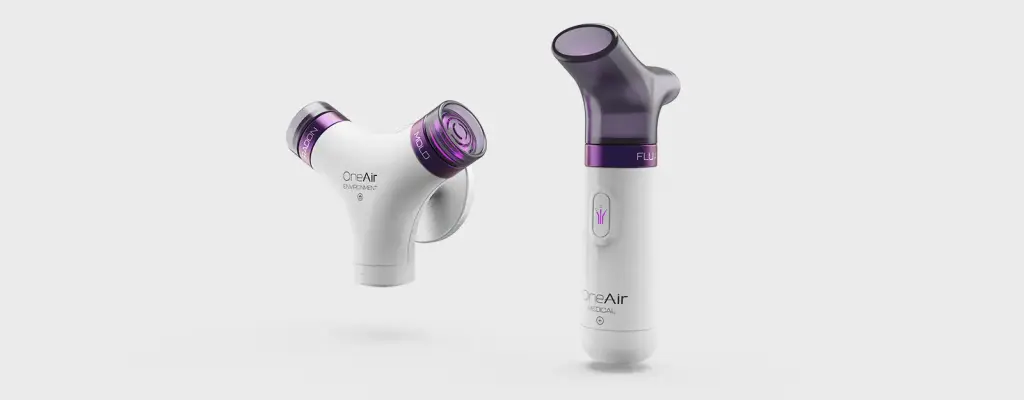
A Q&A with India Pearlman, Packaging Designer for Beauty and Wellness

A Q&A with India Pearlman, Packaging Designer for Beauty and Wellness

Spotlight articles shine a light on designers and engineers we admire, asking leaders in the field about their work and their creative journey. This month’s Spotlight focuses on the world of wellness and beauty through the lens of India Pearlman, a packaging designer whose work sits at the intersection of industrial design, branding, and product experience.

india pearlman spotlight portrait
India Pearlman, packaging designer based in New York and Pratt Institute graduate.

A graduate of Pratt Institute, India brings a distinctly three-dimensional, systems-driven mindset to a field often perceived as purely graphic. Her approach reflects a broader shift in design—where packaging is no longer just a container, but part of a larger ecosystem shaping how products are experienced, displayed, and lived with over time.

We spoke with India about how she found her way into packaging, how industrial design continues to inform her work, and the details she notices that most people miss.

Q:

Can you tell us a bit about your background and what led you into the wellness and beauty space?

A:

I’m a designer based in Queens, currently living in Ridgewood. I graduated from Pratt in 2020 with a degree in industrial design, which was honestly a wild time to enter the workforce. A lot of traditional industrial design roles were hard to find, especially because so much of that work is hands-on.

At the same time, there were a lot of packaging roles opening up. I hadn’t studied packaging in school and wasn’t initially interested in it, but I ended up falling into it because of the timing.

Looking back, it makes sense. My dad works in marketing, and growing up he would show me different pieces of packaging and ask which one I liked more. I think that kind of thinking was always there, even before I realized it.

Eva NYC Freshen Up dry shampoo duo pack featuring stock aluminum cans with custom graphics, an example of hair care packaging design
Eva NYC Freshen Up Invisible Dry Shampoo, a hair care product that combines stock packaging with custom graphics and color application.

Q:

Do you specialize in a particular area of packaging?

A:

I primarily work in beauty and wellness. I got my start in hair care, and the work tends to involve a mix of stock and custom packaging, with a strong focus on graphics, color, and application.

Q:

Do you think industrial design is becoming broader again as categories like beauty and wellness evolve?

A:

I definitely think so. At first, it felt strange to move from identifying as an industrial designer to working as a packaging designer, but over time I’ve seen how closely those disciplines are connected.

There’s a strong overlap between graphic thinking and the physical object—how something exists in space, how it’s held, how it’s experienced. Packaging and industrial design really do belong to the same world.

Q:

How does your industrial design background show up in your work today?

A:

I still rely on it constantly. Having that three-dimensional understanding has allowed me to go further in my role and take on more than just packaging. I often work on retail displays and spatial elements as well, which are very much rooted in industrial design.

Kourtney Kardashian posing with Lemme wellness supplement retail display at Walmart, showing retail packaging and spatial design
Lemme’s Walmart retail display, where packaging extends into spatial and retail design.

My understanding of materials also helps me collaborate more effectively with other teams. I’m able to bring ideas that are creative but also feasible, and sometimes even anticipate challenges before engineering gets involved. That foundation makes a big difference in how projects move forward.

Q:

What usually comes first for you: visual idea, tactile experience, or story?

A:

I typically work under the brand design team, and branding involves a lot more story-based thinking.  I like to start with that because it gives me a direction and purpose. Because I work closely with brand teams, there’s often a strong narrative behind the product, and that gives me direction and purpose.

Packaging design involves a lot more brand thinking. Working within brand guidelines might seem limiting, but I actually find it freeing. It allows me to focus more deeply on the design itself, knowing that I’m working toward a clear and intentional goal.

Q:

Beauty trends move fast. How do you think about what lasts versus what’s fleeting?

A:

It can be tricky. Right now, we’re seeing a lot of minimal, sans-serif typography and simple, blocky forms, and that’s been around for a while.

I look at a lot of references. I scroll through Pinterest, study retail environments, and look at other brands, but I also rely heavily on intuition. One of the biggest considerations for me is how a product will live in someone’s home. Is it something they’ll want to keep and display, or something more temporary?

I also look to interior design trends for inspiration. There’s a movement toward more expressive, colorful spaces, what people call ‘dopamine interiors’, and that’s influencing packaging as well, especially for younger brands.

Q:

What’s a packaging detail most people never notice, but you always do?

A:

I immediately notice when things don’t align across a product line. If packaging isn’t proportionate or the typography shifts from one SKU to another, it really stands out to me.

A lot of my work has focused on refining those details. In one role, I did a full packaging revamp that addressed inconsistencies most people wouldn’t consciously see, but that make a big difference in how cohesive the line feels. I’m always thinking about how everything works together as a system. 

Q:

NEST New York and Drawbertson holiday collection showing cohesive packaging design across candles, diffusers, and gift boxes
NEST x Drawbertson Holiday Collection, an example of packaging that functions as a unified system across an entire product line.

When you’re shopping, are you able to enjoy it? Or are you redesigning everything?

A:

It depends on where I am. In a typical grocery store, I’m definitely redesigning things in my head and questioning a lot of decisions.

But I love going into smaller markets that carry emerging brands. Those spaces tend to have really thoughtful, exciting packaging, and I find them genuinely inspiring. I also take a lot of photos when I’m out, especially in places like Sephora, whenever something catches my attention.

Grocery stores are hard. there’s a lot of packaging that’s been around a long time where I’m like – we could do this better. 

Q:

What materials or sustainability approaches are you most interested in right now?

A:

 Post-consumer recycled plastic has become much more standard, which is great to see. Beyond that, I’m really interested in paper-based and refillable packaging systems.

Refillable design is especially exciting because it allows you to create a more permanent, beautiful object that people want to keep, paired with a more sustainable refill system.

I’m also paying close attention to finishes. For example, traditional foil treatments make packaging harder to recycle, so I try to push toward alternatives that achieve a similar effect while remaining recyclable. You can also get a lot out of embossing and debossing. There’s a lot of innovation happening there right now. 

Q:

If you could collaborate with any brand right now, what would it be?

A:

I would love to work with Prada, especially on fragrance. Their packaging is very architectural, which really resonates with me.

There’s also something interesting about their fashion and accessories, like their bags that translate into form and function. I think there’s a lot of opportunity to bring that same thinking into packaging design. It would be interesting to see how their fashion informs cosmetics, and how something like a handbag, which is itself a functional industrial design object, could inform packaging.

Check out the rest of our Spotlight series to hear more from leaders in the design industry. Sign up for our newsletter and follow us on Instagram and LinkedIn for design news, multi-media recommendations, and to learn more about product design and development!

Please reach out!