Constructing Fit: Designing for Bodies in Motion
When people think about fit, they often think about size and shape, or an intuitive sense of rightness on the body. Does the product sit where it’s supposed to? Does it look right when worn? Soft goods designers ask a host of deeper questions when assessing fit, and these questions become exponentially more complicated when we consider them around a body in motion. How does the fit behave when reaching, or bending? Would a change in materials improve the stability of the fit? How will this construction behave during specific activities?
The reality is that bodies are rarely still. We reach, bend, twist, walk, sit, lift, and stretch throughout the day, continually changing the relationship between our bodies and the products we wear. A product that fits well while standing still can quickly become restrictive, unstable, or uncomfortable once movement is introduced. In soft goods design, fit is not just about creating a static form, it is about creating products that work in motion.
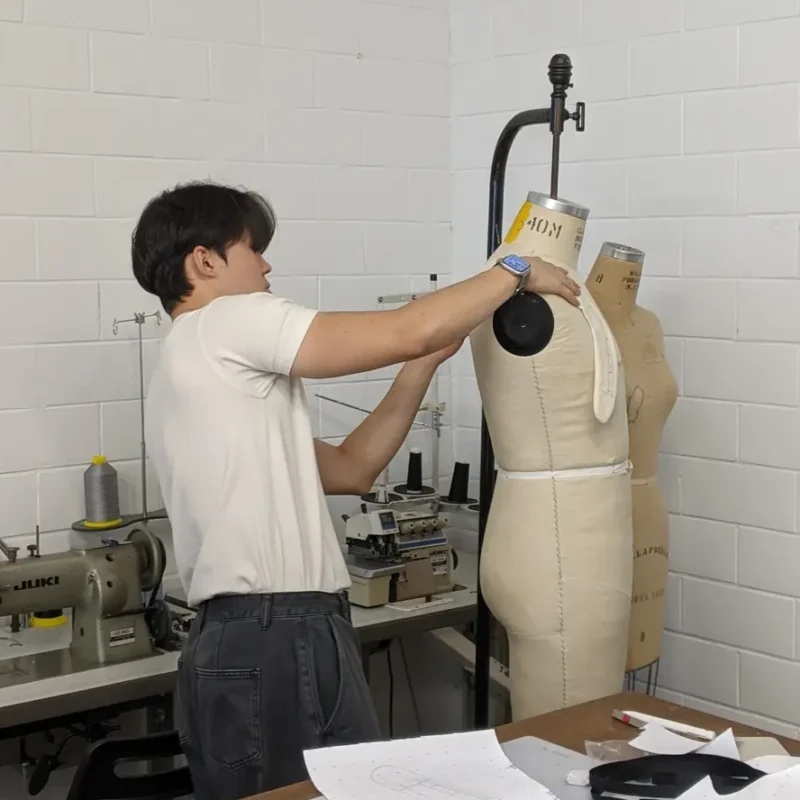
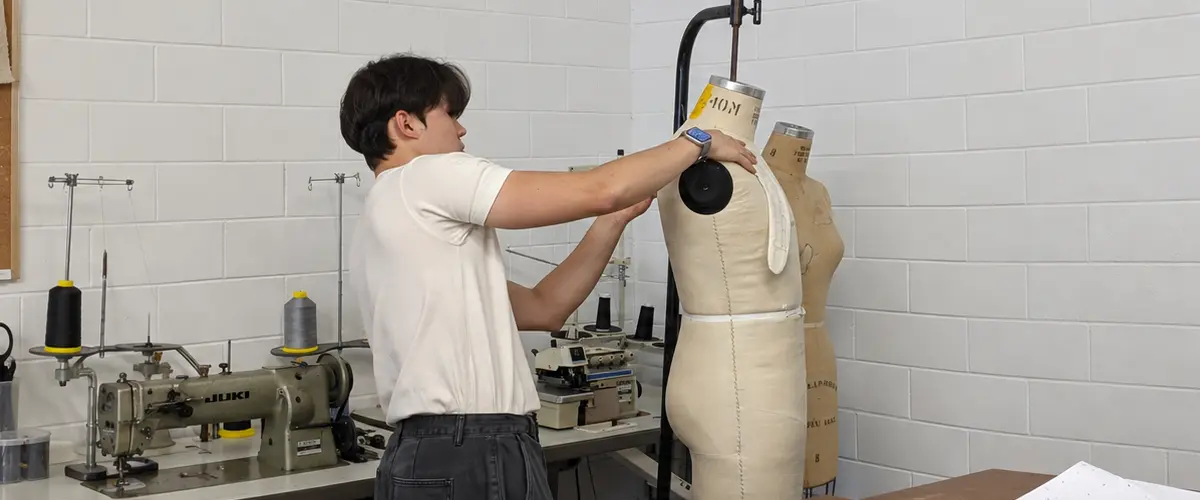
Achieving that outcome requires more than selecting the right material or dimensions. Most wearable products begin as flat materials, yet they must ultimately conform to complex anatomy, accommodate movement, and perform consistently across a range of real-world conditions. Bridging that gap is the role of pattern-making. Through the careful construction of panels, seams, shaping, and material strategies, pattern-making transforms two-dimensional materials into dynamic structures designed to move with the body.
At Interwoven Design, pattern development is a foundational part of our work across wearable technology, medical devices, performance apparel, and consumer soft goods. In this Insight article, we explore how pattern-making shapes fit beyond mere form, why movement should be considered a primary design input rather than an afterthought, and how thoughtful construction transforms flat materials into products that function comfortably and naturally on the body.
From Flat to Fit
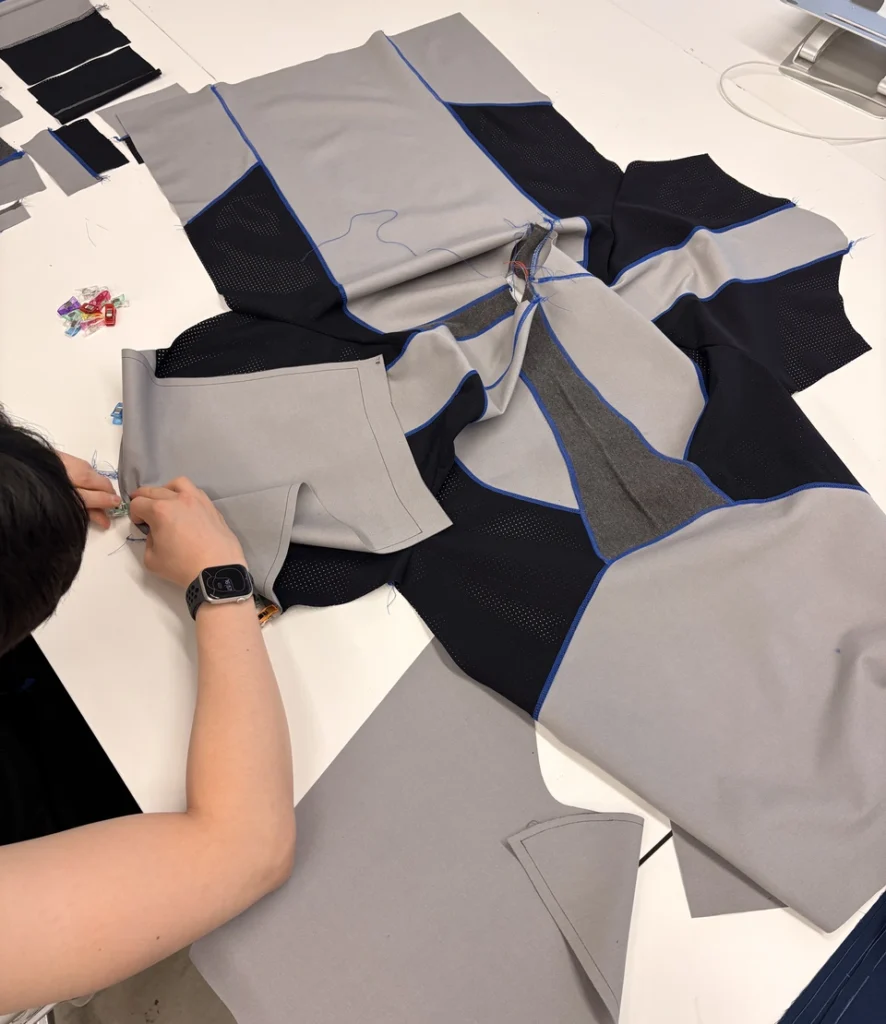
Whether woven textiles, laminated fabrics, films, foams, or flexible plastics, the materials used in wearable products are typically manufactured in a flat sheet before being transformed into forms that interact with the body. That transformation is the work of pattern-making.
By defining the shape, placement, and relationship of individual components, pattern-makers create structures that conform to the body’s contours while supporting the intended function of the product. A compression sleeve, wearable sensor platform, medical brace, or performance garment may all rely on very different materials, but each depends on pattern development to bridge the significant gap between flat material and human anatomy.
This challenge is particularly complex because the human body is neither uniform nor predictable. It consists of compound curves, changing dimensions, and highly variable forms that must be accommodated through construction rather than material alone. While emerging technologies such as engineered knits and 3D-printed structures offer new possibilities, most wearable products are still built from commercially available materials selected for their manufacturability, performance, and cost. Pattern-making is the process of giving structure to flexible materials, transforming simple components into products capable of closely and comfortably interacting with the body.
Designing for Movement
The body is constantly changing shape as joints flex, muscles contract, and limbs move through space. For wearable products, fit is ultimately judged not by how a product looks, but by how well it performs throughout those changes. This is where pattern-making proves its power to impact function. Through the placement of seams and panels, the distribution of stretch, and the management of tension throughout a product, designers can control how a wearable behaves in use. A pattern can introduce flexibility where the body bends, stability where a device needs to stay anchored, or support where loads need to be distributed more comfortably. These decisions help determine whether a product moves naturally with the body or works against it.
Pattern-making helps designers balance competing requirements such as comfort and support, flexibility and stability, mobility and control. In that sense, it functions like engineering in a traditional product. Rather than using mechanisms to guide movement, soft goods designers use construction itself. The pattern becomes a framework that determines where a product moves with the body, where it resists movement, and how it performs over time.
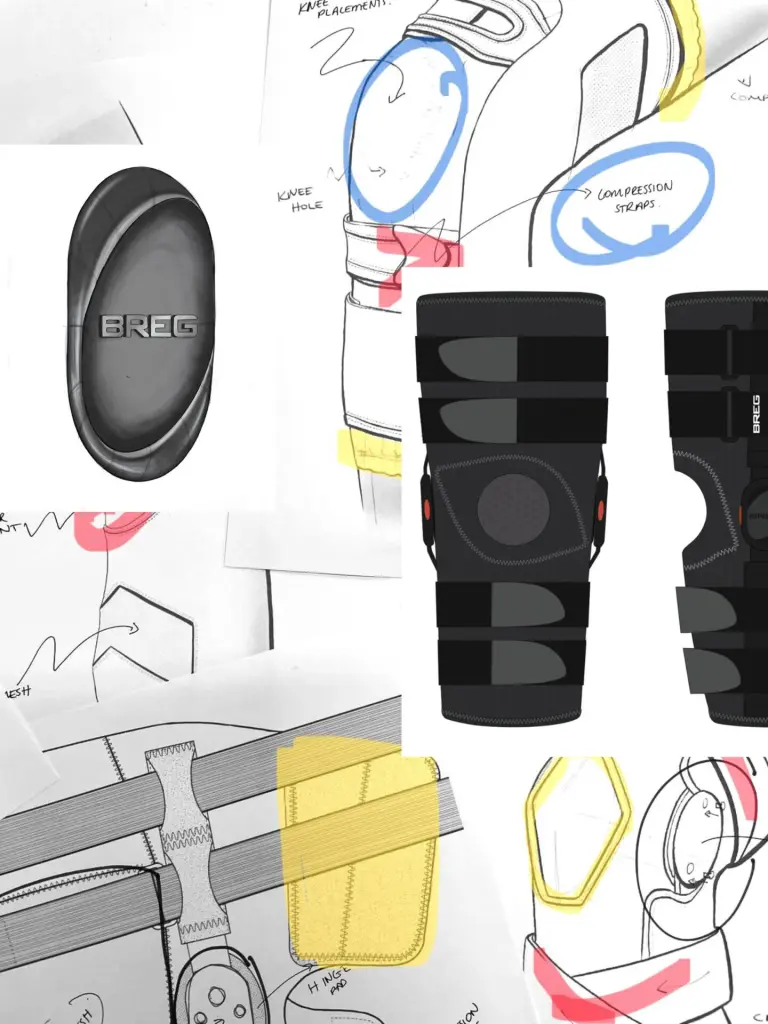
The challenge becomes even more critical in products that must maintain a consistent relationship with the wearer. A wearable sensor may require consistent contact with the skin. A therapeutic device may need controlled compression. A performance product may need to remain stable during high levels of activity. In each case, the challenge is not simply achieving fit, but maintaining a precise fit through movement. A therapeutic brace, for example, may need to provide compression, support, and alignment while still accommodating everyday movement.
In the development of the Breg CrossRunner™ Soft Knee Brace, Interwoven Design worked with Breg to create a family of orthopedic braces for users with a range of knee injuries and instabilities. The project required careful pattern development and size grading to maintain proper hinge placement, compression, and support across multiple brace configurations and body types. Rather than treating fit as a matter of circumference measurements alone, the design team focused on how the brace would articulate with the knee, remain aligned during movement, and provide comfort during extended wear. The resulting product combined breathable materials, low-profile support structures, and anatomically informed construction to create a brace that performs dynamically rather than statically.
The most successful wearable products often make these decisions invisible. Users may never notice why a product feels natural to wear, only that it stays comfortable, remains in place, and allows them to move without thinking about it. That seamless experience is rarely accidental. It is carefully constructed through pattern-making.
Material Matters
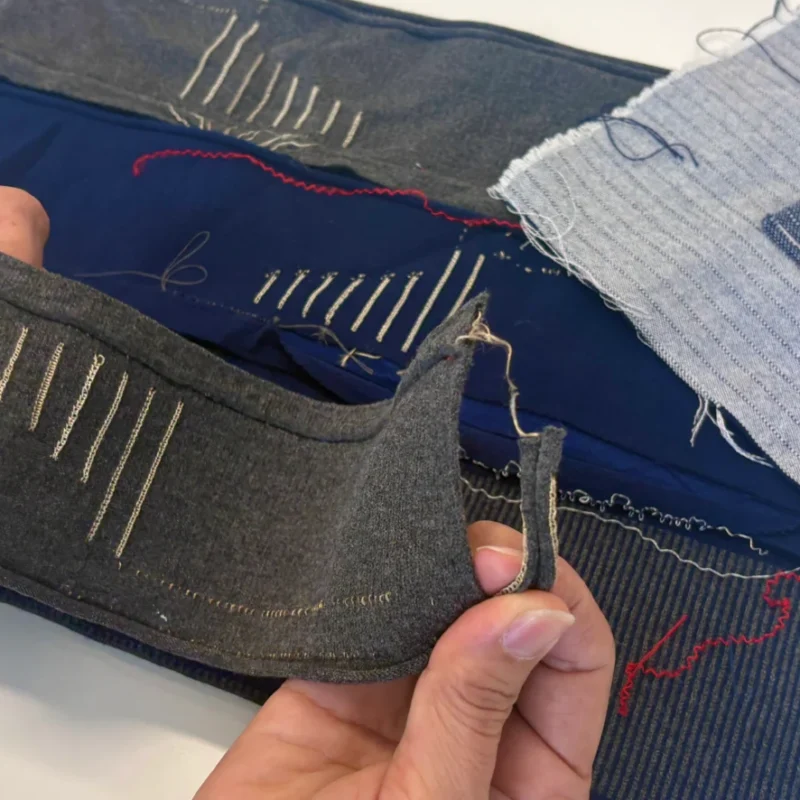
A pattern determines how a product is constructed, while the material determines how that construction behaves. Together, they shape the experience of fit. Every material brings its own characteristics to the design process. Some provide structure and stability, while others might prioritize stretch, recovery, breathability, or compression. A pattern that performs exceptionally well in one material may behave very differently (even dismally) when executed in another. The relationship between the two directly influences comfort, mobility, durability, and long-term wearability.
For soft goods designers, this means fit cannot be designed through geometry alone; material properties are part of the pattern strategy from the outset. Designers must consider where stretch is beneficial (and precisely where), where support should be maintained, how loads are distributed across the body, and how the product will respond to repeated movement. Often, seemingly minor decisions such as the orientation of a textile, the placement of a reinforcement panel, or the selection of a breathable fabric can dramatically change how a product performs.
Our work with the Miami Dolphins Cheerleaders illustrates the impact materials can have on movement and fit. Tasked with modernizing the squad’s on-field uniforms and practice apparel, Interwoven Design developed a collection of performance garments that needed to support high-energy athletic routines while maintaining a polished appearance. Material selection played a central role in achieving that balance. Breathable, moisture-wicking fabrics were chosen to manage heat and perspiration, while perforated performance textiles improved airflow without compromising support. Combined with athletic patterning and strategically placed materials, these choices allowed the garments to move naturally with the body through dynamic choreography while maintaining comfort, coverage, and a consistent fit throughout performance. The project demonstrated that successful movement is often the result of materials and construction working together rather than either acting alone.
Fit Is Iterative
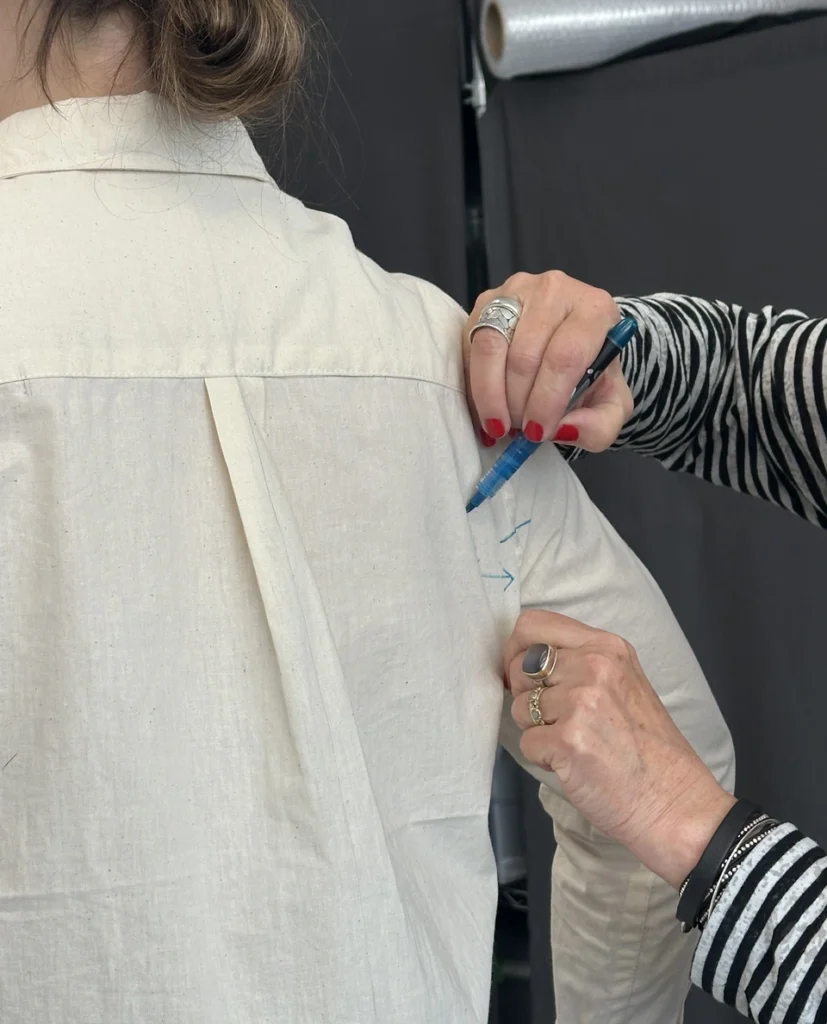
No pattern emerges fully resolved on the first attempt. While we can anticipate how a product should fit and perform, the reality of wear is often more complex than expected. A solution that appears successful on a screen, pattern table, or prototype may behave very differently once it is worn, moved in, and tested over time.
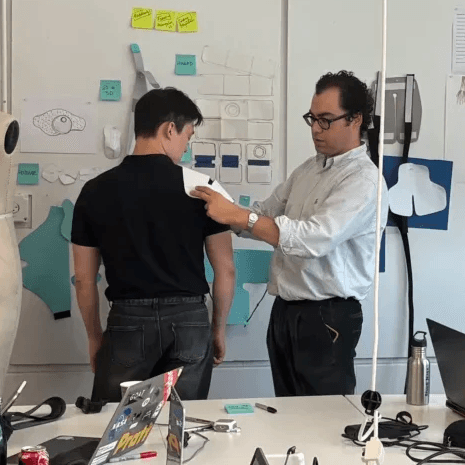
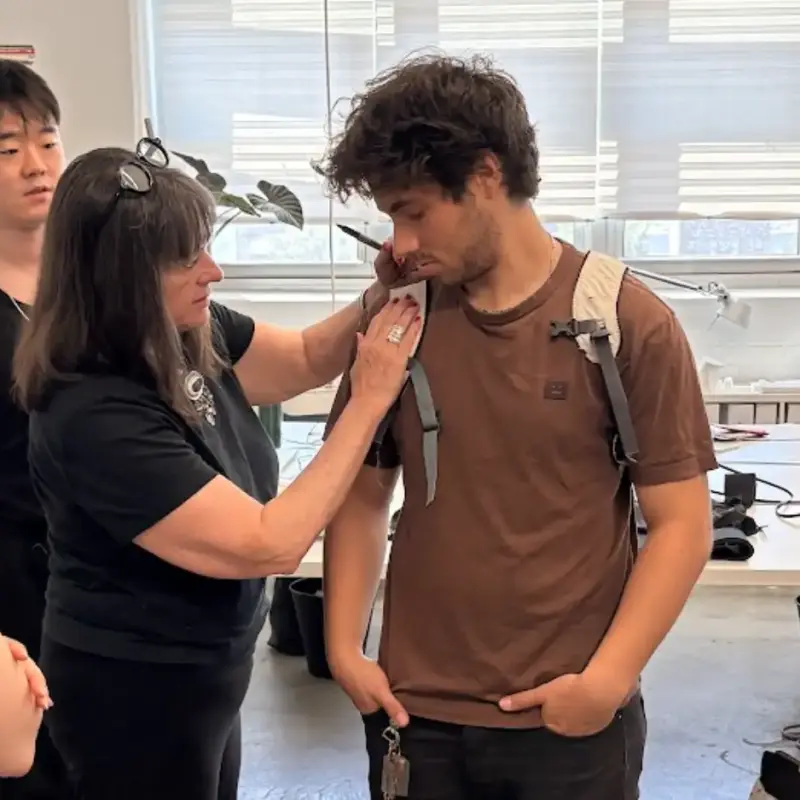
This is because fit is experienced, not simply observed. A wearer may bend, reach, sit, walk, or repeat a motion hundreds of times during normal use, revealing opportunities and challenges that are impossible to predict during development. A seam may create friction and discomfort, or a support panel may migrate. These observations provide valuable information that guides the next iteration.
For soft goods designers, pattern development is an inherently iterative process. Prototypes are created, tested, refined, and tested again. Construction details are adjusted, materials are reconsidered, and patterns evolve in response to real-world performance. Here at Interwoven Design, we always start a rough draft in muslin, gradually working toward final materials and an increasingly refined fit with each round of iteration. Each cycle helps designers better understand how the product interacts with the body and where improvements can be made. Digital tools have accelerated parts of this process, but physical prototyping remains essential. Movement, comfort, pressure distribution, and long-term wearability are difficult to evaluate through geometry alone. Observing products on real bodies, across different sizes, activities, and use cases, continues to be the most effective ways to assess fit.
Constructing the Future of Fit
As wearable technology, medical devices, and performance products become increasingly integrated with the body, the importance of thoughtful, user-centered pattern-making continues to grow. New tools and technologies, from body scanning and digital pattern development to engineered knits and advanced fabrication methods, are expanding the possibilities for creating more responsive and personalized products. No matter how sophisticated these technologies become, the fundamental challenge remains unchanged: designing products that work comfortably and naturally with the human body.
Fit will always be more than a matter of size or appearance. It emerges from the relationship between anatomy, movement, materials, and construction. Pattern-making sits at the center of that relationship, translating flat materials into products that can flex, support, stabilize, and adapt as people move through the world. The best solutions are rarely defined by a single innovation. Instead, they result from a careful orchestration of materials, construction techniques, and iterative refinement.
At Interwoven Design, pattern development is not viewed as a downstream technical exercise, but as a core design discipline. Through prototyping, wear testing, material exploration, and technical pattern development, we work to ensure that products perform not only in theory, but in practice. Whether developing wearable technology, medical devices, performance apparel, or consumer products, our goal is the same: to create solutions that fit the realities of human movement and deliver a seamless experience for the people who use them.
Interwoven Design is a design consultancy that is positioned at the intersection of soft goods and wearable technology, creating products that function with the body and offer comfort as well as the superb performance that arises through the innovative incorporation of rigid, often electronic and responsive elements. Sign up for our newsletter and follow us on Instagram and LinkedIn for design news, multi-media recommendations, and to learn more about product design and development!